
The Pacific Northwest’s cool, wet springs and dry summer windows create a unique stress test for any lawn. Most big-box blends fizzle out when the marine layer lifts and the July sun bakes the soil. The right grass seed for this region must handle extended cloud cover, then pivot to heat without going dormant or inviting moss.
I’m Mohammad Maruf — the founder and writer behind Drink4Good. I’ve analyzed turfgrass performance data across multiple climate zones, focusing specifically on how cool-season varieties interact with Portland’s distinctive rain-shadow and soil pH patterns.
After sifting through laboratory germination reports and real-world customer feedback from local homeowners, the most reliable candidates for a thriving lawn are outlined below. This guide highlights the best grass seed for portland oregon, focusing on deep root systems, shade tolerance, and resilience during the region’s unpredictable dry spells.
How To Choose The Best Grass Seed For Portland Oregon
Portland’s climate falls into the cool-season grass zone, but the combination of acidic soil, heavy winter rain, and summer drought creates a narrow performance window. You need a seed that germinates in cooler soil temperatures (50-65°F) and develops deep roots before the dry spell hits.
Check the Species Mix
Tall fescue and fine fescues (creeping red, chewings, hard fescue) are the backbone of a resilient Portland lawn. They tolerate shade better than perennial ryegrass and have deeper root systems than Kentucky bluegrass, which struggles in the region’s acidic, clay-heavy soil.
Look for Weed-Free Certification
A 99.9% weed-free label means you aren’t importing poa annua or clover into your lawn. Many budget blends include unlisted annual grasses that die after one season, leaving bare patches. Stick to bags with a guaranteed weed-free percentage on the tag.
Evaluate Drought and Shade Tolerance
Portland lawns often sit under mature tree canopies that block sunlight and compete for water. A seed blend labeled “shade tolerant” should include fine fescue varieties. For open areas, tall fescue with a waxy leaf coating reduces moisture loss during July and August.
Quick Comparison
On smaller screens, swipe sideways to see the full table.
| Model | Category | Best For | Key Spec | Amazon |
|---|---|---|---|---|
| Jonathan Green Black Beauty | Heat/Drought | Full sun to light shade | Root depth up to 4 ft | Amazon |
| Jonathan Green Dense Shade | Shade | Heavily shaded yards | 1,800 sq ft coverage | Amazon |
| GreenView Turf Type Tall Fescue | Sun/Shade | Versatile sun and shade | 99.9% weed-free | Amazon |
| Outsidepride Legacy Fine Fescue | Fine Turf | Dense shade / fine texture | OptiGrowth coated | Amazon |
| Scotts Turf Builder All-Purpose | All-Purpose | Large area coverage | Covers 8,000 sq ft | Amazon |
In‑Depth Reviews
1. Jonathan Green (10514) Black Beauty Heat & Drought

This blend combines Black Beauty tall fescue with Texas bluegrass, creating a turf that develops roots up to four feet deep. The waxy leaf coating limits water loss through evaporation, which directly addresses the mid-summer dry period Portland experiences. It handles full sun to light shade and can tolerate soil temperatures up to 100°F without going dormant.
The 3-pound bag covers 750 square feet for new lawns and up to 1,500 for overseeding. Germination takes 14 to 21 days under consistent moisture. Real-world reports show thick dark green growth within two weeks when soil is prepped with aeration and topsoil. The seed performed well in transition zones moving from cool to warm climates.
A small percentage of users reported poor germination, often tied to planting during hot weather or inconsistent watering. The bag size is modest for large properties, so multiple bags may be needed for bigger lots. Overall, the deep root system and heat tolerance make this a top choice for Portland’s variable summer.
Why it’s great
- Roots penetrate up to 4 feet for drought resilience
- Waxy leaf coating reduces summer water needs
- Vibrant dark green color holds through heat
Good to know
- Some users saw slow or no germination in poor soil
- 3 lb bag is small for large lawns
- Best planted mid-August to mid-October
2. Jonathan Green 40600 Dense Shade Grass Seed
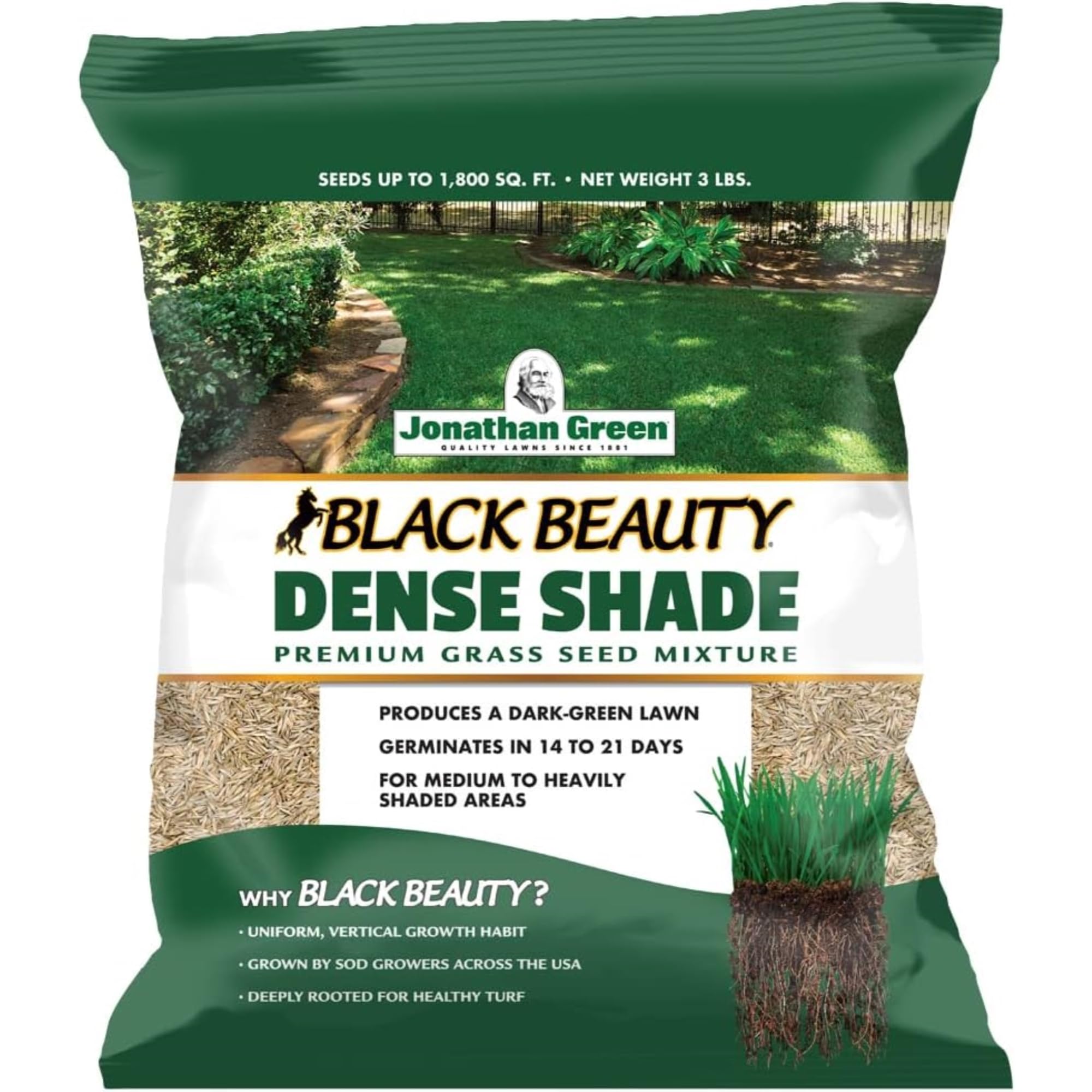
Portland’s mature tree canopy creates deep shade pockets where standard sun mixes fail. This Jonathan Green formula is built specifically for those conditions, using fine fescue varieties that germinate in low light and acidic soil. The 3-pound bag covers up to 1,800 square feet, which is efficient for overseeding shaded zones under oaks and maples.
Users report germination within three days in heavy shade, with thin dark green leaves that stand tall where Bermuda and St. Augustine cannot survive. The grass performs best when fall-planted and can withstand morning sun with afternoon shade. It is not intended for full sun exposure and will thin out in open, hot areas.
Some users experienced poor germination and die-off during mid-80s temperatures, and the manufacturer’s customer support received criticism for being unresponsive. The seed also struggles under leaf cover if fall debris is not raked. For its intended niche — dense, cool shade — it delivers where most blends fail.
Why it’s great
- Germinates reliably in deep shade
- Tall, thin blades resist disease in low light
- Efficient 1,800 sq ft coverage per bag
Good to know
- Struggles in temperatures above mid-80s
- Not suitable for full sun areas
- Uneven customer service reported
3. GreenView Pure Grass Seed Turf Type Tall Fescue

GreenView’s turf-type tall fescue blend hits the sweet spot between price and performance. The 7-pound bag covers 875 square feet for new lawns or 1,750 for overseeding, giving you more volume per dollar than most specialty blends. It is certified 99.9% weed-free, which prevents invasive grasses from popping up during establishment.
Germination starts in 10 to 14 days under consistent moisture, and the turf develops a dark green color with medium-coarse texture. The blend establishes roots that resist heat, drought, insects, and brown patch disease. It adapts to all common soil types, making it forgiving for Portland’s variable clay and loam patches.
Some users noted slower growth than advertised, and the color is not as deep as premium Kentucky bluegrass mixes. For small to medium lawns that need a weed-free, fast-establishing tall fescue, this is the most cost-effective option on the list. The money-back guarantee adds an extra layer of confidence.
Why it’s great
- 99.9% weed-free certification
- Germinates in 10-14 days
- Adapts to all common soil types
Good to know
- Color is medium-dark, not premium dark
- Slower growth reported in some conditions
- May need multiple bags for larger lawns
4. Outsidepride Legacy Fine Fescue Grass Seed Mix
This mix combines 20% hard fescue, 40% chewings fescue, and 40% creeping red fescue, producing an ultra-fine, dark green turf with a soft, luxurious feel. The OptiGrowth coating delivers essential nutrients including zinc, phosphorus, nitrogen, and kelp, which support seed-to-soil contact and faster establishment in both sun and dense shade.
The 5-pound bag is ideal for smaller residential projects or patch repairs under tree canopies. Users report germination within 1.5 weeks when topsoil and compost are used, with thin blades that topple like elite turfgrass. It handles moderate watering and holds up well in shade, making it a strong candidate for Portland’s moss-prone areas.
Some users experienced poor germination rates around 10 percent, and the company’s refund policy was criticized for not covering germination failures. The seed requires consistent daily watering, which increases maintenance. For homeowners who want a fine-bladed, shade-tolerant lawn and are willing to invest time in watering, this is a top-tier choice.
Why it’s great
- Fine, dark green blades with soft texture
- OptiGrowth coating for nutrients and faster germination
- Excellent shade tolerance for tree-covered yards
Good to know
- Needs daily to twice-daily watering
- Variable germination results reported
- Refund policy may not cover poor germination
5. Scotts Turf Builder Grass Seed All-Purpose Mix

Scotts’ all-purpose mix is designed for large properties, covering up to 8,000 square feet per 20-pound bag. The seed is coated to absorb twice as much water as uncoated seeds, which speeds germination in cooler spring and fall soils common to the Pacific Northwest. It is 99.9% weed-free and blends well with existing tall fescue or perennial ryegrass lawns.
Users report germination within two weeks on bare dirt, with thick, deep green growth that holds up under moderate heat. The mix works in both sun and shade, making it a one-bag solution for properties with varied light exposure. The no-quibble guarantee from Scotts provides a safety net if results fall short.
Some users encountered crabgrass intrusion and found that the coated seed can mask lower seed density compared to pure, uncoated alternatives. The 20-pound bag is heavy and may be overkill for small lots. For homeowners with a half-acre or more who want a trusted brand with large coverage, this is a practical choice.
Why it’s great
- Coated seed absorbs 2x more water for faster germination
- Covers up to 8,000 sq ft per bag
- No-quibble guarantee from a major brand
Good to know
- Coating can mask lower pure seed content
- Some reports of crabgrass after germination
- 20 lb bag is heavy for small spaces
FAQ
Should I plant grass seed in spring or fall in Portland Oregon?
Will tall fescue survive in Portland shade?
How often should I water new grass seed in Portland’s climate?
What does coated grass seed mean for germination?
Final Thoughts: The Verdict
For most users, the best grass seed for portland oregon winner is the Jonathan Green Black Beauty Heat & Drought because its deep root system and waxy leaf coating handle the region’s summer dry spell better than any other blend. If you want specialized shade coverage for a tree-covered yard, grab the Jonathan Green Dense Shade. And for covering a large lot on a budget, nothing beats the GreenView Turf Type Tall Fescue.