
There are few more deflating sounds in golf than the plunk of a ball hitting a water hazard. Beyond the immediate loss of a good shot is the slow drain on your wallet as those lost balls add up over a season. A proper retriever turns that frustration into a recovery mission, letting you fish Titleists and Pro V1s from ponds, mud, and thickets without slowing your pace of play.
I’m Mohammad Maruf — the founder and writer behind Drink4Good. I spend hours poring over user reviews, construction tolerances, and material data to separate tools that genuinely perform from those that buckle under their first real test.
Whether you are scouting the rough for salvageable balls or fishing a shallow creek, the right tool needs a secure grip, a stiff shaft, and corrosion-proof hardware. This guide breaks down the five best models to help you select a golf ball retriever that will pay for itself in recovered balls before the turn.
How To Choose The Best Golf Ball Retriever
A retriever is a simple tool on the surface — a pole with a grabbing head — but the wrong choice leads to dropped balls, bent segments, and rust after a single season. Focus on these three areas and you will land on a model that stays reliable round after round.
Shaft Material: Stainless Steel vs. Aluminum
Stainless steel resists corrosion outright, making it the clear winner if you fish balls from ponds or creeks. Aluminum is lighter and usually cheaper, but it can corrode over time if you do not rinse it after wet use. If you plan to retrieve from water regularly, spend the extra few dollars for stainless.
Head Design: Cup vs. Claw
Cup-style heads, especially hinged cups, trap the ball securely and work well in mud or sand. Claw or bionic designs mimic a gripping motion and often let you release the ball by tapping it on the ground — no need to retract the shaft. The best choice depends on whether you value raw security (cup) or quick release (claw).
Telescoping Length and Locking Mechanism
A 12-foot reach is enough for most hazards, but 15- or 18-foot models give you an edge on wide ponds or steep banks. More important than reach is the locking mechanism — twist-locks that hold stiffly prevent the pole from collapsing under the weight of a wet ball. Read reviews for mentions of segment slippage before buying any long model.
Quick Comparison
On smaller screens, swipe sideways to see the full table.
| Model | Category | Best For | Key Spec | Amazon |
|---|---|---|---|---|
| Aquadalus Club Golf Retriever | Premium | All-around reliability | 15 ft stainless steel shaft | Amazon |
| ProActive Sports Hinged Cup Retriever | Premium | Secure cup-style trapping | 12 ft aluminum pole | Amazon |
| Gihunk Telescopic Retriever | Mid-Range | Value with 12-ft aluminum reach | 12 ft aluminum alloy shaft | Amazon |
| Josongslax Patented Bionic Retriever | Mid-Range | Bionic claw quick-release action | 14.7 ft stainless steel shaft | Amazon |
| SPEENSUN Aluminum Retriever | Mid-Range | Lightweight carry | 12 ft aluminum alloy shaft | Amazon |
In‑Depth Reviews
1. Aquadalus Club Golf Retriever

The Aquadalus retriever combines a full stainless steel shaft with an automatic locking scoop, giving you a rust-free tool that holds balls securely even when fully extended. The 15-foot reach — about 174 inches — covers nearly any pond or hazard you will encounter on a typical course, and the dual-stitched headcover disguises it as a regular club so it rides quietly in your bag. Users report that the stainless segments stay stiff under load, with minimal wobble at full extension.
The scoop uses a spring-loaded mechanism that traps the ball on contact, so you do not have to angle the head perfectly. The included zipper bag protects the head from dirt and keeps it from snagging on other club covers.
At just over 1.5 pounds, it is heavier than aluminum retrievers, but the extra heft comes from the stainless construction that will not pit or rust after months of pond water exposure. If you plan to fish balls from water with any regularity, this is the build quality that pays off in longevity.
Why it’s great
- Full stainless steel shaft resists corrosion after repeated water use
- Automatic locking scoop holds balls securely even in mud
- Dual-zip headcover protects the head and keeps the bag tidy
- 2-year replacement warranty from the manufacturer
Good to know
- Heavier than aluminum models at 1.54 pounds
- Last segment can feel slightly unstable at full 15-foot extension
2. ProActive Sports Hinged Cup Retriever

The ProActive Sports Hinged Cup Retriever is the simplest design on this list — an aluminum telescoping pole with a cup-shaped head that traps the ball when you lift. There are no springs, no claws, no moving parts to break, which is exactly why it has stayed popular for years. The cup hinges open when you push down over a ball and locks shut when you lift, so the ball stays contained even if you swing the pole around.
The 12-foot aluminum pole weighs under a pound, making it the lightest option here by a comfortable margin. That is a real advantage if you carry your bag over 18 holes, since the retriever adds negligible weight. Users consistently mention that it extends and retracts smoothly, with twist-locks that hold the segments in place without slipping. Rubber grip at the handle prevents your hands from sliding when conditions are wet.
One drawback is that the cup can trap mud or sand if you retrieve from mucky bottoms, requiring a quick rinse before you stow it. A few users also noted that the aluminum shaft could eventually show corrosion if left wet in the bag, but wiping it down after a round solves that. For a no-fuss, durable, lightweight tool, this is a contender for the best value on the market.
Why it’s great
- Simple hinged cup design with no springs or parts to fail
- Extremely lightweight aluminum pole — under one pound
- Twist-lock segments hold firm during retrieval
- Ergonomic rubber grip stays secure in wet conditions
Good to know
- Aluminum may show corrosion if stored wet without drying
- Mud and sand can collect inside the cup and need rinsing
3. Gihunk Telescopic 12-Foot Retriever
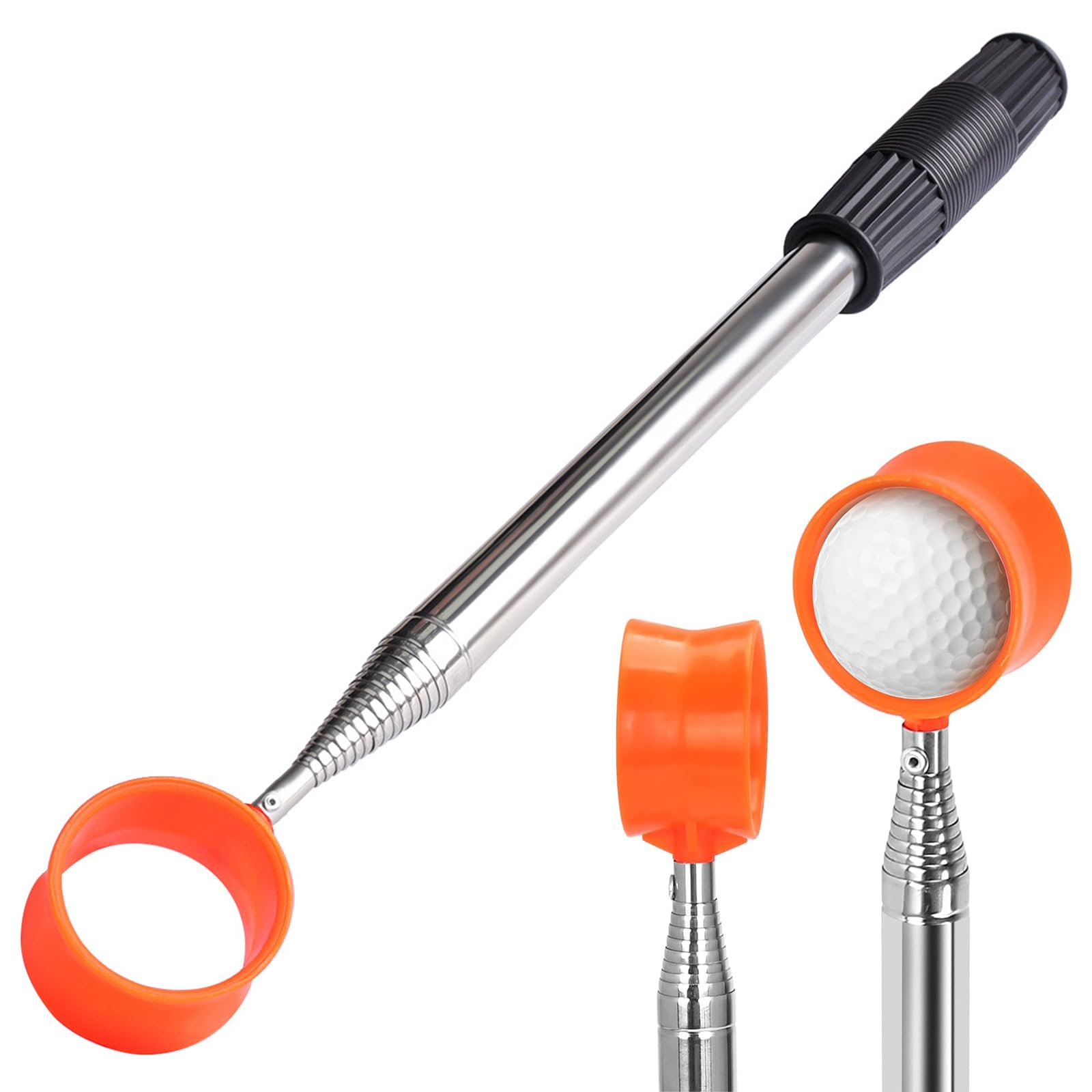
The Gihunk retriever uses an aluminum alloy shaft and a double-sided pickup head, letting you grab balls from either side without rotating the pole. That is a useful detail when you are reaching over a bulkhead or into a bramble patch at an awkward angle. The head is made of high-strength plastic with an internal shape matched to the golf ball diameter, so it holds even wet balls snugly without dropping them mid-retrieval.
At 12 feet, the reach covers standard hazards, and the telescoping segments collapse down to just 16.9 inches — compact enough to slide into any standard golf bag side pocket. The rubber grip is textured and slightly larger than some competitors, which helps if you have larger hands or find yourself retrieving during damp weather. Multiple users over age 60 reported that the tool let them avoid bending or stretching into dangerous spots.
The aluminum shaft does have a notable flex at the far end when fully extended, as a few reviewers pointed out. It is unlikely to break, but you will feel the wobble when lifting a water-laden ball from a pond at full reach. That flex is the trade-off for the budget-friendly price point and the extremely light carry weight of 0.38 kilograms.
Why it’s great
- Two-sided head design works from any angle without rotating
- Collapses to 16.9 inches for easy bag storage
- Lightweight at 0.38 kg — barely noticeable in the bag
- Secure ball grip even on wet or muddy balls
Good to know
- Aluminum shaft flexes noticeably at full 12-foot extension
- The head is plastic and could crack if struck against a hard object
4. Josongslax Patented Bionic Retriever
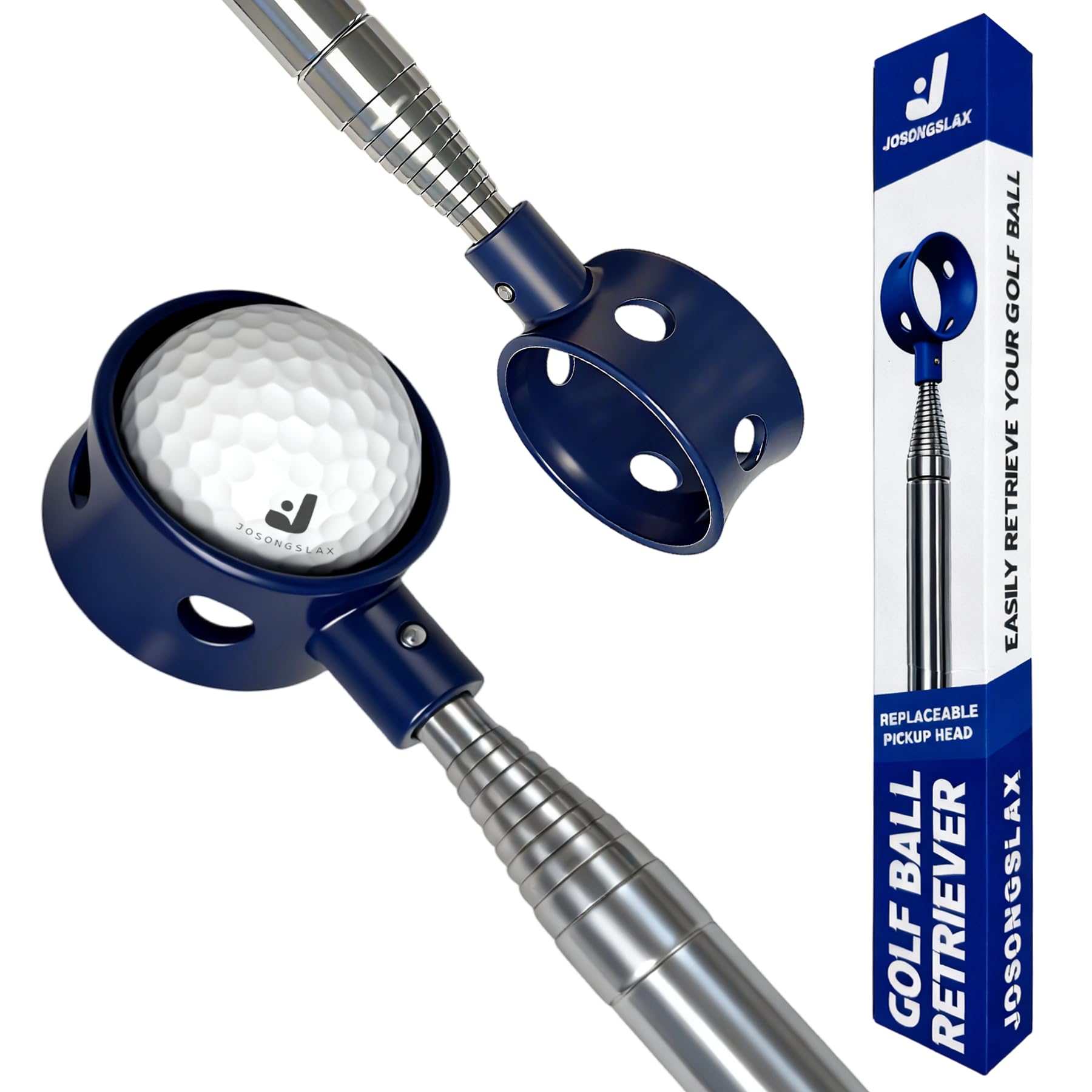
The Josongslax retriever brings a bionic claw design that mimics a four-finger grip, grabbing the ball from the sides rather than cupping it from underneath. The action is simple: push the head over the ball, apply slight downward pressure, then rotate 180 degrees to lock the ball in the claws. To release, just tap the head on the ground — no need to retract the shaft. That makes it noticeably faster than cup-style retrievers when you are trying to clear a hazard quickly.
The shaft is stainless steel, giving it rust resistance that rivals the Aquadalus, and it reaches 14.7 feet — longer than the average retriever and enough to reach over wide marshy edges or steep drop-offs. The PC head is replaceable, so if the plastic claws eventually wear down from scraping against rocks, you can swap in a new head rather than buying a whole new tool. Users report that the telescoping segments are stiff and hold their position even when fully extended.
One minor complaint: the blue head can be hard to spot underwater, making it tricky to position correctly over a submerged ball in murky ponds. The blue seems to blend into darker water. The retriever also runs slightly heavier than pure aluminum designs, though the stainless build is the reason for that. If you want a tool designed for speed and replaceable parts, this is a solid mid-range pick.
Why it’s great
- Bionic claw design allows quick ball release with a ground tap
- Replaceable PC head extends the tool’s useful life
- 14.7-foot reach covers deep hazards and wide banks
- Stainless steel shaft resists corrosion from water exposure
Good to know
- Blue head is hard to see underwater in murky ponds
- Heavier than aluminum retrievers of similar length
5. SPEENSUN Aluminum Alloy Retriever
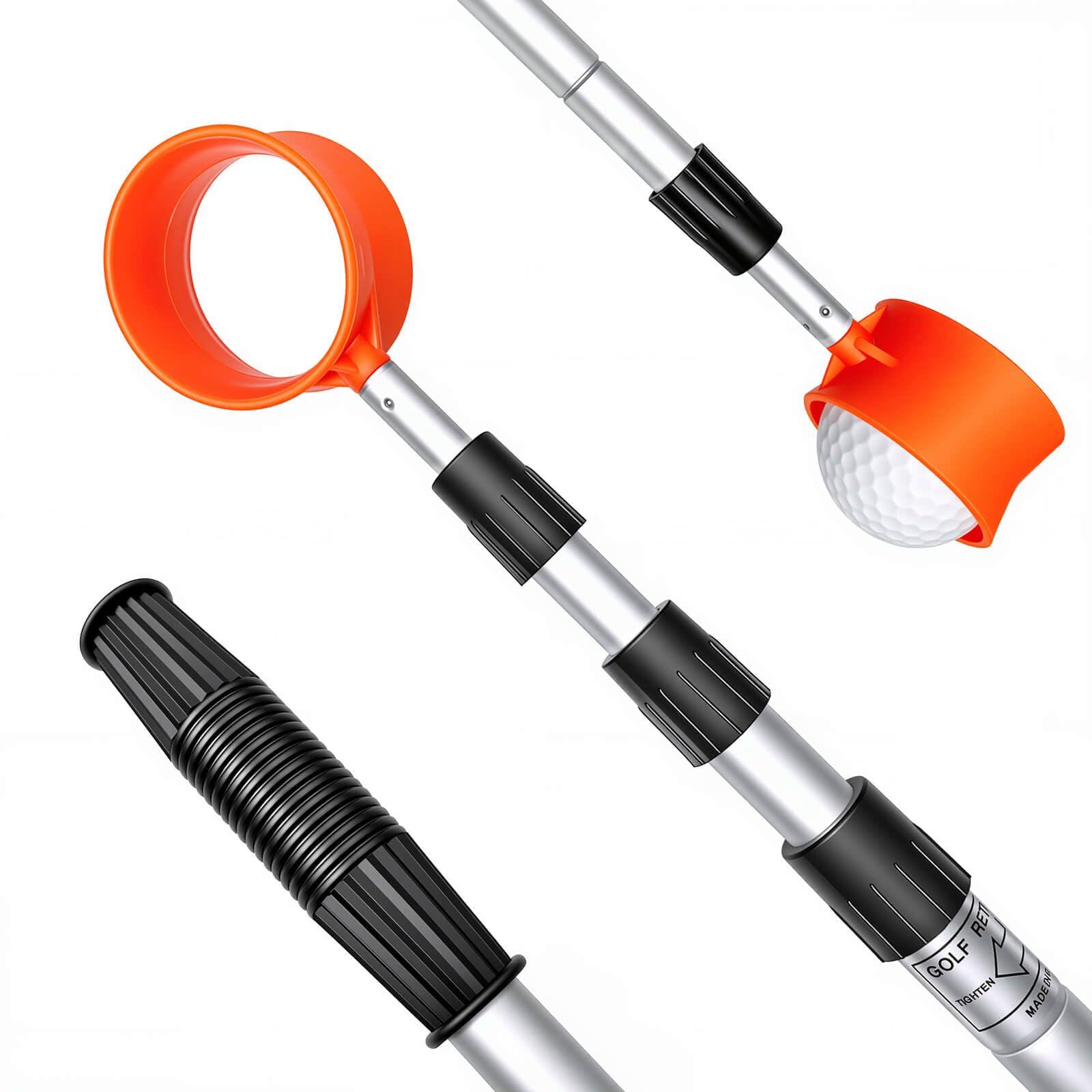
The SPEENSUN retriever uses an aluminum alloy shaft with a hard PC plastic arc-shaped cup, giving you a tool that weighs just 0.88 pounds. That is notably light for a 12-foot retriever, making it an excellent choice if you walk the course with a carry bag and every ounce matters. The arc cup locks the ball with a gentle press — you do not need to apply much force to seat the ball securely inside the head.
Users consistently mention that the telescoping mechanism is smooth and that the twist-lock segments hold well. However, a handful of reports note that after several months of use, the bottom segments can become difficult to extend or retract — possibly due to grit entering the locking collars. One reviewer also warned that in very cold conditions, the orange cup plastic becomes brittle and can snap if you tap it hard against the ground.
For the price, the core function — grabbing balls from water, bushes, and sand — works reliably, and the compact collapsed length of 42.7 inches stores easily in a golf bag. The key is to keep the locking collars clean and to avoid hammering the cup head against rocks in freezing weather. If you want a very light tool for casual use in moderate conditions, the SPEENSUN is a capable budget-friendly companion.
Why it’s great
- Extremely lightweight at 0.88 pounds — ideal for carry bags
- Smooth telescoping action with secure twist-lock segments
- Arc cup head locks balls with a gentle press
- Compact collapsed length fits easily into club storage
Good to know
- Locking collars can jam if grit builds up over time
- Plastic cup head may crack in freezing temperatures if struck hard
FAQ
How long should a golf ball retriever be for most course hazards?
Will an aluminum retriever rust if I use it in water?
Final Thoughts: The Verdict
For most users, the golf ball retriever winner is the Aquadalus Club Golf Retriever because the stainless steel shaft and automatic locking scoop provide the best durability and ball security for regular water retrieval. If you want a lightweight model that disappears into your bag, grab the ProActive Sports Hinged Cup Retriever. And for the fastest retrieval action without retracting the shaft, nothing beats the Josongslax Patented Bionic Retriever.