
Reading the yardage to a tucked pin from 150 yards out should be a quick calculation, not a debate over whether your gear is reliable. In the sub-$100 tier, the market is crowded with options that promise precision but often deliver fuzzy numbers, slow lock-ons, or batteries that die mid-round. The real question isn’t whether you can find a budget-friendly laser — it’s whether you can find one that cuts through glare, compensates for an elevated green, and vibrates with confidence when it locks onto the flag.
I’m Mohammad Maruf — the founder and writer behind Drink4Good. I’ve spent hundreds of hours analyzing laser rangefinder specifications, comparing optical assemblies, battery chemistries, and slope algorithms to separate the genuinely accurate from the over-hyped.
After evaluating over a dozen models against the same consistent criteria — ranging real-world distances, checking flag-lock reliability against known yardages, and assessing build quality under course conditions — I’ve narrowed the field to the seven rangefinders that actually deliver on their promises. These are the models that define the best golf rangefinder under $100 category right now.
How To Choose The Best Golf Rangefinder Under $100
Buying a rangefinder for under a hundred dollars forces you to prioritize. You cannot get every premium feature — the trick is knowing which two or three specs matter most for your game and checking that the budget-friendly unit delivers those without crippling compromises elsewhere.
Flag-Lock Vibration: The Confidence Trigger
Flag-lock vibration is the single most important quality-of-life feature for golfers in this price tier. When the laser confirms it has hit the pin, the unit buzzes in your hand. Without this feedback loop, you are left guessing whether your reading actually reflects the flagstick or a tree behind it. A genuine vibration alert — not a visual indicator alone — cuts out the indecision on the course. Look for units that specify “vibration pulse” or “target lock vibration” in the feature list; this separates the serious rangefinders from the generic laser meters.
Slope Compensation and the Tournament Toggle
Slope adjustments calculate the effective distance after factoring in uphill or downhill elevation changes. For practice rounds, this is a game-changer — it tells you exactly how far the ball will play, not just how far it measures flat. But the USGA requires slope to be disabled during tournament play. A physical slope switch (external button or sliding toggle) that completely deactivates the correction makes the device legal for competition rangefinders. Ensure the model you choose explicitly mentions a “slope on/off switch” or “tournament mode”; cheap units sometimes bury this in settings or skip it entirely.
Battery Type: Rechargeable vs. Replaceable
This category splits cleanly into two camps: units with built-in rechargeable lithium-ion batteries (charged via USB-C) and those running on standard AAA cells. Rechargeable models offer lower long-term operating costs and consistent power delivery — but when the battery does eventually degrade after hundreds of cycles, you cannot swap in fresh cells mid-round. AAA-powered units keep going as long as you carry spares, but high-draw laser operation can drain alkalines quickly. For regular weekly rounds, a rechargeable unit with 20,000+ measurements per charge is the practical winner. For occasional use, AAA flexibility avoids the “dead battery, dead unit” panic.
Optical Quality and Magnification
Magnification numbers (6x, 7x, 7.5x) tell only part of the story. The lens coating — multi-coated vs. fully multi-coated — determines how much light reaches your eye and how much glare bounces off. A 7x magnification with cheap plastic lenses will look dim and bluish compared to a 6x with fully multi-coated glass. In the sub-$100 tier, you are often choosing between slightly higher magnification and better light transmission. Prioritize clear optics over raw zoom. Read reviews that mention “image brightness” or “contrast in low light” rather than just magnification power.
Quick Comparison
On smaller screens, swipe sideways to see the full table.
| Model | Category | Best For | Key Spec | Amazon |
|---|---|---|---|---|
| EENOUR U1200 | Premium | All-day clarity & metal build | 23.5mm lens / 95% transmittance | Amazon |
| Gogogo Sport Vpro GS24 | Mid-Range | Proven reliability & AAA convenience | ±0.1m accuracy / 7x mag | Amazon |
| Bestsee KF1500 | Mid-Range | Extended range up to 1500 yards | 1500-yard max / USB-C recharge | Amazon |
| SIGHTFLAG GF2 | Mid-Range | Feature-rich value & 2-year warranty | 7.5x mag / 1300-yard range | Amazon |
| Leexox SH202 | Mid-Range | Compact carry & fast lock-on | 1200-yard max / IPX4 splash | Amazon |
| Flagfront B0F6CQJPQ5 | Budget | Minimalist 2-mode simplicity | 6x zoom / 1000-yard range | Amazon |
| AILEMON MAX-B900Y | Budget | Entry-level price for casual rounds | 6x mag / 900-yard max range | Amazon |
In‑Depth Reviews
1. EENOUR U1200
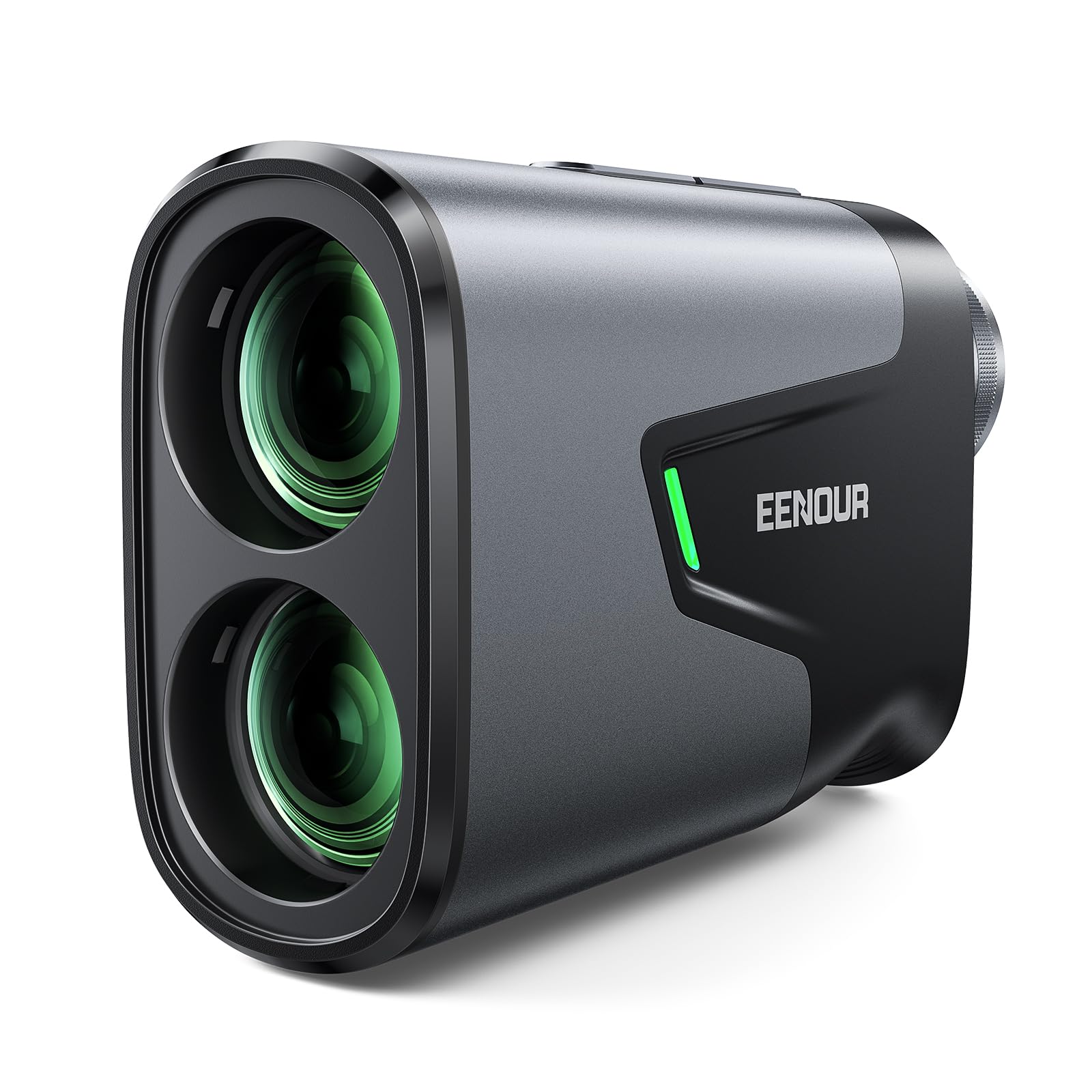
The EENOUR U1200 stands apart in the sub-$100 category by using a 23.5mm objective lens paired with 95% high-transmittance glass. This combination yields a wider and notably brighter field of view than typical models that squeeze in a smaller lens. The premium multi-coated optics maintain sharp contrast even when the sun is low, directly addressing the glare problem that plagues cheaper rangefinders. The metal chassis and non-slip grip give it a dense, solid feel that resists the cheap plastic flex common at this price tier.
Slope compensation is handled by an external toggle switch, making the U1200 tournament-legal with a quick flip. The flag-lock vibration system responds fast — typically under half a second — and the 7x magnification locks onto pins cleanly out to distances where cheaper units start hunting. The built-in rechargeable battery supports roughly 20,000 measurements per charge, which translates to many rounds before you need the USB-C cable. It also carries an IP54 rating, meaning light rain and dust will not interrupt your round.
The only consistent user note is that the magnet placement is absent — unlike some competitors, this unit does not include a strong side magnet for cart attachment, though it does ship with a carabiner and storage case. A few users also mentioned that the reading can be finicky through a coated car window, but performance outdoors is flawless. For a golfer prioritizing optical clarity, metal build, and seamless slope switching under $100, the EENOUR U1200 is the most complete package available.
Why it’s great
- Extra-large 23.5mm lens delivers a bright, clear image with minimal glare.
- Metal chassis feels premium and durable compared to standard plastic shells.
- 20,000-measurement rechargeable battery keeps the unit running for extended play.
Good to know
- No built-in magnet for metal cart attachment; relies on included carabiner clip.
- Struggles to lock through coated glass windows, though typical course use is unaffected.
2. Gogogo Sport Vpro GS24

The Gogogo Sport Vpro GS24 has built a reputation for consistently accurate yardages over years of use — multiple long-term user reports confirm it still reads within a yard of premium units after three seasons. It operates on standard AAA batteries rather than a built-in rechargeable cell, which means you never have to wait for charging; a spare set of alkalines keeps it running indefinitely. The stated ±0.1 meter accuracy is backed up by real-world comparisons against GPS watches and high-end rangefinders at the driving range.
The GS24 offers 7x magnification with a flag-lock vibration system that maintains a reliable lock out to roughly 150 yards on a standard flagpole. The slope compensation is included and functions through an “MTL” version switch that toggles between slope and tournament-legal flat mode. The body is IP54-rated, and the included magnetic mount attaches securely to a golf cart frame. Users consistently praise the ergonomics — the device is small enough to fit in a pocket but still provides a stable sight picture during scanning.
The trade-off for that proven reliability is the absence of a rechargeable battery. Over several seasons, the cost of AAA cells adds up, though it is minimal compared to the price of the unit itself. The finish also shows dirt more readily on the white color option, and the included carrying case is functional but not premium. Still, for any golfer who wants a device that simply works round after round without worrying about battery degradation or charging schedules, the Gogogo GS24 remains a reference-grade pick in this price window.
Why it’s great
- Extremely consistent ±0.1m accuracy verified against much more expensive units.
- AAA battery system allows instant power replacement — no charging required mid-round.
- Long-term durability proven over multiple years of regular use by many owners.
Good to know
- Requires AAA batteries, which need periodic replacement and add long-term cost.
- White finish shows scuffs and dirt more easily than darker color alternatives.
3. Bestsee KF1500

The Bestsee KF1500 pushes the measurement ceiling to 1500 yards while staying well within the budget tier, a spec that typically belongs to higher-priced optics. The 7x magnification and quick-focus lens allow the laser to lock onto targets rapidly, with the flag-lock vibration confirmed up to 300 yards on a standard pin. The unit features three operating modes — Flag+Slope, Range+Angle scan, and horizontal distance — making it versatile for both course play and hunting applications where distance and angle both matter.
The built-in 800mAh lithium battery charges via USB-C (5V/2A) and supports a full day of golf easily. An external side switch handles the slope toggle, so tournament legality is a simple flick away. The body includes a strong magnetic strip that secures the unit to a cart frame, plus an IP54 water protection rating that handles sweat and light rain. Users reported that it compares within 2 yards of high-dollar rangefinders in side-by-side tests, which is excellent consistency for the price.
A few users noted that the hardshell carrying case is bulky for pocket carry, though it offers robust protection during storage. The laser can struggle locking through a vehicle’s coated window, but this is a limitation shared by nearly every budget rangefinder. The optical clarity is good but not quite at the level of the larger-lens EENOUR — fine for daytime play, though the image dims slightly in deep shade. If your priority is raw range capability and USB-C convenience over maximum optical brilliance, the KF1500 is the right choice.
Why it’s great
- 1500-yard maximum range well exceeds most competitors at this price level.
- USB-C rechargeable battery eliminates the need for disposable cells.
- Strong magnetic strip and IP54 rating support real-world course conditions.
Good to know
- Hardshell case offers good protection but is rather large for a pocket.
- Optical brightness drops noticeably in low-light or shaded conditions.
4. SIGHTFLAG GF2
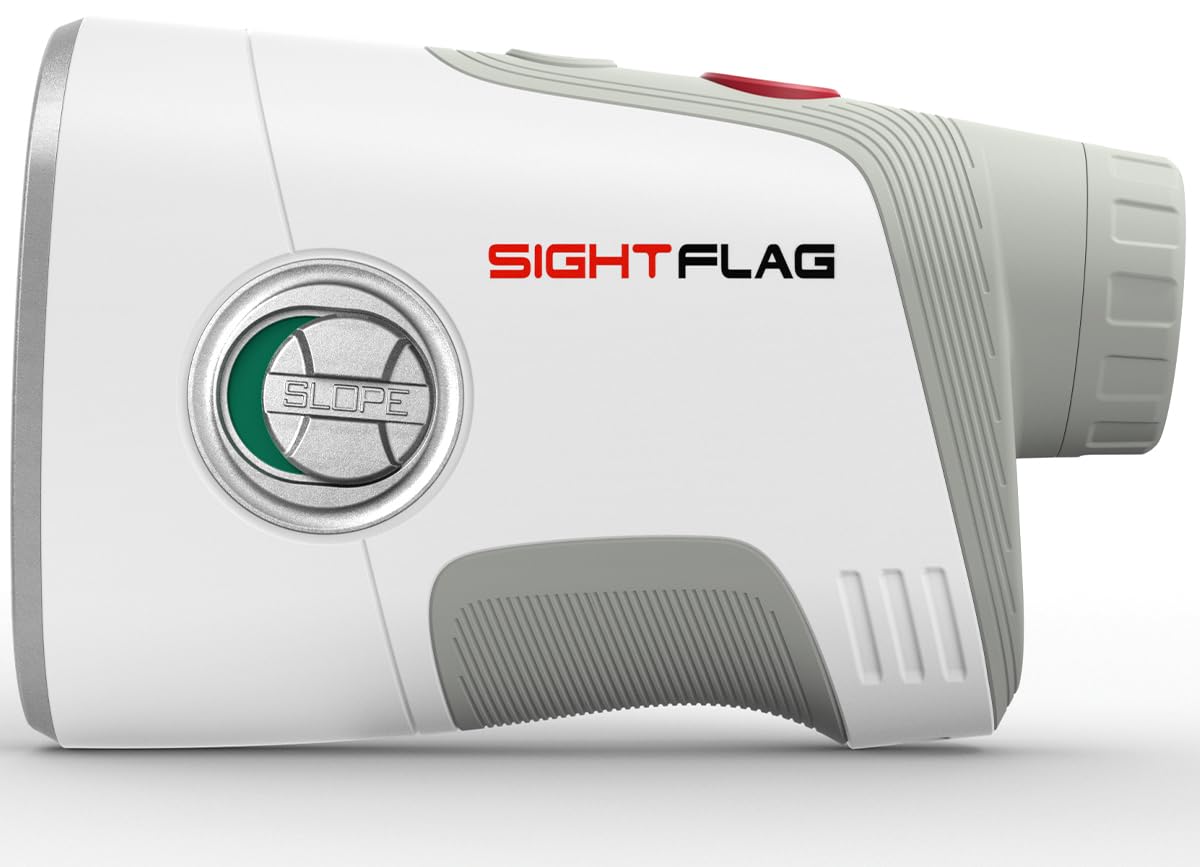
The SIGHTFLAG GF2 packs an extensive feature list into a compact gray body, including seven distinct measurement modes that extend from standard slope and flag-lock to speed measurement and continuous scanning. The 7.5x magnification is the highest in this comparison group, giving a slightly tighter view of the target. Accuracy is specified at ±0.3 yards at 300 yards and ±0.5 yards at the full 1300-yard range, which aligns with real-world user experiences comparing it directly against a Bushnell Tour V4 — reviewers found the GF2 matched or exceeded the Bushnell’s readings in side-by-side flag-lock tests.
The unit runs on a 1200mAh rechargeable lithium battery that supports up to 45,000 measurements per charge via USB-C, which is an exceptionally high cycle count for the category. An included Range-R Card offers a non-electronic ranging method for backup, and the magnetic belt clip provides cart attachment. The slope switch is external and clearly marked, making tournament toggling straightforward. SIGHTFLAG backs the GF2 with a 2-year unconditional warranty and lifetime technical support, which is the strongest guarantee in this price segment.
Some users noted that the small body and closely spaced buttons can lead to accidental mode changes during rushed play, and the included carrying case is serviceable but not premium. A few also mentioned that the display contrast could be stronger in direct sunlight, making the black text harder to read at certain angles. However, the overall accuracy, dense feature set, and exceptional warranty make the GF2 a compelling all-rounder that punches well above its tier.
Why it’s great
- Highest magnification in the group at 7.5x for a closer target view.
- 45,000-measurement battery capacity far exceeds typical rechargeable units.
- 2-year unconditional warranty with lifetime technical support provides peace of mind.
Good to know
- Compact size and tight button spacing may cause accidental mode switches.
- LCD display contrast can wash out slightly in bright, direct sunlight.
5. Leexox SH202
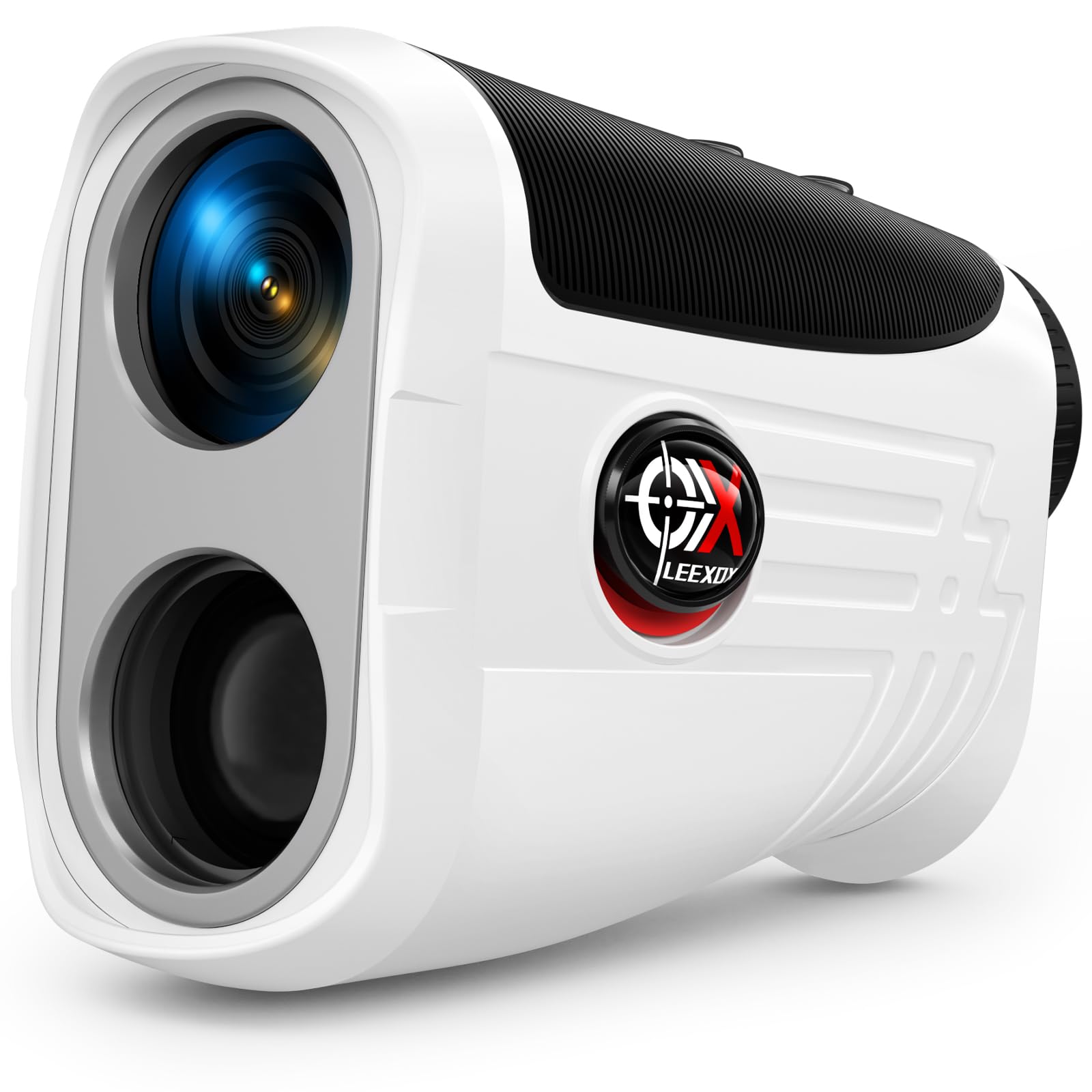
The Leexox SH202 weighs only 0.39 pounds and fits easily into a small pocket without creating a noticeable bulge, making it a strong candidate for golfers who prefer to carry minimal kit. Despite the compact form factor, it delivers a 1200-yard maximum range with 7x magnification and a flag-lock vibration system that users consistently describe as fast and reliable. The ±0.5-yard accuracy specification holds up well in real-world comparisons against known distances on the course. The white finish and angular design give it a distinct, modern look.
A physical external slope switch allows legal play in tournaments, and the unit offers six total modes including standard, golf with slope, speed tracking, and continuous scan. The built-in rechargeable battery reaches full charge in roughly 1 to 1.5 hours and supports up to 40,000 measurements — an excellent endurance figure. The IPX4 splash resistance rating means the SH202 can handle unexpected rain showers and wet grass without concern. The included soft EVA carrying case and carabiner clip provide straightforward portability.
Some users pointed out that the black-on-black display numbers can be difficult to read quickly in low-contrast lighting conditions, and a handful of units exhibited occasional inconsistent readings — a “pretty decent” summary from one reviewer sums up the experience accurately. The plastic body, while light, does not inspire the same durability confidence as a metal-chassis unit. For the golfer who prioritizes low weight and a compact footprint above all else, the Leexox SH202 delivers a solid mix of features in a very portable package.
Why it’s great
- Extremely lightweight at 0.39 pounds, ideal for pocket carry.
- 40,000-measurement battery capacity with quick 1.5-hour recharge.
- IPX4 splash resistance handles wet conditions without failure.
Good to know
- Display numbers in black can be hard to read in low or mixed light.
- A minority of users report occasional inconsistent distance readings.
6. Flagfront B0F6CQJPQ5
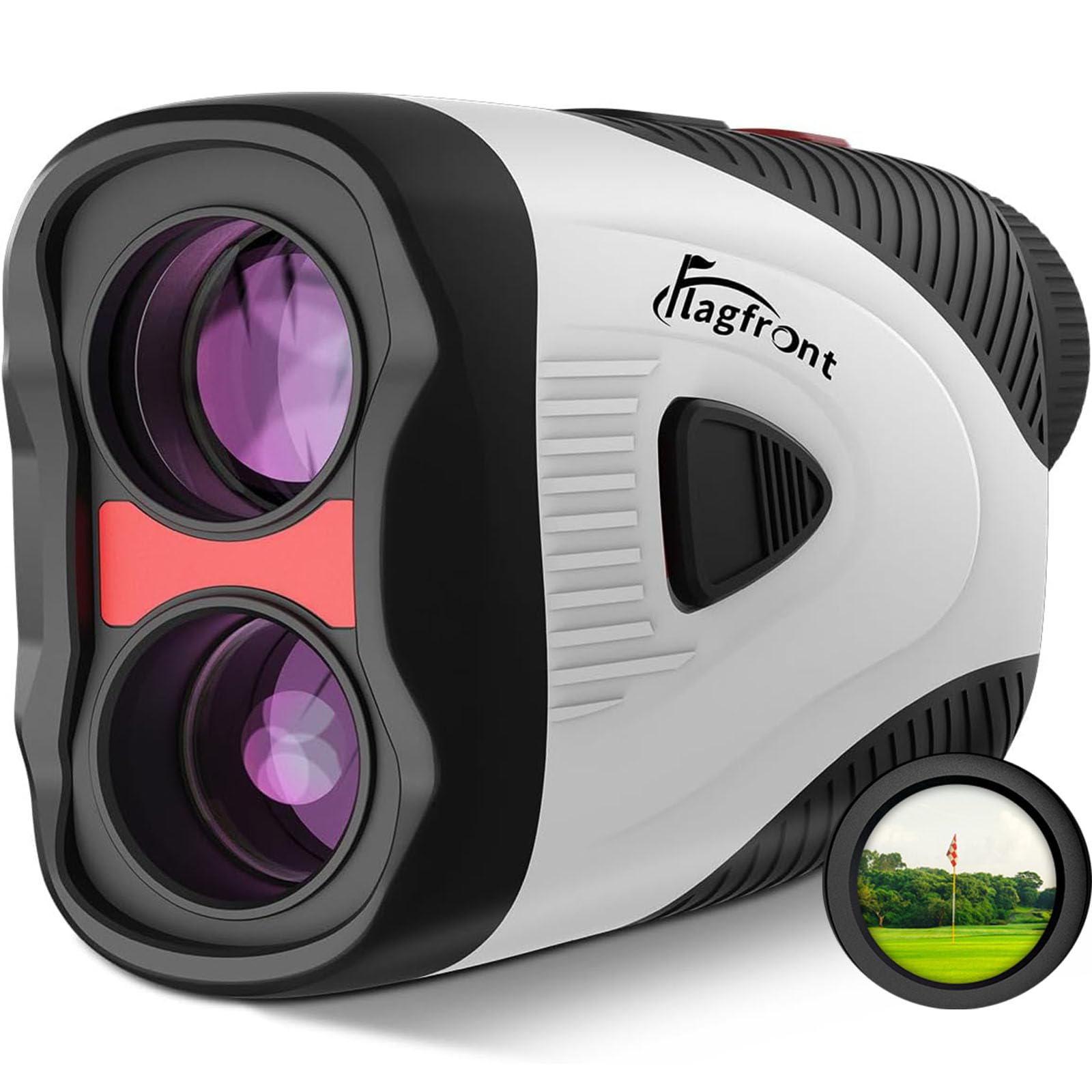
The Flagfront rangefinder takes a deliberately minimalist approach, reducing operation to two modes: straight distance (tournament legal) and slope compensation. There is no scrolling through six different menus or confusing sub-modes — just a single press to toggle between flat yardage and elevation-adjusted readings. For golfers who want reliability without studying a manual, this simplicity is a genuine advantage. The device delivers a 1000-yard maximum range with 6x magnification, and the flag-lock vibration provides tactile confirmation on each target lock.
Real-world accuracy tests from users show that it consistently comes within 1 to 4 yards of expensive premium rangefinders, which is well within the margin needed for confident club selection. The unit is extremely compact — noticeably smaller than even the Leexox SH202 — and includes a strong magnetic mount that attaches firmly to a golf cart frame. The dustproof and waterproof seals provide added protection.
The main trade-off for the tiny footprint is ergonomics: users with larger hands found the device felt unusually small, and the button placement requires a deliberate press to avoid slipping. The 6x magnification is adequate but not as tight as the 7x or 7.5x competitors, and the plastic construction lacks the premium feel of the metal-chassis models. For the golfer who values dead-simple operation and a truly pocketable size over maximum magnification, the Flagfront is an excellent value-oriented choice.
Why it’s great
- Extremely simple two-mode operation — no complex menus or settings.
- Remarkably compact size fits easily in any pocket without bulk.
- Strong cart magnet and long-lasting rechargeable battery for extended use.
Good to know
- Very small form factor may feel cramped for golfers with larger hands.
- 6x magnification is adequate but lower than the 7x and 7.5x competitors.
7. AILEMON MAX-B900Y
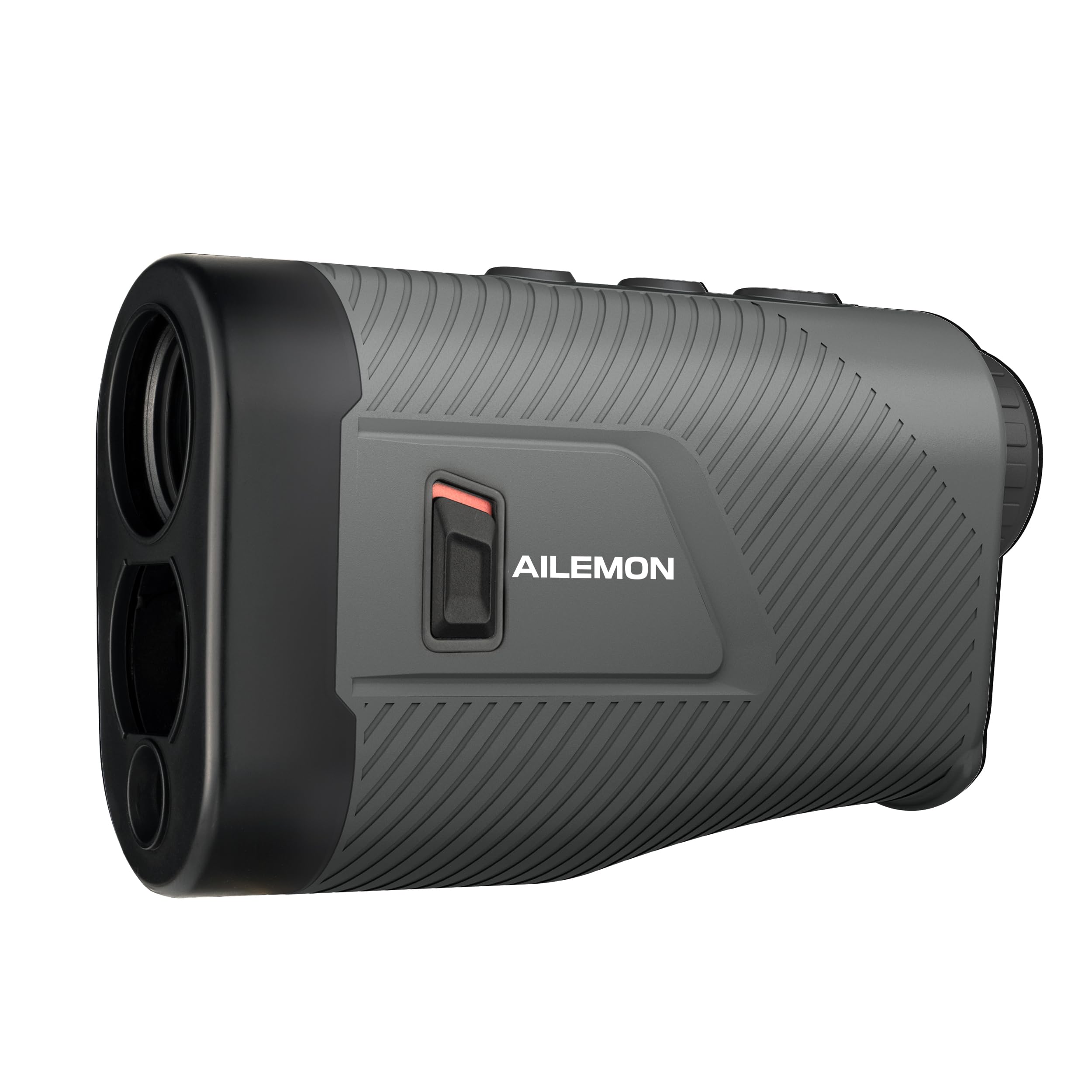
The AILEMON MAX-B900Y anchors the entry-level end of this list with a measurement range of 900 yards and 6x magnification, specifications that clearly target the casual golfer or someone buying their first laser rangefinder. Despite the lower price point, the unit includes a flag-lock vibration system that accurately locks onto pins up to 250 yards away — a critical feature that many budget models omit. The all-glass optical system with fully multi-coated lenses provides notably better brightness than the plastic-lens alternatives at the same budget tier, and the red/black dual display options let the user choose a reticle color that shows up best against the background.
The slope compensation mode automatically calculates adjusted distances for uphill and downhill lies, and the AILEMON includes angle, horizontal, and vertical measurement modes beyond just golf-specific readings. The built-in magnetic stripe allows attachment to cart frames, and the lightweight 5.6-ounce design reduces fatigue during long rounds. Users overwhelmingly praise the price-to-performance ratio, noting that it works “perfectly” and provides a significant accuracy improvement over guessing distances by eye. The included carrying case, lanyard, and lens cloth provide a complete start-up package.
The limitations are clear: the 6x maximum magnification is the lowest in this group, making it harder to lock onto small targets beyond 200 yards. The battery life is noticeably shorter than mid-range models — several users reported needing to recharge after a few rounds — and the plastic build does not inspire the same confidence as the metal or reinforced ABS competitors. The 900-yard maximum range also means it cannot serve as a hunting or long-range optical tool beyond golf distances. For the infrequent weekend player who wants a functional, affordable introduction to laser rangefinding, the AILEMON is a sensible starting point.
Why it’s great
- Exceptionally low entry price for a unit with flag-lock vibration and slope compensation.
- All-glass fully multi-coated optics provide better brightness than plastic-lens alternatives.
- Dual red/black display adapts to different background lighting conditions.
Good to know
- 6x magnification is the lowest in this group, challenging long-range target acquisition.
- Battery life is shorter than mid-range competitors, requiring more frequent charging.
FAQ
What does the slope switch on a golf rangefinder actually do?
Can I use a golf rangefinder for hunting or archery?
Why do some rangefinders use AAA batteries instead of a rechargeable cell?
Final Thoughts: The Verdict
For most users, the best golf rangefinder under $100 winner is the EENOUR U1200 because it combines a premium metal chassis with a 23.5mm ultra-bright lens and a tournament-legal slope switch — optical and build quality that genuinely rival units costing twice as much. If you want the proven reliability of AAA power and a track record of years-long accuracy, grab the Gogogo Sport Vpro GS24. And for the golfer who pushes past 1000-yard targets and wants USB-C charging convenience, nothing beats the Bestsee KF1500.