
Seven year olds are at a sweet spot — ready for real rules and genuine strategy, but still lit up by a playful theme and a bit of luck. The wrong game either feels too babyish or too complex, killing the fun before the first turn ends. A great pick builds their thinking skills while keeping everyone, including adults, fully engaged.
I’m Mohammad Maruf — the founder and writer behind Drink4Good. I’ve spent years analyzing the board game market, comparing rule complexity, component durability, and age-appropriate mechanics to find the games that actually hit the table week after week.
After digging through dozens of options and hundreds of parent reviews, I’ve settled on a tight list of the best games for seven year olds that balance clear rules with real replay value and themes that spark imagination without overwhelming young players.
How To Choose The Best Games For Seven Year Olds
At seven, kids are developing reading fluency and multi-step logic, but they still crave tactile fun and a clear narrative. Choosing a game comes down to matching the rules weight, the playing time, and the social dynamic to your child’s temperament. Here are the three factors that matter most.
Cooperative vs. Competitive
Cooperative games let everyone work toward a shared goal, which can be a relief for kids who melt down over losing. Titles like Space Escape build teamwork and shared decision-making — everyone wins together or loses together. Competitive games, on the other hand, teach resilience and strategic thinking. The key is knowing which mode your child responds to best.
Playing Time and Attention Span
A game that drags past 20 minutes often loses a seven year old’s focus. Look for games with a stated play time of 15–20 minutes. Short rounds mean you can play multiple times in one sitting, and each loss feels like a fresh start rather than a slog. Games with variable setups, like Battle Sheep, add replay value without extending any single session.
Component Quality and Theme
Kids interact with components constantly — flimsy cardboard or tiny pieces that don’t stay in place lead to frustration. Durable tokens, clear card art, and a theme that hooks their imagination (dragons, mole rats in space, or colorful dice in a dumpster) keep them coming back. A game that looks and feels good on the table earns a permanent spot in the rotation.
Quick Comparison
On smaller screens, swipe sideways to see the full table.
| Model | Category | Best For | Key Spec | Amazon |
|---|---|---|---|---|
| Peaceable Kingdom Space Escape | Cooperative | Teamwork & shared decision-making | 51 cards, 20 tokens, 4 movers | Amazon |
| Battle Sheep | Abstract Strategy | Deep strategy in 10-minute rounds | 16 pasture boards, 64 sheep chips | Amazon |
| Spin Master Games Tetris: The Board Game | Strategy | Physical Tetris with blocking mechanics | 128 Tetriminos, 4 grid bases | Amazon |
| Big Discoveries Dumpster Dice | Dice Game | Fast 5-minute dice battles | 80 dice, dumpster game board | Amazon |
| Jumping High Five My First Dragon Adventure | Fantasy Adventure | Imaginative play for younger sevens | Game board, dragon tiles, cards | Amazon |
In‑Depth Reviews
1. Peaceable Kingdom Space Escape

Space Escape stands out because it was designed by the inventor of Pandemic, one of the most celebrated cooperative games ever made. This version is streamlined for younger minds — no reading required, just clear iconography and a shared goal. The central mechanic involves drawing cards that give two actions: one for your team of mole rats and one for the snakes. This forces real negotiation and shared strategy among players.
The component quality is excellent for a mid-range game. The board is thick and the mole rat movers have satisfying heft. Each game takes about 20 minutes and the included challenge cards offer meaningful variety after the first few plays. Many parents report their children preferring this over competitive games because there is no lone loser — everyone wins or loses as a team.
Because the game requires strong communication, it works best with 3–4 players who can talk through decisions together. Solo or two-player rounds lose some of the collaborative magic. Still, for a family looking to teach joint problem-solving without tears, Space Escape is the gold standard in this age bracket.
Why it’s great
- Teaches genuine teamwork and shared decision-making
- No reading required — accessible for early readers
- High replay value with challenge cards
Good to know
- Best with 3–4 players; less engaging with only two
- Theme may feel a bit young for advanced 8-year-olds
2. Battle Sheep
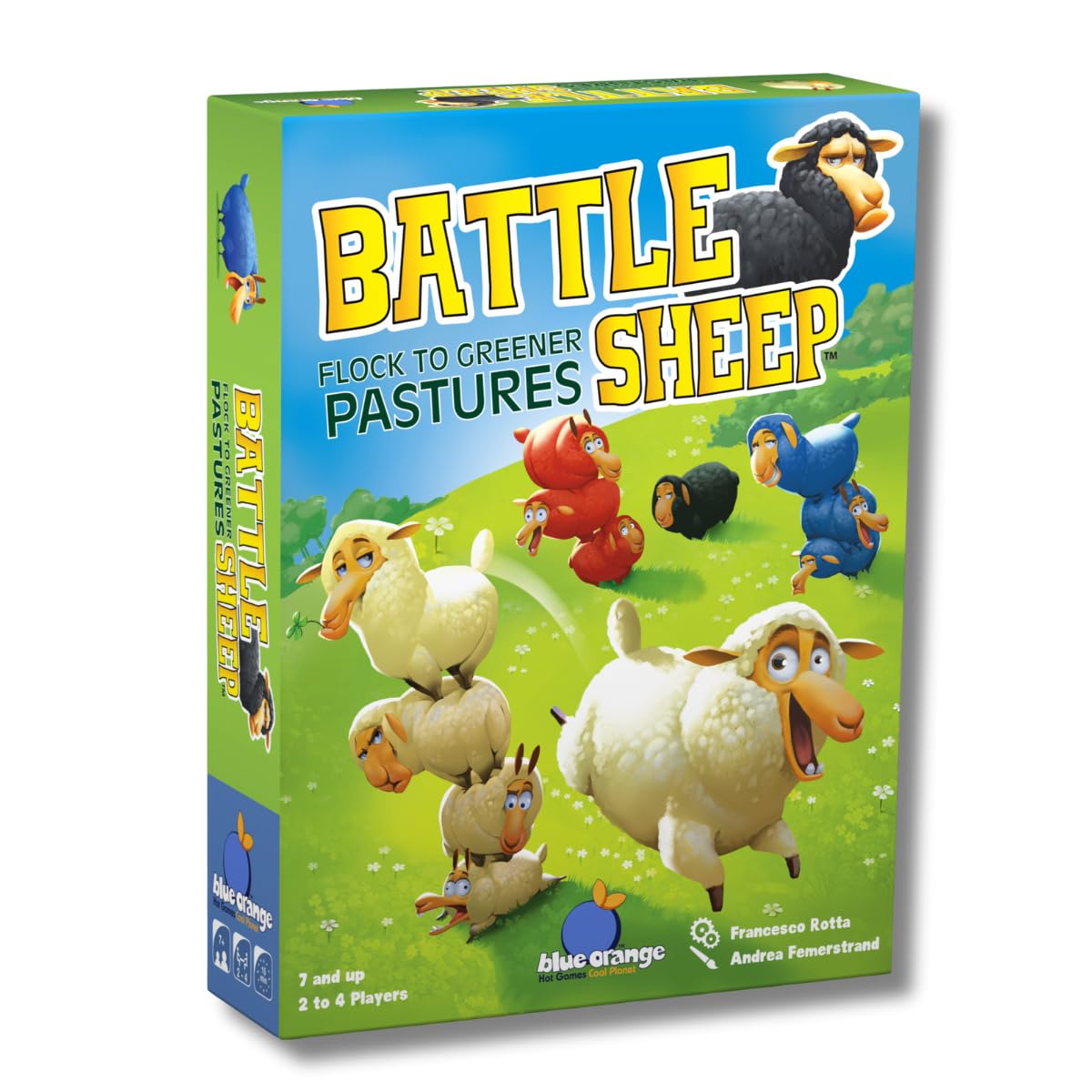
Battle Sheep is an abstract strategy game that hides remarkably deep tactical play beneath a silly farm theme. The rules are absurdly simple: you move a stack of sheep tokens in a straight line as far as they can go, leaving at least one sheep behind at the starting space. As the board fills up, your options shrink, and you must out-think opponents to claim the most spaces. A full game wraps in under 15 minutes.
The modular board — built from 16 identical hex tiles — means no two games are ever the same. This keeps the experience fresh and forces players to adapt rather than memorize routes. The sheep chips themselves are heavy, satisfying urea tokens that stack neatly and feel premium. Younger players can grasp the goal within one round, but adults will find themselves genuinely challenged.
The main consideration is that the game is purely spatial — there is no luck, no card draws, no chance. Some seven year olds who prefer narrative or random fun may find it dry compared to a dice-chucker. But for sharpening logical thinking and teaching cause-and-effect, Battle Sheep is a brilliant tool disguised as a silly pasture game.
Why it’s great
- Deep strategy with a 1-minute rules explanation
- Modular board ensures massive replayability
- High-quality, weighty components
Good to know
- Pure strategy with zero luck — not for kids who want random fun
- Sheep stacks can topple on uneven surfaces
3. Spin Master Games Tetris: The Board Game
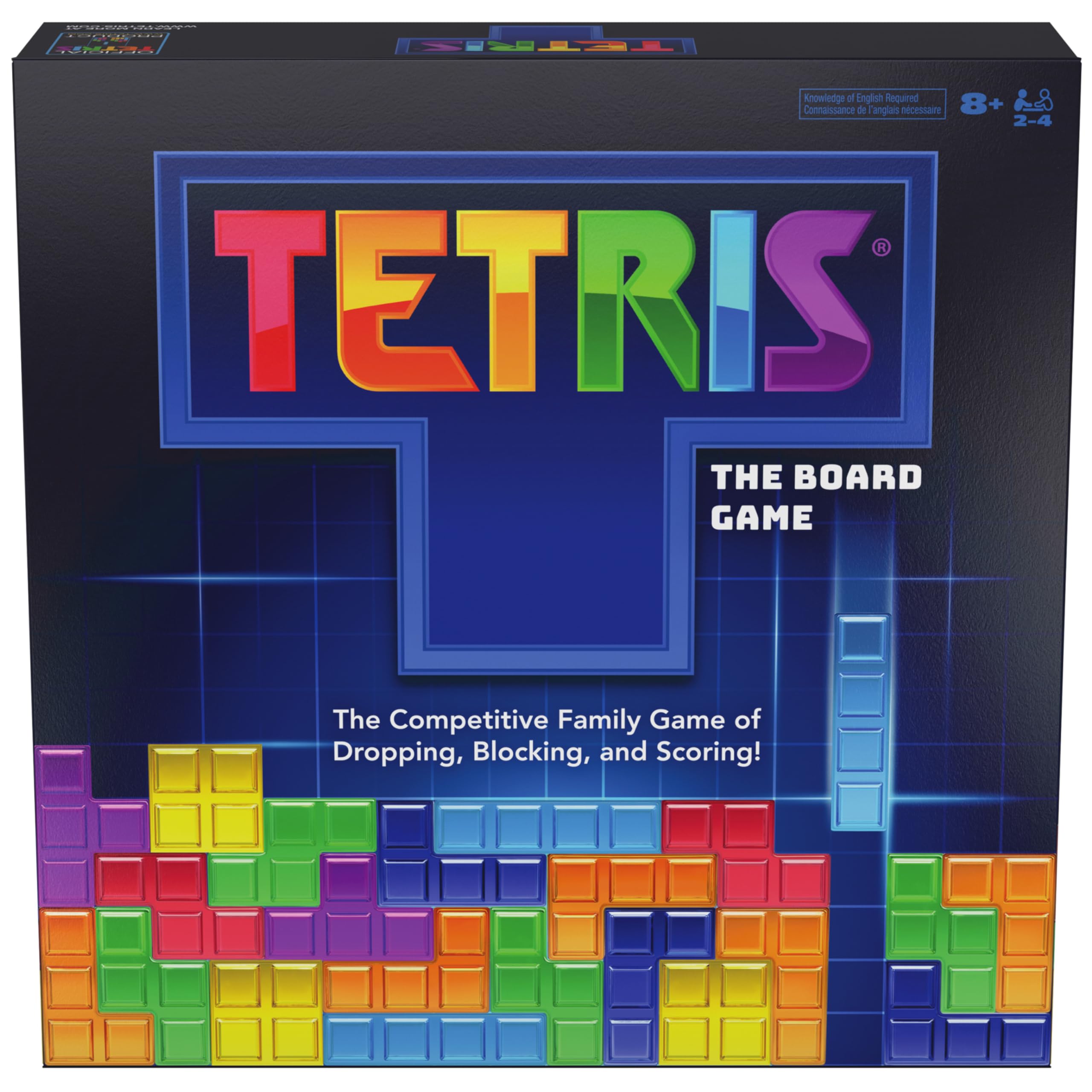
Translating a classic video game into a tabletop experience is a tough trick, but Spin Master pulled it off with this Tetris board game. The core loop is instantly familiar to anyone who has played Tetris — rotate and drop Tetriminos to complete lines. What makes it fresh for the tabletop is the competitive twist: landing a piece on a black garbage icon lets you add a block to an opponent’s grid, actively sabotaging their progress.
The components are colorful and durable. You get four individual grid bases, 128 semi-translucent Tetrimino pieces, and a central gameboard that tracks scoring. The translucent pieces are a nice nod to the video game aesthetic. Setup is fast and the playtime stays around 20 minutes, making it easy to fit into a weeknight. It works with 2–4 players, and the blocking mechanic keeps everyone engaged even when it’s not their turn.
The box says ages 8 and up, and that is a fair floor for the spatial reasoning it demands — most seven year olds will need a couple of practice rounds before the strategy clicks. The physical pieces are small, so parents should watch for choking hazards with younger siblings nearby. As a bridge between digital and analog play, this game is a winner.
Why it’s great
- Brilliant physical adaptation of a beloved digital game
- Blocking mechanic adds competitive tension
- Fast setup and 20-minute playtime
Good to know
- Listed for ages 8+ — may require coaching for younger 7s
- Small pieces need supervision
4. Big Discoveries Dumpster Dice
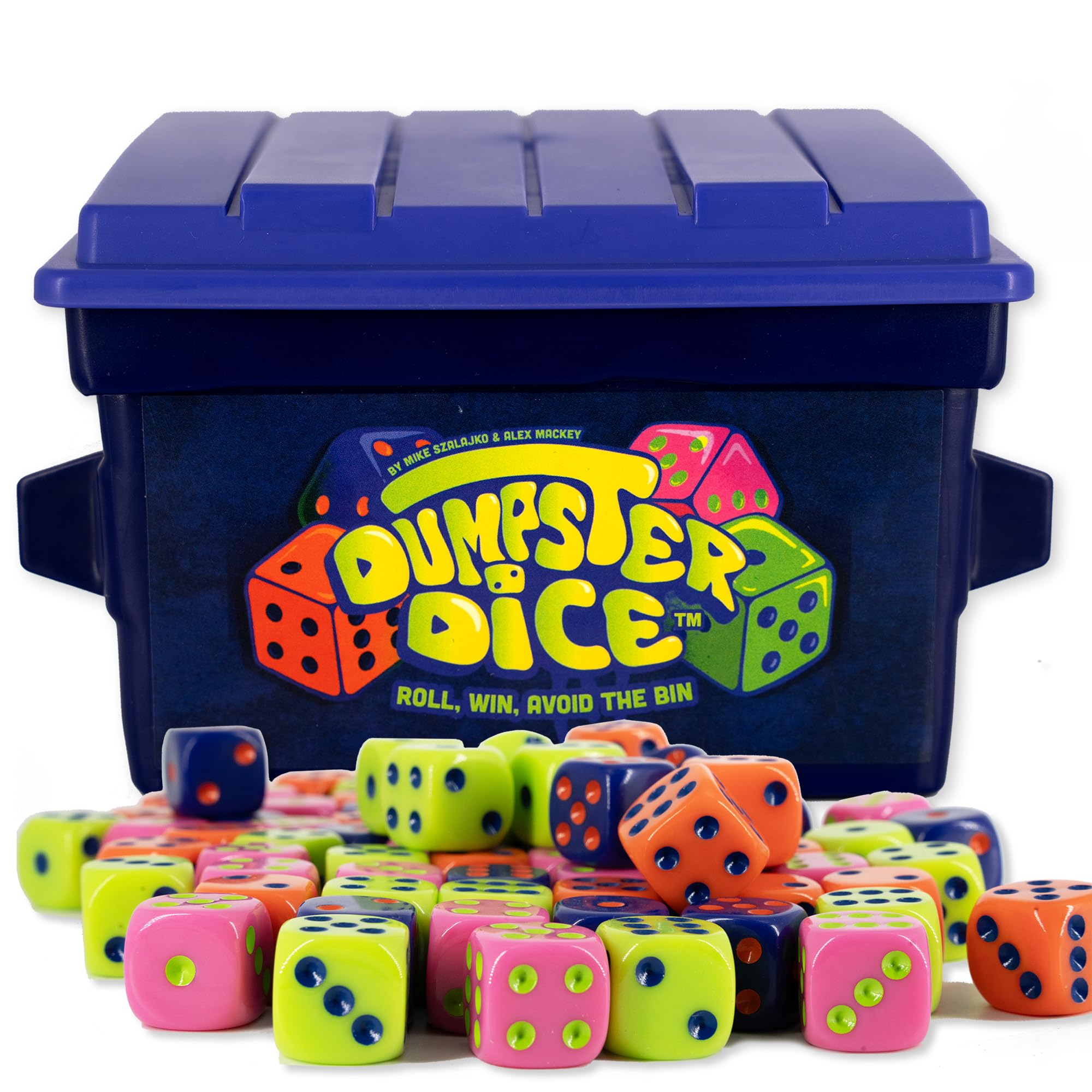
Dumpster Dice is exactly what a dice game should be for this age: loud, fast, and full of silly tension. Players take turns rolling to complete a 1–6 set on their board, but duplicates force you to pass the dice to the next player. The game comes in a clever dumpster-shaped tin that doubles as the dice container, and the lid serves as the gameboard. Rounds clock in at 5–10 minutes, making it ideal for filling small gaps of time.
The 80 dice are colorful and durable — each player gets 20 dice in their own color. The included graffiti sticker sheet lets kids personalize their dumpster, adding a craft element that extends the play beyond the rolling. It also combines with the separate Trash Dice game for up to 6 players, which is a nice option for larger family gatherings. The rulebook includes five gameplay variations, so the core loop stays fresh.
The game is pure chance with no real strategic depth, which is fine for its intended role as a quick filler. Some kids who prefer longer narratives may lose interest after a few rounds. The lightweight plastic dumpster could crack if roughly handled. But for a portable, screen-free time-filler that gets a group laughing, Dumpster Dice delivers exactly what it promises.
Why it’s great
- Ridiculously fast 5-minute rounds
- Portable tin design with built-in storage
- Five game variations for variety
Good to know
- Purely luck-based with no strategic depth
- Lightweight plastic dumpster may feel flimsy
5. Jumping High Five My First Dragon Adventure

This game leans hard into narrative — players race through enchanted lands to convince a dragon to relight the castle’s magical s’mores fire. It’s a competitive race, but the random card draws and straightforward movement make it accessible even for kids on the younger side of seven. The numbered and image-based cards mean no reading is required, and the fantasy theme pulls kids straight into the story.
The board itself is detailed and colorful, with distinct lands that spark curiosity. The dragon tiles and player tokens are sturdy enough for repeated use. The creator is a small, family-owned business of teachers and game lovers, which adds a nice feel-good element to the purchase. The estimated 20-minute playtime aligns well with what seven year olds can handle.
Where this game falls short for the older end of the age range is depth. The rules are simple — move forward using cards — and some seven year olds who have played more complex games may find it feels like a simpler roll-and-move. The box says ages 5+, and it really does skew closer to 5 or 6. For a seven year old who is new to board games or loves imaginative play, it is a charming entry point.
Why it’s great
- Strong narrative theme that hooks young imaginations
- No reading required — accessible to all
- Supports a small, family-owned business
Good to know
- Rules are very simple — may feel too easy for experienced 7s
- Limited strategic variety after a few plays
FAQ
What playing time is ideal for a seven year old board gamer?
Should I start with cooperative or competitive games for a seven year old?
Final Thoughts: The Verdict
For most families, the best games for seven year olds winner is the Peaceable Kingdom Space Escape because it teaches genuine teamwork without requiring reading and offers strong replay value through its challenge cards. If you want a pure strategy game that will challenge adults just as much as kids, grab the Battle Sheep. And for a fast, portable dice game that fills 5-minute gaps with giggles, nothing beats the Big Discoveries Dumpster Dice.