
Nothing ruins a productive day faster than a glove that shreds at the palm seam or fails to stop a screw head from digging into your hand. Whether you’re swapping a transmission, loading rebar, or wrenching on a project, the gap between a glove that fits like a second skin and one that bunches up can mean the difference between finishing the job and fighting your gear. The right pair balances cut resistance, impact absorption, and tactile feedback so you actually keep them on.
I’m Mohammad Maruf — the founder and writer behind Drink4Good. I spend my days deep in market research, analyzing abrasion ratings, foam nitrile densities, and stitch patterns across hundreds of work glove models to separate industrial-grade construction from marketing fluff.
After breaking down real-user feedback and technical specs on grip coatings, palm padding, and dexterity thresholds, this guide delivers a focused look at the best mechanic gloves that actually hold up to the torque, grime, and repetitive friction of daily shop work.
How To Choose The Best Mechanic Gloves
Selecting the right mechanic glove goes beyond grabbing the thickest leather you can find. You need a balance between cut protection, impact coverage, grip performance in oily or wet conditions, and enough fingertip feel to handle a 10mm socket without stripping it. The three specs below will help you filter out the options that actually fit your work.
Cut Resistance Level (ANSI vs. EN388)
ANSI cut ratings run from A1 (low) to A9 (extreme). For general auto repair, A2 to A4 is sufficient for handling hoses, plastic trim, and light metal edges. If you regularly handle sharp sheet metal, glass, or steel cable, step up to A5 or A6. The EN388 standard adds a blade-cut coupe test — Level 3 or 4 is acceptable for most shop use, while Level 5 is needed for serious metal fabrication. Higher cut levels usually mean thicker yarns, which reduce dexterity, so match the rating to your real risk.
Impact Protection (TPR vs. Gel vs. Foam)
Thermoplastic rubber (TPR) hard-shell panels over the knuckles and fingers offer the most rigid strike protection, ideal for heavy demolition and frame work. Gel panels (like those on Grease Monkey models) provide similar impact absorption with more flexibility, making them better for all-day automotive jobs where you still need to reach into tight engine bays. Foam nitrile coatings add cushioning against vibration from power tools but won’t stop a direct hit on concrete or steel.
Grip Coating and Material Durability
Synthetic leather (often AX Suede or Clarino) offers excellent abrasion resistance, consistent thickness, and machine-washability without stiffening. Goat leather is more breathable and develops a custom fit over time but shrinks if soaked. Foam nitrile coatings excel in oily or wet conditions by channeling liquids away from the grip surface. For dry gripping tasks like pulling wires or handling lumber, a simple polyurethane coating provides maximum sensitivity at the cost of tear resistance.
Quick Comparison
On smaller screens, swipe sideways to see the full table.
| Model | Category | Best For | Key Spec | Amazon |
|---|---|---|---|---|
| Mechanix Wear M-Pact 0.5mm Covert | Tactical / Precision | High dexterity and impact | 0.5mm AX-Suede palm | Amazon |
| Mechanix Wear M-Pact Open Cuff | All-Round Impact | High impact with breathability | TPR knuckle protection | Amazon |
| Ansell RINGERS R-267G | Industrial / Oil & Gas | Heavy oil and long life | Full-finger TPR impact | Amazon |
| Ironclad 360 Cut Leather Impact | Full Leather / Cut | Goat leather with cut resistance | 100% goat skin / ANSI A5 | Amazon |
| Ironclad Command Impact 360 Cut A6 | High Cut / Tactical | Cut A6 with anti-vibration pads | ANSI A6 cut resistance | Amazon |
| Grease Monkey Gel-PRO Leather Hybrid | Leather Hybrid / Impact | Long-lasting leather palm | Gel impact panels | Amazon |
| Kebada W5 Foam Nitrile 12-Pack | Budget / Bulk | High-volume daily use | EN388 Level 4 abrasion | Amazon |
In‑Depth Reviews
1. Mechanix Wear M-Pact 0.5mm Covert Tactical

If you need to feel a cotter pin while retaining knuckle protection, this is the glove that bridges that gap. The 0.5mm AX-Suede palm is remarkably thin — you can pick up a washer off a concrete floor — yet it holds up to repeated abuse from impact wrenches and rough steel edges. The molded TPR panels on the knuckles meet the EN 13594 impact standard without adding the bulk that usually forces mechanics to yank their gloves off for small tasks.
The TrekDry back panel does exactly what it claims: it evaporates sweat quickly, which matters when your hands are inside the glove for five straight hours of brake work. Touchscreen capability on the index finger and thumb works reliably with modern smartphones, so you can reference a repair diagram without removing the glove. The hook-and-loop closure secures the wrist firmly, and the material stiffness breaks in after about two wears.
Some users with very wide palms report the slim fit feels tight initially, but the AX-Suede does relax slightly over time. The lack of heavy palm padding means you’ll feel vibration from a die grinder more than on a gel-padded model. For precision mechanical work where cut protection and impact resistance cannot be sacrificed for feel, this hits the sweet spot.
Why it’s great
- Exceptional fingertip dexterity for a glove with TPR impact protection
- Breathable TrekDry back keeps hands from cooking in warm shops
Good to know
- Slim cut may feel tight on wide palms until broken in
- Minimal palm padding transfers vibration from high-speed tools
2. Mechanix Wear M-Pact Open Cuff
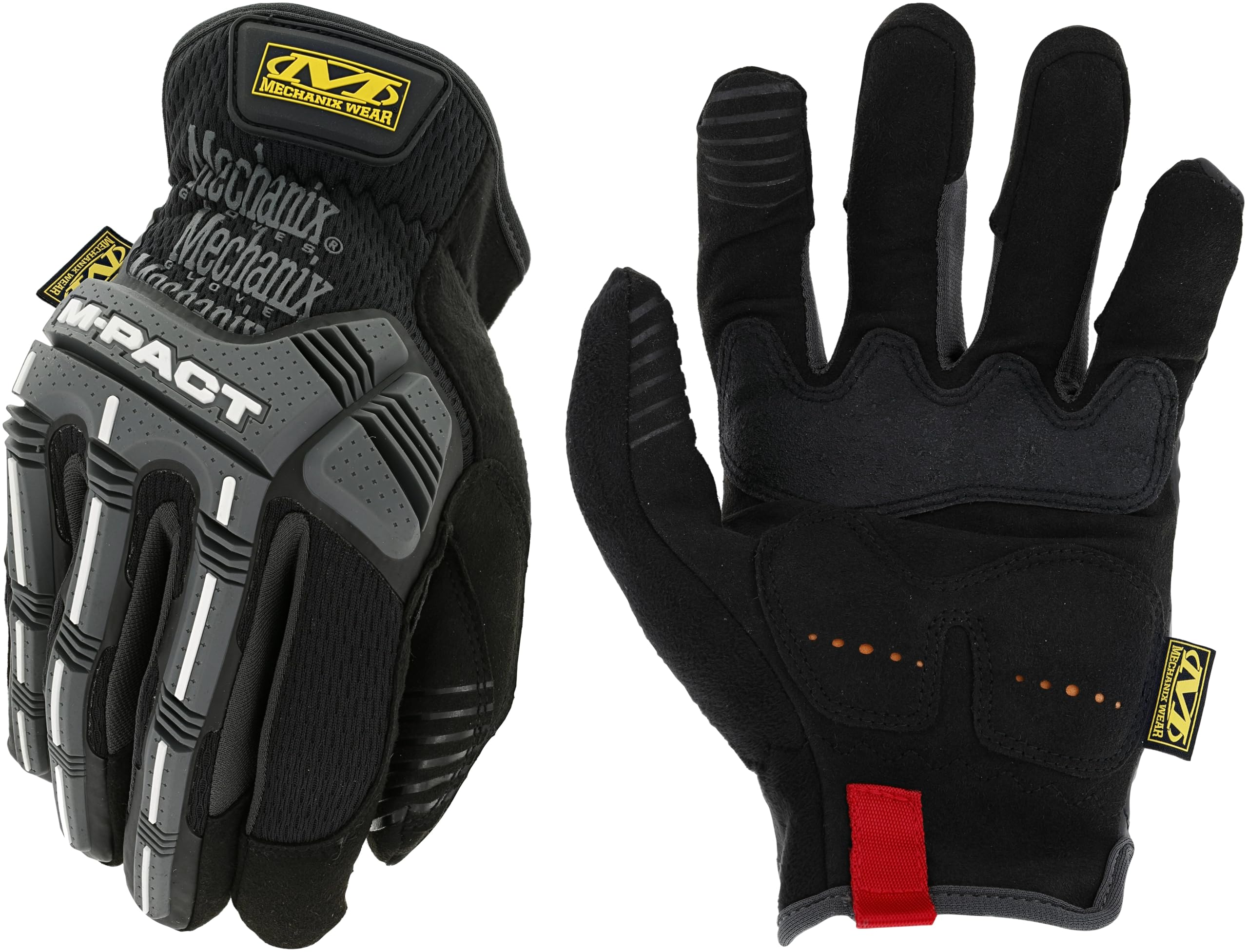
The open-cuff version of the M-Pact line trades a bit of wrist closure for faster on-off and a more forgiving fit for thick hands. The TPR knuckle guard is the same molded design that meets EN 388 impact standards, but the real differentiator here is the anti-fatigue stretch elastic closure. It creates a secure fit without the velcro snagging on upholstery or wire looms, which is a common annoyance in tight engine compartments.
Synthetic leather on the palm holds up well against abrasive tasks like pulling engine harnesses or handling rough-cast iron manifolds. The TrekDry back panel is identical to the Covert version — it breathes effectively enough that users in moderate climates rarely feel the need to remove the gloves between tasks. Touchscreen function on the index fingertip works consistently with both iPhone and Android devices, though the larger finger profile makes accurate typing difficult.
Several long-term users report the synthetic leather at the middle fingertips can wear through after about a month of full-shift loading work, but the same users note the gloves are comfortable enough that they buy another pair immediately. The elastic cuff collects grime over time, but the whole glove is machine-washable and air-dries without shrinking. For those who prefer a velcro-free wrist and durable impact protection, this is a proven choice.
Why it’s great
- Elastic wrist closure avoids velcro snagging on tools and trim
- Breathable TrekDry back reduces hand fatigue in warm conditions
Good to know
- Fingertip synthetic leather can wear through under continuous heavy abrasion
- Touchscreen accuracy limited by bulky finger profile
3. Ansell RINGERS R-267G Oil-Resistant

When the job involves prolonged exposure to hydraulic oil, diesel, or drilling mud, the R-267G is built specifically for that environment. The full-length TPR impact protection extends from the knuckles down to the fingertips, which is rare — most impact gloves stop at the middle phalanx. The silicone dot grip pattern on the palm provides traction in slick conditions where standard foam nitrile would slide off a greasy valve body.
The stitched palm construction adds a layer of durability that allows these gloves to outlast three to four pairs of budget alternatives in oil-field and maritime settings. The extended airprene wrist closure cinches securely and blocks debris from entering the glove, a critical detail when you’re reaching into grit-filled machinery.
Dexterity is the trade-off — the thick leather and full-finger TPR make picking up small fittings or threading fasteners a challenge. The silicone dot pattern, while excellent for oil grip, provides minimal grip on dry smooth surfaces. Users with fine motor tasks like cable termination should look elsewhere. For heavy industrial environments where oil resistance and impact coverage are non-negotiable, these are a legitimate workhorse.
Why it’s great
- Full-length TPR impact protection extends over all fingers
- Exceptional lifespan in oily, abrasive environments
Good to know
- Low dexterity — not suitable for precision fastener work
- Silicone dot grip pattern is less effective on dry surfaces
4. Ironclad 360 Cut Leather Impact

Full goat leather remains the gold standard for durability that conforms to your hand over time, and the Ironclad 360 brings it together with a 360-degree EN388 cut-resistant liner rated at Level 5. That means the cut protection wraps entirely around the hand — not just the palm — so the top of your fingers are protected when you reach into sharp-edged panels or glass. The TPR impact guards cover the metacarpal, knuckle, and full finger length with a rigid shell that absorbs direct strikes.
The goat leather is medium-weight — thick enough to resist punctures from nails and sharp metal, yet flexible enough that after a few wears it conforms to your hand like a custom fit. Kevlar threading in high-stress seam areas prevents blowouts along the side of the index finger, a common failure point in cheaper leather gloves. The open-cuff design allows easy on-off but lacks a closure strap, so debris can enter from the wrist.
Users consistently report these gloves lasting through heavy outdoor use including concrete handling, fence repair, and furniture demolition. The leather does absorb moisture, and repeated soaking can cause stiffness and shrinkage. Not ideal for wet environments, but for dry, sharp, impact-heavy work, this is a top-tier leather option that combines cut safety with real leather feel.
Why it’s great
- 360-degree EN388 Level 5 cut protection wraps entire hand
- Goat leather molds to hand shape for improved fit over time
Good to know
- Leather stiffens and shrinks if repeatedly soaked in water
- Open-cuff design allows debris to enter at the wrist
5. Ironclad Command Impact 360 Cut A6

For jobs that involve sliding against sharp steel edges or handling glass, the ANSI A6 cut rating on this Ironclad model is a serious step up in protection. The HPPE blend liner delivers cut resistance without the extreme bulk of Kevlar-based gloves, and the 360-degree coverage means back-of-hand lacerations are also addressed. The open-cell memory foam pads on the palm are strategically placed to absorb vibration from impact wrenches and hammer drills, reducing hand fatigue over long shifts.
The thermoplastic rubber impact protection runs across the knuckles and metacarpal area, and the hook-and-loop closure provides a secure fit that keeps the glove from shifting during repetitive gripping tasks. Touchscreen capability on the fingertips works reliably — several users confirm compatibility with Samsung and Apple devices for checking diagrams without glove removal. The terry cloth sweat wipe on the thumb is a small detail that makes a noticeable difference when you’re working in a hot shop.
Some users note the overall bulk is higher than standard mechanic gloves, so reaching into tight spaces like wheel wells or behind dashboards can be restrictive. The cut resistance is genuine — tested by users against sharp knives with no new holes after aggressive slicing. For metal fabrication, demolition, or any environment with sharp edges and vibration, the A6 rating and memory foam pads make this a strong contender.
Why it’s great
- ANSI A6 cut resistance handles sharp sheet metal and glass safely
- Memory foam palm pads reduce vibration fatigue during extended tool use
Good to know
- Bulkier profile makes tight-space access more difficult
- Touchscreen fingertips work but finger profile is fat for precise typing
6. Grease Monkey Gel-PRO Leather Hybrid

The leather palm on the Gel-PRO offers the classic durability that mechanics have trusted for decades, but the gel impact panels on the back of the hand add a modern layer of protection without the stiffness of TPR shells. The gel compresses on impact and rebounds, which makes these gloves more comfortable for tasks that involve repeated banging against metal — think brake caliper work or suspension component removal. The neoprene cuff with hook-and-loop closure seals out debris and stays put during overhead work.
Vents and reinforcements are placed at high-wear points between the thumb and index finger, the area that typically blows out first on leather-palm gloves. Touchscreen capability on the index finger and thumb allows basic phone use, though it’s less responsive than synthetic-leather competitors. Several users report these gloves lasting multiple years with regular automotive use, and a second pair is often purchased after the first is inevitably misplaced on a job site.
Sizing runs small — most users need to go up at least one size compared to standard work gloves. A few users experienced fingertip seam failure within days, though this appears to be a batch variation rather than a consistent flaw. The leather palm requires a short break-in period and is not ideal for wet conditions. For traditionalists who want leather feel plus modern impact absorption, the Gel-PRO delivers respectable longevity.
Why it’s great
- Gel impact panels absorb force without sacrificing flexibility
- Reinforced thumb-index seam extends overall glove life
Good to know
- Sizing runs small — order one size larger than normal
- Leather palm is not suitable for heavy water exposure
7. Kebada W5 Foam Nitrile 12-Pack
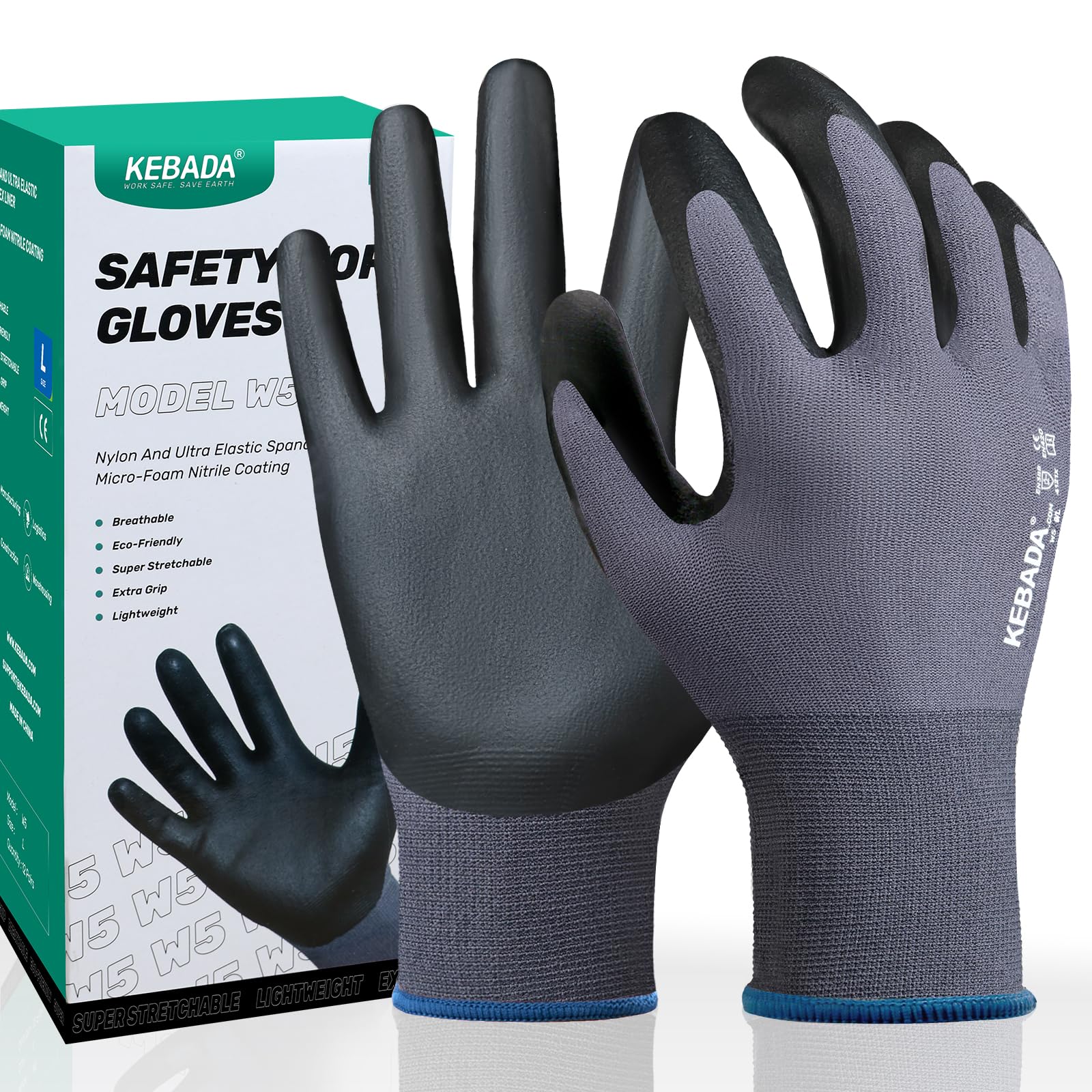
When you go through multiple pairs of gloves per week on a construction site or in a warehouse, the Kebada W5 12-pack solves the replenishment problem. The foam nitrile coating over a 15-gauge nylon-spandex shell delivers an EN388 Level 4 abrasion rating — meaning it withstands over 8,000 abrasion cycles — which is exceptional for a budget-tier coated glove. The micro-textured foam surface channels away oil and moisture, providing reliable grip on greasy auto parts and wet lumber alike.
Breathability is better than most coated gloves thanks to the open knit back, and the dirt-blocking knit wrist prevents sawdust and gravel from entering. Touchscreen compatibility works on the index finger and thumb, a rare find at this price point. Several mail carriers and delivery drivers report these gloves provide sufficient splinter and cut protection for sorting packages and handling cardboard bales, with a typical lifespan of about four weeks per pair before the coating wears at the fingertips.
The ambidextrous design and pack quantity make these ideal for facility managers who need to stock a team without tracking left/right pairs. Some users note the coating can degrade if left wet for extended periods, and the black dye on the knit wrist may bleed when machine-washed. For high-consumption environments where cost-per-wear is the primary metric, this 12-pack offers legitimate EN388-rated durability at a fraction of the per-pair cost of premium options.
Why it’s great
- EN388 Level 4 abrasion rating in an affordable bulk pack
- Foam nitrile coating provides excellent grip in oily conditions
Good to know
- Coating degrades faster when left wet for extended periods
- Knit wrist dye may bleed during machine washing
FAQ
What ANSI cut level do I need for auto mechanic work?
Should I choose foam nitrile or synthetic leather for oily conditions?
Final Thoughts: The Verdict
For most users, the best mechanic gloves winner is the Mechanix Wear M-Pact 0.5mm Covert Tactical because it delivers impact-rated knuckle protection without sacrificing the fingertip feel needed for precision wrench work. If you need maximum cut protection for sharp metal fabrication, grab the Ironclad Command Impact 360 Cut A6. And for high-volume environments where you burn through pairs weekly, nothing beats the cost-per-wear of the Kebada W5 12-Pack.