
The search for the right golf ball often feels like a trade-off between distance off the tee and a soft, controllable feel around the greens. For the average golfer, the wrong choice can exaggerate a slice, deaden touch on chips, or simply cost too much per lost ball. The goal is a ball that forgives a mis-hit, launches predictably, and doesn’t punish a moderate swing speed.
I’m Mohammad Maruf — the founder and writer behind Drink4Good. I’ve spent many hours analyzing the performance specs, construction layers, and compression ratings of today’s most popular golf balls to find which ones deliver real, measurable improvement for the weekend player.
This guide breaks down the top contenders to help you find the golf balls for average golfers that match your swing speed and your budget.
How To Choose The Best Golf Balls For Average Golfers
Selecting the right ball isn’t about finding the most expensive tour-level model. It’s about matching the ball’s construction and compression to your swing speed and common miss-hits. The average golfer typically has a driver swing speed between 85 and 95 mph, which is a critical zone for ball performance.
Compression and Swing Speed
Compression measures how much a ball deforms under the force of a swing. A low-compression ball (around 50-70) is designed for slower swing speeds, helping to maximize distance and reduce spin. A high-compression ball (90+) is for faster swings and will feel like a rock for the average player. Look for “soft” or “low compression” labels, which translate to a more responsive feel and longer carry.
Construction Layers: Two-Piece vs. Multi-Layer
The average golfer often benefits most from a two-piece construction. It pairs a large, solid core with a durable cover, minimizing spin off the tee for straighter flights. Multi-layer balls (three or more pieces) offer more spin separation—lower spin with the driver, higher spin on short irons—but they cost more and require more precision to unlock their benefits. The budget-friendly two-piece is the forgiving friend of the high-handicap player.
Cover Material: Ionomer vs. Urethane
Ionomer covers (like Surlyn) are durable, cut-resistant, and produce lower spin, making them ideal for distance and durability. Urethane covers are softer, provide much more greenside spin for stopping power, but are less durable and more expensive. For an average golfer who loses a ball or two per round, an ionomer cover often provides the best mix of performance and value.
Quick Comparison
On smaller screens, swipe sideways to see the full table.
| Model | Category | Best For | Key Spec | Amazon |
|---|---|---|---|---|
| Bridgestone e12 Contact | Premium | Straight distance & reduced slice | Multi-layer / 46% more contact | Amazon |
| WILSON Duo Soft | Premium | Maximum soft feel & low compression | Two-piece / “World’s Softest” | Amazon |
| TaylorMade Distance+ | Mid-Range | Maximum distance & value | Two-piece / React Speed Core | Amazon |
| Bridgestone e6 | Mid-Range | Soft feel & swing speed control | Multi-layer / Soft seamless cover | Amazon |
| WILSON Chaos (24-pack) | Budget | Beginner-friendly & high durability | Two-piece / Surlyn cover | Amazon |
In‑Depth Reviews
1. 2023 Bridgestone Golf e12 Contact

The Bridgestone e12 Contact uses a unique Contact Force Dimple design that claims 46% more surface contact between the ball and the clubface. This translates into a noticeable reduction in side spin on full shots, a benefit the average golfer fighting a slice will appreciate immediately. Testers reported gaining an average of 12 yards on drives compared to a standard tour ball, with a much straighter flight pattern.
The multi-layer construction with a soft core provides excellent feel without sacrificing distance. It performs particularly well from 150 yards in, where the added friction from the Flexativ cover delivers predictable spin on approach shots and chips. This is a ball that bridges the gap between a pure distance ball and a premium tour model, offering genuine control without the penalty of high spin on mishits.
While it is priced at a premium, the e12 Contact is a compelling choice for the average golfer who wants a single ball that reduces the big miss and still offers stopping power around the green. Its durability is good, though not class-leading, holding up well for several rounds before showing significant scuff marks.
Why it’s great
- Reduces slice/hook side spin dramatically
- Noticeable distance gain off the tee
- Good spin control on approach shots
Good to know
- Premium pricing per dozen
- Some testers still preferred the e6 for feel
2. WILSON 2025 Duo Soft Golf Balls
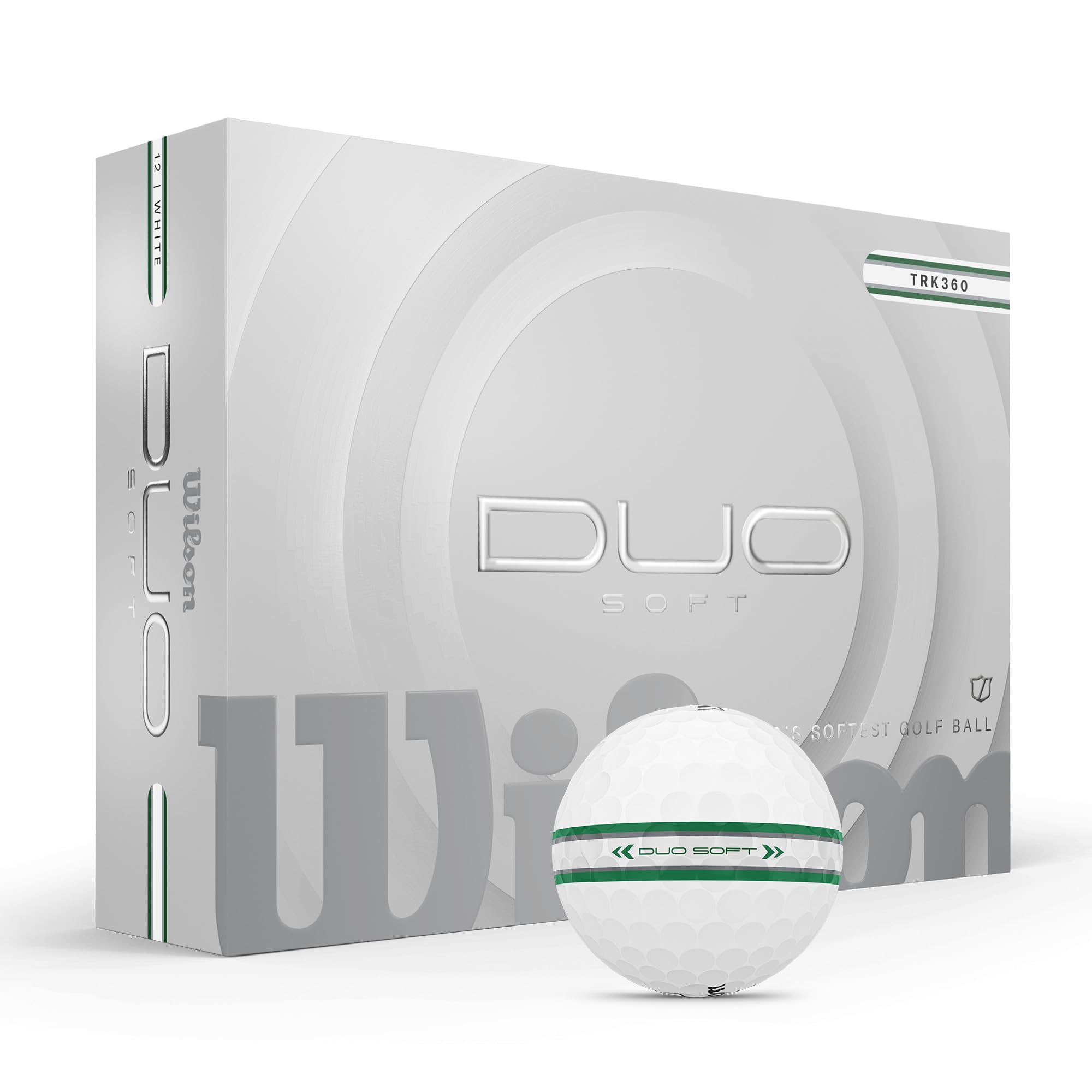
Wilson’s claim of making the “World’s Softest Golf Ball” is no marketing gimmick. The Duo Soft features a low-compression core that delivers an incredibly soft feel at impact, even for a 15-handicap with an above-average swing speed. This low compression is a direct advantage for average golfers with slower swing speeds, as it helps compress the ball for maximum energy transfer and distance.
The two-piece construction with a Surlyn cover inherently reduces spin on longer shots, promoting a straighter flight from the tee. The green and silver stripe alignment aid is functional without being distracting. While it is softer than a Pro V1, this softness primarily aids feel and does not negatively impact durability—many users report the ball remaining in good shape for multiple rounds.
Where the Duo Soft truly shines is its balance of a premium soft feel at a mid-range price point. It’s not a ball that will generate high greenside spin like a urethane-covered tour ball, but for the average player who wants a consistent, comfortable feel on every shot and a reliable straight flight, it’s a near-perfect selection.
Why it’s great
- Ultra-soft feel on all shots
- Great distance for average swing speeds
- Straight, low-spin flight off the tee
Good to know
- Low greenside spin compared to urethane balls
- Not ideal for very fast swing speeds
3. TaylorMade Golf Distance+ Golf Balls

The TaylorMade Distance+ is a classic two-piece distance ball built around the React Speed Core. The core is designed for high initial velocity off the clubface, maximizing carry distance for the average swing speed. The new Extended Flight Dimple pattern helps maintain ball speed on a lower trajectory, which is beneficial in windy conditions.
Its Ionomer cover is extremely durable and resistant to scuffs and cuts, making it an excellent choice for the player who frequently plays on tighter lies or tends to use a high-lofted wedge aggressively. The “Plus Alignment Aid” is a simple but effective putting line that helps with aim on shorter putts. The bright pearlescent finish is easy to spot in the rough, a subtle benefit that can save time on the course.
While it feels harder off the clubface than a soft-cover ball, particularly on short chips and putts, its performance off the tee is undeniably strong. For an average golfer who prioritizes maximum distance and durability over greenside feel, the TaylorMade Distance+ is a tremendous value.
Why it’s great
- Excellent distance and launch height
- Very durable cover for many rounds
- Bright finish for easy visibility
Good to know
- Firm feel, less feedback on short shots
- Not ideal for players wanting high greenside spin
4. Bridgestone e6 Golf Balls
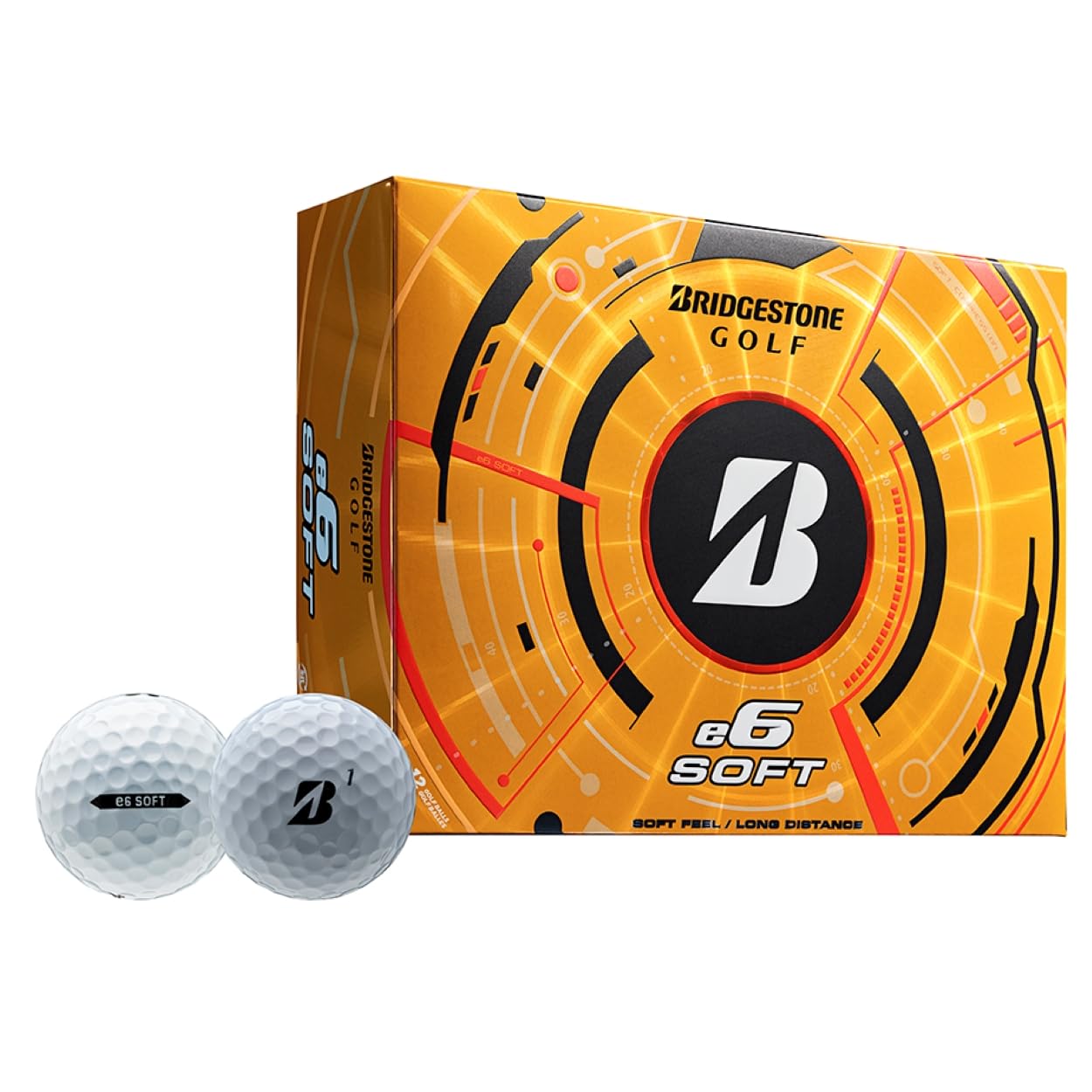
The Bridgestone e6 is a long-standing favorite among mid-to-high handicappers for its consistent soft feel and spin control. Its multi-layer construction uses a larger, softer core that compresses easily, providing both distance and a softer impact sound. The soft seamless cover is specifically designed to reduce side spin on mishits, helping to keep the ball straighter, particularly for players with a natural slice.
Many high-handicap users report that the e6 significantly helps control their slice, making it one of the most forgiving balls off the tee. The softness also provides a confidence-inspiring feel on chips and putts, giving the average player a sensation of control often only found in premium tour balls. Its durability is solid, lasting multiple rounds without significant cosmetic wear.
While it is a bit pricier than the budget two-piece options, the e6 offers a step up in feel and control that many average golfers find worthwhile. The soft feel is a particular favorite among senior golfers and those with slower swing speeds who need maximum compression for distance. It represents a great “if you like a soft ball” alternative to the firmer Distance+.
Why it’s great
- Excellent side spin reduction for straighter shots
- Very soft feel, great for slower swing speeds
- Good durability for a multi-layer ball
Good to know
- Not the longest ball off the driver
- Some players prefer a firmer feel for feedback
5. WILSON 2024 Chaos Golf Balls (24 Pack)

The Wilson Chaos is the ultimate “worry-free” golf ball, designed for the high-handicap player or beginner who may lose several balls per round. At a price point that makes it the cheapest per-ball option on this list, you get 24 balls with a 2-piece Surlyn construction. This combination delivers solid distance off the tee with low spin, a durable cover that scoffs at cart paths and tree roots, and a bright multi-color finish that makes finding your ball in the rough much easier.
The multi-color design is practical: it helps with ball identification and visibility without being distracting. Performance-wise, it holds its own. Reviewers noted similar 7-iron distance to the popular Callaway Supersoft, though it does sacrifice some distance with the driver. The feel is definitively hard and brittle compared to softer premium balls, which is a trade-off for its durability and low cost.
For the beginner who is still developing their swing, the Chaos is a brilliant choice. It removes the financial sting of losing a ball, allowing you to focus on your game. For a more experienced average golfer, it may lack the soft feel and consistent greenside spin needed for lower scores, but for sheer value and durability, it is in a class of its own.
Why it’s great
- Exceptional value with 24 balls
- Very durable Surlyn cover
- Good distance for beginners
Good to know
- Firm, brittle feel on all shots
- Less driver distance than premium models
- Not suitable for lower-handicap players
FAQ
What compression rating should an average golfer with a 90 mph driver swing speed look for?
Will a premium urethane cover ball help a high-handicapper score lower?
Final Thoughts: The Verdict
For most users, the golf balls for average golfers winner is the Bridgestone e12 Contact because it uniquely combines anti-slice technology with the distance and feel needed for better scoring. If you want the absolute softest feel and best compression for a slower swing, grab the WILSON Duo Soft. And for unbeatable value and durability when you are just starting out or still losing a few balls per round, nothing beats the WILSON Chaos 24-pack.