
After hour twelve of a raid, a ranked push, or a late-night creative sprint, most gaming chairs betray you. The foam pancake-flattens, the lumbar support feels like a rolled-up sock, and that “racing seat” look becomes a heat trap you can’t escape. The real challenge for serious players isn’t finding a chair—it’s finding one built to hold your posture hostage without holding your wallet hostage at the same time.
I’m Mohammad Maruf — the founder and writer behind Drink4Good. I’ve spent hundreds of hours cross-referencing foam densities, gas lift certifications, recline mechanisms, and real-world user wear patterns to build a guide that cuts through the marketing noise and lands on hardware that actually works for long sessions.
Whether your priority is breathable mesh, a plush fabric seat that stays cool, or a heavy-duty steel base that won’t wobble during a tense moment, this roundup of the best gaming chairs under $500 gives you nine battleground-tested options to end your search right here.
How To Choose The Best Gaming Chairs Under $500
Too many chairs in this price bracket lean hard on styling—aggressive color stitching, faux carbon fiber embossing—while skimping on the frame, foam, or lumbar mechanism that actually keeps you comfortable. When you sit for 4+ hours at a time, the priority list flips. Frame material, weight capacity, recline engineering, and seat density matter far more than how the chair looks in a product photo. Below are the three specs that separate a keeper from a regret.
Lumbar Support: Depth Adjustment Is the Secret
Many chairs advertise lumbar support. The cheap version is a removable pillow that slides right down to mid-back after two uses. The useful version is either a built-in arch (like the Razer Enki’s fixed curve) or a 2-way mechanism (vertical height plus horizontal depth). Depth adjustment—pushing the support forward or letting it flatten—is the feature that lets you match the curve of your own spine. A pillow that just sits on the seat pan does not qualify as true ergonomic support.
Foam, Mesh, or Leather: The Material Decides Your Comfort Ceiling
Budget chairs often use medium-density polyurethane foam that feels supportive for the first week and then memory-holes your tailbone by month two. High-density cold-cure foam (like the Razer Iskur V2 X uses) or triple-pad segmented foam (like the GTPLAYER Big and Tall uses) resists sagging far longer. If you run warm or play in a non-air-conditioned room, skip bonded leather entirely and look for breathable mesh backs and seats. Mesh never peels, never traps sweat, and its elasticity naturally conforms while keeping you dry.
Recline Range and Footrest Build Quality
A lockable recline of 135° or more gives you real break potential between matches. But the mechanism matters more than the number. Look for chairs that lock at multiple angles (90°/110°/135° is the standard sweet spot) and don’t rely on a single tension knob that loosens over time. If you want a footrest, check whether the deployment uses metal tracks or flimsy plastic brackets. Plastic brackets tend to crack under repeated use; steel-tube footrests with rubber tension bands stay smooth for years.
Quick Comparison
On smaller screens, swipe sideways to see the full table.
| Model | Category | Best For | Key Spec | Amazon |
|---|---|---|---|---|
| Razer Enki | Premium | All-day comfort & wide seat base | 152° recline with reactive seat tilt | Amazon |
| Fantasylab Big & Tall | Premium | Larger frames up to 440 lbs | 155° recline + memory foam lumbar | Amazon |
| Razer Iskur V2 X | Mid-Range | Firm support & integrated lumbar | 152° recline + high-density foam | Amazon |
| Gabrylly Ergonomic | Mid-Range | Breathable mesh & steel base | 135° recline + 2-way lumbar | Amazon |
| Vonesse Ergonomic | Mid-Range | Seat depth adjustment (60mm) | 3D headrest + dynamic lumbar | Amazon |
| LarkLeaves Mesh | Mid-Range | 3D headrest & cooling mesh | 5-level backrest + footrest | Amazon |
| GTPLAYER Big & Tall | Value | Heavy build with spring lumbar | 150° recline + triple-pad cushion | Amazon |
| CYKOV Ergonomic | Value | Deep 160° recline & mesh back | 4-way headrest + retractable footrest | Amazon |
| GTPLAYER Mesh White | Value | Budget-friendly mesh with footrest | 135° recline + 300 lb capacity | Amazon |
In‑Depth Reviews
1. Razer Enki Gaming Chair

The Razer Enki is the closest thing in this price tier to a proper ergonomic workstation chair disguised as a gaming throne. Its 110-degree shoulder arches and 54cm seat base distribute weight evenly across the seat pan, taking pressure off the tailbone and outer thighs. The built-in lumbar arch is fixed to encourage neutral spine alignment rather than relying on a detachable pillow that migrates. Optimized cushion density gives you a softer seat surface for immediate comfort with a firmer foam core underneath for long-term structure—no bottoming out after three hours.
The reactive seat tilt mechanism responds to your body weight, which means the recline moves naturally with your lean rather than fighting you on a stiff tension knob. Dual-textured synthetic leather uses a plush microfibre-like fabric in the center contact zones and smooth leather on the outer edges for durability where you need it most. Assembly is straightforward thanks to clearly marked hardware, and the entire unit feels solid—hardly any flex or creak during aggressive movement.
Some users report that the armrests lack depth adjustment (only height and swivel), so fine-tuning elbow position for narrow desks takes a little compromise. The fixed lumbar arch also won’t suit anyone who prefers aggressive lower-back pressure; it’s gentle by design. For pure, unbroken daily use across work and play, though, the Enki sets the standard under five hundred.
Why it’s great
- Widened seat base reduces pressure on outer thighs during long sits
- Dual-textured fabric prevents sweating and peeling common with bonded leather
- Reactive tilt mechanism makes recline feel natural and intuitive
Good to know
- Armrests lack forward/backward and lateral adjustment
- Built-in lumbar arch is not adjustable for position or depth
2. Fantasylab Big and Tall Gaming Chair
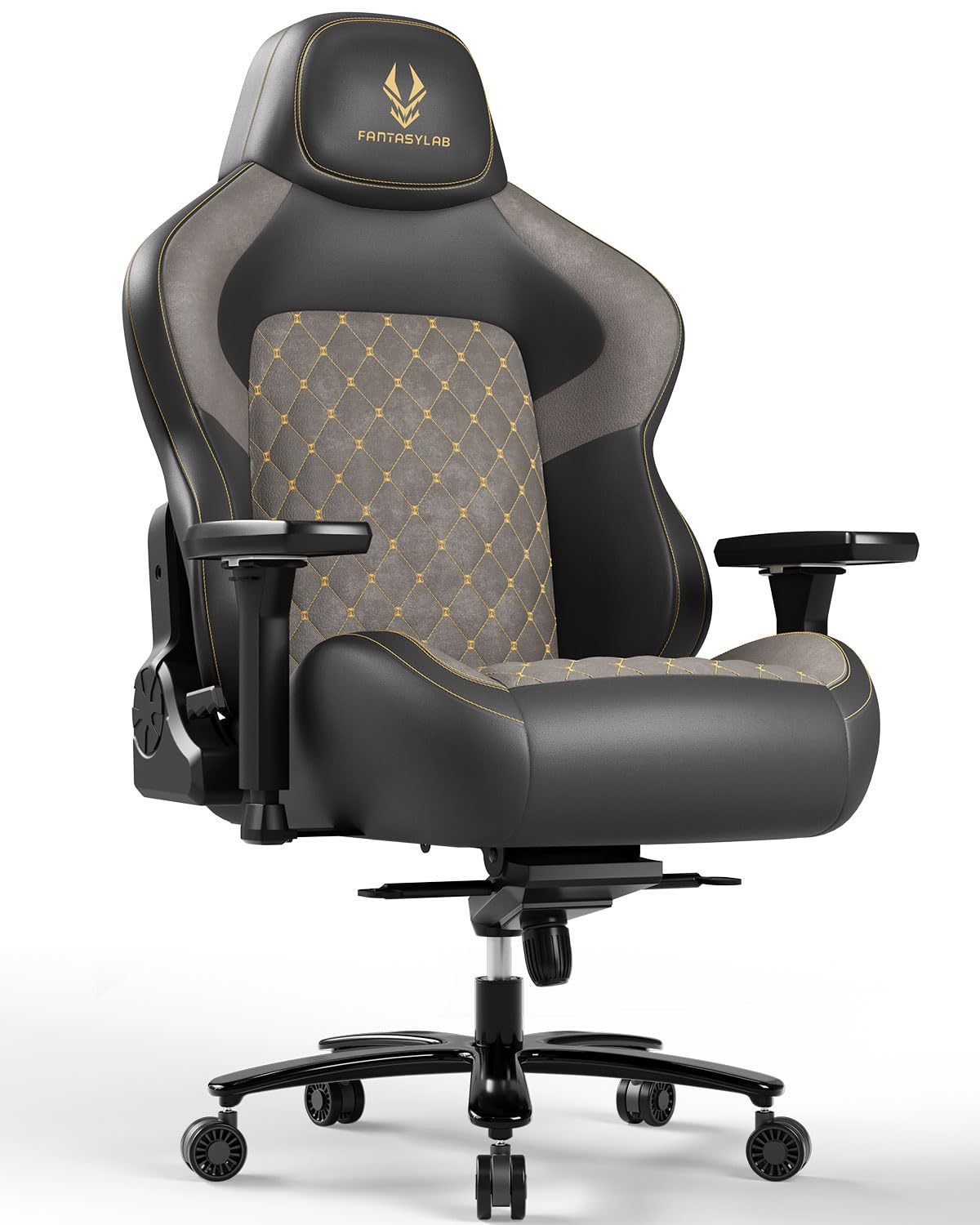
The Fantasylab is engineered for a specific demographic—broad-shouldered and larger-framed gamers who often get squeezed into standard-width chairs with insufficient legroom. The seat base and backrest are noticeably oversized without looking comically bulky, and the high-density memory foam in both the seat cushion and lumbar pillow retains its shape under continuous heavy load. The 4D armrests are a standout at this price point: they move up/down, forward/backward, left/right, and pivot, giving you battlefield-level elbow positioning control that most chairs reserve for the + bracket.
The metal base and explosion-proof gas lift are rated to 440 pounds with zero wobble reported during aggressive leaning or swiveling. Recline reaches 155 degrees, and the rocking lock mechanism lets you lean back without the chair tipping—a genuine concern on taller chairs with high centers of gravity. The multi-layered fabric and leather mix feels robust, and the assembly process is well-documented for a chair this size, typically clocking in under 30 minutes with two people.
One recurring feedback point is that the seat cushion runs firm, which some users love for posture maintenance but others find uncomfortable during the first week. The foam does break in after about 10–15 hours of use. Some units have also shipped with minor cosmetic issues like small stitching irregularities, though the company’s customer service has a strong reputation for rapid replacements. If you need a chair that doesn’t shrink away from a 6’3” 350-pound frame, this is the safest pick in the range.
Why it’s great
- True 440-pound weight capacity without sacrificing armrest adjustability
- Memory foam lumbar cushion holds shape much longer than standard sponge pillows
- Metal base and gas lift eliminate wobble even during full recline
Good to know
- Seat foam runs firm and requires a break-in period
- Metal base and heavy padding make the chair very heavy to move
3. Razer Iskur V2 X Ergonomic Gaming Chair

The Razer Iskur V2 X takes a firm stance on lumbar support—literally. Instead of an adjustable mechanism, it uses a sculpted integrated arch built into the backrest shell. This eliminates the common problem of lumbar pillows sliding down or floating out of alignment during movement. The high-density PU molded foam cushions are noticeably firmer than average, which provides excellent long-session support for users who prefer not to sink into their seat. The widened seat base with reduced edges guides your body centrally, distributing weight evenly and preventing the “edge pressure” feeling that narrower seats create.
The 152-degree recline is smooth and the 2D armrests adjust in height and rotate inward/outward—enough for most setups, though power users may wish for forward/backward travel too. The plush fabric finish is naturally breathable and feels cooler against the skin than synthetic leather, making it a strong choice if you game in a warm room. Assembly is among the easiest in this guide; the backrest attaches to the seat in a single solid piece with no loose lumbar mechanisms to wrestle with.
The trade-off is clear: this chair does not coddle. If you want a soft, cushy, “sink-in” experience, the Iskur V2 X will feel too rigid. The integrated lumbar works well for medium-height users (5’8” to 6’0”) but may miss the curve for shorter or taller frames. There is also no footrest, so if nap-mode is a priority, this chair is less versatile than the reclining mesh options. For someone who prioritizes posture reinforcement and clean, durable materials, however, the Iskur V2 X delivers a focused experience that few competitors match at this price.
Why it’s great
- Integrated lumbar arch stays locked in place with zero movement over time
- Plush fabric finish breathes better than synthetic leather alternatives
- High-density PU foam resists sagging for years of daily use
Good to know
- Cushion is very firm—not suitable for those who prefer soft seating
- No footrest and limited armrest adjustment range
4. GABRYLLY Ergonomic Office Chair
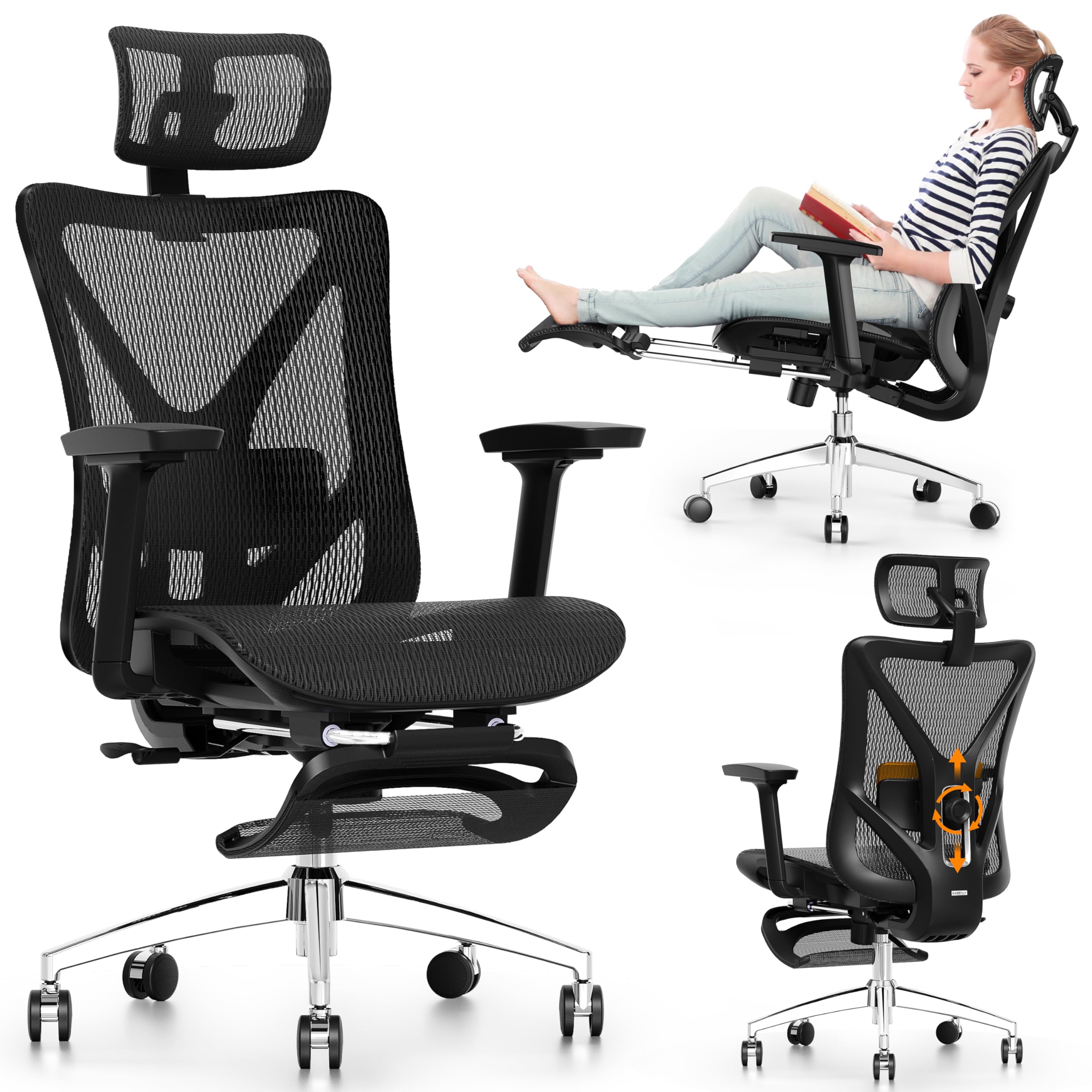
The GABRYLLY Ergonomic Chair is a rare hybrid that combines a proper steel base with an all-mesh design at a mid-range price that typically forces a choice between metal durability or breathable fabric. The 2-way lumbar support system adjusts 3 inches vertically and 1.6 inches in depth, letting you dial in the exact curve for your lower back—a level of precision usually found on chairs costing twice as much. The mesh back and seat are taut without being rigid, offering enough give for comfort while maintaining the airflow that prevents the dreaded swamp-back effect during extended sessions.
The 135-degree recline locks at three distinct positions (90/110/135 degrees), and the retractable steel footrest extends 18.1 inches with smooth rubber-band tension that doesn’t squeak. The 3D armrests adjust up/down, forward/backward, and inward/outward, covering all the major ergonomic axes. The 27.5-inch large-diameter steel legs provide excellent stability even when leaned back with the footrest fully deployed—no wobble on carpet or hardwood. Assembly takes roughly 20 minutes with the included Allen wrench, and the instructions are clearly illustrated for the step that matters most: the gas lift insertion.
The main drawback is that the mesh tension can feel too firm for lightweight users under 140 pounds, who may prefer a cushioned seat pan. Some units have also reported that the armrests shift laterally with accidental pressure—they lock well for intentional adjustment but can pop out of position if you lean on them sideways. For the money, though, the all-mesh construction and steel base deliver a clean, cool, and long-lasting seating experience that outperforms most leather-covered options in this range.
Why it’s great
- Steel base and 27.5-inch legs provide exceptional stability during recline
- All-mesh design stays cool and breathable in warm rooms
- 2-way adjustable lumbar offers true depth customization
Good to know
- Mesh tension may feel too firm for users under 140 lbs
- Armrests can shift sideways under lateral pressure
5. Vonesse Ergonomic Office Chair
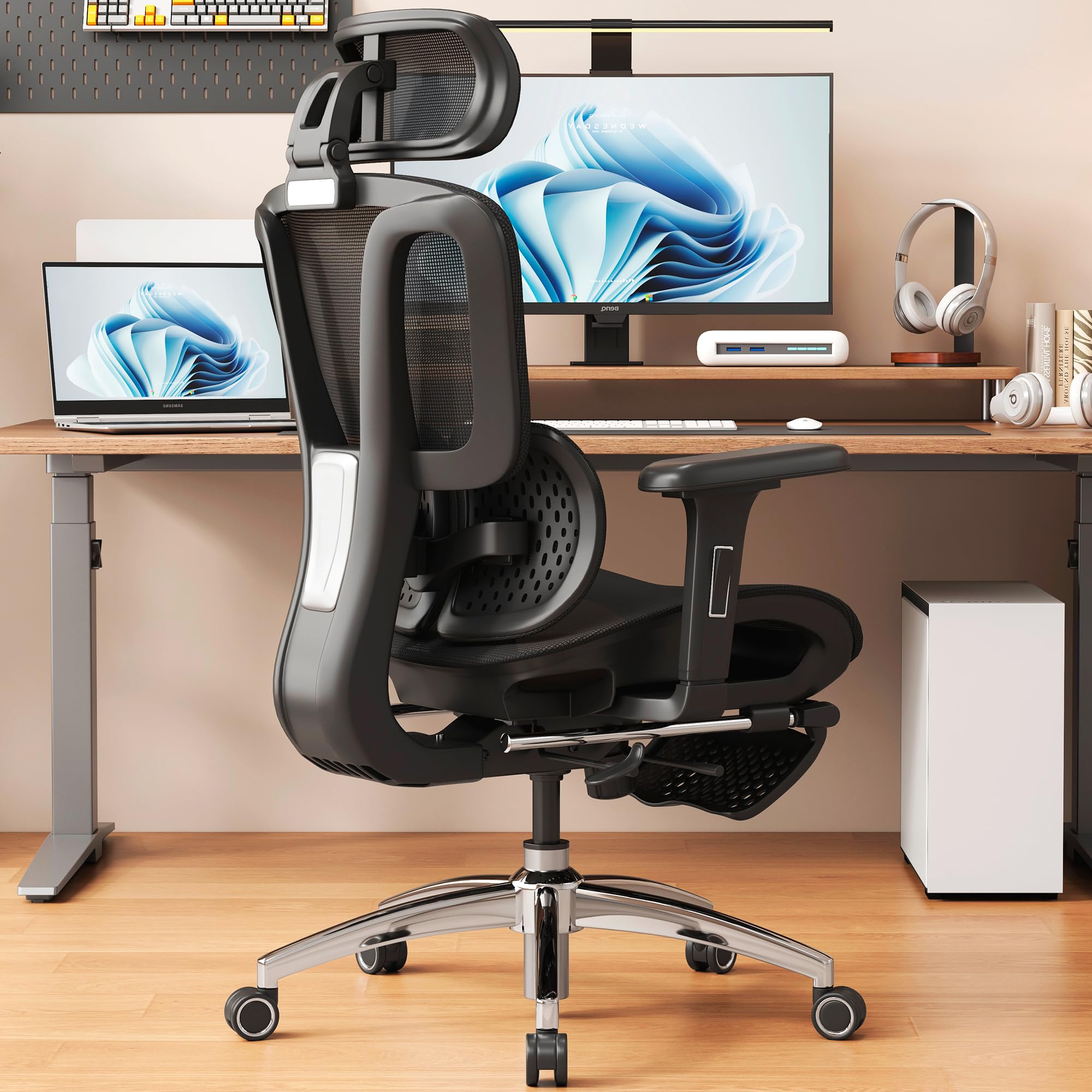
The Vonesse Ergonomic Chair brings one critical adjustment to the table that most chairs in this price range ignore entirely: seat depth. The 60mm adjustable seat pan slides forward or back, which lets you dial in the gap behind your knees for proper thigh support without cutting off circulation. This feature matters especially for shorter users (5’1” to 5’5”) who often end up with three inches of dead space behind their knees on standard fixed-depth seats. The 3-level height and 2-level depth lumbar support is equally configurable, bending forward to fill in lumbar lordosis or flattening out for a more neutral sit.
The 3D headrest moves in height, angle, and depth, cradling the cervical spine more effectively than the basic up-down-only designs. The mesh is high-density ventilated fabric that stays elastic without sagging, and the Grade-4 explosion-proof gas lift is a legitimate safety upgrade over the Grade-2 or Grade-3 lifts found on most entry-level options. The forward-backward telescopic footrest pairs with the 135-degree recline for a convincing relaxation mode, and the 3D armrests (height, forward/backward, angle) cover the core bases for elbow and shoulder relief during heavy aiming sessions.
Where the Vonesse stumbles slightly is in its fit and finish details. Several user reports mention chrome paint peeling on the plastic base trim or armrest edges after removing the protective film. This is cosmetic rather than structural, but it may bother buyers who want a pristine look long-term. The headrest also lacks tilt adjustment for very short users who sit fully upright. If you prioritize adjustability—especially seat depth and lumbar depth—this chair outperforms its price bracket by a wide margin.
Why it’s great
- 60mm adjustable seat depth improves thigh support for shorter users
- Grade-4 explosion-proof gas lift adds a layer of safety not common at this tier
- 3D headrest and dynamic lumbar cover neck and spine ergonomics thoroughly
Good to know
- Chrome-painted plastic trim on base may peel over time
- Headrest tilt range limited for very upright sitting positions
6. LarkLeaves Ergonomic Office Chair
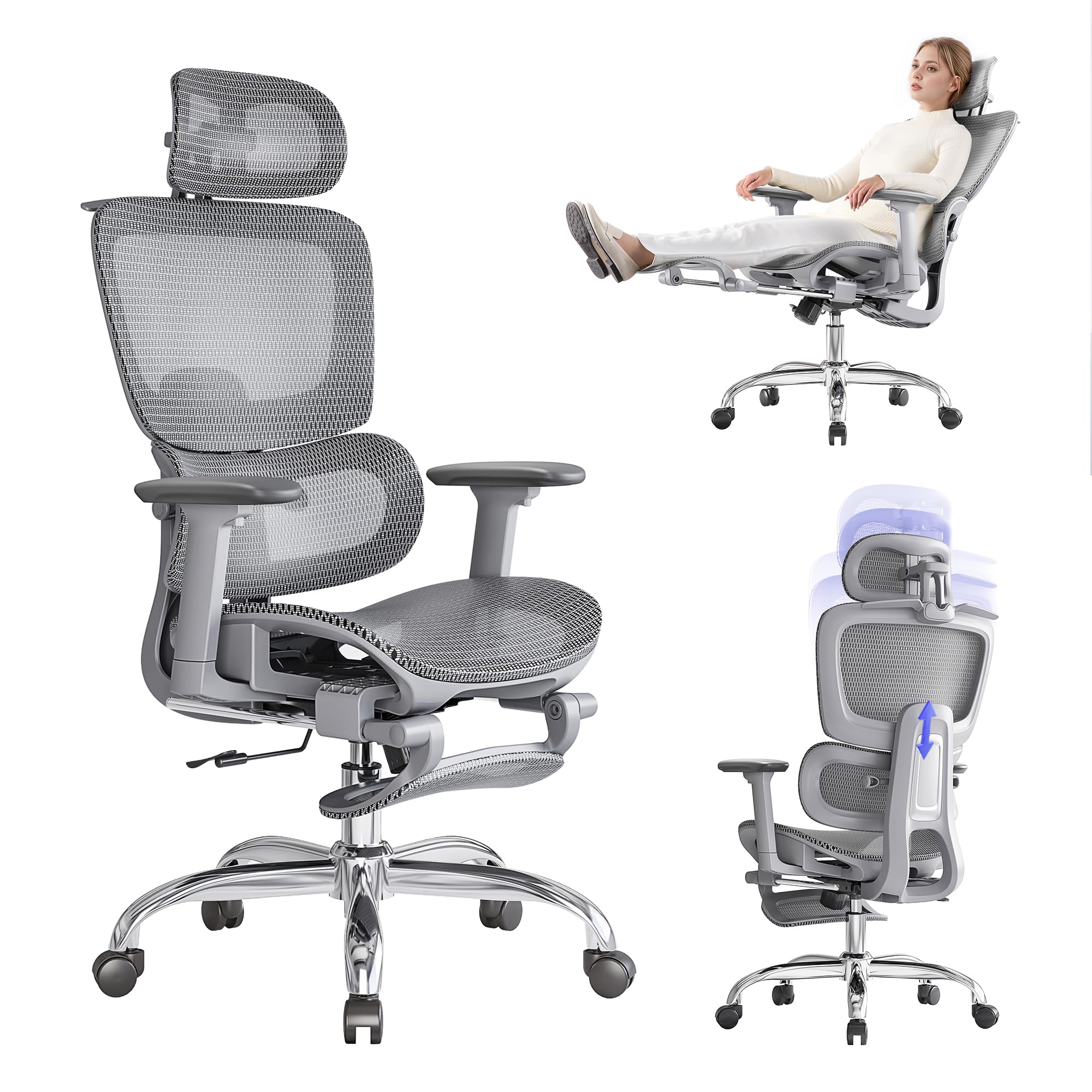
The LarkLeaves chair focuses its engineering on adjustable backrest height—a feature that makes a real difference in households where multiple people of different heights share the same gaming setup. The 5-level backrest height adjustment works in conjunction with the 3D headrest (up/down, forward/backward, rotation) to let both a 5’4” partner and a 6’0” player find their respective sweet spots without needing tools. The footrest is a welcome addition for short breaks between rounds, and the breathable mesh backrest keeps air moving during intense play when your core temperature climbs.
The 2D adaptive lumbar support uses a spring-like mechanism that pushes outward when you lean back and relaxes when you sit upright, giving a dynamic hugging sensation around the lower back. This is not a hard locked-in pressure point—it’s softer and more compliant than the firm arches on the Razer chairs. The 3D armrests provide height, forward/backward, and swivel adjustments, and the integrated coat hanger on the backrest is a small but practical touch for hanging a headset or hoodie within arm’s reach. Assembly takes about an hour, so plan a dedicated build session with a 5mm Allen key.
The trade-off for the adjustable backrest system is that the frame uses a polypropylene base rather than steel or aluminum. This keeps the weight down (easier to roll on carpet) but means the chair feels less bombproof than steel-base competitors under aggressive reclining. Some users also note that the footrest support tube feels slightly flexible under heavy leg pressure. The mesh is great for airflow but the seat cushion is on the firmer side, which may not suit marathon 12-hour sessions without a pad. For a versatile household chair that genuinely adjusts to multiple body types, this is the strongest pick in the mid-range.
Why it’s great
- 5-level backrest height adjustment fits multiple users of different heights
- Dynamic lumbar support adapts to movement for a compliant feel
- Integrated coat hanger keeps gear accessible without a separate stand
Good to know
- Polypropylene base is lighter but less rigid than steel alternatives
- Footrest support can feel flexible under sustained heavy leg pressure
7. GTPLAYER Big and Tall Gaming Chair
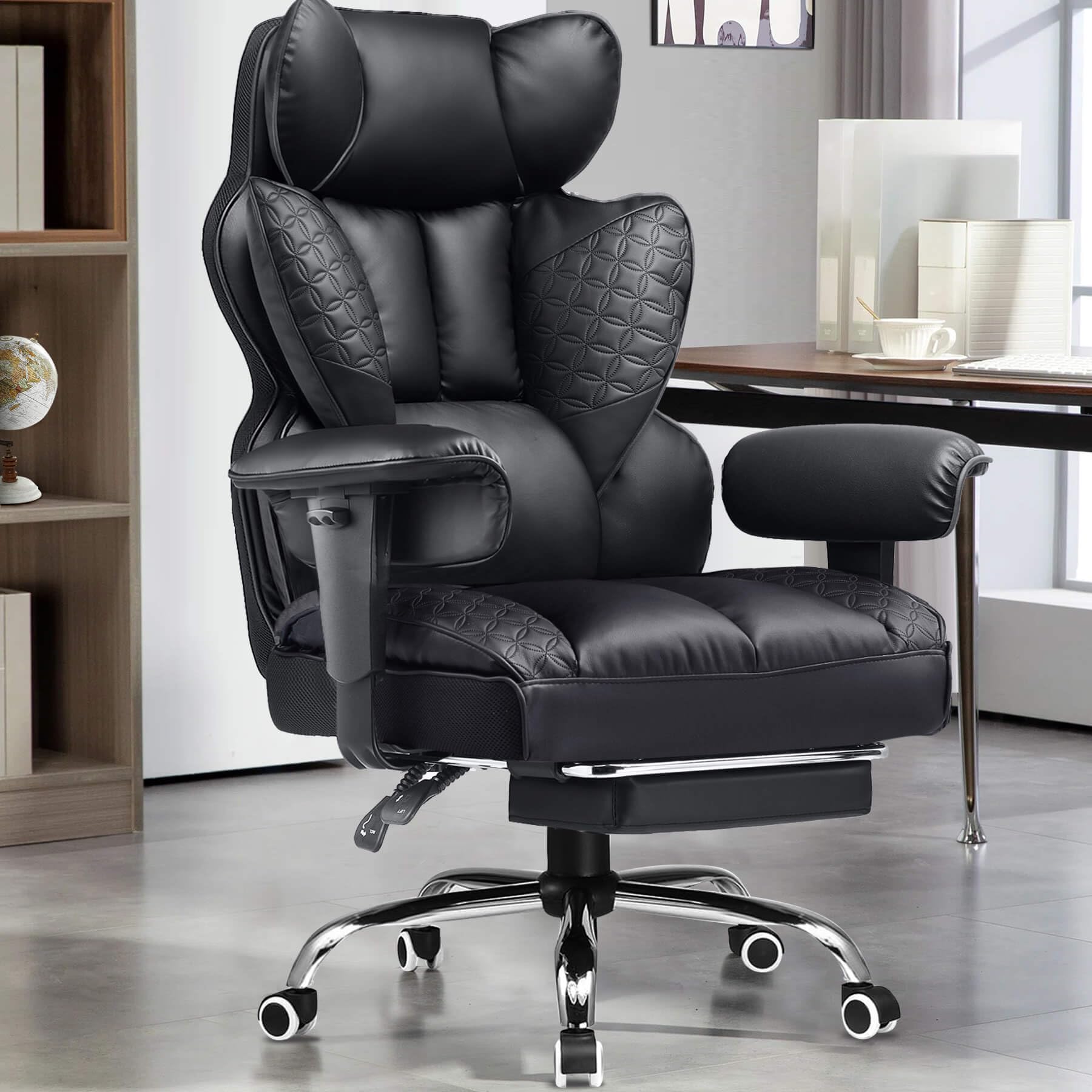
GTPLAYER’s Big and Tall variant tackles the problem of hip and thigh pressure with a triple-pad seat cushion that segments support across three independent foam blocks. Instead of one monolithic slab that turns into a pancake after a few months, the three pads distribute weight differentially—softer in the center for ischial comfort, firmer at the edges for thigh containment. The built-in spring lumbar support adds bounce rather than static resistance, which reduces the “hard plastic digging into your back” feeling that cheap gaming chairs are notorious for.
The deluxe PU leather has a textured embossing pattern that resists scratches and pet claws better than smooth faux leather, and it wipes clean easily after food-fueled sessions. The 150-degree recline pairs with a retractable footrest for legitimate nap capability, and the metal frame and 3-level gas lift give stability a solid floor. Assembly takes between 15 and 30 minutes, and the instructions are straightforward. The wide wing-back design wraps around larger torsos without pinching the shoulder blades, making this a strong option for broad-shouldered players on a tighter budget.
On the downside, some units have reported quality-control issues with the footrest tube assembly using plastic brackets rather than all-metal construction, which can crack after repeated use. The seat cushion, while segmented in theory, still runs firm and may take a week of daily sitting to soften to preference. The included lumber and head pillows attach via elastic straps that can shift over time if you’re aggressive about repositioning. For the price, though, the triple-pad concept and wide seat profile deliver comfort that many similarly priced single-foam chairs cannot touch.
Why it’s great
- Triple-pad seat cushion provides differentiated support for hips and thighs
- Spring lumbar support feels more compliant than static foam blocks
- Scratch-resistant PU leather holds up well against pets and daily wear
Good to know
- Footrest uses plastic brackets that may not survive heavy long-term use
- Elastic strap attachments for pillows may shift with frequent adjustment
8. CYKOV Ergonomic Office Chair
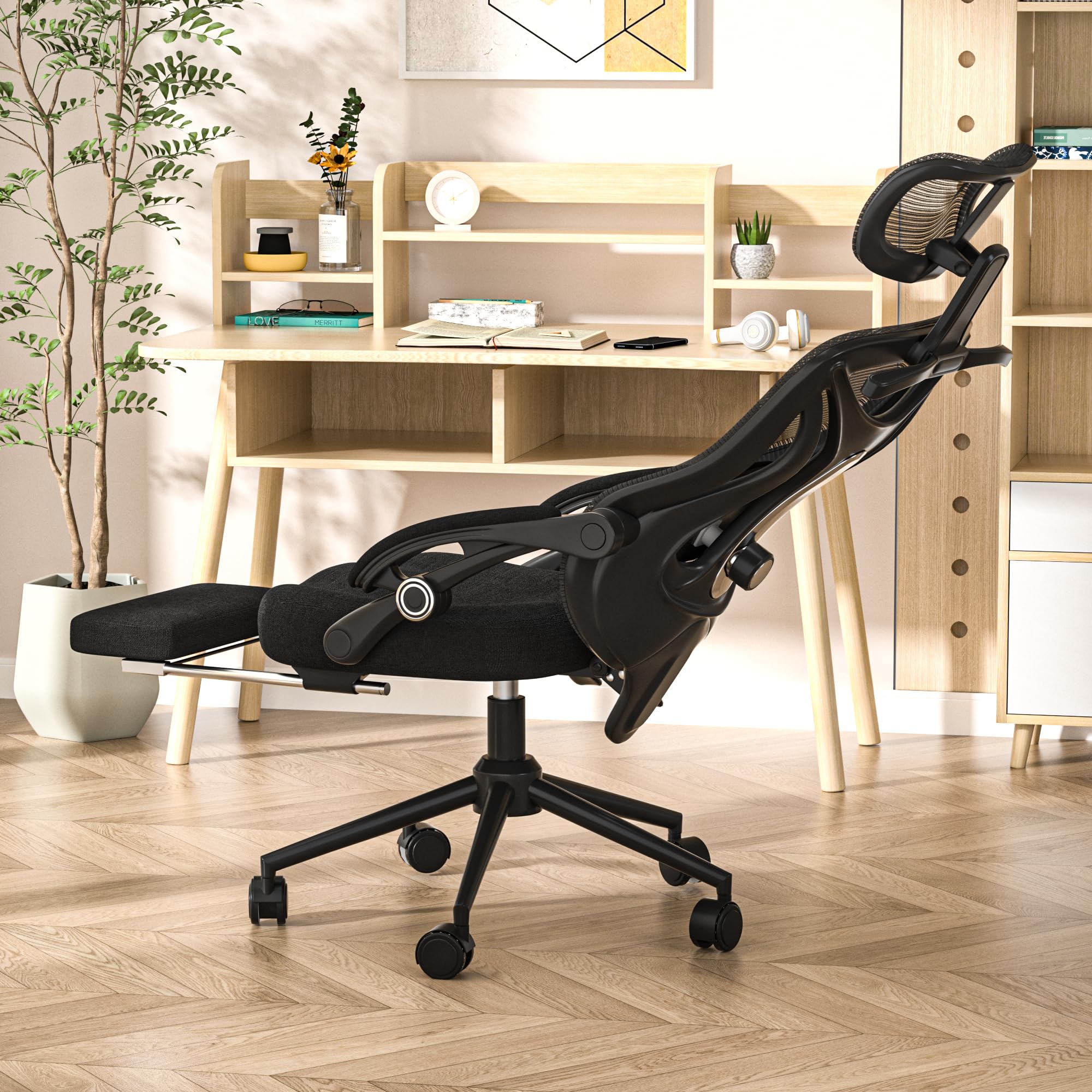
The CYKOV chair stands out primarily for its 160-degree recline range—five degrees deeper than most competitors, making it a legitimate option for power naps between work meetings or gaming sessions. The retractable footrest uses reinforced rubber tension bands that are clearly labeled during assembly, which helps avoid the common frustration of misrouted cables or misplaced hardware. The 4-way headrest (height + swivel) and 2-way lumbar support (height and depth) hit the core ergonomic touchpoints without overcomplicating the setup.
The breathable mesh back is paired with a high-density foam seat that supports up to 350 pounds, making it one of the most weight-capable budget-friendly chairs in the lineup. The heavy-duty nylon base provides stability, and the chair includes a built-in hanger on the backrest for hanging a jacket, bag, or headset—a small but thoughtful workspace organization detail. Assembly takes around 30 minutes, and the pre-sorted hardware bags reduce the common frustration of digging through a single mixed pile of screws and washers. The footrest surface uses a body-friendly shock-absorbing material rather than hard plastic, which feels noticeably warmer and more comfortable against bare feet.
Several user reports mention that the armrests feel wobbly due to their connection to a thin metal support tube, which can flex under elbow pressure during intense gameplay. The lumbar cushion is also non-removable and, for some users, presses too firmly into the lower back regardless of adjustment. The 160-degree recline is impressive on paper but may push your center of gravity far enough back that you need to extend your legs fully to keep the chair from tipping—a stable base is essential. For the buyer who values recline range above all else and works in short bursts between breaks, this chair offers that capability at a striking value.
Why it’s great
- 160-degree recline is the deepest in this guide for near-flat relaxation
- Reinforced rubber tension bands on footrest are clearly labeled for easy assembly
- 350 lb capacity and heavy-duty nylon base offer strong weight support
Good to know
- Armrests may wobble due to thin metal support tube connection
- Non-removable lumbar cushion can feel overly firm for some users
9. GTPLAYER Gaming Chair with Mesh Back
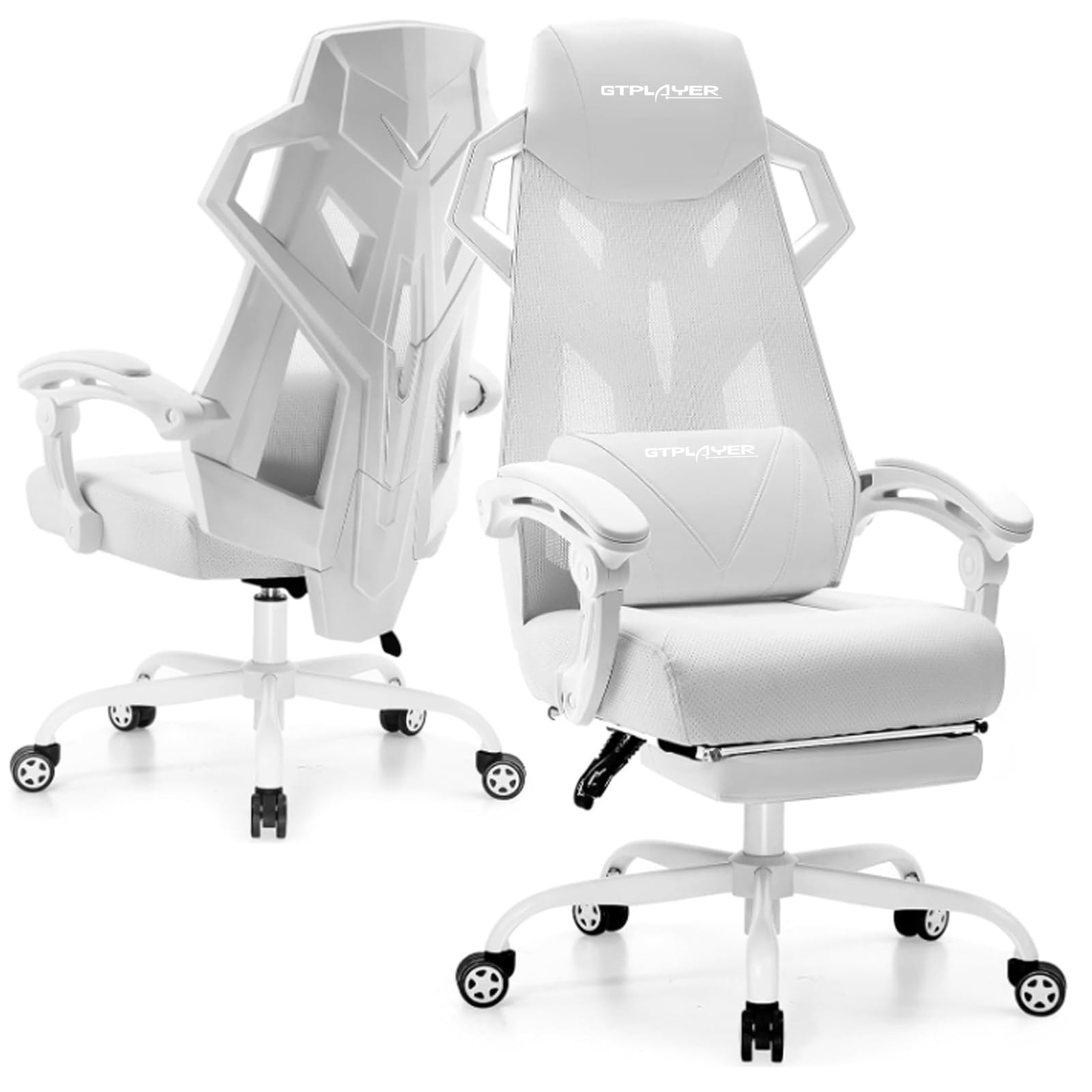
The GTPLAYER mesh-back gaming chair is the entry-level anchor of this roundup, but calling it a starter chair undersells its value proposition. The white color variant is genuinely bright (not cream or off-white), making it one of the few affordable options for gamers building a clean white or pastel setup. The mesh back and seat provide excellent ventilation for a foam-seat chair, which is a rare combination at this price point—most budget chairs use bonded leather that traps heat. The 135-degree recline and retractable footrest cover the basic break-mode needs, and the adjustable headrest and lumbar pillow give rudimentary ergonomic contact points.
The metal frame and 300-pound weight capacity are solid for the price, and the nylon casters roll smoothly on both carpet and hard floors without leaving marks. Assembly is straightforward, aided by a video guide that clears up the step order for attaching the backrest to the seat. The FSC-certified wood inner support is a nice ecological touch—not something you typically see at the bottom of a price tier. The chair sits at a comfortable height for desks between 28 and 30 inches, and the footrest deploys smoothly when you need a quick stretch between rounds.
Budget constraints show in two areas: the armrests are fixed in width and pivot, offering only height adjustment, so they won’t pull in tight under a narrow desk. The lumbar pillow is also on the firmer side and can feel like a blunt object pressing into the lower back rather than a conforming support. The foam cushion in the seat is standard-density foam, not high-resilience cold foam, meaning it will compress faster than the premium options over a year of heavy daily use. For a secondary setup, a college dorm, or a first gaming chair that doesn’t break the bank, though, this mesh option punches well above its weight class.
Why it’s great
- True bright white color matches white-themed gaming setups perfectly
- Mesh back + foam seat combines breathability with cushioning at a low entry price
- FSC-certified wood support frame is a rare eco-friendly detail in budget chairs
Good to know
- Armrests only adjust in height, not width or pivot
- Standard-density foam seat will compress faster than high-resilience foam options
FAQ
Is a footrest worth it on a gaming chair, or is it just a gimmick?
What does a 2-way lumbar adjustment do that a pillow cannot?
Can I use a gaming chair under $500 for full-time office work?
Final Thoughts: The Verdict
For most users, the best gaming chairs under $500 winner is the Razer Enki because it delivers the best balance of all-day seat comfort, natural lumbar arch support, and durable dual-textured upholstery without exceeding the budget ceiling. If you want a steel-base mesh chair that stays cool and offers precise lumbar depth adjustment, grab the GABRYLLY Ergonomic. And for a larger-framed player who needs a 440-pound capacity with 4D armrests and memory foam support, nothing beats the Fantasylab Big & Tall.