
Stop pumping and start drinking: a gravity water filter turns the chore of backcountry hydration into a hands-free choreography of hang, fill, and sip. You hang a dirty bag, connect a hose, and let physics do the filtering while you break camp or scan the map — no forearm fatigue, no squeezing, no mouthfuls of grit from a straw.
I’m Mohammad Maruf — the founder and writer behind Drink4Good. I’ve spent hundreds of hours comparing flow rates, micron ratings, cleanability, and pack weight across the leading backcountry filter platforms to separate the real workhorses from the weekend duds.
Whether you are solo-thru-hiking the Sierra or managing water for a group of scouts, finding the right gravity water filter backpacking system means balancing flow speed, total capacity, and field-maintenance ease without adding an extra pound to your load.
How To Choose The Best Gravity Water Filter Backpacking
A gravity system sounds simple — hang a bag, let water run through a filter into a clean bottle — but the decisions multiply when you factor in trail weight, group size, water source clarity, and how often you are willing to backflush. Below are the three decisions that separate a trail-tested rig from a frustrating one.
Flow Rate vs. Pragmatism
Manufacturers love to quote peak flow numbers in ideal lab conditions with brand-new membranes. Out on the trail, your rate depends on head height (the vertical drop from dirty bag to clean bottle), water temperature, and the amount of suspended sediment in the source. A system that advertises 2L per minute often delivers about 1L per minute by the third refill in a silty alpine lake. Prioritize filters with a shake-to-clean or backflush method that you can perform without a syringe or tools — those are the ones that keep the liters flowing after day three.
Total Capacity vs. Filter Life
Every hollow-fiber membrane has a rated lifespan — typically between 1,000 and 100,000 liters. But lifespan is only half the math. The more critical number is how many liters you actually filter per trip. A solo weekender filtering 4L per day needs maybe 28L per year, so a 1,000L filter lasts decades. A group of four filtering 12L per day for two weeks every summer burns through that same 1,000L in about a year. Match the rated volume to your annual consumption, not the theoretical maximum.
Weight and Bulk in the Pack
Gravity systems trade the squeeze-action weight for the weight of a bladder, hose, and filter head. A complete 3L gravity rig typically lands between 4 and 8 ounces. That is not heavy — but the bag’s packed footprint matters just as much. Bladders that roll or fold flat when empty fit into side pockets and food sacks without stealing space from your quilt or cook kit. Hard plastic reservoirs that do not collapse create dead space. Before buying, check whether the manufacturer lists packed dimensions, not just empty weight.
Quick Comparison
On smaller screens, swipe sideways to see the full table.
| Model | Category | Best For | Key Spec | Amazon |
|---|---|---|---|---|
| Katadyn BeFree Gravity 3L | Gravity System | Small group, fast fill | 0.1-micron, 2 L/min flow | Amazon |
| Katadyn BeFree 3.0L | Gravity System | Ultralight solo trips | 0.1-micron, 2 L/min | Amazon |
| LifeStraw Peak 3L | Gravity System | Group camping, durability | 3L capacity, backwash | Amazon |
| Sawyer Squeeze w/ CNOC 2L | Squeeze/Gravity | Convertible use, long life | 100,000-gal capacity | Amazon |
| Platypus Quickdraw 1L | Squeeze/Gravity | Ultralight, compact | 3.3 oz, bottle adapter | Amazon |
| MSR TrailShot | Squeeze Filter | On-the-go drinking | 1 L/min, 2,000L life | Amazon |
| Sierra Madre Straw (5-pack) | Straw Filter | Emergency kit, ultralight | 2 oz, 260 gal each | Amazon |
In‑Depth Reviews
1. Katadyn BeFree Gravity Water Filter 3L

The Katadyn BeFree Gravity 3L is the closest thing to set-it-and-forget-it filtration in the backcountry. Fill the collapsible Hydrapak bag at a stream, hang it from a branch, and water flows through the 0.1-micron EZ-Clean hollow-fiber membrane at up to 2 L per minute into your waiting bottle or hydration bladder. Real-world users report filling a standard Nalgene in under 20 seconds, making this the fastest gravity system tested for small-group use. The entire rig weighs only 0.4 pounds and packs flat when empty, stealing almost no room from your main bag compartment.
The EZ-Clean maintenance is the standout feature — when flow slows from sediment buildup, you simply shake the filter or swish it in clean water. No syringes, no backflush kit, no disassembly. Katadyn backs the membrane with a 1,000-liter rated lifespan, which covers years of weekend trips for most users. The 3-liter dirty bag provides enough volume for two people to fill their bottles and still have water left for cooking, eliminating the need for multiple collection runs.
One trade-off: the soft-sided dirty bag can be finicky to fill in very shallow streams — it needs depth to submerge the wide opening. A few users also note that if you drop the bag on bare ground it tends to attract dirt like a magnet, so a dedicated dry-bag or stuff-sack is worth carrying for the clean side. Overall, the combination of gravity-fed speed, shake-to-clean convenience, and packable design puts the BeFree Gravity 3L at the top of the list for any backpacker or small group.
Why it’s great
- Fastest real-world flow rate in the category at 2 L/min
- Zero-tool cleaning — just shake or swish the membrane
- Ultra-packable flat-fold design at only 0.4 lb
Good to know
- Dirty bag is hard to fill in shallow water sources
- Soft bag exterior attracts dirt and debris easily
- Rated filter lifespan of 1,000 L — shorter than some squeeze competitors
2. Katadyn BeFree 3.0L Water Filter
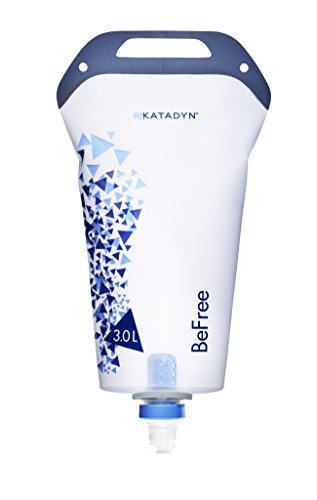
The earlier-generation Katadyn BeFree 3.0L shares the same 0.1-micron EZ-Clean hollow-fiber technology as the Gravity 3L but in a slightly different package — the filter attaches directly to the 3.0L Hydrapak bottle rather than to a dedicated gravity hose system. This makes it equally effective as a gravity setup when hung, but also allows direct drinking from the bottle or use as a squeeze filter for filling camp containers. Weight comes in at just 3.5 ounces for the complete system, beating most dedicated gravity rigs by a full ounce or more.
Real-world reviews from John Muir Trail thru-hikers and multi-day kayak expeditions report that the 3.0L unit filled 2+ gallons per day for eight straight days with zero issues. The flow rate is genuinely fast — users report filtering 3 liters in about 3 to 5 minutes, which is competitive with the Gravity 3L. The wide-mouth opening makes collection from streams and lakes easier than the Sawyer Squeeze’s narrow pouch design, and the flexible bottle rolls flat when empty for compact storage in an outside pocket.
The primary downsides are durability-related: the filter element itself feels fragile, and users caution against touching the white membrane fibers. The bottle’s cap can leak slightly if not held shut during shaking, and the mouthpiece may drip when the system is hung upside-down with water pressure behind it. For solo backpackers and ultralight enthusiasts who prioritize weight and speed over brute-force durability, this remains one of the most efficient systems available. Made in Switzerland, the filter meets EPA standards for bacteria (99.9999%) and protozoa (99.9%) removal.
Why it’s great
- Ultralight at 3.5 oz complete system
- Fast flow — 3L in about 3-5 minutes
- Wide-mouth opening for easy stream collection
Good to know
- Filter membrane feels delicate and should not be touched
- Bottle cap can leak slightly if not held shut when shaking
- Mouthpiece drips when system is hung upside-down
3. LifeStraw Peak Series 3L Gravity System

The LifeStraw Peak Series 3L Gravity System brings the brand’s global health reputation into the group-camping space with a rugged, leak-proof construction that feels noticeably tougher than the soft-sided Hydrapak competitors. The re-engineered membrane is paired with a custom backwash accessory that restores flow even after filtering sand and silt, making this a strong choice for environments where water sources are less-than-pristine — think high-use alpine lakes or silty desert springs. The system removes 99.999999% of bacteria and 99.999% of parasites, hitting the highest removal percentages in this comparison.
Users who use the Peak for multi-week backpacking and hunting trips consistently praise its durability and compact storage — the filter stores inside the bag when not in use, creating a single tidy package that fits easily in a pack. The 3-liter capacity handles group refills nicely: fill two 1L smartwater bottles and still have a liter left for dinner. A bonus many owners appreciate: the hose can plug directly into a hydration bladder’s quick-disconnect fitting, turning your entire Camelbak into a gravity-fed clean water reservoir.
The main friction point is bag filling in slow-moving or shallow water — several reviewers mention needing to use a cut-corner ziplock bag as a scoop because the wide opening could not submerge enough. The filter is also not designed for freezing conditions, which limits winter use. For car-camping base camps, scout groups, or emergency preparedness kits where durability and high pathogen removal rates are the top priorities, the LifeStraw Peak Series is the most rugged gravity system tested here.
Why it’s great
- Highest bacteria removal rate at 99.999999%
- Extremely durable, leak-proof construction
- Filter stores inside bag for a single compact package
Good to know
- Hard to fill in slow or shallow water without a scoop
- Do not use in freezing temperatures
- Heavier than ultralight competitors at 8 oz
4. Sawyer Squeeze Water Filtration System (w/ CNOC 2L)

The Sawyer Squeeze has been a thru-hiking staple for years, and this bundle with the Cnoc 2L bladder transforms it into a capable gravity system without sacrificing the option to squeeze-filter as needed. The hollow-fiber cartridge is rated for a staggering 100,000 gallons — roughly 378,000 liters — meaning for the average weekend backpacker, this filter will outlive your pack, your boots, and probably your patience before it needs replacement. The Cnoc bladder is made from extra-durable TPU with a wide-mouth opening that makes collection from streams and lakes significantly easier than Sawyer’s original foldable pouch.
In gravity mode, hang the Cnoc bag and let water run through the Squeeze cartridge into a clean bottle or bladder. The flow is slower than the Katadyn BeFree — expect about 1 liter per minute in ideal conditions — but the filter’s field-cleanability is excellent thanks to the included syringe for backflushing. Users who took the Squeeze on month-long Appalachian Trail hikes reported that a single cartridge lasted the entire journey and still had plenty of life left. The entire system weighs under 6 ounces, and the Squeeze cartridge itself is only 2 inches in diameter by 5 inches long, making it easy to stash in a side pocket.
The downsides are design trade-offs. The Squeeze requires the syringe to backflush effectively — you cannot simply shake it clean like the Katadyn. The Cnoc bladder, while tough, is not as packable as a flat-folding Hydrapak bag when fully empty. And if you use the Squeeze purely in gravity mode, the flow rate will feel sluggish compared to a dedicated gravity system. However, the virtually unlimited filter lifespan and the ability to switch between squeeze, gravity, and inline use make this the most versatile and cost-effective option for long-distance hikers and budget-conscious backpackers.
Why it’s great
- Almost infinite 100,000-gallon filter lifespan
- Versatile squeeze, gravity, and inline modes
- Durable CNOC TPU bladder with wide mouth
Good to know
- Slower gravity flow — ~1 L/min versus 2 L/min for Katadyn
- Requires syringe to backflush effectively
- CNOC bladder does not pack as flat as Hydrapak
5. Platypus Quickdraw Ultralight 1L System

The Platypus Quickdraw is the ultralight specialist of the group, weighing just 3.3 ounces for the complete 1-liter system — filter, reservoir, caps, and adapter. When used in gravity mode, it delivers a respectable 1.75 liters per minute, which is competitive with much bulkier systems. The unique ConnectCap threads the clean side of the filter directly onto any standard 28mm water bottle — Smartwater, soda bottles, select Cnoc bags — eliminating the need for a separate clean bottle or adaptor. This single feature reduces your gear count by one item and makes the Quickdraw the most streamlined system for solo backpackers and fast-packers.
Field reviews consistently praise the Quickdraw’s ease of use and compact storage. The 1-liter reservoir measures only 11.5 x 5.5 inches when full and rolls down to almost nothing when empty. The shake-to-clean method restores flow without tools, and the filter carries NSF/EPA P231 certification for removing 99.9999% of bacteria and 99.9% of protozoa. Several reviewers who used the Quickdraw on week-long trips report that the flow rate stayed consistent even without backflushing, thanks to the hollow-fiber design that sheds sediment rather than trapping it.
The clear trade-off is capacity: at 1 liter, the dirty bag is too small for group use or even for filling a 2-liter hydration bladder without multiple collection trips. This is strictly a solo system. The plastic construction, while lightweight, feels less military-grade than the MSR or LifeStraw options, and the small reservoir opening can be a nuisance to fill in shallow water. For the solo ultralight enthusiast who wants the lightest gravity-compatible system with a universal bottle adapter, the Quickdraw is unmatched.
Why it’s great
- Incredibly light at 3.3 oz complete
- ConnectCap threads onto any standard 28mm bottle
- Consistent flow without frequent backflushing
Good to know
- 1L reservoir is too small for group use
- Plastic body feels less rugged than premium competitors
- Small opening makes filling in shallow water tricky
6. MSR TrailShot Ultralight Squeeze Water Filter

The MSR TrailShot is not a gravity system in its default configuration — it is a squeeze filter that you pump by hand — but its design philosophy of “drink directly from the source” makes it a compelling alternative for hikers who want the weight savings of a straw setup without having to handle dirty bags. The one-handed operation squeezes water through a hollow-fiber membrane at 1 liter per minute, directly into your mouth or bottle via the included drinking spout. At 5 ounces and 6 inches long, it fits into a hip-belt pocket or stash pouch for trail runners and mountain bikers who prioritize access speed.
Users who have used the TrailShot on multi-day backpacking trips in the Sierra Nevada and Appalachian trails report that the flow rate is fast enough to fill a 1L bottle in about 60 seconds with steady hand pressure. The filter traps bacteria (99.9999%) and protozoa (99.9%) and is rated for up to 2,000 liters. Field maintenance is simple: back-pump clean water through the intake to clear sediment, which is easier than carrying a separate syringe. The actual weight comes in at 4.9 ounces per one owner’s scale, which is lighter than the 6-ounce Sawyer Squeeze system.
The trade-offs are hand fatigue and capacity. For large volumes — treating 4+ liters per day for a group — the continuous squeezing becomes tiring, and you will wish for a true gravity setup. The included rubber intake hose is prone to nicks and cuts if you pack it carelessly, and the filter does not remove chemicals or viruses. For solo hikers and fast-packers who want a compact, grab-and-go filter that works without a bag, the TrailShot is a smart, lightweight choice, but it is not a pure gravity replacement for basecamp use.
Why it’s great
- Lightest full-flow filter at 4.9 oz actual weight
- One-handed operation for direct drinking or bottle filling
- Simple back-pump cleaning without syringe
Good to know
- Hand-squeezing gets tiring for large volumes
- Rubber tube is prone to nicks and cuts
- No virus removal or chemical filtration
7. Sierra Madre Portable Water Filter Straw (5-Pack)

The Sierra Madre Portable Water Filter Straw is a different animal from the gravity systems above — it is a personal drinking straw, not a gravity bag setup. This 5-pack of filters is designed for emergency kits, go-bags, and ultralight hikers who want an absolute minimum weight solution. Each straw weighs 2 ounces and measures 6 inches long, with a 2-stage filtration system in a BPA-free ABS shell. The flow rate is 400 ml per minute, and each straw is rated for 260 gallons (1,000 liters) of use. Unopened, they store for up to 5 years in dry conditions, making them ideal for long-term emergency preparedness.
Users who keep these in their car, bug-out bag, or hiking day-pack appreciate that they eliminate the need to carry heavy water bottles — simply drink directly from any stream, spring, or lake. The straw-style filtration requires no setup, no batteries, and no pumping. Sierra Madre recommends replacing the straw after one year once opened, but the storage lifespan before opening is competitive with other emergency filters. Reviewers specifically note that the straw is smaller and better-featured than many similar products in the emergency preparedness space.
The major limitation is that a drinking straw cannot produce bulk water for cooking, hydration bladders, or group use. You drink directly from the source, one sip at a time, which is slow for thirsty hikers. The filtration technology is less robust than the hollow-fiber membranes found in the Sawyer, Katadyn, or Platypus systems — it reduces sediment and improves taste, but the manufacturer does not claim specific bacteria or protozoa removal percentages, so this is best regarded as an emergency backup rather than a primary backcountry filter. For the weight-conscious prepper or as a redundancy in a multi-person group, the 5-pack offers excellent value per unit.
Why it’s great
- Extremely lightweight at 2 oz per straw
- 5-year storage life unopened — ideal for emergency kits
- No pumping, batteries, or setup required
Good to know
- Cannot produce bulk water for cooking or group use
- No specific bacteria/protozoa removal claims
- Slow flow at 400 ml/min compared to gravity systems
FAQ
Can I use a gravity water filter for group camping or only solo trips?
How often should I backflush my gravity filter to maintain flow?
Can I freeze my gravity water filter without damaging it?
Why does my gravity filter taste like plastic or chemicals when new?
How do I clean a gravity filter in the field without a syringe?
Final Thoughts: The Verdict
For most backpackers, the gravity water filter backpacking winner is the Katadyn BeFree Gravity 3L because it combines the fastest real-world flow rate, the most convenient shake-to-clean maintenance, and a packable weight that disappears into any load. If you want a filter that can also work as a squeeze system and will outlast every other piece of gear you own, grab the Sawyer Squeeze with CNOC 2L. And for a bomber, leak-proof system designed for rough group use and adventure motorcycle trips, nothing beats the LifeStraw Peak Series 3L.