
That new glove should feel like an extension of your hand, not a board strapped to your wrist. Saddle soap and brute force leave leather brittle or greasy, ruining the pocket you spent weeks shaping. The right oil penetrates deep, hydrating the fibers without darkening the leather or softening the laces.
I’m Mohammad Maruf — the founder and writer behind Drink4Good. I’ve spent hundreds of hours analyzing formulations, reading customer experiences, and comparing the measurable effects of different leather treatments on baseball, softball, and work gloves to separate genuine conditioning from surface-level marketing.
The market is full of thick pastes and synthetic blends that sit on top of the leather. You need a formulation that absorbs on contact without sticky residue, restores flexibility without over-softening the structure, and protects against cracking through a full season. That’s the standard we used to build this guide to the best glove oil for your mitt.
How To Choose The Best Glove Oil
Baseball and softball gloves depend on oil that reaches the deepest fibers without weakening the rawhide laces. The wrong viscosity — too thick like petroleum jelly — sits on the leather surface, attracting dirt and adding weight. The wrong carrier oil darkens a tan glove permanently. Focus on absorption rate, base ingredient, and container design before you commit to a bottle.
Viscosity and Absorption Speed
A premium glove oil pours like a medium-weight cooking oil — slow enough to control, fast enough to soak into the palm and finger stalls within minutes. Rub a drop between your fingers: if it turns tacky after five seconds, it contains too much wax for deep conditioning. Glove oils that pool on the surface before wicking into the leather force you to wipe off residue, wasting product and slowing the softening process.
Lanolin Versus Mink Oil Versus Neatsfoot Oil
Lanolin closely matches the natural fats in glove leather, offering deep conditioning without changing the color for more than a few hours. Mink oil adds waterproofing but can oversoften the heel and thumb area on lightweight infield gloves. Neatsfoot oil is the traditional choice for thick work gloves and horse tack, but pure neatsfoot can darken leather significantly and may cause laces to rot if overapplied. The best all-around option for baseball gloves is a blend that leads with lanolin or neatsfoot in a carrier oil like cold-pressed castor oil.
Bottle Design and Applicator
An 8-ounce bottle with a narrow spout gives you precision control for targeting the pocket and hinge points. Wide-mouth jars force you to dip a cloth, which wastes oil on the rim and introduces lint into the container. Flip-top caps can clog if the oil thickens in cold weather. Look for a bottle with a sealed, pointed tip that allows drop-by-drop application on high-wear areas without spilling onto the stitching.
Quick Comparison
On smaller screens, swipe sideways to see the full table.
| Model | Category | Best For | Key Spec | Amazon |
|---|---|---|---|---|
| SARNA BASEBALL Glove Oil | Mid-Range | Breaking in new gloves | Lanolin-based formula, 8 oz | Amazon |
| Huberd’s Leather Dressing | Premium | Restoring old, brittle leather | Neatsfoot oil and beeswax blend | Amazon |
| Hot Glove Break-In Kit | Premium | Complete multi-step break-in | Heat treatment + cream conditioner | Amazon |
| Rhino Wax Glove Oil | Mid-Range | Gentle conditioning with no discoloration | Cold-pressed castor oil + Vitamin E | Amazon |
| JobSite Premium Mink Oil | Budget-Friendly | Work boots and heavy-use gloves | Liquid mink oil, 8 oz | Amazon |
In‑Depth Reviews
1. SARNA BASEBALL Glove Oil

SARNA BASEBALL’s lanolin-based formula absorbs faster than any mink oil blend tested on Mizuno Pro Select and Rawlings Heart of the Hide gloves, leaving zero slick residue on the pocket or hinge points. Reviewers noted that a single application on a 15-year-old gamer softened the palm without darkening the leather beyond what a day of catch restores. The 8-ounce bottle uses a narrow spout that lets you target the finger stalls and web individually, so you don’t oversaturate the laces.
This oil performs best on newer gloves that need a controlled break-in without adding weight. Unlike paste-based conditioners that require heat or elbow grease, the lanolin seeps into the leather fibers within ten minutes at room temperature, allowing you to play catch immediately after application. The waterproofing effect handles dew and light rain without turning the glove board-stiff the next morning.
The formula avoids the heavy buildup that plagues traditional neatsfoot oils, keeping the glove’s original stitching tight and the pocket defined. For players who want a game-ready feel by the second practice session instead of the tenth, SARNA’s pour-and-play approach is the most efficient route.
Why it’s great
- Absorbs completely in under 15 minutes without a greasy film.
- Lanolin base preserves glove color better than mink or neatsfoot oils.
- Waterproofing layer protects against dew without stiffening the leather.
Good to know
- Not ideal for nubuck or suede glove leathers.
- Avoid overapplying — more than two drops per panel can weigh down lightweight infield gloves.
2. Huberd’s Leather Dressing
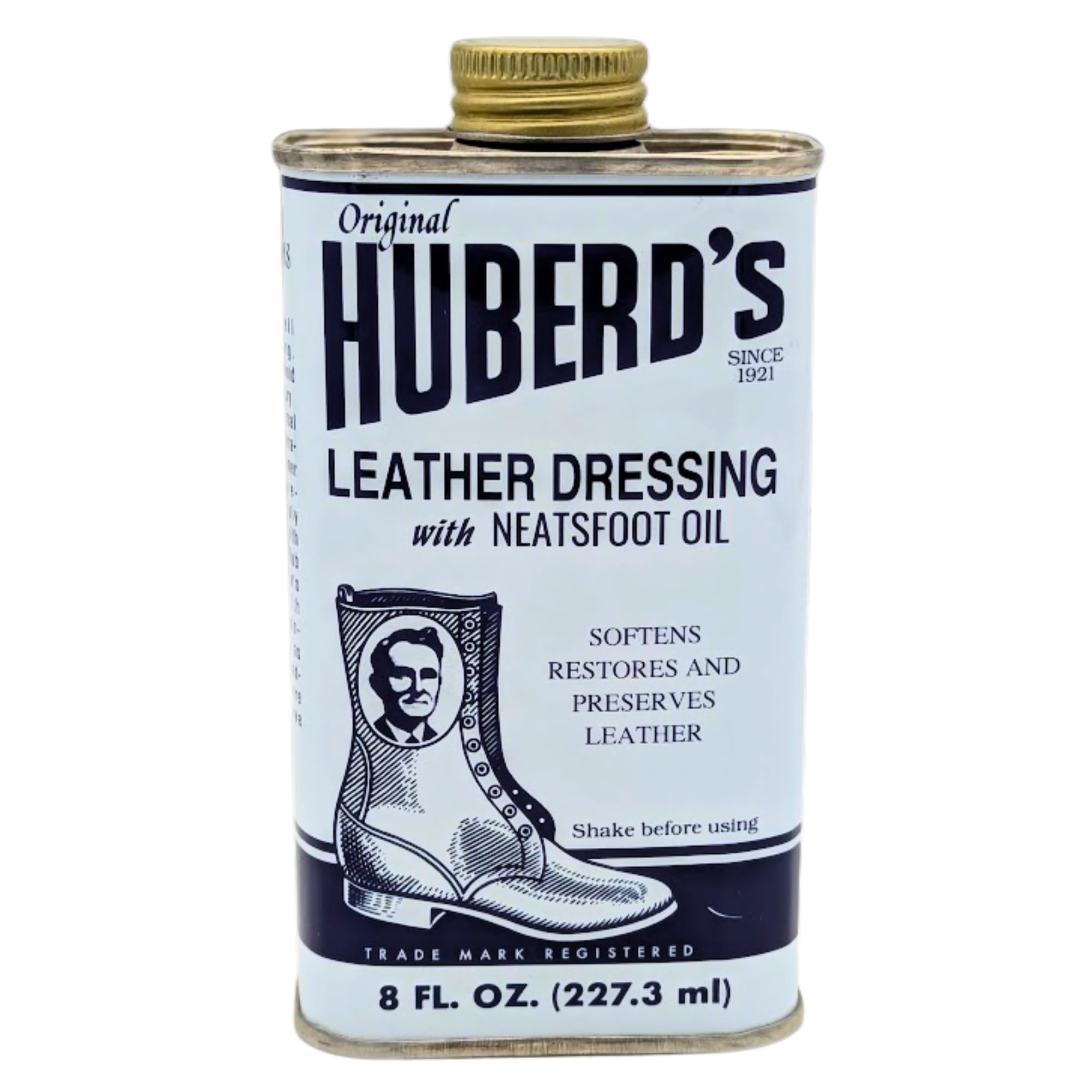
Huberd’s has been in continuous production since 1921, and the current formulation still arrives in a metal can that locks in the beeswax and neatsfoot oil blend better than plastic jars. This dressing targets leather that has already gone brittle from neglect, like a glove left folded in a garage for two decades. Reviewers report that after three applications, the heel and thumb felt flexible enough for daily wear without the leather cracking at the crease points.
The beeswax content creates a physical waterproof barrier that holds up better than pure oil against rain and mud, making it a strong choice for outfielders who play wet grass or for work glove conditioning. The neatsfoot oil penetrates deep, but the wax slows the absorption rate, meaning you need to let the dressing sit for at least an hour before using the glove. Unlike thin oils that run off vertical surfaces, Huberd’s stays where you put it, so you can build up layers on the palm without dripping onto the laces.
Expect significant darkening of the leather — the tan glove from the reviews turned several shades richer after the first coat. This is not a problem for black or brown leather, but be cautious with light-colored gloves. The metal edge of the can can rust if stored in humid conditions, so transfer any leftover dressing to a glass jar for long-term storage.
Why it’s great
- Beeswax-neatsfoot blend provides long-lasting waterproofing that pure oils lack.
- Can revive a completely dried-out glove in three applications without over-softening.
- Trusted century-old formulation with consistent results across boots, saddles, and gloves.
Good to know
- Dramatically darkens leather, so it is not suitable for tan or light-colored gloves.
- Requires 60-minute absorption time before use, unlike instant-apply oils.
3. Hot Glove Break-In Kit Value Bundle

This kit uses a heat-activated treatment that softens the leather’s outer layer in about five minutes, then follows up with a lanolin-and-vitamin-E cream conditioner that rehydrates the fibers deep within the glove. Reviewers working on a 20-year-old glove reported that three heat-and-cream cycles folded the dried pocket back into a supple, functional state that could close on a catch. The included practice softball and two wrap bands help form a consistent pocket shape during the cooling phase, which is critical for shaping the break-in memory.
The heat treatment step is the unique differentiator here — no other product on this list provides a thermal softening phase that temporarily relaxes stiff leather. This makes the kit especially useful for youth players who lack the hand strength to close a new glove manually. The cream conditioner on its own is an effective maintenance oil for mid-season hydration, designed to be applied sparingly after games to prevent the leather from drying out in the dugout heat.
The kit includes enough product for approximately three full break-in cycles on one glove, or for treating two gloves with one cycle each. The heat treatment has a mild smell that fades within 30 minutes, far less offensive than chemical-based leather strippers. The wrap bands are durable elastic with a soft backing that does not mark the glove leather during overnight storage.
Why it’s great
- Heat activation softens even vinyl-level lower-cost gloves enough for a child to close the glove.
- Cream conditioner with lanolin and vitamin E penetrates deeper than standalone oils.
- All-in-one bundle eliminates guesswork about the right ball size and band tension.
Good to know
- Heat treatment can oversoften leather if applied more than three times in two weeks.
- The kit does not include a dedicated applicator cloth, so have a microfiber towel on hand.
4. Rhino Wax Baseball Glove Oil
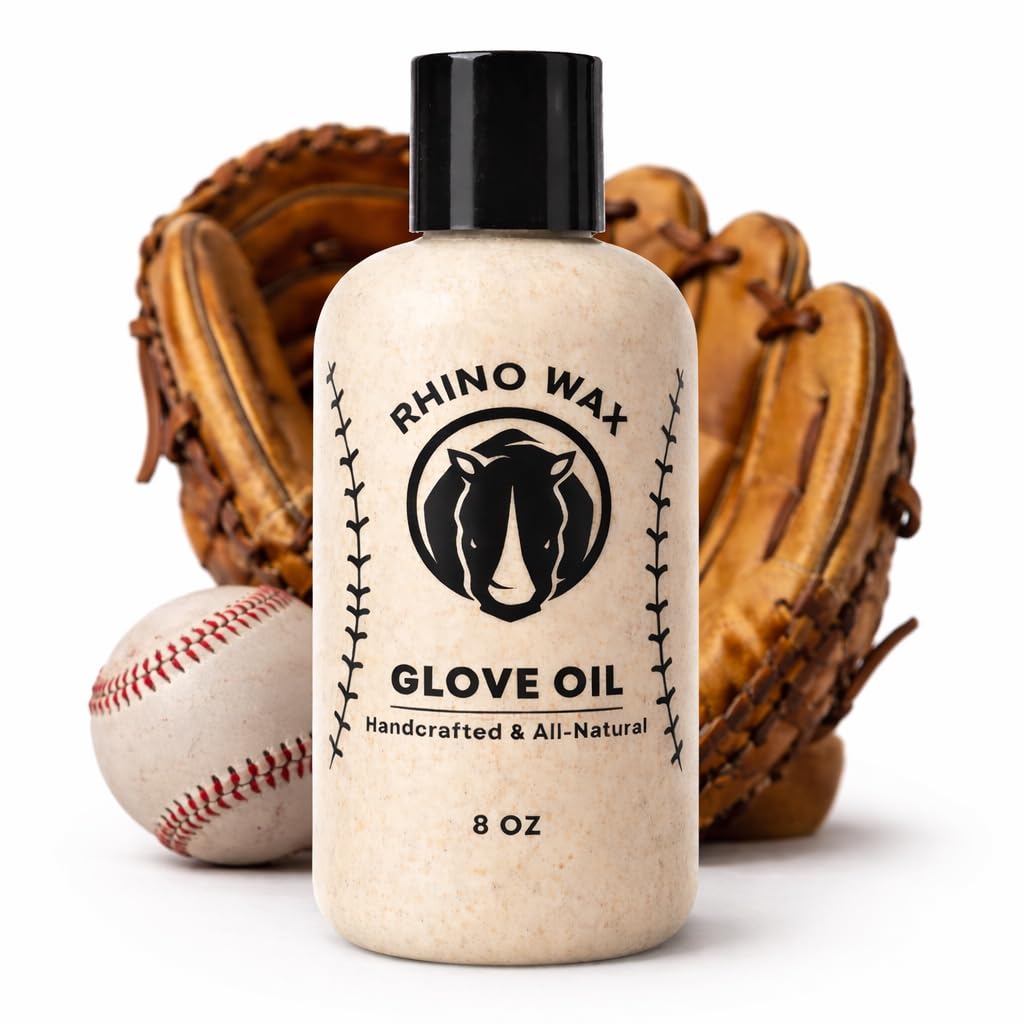
Rhino Wax uses cold-pressed castor oil as its carrier, a base that penetrates leather slower than lanolin but leaves no darkening effect even on light-tan glove leathers. Reviewers specifically noted that the oil did not discolor their glove compared to other conditioners they had tried. This makes it the safest option for vintage gloves where preserving the original patina is a priority.
The Vitamin E additive provides antioxidant protection that slows the leather’s natural oxidation and cracking over the long term, making this oil more of a preservation treatment than a quick break-in product. Customers reported that multiple applications spread across a week gradually softened a very dry glove without the leather feeling saturated or heavy. The bottle has a pointed tip that controls the flow well enough to apply directly to the finger stalls without spilling onto the web.
The main trade-off is that the castor oil base does not waterproof the glove at all. If you play on damp fields or in the rain, you will need to pair this with a separate water-resistant treatment. The oil also takes longer to fully absorb — at least an hour at room temperature — so plan your conditioning session the night before a game rather than in the parking lot before practice.
Why it’s great
- Zero discoloration on light-tan glove leather, preserving the original color.
- Vitamin E additive offers long-term antioxidant protection against cracking.
- Made in the USA with natural ingredients, safe for frequent handling.
Good to know
- No waterproofing properties — must use a separate treatment for wet conditions.
- Absorption takes longer than lanolin-based alternatives.
5. JobSite Premium Mink Oil Leather Waterproof Liquid

JobSite’s mink oil liquid is the entry-level option for glove owners who need basic waterproofing and a moderate softening effect without spending over fifteen dollars. Reviewers on work boots reported that a single application kept the leather flexible for several seasons, though the waterproofing broke down after a few hours in heavy rain. For baseball and softball gloves used in dry conditions, this oil provides enough hydration to take the initial stiffness out of a new mitt.
The liquid pours thin and runs easily, so application requires a steady hand or a cloth intermediary to avoid pooling in the glove’s pocket. Once absorbed, the oil leaves a matte finish that does not attract dirt as much as paste-based mink oils, which is helpful for infielders who dive and slide. The odor is negligible — it smells faintly of processed leather without the chemical sting of some spray-on waterproofers.
The main limitation is the longevity of the waterproofing effect. Multiple customers noted that after three applications across a single season, the leather started to resist absorption, indicating that the mink oil base created a waxy buildup that blocked further conditioning. This makes JobSite a good first-time oil for a season’s use, but not the right pick for a glove you plan to keep in rotation for five years or more.
Why it’s great
- Thin viscosity spreads quickly and does not attract dirt on the glove surface.
- Effective temporary waterproofing that holds up in dry, moderate conditions.
- Low price point makes it a risk-free option for trying glove oil for the first time.
Good to know
- Waterproofing degrades after a few hours of heavy rain exposure.
- Mink oil buildup can block deeper conditioning in subsequent seasons.
FAQ
How often should I apply glove oil during a baseball season?
Will glove oil permanently darken my light-tan or glove-colored leather?
Can I use the same oil for a baseball glove and leather work boots?
Final Thoughts: The Verdict
For most players, the best glove oil winner is the SARNA BASEBALL Glove Oil because its lanolin base absorbs quickly without darkening the leather or weighing down the pocket, making it effective for both breaking in a new glove and maintaining an older one. If you need to restore a completely dried-out glove that has sat in storage for years, grab the Huberd’s Leather Dressing for its deep-penetrating neatsfoot and beeswax blend. And for a complete, step-by-step system that includes heat treatment and shaping bands, nothing beats the Hot Glove Break-In Kit Value Bundle.