
A generator that coughs and sputters or refuses to start during a power outage isn’t just an inconvenience — it’s a failed safety net. The culprit is almost always degraded fuel that has gummed up the carburetor, drawn moisture, or formed varnish deposits after just a few weeks of sitting idle. Pouring in a proper stabilizer before storage changes that equation entirely, chemically preserving the gasoline so it remains volatile and clean-burning months later.
I’m Mohammad Maruf — the founder and writer behind Drink4Good. My process for this guide involved cross-referencing dozens of technical spec sheets, analyzing customer reviews across thousands of hours of real-world generator use, and comparing chemical formulations side-by-side to determine which stabilizers actually deliver on their storage claims.
Whether you’re winterizing a whole-house standby unit or protecting a portable inverter for emergency use, knowing which chemistry works best for your specific fuel type and storage duration is critical. This guide breaks down the seven top-rated options to help you choose the right fuel stabilizer for generator based on concrete performance data and proven user results.
How To Choose The Best Fuel Stabilizer For Generator
Not all fuel stabilizers are created equal for generator use. A generator’s fuel system — carburetor jets, fuel lines, and float bowls — is extremely sensitive to deposits, and the engine typically sits unused for long stretches. Choosing a stabilizer requires matching the chemical approach to your storage habits, fuel type, and generator engine class.
Enzyme-Based vs. Hydrocarbon-Based Formulas
Enzyme-based stabilizers like the Star Tron line use biological catalysts to continuously break down existing deposits and prevent new ones from forming. They actively consume the precursors of gum and varnish, making them ideal for engines with existing residue. Hydrocarbon-based stabilizers (typical in products like STA-BIL) create a protective chemical layer on the fuel surface to slow oxidation. They are more effective at preventing future problems in clean fuel systems but do not clean existing crud. For a generator with an unknown history, an enzyme formula is often the safer bet.
Water Removal and Phase Separation Prevention
Ethanol in pump gas is hygroscopic — it absorbs moisture from the air inside the tank. Once the water concentration exceeds a threshold, ethanol separates from the gasoline and sinks to the bottom where it can corrode a generator’s aluminum carburetor. A stabilizer that disperses water into tiny droplets that burn harmlessly during engine operation (Star Tron and VP Racing both claim this) is superior to one that just claims to stabilize the fuel itself. Check the label specifically for “phase separation prevention” — not all stabilizers handle water.
Dosage Economics and Tank Fit
Generator fuel tanks vary wildly: a small portable unit might hold 1.5 gallons, while a whole-house standby can have a 30-gallon integral tank. The treatment ratio matters. A bottle that treats 1 oz per 16 gallons forces you to calculate odd doses for smaller tanks. Products with a 1 oz per 5 gallon ratio (like CRC Marine) are easier to dose accurately for medium tanks. For very large integrated generator tanks, a gallon-sized concentrate is significantly more cost-effective than buying six-ounce bottles repeatedly.
Storage Duration vs. Protection Chemistry
Some stabilizers promise protection for one year, others claim up to three years. The difference is the chemical base and the antioxidant pack. If your generator only sits for the off-season (~4-6 months), a standard stabilizer labeled that it protects up to one year is sufficient. If you only run the generator during grid outages and refuel once annually, look specifically for a stabilizer that advertises stabilizing fuel for two or more years — the Ethanol Shield could be a fit here. Shorter claims meeting actual use saves you money on excess chemistry.
Quick Comparison
On smaller screens, swipe sideways to see the full table.
| Model | Category | Best For | Key Spec | Amazon |
|---|---|---|---|---|
| Star Tron Enzyme Fuel Treatment | Enzyme | Cleaning old deposits | 1 oz treats 16 gallons | Amazon |
| STA-BIL Fast Fix Small Engine Treatment | Quick Clean | Fixing rough starts | 1 oz treats 2.5 gallons | Amazon |
| CRC Marine Fuel Stabilizer | Concentrate | Large tank economy | 1 oz treats 5 gallons | Amazon |
| Star Brite PRO Gas Stabilizer + Fog | Fogging Combo | Winterizing one-step | 1 oz treats 5 gallons | Amazon |
| VP Racing Fuels 6205 SEF Fuel | Ethanol-Free Fuel | No stabilizer needed | 94 octane, ethanol-free | Amazon |
| VP Madditive Fuel Stabilizer | Ethanol Armor | Water and corrosion shield | 8 oz per treatment rate | Amazon |
| Ethanol Shield Fuel Stabilizer | Long-Term Storage | 3-year storage needs | Treats up to 1280 gallons | Amazon |
In‑Depth Reviews
1. Star Tron Enzyme Fuel Treatment
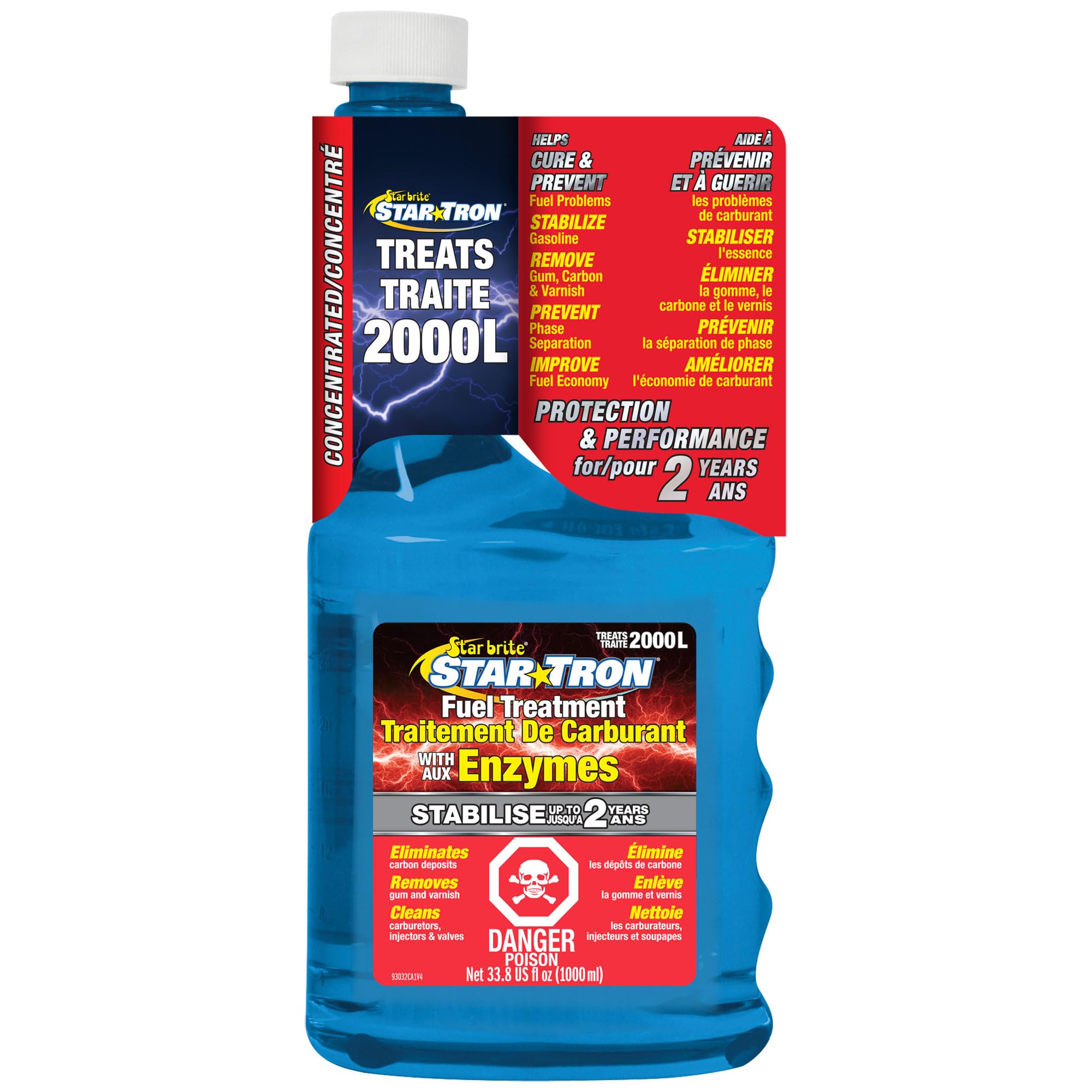
Star Tron’s enzyme technology sets it apart from every other stabilizer on this list. Instead of merely creating a protective layer over the fuel surface, its biological catalysts continuously break down the precursors of gum, varnish, and carbon deposits inside the carburetor and fuel passages. This makes it uniquely effective for generators that have sat for years with untreated fuel — it actively remediates existing crud while preventing new buildup. At just one fluid ounce per 16 gallons of fuel, the 32-ounce bottle treats a massive 512 gallons, making the cost per treatment very low even next to some budget options.
The formula also addresses the ethanol-water problem directly by dispersing water into submicron droplets that burn harmlessly during generator operation. Users consistently report that generators with season-long storage start on the first or second pull after treatment, with no sputtering or hesitation. The stabilizer is compatible with all 2-cycle and 4-cycle gasoline engines, so one bottle covers everything from the portable inverter to the pressure washer and lawn tractor.
The star attraction for many users is the ability to rejuvenate old, sub-spec fuel. If you find a gas can that has been sitting for a year, Star Tron can often bring it back to a usable state, saving you the hassle and expense of disposal. The fuel remains stable for up to two years from treatment, which covers multiple off-seasons without re-dosing. For generator owners who want the deepest clean and the widest compatibility, this product earns its top spot.
Why it’s great
- Advanced enzyme technology actively removes deposits
- Extremely cost-effective at 1 oz per 16 gallons
- Rejuvenates old or stale gasoline
Good to know
- Higher initial cost for the 32 oz bottle
- Enzyme formula works best with continuous contact over time
2. CRC Marine Gasoline Fuel Stabilizer

CRC Marine Fuel Stabilizer may carry a “Marine” designation, but its high-potency concentrate formula works flawlessly in 4-cycle generators, agricultural equipment, and lawn machines. The key advantage here is the volume to price ratio: a full gallon (128 ounces) of concentrated formula treats thousands of gallons of gasoline at a rate of 1 ounce per 5 gallons. For generator owners with large integral fuel tanks or multiple engines to treat, this represents the lowest cost-per-gallon treated in the entire roundup.
The formula is designed to reduce the harmful impact of ethanol-blended gasoline on the fuel system, specifically targeting resin and gum buildup. An experienced retired mechanic who uses it on all his stored equipment reports never having to rebuild a carburetor since switching to CRC. That kind of anecdotal durability evidence — from someone who knows how carburetors fail — carries weight. The stabilizer works on both 2 and 4 cycle engines, so it also protects your chainsaw, snow blower, and weed trimmer.
On the practical side, the 1-gallon jug is bulky but allows you to decant small amounts into a smaller container for portable tool bags. The concentrate means you need to measure carefully for small tanks: a 2-gallon generator tank requires just 0.4 ounces, so a graduated medicine cup is a good addition. Users who have stored boats and generators through multiple winters note that the fuel stays fresh and engines start without drama the following season. For sheer volume economy, CRC is hard to beat.
Why it’s great
- Best value per treated gallon in the lineup
- Works effectively against resin, gum, and ethanol damage
- Concentrated formula fits large tank needs
Good to know
- Requires careful dosing for small generator tanks
- Bulk 1-gallon jug is heavy to handle
3. Star Brite PRO Gas Stabilizer + Fogging
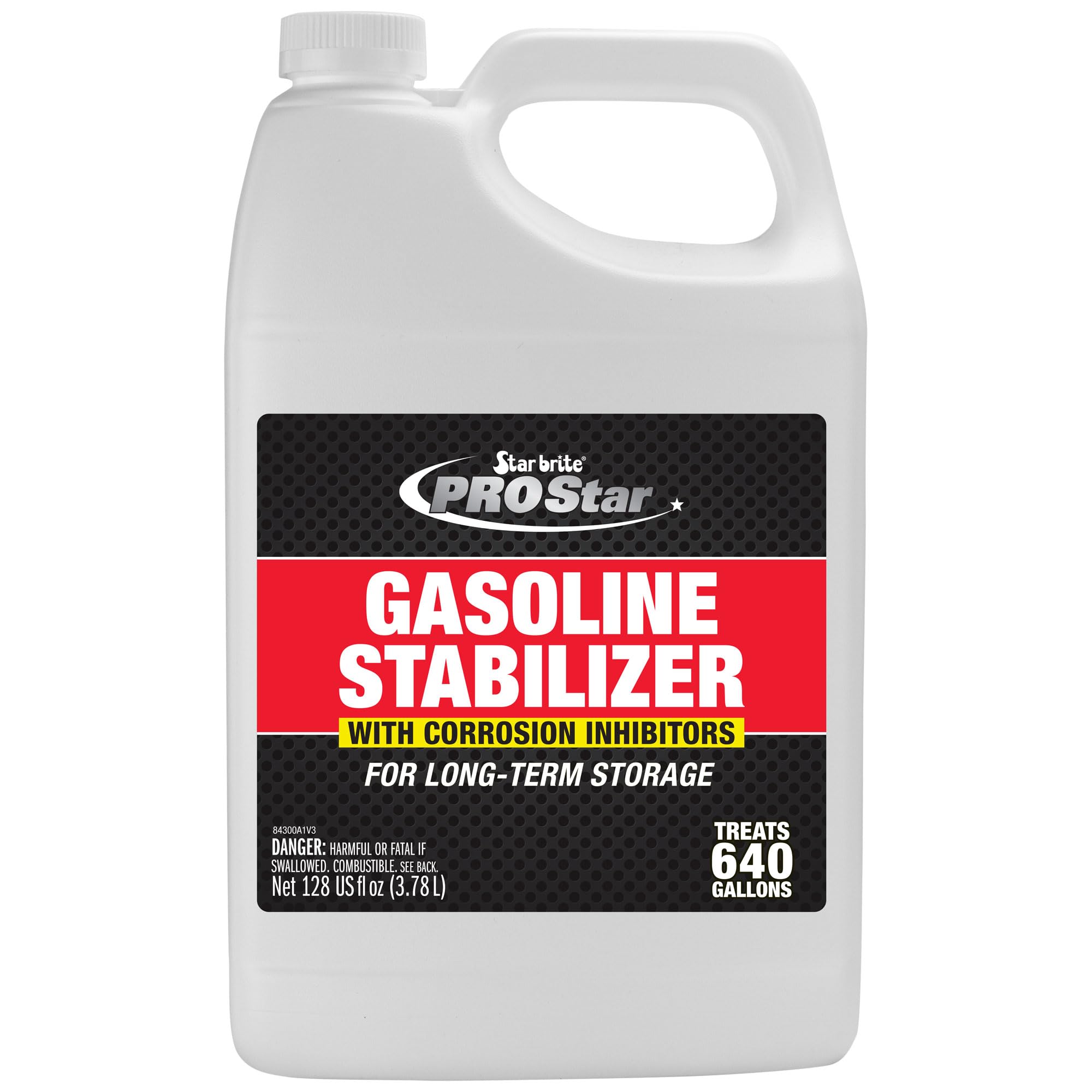
The Star Brite PRO is a combination product that accomplishes two tasks many generator owners treat as separate steps: fuel stabilization and engine fogging. Fogging involves coating the internal engine components with a protective oil film to prevent rust during storage. Normally this requires a separate spray can. Star Brite PRO’s additive does both from a single pour, saving significant time during winterization. The dosage is straightforward: 1 fluid ounce per 5 gallons of fuel, after which you run the engine for 10 minutes to circulate the stabilized fuel and fog the upper cylinder.
The formula is designed for all ethanol blends including E-10, which is nearly universal in pump gas. The corrosion inhibitors protect the fuel system components — carburetor, fuel lines, and injectors — from rust formation caused by moisture ingress. A marine mechanic recommended it to one user for winterizing their outboard boat motor, and that user has been using it for over five years without a single fuel-related issue on their generator and other stored equipment.
This is specifically a storage product, not a cleaner for already-fouled engines. If your generator is currently running rough due to varnish, you need a treatment like Star Tron or STA-BIL Fast Fix first, then switch to Star Brite PRO for future storage. Users consistently love that they can skip the separate aerosol fogger step. For anyone winterizing multiple engines — generator, mower, pressure washer, golf cart — the time savings add up fast. It keeps fuel fresh for up to one year.
Why it’s great
- One-step fuel stabilization and engine fogging
- Corrosion inhibitors protect fuel system components
- Proven reliable by marine mechanics for years
Good to know
- Does not clean existing gum and varnish
- Up to 1 year storage, not 2+ years
4. STA-BIL Fast Fix Small Engine Treatment
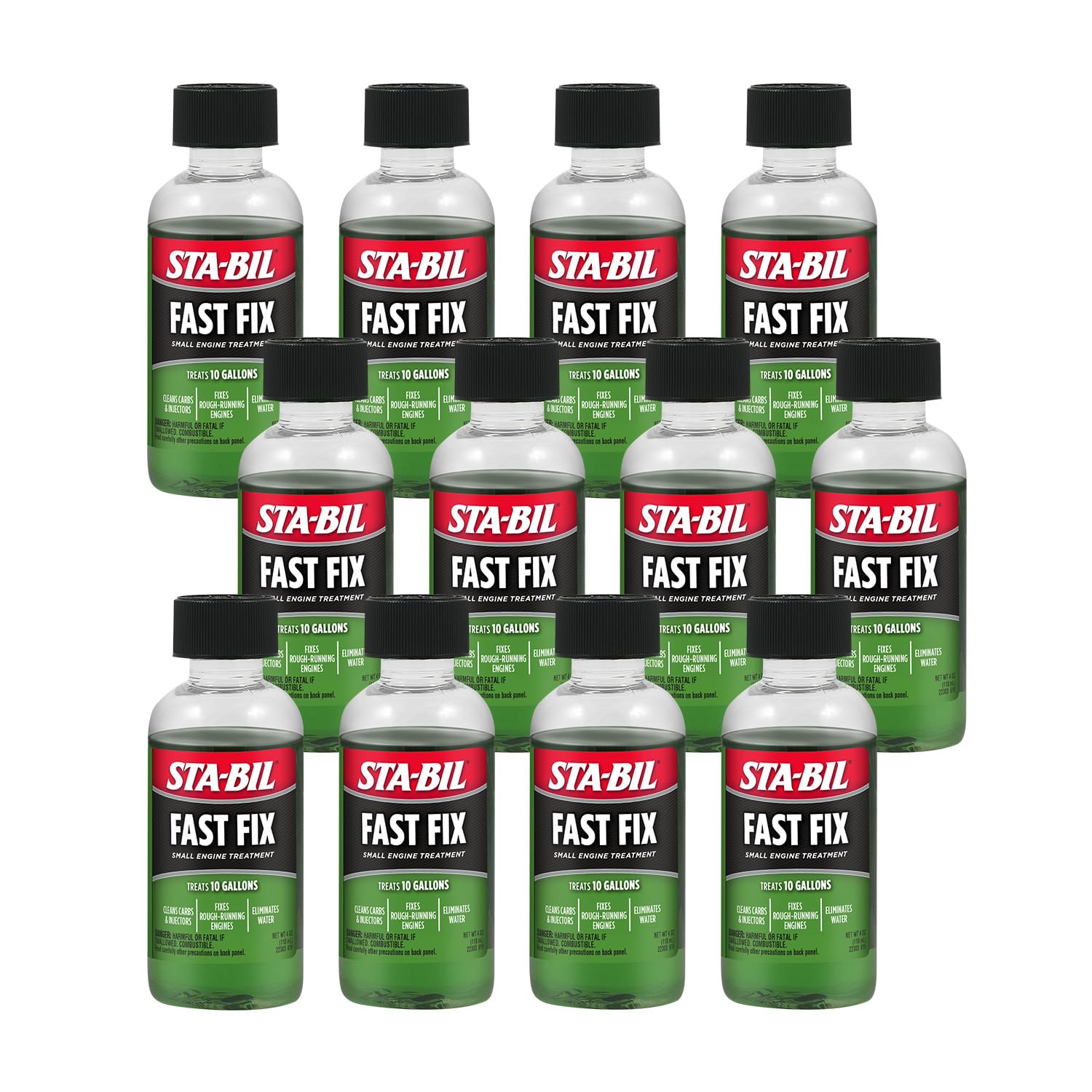
STA-BIL Fast Fix is a dedicated problem-solver for generators that are already running poorly. While most stabilizers are preventive, Fast Fix is formulated to eat through gum, varnish, and sticky residues that have already accumulated in the carburetor jets and fuel passages. The active ingredients break down deposits quickly: the manufacturer recommends adding 1 ounce per 2.5 gallons of fresh fuel, running the engine for 15 minutes, then leaving it overnight. Many users report that a single treatment salvages an engine that would otherwise require a carburetor rebuild or replacement.
One user documented a 2003 Honda ATV that had needed carburetor cleaning every season for years. A single dose of Fast Fix eliminated the recurring problem, saving the estimated replacement cost. Another brought a lawnmower back to life after three years of sitting with stale fuel. For generators that haven’t been started in several seasons, this is often the first product to try before reaching for a wrench. It also removes water from the fuel system, addressing the ethanol absorption issue directly.
The trade-off is that Fast Fix is more concentrated and therefore more expensive per gallon treated compared to standard stabilizers. The 12-pack of 4-ounce bottles is designed for those who maintain multiple small engines or want to keep doses on hand. Because it’s an aggressive cleaner, it should be used to fix an issue, then swapped for a regular stabilizer like Star Tron or STA-BIL 360 Protection for ongoing storage. It also works well in both 2-cycle and 4-cycle generators, as verified by users with leaf blowers and trimmers.
Why it’s great
- Dissolves existing gum and varnish in carburetors
- Has saved users hundreds in repair shop fees
- Removes water contamination from fuel system
Good to know
- More expensive per gallon treated
- Not a long-term storage stabilizer; use as a one-time fix
5. VP Racing Fuels 6205 SEF 4-Cycle Fuel

VP Racing’s 6205 SEF is not a stabilizer additive — it is pre-blended, ethanol-free, 94-octane fuel that eliminates the root cause of generator fuel problems: ethanol. By using this fuel instead of pump gas, you skip the need for any stabilizer addition in the first place. The chemistry is simple: ethanol-free gasoline does not absorb moisture, does not cause phase separation, and does not leave corrosive deposits when it evaporates. The fuel is stabilized in-tank for 2 years after being poured, and if left sealed in the can, it stays fresh for up to 5 years.
The ready-to-use nature saves time and eliminates dosing errors. Users consistently report that their 4-cycle small engines — mowers, zero-turn mowers, generators, ATVs — start immediately after winter storage with zero hesitation, zero smoke, and clean spark plugs. One user notes that spark plugs stay clean for years when using this fuel, a direct contrast to the fouling caused by ethanol-blended gasoline. The 94-octane rating also provides a modest knock resistance advantage for engines under load.
The cost per quart is significantly higher than pump gas plus stabilizer, and the product comes in individual quart bottles sold in an 8-pack. For a generator that burns through fuel quickly during a long power outage, this can get expensive. However, for seasonal storage where the generator might only run a few hours, or for critical equipment where reliable starting is non-negotiable, the premium cost eliminates the risk of stale fuel entirely. It’s a different category of solution — prevention through elimination rather than management.
Why it’s great
- No ethanol means no fuel stabilizer needed
- 2-year in-tank storage life
- Clean starts, no smoke, no spark plug fouling
Good to know
- High per-quart cost compared to additive treatment
- Only for 4-cycle engines; not suitable for 2-cycle mix
6. VP Madditive Fuel Stabilizer with Ethanol Armor
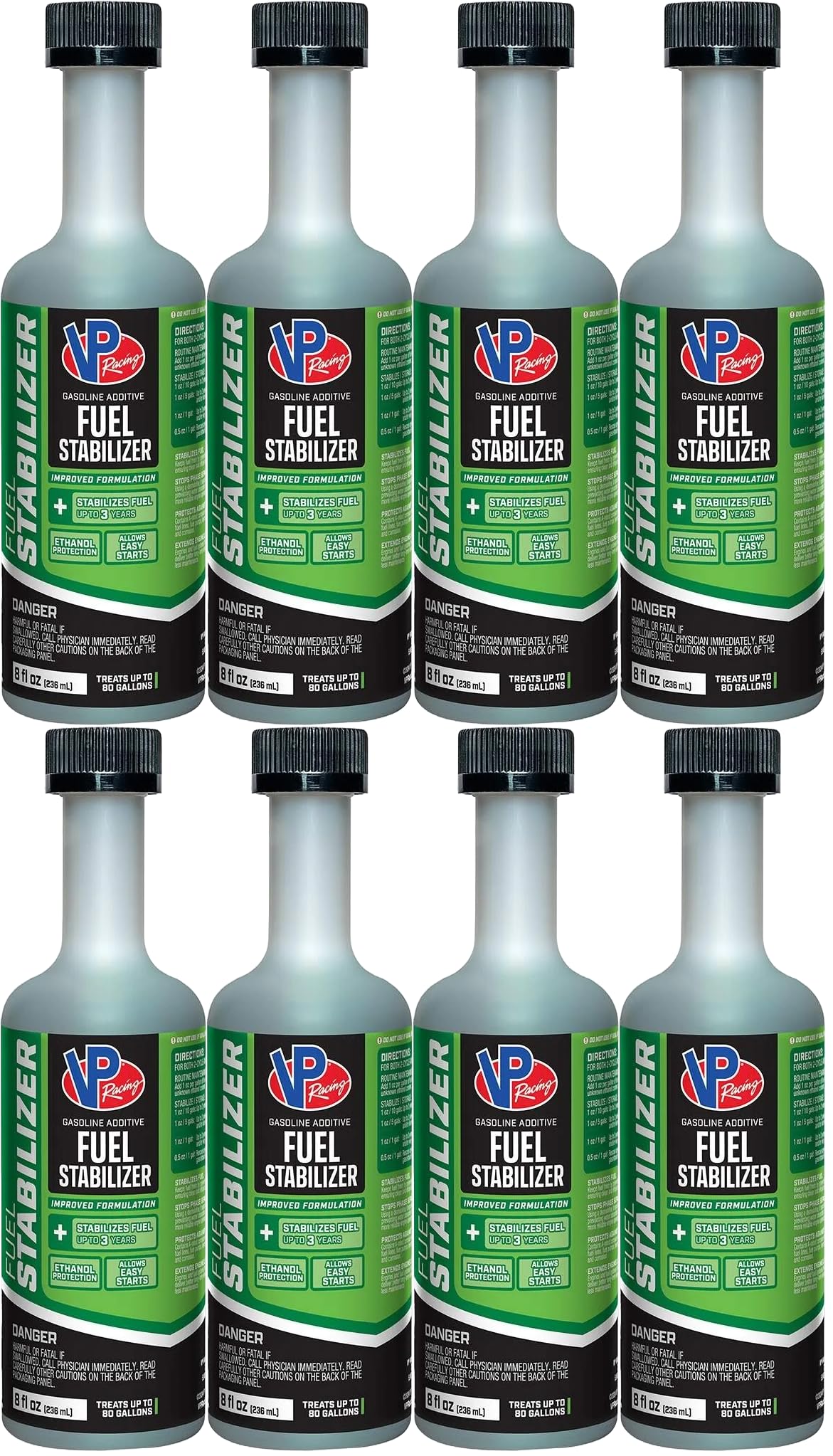
VP Madditive focuses on what it calls “Ethanol Armor” — a chemical package designed to actively separate water from ethanol-blended fuel rather than just dispersing it. This is a different approach from Star Tron’s dispersion method. By preventing phase separation at the chemical level, Madditive ensures that the ethanol stays properly mixed with the gasoline, which in turn keeps the octane rating stable and the fuel clean for cold starts. The advanced corrosion inhibitors in the formula protect the entire fuel system, including injector bodies and carburetor float bowls, from rust.
The 6-pack of 8-ounce bottles gives users flexibility: one bottle treats a small generator tank, and the pack covers multiple engines or multiple seasons. Users who have been using this product for over five years report no fuel-related issues at all, a strong testament to reliability. However, the reviews are not unanimous — one user expressed skepticism about whether the product works, and another noted a packaging issue where they received only one bottle instead of six (though Amazon corrected it). The inconsistency in customer experience is worth considering.
VP Madditive is best suited for generators that run on ethanol-blended fuel and are stored for moderate periods (up to 12 months). It also works well in older vehicles from before 2007, where manufacturers had not yet engineered for ethanol tolerance. For high-mileage generators or those running vintage engines, the ethanol armor provides an extra layer of protection. The clean-burn characteristics also help reduce deposit buildup on spark plugs, extending maintenance intervals.
Why it’s great
- Ethanol Armor prevents phase separation actively
- Corrosion inhibitors protect entire fuel system
- Convenient multi-pack for multiple engines
Good to know
- Mixed customer reviews on effectiveness
- Packaging issues reported with multi-bottle sets
7. Ethanol Shield Fuel Stabilizer

Ethanol Shield takes the longest storage duration claim of any product in this comparison: up to 3 years of fuel stability. This makes it the go-to choice for generators that are part of a true emergency preparedness stack — the kind of setup where fuel is filled, treated, and then the generator may not be started again for years unless the grid goes down. The 1-gallon (128 oz) bottle treats up to 1280 gallons of gasoline, which at a 3-year rotation cycle is a multi-year supply for most households.
Beyond stabilization, Ethanol Shield explicitly states it prevents water issues and conditions rubber and plastic components in the fuel system. As ethanol-blended gas ages, it can degrade fuel lines and diaphragm seals. This formula includes plasticizers and rubber conditioners that keep those components flexible, preventing cracks and leaks during storage. Users report that equipment stored over the winter starts immediately the next spring with smooth operation and no unusual exhaust odors, which is a common complaint with cheaper stabilizers.
The 1-gallon jug is heavy at 8 pounds, but the value per treatment is exceptional for anyone with large fuel storage. One user noted that after 4 months of winter storage, their zero-turn mower and motorcycle fired up immediately, and the fuel was clearly still usable. The product has been OEM-tested and verified by some equipment manufacturers, which adds a layer of trust. However, for small generator tanks (under 5 gallons), measuring out the precise dose is fiddly — you need to use a small graduated syringe or medicine cup for accuracy.
Why it’s great
- Claims up to 3 years fuel stability
- Conditions rubber and plastic fuel system parts
- Extremely high gallon-treatment ratio (up to 1280 gallons)
Good to know
- Bulky 1-gallon container weighs 8 pounds
- Dosing for small tanks requires precise measurement
FAQ
Can I use marine fuel stabilizer in my generator?
How long does treated fuel actually last in a generator tank?
Do I need to drain the carburetor after using a stabilizer?
Will a fuel stabilizer fix a generator that already runs rough?
Final Thoughts: The Verdict
For most users, the fuel stabilizer for generator winner is the Star Tron Enzyme Fuel Treatment because its enzyme technology actively cleans existing deposits while preventing future buildup, and its concentrated formula treats 512 gallons from a single bottle. If you want a one-step winterization solution that also fogs the engine, grab the Star Brite PRO Gas Stabilizer + Fog. And for sheer long-term storage economy with a 3-year stability claim, nothing beats the Ethanol Shield Fuel Stabilizer in the 1-gallon jug.