
A single layer of thin, flimsy ground fabric can turn your flower bed into a nightmare within a year, with tough weeds punching through the weave and laughing at your efforts. The difference between a garden that stays pristine and one that becomes a constant battle against roots and rhizomes lies entirely in the ounce-weight, weave type, and UV stability of the barrier you choose. This guide cuts through the marketing noise to deliver a side-by-side comparison of the most effective barriers available, focusing only on the concrete specs that actually stop sprouts.
I’m Mohammad Maruf — the founder and writer behind Drink4Good. After spending countless hours cross-referencing customer longevity reports with material density, tensile strength, and weave construction data for this category, I’ve focused this guide on the measurable metrics that separate a five-year fabric from a one-season disappointment.
Whether you’re laying gravel for a driveway, creating a low-maintenance flower bed, or building a vegetable patch that stays clean season after season, finding the right ground cover to prevent weeds is the single most important decision you can make for your long-term garden sanity.
How To Choose The Best Ground Cover To Prevent Weeds
Not all black rolls of fabric are created equal. The market is flooded with lightweight options that look identical on the shelf but fail within months. Understanding three core specifications will save you from replacing your entire ground cover within a year.
Understanding Fabric Weight (Ounces Per Square Yard)
The ounce-weight is the single most reliable predictor of a fabric’s ability to resist puncture from sharp gravel, roots, and foot traffic. A 3-ounce fabric works fine under a thin layer of mulch in a low-traffic flower bed. A 4-ounce or 5-ounce barrier becomes necessary under heavy stone, driveways, or areas where you’ll walk frequently. Don’t guess — check the manufacturer’s listed weight before purchasing.
Weave Construction: Woven vs. Non-Woven vs. Dual-Layer
Woven polypropylene fabric offers excellent tensile strength and is ideal for high-traffic areas like gravel paths and driveways. Non-woven (or needle-punched) fabric provides better water permeability and soil stabilization, making it superior for garden beds where drainage is critical. Dual-layer fabrics combine both — a woven base for strength and a non-woven top for filtration and water movement — representing the premium tier of weed prevention.
UV Stabilization and Warranty Life
A fabric exposed to sunlight will degrade quickly unless treated with UV stabilizers. Look for manufacturers who explicitly state UV treatment and warranty duration — a 12-year warranty for non-woven fabric or a 20-year warranty for professional-grade woven material indicates real engineering. Budget fabrics often lack this treatment, becoming brittle and useless within two seasons.
Quick Comparison
On smaller screens, swipe sideways to see the full table.
| Model | Category | Best For | Key Spec | Amazon |
|---|---|---|---|---|
| DeWitt Pro Max 4×250 | Woven Premium | Long-term flower beds & mulch | 4.1 oz, woven polypropylene | Amazon |
| VIVOSUN 6×300 5oz | Dual-Layer | Heavy traffic & vegetable gardens | 5 oz dual-layer construction | Amazon |
| Super Geotextile 5oz 6×200 | Dual-Sided Heavy Duty | High-stakes landscaping | 5 oz, PP woven + needle-punched | Amazon |
| Super Geotextile 4oz 4×100 | Woven Commercial | Driveways & road stabilization | 4 oz true weight, 800 LBS tensile | Amazon |
| DWALE 6.5×330 3.5oz | Woven Heavy Duty | French drains & erosion control | 3.5 oz polyethylene, 800 LBS tensile | Amazon |
| Vanver 4×300 3.2oz | Woven Value | Paths & medium-traffic beds | 3.2 oz woven polypropylene | Amazon |
| DeWitt 12-Year 3×100 | Non-Woven | Planting beds & high drainage | 3 oz non-woven, UV treated | Amazon |
In‑Depth Reviews
1. DeWitt Professional Max 4×250
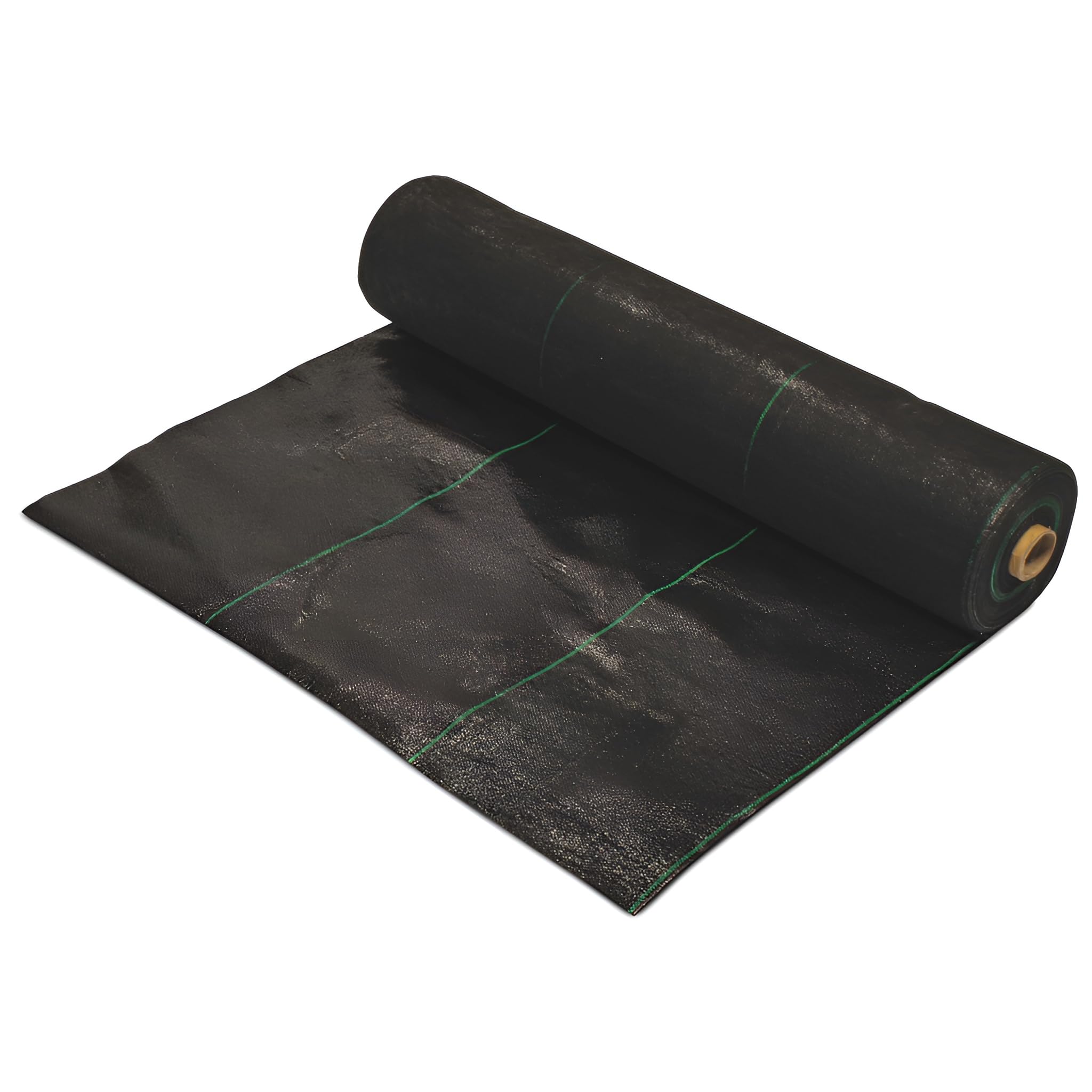
This is the professional-grade benchmark that growers and landscapers return to year after year. The 4.1-ounce woven polypropylene construction hits the sweet spot between flexibility and puncture resistance — it conforms to irregular bed shapes without tearing, yet stands up to sharp gravel and repeated foot traffic. The 4-foot by 250-foot roll covers large areas efficiently, and the striped green lines printed every 12 inches make plant alignment a straight-line process.
Customer reports consistently cite five years of weed-free performance under rubber mulch and wood chips, with many noting that the fabric still looks intact when exposed during maintenance. The woven structure allows air and water to pass through at a healthy rate, preventing the soil compaction issues common with cheaper, non-woven alternatives. DeWitt also backs this with a warranty that reflects its commercial-grade engineering — a rare confidence signal in this category.
The only real trade-off is the upfront investment, which is higher than entry-level rolls. However, when you calculate the cost of replacing a 3-ounce fabric every two seasons, the Professional Max becomes the more economical choice over a decade of use. It also requires a clean, weed-free base before installation — simply laying it over existing growth will still result in weeds pushing through.
Why it’s great
- Commercial-grade woven fabric resists punctures and tears exceptionally well
- Green alignment lines every 12 inches simplify plant spacing
- Balanced water permeability prevents soil compaction
Good to know
- Higher initial cost compared to entry-level 3oz fabrics
- Requires thorough weed removal and leveling before installation for best results
2. VIVOSUN 6×300 5oz

The VIVOSUN fabric represents the cutting edge of weed barrier engineering with its needle-punched dual-layer design. A woven polypropylene base provides structural strength, while a non-woven top layer actively draws water downward through molecular attraction — a feature that makes it particularly effective in vegetable gardens and raised beds where root aeration is critical. The 5-ounce density feels substantial in the hand, and customers confirm it holds up under daily foot traffic in garden pathways.
One of the standout features is the reduced fraying at cut edges compared to standard woven fabrics. The needle-punching process locks the fibers together, meaning you can cut custom shapes without seeing the roll unravel. The roll dimensions (6 feet by 300 feet) are generous enough to cover large projects with fewer seams, and the green line guides every foot make precise plant alignment straightforward.
The back side has a fuzzy, felt-like texture that grips the soil and prevents the fabric from shifting once installed — a small but meaningful detail that reduces the number of landscape staples needed. The only downside reported is that the felt side can snag on rough ground during installation if you drag it instead of lifting it. It’s also the most expensive option per square foot among the premium picks, but the dual-layer construction justifies the cost for serious gardeners.
Why it’s great
- Dual-layer construction with needle-punched non-woven top for superior drainage
- Fuzzy backing grips soil and reduces fabric shifting
- Cut edges fray less than standard woven fabrics
Good to know
- Highest price point in the premium category
- Felt side can snag on rough ground if dragged during installation
3. Super Geotextile 5oz 6×200

Super Geotextile stakes its reputation on being a true 5-ounce fabric — not the inflated marketing weight that some competitors use. When you unroll this 6-by-200-foot sheet, the first thing you notice is the density. It has a woven polypropylene side for structural integrity and a needle-punched felt side for filtration and water retention. This dual-sided construction makes it ideal for projects that require both strength and drainage, such as retaining wall backfill or under heavy stone pathways.
Customer reviews frequently compare it favorably to store-brand fabrics, noting that it is visibly thicker and less prone to tearing under sharp rocks. One reviewer torch-sealed their cut edges to prevent fraying — a proactive step that highlights the material’s durability.
This is a minor inconvenience during installation — you simply need to tuck the edges under or use landscape staples to keep them secure. The roll is also heavy at 38.5 pounds, so installing it alone is a two-person job in larger spaces. For high-stakes landscaping where failure is not an option, this is the fabric to choose.
Why it’s great
- True 5-ounce weight for maximum puncture resistance
- Dual-sided construction combines strength with water filtration
- Longevity claims backed by heavy user satisfaction over multiple seasons
Good to know
- Cut edges can fray significantly if not secured or sealed
- Heavy roll makes solo installation challenging
4. Super Geotextile 4oz 4×100

This fabric from Super Geotextile is explicitly engineered for road and driveway stabilization, and it shows in the 4-ounce true weight and the 50-year warranty when properly buried. The woven polypropylene construction creates a tight grid that prevents gravel from punching through into the subsoil, while still allowing enough water permeability to prevent hydrostatic pressure buildup under your driveway. It’s a specialist tool for anyone building a gravel road, paver patio, or French drain system.
Customers who used it under sheds, gravel bases, and retaining walls report that the fabric remained intact and functional even after being covered with heavy crushed stone. The tensile strength is well above average for this weight class, meaning it resists stretching and tearing under load. It also cuts cleanly with sharp shears, though the manufacturer recommends cutting in a single long piece to minimize scrap and avoid unnecessary seams where weeds could eventually find a foothold.
The trade-off is that the woven structure is less permeable than non-woven or dual-layer options. One customer specifically noted that water drainage was minimal, which is actually desirable for driveway stabilization but a negative for garden beds where you want water to reach plant roots. If your project needs both erosion control and active drainage for plants, consider the dual-layer options above instead. This is a dedicated ground cover for hardscape, not for horticulture.
Why it’s great
- Exceptional 4-ounce weight for heavy gravel and road use
- 50-year buried warranty reflects extreme durability
- High tensile strength resists tearing under stone loads
Good to know
- Low water permeability makes it unsuitable for garden beds requiring drainage
- Delivery packaging can leave the roll at risk of theft if left unattended
5. DWALE 6.5×330 3.5oz

The DWALE fabric is a woven polyethylene geotextile designed for heavy-duty applications like French drains, retaining walls, and erosion control on slopes. At 3.5 ounces, it is lighter than the Super Geotextile 4oz, but it compensates with an impressive 800-pound tensile strength rating — meaning it can handle significant load stress from gravel and stone without tearing. The 6.5-foot width is notably wider than standard 4-foot rolls, reducing the number of seams needed for covering large driveway or patio areas.
Real-world reports from customers who used it under gravel pads, greenhouses, and no-till garden beds confirm that it effectively blocks weed and grass growth for at least eight months, with many reporting a full year or more of weed-free performance under bark and compost. The fabric is highly permeable, which prevents water pooling and makes it an excellent choice for French drain systems where water movement is the primary concern.
The main complaint across multiple reviews is that the woven threads can unravel significantly at cut edges — one customer noted that threads came undone during cutting, which is a characteristic of loosely woven polyethylene. This can be managed by cutting with a hot knife or using a flame to seal the edges, but it requires an extra step that budget buyers may not anticipate. For the price per square foot, it offers excellent value for medium-duty projects.
Why it’s great
- Wide 6.5-foot roll reduces seams for large areas
- 800 LBS tensile strength handles heavy gravel loads
- Highly permeable design prevents water pooling
Good to know
- Woven edges unravel significantly during cutting
- Lighter 3.5oz weight may not suit high-traffic flower beds
6. Vanver 4×300 3.2oz
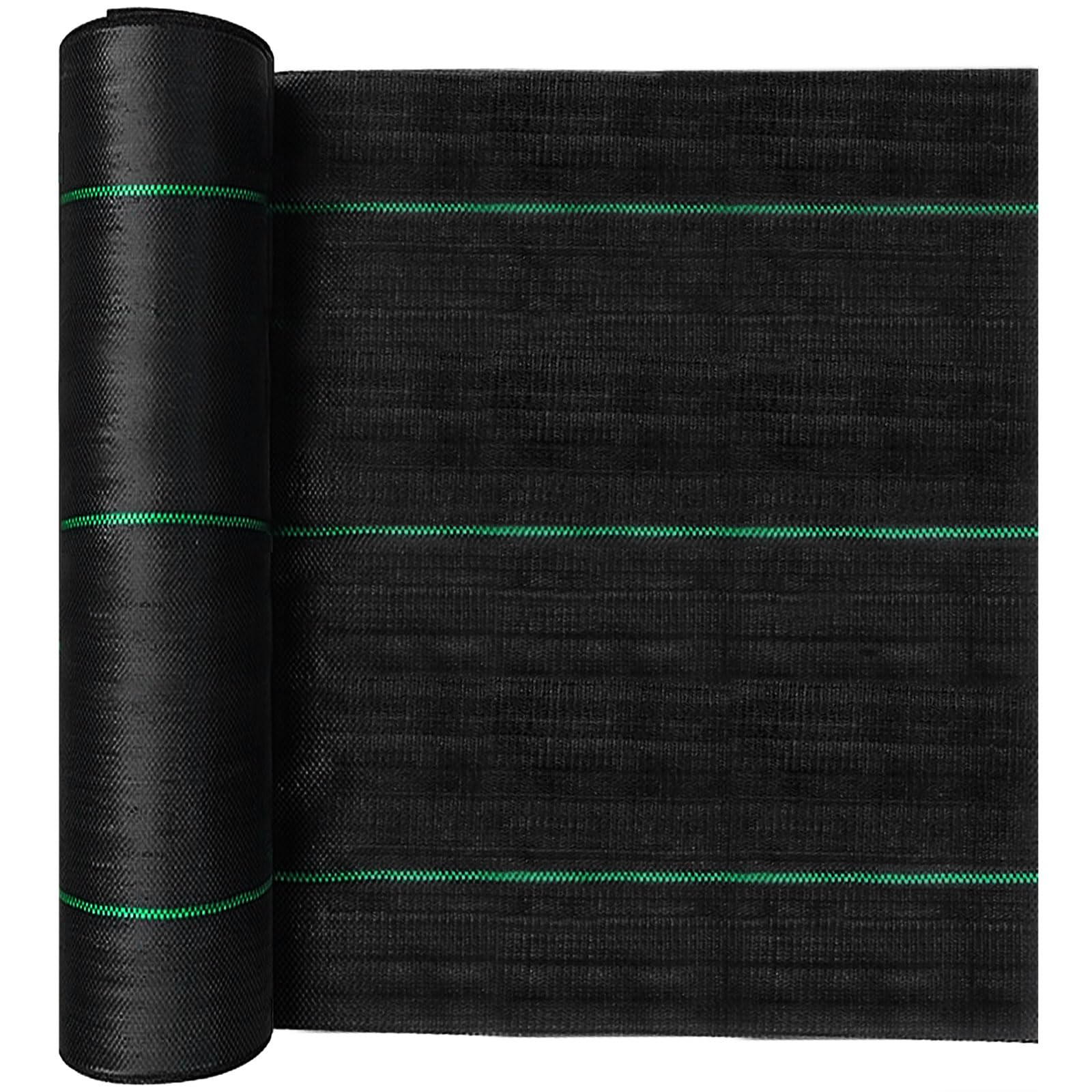
The Vanver weed barrier targets the sweet spot for homeowners who need reliable coverage for medium-traffic areas without paying for commercial-grade overkill. The 3.2-ounce woven polypropylene construction is thick enough to block sunlight and prevent weed germination, but light enough to handle and cut easily without heavy tools. The 4-by-300-foot roll provides substantial coverage at a price point that makes it practical for large garden beds and walkways.
Customer feedback highlights its effectiveness under decomposed granite and between raised beds, where foot traffic is moderate. The fabric holds up well with landscape staples, and users report that it allows enough water penetration to keep plants healthy while preventing weeds from taking hold. The anti-aging material treatment adds longevity compared to untreated budget fabrics, which often become brittle within a single season.
The primary limitation is the weight: at 3.2 ounces, it is not designed for heavy stone driveways or areas with sharp objects that could puncture it. Some customers also noted that the woven ends can come apart where cut, requiring careful tucking or stapling to prevent unraveling. For garden paths, flower beds, and vegetable patches with moderate foot traffic, it delivers exactly the value it promises — no more, no less.
Why it’s great
- Excellent price per square foot for large-scale coverage
- Permeable woven design supports healthy plant growth
- Anti-aging treatment improves longevity over untreated fabrics
Good to know
- 3.2oz weight is too light for heavy gravel or sharp stone
- Cut edges may unravel if not properly secured
7. DeWitt 12-Year 3×100

DeWitt’s non-woven landscape fabric has been a reliable staple for gardeners for years, and the 12-year warranty tells you the company stands behind its UV stabilization treatment. At 3 ounces, it is lighter than the premium options, but the non-woven construction provides superior water and nutrient flow compared to tightly woven alternatives. This makes it an ideal choice for planting beds where soil health and drainage are the top priorities.
Customer reports consistently mention that the fabric remains intact and effective after three years under pea gravel and fire pit areas, with minimal weed breakthrough. The hydrophilic treatment actively encourages water penetration rather than repelling it, which prevents runoff and ensures moisture reaches plant roots. It’s also easier to cut and shape than heavy woven fabrics, making it a good choice for DIY gardeners with irregularly shaped beds.
The non-woven structure is less resistant to puncture than woven fabrics of equivalent weight, so it’s not suitable for high-traffic areas or sharp gravel pathways. Some customers also noted that it is not the thickest option available, but they acknowledged that the thickness is appropriate for its intended use — suppression of weed germination in planting beds rather than load-bearing applications. For dedicated garden beds where drainage matters most, this remains a trusted, time-proven option.
Why it’s great
- Non-woven construction provides excellent water and nutrient flow
- 12-year UV warranty indicates real engineering confidence
- Hydrophilic treatment prevents water runoff
Good to know
- Less puncture-resistant than woven fabrics of similar weight
- Not suitable for high-traffic gravel or driveway applications
FAQ
Can I lay weed barrier directly over existing weeds?
How much overlap should I use for landscape fabric seams?
Does woven or non-woven fabric last longer under gravel?
Final Thoughts: The Verdict
For most users, the ground cover to prevent weeds winner is the DeWitt Professional Max 4×250 because its 4.1-ounce woven construction offers the best balance of durability, water permeability, and long-term value for standard garden beds and mulch areas. If you need maximum puncture resistance and dual-layer drainage for a vegetable garden or high-traffic pathway, grab the VIVOSUN 6×300 5oz. And for heavy-duty driveway or road stabilization projects where only the toughest barrier will do, nothing beats the Super Geotextile 4oz with its 50-year buried warranty.