
Choosing the wrong adhesive for foam core is a one-way ticket to a melted, deformed mess. Standard super glues and solvent-based adhesives chemically attack expanded polystyrene (EPS) and extruded polystyrene (XPS), dissolving the foam’s cell structure on contact. The right glue for foam core bonds without that disastrous chemical reaction, giving you a strong, clear-drying hold that preserves the integrity of your project.
I’m Mohammad Maruf — the founder and writer behind Drink4Good. I’ve spent countless hours analyzing the chemical composition, tack strength, and real-world application of specialty adhesives so you don’t have to gamble on a product that could ruin your foam model, prop, or insulation panel.
Whether you’re assembling a lightweight RC plane, building architectural models, or mounting acoustic panels, the glue for foam core you pick must check three boxes: foam-safe chemistry, sufficient bond strength for your specific material weight, and a working time that allows proper placement.
How To Choose The Best Glue For Foam Core
Picking the wrong glue is expensive and frustrating. Focus on these three factors to get it right the first time without melting your foam or ending up with a weak joint.
Foam-Safe Chemistry: The Non-Negotiable Rule
Never assume a glue is safe for foam. Standard cyanoacrylate (CA) glues and solvent-based contact cements contain chemicals that react violently with polystyrene foam. Look for products explicitly labeled “foam safe” or those based on water, epoxy, or a specialized non-solvent carrier. Your foam core’s cell structure depends on it.
Tack Strength and Working Time
Not all foam glues grip the same way. Lightweight EPS for craft projects can use a repositionable spray or a slower-setting liquid that allows adjustments. Heavy XPS insulation panels or dense foam for architectural models need a high-tack contact adhesive that grabs immediately. Check the open time — the window you have to reposition parts — before committing.
Drying Clarity and Flexibility
A glue that dries milky or brittle can ruin the look and function of a foam project. Clear-drying formulas maintain a clean aesthetic, especially for transparent or painted surfaces. Flexible bonds are critical for foam sheets that undergo light vibration (RC aircraft surfaces) or thermal expansion (outdoor insulation panels). Stiff glues crack under movement.
Quick Comparison
On smaller screens, swipe sideways to see the full table.
| Model | Category | Best For | Key Spec | Amazon |
|---|---|---|---|---|
| Bob Smith Industries BSI-139H | Super Glue | D&D Terrain & Scratch Building | Foam-safe, bonds in 5-15 seconds | Amazon |
| 3M Hi-Strength 94 ET Spray | Spray Contact Cement | Large Surface Laminations | 60-minute open time, 19.75 oz can | Amazon |
| Woodland SCENICS ST1444 | Liquid Tack Glue | Model Railroading & Scenery | Dries flexible, 12 oz bottle | Amazon |
| DELUXE MATERIALS AD34 | Contact Glue | RC Foam Plane Repairs | High tack, 1.7 oz bottle | Amazon |
| Scotch Spray Mount 6065 | Repositionable Spray | Stencils & Lightweight Mounting | Removable bond, 10.25 oz can | Amazon |
In‑Depth Reviews
1. Bob Smith Industries BSI-139H Super-Gold Odorless Foam Safe Super Glue
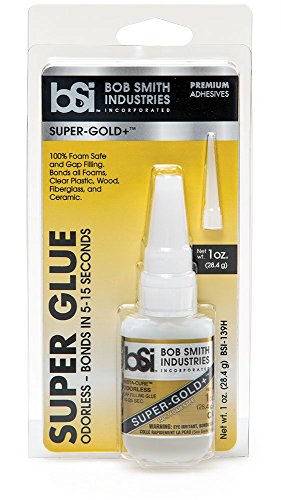
Bob Smith Industries (BSI) designed this Super-Gold line specifically to eliminate the solvent fumes that melt EPS and XPS foams. The 1 oz. bottle delivers a precise flow that wicks into tight joints on D&D terrain, scratch-built dioramas, and foam-core model kits without causing that dreaded fizz-and-collapse reaction.
The formula’s fast grab (5-15 seconds) is a double-edged blessing — it means instant bonding for small parts but requires you to be exact with your placement. The included extender tip gives you control for tricky angles, and the glue dries crystal clear, which preserves the painstaking paintwork on your foam surfaces.
User feedback consistently highlights its odorless nature as a game-changer for indoor crafting, and its strength on silicone and fiberglass proves it isn’t a one-trick pony. Keep the bottle capped tightly when not in use, as exposure to moisture accelerates the curing process inside the nozzle.
Why it’s great
- 100% foam-safe formula with zero solvent melting
- Dries completely clear for clean cosmetic finishes
- Bonds a wide range of materials beyond foam (wood, fiberglass, plastic)
Good to know
- Fast cure leaves almost no working time for repositioning
- Small 1 oz. volume may require frequent restocking for large projects
2. 3M Hi-Strength 94 ET Spray Adhesive
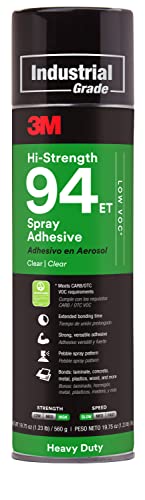
The 3M Hi-Strength 94 ET is a heavy-duty spray contact cement built for bonding large surface areas, including foam insulation panels, fabric, carpet, and laminates. Its 19.75 oz. can produces a wide, consistent fan pattern that coats square footage quickly without puddling, making it the go-to for pro workshops and DIY van insulation projects.
What sets this spray apart is its aggressive tack combined with a generous 60-minute open time. You can spray both surfaces, wait for the solvent to flash off, then position your foam panel with the confidence that the bond will grab hard — and still have time to slide it into the correct spot before the final set.
One real-world caveat: the chemical smell is strong even though it’s a Low VOC formula. Users recommend forced ventilation and a respirator mask for indoor use. The bond is extremely durable once cured (24-hour full cure), but the initial solvent odor lingers, so plan your workspace accordingly.
Why it’s great
- Extra-long 60-minute bonding window allows precise alignment
- Very high tack strength for dense foam and mixed materials
- GREENGUARD Certified and contributes to LEED building credits
Good to know
- Strong solvent odor requires a well-ventilated workspace and mask
- Not suitable for delicate, thin foam skins where spray could saturate
3. Woodland SCENICS ST1444 Foam Tack Glue

Woodland Scenics built this Foam Tack Glue specifically for the model railroading community, but its utility extends to any foam project needing a rubbery, flexible bond. Unlike white glues that cure stiff and brittle, this formula dries with a slight give — users have leveraged this to create functional hinges for RC plane control surfaces that survive repeated flex cycles.
The 12 oz. squeeze bottle is generously sized for covering layouts and scenery bases. You apply it to both surfaces, let it tack up for about 30 minutes, then press together. This contact-cement-like process means you can lay track, ballast, and cork sheeting with confidence that the foam won’t dissolve underneath.
A key detail modelers appreciate is that after full cure, you can cut through the glued joint with a hot wire cutter without gumming up the wire — a property not shared by many other adhesives. The tradeoff is the cure time: while it grabs after 30 minutes, full strength takes 6+ hours, so overnight drying is the standard practice.
Why it’s great
- Dries flexible for moving joints (hinges, vibration absorption)
- Allows hot wire cutting through glued sections after cure
- Large 12 oz. bottle provides good value for layout-scale projects
Good to know
- Requires patience — full cure takes 6+ hours
- Thicker consistency can be challenging to apply in fine detail work
4. DELUXE MATERIALS AD34 Foam 2 Foam High Tack Glue

The DELUXE MATERIALS AD34 is a contact glue formulated for EPO (expanded polyolefin) and EPS foams commonly used in RC aircraft. Its high-tack nature means it grabs instantly when the two coated surfaces meet, forming a bond that many users report is stronger than the surrounding foam — a crash that breaks a foam part often won’t break the glue line itself.
This is not a fast-drying super glue; it’s a contact adhesive that requires you to coat both surfaces, let them become tacky (a few minutes), then press together. That extra step is a small price for a bond that handles the vibration and stress of flight without snapping. The glue flows easily from the nozzle, giving you control over small repair areas.
One thing to note is the price. Multiple users have pointed out that Horizon Hobby sells the same formula for almost half the cost, so it’s worth price-checking before purchase. The 1.7 oz. bottle is compact and travels well in a flight box, but you’ll want a larger format if you’re building a fleet.
Why it’s great
- Creates bond stronger than the parent foam material
- Easy-flowing nozzle for precise application on small repairs
- Specifically formulated for EPO and EPS RC aircraft foams
Good to know
- Contact-adhesive method requires coating both surfaces
- Same product may be available cheaper at dedicated hobby shops
5. Scotch Spray Mount Repositionable Adhesive

Scotch Spray Mount 6065 is a repositionable spray adhesive designed primarily for paper, photos, and lightweight materials, but it has a surprising foam-core application: mounting lightweight acoustic foam panels. Users report that it provides enough tack for 12″x12″x2″ foam panels on painted walls, yet allows easy removal without damaging the wall surface.
This is not a permanent structural glue. The bond is designed to be removable and restickable within minutes of application. For crafters, this is ideal for positioning stencils on styrofoam before painting, or for temporary layouts where final placement needs testing before committing to a permanent bond.
The 10.25 oz. aerosol can delivers a fine, even mist that covers large poster-sized areas with minimal overspray. The spray dries clear and acid-free, so it won’t yellow or damage photographs or archival materials over time. However, it lacks the shear strength for heavier foam builds — stick to lightweight mounting and crafting applications only.
Why it’s great
- Repositionable bond allows test-fitting before permanent commitment
- Acid-free and photo-safe for archival and craft projects
- Fine mist coverage minimizes overspray on large surfaces
Good to know
- Not strong enough for heavy structural foam builds
- Bond is temporary — not intended for permanent high-shear applications
FAQ
Will regular super glue melt foam core?
What is the strongest glue for foam core projects?
Can I use spray adhesive on foam core for acoustic panels?
How long does foam tack glue take to cure fully?
Final Thoughts: The Verdict
For most users, the glue for foam core winner is the Bob Smith Industries BSI-139H because it combines foam-safe chemistry, incredibly fast cure, and crystal-clear aesthetics in one bottle. If you need industrial-strength coverage for large panels or insulation, grab the 3M Hi-Strength 94 ET. And for flexible, rubbery joints that can serve as hinges or withstand vibration, the Woodland SCENICS ST1444 is your best bet.