
When a baby’s tiny system rejects lactose, every feeding becomes a guessing game of tears, gas, and sleepless nights. The wrong formula can amplify that misery, while the right one can turn feedings back into calm, nourishing moments. Finding that balance between complete nutrition and digestibility is the core challenge for any parent navigating this path.
I’m Mohammad Maruf — the founder and writer behind Drink4Good. I’ve spent hundreds of hours analyzing the ingredient profiles, protein structures, and scientific literature behind specialized infant and toddler nutrition to understand exactly what separates a gentle formula from a disruptive one.
This guide distills that research into actionable advice, comparing the top contenders for sensitive systems. Whether you are dealing with colic, a confirmed cow milk protein allergy, or simple lactose sensitivity, the right formula for lactose intolerance can restore peace to your feeding routine.
How To Choose The Best Formula For Lactose Intolerance
Not all sensitive-tummy formulas are created equal. Some reduce lactose content, others break down milk proteins into non-allergenic amino acids, and a third category adds prebiotic HMOs to support gut flora. Understanding these three levers helps you match a formula to your baby’s specific symptom profile.
Lactose Level vs. Protein Hydrolysis
A true lactose-intolerance formula reduces or eliminates the milk sugar that causes gas and diarrhea. However, some babies react to the intact milk protein itself. Look for the phrase “99% less lactose” in the fine print for sensitivity formulas, or choose a “hypoallergenic” or “amino acid-based” formula if colic and rashes suggest a protein allergy instead of a simple sugar intolerance.
The Role of HMOs
Human milk oligosaccharides (HMOs) like 2’-FL and LNnT are prebiotic compounds that feed beneficial gut bacteria. In a low-lactose formula, HMOs help compensate for the missing prebiotic effect of breast milk by encouraging a healthy microbiome, which can further reduce gas and promote regular bowel movements without introducing additional lactose.
Scoop-to-Water Ratio and Mixing
Hypoallergenic formulas (especially amino acid-based ones like Neocate) often require a slightly different mixing technique — room-temperature water helps them dissolve more thoroughly than cold water. Budget-friendly options often include a leveling shelf inside the can, which is a small detail that makes nighttime preparation faster and more consistent.
Quick Comparison
On smaller screens, swipe sideways to see the full table.
| Model | Category | Best For | Key Spec | Amazon |
|---|---|---|---|---|
| Similac Alimentum | Hypoallergenic | CMPA & colic relief | Partially hydrolyzed + 2′-FL HMO | Amazon |
| Neocate Syneo Junior | Amino Acid | Severe multiple allergies | Soy-free & dairy-free amino acids | Amazon |
| Mama Bear Sensitivity | Low Lactose | Lactose sensitivity & budget | 99% less lactose + dual HMOs | Amazon |
| Mama Bear Gentle | Gentle/Partially Hydrolyzed | Fussiness, gas, crying | Reduced lactose + DHA/Choline | Amazon |
| Go & Grow 360 by Similac | Toddler Nutritional Drink | Older toddlers needing extra support | 5 HMO prebiotics, 24-oz can | Amazon |
In‑Depth Reviews
1. Similac Alimentum With 2’-FL HMO
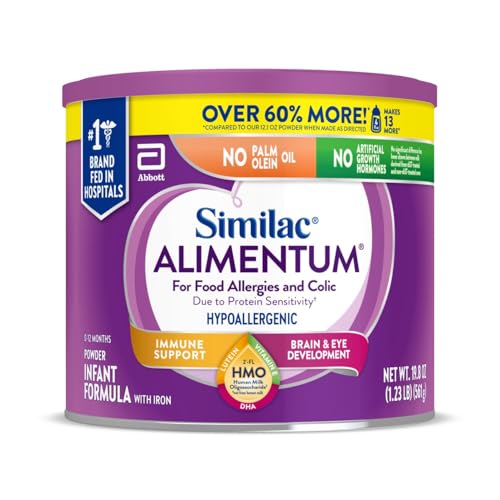
Similac Alimentum is a pediatrician-favorite because it takes a dual approach: the milk proteins are broken down into tiny pieces to neutralize the allergen, plus it adds 2’-FL HMO — an immune-nourishing prebiotic traditionally missing from hypoallergenic powders. Clinical data shows that colic symptoms due to protein sensitivity can start reducing within 24 hours, which is unusually fast for a dietary change. The 19.8-ounce value can offers a practical balance between trial size and cost-per-ounce.
The partially hydrolyzed protein texture makes this formula noticeably thinner than standard milk-based options, but parents consistently report that babies who rejected other formulas accept Alimentum with minimal fuss. The formula is also SNAP-eligible, which removes a financial barrier for families dealing with a medically necessary specialty feed. It does contain some intact lactose fragments, so it works best for protein-sensitive colic rather than an absolute lactose-zero requirement.
For the parent who needs a medically reliable, hospital-grade solution that works fast, Alimentum is the top-tier selection. The only real sacrifice is the price point, which sits in the premium tier compared to store-brand gentle formulas. If your baby has confirmed CMPA and colic, that cost buys you faster symptom relief and peace of mind.
Why it’s great
- Partially hydrolyzed proteins reduce allergic reactions within 24 hours
- Contains 2′-FL HMO for immune support, rare in hypoallergenic formulas
- #1 infant formula brand fed in hospitals
Good to know
- Higher price point; premium tier investment
- Not completely lactose-free — designed for protein sensitivity, not pure lactose intolerance
2. Neocate Syneo Junior
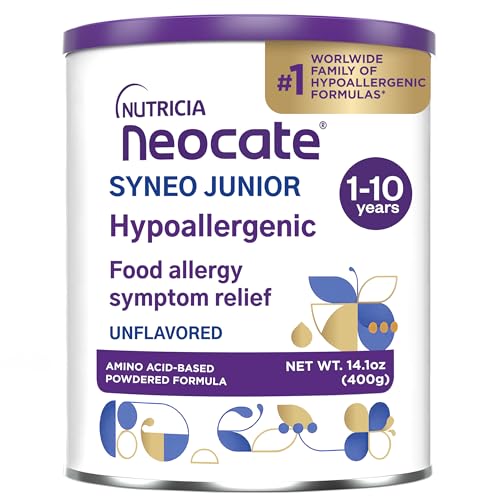
Neocate Syneo Junior represents the most extreme level of dietary management available in a formula. It is made from 100% non-allergenic amino acids, meaning it contains zero intact milk proteins and zero soy — making it suitable for children with severe, multiple food allergies that go beyond just lactose. It is the only amino acid-based formula that also includes Syneo, a blend of prebiotic fibers and probiotics to actively support digestive health from both sides.
Parents of children with eosinophilic esophagitis, severe MCAS, or complex anaphylactic profiles often report that this formula becomes their child’s sole reliable nutrition source. The unflavored version mixes best at room temperature — cold water creates clumps — and the taste is described as functional rather than pleasant, but far superior to the bitter profile of most hydrolyzed infant formulas. The can is compact (14.1 oz) because the formula is nutrient-dense per scoop.
This is not a casual first try; it is the formula pediatric gastroenterologists turn to when everything else fails. The cost is the highest in this comparison, and the smaller can size requires more frequent repurchases. For a child with life-altering allergies, however, the symptom relief and complete nutritional coverage justify the investment.
Why it’s great
- 100% non-allergenic amino acids; safe for CMPA, soy allergy, and related conditions
- Contains Syneo (prebiotic + probiotic) for digestive health
- Clinically shown to provide food allergy relief in as little as 3 days
Good to know
- Highest cost per ounce; premium medical-grade investment
- Mixes best at room temp; avoid cold water to prevent clumping
3. Mama Bear Sensitivity Premium Infant Formula
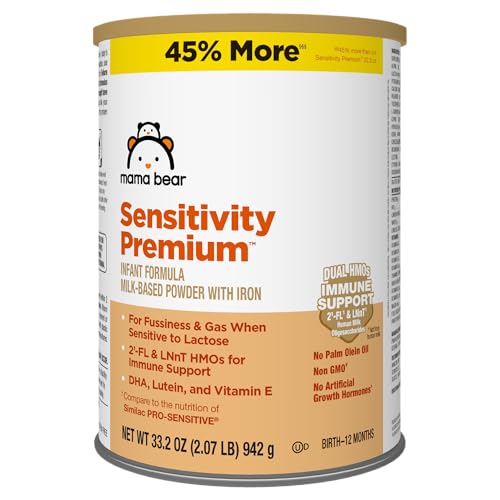
The Mama Bear Sensitivity formula carves out a specific niche: it delivers 99% less lactose than standard milk-based formula while adding dual HMOs (2’-FL and LNnT) — an upgrade over the single HMO used in many budget-sensitive formulas. At 33.2 ounces, this is the largest can in the comparison, which translates to significantly fewer repurchase trips. The formula also excludes palm olein oil, a fat source that can cause calcium soap formation and hard stools in some babies.
Reviews consistently highlight how well babies transition from breastfeeding to this formula, with fewer gas episodes and less fussiness compared to standard store brands. Some parents noted a distinct “bad breath” side effect after prolonged use, which, while harmless, can be unpleasant. The formula uses corn syrup solids as the primary carbohydrate source instead of lactose, which makes it effective for pure lactose sensitivity but less ideal for babies who also need a fully hydrolyzed protein profile.
For the family navigating lactose sensitivity without a confirmed protein allergy, this is the smartest value play on the market. It matches the nutritional backbone of Similac Pro-Sensitive at roughly half the cost per ounce. The dual HMO inclusion is a genuine differentiator that pushes it ahead of older gentle formulas still using only 2’-FL or no HMOs at all.
Why it’s great
- 99% less lactose targets sensitive tummies directly
- Dual HMOs (2’-FL + LNnT) support immune and digestive health
- Largest can size (33.2 oz) offers best cost-per-feeding value
Good to know
- Contains corn syrup solids; not suitable for protein-allergic babies
- Rare reports of bad breath after extended use
4. Mama Bear Gentle Premium Baby Formula

The Mama Bear Gentle formula is designed as a direct nutritional equivalent to Enfamil NeuroPro Gentlease, which means it relies on partially hydrolyzed proteins (broken down into smaller, gentler chains) rather than drastically reducing lactose. This makes it a better fit for babies whose primary issue is gas and fussiness from protein structure rather than a pure lactose sugar intolerance. It includes DHA and choline for brain development, and the formula is non-GMO with no artificial growth hormones.
Parents switching from Gentlease report that the transition is smooth and that their babies tolerate the taste well — many stated they could not tell a difference. The formula mixes easily without clumps, and the can includes a separate compartment to store the scoop, a small convenience that parents appreciate during late-night feeds. Some sensitive babies experienced increased spit-up because the protein is less extensively hydrolyzed than Enfamil’s version, but this appears to be a minority reaction.
This is the ideal choice for parents who want a gentle formula comparable to the leading national brand but at a noticeably lower cost. If your baby’s main struggle is general fussiness and gas rather than a confirmed milk allergy, this formula offers a balanced, affordable starting point that avoids the premium price of specialty hypoallergenics.
Why it’s great
- Partially hydrolyzed proteins target fussiness, gas, and crying
- Priced well below Enfamil Gentlease, with comparable nutrition
- Non-GMO, no artificial growth hormones, gluten-free and kosher certified
Good to know
- Contains palm oil and corn syrup solids like Enfamil version
- Less extensively hydrolyzed than Gentlease; may cause spit-up in very sensitive babies
5. Go & Grow 360 Total Care by Similac

Go & Grow 360 occupies a different age bracket than the other products here — it is formulated for toddlers (12 months and older) who still need nutritional supplementation but have outgrown infant formulas. Its biggest feature is being the first US toddler drink with an exclusive blend of 5 HMO prebiotics, a dramatic upgrade from the single or dual HMO formulas on the infant side. This prebiotic diversity supports a broader range of gut bacteria, which is especially valuable for toddlers who experience lingering lactose sensitivity during food transitions.
The formula includes DHA, lutein, and vitamin E for continued brain and eye development, and it excludes both palm olein oil and artificial growth hormones. Because it is designed as a nutritional drink rather than a sole food source, it mixes easily and has a sweeter taste profile that most toddlers accept readily. Some parents rely on it for years when their child struggles with solid food intake or has ongoing digestive sensitivities that make whole milk problematic.
If your child is over 12 months old and still needs help bridging nutritional gaps — especially with a history of lactose issues — this is the most complete option on the list. The larger can size (24 oz) and frequent subscription discounts on Amazon make it a practical choice for ongoing use. It is not, however, suitable as a primary infant formula for babies under 12 months.
Why it’s great
- 5 HMO prebiotic blend — highest diversity in the category
- Includes DHA, lutein, and vitamin E for brain/eye development
- No palm olein oil or artificial growth hormones
Good to know
- Formulated for toddlers 12+ months only; not for newborn infants
- Designed as a supplement, not a complete sole nutrition source for infants
FAQ
Can a baby be lactose intolerant but not allergic to milk protein?
How quickly should I see improvements after switching to a lactose-free formula?
Are store-brand formulas as effective as name brands for lactose intolerance?
Final Thoughts: The Verdict
For most users, the formula for lactose intolerance winner is the Similac Alimentum because it combines extensively hydrolyzed proteins with 2’-FL HMO immune support, offering fast colic relief for the widest range of sensitive babies. If you want a budget-friendly option without sacrificing gut health, grab the Mama Bear Sensitivity Premium with its dual HMOs and 99% reduced lactose. And for severe, multi-allergy cases requiring complete amino acid nutrition, nothing beats the Neocate Syneo Junior.