
Michigan sandy soil drains so fast that standard grass seed rarely gets the moisture it needs to germinate, leaving you with bare patches and a dusty yard. The key is selecting a blend with deep-rooting fescues and drought-tolerant varieties that can anchor themselves before the water vanishes.
I’m Mohammad Maruf — the founder and writer behind Drink4Good. I’ve spent countless hours analyzing germination rates, root-depth claims, and soil-specific performance data to build this guide around what actually works in Michigan’s unique growing conditions.
This guide breaks down five proven seed mixes that can handle the combination of fast-draining sand and Michigan’s freeze-thaw cycles, helping you find the right grass seed for sandy soil in michigan without wasting money on blends that wash away.
How To Choose The Best Grass Seed For Sandy Soil In Michigan
Sandy soil in Michigan presents two core problems: water runs through it before seeds can absorb moisture, and nutrients leach away faster than in clay or loam. The wrong seed choice means you’ll reseed every season. The right choice builds a lawn that thickens year after year without constant intervention.
Root Depth is Everything
Shallow-rooted grasses like annual ryegrass will sprout quickly but die off during Michigan’s dry summer stretches. Look for blends containing tall fescue or Texas bluegrass — these varieties push roots three to four feet deep, tapping moisture reserves that surface water never reaches. A seed mix that promotes deep root growth is non-negotiable for sandy sites.
Water-Coating Technology
Some seed manufacturers coat each kernel with a moisture-retaining polymer that absorbs up to twice its weight in water. For a seed bed that dries out in hours, this coating can mean the difference between a 60% germination rate and a 10% one. Check the product description for terms like “Water Smart” or “coated seed” before buying.
Blend Composition for Michigan’s Climate
Michigan sits in the cool-season grass zone, so warm-season varieties like Bermuda or Zoysia are not viable. The ideal mix includes Kentucky bluegrass for density, perennial ryegrass for quick cover, and fine fescues for shade tolerance. A three-way or four-way blend outperforms a single species in sandy soil because each grass type handles different stress points.
Quick Comparison
On smaller screens, swipe sideways to see the full table.
| Model | Category | Best For | Key Spec | Amazon |
|---|---|---|---|---|
| Pennington Smart Seed Northeast Mix | Premium | Deep root establishment in fast-draining sand | 7 lb bag / 2,330 sq ft coverage | Amazon |
| Scotts Turf Builder All-Purpose Mix | Premium | Large-area coverage with high seed purity | 20 lb bag / 8,000 sq ft coverage | Amazon |
| Jonathan Green Black Beauty Heat & Drought | Mid-Range | Heat tolerance in full-sun sandy areas | 3 lb bag / 750-1,500 sq ft coverage | Amazon |
| Jonathan Green Dense Shade | Mid-Range | Shaded sandy spots under trees or north-facing walls | 3 lb bag / 1,800 sq ft coverage | Amazon |
| Scotts Turf Builder Sunny Mix | Budget | Small sunny patches with built-in fertilizer | 2.4 lb bag / 360-1,080 sq ft coverage | Amazon |
In‑Depth Reviews
1. Pennington Smart Seed Northeast Mix

This premium three-way blend of Kentucky bluegrass, perennial ryegrass, and fine fescues is purpose-built for the Northeast’s freeze-thaw cycle and sandy soil. The Kentucky bluegrass component provides the dense sod layer that prevents sand from shifting, while the fine fescues handle the 4–6 hours of sunlight typical in partially shaded Michigan yards. The fertilizer coating is measured precisely — enough to support initial growth without burning tender roots in that low-nutrient sand.
Germination reports from Michigan users consistently land at 8–14 days with twice-daily watering, and the grassy patches that fill in after two months hold up well against late-summer heat. The 7-pound bag covers up to 2,330 square feet, making it a strong option for both full-lawn renovation and strategic patch repair. Several buyers note that double-seeding with a starter fertilizer thickens the stand noticeably faster than single application.
The warranty from Pennington adds peace of mind — if germination fails, they stand behind the product with a refund policy. The Smart Seed label also indicates the blend uses less water over the long term because the root system develops deeper in the first season. For Michigan sandy soil, this is the most balanced, research-backed pick available.
Why it’s great
- Three-way blend addresses sun, shade, and drought stress in one bag
- Fertilizer coating is calibrated for sandy, low-nutrient soil
- Proven 8–14 day germination window with proper watering
Good to know
- Requires consistent twice-daily watering for first two weeks
- Coverage estimates assume even spreading — measure your area precisely
2. Scotts Turf Builder Grass Seed Quality All-Purpose Mix

This all-purpose mix from Scotts is 99.9% weed-free and delivers 20 pounds of pure seed — no filler, no built-in fertilizer. For Michigan sandy soil, this purity matters because you control exactly what goes into the ground. The seed is coated with a Water Smart technology that absorbs twice as much water as uncoated seed, directly countering the rapid drainage that kills germination in sand. The blend handles both sun and shade, making it a versatile choice for uneven yards with varied tree cover.
Coverage is extraordinary — up to 8,000 square feet from a single bag. Users report visible sprouting within two weeks on bare dirt, with the grass growing tall and thick enough to require mowing by week six. Some users have noted that crabgrass may sneak into the stand if pre-emergent is not applied separately, but the seed itself is clean. The deep green color blends well with existing tall fescue or Kentucky bluegrass lawns, so overseeding doesn’t create a patchwork look.
At this size, the mix is ideal for Michigan homeowners with large lots or acreage. The lack of added fertilizer means you should apply a starter fertilizer at planting time for best results in lean sandy soil. Multiple buyers who purchased additional bags for follow-up applications confirm that the germination rate remains consistent across batches.
Why it’s great
- 20 pounds of pure seed covers massive areas without filler waste
- Water-absorbent coating directly addresses sandy soil drainage
- 99.9% weed-free guarantee reduces future maintenance
Good to know
- No fertilizer included — requires separate starter fertilizer for sandy soil
- Some users report crabgrass intrusion without pre-emergent treatment
3. Jonathan Green Black Beauty Heat & Drought Resistant Grass Seed

Jonathan Green’s Black Beauty line is built around tall fescue and Texas bluegrass — two varieties that push roots up to four feet deep. That depth is exactly what Michigan sandy soil demands, because shallow-rooted grasses cannot reach the moisture that percolates past the top six inches. The waxy leaf coating on these grasses reduces evaporation, preserving the moisture the plant does manage to absorb. This seed mix tolerates heat up to 100°F, which is relevant during Michigan’s occasional July spikes.
The 3-pound bag covers 750 square feet for new lawns or 1,500 square feet for overseeding. Germination typically falls between 14 and 21 days, which is slightly slower than some competitors but the resulting root system is significantly more resilient. Users who prepare properly — aeration, topsoil, and consistent watering — report a lush dark-green lawn within two weeks of sprouting. A minority of users report zero germination, which may indicate batch variability or insufficient watering on sandy beds that dry out hourly.
This blend is best applied in late August to mid-October or mid-March to mid-May. For Michigan’s sandy soil that bakes in full sun, the heat tolerance and deep rooting make this a top contender. The low-maintenance rating from the manufacturer matches real-world user experiences: once established, this grass requires less frequent watering than standard mixes.
Why it’s great
- Four-foot root depth anchors in sandy, fast-draining soil
- Waxy leaf coating preserves moisture during dry spells
- Tolerates heat up to 100°F without going dormant
Good to know
- Slower germination window (14–21 days) than ryegrass-heavy blends
- Inconsistent results reported — requires scrupulous watering on sand
4. Jonathan Green 40600 Dense Shade Grass Seed
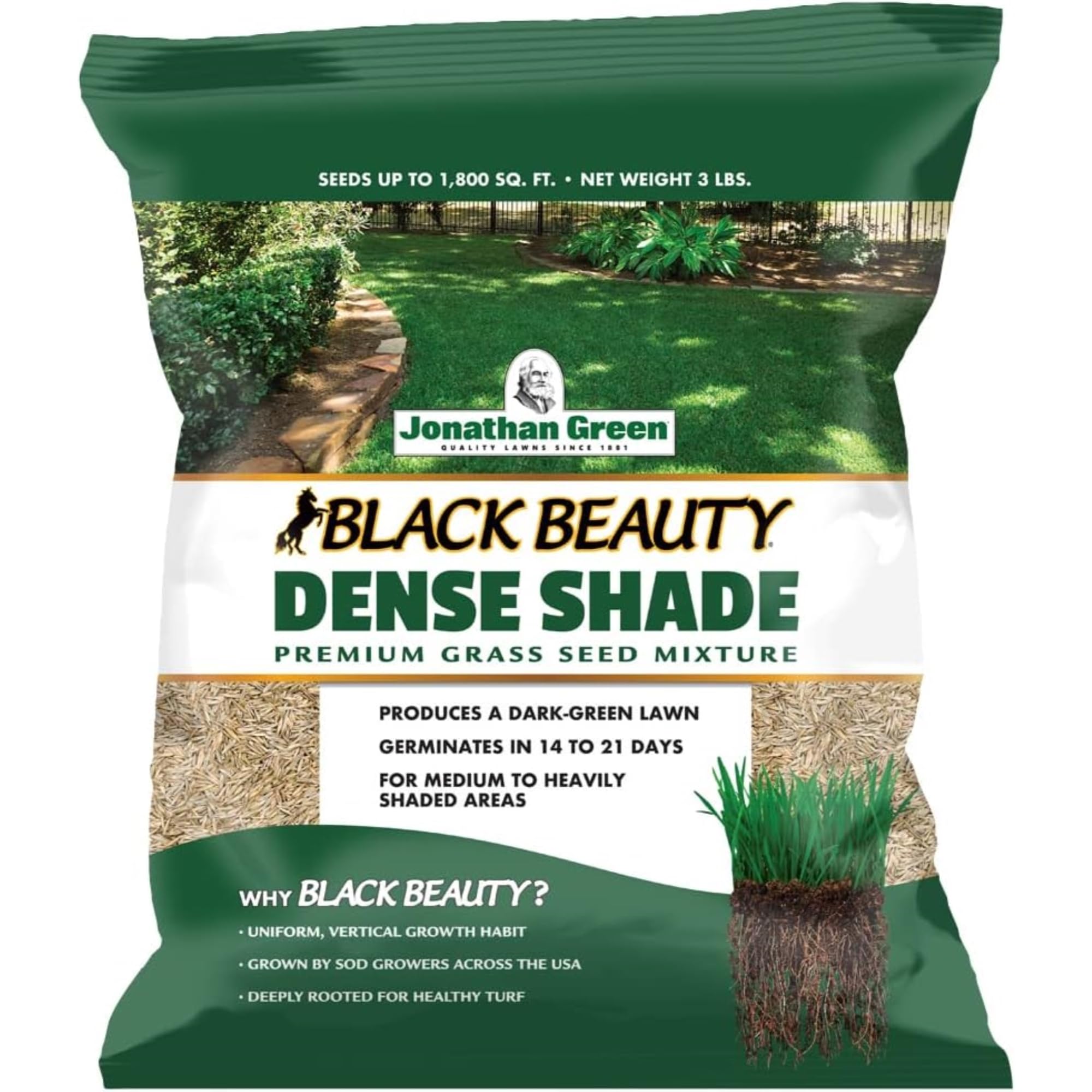
Sandy soil in a shaded Michigan yard is the hardest situation to seed — no direct sunlight to dry the surface, but sand still drains so fast that seeds dry out. Jonathan Green’s Dense Shade mix is formulated with fine fescues that tolerate low light and acidic conditions common under pines and maples. The 3-pound bag covers 1,800 square feet, which is generous for a shade-specific product, and the seed is 100% superior-grade without filler species.
User reports from heavily shaded front yards show germination as fast as three days under ideal conditions, with the grass reaching 4 to 5 inches tall in dense shade where Bermuda and St. Augustine fail completely. The resulting grass has tall, thin, dark-green blades that blend well with existing cool-season lawns. One caution: fallen leaves can smother this grass if not raked promptly, because the fine fescue blades are less aggressive at pushing through debris than tall fescue.
There are scattered reports of poor germination and deterioration during summer heat. This makes sense for a shade-focused blend — it sacrifices heat tolerance for low-light performance. Use this product specifically for north-facing slopes, tree-lined strips, or areas that receive less than four hours of direct sun. For full-sun sandy patches, the Black Beauty or Pennington mixes will perform better.
Why it’s great
- Proven germination in heavy shade where other varieties fail
- Tall, dark-green blades blend naturally with existing lawns
- Generous 1,800 sq ft coverage from a single 3 lb bag
Good to know
- Not heat-tolerant — deteriorates in full sun above 85°F
- Leaves and debris must be raked promptly to prevent die-back
5. Scotts Turf Builder Grass Seed Sunny Mix
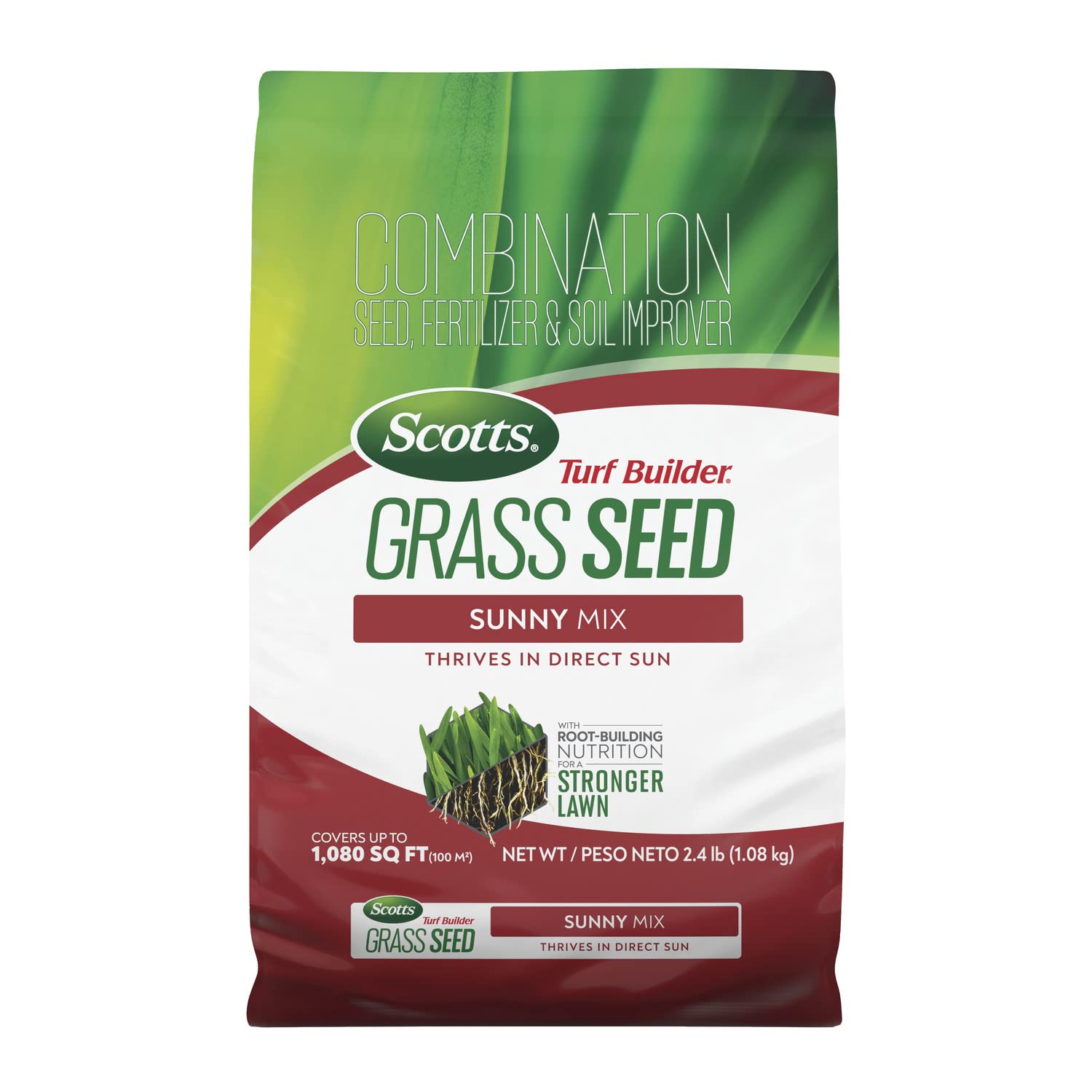
This Sunny Mix from Scotts comes with fertilizer and soil improver already blended into the seed, eliminating the need for a separate starter application. For small, sunny sandy patches on a Michigan property, this all-in-one approach simplifies the process and reduces the chance of under-fertilizing. The Root-Building Nutrition formula is designed to establish deep roots quickly, though the coverage is limited — 360 square feet for new lawns or 1,080 for overseeding from a 2.4-pound bag.
Users report fast germination and strong growth, with several noting that the grass held up well during drought conditions. The seed is formulated for full sun to light shade, with medium to high drought resistance and medium to high durability. One Michigan buyer covered a 60-by-25-foot area with a single bag and reported excellent value, though the grass took about three months to fully establish.
The main limitation is bag size. For any project over 1,000 square feet, you will need multiple bags, which pushes the per-square-foot cost higher than the large-format mixes. This product works best for targeted repair of bare spots or small front-yard patches where convenience matters more than economy. The built-in fertilizer is a time-saver but does reduce your control over nutrient composition in sandy soil that may need specific amendments.
Why it’s great
- Seed, fertilizer, and soil improver in one bag — no separate purchase needed
- Fast germination reported even on compacted sandy soil
- Drought resistance holds up during Michigan dry spells
Good to know
- Small bag size makes large-area coverage expensive per square foot
- Built-in fertilizer limits your ability to adjust nutrients for sand
FAQ
Will Kentucky bluegrass grow in Michigan sandy soil without extra watering?
How often should I water new grass seed on sandy Michigan soil?
What grass type holds best on a sandy slope in Michigan?
Final Thoughts: The Verdict
For most users, the grass seed for sandy soil in michigan winner is the Pennington Smart Seed Northeast Mix because its three-way blend of Kentucky bluegrass, perennial ryegrass, and fine fescues delivers deep roots, fast germination, and heat tolerance that sand demands. If you want maximum coverage per dollar, grab the Scotts Turf Builder All-Purpose Mix for its 20-pound bag and weed-free purity. And for heavily shaded sandy areas where sunlight is scarce, nothing beats the Jonathan Green Dense Shade Grass Seed.