
Colorado’s high altitude, intense UV rays, and semi-arid climate create a brutal proving ground for most grass seed varieties. Between the roller-coaster temperature swings and that bone-dry Front Range air, a standard bluegrass blend will often scorch before it sprouts. Choosing a mix that can dig deep, hold moisture, and laugh at a 100-degree afternoon makes the difference between a patchy lot and a resilient, dark green lawn.
I’m Mohammad Maruf — the founder and writer behind Drink4Good. I’ve spent countless hours analyzing seed types, germination rates, and customer results to find which specific blends actually handle Colorado’s unique growing stresses.
This guide cuts through the marketing and delivers a straight answer on the grass seed for colorado that thrives, not just survives, in your yard.
How To Choose The Best Grass Seed For Colorado
Colorado presents a few unique challenges: low humidity saps moisture from the soil, intense UV radiation stresses leaf tissue, and the growing season is short. Picking a blend that isn’t built for these conditions often leads to bare spots and wasted money. Focus on these four factors to get it right.
Root Depth and Drought Resistance
A deep root system is the single most important trait for a Colorado lawn. Seeds that produce roots reaching 3 to 4 feet into the soil can access moisture deeper underground, meaning you water less frequently. Look for mixes containing tall fescue or Texas bluegrass, both known for aggressive root penetration. Grass with a shallow root system will be the first to go dormant during a dry spell.
Leaf Structure and Moisture Retention
The waxy coating on a grass blade acts like a natural sunscreen and moisture barrier. It reduces evaporation on hot afternoons. Blends that include Black Beauty tall fescue, for example, are designed with this waxy cuticle. Without it, your lawn will look crisp and brown by mid-summer, even if you’re watering consistently.
Germination Speed and Planting Window
Colorado’s window for cool-season seeding is tight. The ideal fall window runs from mid-August to mid-October, and spring from mid-March to mid-May. A fast-germinating seed (10 to 14 days) gives you a head start before temperatures shift. Slower blends (14 to 28 days) are more vulnerable to late frosts or early heat waves before they can establish.
Sun and Shade Adaptability
Full sun in Colorado delivers high-intensity light that can burn delicate grass. A good mix will specify whether it tolerates full sun, partial shade, or both. Blends with fine fescues handle the shady spots under trees, while tall fescue or Kentucky bluegrass handles the open, sun-baked areas. A one-size-fits-all approach rarely works across an entire property.
Quick Comparison
On smaller screens, swipe sideways to see the full table.
| Model | Category | Best For | Key Spec | Amazon |
|---|---|---|---|---|
| Jonathan Green Black Beauty Heat & Drought | Cool-Season Blend | Deep roots & heat tolerance | Roots up to 4 ft deep; waxy leaf coating | Amazon |
| Jonathan Green Black Beauty Fall Magic | Fall-Seeding Mix | Fast fall germination | Germinates in 10-14 days | Amazon |
| GreenView Pure Kentucky Bluegrass Blend | Kentucky Bluegrass Blend | Large area coverage | Covers 3,000 sq. ft. for overseeding | Amazon |
| Pennington Smart Seed Kentucky Bluegrass | Bluegrass + Fertilizer | Budgets with direct sun | Includes fertilizer; covers 2,000 sq. ft. | Amazon |
| Scotts Turf Builder Sunny Mix | Seed + Soil Improver | Sun-drenched spots | Includes fertilizer & soil improver | Amazon |
In‑Depth Reviews
1. Jonathan Green Black Beauty Heat & Drought Resistant Grass Seed

This is exactly the kind of blend Colorado demands. The combination of tall fescue and Texas bluegrass produces a root system that can push 4 feet deep, pulling moisture from deeper soil layers when the surface dries out. That waxy leaf coating customers describe as “skin of an apple” is a real, functional barrier against the state’s intense UV rays. Heat tolerance up to 100°F gives you a buffer during those July scorchers.
The germination window of 14 to 21 days is competitive, and the dark green color is a genuine result of the specific fescue genetics, not just filler. Customer results show consistent sprouting when prepped properly — aeration, topsoil cover, and consistent watering before 9 a.m. The 3 lb bag covers 750 sq. ft. for new lawns, which is enough for a decent front patch without overcommitting on cost.
Some reviews report poor results when seeded in late summer without proper fall timing. This points to the importance of hitting that mid-August to mid-October window. If you prep the soil correctly — rake down 2 inches, add a thin soil cover, and water consistently — this mix performs consistently across Colorado’s various microclimates.
Why it’s great
- Deep 4-foot roots drastically cut water needs
- Waxy leaf coating protects against high UV
- Heat tolerant up to 100°F
Good to know
- Requires strict fall or spring planting window for best results
- Coverage per bag is limited for large new lawns
2. Jonathan Green Black Beauty Fall Magic Grass Seed
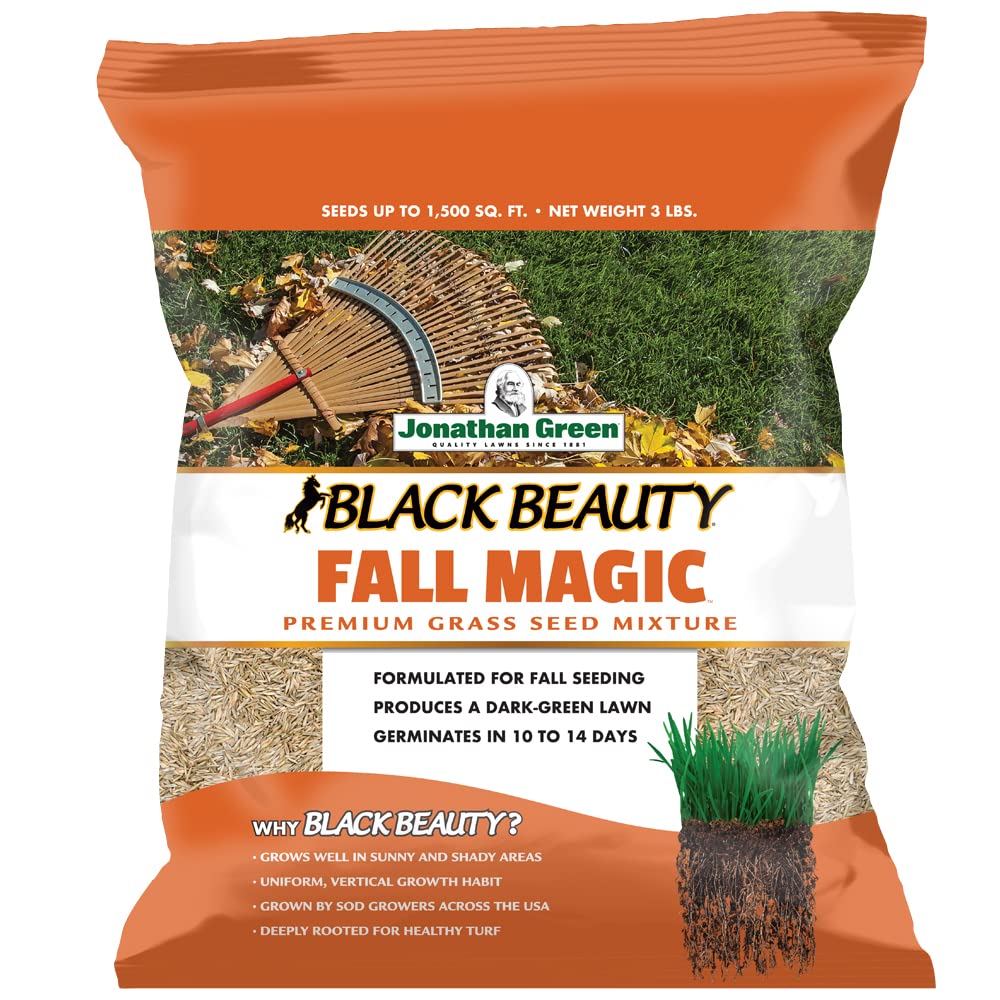
When Colorado’s fall window tightens, speed matters. Fall Magic is engineered specifically for that mid-August to mid-October seeding slot, and it shows. The blend mixes tall and fine fescues, Kentucky bluegrass, and perennial rye — a four-way spread that handles both full sun and partial shade across the state’s variable terrain. The germination speed of 10 to 14 days is noticeably faster than many competitors, giving seedlings a chance to establish before the first frost.
Customers consistently report lush, dense growth and a dark green color that holds well into spring. The lack of a weight-inflating coating (a common trick in cheaper seed bags) means you’re paying for actual seed, not filler. Reviewers who protected the seed with a thin layer of soil or straw had particularly strong results, keeping birds from digging it up.
This mix is also sold as a repair tool for summer damage, which is relevant for Colorado lawns that take a beating from hail and heat. If you’re planning a full fall renovation or overseeding, the faster germination gives you a meaningful advantage. Just be prepared to net or cover the seeded area until the grass is a few weeks old.
Why it’s great
- Germinates in 10-14 days, beating the frost window
- Four-part blend handles sun and partial shade
- No filler coating, so you get pure seed weight
Good to know
- Birds and wildlife may dig up seed without a cover
- Best results limited to fall planting season
3. GreenView Pure Grass Seed Kentucky Bluegrass Blend

If you’re covering a large area, this Kentucky bluegrass blend stretches further than most. The 3 lb bag covers up to 3,000 sq. ft. when overseeding, which is roughly double what a typical 3 lb bag of tall fescue covers. The blend is also 99.9% weed-free, a meaningful spec when you’re trying to avoid introducing invasive species into a Colorado lawn that’s already struggling against crabgrass and clover.
Germination takes 14 to 28 days, which is on the slower side. This means you need to be more patient and more diligent about keeping the soil moist during the establishment phase. Customer reports confirm that heavy watering early on is non-negotiable. The trade-off is a fine-textured, dark green lawn with good drought and heat resistance once those deep roots are established.
It also grows in all common soil types, which is useful for Colorado properties with heavy clay or sandy patches. The more negative reviews typically center on insufficient watering or planting too late in spring. If you can stay disciplined with moisture and timing, this is a strong, budget-efficient choice for large lawns.
Why it’s great
- Covers 3,000 sq. ft. for overseeding
- 99.9% weed-free for a clean lawn
- Grows in multiple soil types
Good to know
- Slow germinator at 14-28 days
- High water commitment needed during establishment
4. Pennington Smart Seed Kentucky Bluegrass Blend

Pennington’s Smart Seed line is marketed as a water-saving option, and the included fertilizer gives you a head start on soil nutrition. For a 3 lb bag, covering up to 2,000 sq. ft. for establishment is competitive. The blend is resistant to both disease and traffic, which matters for Front Range yards that see family use. The expected germination of 15 to 30 days is on the slower side, so patience is required.
Customer reviews highlight thick, hearty growth when the seed is properly spread and watered. Several users report visible sprouting within two weeks and a dense lawn by the one-month mark. However, the mix is specifically recommended for areas getting 4 to 6 hours of sunlight, which means it will struggle in shadier spots around the house.
Some customers experienced no germination at all, particularly when planting during cooler temperatures or without consistent watering. The inclusion of fertilizer in the bag also means you cannot control the nutrient release rate, which can be a drawback for precise soil management. For the price, it offers good coverage, but expect variable results if your soil or watering schedule is inconsistent.
Why it’s great
- Includes fertilizer for immediate soil nutrition
- Good coverage at 2,000 sq. ft. per bag
- Traffic and disease resistant
Good to know
- Requires 4-6 hours of direct sun only
- 15-30 day germination is slow; high water commitment
- Fertilizer included limits custom nutrient control
5. Scotts Turf Builder Grass Seed Sunny Mix
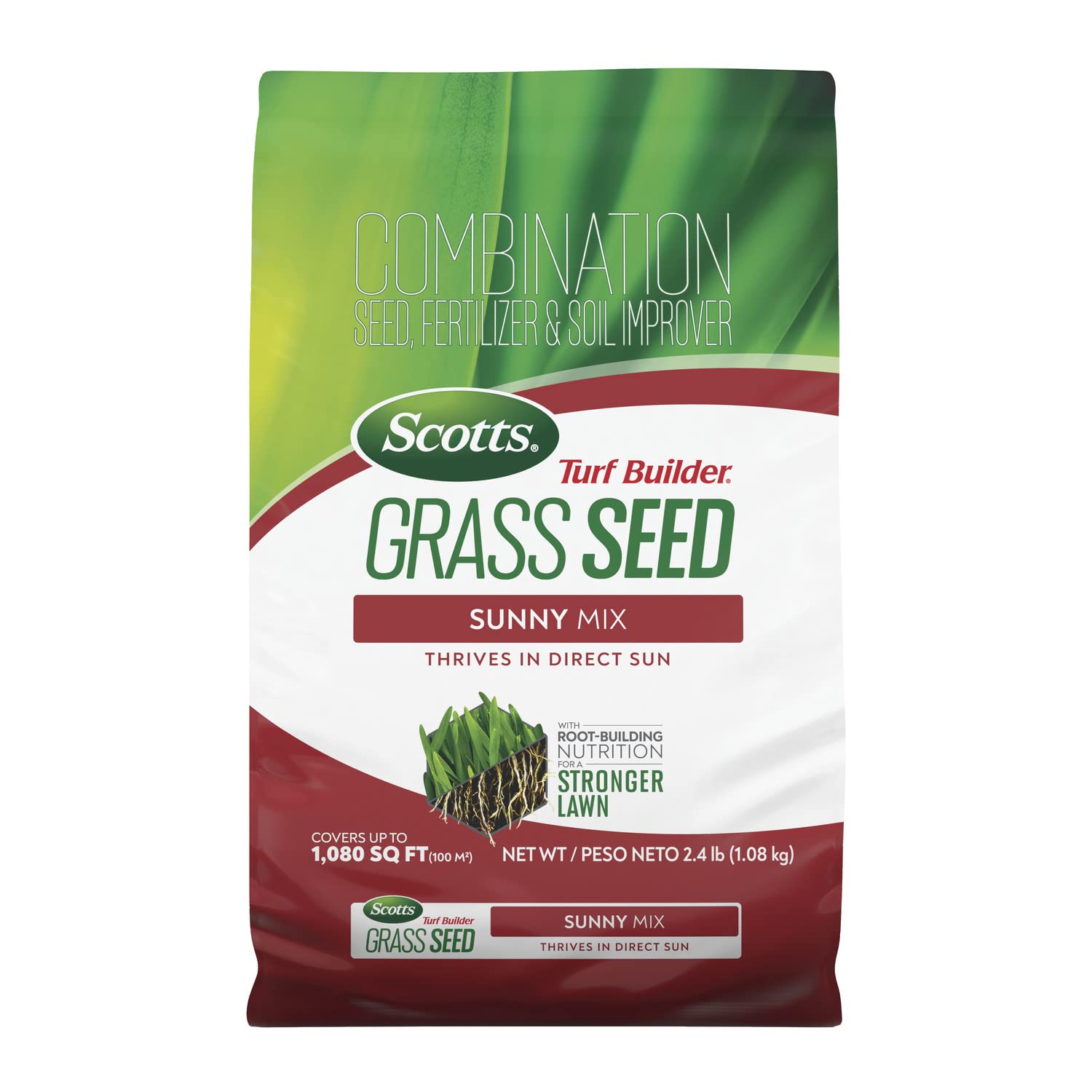
Scotts built this mix for direct sun, which makes it a natural fit for the open, unshaded lawns common in Colorado’s newer subdivisions. The Root-Building Nutrition formula combines seed, fertilizer, and a soil improver in one bag. The idea is to reduce the number of passes you need to make — spread once, and the soil conditioner helps break up compacted dirt while the fertilizer feeds the seedling.
Coverage is modest: 360 sq. ft. for a new lawn and 1,080 sq. ft. for overseeding. The 2.4 lb bag is smaller than the others on this list, so it works best for patching bare spots or small front yards. It is also recommended for light shade, though it prefers full sun. The drought resistance is listed as medium to high, but the lack of a deep-rooted tall fescue component means it may need more watering than the Jonathan Green options during a dry August.
Customer reports show solid results when used in full sun, with grass growing strong even during drought conditions. The slow start (up to 3 months for full establishment) means this is not a quick fix. If your yard is mostly exposed to direct sun and you want an all-in-one product to reduce steps, this mix makes sense. For larger properties or shadier areas, look at the other options.
Why it’s great
- All-in-one seed, fertilizer, and soil improver
- Thrives in direct sun
- Works well for patching bare spots
Good to know
- Small bag covers only 360 sq. ft. for new lawns
- Medium drought resistance; not ideal for deep water savings
- Can take up to 3 months for full establishment
FAQ
When is the best time to plant grass seed in Colorado?
Should I use Kentucky bluegrass or tall fescue for my Colorado lawn?
Can I just throw grass seed on the ground and water it?
How often should I water new grass seed in Colorado’s dry climate?
Final Thoughts: The Verdict
For most users, the grass seed for colorado winner is the Jonathan Green Black Beauty Heat & Drought because its 4-foot roots and waxy leaves are purpose-built for the state’s arid, high-UV climate. If you want fast fall germination to beat the frost, grab the Jonathan Green Fall Magic. And for covering a large new lawn on a budget without sacrificing quality, nothing beats the coverage of the GreenView Pure Kentucky Bluegrass Blend.