
Finding a spray that actually clears your fruit trees of aphids, rust, and powdery mildew without burning leaves or losing effectiveness after rain is the real struggle. The wrong formula leaves you with spotted fruit and a schedule of constant reapplication.
I’m Mohammad Maruf — the founder and writer behind Drink4Good. For this guide, I analyzed the active ingredients, dilution rates, disease coverage, and persistent control data behind the most popular fruit tree insecticides to determine which ones deliver on their promises.
After comparing formulation types, target pest lists, and real-world user feedback on leaf recovery and fruit quality, I’ve identified the top performers that simplify orchard care. This is the definitive analysis of the best fruit tree insecticide for home growers this season.
How To Choose The Best Fruit Tree Insecticide
Selecting the right fruit tree insecticide goes beyond grabbing a bottle off the shelf. Your choice impacts fruit safety, tree health, and the effort required for application. Focus on these three factors to make an informed decision.
Active Ingredient & Action Type
The active ingredient determines what pests it kills and how. Neem oil extract is a broad-spectrum fungicide, insecticide, and miticide that’s gentle on plants and suitable for organic gardening. Malathion is a potent organophosphate effective against tough infestations like scale and spider mites but requires strict safety precautions. Systemic insecticides like acephate absorb into the plant to control hidden pests like thrips and mealybugs, but they are not labeled for use on edible fruit — only ornamentals and certain non-fruit trees.
Formulation: Concentrate vs. Ready-to-Spray vs. Hose-End
A concentrate requires you to mix with water in a tank sprayer, offering maximum control over coverage and economical use — a 32 oz bottle might make 6 gallons of finished spray. Ready-to-Spray (RTS) bottles connect directly to your hose, providing instant application for large trees but less precision on mixing ratios. Hose-end sprayers offer a middle ground but can suffer from poor build quality, as some user reviews indicate.
Pest & Disease Spectrum
Check the label for the specific pests and diseases you are battling. An ideal fruit tree insecticide covers common threats: aphids, caterpillars, scale, spider mites, and diseases like powdery mildew, rust, and brown rot. Triple-action formulas save you from buying separate products for fungus and mites, which often attack a stressed tree simultaneously.
Quick Comparison
On smaller screens, swipe sideways to see the full table.
| Model | Category | Best For | Key Spec | Amazon |
|---|---|---|---|---|
| BioAdvanced 3-in-1 | Triple-Action RTS | Easy hose-end treatment | Ready-to-Spray; 32 oz | Amazon |
| Bonide Captain Jack’s Orchard Spray | Multi-Purpose Concentrate | Comprehensive disease & pest control | Concentrate; 32 oz | Amazon |
| Garden Safe Fungicide3 | Organic Neem Oil | Organic gardening and mildew | Ready-to-Use; 1 Gallon | Amazon |
| Bonide Systemic Insect Control | Systemic Concentrate | Hard-to-kill insects on ornamentals | Concentrate; 16 oz (makes 16 gal) | Amazon |
| Hi-Yield 55% Malathion | Potent Organophosphate | Stubborn mite & scale infestations | Concentrate; 32 oz | Amazon |
In‑Depth Reviews
1. BioAdvanced 3-in-1 Fruit, Citrus & Nut Tree Spray

This triple-action formula kills caterpillars, aphids, and mites while controlling black spot, powdery mildew, and rust — all with one application. The ready-to-spray design connects directly to a hose, so you can treat an entire peach or apple tree without mixing concentrate in a tank. Real-world users report noticeable results on citrus, with leaf miners and whiteflies eliminated after consistent monthly applications.
The active ingredients work systemically through the foliage, meaning rain is less likely to wash off the protection compared to a simple contact spray. It’s labeled for use up to the day before harvest on fruit and nut trees, making it practical for growers who want to eat their crop. The spray pattern reaches both the tops and undersides of leaves where pests hide.
Some users note the spray head requires good hose pressure to function optimally, and certain dense leaf clusters may need separate attention. Overall, the BioAdvanced provides the best balance of broad-spectrum control and ease of use for the home orchardist.
Why it’s great
- Triple-action covers insects, diseases, and mites in one bottle
- Hose-end ready-to-spray design simplifies large tree treatment
- Approved for use up to day before harvest
Good to know
- Spray head can be finicky under low water pressure
- Not a concentrate — you don’t control the dilution ratio
2. Bonide Captain Jack’s Citrus, Fruit & Nut Orchard Spray

This concentrate packs a punch: one pint makes up to 6.4 gallons of finished spray, making it one of the most economical options for the serious gardener. The active ingredients target beetles, fruit flies, caterpillars, spider mites, thrips, and scale, while also controlling fungal diseases like powdery mildew, rust, blight, and brown rot.
Users report impressive results on apple trees — yellowing leaves turning greener as leaf spots disappear within weeks of application. It’s also gentle enough to use on avocados, citrus, vegetables, and ornamentals. The flexibility to adjust dilution from 2.5 oz per gallon for light issues up to a stronger mix for heavy infestations gives you precise control.
A slight powdery residue can remain on leaves, and reapplication after heavy rain is necessary since the product is non-persistent. For the combination of pest and disease coverage at this price per gallon, the Bonide Captain Jack’s Orchard Spray is tough to beat.
Why it’s great
- Highly economical — 32 oz makes over 6 gallons of spray
- Broad spectrum: kills insects and controls multiple fungal diseases
- Safe to use on fruit up to day before harvest
Good to know
- Leaves a slight powdery residue on foliage
- Requires reapplication after rain
3. Garden Safe Fungicide3 with Neem Oil Extract
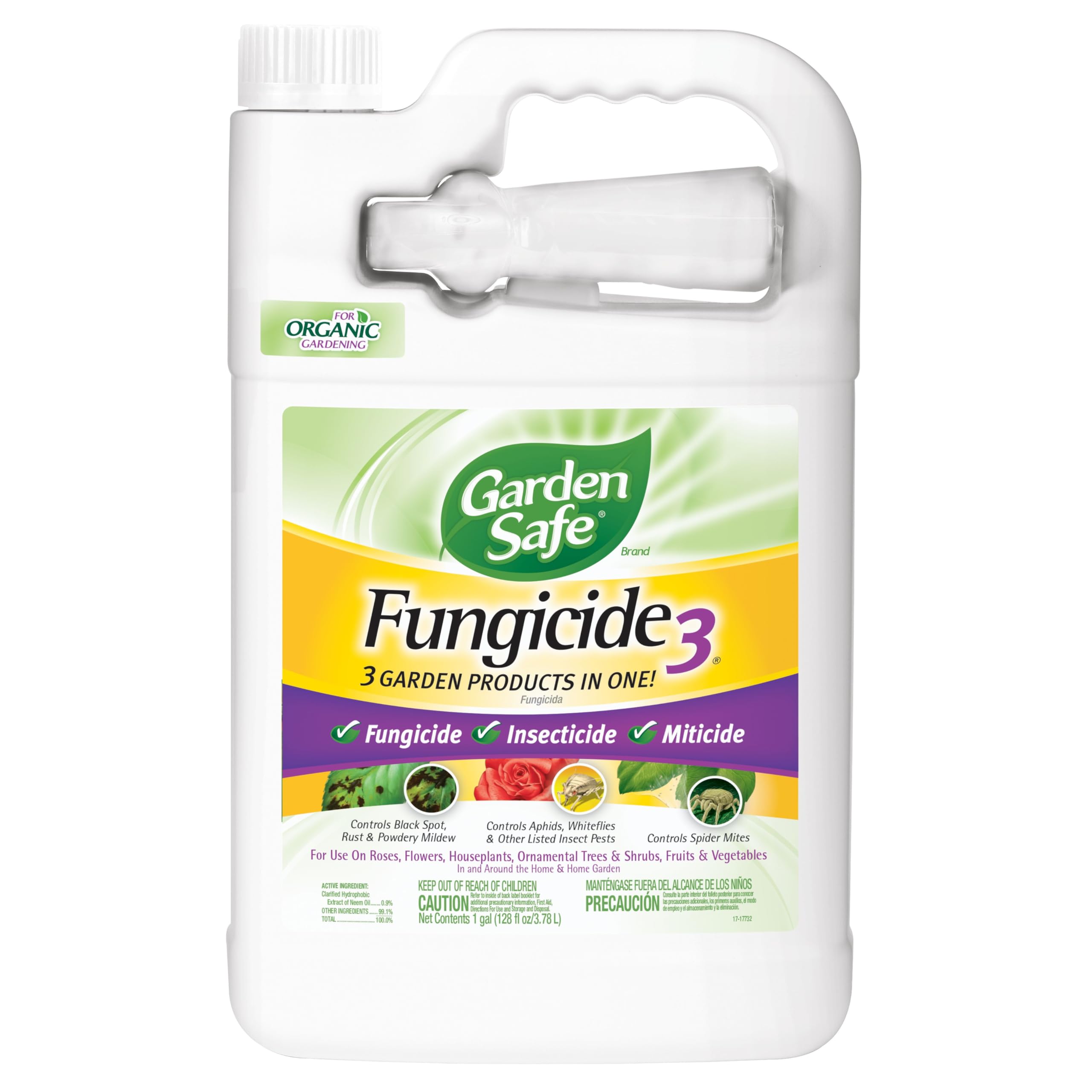
For the organic grower, this ready-to-use 1-gallon jug uses clarified hydrophobic extract of neem oil as its active ingredient, controlling black spot, rust, powdery mildew, aphids, whiteflies, and spider mites. The convenient sprayer attachment means no mixing or measuring — just point and spray on roses, tomatoes, blueberries, and fruit trees.
Users praise its effectiveness on persistent mildew problems, noting that weekly applications during the active season completely prevent recurrence and improve foliage health. It kills eggs, larvae, and adult stages of listed insects and prevents fungal attack of plant tissues. The organic certification is a major plus for those avoiding synthetic chemicals on edible crops.
The sprayer design is criticized by some users — the coiled hose is short, and the trigger mechanism can fail. A few users also report leaf burn if applied during hot, sunny days, so evening or overcast application is recommended. It’s an excellent maintenance spray for keeping mild to moderate pest and disease pressure at bay without harsh chemistry.
Why it’s great
- Organic neem oil formula safe for edible gardens
- Triple action: fungicide, insecticide, and miticide
- Ready-to-use with attached sprayer for quick application
Good to know
- Sprayer design is short and can be unreliable
- Can burn leaves if applied in direct hot sun
4. Bonide Systemic Insect Control Concentrate

When hard-to-kill insects like thrips, mealybugs, scale, and whiteflies resist contact sprays, a systemic insecticide provides a different approach. The Bonide Systemic Insect Control is absorbed by the plant and moves through its tissues, killing insects that feed on it for up to 7–10 days per application. The 16 oz concentrate makes a remarkable 16 gallons of finished spray.
It has proven highly effective on arborvitae bagworms, Canna Lily worms, and general garden pests. Users report that infestations stop quickly after the first treatment. It’s labeled for use on over 100 plant varieties, including flower beds, roses, and shrubs, and can be mixed with certain fungicides or fertilizers for efficient combination sprays.
This product is not labeled for use on fruit or vegetable plants — it’s for ornamental plants only. Multiple reviews warn of an intensely strong, unpleasant odor (described as “dumpster-like”) during mixing. Additionally, leaf spotting can occur if applied in direct sun. It is a specialty tool for ornamental tree and shrub protection, not for edible crops.
Why it’s great
- Systemic action reaches pests hiding inside the plant
- Very economical — 16 oz makes 16 gallons of spray
- Effective against resistant insects like thrips and scale
Good to know
- NOT safe for use on fruit or vegetable plants
- Extremely strong odor during mixing and application
5. Hi-Yield 55% Malathion Spray
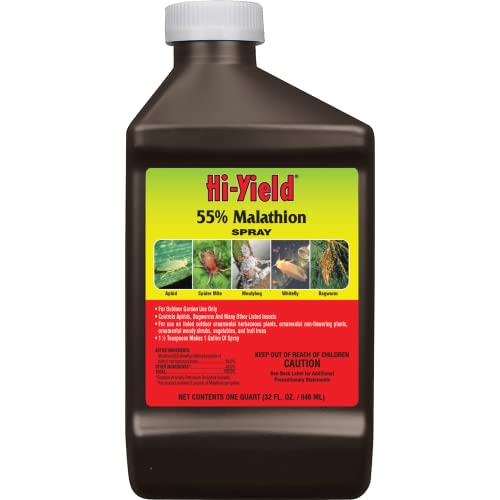
Malathion is the classic heavy artillery for fruit tree insect control, and this 55% concentrate is one of the strongest formulations available. It controls aphids, thrips, spider mites, lace bugs, and many other listed pests on fruit trees, vegetables, and ornamentals. Users report it as “kryptonite for mosquitoes” and the only solution that finally stopped stubborn spider mites on dahlias.
The 32 oz bottle covers a large area and is effective where other products have failed, particularly against scale and red spider mites. It is labeled for use on herbaceous plants, shrubs, vegetables, and fruit trees, making it highly versatile. Best results come from applying in calm weather when rain is not predicted for 24 hours.
Malathion is a potent organophosphate and a suspected carcinogen. Users strongly emphasize the need for protective gear (gloves, mask, long sleeves) during application, and some recommend hiring a licensed professional for large jobs. Unknown effects on wildlife and pets mean it should be used only as a last resort and with full caution. It is not an organic solution and requires careful handling.
Why it’s great
- Extremely effective on stubborn scale, mites, and mosquitoes
- High 55% malathion concentration for serious infestations
- Labeled for fruit trees, vegetables, and ornamentals
Good to know
- Strong suspected carcinogen — requires full protective gear
- Not suitable for regular maintenance; best used as last resort
FAQ
How often should I apply insecticide to my fruit trees?
Can I use a fruit tree insecticide on vegetables and ornamentals too?
What is the difference between a contact and a systemic insecticide?
Final Thoughts: The Verdict
For most users, the best fruit tree insecticide winner is the BioAdvanced 3-in-1 because it combines triple-action coverage with the easiest hose-end application, making it simple to protect your entire orchard. If you want to mix your own spray and save money per gallon, grab the Bonide Captain Jack’s Orchard Spray. And for stubborn mite and scale infestations where other products have failed, nothing beats the Hi-Yield 55% Malathion — though use it with the utmost care.