
Finding a fountain pen whose nib actually spreads under pressure — delivering that expressive thin-to-thick line variation — is the difference between writing and creating art. Too many pens labeled “flexible” deliver a disappointingly stiff stroke that feels just like a standard round nib. That frustration wastes time and money.
I’m Mohammad Maruf — the founder and writer behind Drink4Good. I’ve analyzed hundreds of writing instruments on paper, comparing feed channel depth, tine elasticity, and nib material composition to identify which models genuinely offer usable line variation versus which lean on marketing hype.
This guide focuses exclusively on pens whose nibs actually bend — separating true flex options from calligraphy stubs. Understanding the difference between a springy fine nib and a proper flex nib is essential before buying your next best flexible nib fountain pen.
How To Choose The Best Flexible Nib Fountain Pen
A true flexible nib fountain pen requires more than a soft-touch label. The nib’s tines must separate measurably under moderate finger pressure, and the feed must deliver enough ink to keep the widened stroke from going dry mid-letter. Most pens marketed as flex are actually semi-flex at best — they offer a bit of spring without genuine line width expansion.
Nib Material and Tine Elasticity
Steel nibs can flex with proper shaping, but titanium and 14k gold offer the best balance of snap-back and fatigue resistance. A thicker nib blank reduces flex; thinner blanks allow tine spread but may fatigue faster. The hardness rating — usually stamped on the nib — correlates with flexibility, but individual nib grinding matters just as much.
Feed Capacity and Ink Flow
Flex demands flow. A standard narrow feed channel designed for consistent fine-line writing will starve a flex stroke, causing railroading — where the two tine tracks leave a blank center line in the ink. Look for an ebonite or large-capacity plastic feed with a deep ink channel. Piston fillers generally deliver better flow than cartridge converters.
Line Variation at Writing Pressure
A true flex nib should go from a fine line (0.3–0.5 mm) at light pressure to a broad line (1.0–2.0 mm) at moderate pressure. Semi-flex nibs spread only 0.2–0.4 mm. Test the range by checking user reviews that mention specific line widths under pressure — vague “springy” descriptions often mean semi-flex.
Quick Comparison
On smaller screens, swipe sideways to see the full table.
| Model | Category | Best For | Key Spec | Amazon |
|---|---|---|---|---|
| Asvine J16 Titanium | Piston Filler | All-day flex writing | Jowo flex fine nib, 0.5mm at rest | Amazon |
| Zebra G Titanium Nib Pack | Dip Nib | Ultimate flex line variation | Titanium 10‑pack, 4x endurance | Amazon |
| BEILUNER 316 Rosewood | Premium Set | Luxury executive flex experience | 24K gilded fine nib, 0.3mm line | Amazon |
| Hongdian N11 | Metal Everyday | Entry-level soft nib experience | Titanium-coated fine soft nib, #6 size | Amazon |
| Pilot Prera Iro-Ai CM | Calligraphy Stub | Line variation without flex muscle | CM stub nib, ~0.9mm tip width | Amazon |
| Pilot Prera Transparent Black CM | Pocket Stub | Compact carry with stub flair | CM calligraphy nib, 13.4mm diameter | Amazon |
| novium Hoverpen Future | Luxury Desk Set | Conversation piece + fountain pen | Schmidt fine nib, modular body | Amazon |
In‑Depth Reviews
1. Asvine J16 Solid Titanium Fountain Pen
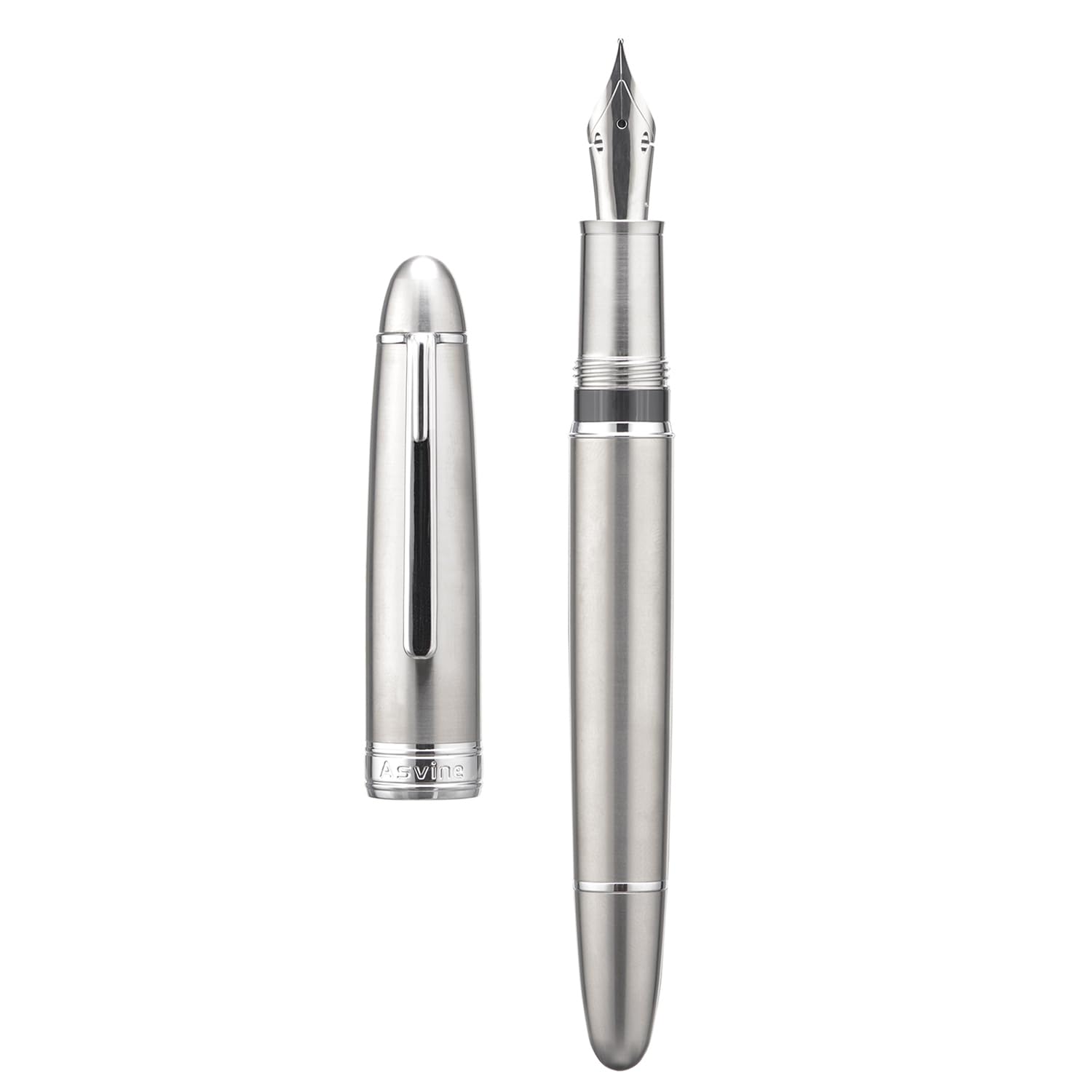
The Asvine J16 packs a genuine Jowo flexible fine nib into a solid titanium body — an unusual combination at this level. The nib spreads under moderate pressure without losing snap-back, delivering consistent line variation from a standard 0.5mm fine line to roughly 1.0mm under flex. The ebonite feed keeps up with the increased ink demand, preventing railroading during normal cursive flex strokes.
Its piston filling system holds a substantial ink reservoir — far more than any cartridge converter — and draws directly from a bottle. The titanium section is contoured with a no-slip design that stays comfortable even during longer writing sessions.
The nib leans slightly broader than a typical Japanese fine, so expect it to write closer to a European fine. The 35.3g total weight feels balanced and solid without being fatiguing. For everyday flex writing where you want a real flexible nib built into a modern, durable pen, this is the most direct option available under premium-tier pricing.
Why it’s great
- Genuine Jowo flexible nib with measurable tine spread
- High-capacity piston filler for long flex sessions
- Durable titanium body with ergonomic section
Good to know
- Nib writes slightly wider than marked fine
- Cap does not post securely
- No ink included in the box
2. Zebra Comic Pen Nib G Model Titanium Pack

This 10-pack of titanium G nibs is built for comic artists, calligraphers, and anyone who requires extreme line variation from a dip pen. The titanium formulation delivers roughly four times the durability of standard chrome-plated G nibs, resisting tine spread fatigue across extended use. Each nib starts with a hard, scratchy feel that gradually breaks in to match the classic G-pen smoothness.
The flex response is stiffer than standard chrome G nibs during the first few pages, but once broken in, the titanium alloy provides consistent spring-back without the paper-bite issues common to cheaper nibs. Ink retention is excellent — a full dip produces predictable, even lines from hairlines to broad swells without dripping.
These are dip nibs, so they require a pen holder and lack a reservoir feed. That makes them unsuitable for long-form writing but ideal for deliberate flex calligraphy and manga inking where you control every millimeter of line width. The premium price over standard chrome G nibs is justified for heavy daily use where replacing cheaper nibs every few days adds up.
Why it’s great
- Titanium alloy lasts 4x longer than standard G nibs
- Predictable ink retention for consistent flex strokes
- Breaks in to match classic G-pin smoothness
Good to know
- Requires a separate pen holder — not a fountain pen
- Initial break-in period with scratchy feel
- Stiffer than standard chrome G nibs before wear-in
3. BEILUNER 316 Fountain Pen Rosewood & 24K Gold
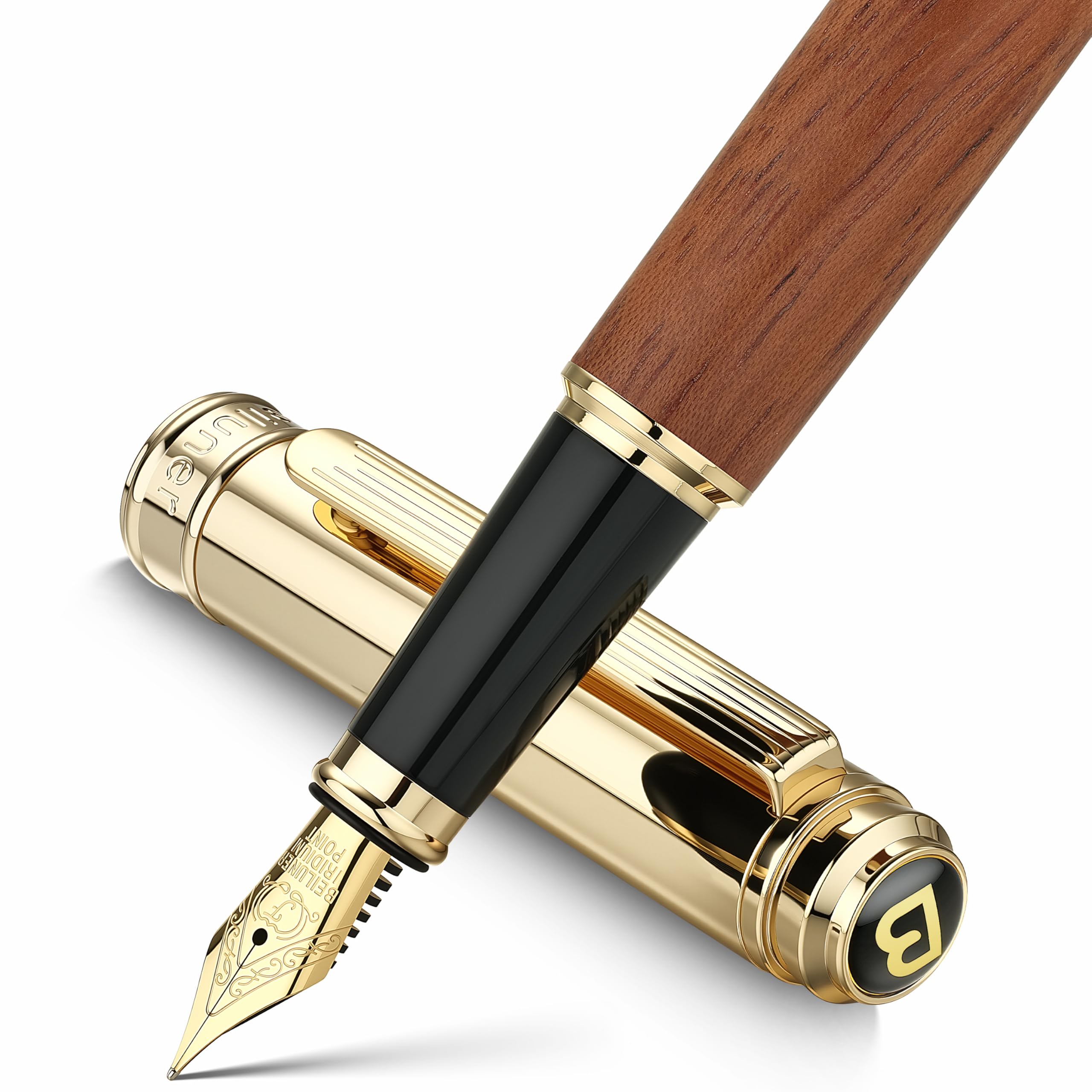
The BEILUNER 316 combines a real rosewood barrel with a 24K gold-plated fine nib, creating a set that looks as refined as it writes. The nib is a gilded steel unit with a fine point that writes a 0.3mm line at rest — thinner than most flex fine nibs — and offers a slight spring rather than full flex. It is best described as a soft fine nib that gives a pleasant cushion without dramatic line width expansion.
The included converter and six black cartridges mean you can start writing immediately. The ink flow is smooth and wet from the third-generation feed system, and the balance — thanks to the brass inner sleeve — feels substantial without being heavy. The rosewood grain is unique to each pen, adding genuine visual character.
The included leather pen box makes this a strong executive gift option. The nib writes smoothly out of the box with no tuning needed, but the fine tip may feel too thin for quick note-taking or check-writing. Let it sit for weeks unused and you may need a scribble or two to restart flow — a common trait in gilded fine nibs without airtight caps.
Why it’s great
- Stunning rosewood and 24K gold aesthetic
- Includes converter and 6 cartridges for immediate use
- Wet, smooth fine nib with pleasant spring
Good to know
- Fine nib is very thin — not a broad flex stroke
- May require restart after sitting unused for weeks
- More of a soft nib than a true flex nib
4. Hongdian N11 Fountain Pen
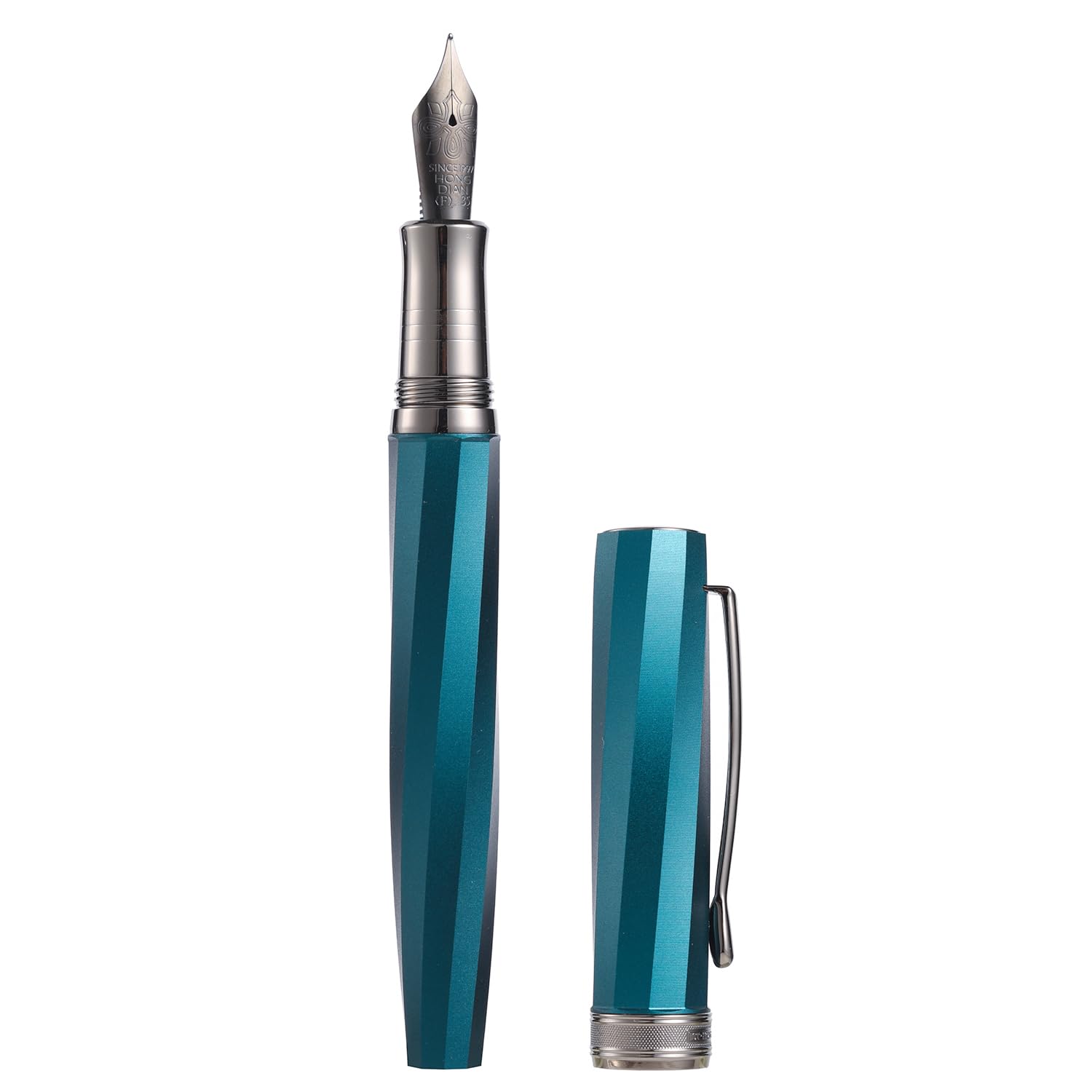
The Hongdian N11 offers a titanium-coated fine soft nib in a sharply designed metal body at a budget-friendly price point. It provides pleasant give that softens the writing experience and adds subtle line variation without dramatic tine separation.
The peacock blue twill geometric body uses a blade-cut pattern that catches light attractively. At 22g capped, it is lightweight for an all-metal pen, and the screw-off cap features an O-ring that prevents accidental loosening. The included converter gives you access to bottled ink, and the #6 nib size means you can swap it with other compatible aftermarket nibs.
Write quality is smooth with no scratchiness after a brief break-in period. The fine nib runs slightly wider than a typical Japanese fine, landing closer to a medium. On cheaper paper, it shows minimal bleed-through and feathering. For someone wanting to test whether a springy soft nib fits their writing style before investing in a true flex pen, this is the most affordable entry point that still feels premium.
Why it’s great
- Affordable soft nib experience in a premium metal body
- #6 nib size compatible with aftermarket upgrades
- Beautiful geometric design with light-catching finish
Good to know
- Soft spring nib, not a true flex nib
- Fine nib runs closer to medium width
- No ink cartridges included — converter only
5. Pilot Prera Iro-Ai Calligraphy-Nib Fountain Pen

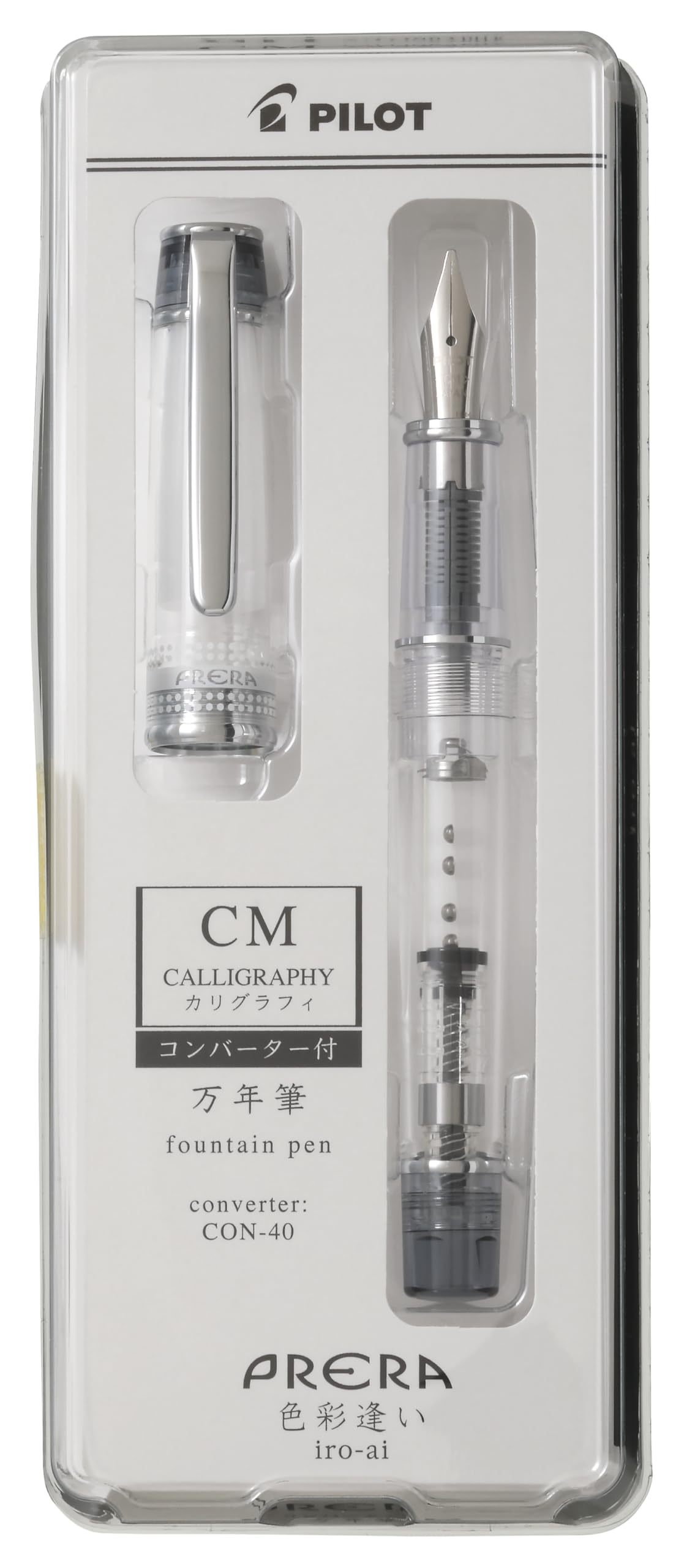
The Pilot Prera Iro-Ai uses a CM calligraphy nib — a crisp italic stub that creates automatic line variation through its shaped tip rather than through tine flex. The CM nib is approximately 0.9mm wide and produces a consistent thin horizontal stroke with a broad vertical downstroke, giving handwriting an elegant calligraphic look without requiring any pressure.
The transparent demonstrator body lets you see the ink level, and the included CON-50 converter feeds the stub reliably. The pen is a short pocket model — 120.4mm capped — but posts to a comfortable full length. The snap cap is exceptionally smooth and satisfying, creating a tight seal that keeps the nib moist between writing sessions.
The Prera is lightweight at around 15g, making it ideal for small hands or pocket carry. It is not a flex pen — the nib does not spread at all — but for anyone seeking line variation without the learning curve of pressure control, this stub delivers instant results. On poor paper the broad stroke can ghost, but on fountain-pen-friendly paper it writes wet and smooth.
Why it’s great
- Instant line variation from stub grind — no flex technique needed
- Exceptional snap cap with satisfying click and seal
- Compact pocket size that posts to full writing length
Good to know
- Not a flex nib — fixed stub geometry only
- Short pen may feel small in larger hands unposted
- CON-50 converter has small capacity
6. Pilot Prera Transparent Black CM Calligraphy
This transparent black version of the Pilot Prera shares the same CM stub nib as the Iro-Ai model, delivering the same crisp line variation through a shaped italic grind. The key difference is the included CON-40 converter, which has a lower ink capacity than the CON-50 but still functions reliably in the clear body where you can see the filling mechanism work.
The nib writes smoothly out of the box with no sweet spot hunting — a hallmark of Pilot’s quality control. The resin body is lightweight at 15.4g, and the snap cap is equally satisfying, producing a quiet click that feels precise. The pen accepts standard Pilot cartridges for quick refills on the go.
At roughly the same length as the transparent green version, this is another pocket pen that relies on posting to reach full size. The stub nib gives handwriting noticeable character without the need for pressure variation, making it a popular everyday carry for journaling and header writing. For writers who prefer a darker, more understated look, the transparent black finish offers a sophisticated alternative to the bright green version.
Why it’s great
- Same excellent CM stub nib with no sweet spot
- Sleek transparent black aesthetic for understated carry
- Accepts standard Pilot cartridges for easy refills
Good to know
- CON-40 converter has low ink capacity
- Not a flex nib — stub grind only
- Pocket size requires posting for full length
7. novium Hoverpen Future Fountain Pen & Rollerball Set

The novium Hoverpen Future is a luxury desk set built around a magnetic suspension base that holds the pen at a 60-degree angle, defying gravity. The fountain pen module uses a Schmidt fine steel nib manufactured in Germany — a smooth, reliable writer that delivers consistent ink flow without skipping. The set also includes a rollerball module that swaps into the same body for everyday use.
The pen body is machined from aerospace-grade metal with a deep black finish. The modular design lets you switch between fountain pen and rollerball by unscrewing the grip section. The fountain pen nib is fine and writes a crisp 0.5mm line — it is not designed for flex, but the Schmidt nib offers a smooth, wet writing experience suitable for daily note-taking and signing.
The magnetic base is the real centerpiece — the pen spins freely for up to 30 seconds with a gentle twist and bobs with a satisfying weightlessness. The cap does not post, so you must set it aside while writing. The desk presence is unmatched as a conversation piece, but the writing experience is secondary to the display feature. For someone who wants a premium desk ornament that also writes beautifully, this delivers.
Why it’s great
- Unique magnetic suspension base is a genuine desk centerpiece
- Includes both Schmidt fountain pen and rollerball modules
- Smooth, reliable writing from quality German nib
Good to know
- Not a flex nib — standard fine fountain pen
- Cap does not post; magnet requires force to separate
- Desk gadget form factor limits portability and usability
FAQ
What is the difference between a soft nib and a flexible nib?
Can I turn any fountain pen into a flex nib by pressing harder?
Why does my flex nib sometimes leave a blank line in the middle of strokes?
Is a titanium nib more flexible than a steel nib?
Final Thoughts: The Verdict
For most users, the best flexible nib fountain pen winner is the Asvine J16 because it combines a genuine Jowo flexible fine nib with a durable titanium body and a high-capacity piston filler at a price that undercuts most competitors. If you want maximum line variation for dedicated calligraphy, grab the Zebra G Titanium nib pack — it is not a fountain pen, but nothing delivers flex as aggressively. And for a luxury desk piece that also writes beautifully, nothing beats the novium Hoverpen Future.