
For cattle and horses, drinking water is essential in summer and winter. But breaking ice twice a day in subzero temperatures is a brutal chore that raises the risk of dehydration and hypothermia. A dedicated freeze proof cattle waterer automates access to liquid water, cutting labor and protecting herd health throughout the coldest months.
I’m Mohammad Maruf — the founder and writer behind Drink4Good. After investing dozens of hours into spec-level research on heated troughs, insulation types, and energy-efficiency claims, this guide aims to cut through the noise and deliver the straight facts.
After comparing 7 models, I’ve narrowed the field to three standouts for different setups. This roundup of the best freeze proof cattle waterer options covers heated, insulated, and heavy-duty passive designs that withstand serious cold.
How To Choose The Best Freeze Proof Cattle Waterer
The single most important factor in a freeze-proof waterer is how it balances insulation, energy source, and installation depth relative to your local frost line. A high-wattage heater in a uninsulated shell wastes power and still freezes if the water supply line is too shallow. Read on for the three main design categories and the specs that separate the reliable models from the headaches.
Insulation Type and R-Value
Polyurethane foam offers the highest R-value per inch (7.14 and up), far exceeding fiberglass or styrofoam. Thick foam keeps the heat from the electric element inside the basin and eases the load on the thermostat. The Ritchie Omni Fount uses exactly this approach with an R-7 rating, keeping waterers functional at -32°F without sizzling the element. Check whether the insulation is sealed against moisture — wet foam loses all insulating ability.
Heater Material and Location
Heating elements should be sheathed in stainless steel or another corrosion-resistant metal. Look for elements positioned directly under the drinking trough rather than in a separate side housing. This direct-contact transfer is far more efficient and prevents cold spots. The Ritchie Omni and the Brower insulated models place the heater centrally, reducing the risk of the float mechanism icing up before the rest of the waterer.
Float Valve and Plumbing Hardware
The float valve is the most common failure point in any freeze-proof waterer. Manufacturers often use plastic thumbscrews and lightweight shut-off arms that crack when the water temperature cycles near freezing. Multiple verified reviews confirm that replacing plastic fittings with brass or stainless components early prevents mid-winter failures. If the unit’s drain plug sits inside the basin where animals can reach it, a secure threaded plug or lock is essential.
Quick Comparison
On smaller screens, swipe sideways to see the full table.
| Model | Category | Best For | Key Spec | Amazon |
|---|---|---|---|---|
| Ritchie Omni Fount 2 | Heated/Insulated | Horse & cattle in severe cold | R-7 polyurethane foam, stainless trough | Amazon |
| Brower Super Insulated MK32E | Heated/Insulated | Double-pen fence line setup | R-7.14 foam, galvanized steel body | Amazon |
| Brower MC32E | Heated/Insulated | Hogs & sheep with fence integration | 23.75″ x 13″ footprint, 150 hog capacity | Amazon |
| Ritchie Watermatic 150 | Heated | Stalls & small pens (mild cold) | One-piece fountain body, no gaskets | Amazon |
| Rubbermaid 300-Gallon Stock Tank | Passive (add heater) | Large herd trough water storage | 300-gallon structural foam, ribbed base | Amazon |
| Little Giant Poly Oval 150 | Passive (add heater) | Goats, donkeys, and pond use | 150-gal polyethylene, 3/4″ drain fitting | Amazon |
| RomoTech 550-Gal Reservoir | Bulk Storage (add heater) | Off-grid & large capacity backup | 550-gal UV-stabilized polyethylene | Amazon |
In‑Depth Reviews
1. Ritchie Omni Fount 2 Automatic Heated Cattle, Horse Waterer

This is the unit that hands-down performed best in the harshest winters tested by reviewers. The Omni Fount 2 uses thick polyurethane foam with an R-value of 7 per inch — the highest insulation spec among the 7 models here — and places the heating elements directly under a stainless steel trough. One verified ranch in Wyoming reported that it stayed thawed through -32°F temperatures with wind chill, no sizzling or hot spots. The stainless interior is far easier to clean than galvanized steel and won’t rust or leach metal into the water.
Install depth is critical: you need a buried water line below your frost line plus a thermal tube (sold separately) to protect the supply line from freezing above ground. The customer who installed rigid PVC around the PTE water line inside the Ritchie thermal tube had zero trouble after rewiring the heater to a non-GFCI switch to avoid nuisance tripping. The overall dimensions are compact — 28.3 inches long, 14.5 inches wide, 25 inches high — ideal for small groups of horses or beef cattle in individual pens.
Two minor complaints surface in real reviews: the tight access doorway makes connecting the waterline difficult after mounting, and the float valve uses a plastic arm that some owners preemptively replaced with a metal one. The heating elements are very reliable, but if your frost line exceeds 4 feet you need extra thermal tube sections from Ritchie. Overall, the Omni Fount 2 delivers the lowest energy consumption per thawed gallon in this class.
Why it’s great
- R-7 polyurethane foam insulation eliminates cold spots
- Stainless steel trough is rust-proof and easy to clean
- Verified freeze protection down to -32°F
Good to know
- Thermal tube for supply line sold separately
- Float valve arm is plastic — consider brass replacement
- Install access panel is tight for hookups
2. Brower Super Insulated Electric Heated Livestock Waterer MK32E

The Brower MK32E delivers the best R-value of any galvanized steel waterer here — 7.14 per inch of extra-thick polyurethane foam. This insulation repels water, resists rodents, and contains no formaldehyde or CFCs. The double-trough design feeds two pens from a single fence-line installation, and the rounded edges prevent livestock injuries. One long-term user reported a first unit that lasted 16 years in constant outdoor Wyoming winter use, only failing when the heater needed replacement — and Brower sent a new heater immediately.
The catch: multiple buyers found the factory float mechanism unreliable out of the box. The plastic thumbscrew on the float valve broke at freezing temps, and the shut-off arm is undersized — it overfills or doesn’t seal properly. The standard solution is to replace the plastic fittings with brass, swap the shut-off valve to a brass unit, and adjust the float height. One reviewer also prevented the drain plug from being pulled by horses by inserting a bolt wrapped in rubber tape. These are simple, cheap modifications that turn a budget-leaning mid-range unit into something that truly competes with premium waterers.
At 46 pounds and 21.25 inches tall, the MK32E is slightly taller than the MC32E. The heavy-gauge sidewalls and steel roof hold up to aggressive livestock pushing. If you are comfortable swapping a few plastic parts before installation, the MK32E gives you premium insulation at a mid-range cost. The savings over the Ritchie Omni are significant, but be prepared for the extra hour of upgrade effort.
Why it’s great
- Galvanized steel with R-7.14 foam — best insulation/steel combo
- Fence-line double pen design works for hogs and horses
- Manufacturer support is responsive (replaced faulty heater quickly)
Good to know
- Plastic float valve and thumbscrew fail in freezing weather
- Drain plug sits inside basin where animals can access it
- Install requires adapters for 1/2″ NPT water line
3. Brower Polyurethane Foam Insulated Galvanized Steel Electric Heated MC32E
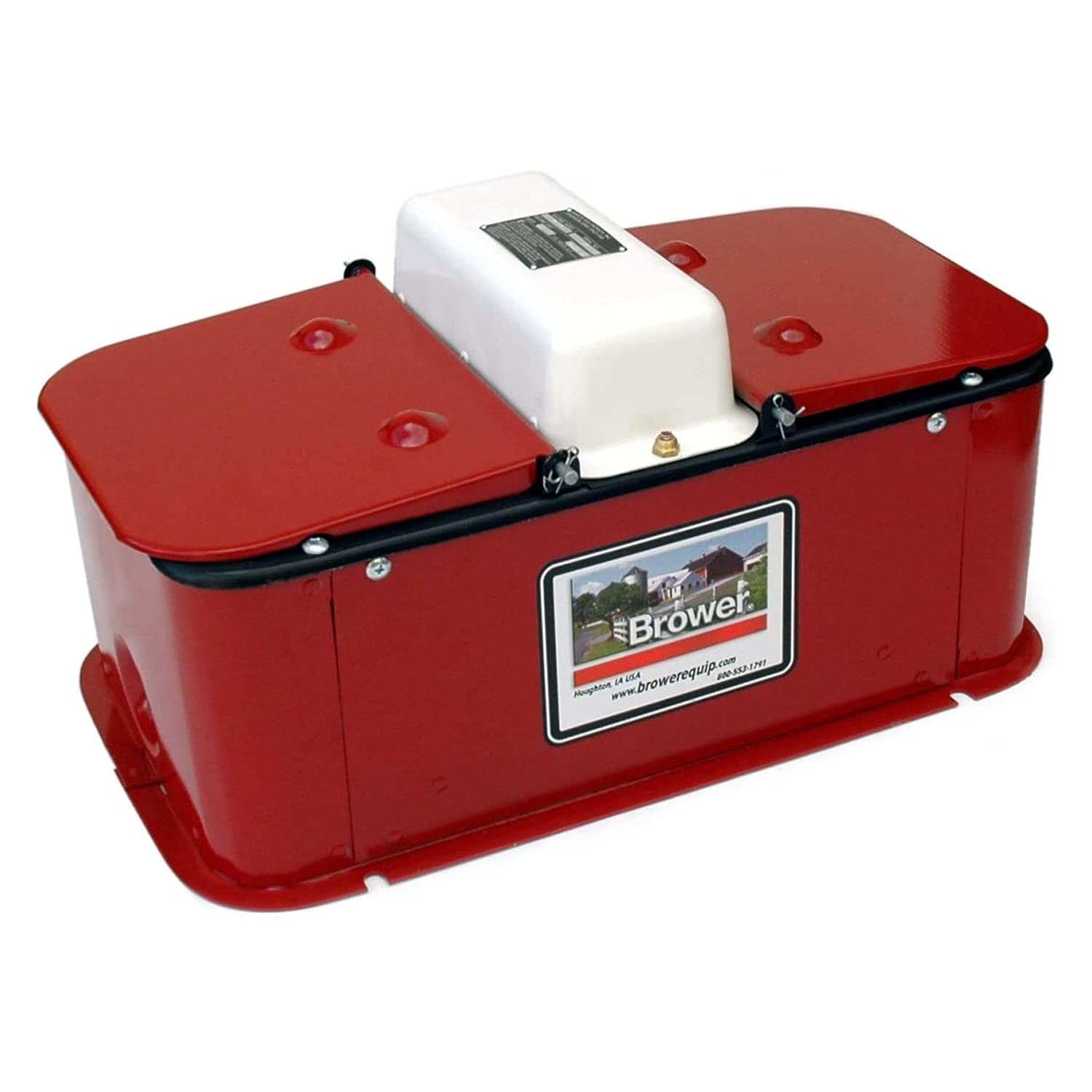
The MC32E is the smaller sibling of the MK32E, dimensionally identical in length and width (23.75″ x 13″) but shorter at 11.75 inches. It is officially rated for 150 hogs, and the low profile is designed specifically for fence-line placement to water two pens at once. The galvanized steel body uses the same super-insulating foam — formaldehyde-free and rodent-resistant — plus mud grates and lids that keep debris out of the basin. Verified reviews confirm it survived -10°F with the heater running and stayed thawed.
Installation is the biggest hurdle. Because the waterer is so low, you must bury the water line in a tile, pour a concrete pad, and run electrical power to the site. One owner reported it took over 3 hours to adapt the 1/2″ NPT fitting and stop a leak from the elbow joint even with pipe dope. The float valve design shares the same plastic weakness as the MK32E, and one Illinois buyer reported the unit froze solid on the first cold night — blamed on poor seal around the top door where cold air entered. The top door is not insulated and doesn’t clamp tightly.
Despite these quality-control gripes, the MC32E works reliably at subzero temps once the installation is solid and the float is adjusted correctly. The low height makes it difficult for larger animals to tip or damage. For anyone with hogs or sheep needing a fence-line waterer in moderate winter conditions, the MC32E offers the best price-to-performance ratio in this comparison, but you must budget for brass retrofit parts and extra caulking around the access lid.
Why it’s great
- Low profile — hard for animals to tip or damage
- Insulated galvanized steel resists rodents and corrosion
- Mud grates keep trough clean even in wet pens
Good to know
- Top access cover is uninsulated and poorly sealed
- Float valve plastic parts fail in freezing temps
- Low height forces difficult underside plumbing access
4. Ritchie Watermatic 150

The Watermatic 150 is a no-frills heated fountain made in the USA with a single-piece rugged body that eliminates gaskets — the most common leak point on multi-piece designs. All interior surfaces slope toward a central drain, making cleanout a 30-second job. The large side access panel lets you reach the heating element and valve without disassembling the whole unit. It’s designed for individual stalls or small pens and at 55 pounds it’s solid enough that horses won’t shift it.
However, the Watermatic 150 is NOT insulated. This is the single most important detail to understand before buying. Multiple Wisconsin owners reported that the deicing system couldn’t keep up with sustained subzero cold — the basin froze on nights below 0°F. The unit relies entirely on the electric heater element to prevent freezing, which means higher power draw and less margin for error if the thermostat fails. The valve assembly feels cheap for the price point; one reviewer described it as “a paperweight” and advised replacing it with a brass unit immediately.
For mild winter zones where temps rarely drop below 15°F, the Watermatic 150 is a simple, durable, easy-to-clean option. For cold climates like Wisconsin or Wyoming, you want the Omni Fount or an insulated Brower. The lack of foam insulation and the unsealed top make it a poor choice for deep-freeze regions, despite the heavy-duty body.
Why it’s great
- One-piece molded body — zero gasket leaks
- Sloped interior drains completely for fast cleaning
- Easy side access to heating element
Good to know
- No insulation — heater works hard in extreme cold
- Factory valve assembly is cheap plastic
- Reported freeze failures in Wisconsin winters
5. Rubbermaid Commercial Products Stock Tank 300-Gallons
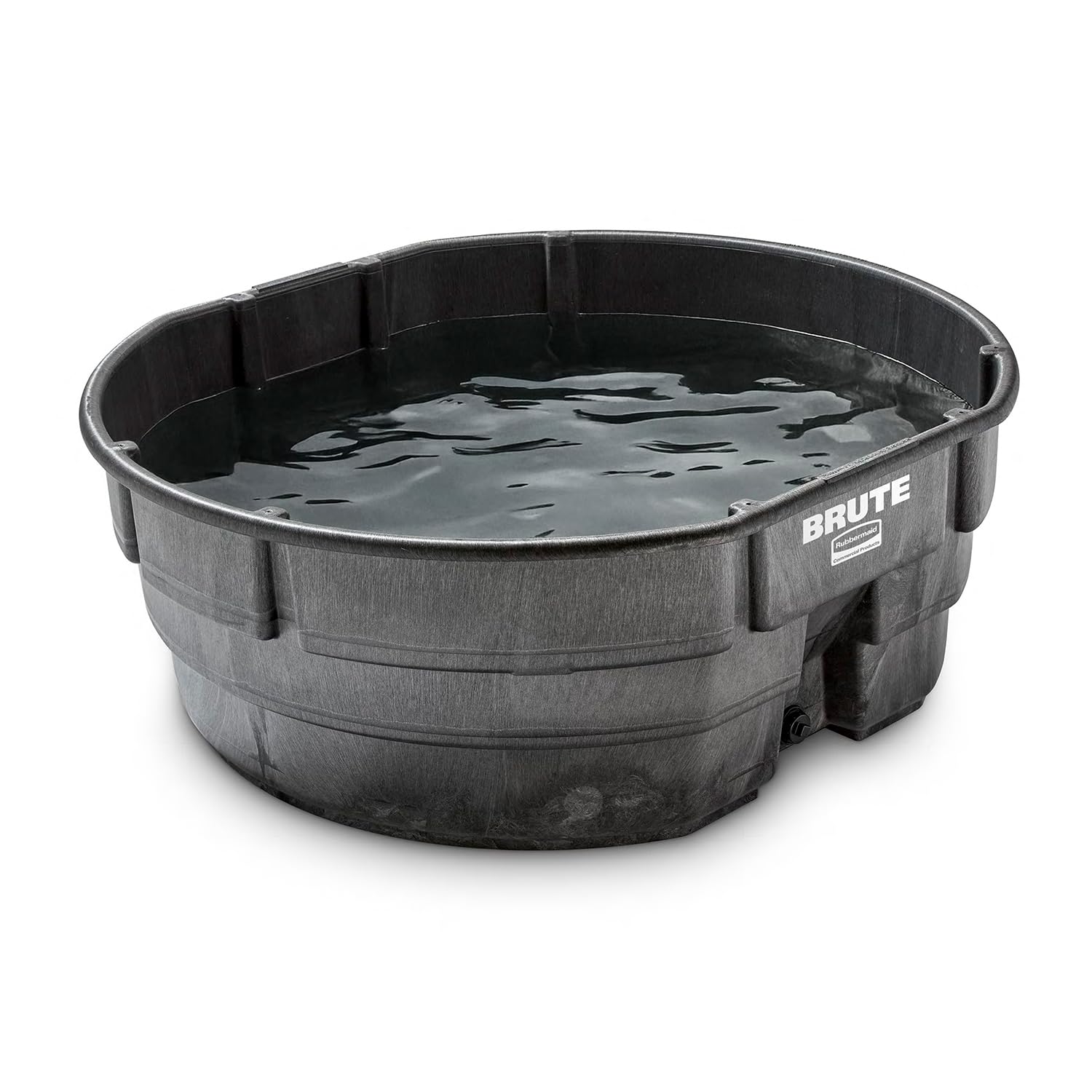
The Rubbermaid 300-gallon stock tank is not a freeze-proof waterer by itself, but it is the best passive tank on this list for pairing with a floating tank heater or a submersible deicer. The structural foam construction (Rigidcell) is far more durable than roto-molded polyethylene — it resists cracking, warping, and impact damage in extreme weather. The ribbed base and built-in body stiffeners prevent the sides from bulging when full, and the 2-inch protected drain plug sits in a recessed pocket where livestock nudging won’t break it. It carries a 10-year limited warranty and is made in the USA.
At 300 gallons, this tank is best for large herds of cattle or horses where you want a single large water source rather than multiple small waterers. The smooth interior has no sharp edges, and the black color absorbs solar heat during the day, slightly reducing the heater duty cycle. Owners report it works flawlessly as a duck pond, ice bath, or cow trough, and one customer called it “the nicest I’ve seen anywhere.” Unlike a dedicated heated waterer, this tank requires you to run a power cord for a floating heater and monitor the water level manually unless you install an automatic float valve.
The main downside for freeze protection is the open-top design — cold air has free access to the water surface, and wind accelerates heat loss. A floating insulated cover can help, but you will use more electricity than with a closed, insulated fountain. For operations with existing power at the pasture and a budget that prefers a single large tank over multiple specialized waterers, the Rubbermaid 300 is a battle tank that will outlast the deicers you pair with it.
Why it’s great
- Heavy-duty structural foam — resists cracking and warpage
- 300-gallon capacity for large herds
- Protected 2″ drain plug won’t break from animal impact
Good to know
- Open-top design loses heat quickly in wind
- Requires separate floating or submersible heater
- No integrated float valve for auto-refill
6. Little Giant Poly Oval Stock Tank 150 Gallons
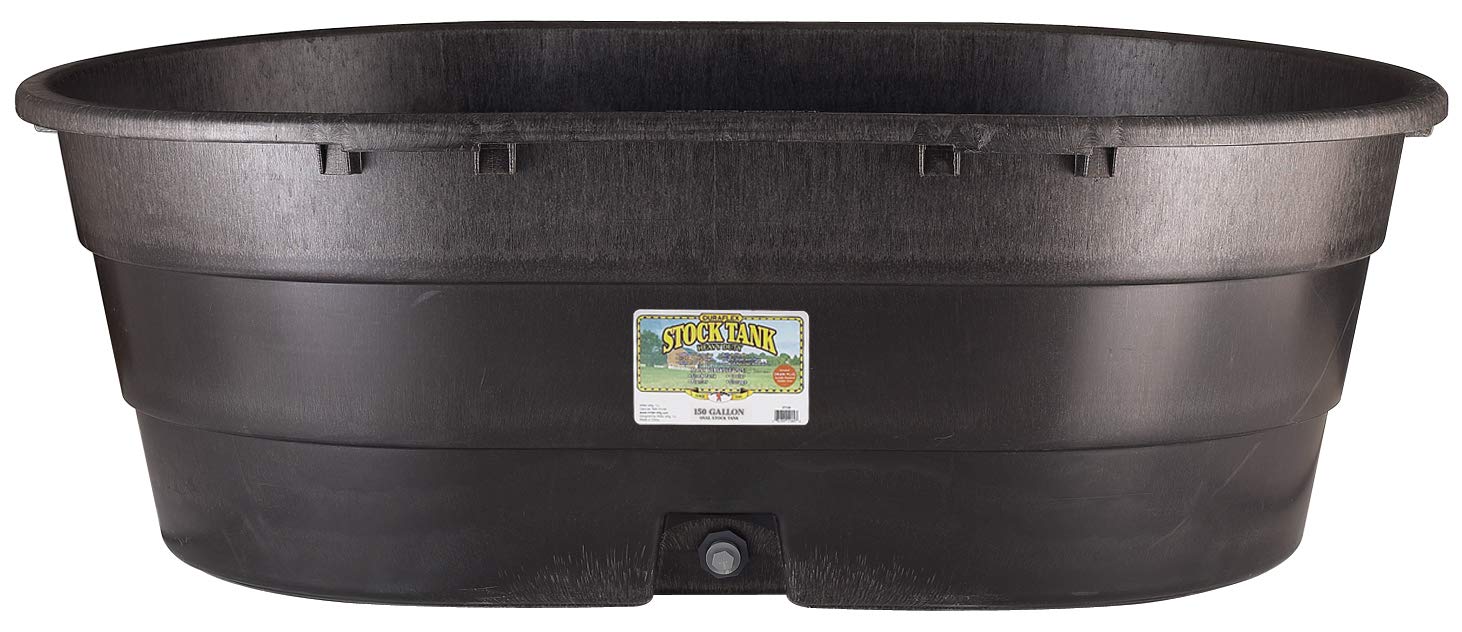
The Little Giant Poly Oval 150 is the lightest large-volume tank here at 42.5 pounds, making it the easiest to move empty or reposition between pastures. The oval shape eliminates corner stress cracking — a common failure mode in rectangular poly tanks — and the molded rim enables one-person carrying. The polyethylene resin is impact-resistant and UV-stabilized, and the tank is available in five sizes from 15 to 150 gallons. One goat owner found it to be the perfect height for donkeys and small goats, and a dog owner uses it as both a pool and drinking station for huskies.
For freeze-proofing, this tank requires an external heater, just like the Rubbermaid. The 3/4-inch drain fitting (plug sold separately) can be left open or closed to manage water flow. In winter, a floating deicer or tank heater is necessary, and the thin poly walls offer almost no insulation value. The tank survived a Maine winter with no damage when kept 3/4 full, but the water froze solid — which proves the material is tough but not thermally efficient. The 150-gallon capacity is adequate for small herds but may need daily thawing management in single-digit weather.
Compared to the Rubbermaid 300, the Little Giant is half the capacity, lighter, and significantly cheaper. It does not have the ribbed base or body stiffeners, so it will bulge slightly under full load, but the polyethylene has enough flex to accommodate this without cracking. For a start-up operation on a tight budget that already owns a tank heater, this is a practical open-water trough. It is not a freeze-proof solution alone, but as a durable vessel for a heater setup, it gets the job done.
Why it’s great
- Lightweight — easy to move and clean
- Oval shape eliminates corner stress cracks
- UV-stabilized polyethylene resists sun damage
Good to know
- No insulation — requires external heater for winter
- Sides may bulge slightly under full water pressure
- Drain plug sold separately
7. RomoTech 550-Gal Polyethylene Vertical Reservoir Tank

The RomoTech 550-gallon vertical tank is a bulk water storage solution rather than a direct-use waterer. The UV-stabilized polyethylene construction resists corrosion, and the translucent walls show the water level at a glance through the molded-in gallon and liter markings. It comes with a 12-inch lid and a 2-inch NPT outlet for connecting to a hose or gravity feed line. One owner used it to collect rainwater for their orchard and found the walls thick enough that a 3/4-fill survived a Maine winter with no damage.
For livestock watering, you would use this tank as a remote water reservoir that gravity-feeds a freeze-proof waterer or trough. The 550-gallon capacity provides weeks of supply in a dry paddock without a well. However, the tank has no built-in freeze protection — you must bury it, insulate the exterior, or heat the enclosure to prevent the stored water from freezing solid. The 2-inch outlet is located at the bottom, meaning any freezing will block the entire water supply. One reviewer reported a leak around the outlet threads right out of the box, and both the seller and manufacturer were difficult about returns.
At 140 pounds empty, this tank is not portable and requires a solid base — concrete or compacted gravel — to support the full 4,500-pound water weight. It is not a freeze-proof waterer in itself, but it is the highest-capacity backup reservoir on the list. Smart buyers pair it with a small heated, insulated waterer like the Ritchie Omni Fount for remote pastures: the RomoTech supplies the water, the Omni keeps it thawed. The RomoTech alone will freeze if exposed, so this recommendation is conditional on you having a separate freeze-proof dispensing system.
Why it’s great
- 550-gallon capacity for off-grid or backup water supply
- UV-stabilized polyethylene withstands outdoor exposure
- Translucent walls with visible level markings
Good to know
- No freeze protection — requires insulation or heating
- Leaking outlet threads reported on some units
- Very heavy when full (4,500+ lbs) — needs solid base
FAQ
Do I need a thermal tube for a freeze-proof waterer?
Can I use a drop-in heater with a passive stock tank instead of buying a heated waterer?
How do I retrofit cheap plastic parts on a Brower waterer?
What should I do if my waterer freezes despite being rated as freeze-proof?
Final Thoughts: The Verdict
For most users, the best freeze proof cattle waterer winner is the Ritchie Omni Fount 2 because its R-7 polyurethane foam and stainless steel trough deliver proven freeze protection in -32°F weather with the lowest energy draw. If you want a fence-line double-pen design with top insulation value, grab the Brower Super Insulated MK32E and budget 30 minutes to upgrade the plastic float valve to brass. For a setup on a tight budget that already owns a tank heater, nothing beats the durable value of the Rubbermaid 300-gallon stock tank as a heavy-duty passive trough.