
Pythium blight doesn’t give you a second chance. This water-mold pathogen thrives in hot, humid weather and saturated soil, turning healthy turf into slimy, matted patches of rot within 24 to 48 hours. Choosing the wrong product means wasted money and a dead lawn before the weekend is over.
I’m Mohammad Maruf — the founder and writer behind Drink4Good. I’ve spent hundreds of hours analyzing fungicide labels, active ingredient efficacy against Pythium species, and user-reported field results to build this guide around what actually stops this aggressive disease.
Whether you are treating a small home lawn or a large landscape, the right fungicide for pythium blight must deliver rapid systemic uptake and residual protection against the oomycete pathogens that cause this rapid turf collapse.
How To Choose The Best Fungicide For Pythium Blight
Standard lawn fungicides often fail against Pythium because it is an oomycete, not a true fungus. You need an active ingredient that targets this specific water-mold biology. Here is what to check before you buy.
Active Ingredient Selection
Propiconazole, azoxystrobin, and phosphite-based compounds (mono- and di-potassium salts of phosphorous acid) are the most effective against Pythium. Products relying solely on chlorothalonil or mancozeb may suppress surface issues but lack the systemic movement needed to reach the root zone where Pythium attacks.
Application Method
Liquid concentrates allow precise mixing for foliar sprays or soil drenches, which deliver active ingredients directly to the crown and roots. Granular formulations are easier to broadcast over large lawns but require thorough watering-in to move the product into the soil profile where it can stop the pathogen.
Residual Duration
Pythium develops resistance quickly under continuous pressure. Look for a product that offers 14 to 28 days of residual control so you can rotate active ingredients between applications. Heavy rain or irrigation shortens residual activity, so products with rain-fast labels perform better in wet seasons.
Quick Comparison
On smaller screens, swipe sideways to see the full table.
| Model | Category | Best For | Key Spec | Amazon |
|---|---|---|---|---|
| Monterey Garden Phos | Liquid | Pythium & root rot drench | Phosphite-based systemic | Amazon |
| The Andersons Prophesy | Granular | Large lawn preventative | Propiconazole 25lb bag | Amazon |
| Syngenta Headway G | Granular | Dual-action protection | Azoxy + Propiconazole | Amazon |
| Atticus Gunner 14.3 | Liquid | Low-odor ready-to-mix | Propiconazole MEC | Amazon |
| Quali-Pro Propiconazole 14.3 | Liquid | Golf course grade control | Propiconazole 14.3% | Amazon |
| Monterey Fungi-Max | Liquid | Multi-disease vegetable care | Myclobutanil concentrate | Amazon |
| Fertilome Systemic Fungicide II | Liquid | Quick spot treatment | Ready-to-use 32oz | Amazon |
In‑Depth Reviews
1. Monterey Garden Phos

Monterey Garden Phos is built around mono- and di-potassium salts of phosphorous acid — a chemistry known to inhibit oomycete pathogens like Pythium at the cellular level. Users report stopping root rot in avocado trees and fire blight in apples after just one or two applications, with the product labeled specifically for Pythium control as a soil drench or foliar spray.
The systemic action moves the active ingredient into the plant’s vascular system within hours, providing protection that lasts up to 14 days per application. The included measuring spoon takes the guesswork out of mixing ratios, and the 1-pint concentrate yields enough solution for multiple treatments on ornamentals, vegetables, and turf.
Some users mention leaf burn if the solution is mixed too strong or applied during peak heat, so follow the dilution rates carefully. For targeted Pythium blight management on high-value turf or garden plants, this is the most effective chemistry currently available in a consumer-ready bottle.
Why it’s great
- Phosphite chemistry directly targets Pythium oomycetes
- Three application methods: drench, spray, or bark soak
- Fast systemic uptake protects roots within hours
Good to know
- Can cause leaf burn if applied in direct sunlight above 85°F
- Not labeled for use on all turfgrass species — check label
2. The Andersons Prophesy Propiconazole
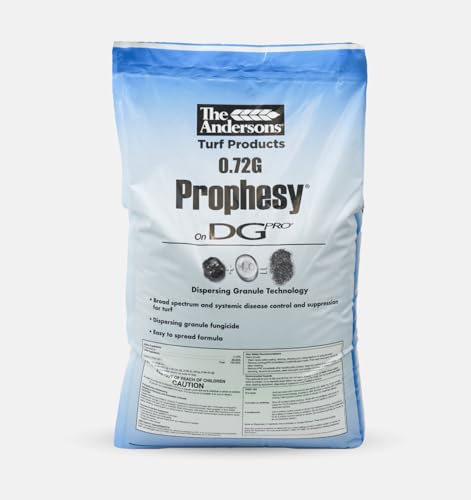
The Andersons Prophesy delivers 0.44% propiconazole on a fertilizer carrier using DG Pro Technology, which breaks down quickly after watering-in to release the active ingredient into the soil. Each 25-pound bag covers up to 10,000 square feet, making this the most efficient option for large lawns where liquid spraying becomes impractical.
Propiconazole is a sterol inhibitor that disrupts fungal cell membrane formation, and while it is effective against brown patch and dollar spot, it also provides suppression of Pythium when used as a preventative before symptoms appear. User reviews highlight dramatic recovery from necrotic ring spot and red thread after a single application.
The granular formulation requires careful spreader calibration — applying too much can stress the turf during hot weather. Several reviewers note that the price has increased recently, but the convenience of broadcast application and the 28-day residual window make it a strong choice for season-long disease prevention.
Why it’s great
- Broadcast application covers 10,000 sq ft per bag
- DG Pro particles release active ingredient evenly
- Effective as both preventative and curative
Good to know
- Requires thorough watering-in to activate
- Price per bag is higher than liquid concentrates
3. Syngenta Headway G Granular Fungicide

Syngenta Headway G combines azoxystrobin and propiconazole in a single granular formulation — a dual-mode-of-action approach that reduces the risk of resistance development in Pythium populations. Azoxystrobin inhibits mitochondrial respiration in the pathogen, while propiconazole disrupts sterol synthesis, creating a two-front attack that few single-active products can match.
The 30-pound bag provides extended coverage for large properties, and users in warm, wet climates report that this product kept their lawns fungus-free through unusually rainy spring and summer seasons. The granular format allows easy application with a standard broadcast spreader, and the residual activity holds for roughly four weeks under normal conditions.
Packaging is the primary complaint — the bag arrives inside a cardboard box that can tear during shipping. The control duration drifts closer to three weeks under heavy rain or frequent irrigation, so plan for a mid-season reapplication. For those seeking a rotation partner or a high-end preventative, this dual-active granular is a solid investment.
Why it’s great
- Two active ingredients reduce resistance risk
- Azoxystrobin provides strong Pythium suppression
- Large bag covers significant turf acreage
Good to know
- Packaging can tear during shipping
- Residual control may shorten in heavy rain
4. Atticus Gunner 14.3 MEC Propiconazole
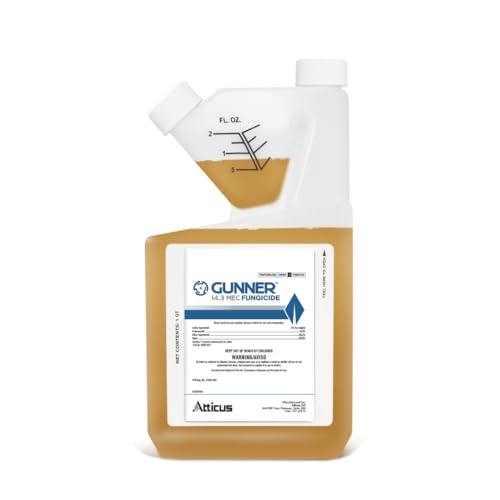
Atticus Gunner 14.3 MEC uses a microemulsion concentrate (MEC) formulation that keeps the active ingredient suspended evenly in the spray tank — no settling, no clogs, and no need to re-agitate mid-application. The 14.3% propiconazole content matches professional-grade products used on golf courses and commercial landscapes, offering proven suppression of Pythium along with more than 20 other listed diseases.
Once dried on the foliage, the product resists wash-off from rain or irrigation, which is a critical advantage during the wet conditions that trigger Pythium outbreaks. Users report excellent results against powdery mildew and brown patch, and the low-odor formula makes it more pleasant to apply than sulfur-based or chlorothalonil alternatives.
The 32-ounce bottle treats a substantial area, but the label instructions are printed very small — consider downloading the PDF from the manufacturer’s site for readability. It is not registered for sale in Alaska, Hawaii, or several other regions, so verify local availability before ordering.
Why it’s great
- Microemulsion stays mixed without settling
- Rain-fast once dried on foliage
- Low-odor application for sensitive areas
Good to know
- Not registered in Alaska, Hawaii, or Vermont
- Label print is extremely small for mixing instructions
5. Quali-Pro Propiconazole 14.3 Fungicide

Quali-Pro Propiconazole 14.3 is the same active ingredient concentration used by turf professionals but sold in a consumer-ready 32-ounce bottle. The microemulsion formula minimizes odor and improves tank stability, and the locally systemic mode of action moves the propiconazole into the leaf tissue within hours.
Real-world results from users show immediate control of brown patch on Bermuda grass after one application, with the bottle lasting multiple seasons for smaller lawns. The product is labeled for use on cool- and warm-season grasses, trees, shrubs, and ornamentals, making it a versatile option for anyone managing mixed landscapes.
Some users found that it worked exceptionally well on oak wilt and leaf spot but was less effective on St. Augustine grass fungus compared to other products. The instructions recommend full PPE for mixing, and the oil-based liquid can leave a residue on sprayer components if not cleaned promptly.
Why it’s great
- Professional-grade 14.3% propiconazole at a value price
- Low-odor microemulsion for comfortable application
- Effective on both cool- and warm-season turf
Good to know
- May not perform well on St. Augustine grass fungus
- Requires full PPE and thorough sprayer cleaning
6. Monterey Fungi-Max
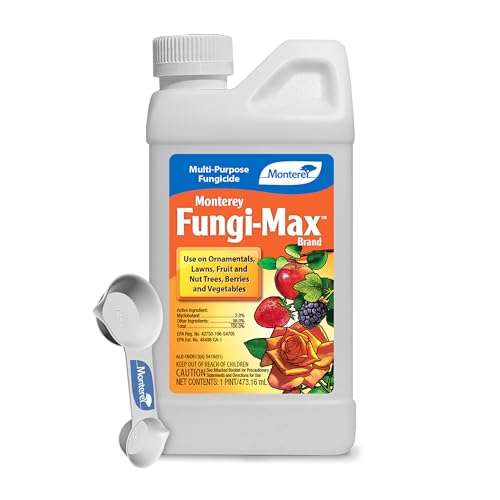
Monterey Fungi-Max contains myclobutanil, a systemic triazole fungicide that moves upward through the plant’s xylem to protect new growth from infection. While myclobutanil is primarily effective against powdery mildew, rust, and leaf spot, it offers suppression of Pythium when used in a rotation program with other active ingredients.
The 1-pint bottle comes with a graduated measuring spoon for accurate mixing, and the concentrate yields a large number of spray applications — one reviewer noted using a very small amount per gallon and still having product left after treating multiple seasons. Users report rapid clearing of powdery mildew on roses and rust on hawthorn bushes after a single spray.
Myclobutanil is not the strongest standalone choice for active Pythium blight, but it works well as a preventative component early in the season. The product must be mixed with water in a spray tank, and it requires two to three reapplications at 14-day intervals for persistent disease pressure.
Why it’s great
- Highly concentrated — many applications per bottle
- Systemic action protects new growth
- Excellent for multi-disease garden use
Good to know
- Not specifically formulated for Pythium blight
- Requires multiple reapplications for full control
7. Fertilome Liquid Systemic Fungicide II RTS
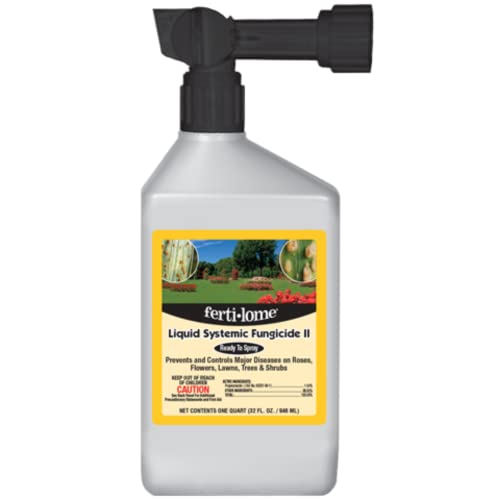
Fertilome Liquid Systemic Fungicide II RTS comes ready to use in a 32-ounce trigger spray bottle — no mixing, no measuring, no sprayer calibration. This convenience makes it ideal for small spot treatments on flower beds, roses, or isolated turf patches where Pythium blight is just starting to show.
The active ingredient is thiophanate-methyl, a broad-spectrum systemic that controls dollar spot, brown patch, leaf spot, and other common lawn diseases. Users report visible improvement on yellowing Live Oak leaves after one application and complete clearing of fire blight on Crimson Maple after three bi-weekly sprays.
Thiophanate-methyl is less potent against Pythium oomycetes compared to phosphite or propiconazole products, so this is best used for early prevention on ornamentals rather than curative treatment on turf. The bottle covers a limited area — about the size of a small garden bed — and refills are more expensive per ounce than concentrate options.
Why it’s great
- No mixing — spray directly from the bottle
- Effective on rose, flower, and tree diseases
- Fast shipping and easy storage
Good to know
- Limited coverage for large turf areas
- Less effective against aggressive Pythium outbreaks
FAQ
Can I use a granular fungicide for Pythium blight?
How often should I reapply fungicide for Pythium?
Is Pythium blight the same as brown patch fungus?
Final Thoughts: The Verdict
For most users, the fungicide for pythium blight winner is the Monterey Garden Phos because its phosphite chemistry directly targets the oomycete pathogen and works as a soil drench, foliar spray, or bark soak. If you want the convenience of broadcast application over a large lawn, grab the The Andersons Prophesy Propiconazole. And for a dual-active granular that reduces resistance risk, nothing beats the Syngenta Headway G.