
The transition from breast to bottle is a delicate dance—one wrong move (or a fast-flow nipple) can lead to nipple rejection, gassiness, or a baby that refuses the bottle entirely. For parents of breastfed babies, the bottle material matters as much as the nipple shape; glass eliminates the risk of microplastics and stubborn odors that plastic bottles retain after multiple washes.
I’m Mohammad Maruf — the founder and writer behind Drink4Good. This guide is the result of cross-referencing hundreds of real user reviews and digging deep into the specific specs that matter most: borosilicate glass thickness, anti-colic vent design, flow-rate compatibility with breastfeeding, and universal fit compatibility with common breast pump systems.
Whether you’re a first-time parent or adding to your feeding arsenal, finding the right glass bottles for breastfed babies means balancing material safety, nipple flow, and colic prevention without overwhelming your baby’s natural latch.
How To Choose The Best Glass Bottles For Breastfed Babies
Not all glass baby bottles are equal when your baby is used to the natural rhythm of breastfeeding. The wrong nipple flow or a vent system that leaks can undo weeks of feeding success. Focus on these four factors before clicking ‘buy’.
Nipple Flow Rate and Shape
Breastfed babies are accustomed to a variable flow—fast let-down followed by slower streams. Bottle nipples labeled “slow flow” or “extra slow flow” mimic this pattern best. A nipple that is too wide or too rigid can cause nipple confusion; look for a soft, breast-shaped silhouette with a gradual slope from base to tip. Some bottles even include flow-rate markers (like dots or S/M/L stamps) to help you level up as your baby’s sucking reflex matures.
Anti-Colic Venting System
Air swallowed during feeding is the primary cause of gas and fussiness in breastfed babies. Effective anti-colic bottles use a two-part valve or a side channel that redirects air bubbles away from the milk and into the bottle’s chamber. The best venting systems require minimal extra assembly parts—every additional gasket or tube is one more piece to wash and one more chance for leakage. Internal vents (integrated into the nipple collar) tend to be more leak-resistant than external straw-based systems.
Glass Grade and Thermal Shock Resistance
Standard soda-lime glass can shatter when going from freezer to hot water. Borosilicate glass is the industry standard for feeding bottles because it withstands extreme temperature swings without cracking. A thicker glass wall also provides better drop protection—though no glass is unbreakable. Some manufacturers include silicone sleeves in the package; if not, plan to buy a compatible sleeve to add grip and absorb impact forces.
Pump and Sterilizer Compatibility
A glass bottle that screws directly onto your breast pump flange saves you the step of transferring milk between containers—every drop saved matters. Check the bottle’s neck diameter (standard wide neck fits most major pumps like Spectra, Medela, and Lansinoh). Also verify that the bottle’s maximum volume and shape fit inside your bottle warmer and microwave sterilizer without tipping over. Laser-engraved volume markings (instead of printed ink) are safer because they contain no lead or harsh chemicals.
Quick Comparison
On smaller screens, swipe sideways to see the full table.
| Model | Category | Best For | Key Spec | Amazon |
|---|---|---|---|---|
| Lansinoh Glass Baby Bottles | Premium | Breast-to-bottle transition with anti-colic | Borosilicate glass, 5 oz, slow flow nipple size S | Amazon |
| Natursutten Anti-Colic Glass | Premium | Natural rubber nipple, slow flow | Borosilicate glass, 4 oz, double anti-colic valve | Amazon |
| COMI Wide Neck Glass | Mid-Range | Pump, store, and feed in one bottle | Borosilicate glass, 6 oz, silicone sealing disc | Amazon |
| haakaa Gen.3 Natural Glass | Mid-Range | Paced feeding with offset nipple | Borosilicate glass, 6.3 oz, variable flow nipple | Amazon |
| NUMVIM Glass Baby Bottles | Budget-Friendly | Lead-free laser engraving, extra slow flow | Borosilicate glass, 3 oz, vented nipple | Amazon |
In‑Depth Reviews
1. Lansinoh Glass Baby Bottles
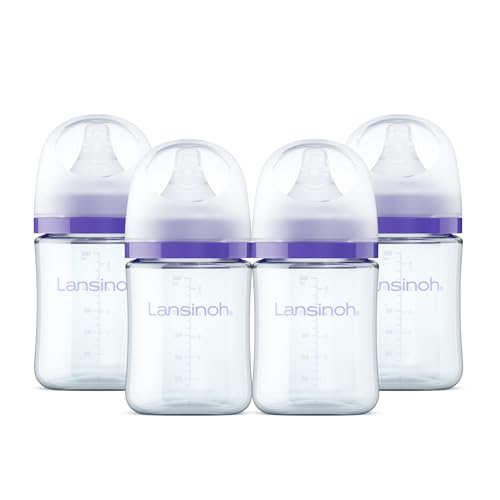
The Lansinoh glass bottle set comes with four 5-ounce bottles paired with slow flow nipples (size S), making it a complete kit for the first three months of bottle-feeding a breastfed baby. The borosilicate glass is noticeably lightweight yet durable—multiple users report it surviving accidental drops on tile and concrete without shattering. The nipple’s wide, gentle slope molds to the baby’s mouth and stretches with the sucking motion, which drastically reduces the risk of nipple confusion compared to bottles with stiffer, taller nipples.
The clinically proven anti-colic air ventilation system is integrated into the nipple itself, meaning there are no extra valves, tubes, or discs to lose or clean. This simplicity is a huge time-saver during middle-of-the-night feeds. The 5-ounce capacity is ideal for newborns and young infants, though parents of older babies may want to supplement with the 8-ounce Lansinoh version. The glass body is compatible with most bottle warmers and sterilizers, and the bottles fit Lansinoh breast pumps directly for seamless milk collection and feeding from the same container.
One weak spot is the price—this premium-tier option costs more per bottle than most competitors. However, the set provides excellent value because it includes four complete units (bottle + nipple + ring + cap), eliminating the need for separate parts purchases. Some users note that the slow flow nipple (size S) may still be slightly too fast for a newborn with a very weak suck; transitioning to the extra-slow flow nipple (size XS, sold separately) solves this. Overall, the Lansinoh bottle offers the most foolproof breast-to-bottle transition in the glass category.
Why it’s great
- Lightweight borosilicate glass resists thermal shock and drops
- Integrated anti-colic vent inside nipple—no extra parts to wash
- Wide nipple shape accepted by breastfed babies with minimal confusion
- Fits Lansinoh breast pumps and universal bottle warmers
Good to know
- Premium price point compared to single-bottle sets
- Slow flow (size S) may be too fast for newborns; extra-slow sold separately
- Max 5 oz—older babies will need the 8 oz version
2. Natursutten Anti-Colic Glass Baby Bottle

The Natursutten Anti-Colic Glass bottle uses natural rubber (latex) nipples rather than silicone, giving it a texture and warmth closer to human skin. For breastfed babies who reject the firmer feel of silicone, this material difference can be the deciding factor. The 4-ounce bottles are made from thermal shock-resistant borosilicate glass, and the set includes two complete bottles with natural rubber nipples, double anti-colic valves, sealing discs, and travel caps—all pre-assembled out of the box.
The double anti-colic valve system is effective: air bubbles collect in the bottle’s chamber rather than passing into the milk stream. Real-world user tests confirm that even gassy babies feed more comfortably with this bottle compared to standard ventless designs. The glass body is notably tough—several reviewers report the same bottle surviving multiple drops onto hardwood floors over months of use without cracking. The sealing discs and threaded rings allow you to pump, store, and feed from the same glass body without transferring milk.
The main drawback is the nipple flow speed. Many parents, especially those with newborns, find the slow-flow nipple still delivers milk too quickly, with a 3-month-old finishing the bottle in under five minutes. Using a paced feeding technique (pausing and burping frequently) helps, but some parents end up swapping in Dr. Brown’s nipples for better flow control. Natural latex can also degrade over time—some users report the nipple becoming tacky after several months of daily sterilization. However, the low replacement cost and the bottle’s otherwise excellent durability make this a solid choice for families committed to avoiding silicone.
Why it’s great
- Natural latex nipple feels warmer and closer to skin than silicone
- Double anti-colic valve keeps air away from milk for a gassy baby
- Very durable borosilicate glass—survives repeated drops
- Complete 2-bottle set with seals and travel caps included
Good to know
- Nipple flow may still be too fast for newborns; paced feeding required
- Natural latex degrades after months of heat sterilization
- Some users prefer silicone nipples for longer lifespan
3. COMI Wide Neck Glass Breastmilk Bottle

The COMI Wide Neck Glass bottle set is built for pumping mothers who want one container to collect, store, and feed. Each of the four 6-ounce bottles uses a 100% silicone sealing disc that creates an airtight, leak-proof seal without the milk touching any plastic. The wide neck is compatible with Spectra and Maymom pump flanges, so you can pump directly into the glass bottle and then cap it with the included sealing disc for fridge storage—no transfer step needed.
The borosilicate glass body has 10 ml incremental measurement markings that are laser-etched rather than painted, meaning they won’t fade or peel after repeated dishwasher cycles. Users who tested the bottles with lead-testing swabs confirmed no trace of lead, dispelling earlier online concerns. The bottles also fit the Momcozy milk-chilling capsule system snugly, making them versatile for both home and travel. The silicone disc is reusable and does not absorb odors or discolor over time.
On the downside, these bottles are not designed to double as feeding bottles out of the box—you must purchase separate nipples and rings (standard wide neck compatible) to use them for direct feeding. The included sealing discs are excellent for storage but are not intended for drinking. Some users also note that the glass, while borosilicate, feels slightly thinner than premium-tier bottles like Lansinoh; however, no widespread breakage reports exist. For parents who prioritize breastmilk storage and pump compatibility over feeding convenience, this is the most cost-effective 4-bottle set available.
Why it’s great
- Pump-directly compatibility with Spectra and Maymom flanges
- Silicone sealing disc creates a leak-proof, plastic-free milk seal
- Laser-etched volume markings stay visible after repeated washing
- Excellent value for a 4-bottle storage set
Good to know
- No feeding nipple included—must buy separate wide-neck nipples
- Glass wall feels slightly thinner than some premium brands
- Best suited for pumping/storage rather than daily feeding use
4. haakaa Gen.3 Natural Glass Baby Bottle

The haakaa Gen.3 Natural Glass bottle stands out for its offset nipple design, which allows your baby to drink without fully inverting the bottle. This feature naturally slows the milk flow and encourages paced feeding—a technique where the baby controls the pace by pausing to breathe, reducing the risk of overfeeding and gas. The 6.3-ounce borosilicate glass body has a wide neck that is easy to fill and clean, and it is compatible with haakaa Gen.3 attachments like the sippy spout and sealing disk.
The variable flow nipple is designed for babies 6 months and older, which makes this bottle better suited for an older infant who has already been introduced to solid foods. The nipple shape mimics the breast during breastfeeding, and many parents report that their babies accept the bottle without nipple confusion after the first couple of tries. The anti-colic vents inside the nipple collar help reduce air intake, but the system is less elaborate than the double-valve design found on the Natursutten bottle.
There is a significant concern with the Gen.3 material quality: multiple user reviews describe the borosilicate glass as “thin” and “flimsy” compared to earlier haakaa generations. Several reviewers reported the glass cracking or shattering after minor drops. While the offset nipple and paced feeding design are genuinely useful for breastfed babies, the glass durability is a step behind competitors like Lansinoh or Natursutten. If you choose this bottle, using a silicone sleeve is strongly recommended—and the sleeve is not included in the box.
Why it’s great
- Offset nipple enables paced, upright feeding without full bottle inversion
- Wide neck and ergonomic shape make cleaning and gripping easy
- Compatible with haakaa Gen.3 attachments for sippy cup conversion
- Variable flow adjusts as baby’s sucking strength grows
Good to know
- Gen.3 glass reported as thinner and more breakable than prior versions
- Nipple flow labeled for 6m+; not ideal for newborns
- Silicone sleeve not included—buy separately for drop protection
5. NUMVIM Glass Baby Bottles Gentle & Extra Slow Flow
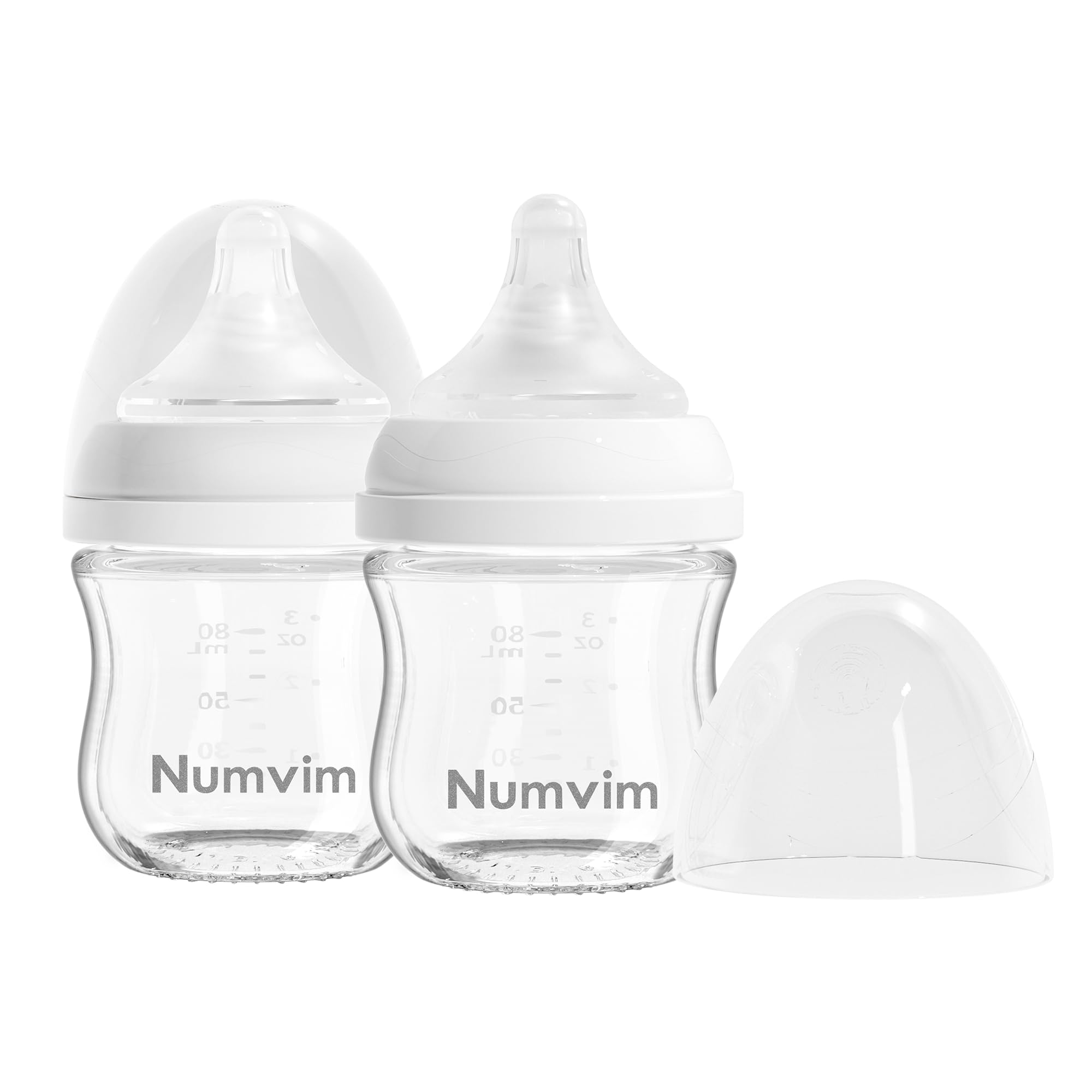
The NUMVIM Glass Baby Bottles are a strong entry-level option for parents who want borosilicate glass without spending premium money. The 2-pack includes 3-ounce bottles with extra slow flow nipples, making them specifically calibrated for newborns who are still building their suck reflex. The glass body uses laser engraving for volume markings instead of ink—multiple independent users have tested the bottles with lead-test swabs and confirmed zero lead content, which adds an extra layer of safety for parents worried about painted markings on cheaper bottles.
The nipple is soft and shaped like the breast, with small guide points on the tip to train the baby into a correct latch. In practice, reviewers report that breastfed babies latch easily and feed comfortably without gulping or excessive air intake. The glass has been dropped onto pavement from about 4 feet and survived without cracking—an impressive result for a budget-friendly option. The vented nipple system helps reduce colic, and the bottles are dishwasher, microwave, and sterilizer-safe without warping or discoloration.
The biggest flaw is the nipple itself, which can collapse during feeding. Multiple reviewers note that the nipple collapses every single use regardless of the technique, making the feeding experience frustrating. The workaround is straightforward: the bottles are compatible with Lansinoh nipples (medium flow), which fit perfectly and do not collapse or leak. If you account for the cost of replacement nipples, the overall value proposition remains strong because the glass quality and lead-free construction are genuinely good. This set works best as a starter pack to test whether your baby accepts a glass bottle before you invest in a larger, premium set.
Why it’s great
- Ultra affordable entry into borosilicate glass feeding
- Extra slow flow nip suitable for newborn breastfed babies
- Lead-free laser-engraved markings—confirmed by user testing
- Surprisingly durable glass survived 4-foot drop onto pavement
Good to know
- Included nipples collapse during feeding—require Lansinoh replacement
- Only 3 oz capacity; outgrown quickly by older babies
- 2-pack format means fewer bottles in rotation per wash cycle
FAQ
Why are borosilicate glass bottles recommended for breastfed babies?
What nipple flow rate should I choose for a newborn breastfed baby?
Can I pump directly into a glass baby bottle?
How do I clean and sterilize glass baby bottles without damaging them?
Do glass bottles cause nipple confusion in breastfed babies?
Final Thoughts: The Verdict
For most users, the glass bottles for breastfed babies winner is the Lansinoh Glass Baby Bottles because it combines a lightweight borosilicate glass body with an integrated anti-colic vent that requires no extra parts to wash, plus a nipple shape that breastfed babies accept with minimal resistance. If you want a natural rubber nipple that feels closer to skin and are prepared to manage a slightly faster flow rate, grab the Natursutten Anti-Colic Glass Bottle. And for pumping parents who need one container to collect, store, and feed, nothing beats the COMI Wide Neck Glass Bottle—especially with its silicone sealing disc that keeps plastic away from your milk.