
When a new puppy arrives, digestive distress, inconsistent stools, and boundless energy can turn the excitement of a new arrival into a guessing game over food. The right nutrition during the first year lays the foundation for a strong immune system, healthy joints, and a gleaming coat — but the sheer number of bags on the shelf, each touting its own mix of proteins, grains, and supplements, can feel overwhelming.
I’m Mohammad Maruf — the founder and writer behind Drink4Good. I’ve spent countless hours analyzing veterinary nutrition research, poring over ingredient panels, and cross-referencing real owner feedback to isolate the best options for growing dogs.
Whether your pup has a delicate stomach or needs extra muscle support, choosing the right formula for puppies means matching the kibble’s protein source, fat balance, and fiber content to your puppy’s specific developmental needs and digestive limits.
How To Choose The Best Formula For Puppies
Every puppy bag makes a promise, but the ingredients list rarely delivers the same result for every breed. The real differentiators come down to your pup’s size, digestion sensitivity, and the specific nutrients needed for rapid skeletal and neural growth.
Match kibble size to mouth size
Small-breed puppies have tiny jaws and developing teeth. A large, hard chunk can discourage eating or cause gagging. Look for bags labeled “Small Breed” or “Lil’ Plates” — the kibble diameter is usually under half an inch, making it easy for a Yorkie or a Chihuahua to pick up and chew without struggle.
Prioritize DHA for brain and eye development
Docosahexaenoic acid is an omega-3 fatty acid that directly supports cognitive function and retinal health during the first year. A formula with guaranteed levels of DHA gives your puppy a measurable advantage during the critical socialization and training window.
Look at fiber source, not just fiber amount
Oatmeal, yams, brown rice, and sweet potatoes provide gentle fiber that slows digestion and steadies energy. If your puppy has loose stools or a sensitive stomach, a formula with a single simple carbohydrate source like oatmeal or sweet potato is often easier on the system than a blend of multiple legumes or grains.
Quick Comparison
On smaller screens, swipe sideways to see the full table.
| Model | Category | Best For | Key Spec | Amazon |
|---|---|---|---|---|
| Hill’s Science Diet Sensitive Stomach | Premium | Sensitive tummies & itchy skin | Salmon #1 ingredient / Prebiotic fiber | Amazon |
| Wellness CORE Small Breed Puppy | Premium | High-protein growth & small mouths | 53% protein / DHA + probiotics | Amazon |
| Merrick Lil’ Plates Puppy | Mid-Range | Joint support & grain-free | Glucosamine + chondroitin / Small Kibble | Amazon |
| Bil-Jac Small Breed Puppy | Budget-Friendly | Picky eaters & weaning transition | Soft, porous bites / Oatmeal + yam | Amazon |
| NutriSource Chicken Meal & Rice | Value | All-around balanced starter food | Prebiotics + probiotics / L-Carnitine | Amazon |
In‑Depth Reviews
4. Hill’s Science Diet Puppy Sensitive Stomach & Skin
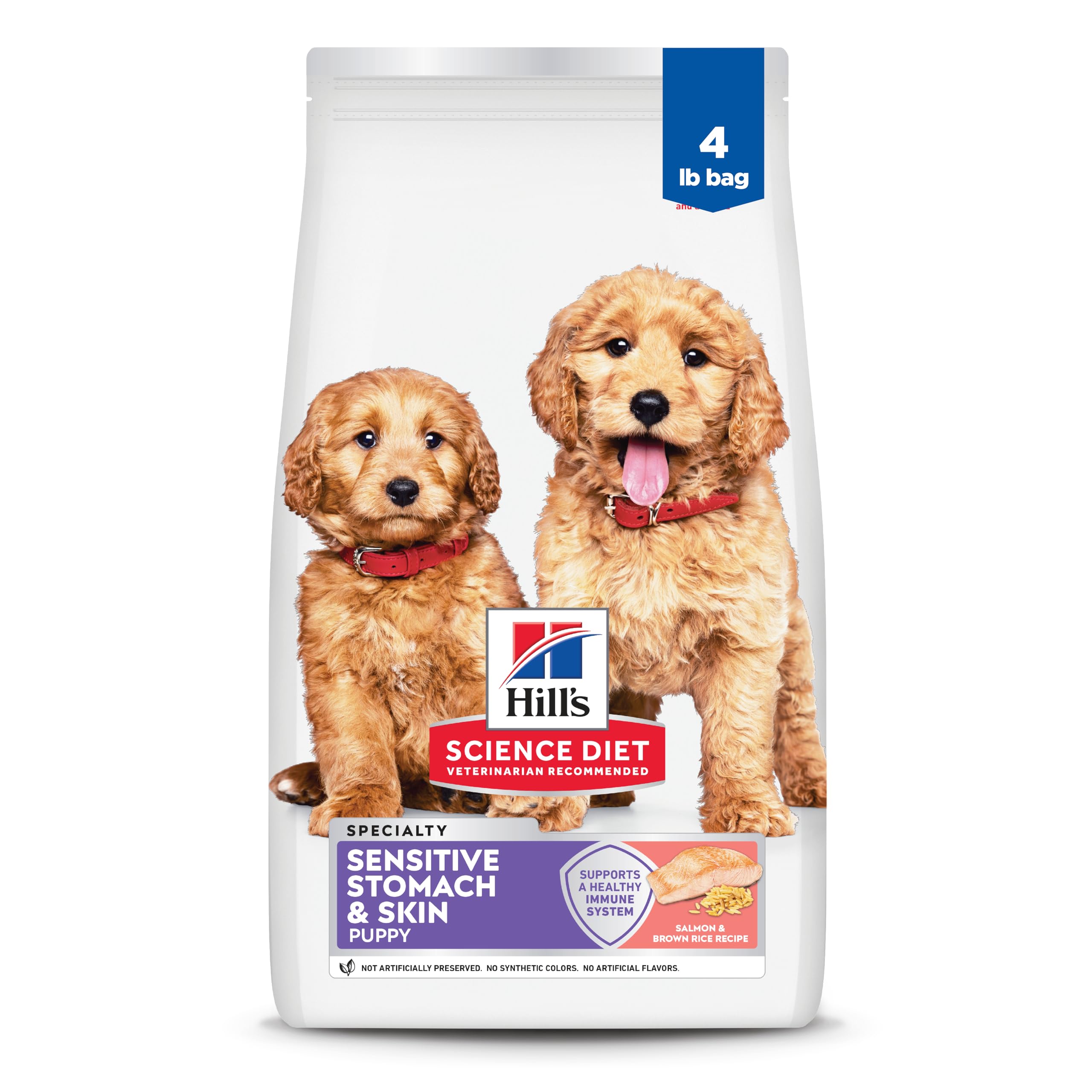
Salmon is the number-one ingredient in this highly digestible formula, making it a strong choice for puppies that experience loose stools or a dull, scratchy coat on other foods. Real owner reports note that a six-month-old Chihuahua stopped scratching within two days of switching, and appetites perked up immediately — a telling sign when a hesitant eater finally clears the bowl.
The prebiotic fiber and added Vitamin E work together to soothe the digestive lining while omega-3 and omega-6 fatty acids rebuild skin barrier quality. Clinically proven antioxidants also support the developing immune system, which is especially valuable during the first year when puppies are building resistance to environmental triggers.
Because the formula is not grain-free, it delivers the steady carbohydrate energy from brown rice that many holistic vets prefer for long-term gut health. It is made in the USA with global ingredients, and Hill’s remains the brand most frequently recommended by veterinarians for sensitive-stomach protocols.
Why it’s great
- Clears up itching and coat issues quickly
- Gentle on sensitive digestion with prebiotic fiber
- Vet-recommended for stomach and skin issues
Good to know
- Mid-range price point may be higher than generics
- Kibble size is medium — not ideal for extra-small breeds
1. Wellness CORE Small Breed Puppy
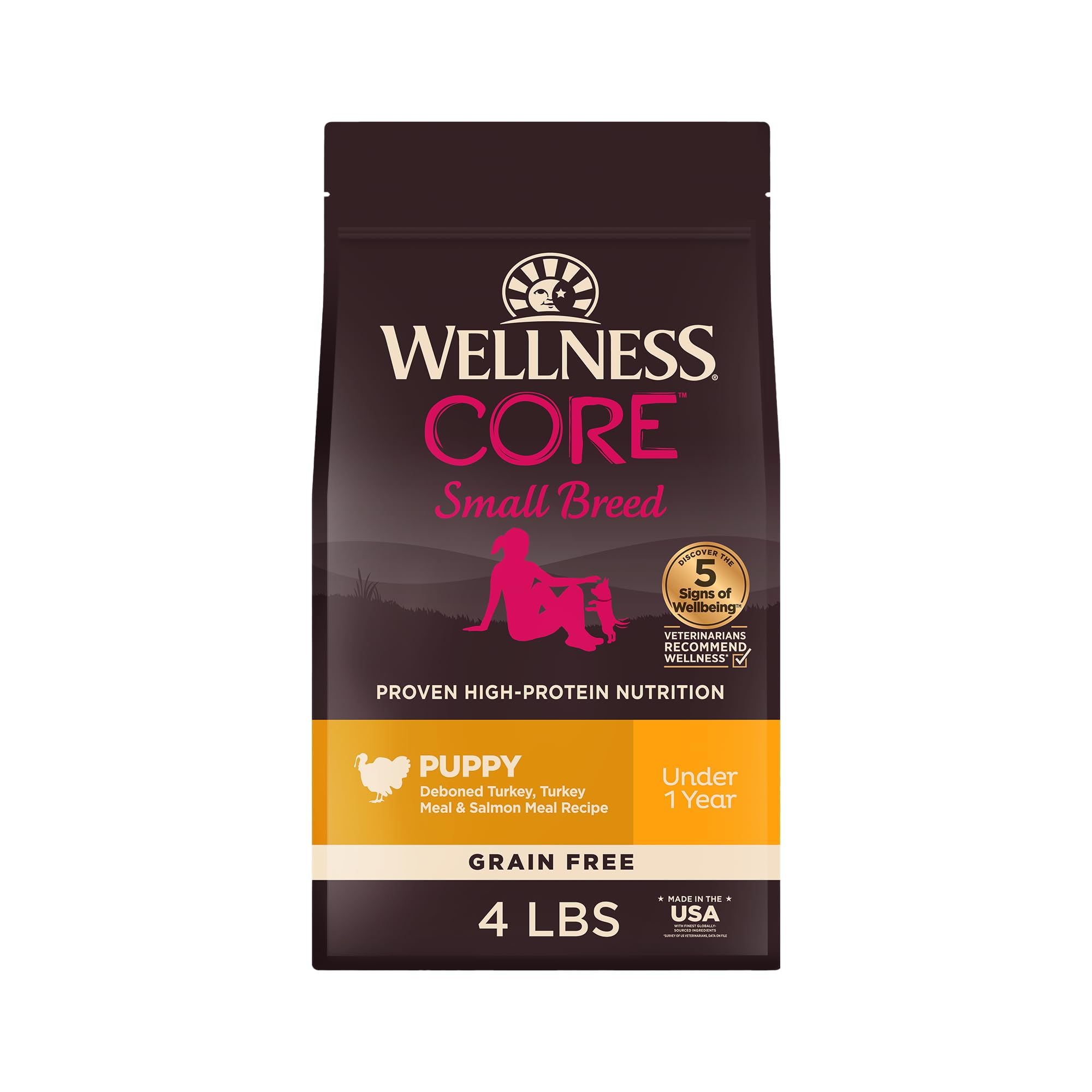
Turkeys and salmon head the ingredient list here, and the overall protein content hits 53 percent, which is among the highest in the grain-free puppy category. Guaranteed levels of DHA directly target brain and vision development, while calcium and phosphorus levels are calibrated for controlled bone growth in small-frame breeds.
Owners of Dachshunds and Chihuahuas repeatedly mention that the small kibble size is easy for tiny teeth to manage, and that stools became firm and well-formed within a few days of switching. The formula is free of corn, wheat, soy, poultry by-products, and artificial colors — a clean profile that reduces the chance of a food-sensitivity reaction.
One important caveat from reviews: despite the “Turkey” label, the recipe does include chicken, so it is not a safe choice for puppies with a confirmed chicken allergy. For everyone else, it offers a nutrient-dense, high-energy base that keeps active pups satisfied between meals.
Why it’s great
- 53% protein supports muscle and energy needs
- Small kibble ideal for small mouths
- DHA and probiotics promote brain and gut health
Good to know
- Contains chicken — not suitable for chicken-allergic pups
- Grain-free may not suit every digestive system
3. Merrick Lil’ Plates Puppy

Deboned chicken is listed first, and Merrick rounds out the recipe with sweet potato for a natural carbohydrate source that avoids the pea-heavy blends common in many grain-free foods. The inclusion of glucosamine and chondroitin is a standout for breeds prone to hip and joint issues — think French Bulldogs, Shih Tzus, and Cavaliers — because those compounds support cartilage health before weight stress becomes a problem.
Owners report that the small, crunchy kibble helps clean teeth as the puppy chews, and the added omega-6 and omega-3 fatty acids show up quickly in a shinier coat. One review from a Shih Tzu owner noted that their picky eater “scarfed it down” without the diarrhea that other brands had caused, which points to the recipe’s gentle digestibility.
At a slightly higher per-pound cost than some mid-range options, Merrick Lil’ Plates is best treated as a targeted formula for owners who want grain-free nutrition plus extra joint support during the formative months.
Why it’s great
- Glucosamine and chondroitin for developing joints
- Grain-free recipe with real deboned chicken
- Small crunchy kibble aids dental cleaning
Good to know
- Premium price per pound compared to grain-inclusive options
- Not all small breeds need the added joint supplements
5. NutriSource Puppy Food for Small and Medium Breeds

NutriSource is a breeder-favorite for good reason: chicken meal delivers concentrated protein, and the inclusion of brown rice, oatmeal, and barley provides a steady energy release without the blood-sugar spikes that can make a puppy hyperactive followed by a crash. The formula also includes L-Carnitine and taurine, which support cardiac muscle development — a detail often overlooked in general puppy foods.
Real owners consistently mention that their breeders started puppies on NutriSource and that the transition to adulthood was seamless because the food maintains consistency through the growth phase. The prebiotic and probiotic blend is one of the most complete in this price tier, promoting regular, firm stools that make house-training easier.
It ships quickly for a grain-inclusive option, and the 4-pound bag is a practical size for testing before committing to a larger purchase. The only real trade-off is the chicken meal concentrate — it is less recognizable to some owners than whole deboned chicken, but the amino acid profile is actually more stable in meal form.
Why it’s great
- Prebiotics and probiotics support easy digestion
- L-Carnitine and taurine support heart health
- Breeder-recommended for seamless growth transition
Good to know
- Chicken meal may raise concerns for some owners
- Kibble shape is round, not specifically shaped for small mouths
2. Bil-Jac Small Breed Puppy Dry Dog Food
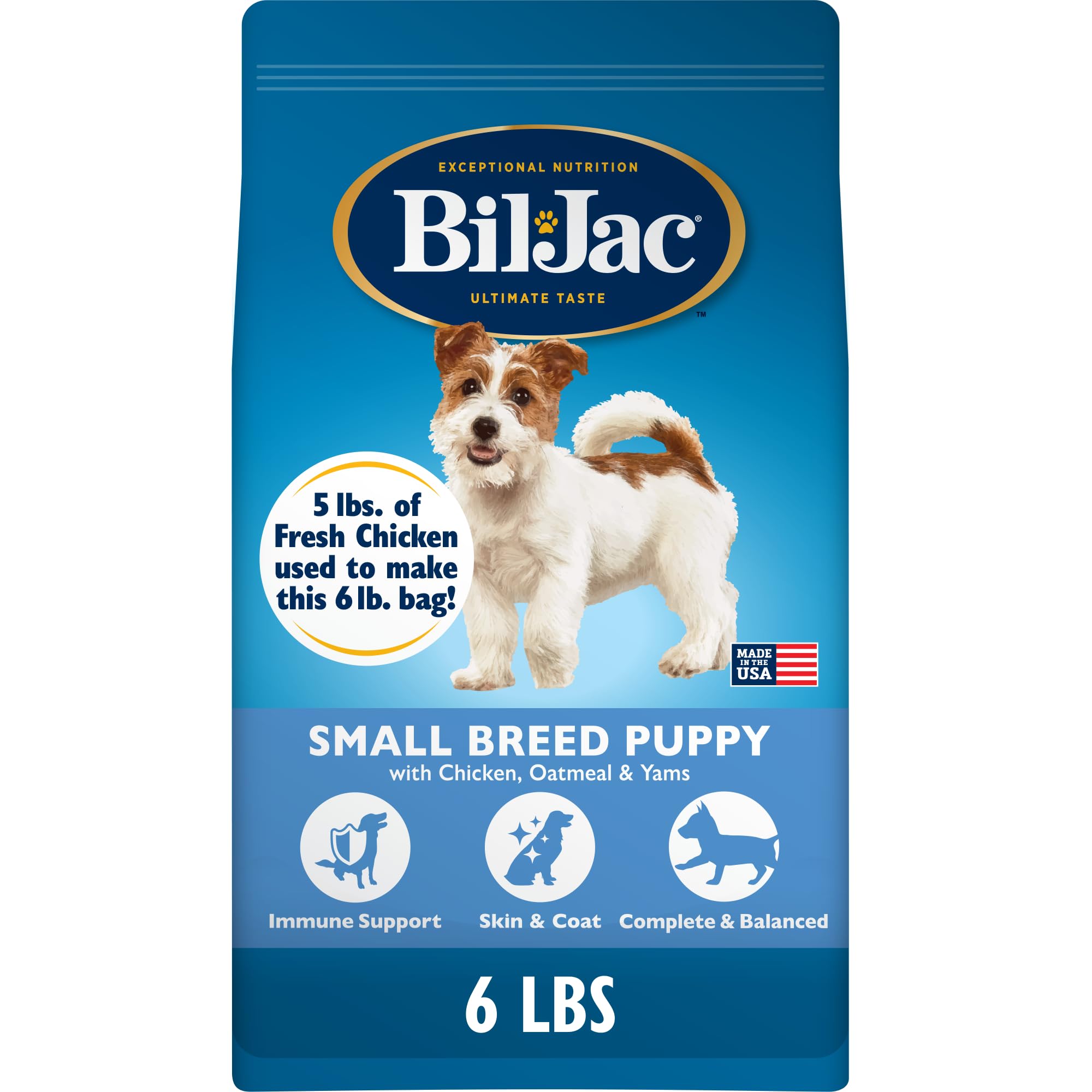
Bil-Jac stands apart because its kibble is intentionally soft and porous — a feature that makes it far easier for a newly weaned puppy to pick up and break apart compared to hard, dense pellets. The oatmeal and yam fiber profile is one of the gentlest on the market, designed specifically to soothe sensitive stomachs during the transition from mother’s milk to solid food.
Each 6-pound bag is made with the equivalent of 5 pounds of fresh chicken, so the amino acid density is high without relying on bone meal or by-products. The proprietary “Smart Defense” blend of Vitamin C and Vitamin E gives the immune system an extra layer of protection during the most vulnerable first year, when puppies are exposed to new environments and pathogens.
It remains a budget-friendly entry point for owners who need a gentle, high-fat formula for a very small or underweight puppy.
Why it’s great
- Soft, porous kibble is easy for tiny puppy teeth
- 5 lbs fresh chicken per 6 lb bag for lean muscle support
- Oatmeal and yam soothe sensitive digestion
Good to know
- Soft texture offers less dental abrasion
- High palatability may lead to overeating if not measured
FAQ
Can I switch a puppy’s formula suddenly if the current one causes loose stools?
How long should I feed a puppy-specific formula before switching to adult food?
What does “grain-free” mean in a puppy formula — is it always better for digestion?
Final Thoughts: The Verdict
For most owners, the best formula for puppies is the Hill’s Science Diet Puppy Sensitive Stomach & Skin because its prebiotic fiber, salmon protein, and dual omega support solve the two most common puppy problems — loose stools and skin irritation — in one bag. If you want a grain-free, high-protein option for a small breed, grab the Wellness CORE Small Breed Puppy. And for a budget-friendly, soft-kibble starter that makes weaning easy, nothing beats the Bil-Jac Small Breed Puppy.