
The bond between two pieces of wood is only as strong as the thin layer of adhesive that holds them together. A weak glue joint means gaps, creeping, or outright failure under stress — a ruined project that no amount of sanding can fix. Choosing the wrong wood glue can turn a weekend build into a frustrating disaster.
I’m Mohammad Maruf — the founder and writer behind Drink4Good. I’ve spent countless hours analyzing adhesive chemistries, reading through hardening and curing data, and weighing real-world feedback on how these glues perform under different woodworking conditions.
Whether you need instant grab for trim work or extended open time for a complex cabinet glue-up, knowing the right formula makes all the difference. After combing through the specs and experiences, here is your guide to the glue for woodworking that actually delivers on its promises.
How To Choose The Best Glue For Woodworking
Not every bottle labeled “wood glue” behaves the same way. Picking the right formula comes down to matching three key factors to your specific project: the type of adhesive chemistry, the working time you need, and the bond’s exposure to moisture. Ignore any one of these, and you risk a weak joint or a frustrating glue-up.
PVA vs. CA: The Core Chemistry Choice
The two main camps are polyvinyl acetate (PVA) and cyanoacrylate (CA). PVA glues, like standard white or yellow wood glues, cure by water evaporation. They need clamping for at least 30 minutes and offer a strong, slightly flexible bond that won’t creep. CA glues, often called super glues, cure by reacting with moisture in the air or on the wood surface. They grab almost instantly, require little to no clamping, but can be brittle in a thick layer. PVA is the go-to for large assemblies; CA is the weapon for small parts, repairs, and filling tiny gaps.
Clamp Time and Open Assembly: The Workflow Dictators
Your workflow determines which timing spec matters. “Clamp time” is how long you must hold the pieces together under pressure before the glue develops enough strength to hold them on its own. Standard PVA needs 30–60 minutes, while CA needs seconds. “Open time” or “assembly time” is how long you can spread the glue, position parts, and adjust before it skins over. For a complex project with many pieces, a slow-setting PVA with 15+ minutes of open time is a lifesaver. For a quick repair, a super-fast CA glue is the answer.
Water Resistance and Toxicity: The Hidden Factors
Consider the final environment of your project. Standard interior PVA glues are not waterproof and will fail if exposed to moisture. Type II or Type I PVA glues offer water resistance for outdoor or kitchen use. Also check if the glue is FDA compliant for indirect food contact — essential if you’re building cutting boards or serving trays. For CA glues, be aware that the fumes can be irritating, and the glue will bond instantly to skin. Work with adequate ventilation and keep a bottle of acetone on hand for clean-up.
Quick Comparison
On smaller screens, swipe sideways to see the full table.
| Model | Category | Best For | Key Spec | Amazon |
|---|---|---|---|---|
| Titebond Instant Bond Thick | CA Gel | No-clamp repairs & small parts | 18 Second Full Cure | Amazon |
| BOSSDOG Wood Glue | PVA | Food-safe projects & general carpentry | 3900 PSI Tensile Strength | Amazon |
| Titebond Extend | PVA Gel | Complex assemblies needing extra time | 15 Minutes Open Time | Amazon |
| Starbond Thick CA Pro Kit | CA Gel | Gap-filling & precision wood crafts | 2000 cps Viscosity | Amazon |
| Gorilla Original Polyurethane | Polyurethane | Outdoor & multi-material bonding | 3x Expansion into materials | Amazon |
In‑Depth Reviews
1. Titebond Instant Bond Wood Adhesive Thick

This is the no-compromise solution for anyone who wants a wood-to-wood bond that sets in seconds without clamps. The thick, gel-like CA formula fills small gaps effectively and bonds stronger than the surrounding wood, as confirmed by the many users who tested it by hammering the joint apart. It’s ideal for small repairs, adding trim, or any situation where clamping is impossible or inconvenient.
The 18-second full cure time means you must have your alignment perfect before the pieces touch — there is no room for sliding or adjustment. Users praise its gap-filling ability on foam board, wood, and MDF, and note that the bottle design minimizes waste. One professional remodeler reported using it on oak trim with zero drips and a bond that withstood hammer blows.
Keep in mind this is not a gap-filling PVA; it’s a thin-gel CA that excels on close-fitting joints. The 2 oz bottle is small, but a little goes a long way. For small-scale instant repairs where waiting 30 minutes for clamp time is unacceptable, this Titebond CA glue is the clear winner.
Why it’s great
- Eliminates clamping for small joints
- Cures in just 18 seconds
- Bonds to wood, MDF, acrylic, and more
Good to know
- Very fast set — no repositioning
- Small bottle at 2 oz
- Not for large surface area glue-ups
2. BOSSDOG Professional Strength Wood Glue
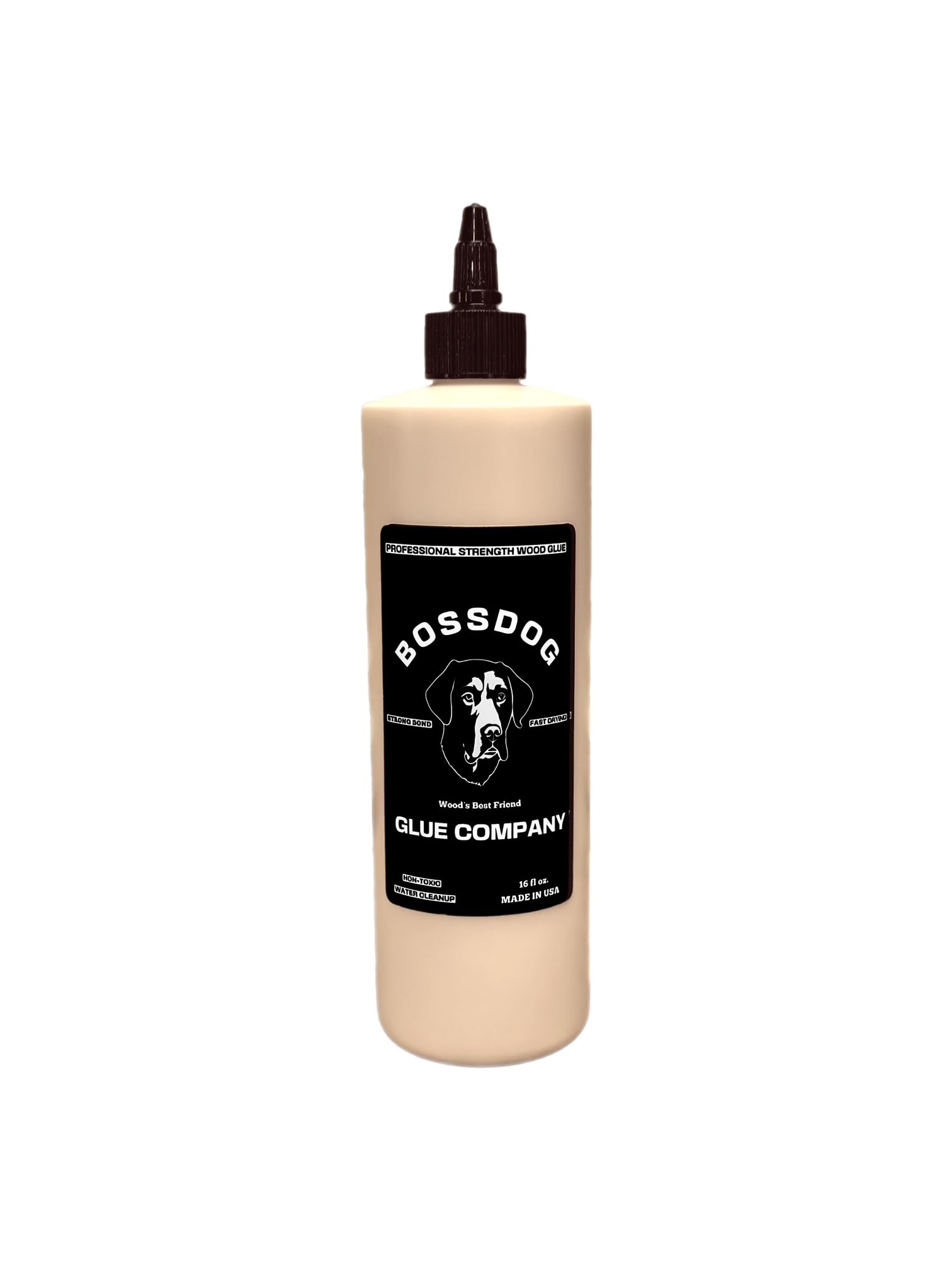
This PVA glue from BOSSDOG delivers serious specs at an entry-level price point. With a tensile strength of 3900 PSI, it forms a bond that outlasts the wood itself. The 30-minute clamp time is standard for a quality PVA, but the strong initial tack means parts stay put after minimal clamping pressure — a real workflow boost for beginners and pros alike.
One of its standout features is FDA compliance for indirect food contact once cured, making it a top choice for cutting boards, serving trays, and kitchen repairs. It dries to a natural tan color that blends well with most wood species, and water cleanup before curing keeps your shop clean. The 16 oz bottle is generous, though some users note the lack of a precision dispensing nozzle as a minor inconvenience.
This glue is proudly made in the USA by a family-owned business, and customer feedback shows it competes head-to-head with established brands on bond quality. If you want a high-strength, food-safe PVA at a price that undercuts the competition, this is the one to grab for your next project.
Why it’s great
- 3900 PSI tensile strength is exceptional for the price
- FDA compliant for food-contact projects
- Water cleanup and low odor
Good to know
- No precision nozzle on the bottle
- Requires 30 minutes of clamp time
- Not waterproof — interior use only
3. Titebond Extend

When you are working on a complex assembly — a guitar body, a dovetailed drawer, or a large panel glue-up — the last thing you need is a glue that skins over before all clamps are in place. Titebond Extend solves this by offering a full 15 minutes of open time, giving you the breathing room to apply glue, position every piece, and adjust before the bond locks.
This PVA formula is a high-viscosity gel that stays put without running, and it dries to a translucent glue line that virtually disappears into the wood grain. Users report that the extended open time can even stretch beyond the stated 30 minutes. The bond strength equals the original Titebond — wood fails before the joint — and it sands beautifully without gumming up sandpaper.
The gel consistency makes it ideal for vertical surfaces and gaps, but this is an interior glue only; it offers no water resistance. If your project requires patience and precision, the Titebond Extend is the tool for the job.
Why it’s great
- Extended open time prevents rushed glue-ups
- High viscosity gel — no drips on vertical surfaces
- Translucent glue line for clean joints
Good to know
- Not water-resistant
- Requires full 24-hour cure for max strength
- Not for quick repairs
4. Starbond Thick Super Glue Pro Kit
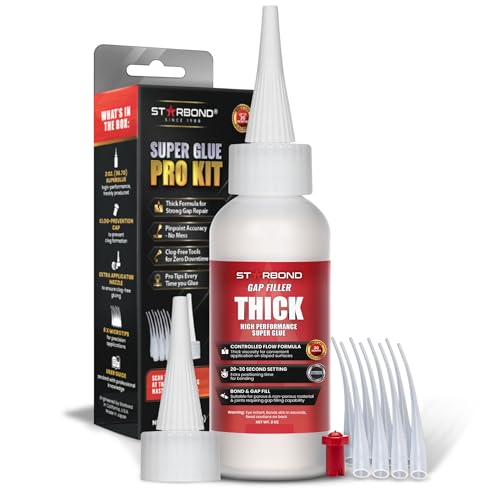
This Canadian-made CA glue is a favorite among woodturners and luthiers for a reason: the 2000 cps viscosity delivers a thick, honey-like consistency that stays exactly where you put it. The Pro Kit includes microtips and an extra nozzle, giving you pinpoint control even on intricate craft work like archery fletching or building balsa wood bridges.
The gap-filling capability fills voids up to 0.02 inches, and users report a 15-second bond that remains strong and reliable. The formula has a proven shelf life of 30 months when refrigerated, and the clog-resistant cap design keeps the bottle usable between sessions — a common failure point with standard super glue containers.
While it bonds beautifully to wood, metal, plastic, ceramic, and fiberglass, it will not work on low-surface-energy materials like polyethylene. The inclusion of a QR code linking to pro tips is a nice touch. For any woodworker who needs a precise, instant-bond solution with the right accessories, this kit is a complete package.
Why it’s great
- Thick, gap-filling formula stays in place
- Microtips and extra nozzle for precision
- Long 30-month shelf life warranty
Good to know
- Not for polyethylene or polypropylene plastics
- Bonds to skin instantly — have acetone ready
- Small 2 oz bottle
5. Gorilla Original Polyurethane Glue

Gorilla Glue has earned its reputation by solving a problem that PVA and CA cannot touch: bonding wood to dissimilar materials like stone, metal, ceramic, and glass, all while remaining 100% waterproof. This polyurethane formula works by expanding three times into the materials it joins, creating a mechanical lock that stands up to outdoor weather and moisture.
The 24-hour full cure time is standard for this chemistry, and the moisture-activated curing means you must dampen one surface before application. Users report an incredibly strong bond that outlasts super glue in load-bearing applications. The pack includes two 4-ounce bottles, giving you a solid supply for larger projects.
The main drawback is the expansion itself — it foams out of the joint if you apply too much, requiring careful clamping and cleanup after curing. The nozzle also tends to clog despite the user’s best efforts. For indoor-only furniture, a standard PVA is cleaner. But for outdoor repairs, boat projects, or bonding wood to concrete, this is the undisputed workhorse.
Why it’s great
- 100% waterproof — excellent for outdoor use
- Bonds wood, metal, stone, glass, and ceramic
- Expands to fill gaps and create a strong lock
Good to know
- Expansion requires careful clamping and cleanup
- 24-hour cure time
- Nozzle prone to clogging between uses
FAQ
How long should I clamp PVA wood glue before removing clamps?
Can I use CA super glue for large panel glue-ups?
Is polyurethane Gorilla Glue safe for cutting boards?
Final Thoughts: The Verdict
For most users, the glue for woodworking winner is the Titebond Instant Bond Thick because it delivers a no-clamp, seconds-set bond that holds stronger than the wood itself — perfect for precision repairs and small jobs. If you need a food-safe, high-strength PVA for cutting boards and general carpentry, grab the BOSSDOG Professional Strength Wood Glue. And for complex assemblies that need extra setup time, nothing beats the Titebond Extend.