
Snowboarding demands clear vision from the first chairlift to the last run. Flat light on an overcast afternoon or blinding glare off fresh powder will test any lens, and the wrong pair of goggles can turn a perfect day into a frustrating one. You need a lens that cuts haze, a frame that fits your helmet without gaps, and a seal that stays fog-free when you are breathing hard.
I’m Mohammad Maruf — the founder and writer behind Drink4Good. I have spent long hours analyzing snow goggles across dozens of spec sheets and thousands of rider reviews, focusing on the metrics that actually matter: VLT range, lens geometry, anti-fog performance, and frame compatibility with over-the-glasses (OTG) setups.
This guide breaks down the top performers so you can confidently choose the best goggles for snowboarding that match your riding style, from stormy tree runs to sunny park laps.
How To Choose The Best Goggles For Snowboarding
Snowboarding goggles are more than a fashion piece — they are a safety tool that dictates how well you read terrain. Most riders overlook lens technology and focus only on frame color or brand, which leads to fogged lenses and poor visibility. Here are the core specs to evaluate before buying.
Lens Geometry: Cylindrical, Spherical, or Toric
A cylindrical lens curves horizontally but not vertically, which reduces distortion but limits peripheral vision. A spherical lens curves in both directions, mimicking the shape of your eye for a wider, more natural field of view. Toric lenses are a hybrid that combines spherical curvature with a slight cylindrical correction, delivering the widest usable field without optical distortion. For snowboarding, spherical or toric lenses are preferred because they let you see approaching riders and terrain features without turning your head.
Visible Light Transmission (VLT)
VLT is the percentage of visible light that passes through the lens. Low-light or storm riding requires a VLT above 50% (clear, yellow, or rose tints). Sunny bluebird days call for a VLT below 20% (dark grey or mirrored lenses). A mid-range VLT from 20% to 50% works for partly cloudy conditions. The best goggles include a second lens or a magnetic swap system so you can switch VLT on the fly rather than being stuck in a single light condition.
Anti-Fog and Ventilation
Fog occurs when warm moisture from your face hits a cold lens. A dual-pane lens creates an insulating air gap that slows condensation. Active ventilation systems — vents in the frame that channel airflow across the interior — pull moisture away. Some goggles also use a silicone coating on the inner lens. Always look for a dual-layer lens and frame vents; single-layer goggles fog almost immediately once you start moving.
OTG (Over-the-Glasses) Compatibility
If you wear prescription glasses, standard goggles may press the frames into your temples or bridge. OTG goggles have a deeper internal volume and often a cutout at the top of the foam to accommodate eyeglass arms. Check the stated fit type — some brands explicitly label their goggles as OTG friendly. The frame material must also be flexible enough to seal around your glasses without creating pressure points.
Quick Comparison
On smaller screens, swipe sideways to see the full table.
| Model | Category | Best For | Key Spec | Amazon |
|---|---|---|---|---|
| Giro Method | Premium | All-day precision and clarity | Zeiss VIVID lens with dual VLT | Amazon |
| SMITH Squad | Premium | Color contrast in variable light | ChromaPop lens technology | Amazon |
| Wildhorn Pipeline | Mid-Range | Large heads and wide FOV | 185° field of view | Amazon |
| Wildhorn Roca Pro | Mid-Range | Ultra-wide peripheral vision | 185° ultra wide FOV | Amazon |
| OutdoorMaster Heron | Mid-Range | HD clarity at a great value | HD Toric lens with dual VLT | Amazon |
| Odoland Interchangeable | Budget | Budget-friendly magnetic swap | 20 magnets for lens swap | Amazon |
| Giro Cruz | Budget | OTG beginners on a budget | OTG friendly with silicone strap | Amazon |
In‑Depth Reviews
1. Giro Method Ski Goggles
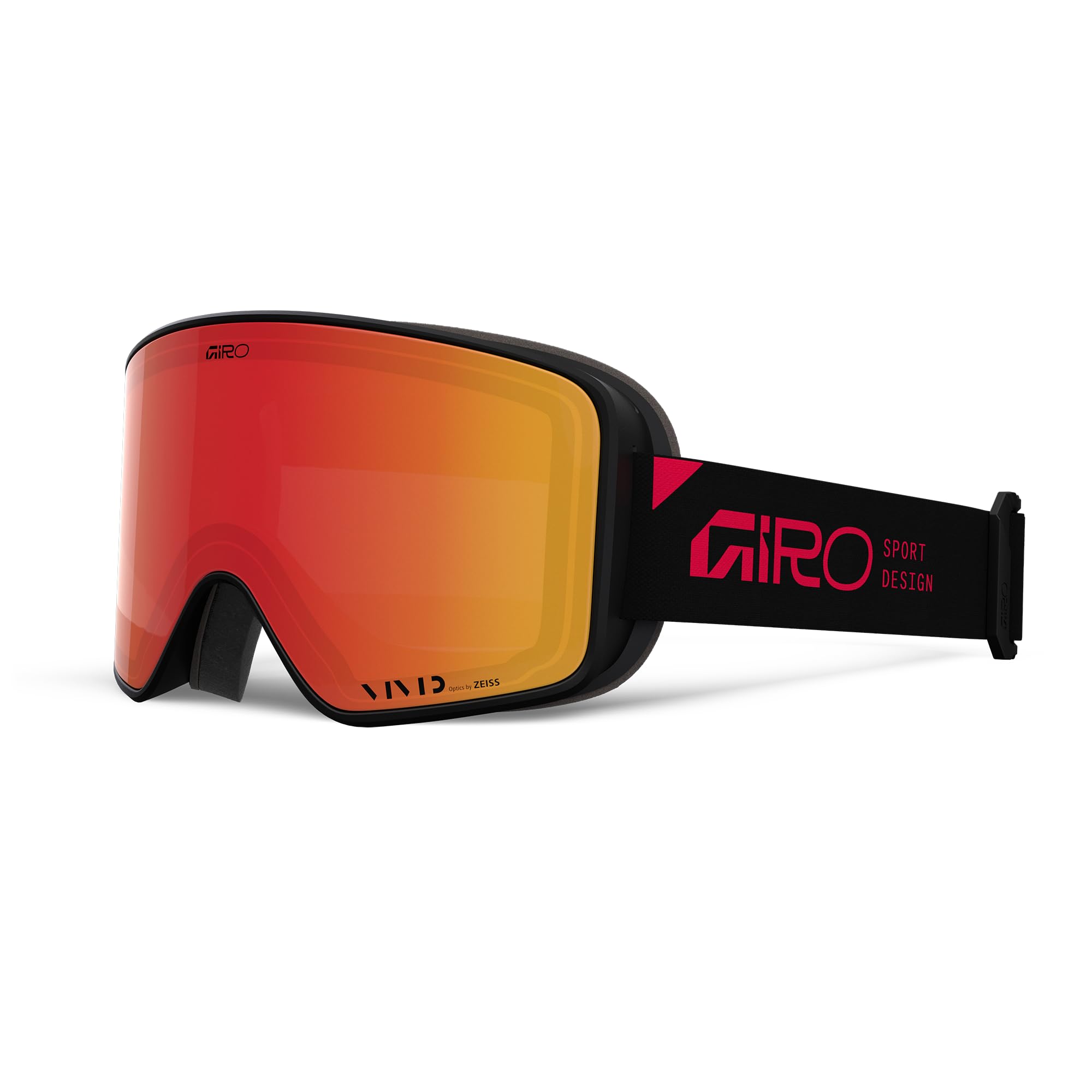
The Giro Method uses a patented VIVID lens developed with Zeiss Optics that selectively filters blue light to cut haze while preserving contrast-enhancing wavelengths. This technology makes flat light far more readable — subtle terrain changes show up clearly where standard lenses turn everything into a white sheet. The injection-molded cylindrical lens is paired with Giro’s Expansion View (EXV) frame that shaves down the rim and adds frameless zones for a wide peripheral view without the distortion of a spherical lens.
This goggle ships with two VIVID lenses — a full-sun/ all-condition lens and an overcast/ low-light lens — covering VLT ranges from around 10% to 60%. The Slash Seal lens interchange system uses a locking tab rather than magnets, which prevents accidental release during a crash or while tucking. The triple-layer face foam with microfleece facing absorbs sweat without holding moisture against the skin, and the silicone strap band prevents drift over the helmet.
OTG riders report that the internal volume accommodates standard prescription frames without pressure on the temples or bridge. The Evak Vent Technology channels air across the dual-pane lens, which keeps the interior fog-free even during high-output climbs or warm spring slush. For riders who demand the clearest possible vision across varying light, the Method is the top-tier choice.
Why it’s great
- Zeiss VIVID lens enhances contrast in flat light
- Two included lenses cover full sun to overcast conditions
- OTG friendly with deep internal volume
- Secure mechanical lens lock — no magnets to fail
Good to know
- Top-tier price point compared to mid-range options
- Cylindrical lens, not spherical or toric
- Lens scratches more easily if stored without a case
2. SMITH Squad Goggles with ChromaPop Lens

SMITH’s ChromaPop lens technology works differently from standard tinted lenses — it uses proprietary dyes to selectively filter light at specific wavelengths where red and green cones in the eye overlap. The result is a noticeable boost in color contrast that makes rocks, divots, and small undulations in the snow pop out. Testers consistently mention that the smoked lens color performs exceptionally well across partly cloudy to sunny conditions, and the spherical geometry gives a panoramic field of view with no blind spots at the edges.
The Squad uses a dual-pane spherical lens with an anti-fog inner coating and passive ventilation through the frame. In subzero temperatures and during high-exertion runs, fogging is nearly nonexistent according to rider feedback. The frame is designed for seamless integration with SMITH helmets, but adjustable strap routing allows it to work with other brands as well. The lens interchange system is straightforward — a simple frame notch and release mechanism — though it lacks the speed of a magnetic system.
Build quality is consistent with SMITH’s reputation: the face foam is 2-layer DriWix with a moisture-wicking microfleece layer next to the skin. The strap uses a silicone strip that holds position even over smooth helmet shells. For riders who prioritize terrain readability over sheer brightness, the ChromaPop lens makes a genuine difference in how quickly you can react to changing snow surfaces.
Why it’s great
- ChromaPop lens dramatically improves color and contrast
- Spherical lens offers wide, distortion-free peripheral vision
- Effective anti-fog performance in cold and humid conditions
- Lightweight frame with secure helmet integration
Good to know
- Lens swap is slower than magnetic systems
- Not OTG friendly — may pinch larger glasses
- Price is premium, though often on sale
3. Wildhorn Pipeline Ski Goggles
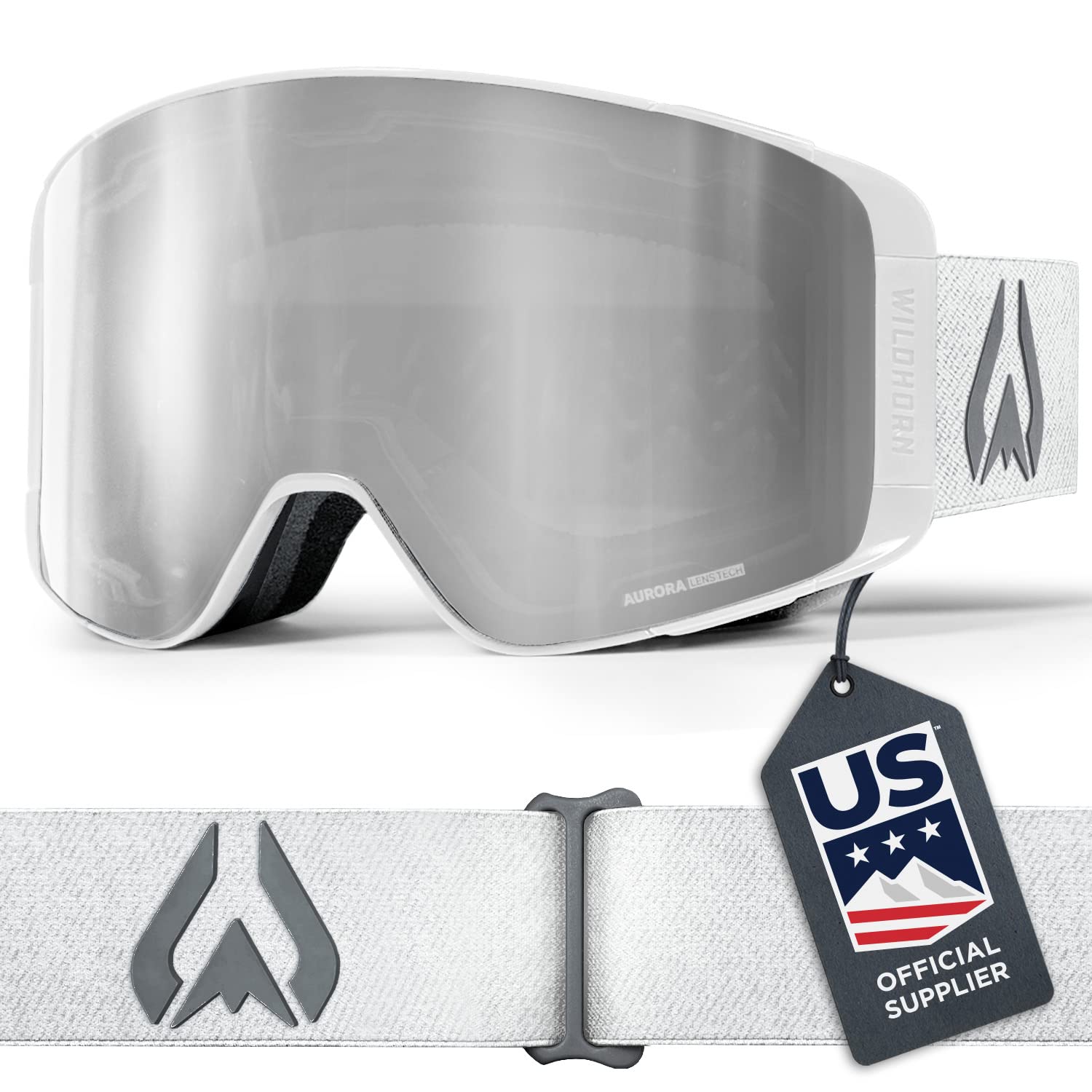
The Pipeline from Wildhorn is the official goggle supplier for the US Ski Team and delivers a 185-degree field of view, which is among the widest available at this price tier. The oversized spherical lens wraps far around the frame, reducing the frame rim to almost zero at the sides so there is virtually no visual obstruction. This makes it particularly useful for riders who want to spot obstacles and other riders without turning their head, especially in tight tree runs or crowded lift lines.
Lens swapping uses a hybrid magnetic-and-snap mechanism — strong neodymium magnets align the lens, and a snap lock secures it. Riders report that the magnetic hold is robust enough to survive falls and hard impacts without popping loose. The dual-pane anti-fog lens resists condensation even during long ascents in wet weather, though the oversized fit means it can press on the nose bridge of riders with smaller faces.
The OTG compatibility is better than average: the internal volume is generous enough to fit most prescription frames without the goggle pushing the glasses into the face. The strap is extra-long and adjustable, and it fits over both standard and larger helmets comfortably. For riders with a large head circumference who have struggled with frame fit from other brands, the Pipeline’s oversized design is a clear advantage.
Why it’s great
- 185° field of view is best-in-class for awareness
- Hybrid magnetic/snap lens swap is fast and secure
- OTG friendly with deep internal volume
- Great for large helmet sizes
Good to know
- Oversized frame may feel bulky on smaller faces
- Can press on the nose bridge
- Lens clarity is good but not Zeiss-level
4. Wildhorn Roca Pro Ski Goggles
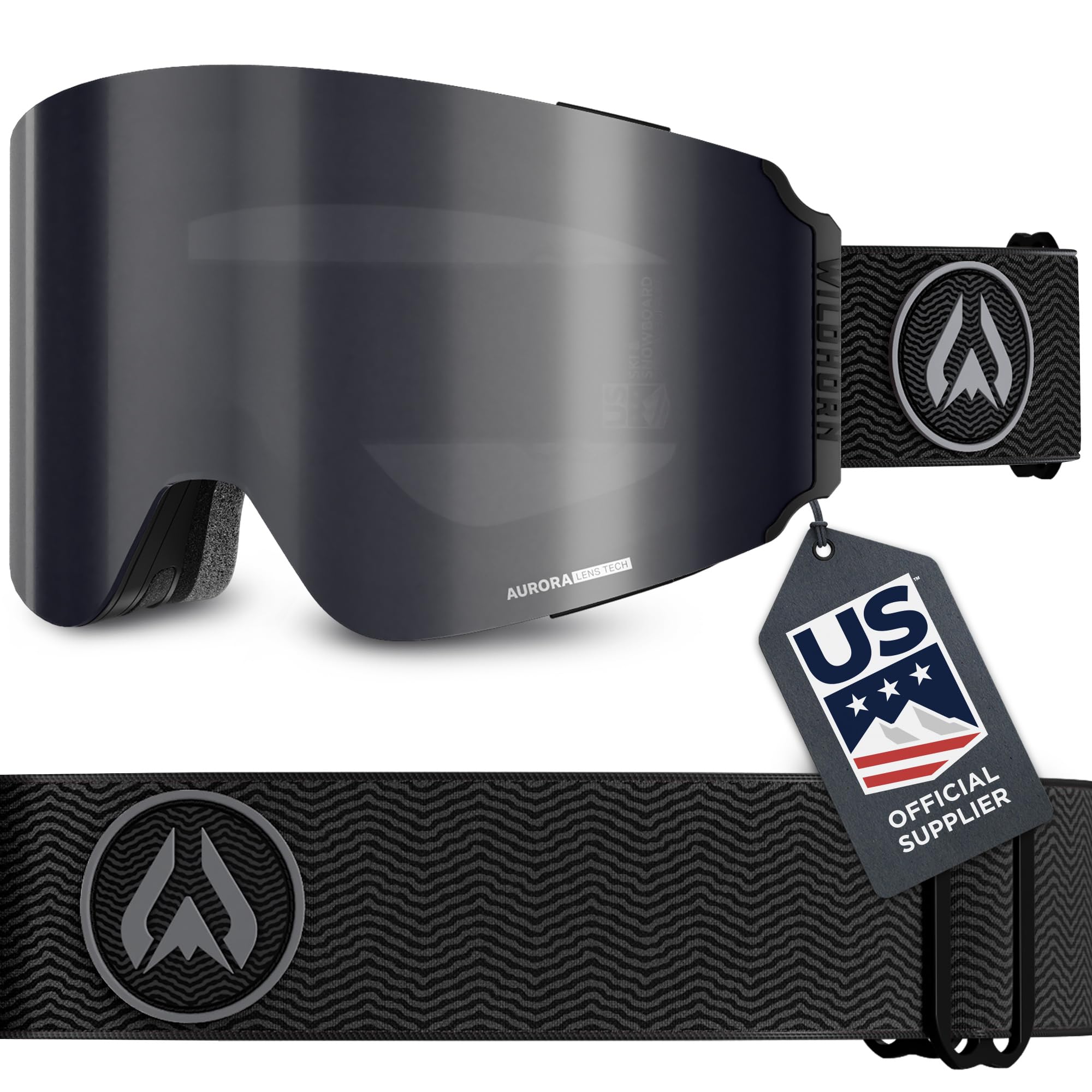
The Roca Pro steps up from Wildhorn’s Pipeline with an identical 185-degree ultra-wide field of view but in a slightly more compact frame that fits average face sizes better. The lens is a spherical design with magnetic lock, allowing a quick swap between the included lenses — typically one for bright sun (low VLT) and one for overcast (higher VLT). Riders report that the peripheral vision is outstanding, with the frameless zone letting you see approaching riders without turning your head.
Anti-fog performance is solid thanks to the dual-pane construction and frame vents. Multiple user reviews confirm that the lens stays clear even during high-exertion riding in wet conditions. The triple-layer foam padding with microfleece makes long days comfortable, and the adjustable strap fits securely over most helmet shapes without slipping. The scratch-resistant coating on the main lens holds up well to accidental contact with tree branches and snow gun spray.
Packaging includes a hard case and a soft pouch, which keeps both lenses protected during travel. The magnetic lens swap is straightforward enough to do one-handed on the chairlift. For riders seeking the same wide-view experience as the Pipeline but with a better fit for average-sized faces, the Roca Pro hits the sweet spot between coverage, comfort, and cost.
Why it’s great
- Ultra-wide 185° spherical lens with nearly frameless design
- Magnetic swap is quick and secure
- Good anti-fog performance for the price
- Includes hard case and soft pouch for travel
Good to know
- Lens clarity is not as precise as premium brands
- Some users report slower delivery times
- Not all colorways include two lenses
5. OutdoorMaster Heron Ski Goggles

The OutdoorMaster Heron brings a toric lens — typically found on goggles costing twice as much — into the budget tier. A toric lens combines the horizontal curve of a spherical lens with a slight cylindrical correction, delivering a wider usable field of view with less distortion at the edges than standard spherical lenses. The magnetic lens system uses strong magnets that hold the lens securely even during hard carving, and swapping between the included day and low-light lenses takes seconds.
Anti-fog performance is a standout feature at this price point. The dual-pane lens with a textured anti-fog coating prevents condensation even in subzero temperatures with high exertion. Riders with hyperhidrosis (excessive sweating) report no fogging during strenuous tree runs, which is rare for budget goggles. The frame is OTG compatible, with enough internal volume to accommodate most prescription glasses without pressing the frames into the nose or temples.
The strap is extra-long, which is a double-edged sword: it fits large helmets and large head circumferences comfortably, but at maximum extension it may not cinch tightly enough for smaller helmet setups. The triple-layer foam with fleece lining is comfortable for all-day wear. For riders who want toric clarity and magnetic convenience without a premium price tag, the Heron is a compelling option.
Why it’s great
- HD toric lens at a budget price
- Excellent anti-fog with textured coating
- Strong magnetic lens swap
- OTG compatible with good internal volume
Good to know
- Strap length may be too long for small helmet users
- Low-light lens only included in combo pack
- Hard case not included with all packages
6. Odoland Magnetic Interchangeable Ski Goggles
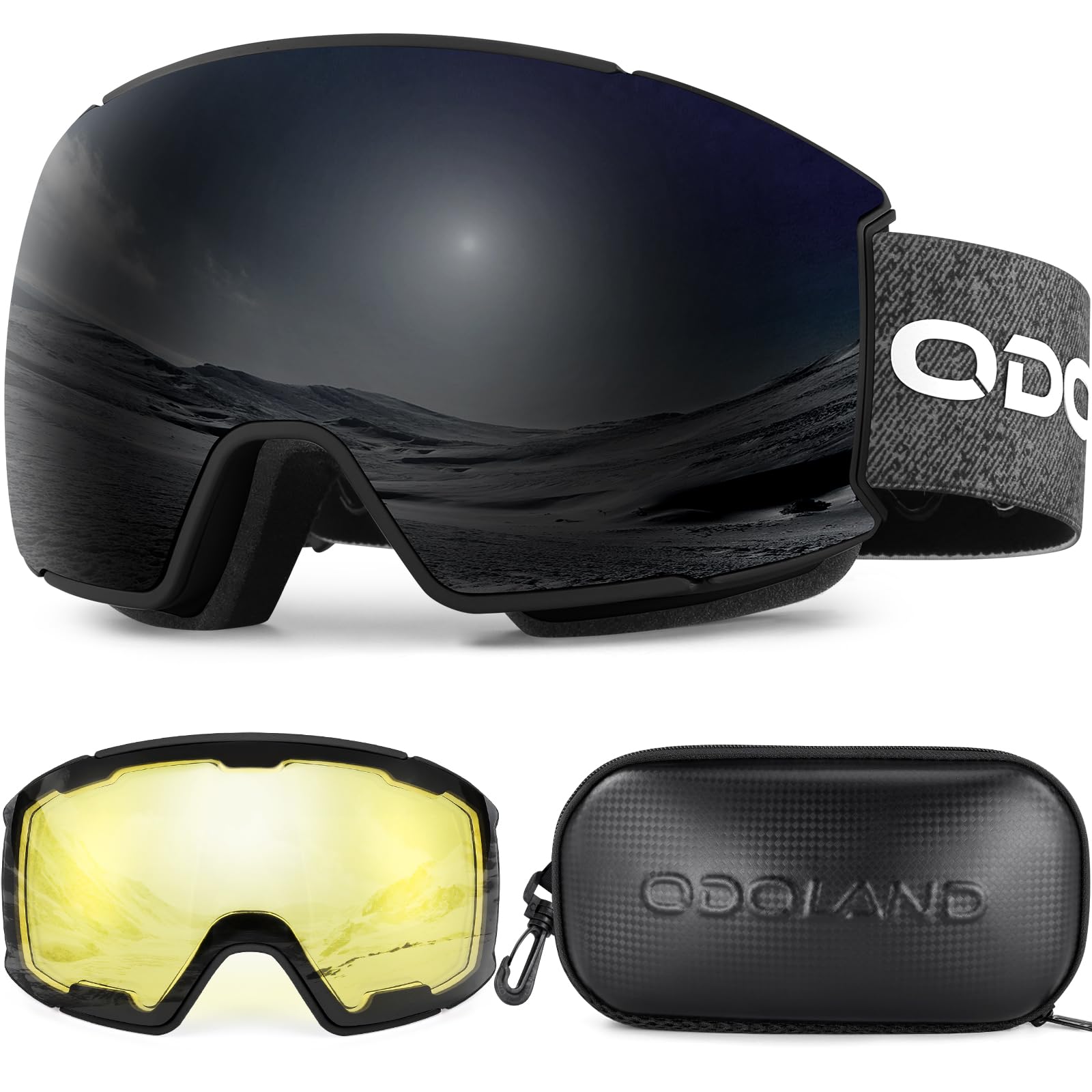
The Odoland set uses 20 magnets embedded around the frame rim to hold the spherical lens in place, making it one of the most secure magnetic lenses available. The magnetic grip is strong enough that the lens stays in place even during violent falls or when stowed in a crowded gear bag. The set includes two lenses — one for bright sun with VLT around 8.8% and one for overcast conditions — plus a hard case and a bag for the second lens.
Dual-layer lens technology with an anti-fog coating keeps the interior clear in most conditions, though some riders report that touching the inner lens coating during cleaning can cause fogging later. The TPU frame is durable and flexible, which helps the goggle conform to different face shapes and seal out wind. The triple-layer foam is comfortable but not as plush as mid-range options from Giro or SMITH.
The strap is extra-long and adjustable, fitting over larger helmets without issue. The Odoland is a very strong value proposition for riders who need two lenses on a tight budget. The 177-degree peripheral vision is slightly narrower than the Wildhorn models but still excellent for the price. If you are buying your first pair of goggles and need the flexibility of interchangeable lenses, Odoland delivers reliable performance without breaking the bank.
Why it’s great
- 20-magnet system provides extremely secure lens hold
- Includes two lenses and a hard case
- Durable TPU frame with good flexibility
- Great value for a magnetic interchangeable set
Good to know
- Yellow tinted lens is poor for night vision
- Foam quality is less premium than mid-range brands
- Touching inner lens coating can degrade anti-fog
7. Giro Cruz Ski Goggles

The Giro Cruz is the most affordable way to get into a recognizable brand goggle with OTG capability. The Expansion View (EXV) frame design shaves down the rim and adds frameless zones around a cylindrical spherical lens, giving you more peripheral vision than standard cylindrical goggles in this price bracket. The silicone strap band prevents the goggle from sliding off the helmet, which is a common annoyance on cheaper models.
Anti-fog performance is handled by a factory-applied coating on the inner lens and passive ventilation. For typical resort riding — chairlifts, groomers, occasional tree runs — the coating holds up fine. Heavy sweating or warm spring slush can overwhelm the system faster than dual-pane designs with active vents, but for the price the Cruz performs admirably. The single clear lens covers full sun to overcast, though it lacks a second lens for very bright days.
The double-layer face foam with microfleece is comfortable against the skin and does not harbor moisture. OTG riders with smaller frames report a comfortable fit without pressure on the glasses arms. The Cruz does not include a hard case or additional lens, so budget for a storage pouch. For the beginner or casual rider who needs OTG compatibility on a tight budget, the Cruz is a reliable, no-frills choice from a respected brand.
Why it’s great
- OTG compatible with good internal volume for glasses
- EXV frame provides wider field than standard cylindrical
- Silicone strap stays put on the helmet
- Lowest price option from a major brand
Good to know
- Single lens — no interchangeable option
- Anti-fog performance can struggle in warm wet conditions
- No hard case included
- Cylindrical lens geometry, not spherical or toric
FAQ
What VLT should I look for in a snowboarding goggle?
Are magnetic lens goggles better than clip-on systems?
Will these goggles fit over my prescription glasses?
How do I stop my goggles from fogging?
Final Thoughts: The Verdict
For most users, the goggles for snowboarding winner is the Giro Method because its Zeiss VIVID lens technology delivers unmatched contrast in flat light and the dual-lens system covers all conditions with a secure mechanical lock. If you want the widest possible field of view, grab the Wildhorn Roca Pro with its 185° frameless spherical lens and fast magnetic swap. And for budget-conscious riders who still need OTG compatibility, nothing beats the OutdoorMaster Heron with its toric lens and reliable anti-fog performance.