
Cold, wet feet can turn a beautiful day on snowshoes into a miserable, dangerous ordeal. Finding a boot that seals out moisture while keeping your toes warm is the single most critical decision you will make before heading out onto the trail. This guide breaks down the specific insulation levels, waterproof membranes, and binding-compatible designs that separate serious gear from casual footwear.
I’m Mohammad Maruf — the founder and writer behind Drink4Good. I have spent countless hours analyzing technical specs, membrane construction, and real-world feedback from winter enthusiasts to provide a clear path through the crowded market of insulated winter boots.
After extensive research into insulation weights, outsole lug patterns, and ankle support architecture, I compiled the essential criteria for choosing the right footwear for snowshoeing that balances warmth, mobility, and reliable traction on packed snow and icy slopes.
How To Choose The Best Footwear For Snowshoeing
Snowshoeing places unique demands on a boot that casual winter walking does not. Your footwear must interface securely with a binding, resist moisture from above and below, and provide enough insulation for stationary moments while still moving with your natural stride. Focus on four specific pillars rather than general boot features.
Insulation Weight and Activity Level
Insulation is rated in grams per square meter, with common options being 200g, 400g, and 1200g. For snowshoeing, you are moving actively, generating body heat. A 200g boot is suitable for mild winter days and high-exertion climbs, while 400g suits most recreational snowshoeing down to about 10°F. The 1200g options are best for extreme cold or low-activity use like ice fishing. Over-insulating leads to sweaty feet, which then freeze when you stop moving.
Sole Stiffness and Binding Compatibility
Snowshoe bindings rely on a rigid platform to transfer power and keep the crampon underfoot. A flexible hiking boot will cause the binding to torque sideways, reducing control. Look for boots with a stiff shank and a defined heel welt. Many modern snowshoes feature a heel strap that needs a notch or ridge to lock in place. The North Face Chilkat series and Oboz Bridger both include a heel welt explicitly designed for snowshoe bindings and micro-crampons.
Waterproofing and Breathability
Wet feet are dangerous in winter conditions, so a reliable waterproof membrane is non-negotiable. B-Dry from Oboz, KEEN.DRY, Merrell M-Select DRY, and proprietary membrane systems from Baffin all provide sealed protection. Breathability matters because retained moisture from sweat will cool your feet. A boot with a breathable membrane like Thinsulate insulation paired with a waterproof outer keeps moisture moving out while preventing snowmelt from seeping in.
Upper Height and Ankle Support
Snowshoeing on uneven terrain requires ankle stability that a low-cut shoe cannot provide. A mid-to-calf height boot supports your ankle against lateral motion when traversing slopes. The tall zip boots from Merrell offer additional support with the convenience of a side zipper for quick entry. Avoid boots that are too bulky, as they will limit natural ankle flexion and increase fatigue on longer treks.
Quick Comparison
On smaller screens, swipe sideways to see the full table.
| Model | Category | Best For | Key Spec | Amazon |
|---|---|---|---|---|
| Oboz Bridger 10″ Insulated | Premium | All-day winter hiking | 400g Thinsulate, B-Dry membrane | Amazon |
| Baffin Control Max | Premium | Extreme cold and static use | Removable liner, -100°F rated | Amazon |
| Baffin Zone | Premium | Day hikes and snowshoeing | Lightweight, -40°F rated | Amazon |
| Merrell Coldpack 3 Thermo Tall Zip | Premium | Easy on/off, deep snow | Side zip, tall shaft, M-Select DRY | Amazon |
| North Face Chilkat V 400 | Mid-Range | Recreational snowshoeing | 400g insulation, heel welt | Amazon |
| KEEN Revel 4 Mid Polar | Mid-Range | Wide toe box, active use | KEEN.DRY, Polar insulation | Amazon |
| Helly Hansen V3 Winter Boot | Mid-Range | Stylish warmth to -11°F | Waterproof leather, firm sole | Amazon |
| North Face Chilkat V 200 | Value | Mild winter and fall hikes | 200g insulation, lightweight | Amazon |
| Rocky Blizzard Stalker 1200G | Value | Extreme cold with thick socks | 1200g insulation, runs large | Amazon |
In‑Depth Reviews
1. Oboz Men’s Bridger 10″ Insulated B-Dry Waterproof Hiking Boots

The Oboz Bridger 10″ delivers stiff ankle support and a deep heel welt that locks into snowshoe bindings without shifting. The 400g Thinsulate insulation provides ample warmth for active winter hiking while the B-Dry membrane keeps moisture out during full-day treks through wet snow. Users consistently note the comfortable footbed with no pressure points, a critical detail for long distances.
Several long-term users report the boots remain comfortable after thousands of steps daily through woods and swamps, and the laces hold tension all day. The narrow fit is the main constraint — many recommend ordering half a size up, especially if you plan to wear a thick merino sock layer. The 10-inch shaft gives excellent protection against deep powder, reducing the need for gaiters in most conditions.
For snowshoeing, the stiff shank keeps your foot flat against the deck, allowing the binding crampon to bite effectively on icy climbs. The outsole traction is rated highly on snow, though users suggest adding micro-spikes for hard-packed ice. If you need one boot that does everything well — summer hiking to winter snowshoeing — this is the benchmark.
Why it’s great
- Stiff shank and heel welt for secure binding fit
- 400g Thinsulate provides balanced warmth for active use
- Durable construction with B-Dry waterproof membrane
Good to know
- Runs narrow; order half size up for thick socks
- Break-in period required for some users
2. Baffin Men’s Control Max Snow Boot
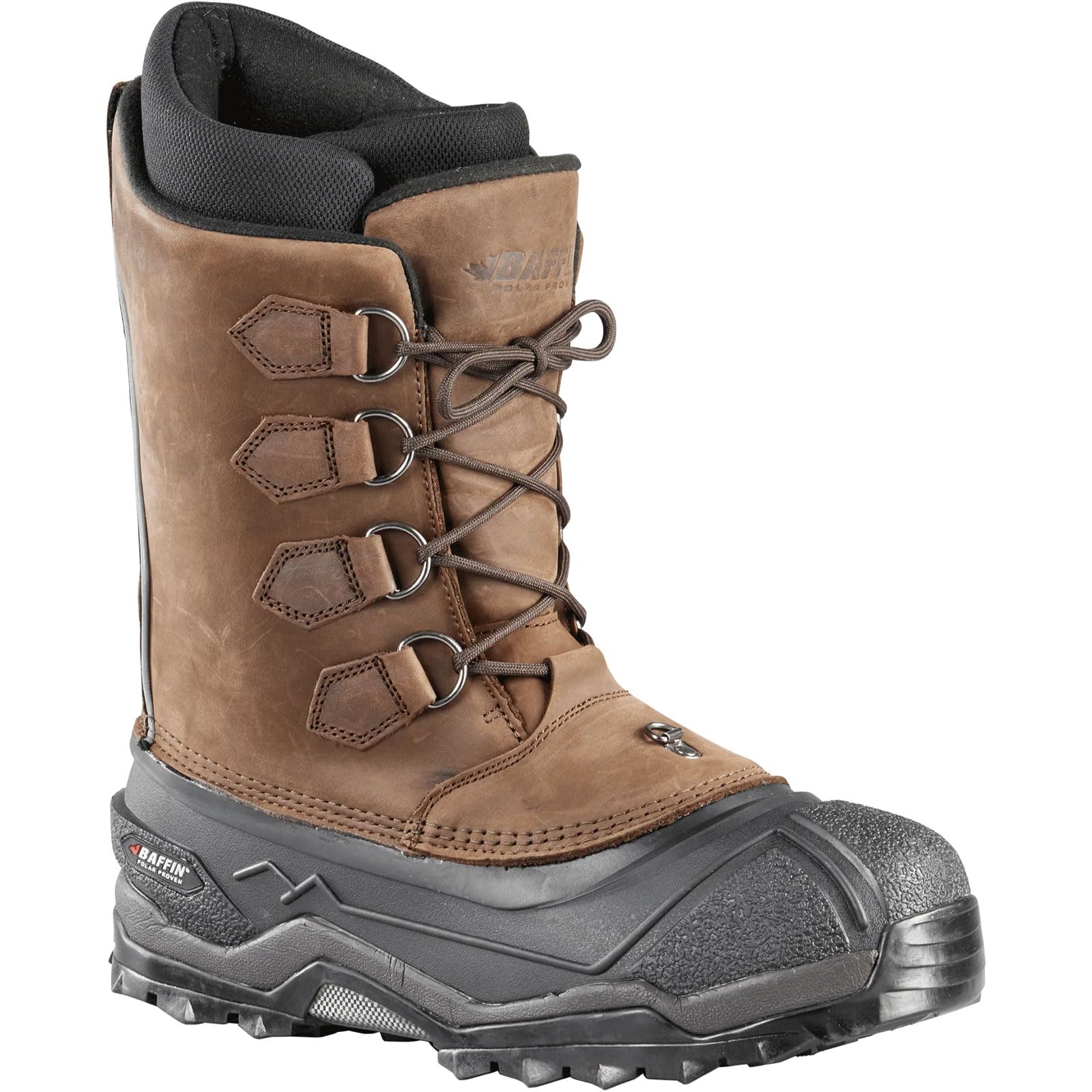
The Baffin Control Max is a serious Pac-style boot built for extreme conditions, rated down to -100°F. The removable liner system allows you to dry the interior between uses, a critical feature for multi-day snowshoeing trips where moisture management determines comfort. The multi-layer design includes a polar membrane, Thermaplush liner, and a reinforced shell that resists abrasion from snowshoe straps.
Users report the boots run small, so ordering half a size up is recommended to accommodate thick wool socks. The thick calf insulation makes pulling pants over the boot difficult, a common trade-off with Pac boots that prioritize warmth over sleek fit. The outsole provides excellent traction on packed snow and icy surfaces, though the bulk can make natural ankle flexion feel restricted.
For stationary use like winter camping or snowshoe breaks, the Control Max is unmatched in warmth. But for high-output snowshoeing, the insulation may cause sweating, and the bulk can slow your pace. This is the right choice for North Dakota blizzards or Alaskan trips, not for moderate trail days.
Why it’s great
- Extreme cold rating suitable for arctic conditions
- Removable liner allows drying and customization
- Very durable shell with deep traction lugs
Good to know
- Very bulky; hard to fit under snow pants
- Runs small; size up half to full size
3. Baffin Men’s Zone High-Performance Insulated Waterproof Snow Boots

The Baffin Zone bridges the gap between a lightweight hiking boot and a full winter expedition boot. At just 1.7 pounds, it is noticeably lighter than the Control Max, reducing fatigue over long distances. Users confirm it fits MSR snowshoe bindings without modification, and the flexible design allows a natural stride while still providing enough stiffness for effective crampon use. Rated to -40°F, it handles deep cold without the bulk of a Pac boot.
Reviews highlight that the boot runs large — a size 11 fits a US 10.5 foot with thick socks. The traction is excellent on icy surfaces, and no water seepage has been reported even after full-day use in wet snow. However, some users note that the interior saturates from sweat during high-output use, and if you camp overnight, the frozen moisture becomes a problem.
This boot is ideal for day trips and short snowshoe adventures where you return to a dry space. It is not suited for multi-day winter camping without a method to dry the interior overnight. If your snowshoeing is a day activity in moderate to cold conditions, the Zone provides a compelling balance of warmth, weight, and cost.
Why it’s great
- Featherlight at 1.7 lbs for reduced fatigue
- Excellent traction on icy surfaces
- Direct compatibility with MSR bindings
Good to know
- Sweat saturation can freeze overnight during camping
- Runs large; size down for snug fit
4. Merrell Men’s Coldpack 3 Thermo Tall Zip Waterproof Snow Boots
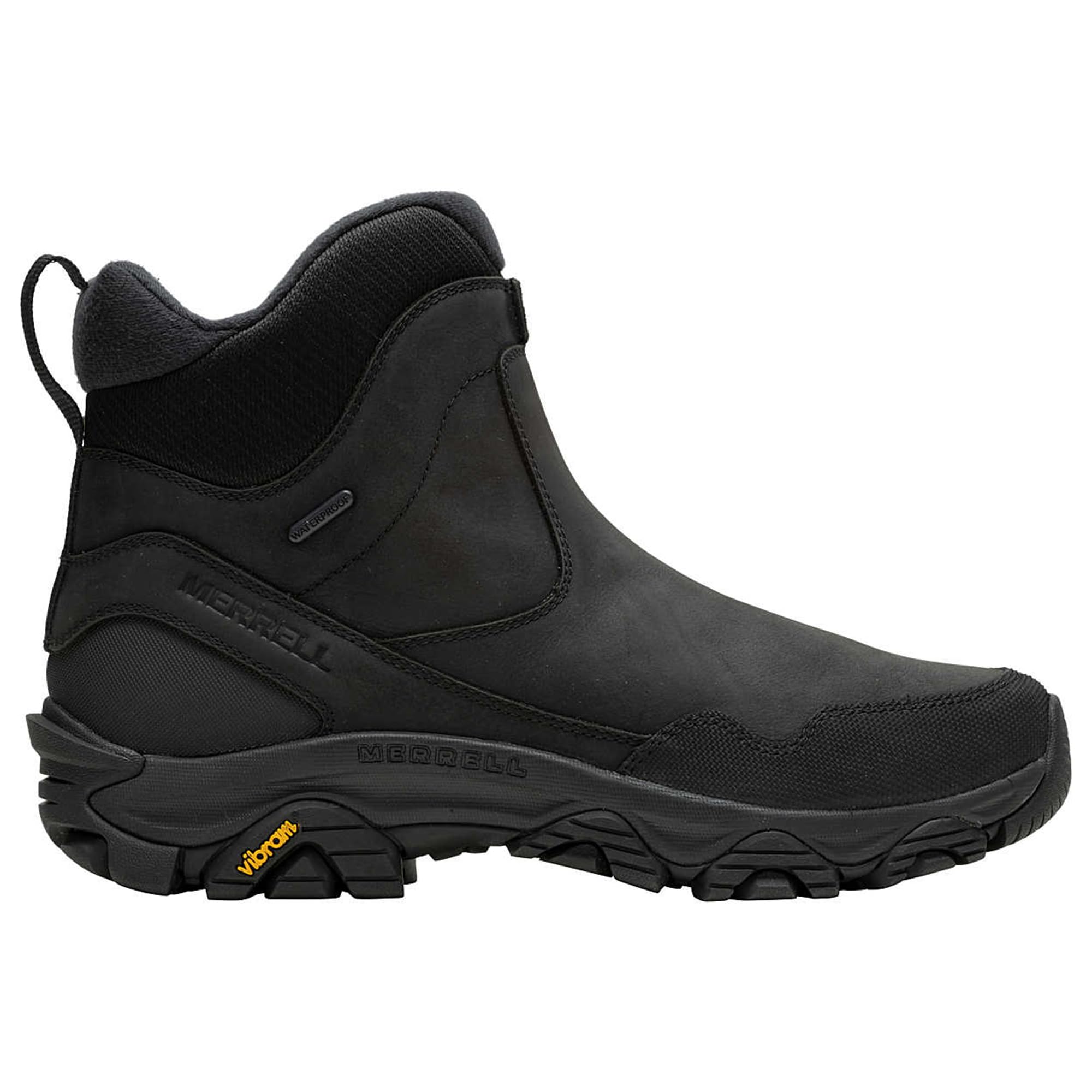
The Merrell Coldpack 3 Thermo Tall Zip features a full side zipper that eliminates the struggle of lacing up tall boots in freezing temperatures. The tall shaft provides calf coverage for deep snow, and the M-Select DRY membrane keeps moisture out during flurries and slush. Users report the boots are comfortable and warm, with deep treads that grip well on snow, though they still slip on black ice.
Several users note that the boots run true to size but the fit is initially snug, requiring a short break-in period of indoor walking before a full day on the trail. The side zipper is a convenience feature that prevents frozen laces, but some users prefer traditional lacing for a more adjustable fit. The boot is not as stiff as the Oboz Bridger, which may affect performance with aggressive snowshoe bindings.
This boot is best for recreational snowshoeing, daily winter commutes, and shoveling driveways. It shines in convenience, allowing quick changes without sitting on a cold log to untie frozen knots. If you prioritize ease of entry over technical climbing features, the Coldpack 3 delivers.
Why it’s great
- Full side zipper for quick on/off in cold weather
- Tall shaft for deep snow coverage
- M-Select DRY membrane is reliable and breathable
Good to know
- Side zipper may not be as adjustable as laces
- Initial fit is snug; needs break-in
5. The North Face Men’s Chilkat V 400 Waterproof Snow Boot

The North Face Chilkat V 400 is purpose-built for snowshoeing, featuring a heel welt that locks into bindings and a rear D-ring for attaching gaiters. The 400g insulation provides serious warmth for cold days while the waterproof construction keeps feet dry in slush and powder. Users consistently report the boot is extremely comfortable, feeling like a running shoe out of the box.
Several reviews mention the boots run a full size smaller than marked, so sizing up is essential. The fit leans narrow, which may be an issue for wider feet since wide sizes are not available. The lightweight design makes it easy to pack for travel to snowy destinations, and the outsole provides good traction on packed trails.
For recreational snowshoeing, this boot hits the sweet spot between warmth, stiffness, and weight. The heel welt integrates securely with most modern bindings, and the D-ring keeps gaiters in place to prevent snow from entering the ankle area. If you need a dedicated snowshoe boot for moderate winter conditions, the Chilkat V 400 is a top contender.
Why it’s great
- Integrated heel welt for secure binding lock
- Rear D-ring for gaiter attachment
- Comfortable, lightweight, and ready out of box
Good to know
- Runs a full size small; order up
- Narrow fit; not ideal for wide feet
6. KEEN Revel 4 Mid Height Polar Insulated Waterproof Boot
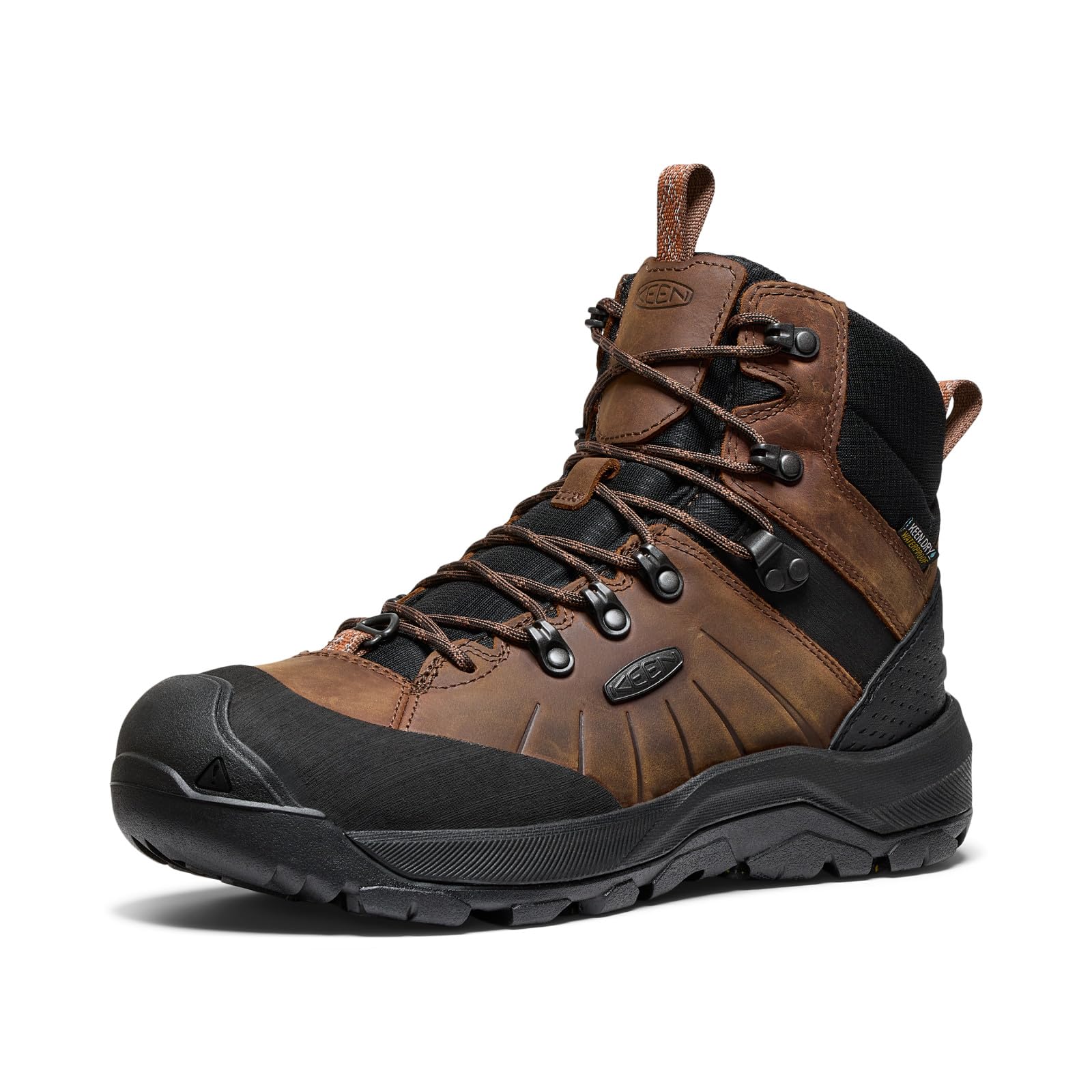
The KEEN Revel 4 Polar features the brand’s signature wide toe box, which accommodates thicker socks and allows toes to splay naturally during long walks. The KEEN.DRY membrane offers reliable waterproofing, and the Polar insulation provides enough warmth for subzero snowshoeing without overheating during active climbs. Users confirm the boot fits true to size and does not require sizing up for thick socks.
Long-term users report the boot maintains its warmth and waterproofing after a full season of harsh winter use. The bump toe protects against rock strikes, and the outsole traction is phenomenal, with many users reporting they do not need cleats on moderate terrain. The boot works well with snowshoes, and the stiff shank prevents binding torque on uneven ground.
This boot is ideal for snowshoers with wider feet who struggle with narrow-fitting options. The wide toe box reduces pressure points and allows for natural foot movement, reducing fatigue over long distances. If KEEN’s shape works for your foot, the Revel 4 Polar is a reliable companion for winter adventures.
Why it’s great
- Wide toe box accommodates thick socks and natural splay
- Excellent traction; often no cleats needed
- True to size; no need to size up
Good to know
- Bump toe adds slight weight
- Mid-height shaft offers less calf coverage
7. Helly Hansen V3 Winter Boots – Waterproof Snow Boots for Men
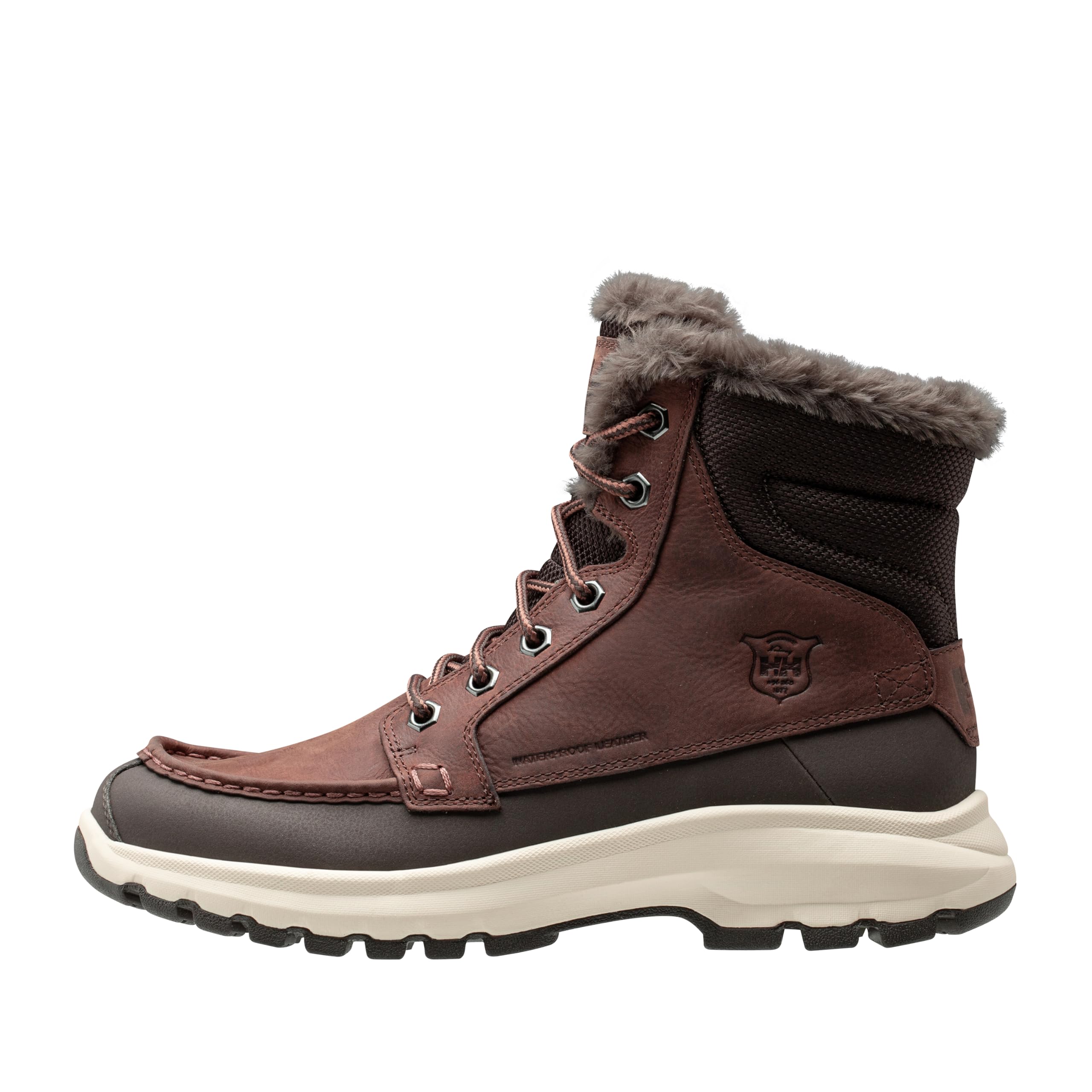
The Helly Hansen V3 Winter Boot blends a stylish aesthetic with technical performance suitable for snowshoeing. The waterproof leather upper and firm rubber outsole provide a stiff platform for bindings, while the insulation keeps feet warm down to -11°F. Users appreciate the boot’s lightweight feel and true-to-size fit, which runs like a normal shoe size without the need to upsize.
Several users report the boot is comfortable for all-day wear, with good traction on snow and firm soles that prevent binding slippage. The breathable insole prevents sweating inside the boot, and the lace-up closure provides a secure fit. One user noted the boot passed the test of an Alaskan winter, confirming its durability under harsh conditions.
This boot is a solid mid-range option for snowshoers who want a boot that transitions from trail to casual wear without looking like a technical piece of gear. If you need a boot that performs well in the backcountry but also looks good at the lodge, the Helly Hansen V3 is the best choice.
Why it’s great
- Stylish silhouette that works on and off the trail
- Firm sole provides stiffness for binding compatibility
- True to size fit with no need to upsize
Good to know
- Not as heavily insulated as 400g options
- May lack heel welt for advanced binding systems
8. The North Face Men’s Chilkat V 200 Waterproof Snow Boot

The North Face Chilkat V 200 is the lighter-insulated sibling of the 400 model, featuring the same heel welt and D-ring design at a lower weight and lower insulation. With 200g of premium insulation, this boot is designed for mild winter days and high-output snowshoeing where body heat keeps you warm. The waterproof construction and rubber outsole provide reliable protection in wet snow and slush.
Users report the boot runs small across the top of the foot, requiring half a size up for thick socks. The boot is lightweight and comfortable, making it a good choice for fall and early winter hikes. Some users noted the rubber side can separate from the leather upper over time, a potential durability concern for heavy use.
For snowshoeing in milder climates or on high-exertion ascents, the Chilkat V 200 provides the essential binding features without the extra weight of heavy insulation. Pair it with merino wool socks for toasty feet without the sweat. It is the ideal entry-level snowshoe boot for those who do not face extreme cold.
Why it’s great
- Low weight for high-exertion snowshoeing
- Heel welt and D-ring for compatibility
- Comfortable and ready out of box
Good to know
- 200g insulation is only suitable for mild cold
- Rubber separation reported in long-term use
9. Rocky Blizzard Stalker Waterproof 1200G Insulated Boot

The Rocky Blizzard Stalker is designed for extreme cold, packing 1200g of insulation for static use in subzero temperatures. It runs a full size large to accommodate thick boot socks, so you should order down if you plan on wearing standard sock thickness. Users confirm the boot keeps feet warm in 6°F conditions and provides good traction on snow, though it struggles on ice.
Several users have owned these boots for over two years and report they remain warm and comfortable on frozen concrete and in the woods. The boots are lighter than they look, reducing fatigue during all-day wear. Some users experienced bootlace hooks breaking after a few uses, a known design weakness that may require replacement lacing loops.
This boot is best for ice fishing, standing in sleds, or low-activity winter use where maximum insulation is the priority. For active snowshoeing, the 1200g insulation may cause excessive sweating, and the lack of a defined heel welt reduces binding compatibility with modern snowshoes. It is a specialist boot for extreme cold rather than a general-purpose snowshoe boot.
Why it’s great
- 1200g insulation for arctic-level warmth
- Runs large to fit extremely thick socks
- Lightweight for the amount of insulation provided
Good to know
- Bootlace hooks prone to breaking
- Not designed for modern snowshoe binding systems
FAQ
Do I need a special boot for snowshoeing or can I use regular winter boots?
What insulation weight is ideal for snowshoeing in moderate cold?
Can I use hiking boots for snowshoeing in light snow?
How should snowshoe boots fit for binding comfort?
Final Thoughts: The Verdict
For most users, the footwear for snowshoeing winner is the Oboz Bridger 10″ Insulated because it combines a stiff shank, heel welt, 400g insulation, and a proven B-Dry membrane into a single well-built package. If you want a lighter option with excellent modern binding features, grab the North Face Chilkat V 400. And for extreme cold where warmth is the only priority, nothing beats the Baffin Control Max.