
When the grid goes down, your home’s appliances — refrigerators, well pumps, furnaces, and medical devices — become a test of your backup plan. A generator for home use isn’t a luxury; it’s the difference between a minor inconvenience and a spoiled pantry, a cold house, or a flooded basement. The market is split between fuel-burning portable units that can power an entire home and silent, fume-free battery stations that handle essentials without maintenance.
I’m Mohammad Maruf — the founder and writer behind Drink4Good. Over the last several weeks, I’ve been deep-diving into generator specifications, fuel consumption rates, THD figures, transfer switch compatibility, and real-world customer stress tests to separate the machines that deliver from those that sputter under load.
This guide evaluates eleven top-tier backup systems, from heavy 13,000-watt tri-fuel monsters to whisper-quiet solar generators, to help you confidently choose among the best generators for home use that match your power needs and installation preferences.
How To Choose The Best Generators For Home
Picking a home generator is an exercise in matching your essential appliances to a machine’s output and fuel logistics. If you overshoot on wattage, you pay for capacity you don’t need; if you undershoot, your generator trips its breaker the moment the well pump and fridge kick on together.
Match Running Watts to Your Essential Load
The first step is a load calculation. Add the running watts of everything you want to power simultaneously — a refrigerator (600-800W), a sump pump (800-1200W), a furnace blower (500-1000W), and lights (300-500W). That base load often lands between 2,200 and 5,000 watts. Now add the surge watts of your largest motor (a well pump or AC compressor can spike to 3-5 times its running watts for a few seconds). A generator with 3,500 running watts and 4,500 surge watts might handle a camper but will fail to start a 1HP well pump. Go bigger than you estimate.
Fuel Type and Run Time Logistics
Gasoline is the most common fuel but degrades in months and requires stockpiling. Propane stores indefinitely and burns cleaner but reduces peak wattage by roughly 10-15% compared to gasoline. Natural gas offers unlimited runtime via a direct gas line but is not available after earthquakes or line breaks. Battery power stations need no fuel and produce zero fumes but have a finite capacity; after 3kWh, you need solar or grid recharging. For whole-home backup spanning days, a dual-fuel or tri-fuel portable unit connected to a transfer switch offers the best independence. For overnight essentials without noise, a large battery station like a 3.6kWh system can keep fridges and lights running silently.
Transfer Switch vs. Extension Cords
Running heavy-gauge extension cords through a window during every outage gets old fast. A manual transfer switch (6-10 circuits) lets you hardwire a portable generator to a panel inside your home, eliminating tripping hazards and guaranteeing an organized power distribution. A fully automatic standby unit with an integrated transfer switch does everything — starts the generator, switches the load, and returns to utility when power comes back — all without you lifting a finger. The 200-amp switch on the Generac 22kW is the gold standard for whole-home coverage, but a 50-amp inlet box paired with a 10-circuit manual switch is sufficient for most mid-range portable units.
Quick Comparison
On smaller screens, swipe sideways to see the full table.
| Model | Category | Best For | Key Spec | Amazon |
|---|---|---|---|---|
| Generac Guardian 22kW | Standby | Whole-home auto backup | 22,000W on natural gas | Amazon |
| EcoFlow DELTA Pro 3 | Battery | Silent, expandable power | 4096Wh LFP battery | Amazon |
| DuroMax XP13000HXT | Tri-Fuel Portable | High-wattage fuel flexibility | 13,000W / 500cc engine | Amazon |
| EcoFlow DELTA Pro | Battery | Mid-range battery backup | 3600Wh LFP battery | Amazon |
| Jackery HomePower 3000 | Battery + Solar | Solar rechargeable home backup | 3072Wh / 3600W output | Amazon |
| Westinghouse 12500W | Dual-Fuel Portable | Remote-start home backup | 12,500 surge / 457cc | Amazon |
| DuroStar DS13000MX | Dual-Fuel Portable | High-power budget choice | 13,000W / 500cc engine | Amazon |
| WEN DF680iX | Dual-Fuel Inverter | EV charging + clean power | 6,800 surge / 224cc | Amazon |
| Jackery Explorer 2000 v2 | Battery + Solar | Lightweight solar backup | 2042Wh / 2200W output | Amazon |
| Champion 4000W Dual Fuel | Dual-Fuel Inverter | Light dual-fuel inverter | 4,000 surge / 51.8 lbs | Amazon |
| Champion 4500W Inverter | Inverter Portable | Quiet RV and camping power | 61 dBA / 14 hrs run time | Amazon |
In‑Depth Reviews
1. Generac Guardian 22kW Home Standby Generator
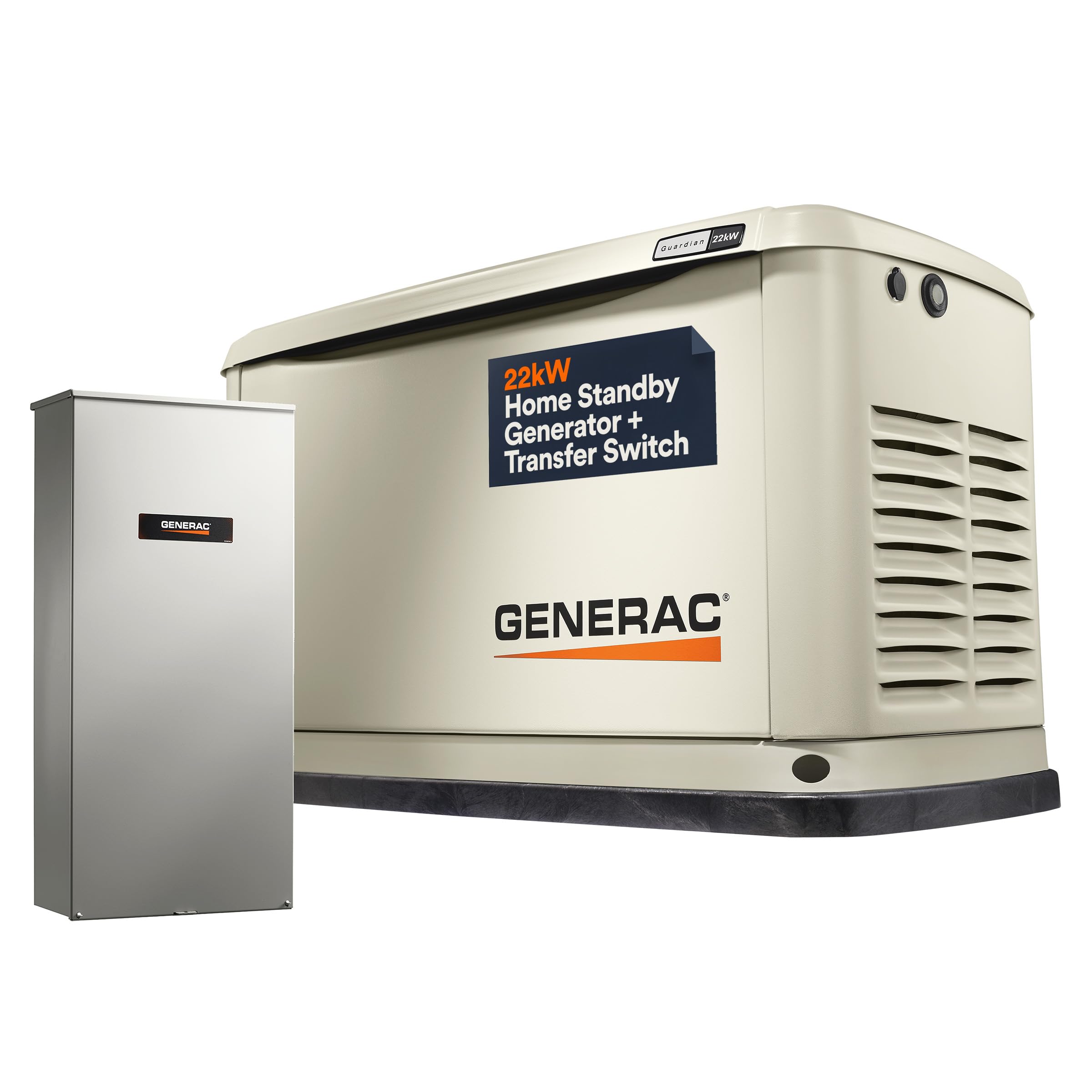
The Generac Guardian 22kW is the definitive whole-home standby solution. It runs on natural gas or liquid propane, feeds a built-in 200-amp automatic transfer switch, and uses True Power Technology to keep harmonic distortion below 5%. That means it’s safe for sensitive electronics like your computer, TV, and variable-speed furnace controls — no need for an external inverter. The purpose-built G-Force 999cc engine is designed for thousands of hours of operation, and the 5-year limited warranty reflects Generac’s confidence in its longevity.
Installation requires a certified electrician, but the payoff is total automation. When the utility power drops, the generator starts itself, transfers the load within seconds, and runs until the grid returns — then performs a cooldown cycle and shuts off. The included Mobile Link Wi-Fi module lets you monitor status and maintenance alerts from your phone, so you know the unit exercised itself last week even if you were away.
Owners consistently report that the 22kW carries their entire house — including central AC, well pump, electric oven, and lighting — without breaking a sweat. The biggest upfront cost is the professional installation and gas line connection; once that’s done, you have a set-and-forget backup solution that many users call “emergency insurance.” The G-Force engine is noticeably quieter than many open-frame portables, though it is still an audible machine when running at full load.
Why it’s great
- Fully automatic with integrated 200A transfer switch
- Clean power output with under 5% THD
- 5-year warranty and Wi-Fi monitoring built in
Good to know
- Heavy unit (466 lbs) requiring professional installation
- Some units require Wi-Fi for initial setup and firmware updates
2. EF ECOFLOW DELTA Pro 3 Portable Power Station

The EcoFlow DELTA Pro 3 is a battery-powered generator that breaks the mold by offering native 120/240V split-phase output straight from a 4096Wh LFP battery pack. That means it can power a 240V well pump, a 3-ton central AC, or even an EV charger without a separate step-up transformer. The unit delivers 4000W continuous (6000W surge with X-Boost), and you can daisy-chain two units for 12,000W or add extra batteries to expand capacity up to 48kWh.
Charging flexibility is unmatched: it can pull 3000W from a 240V wall outlet (full charge in 2.7 hours), accept up to 2600W of solar input, or recharge from an EV charging station. The X-Quiet technology keeps operation at a whisper — as low as 30 dB — making it ideal for indoor placement near electronics or in a bedroom during an overnight outage. The UPS mode switches in under 10 milliseconds, protecting NAS drives and servers from glitches.
Early adopters praise the 240V output, the fast charging, and the app-based controls, though some note that the display interface could be more intuitive. The 115-pound weight is manageable with the built-in handle, but it’s not something you want to carry up stairs. The reliance on the EcoFlow app for certain settings (like charge rate and storage cap) has frustrated a few users who prefer a simple physical switch during off-grid use.
Why it’s great
- Native 120/240V split-phase output for heavy appliances
- Expandable to massive 48kWh capacity
- Near-silent operation at 30 dB in quiet mode
Good to know
- App-dependent for advanced settings
- Heavy at 115 lbs; lacks a wheel kit
3. DuroMax XP13000HXT 13,000-Watt Tri Fuel Portable Generator
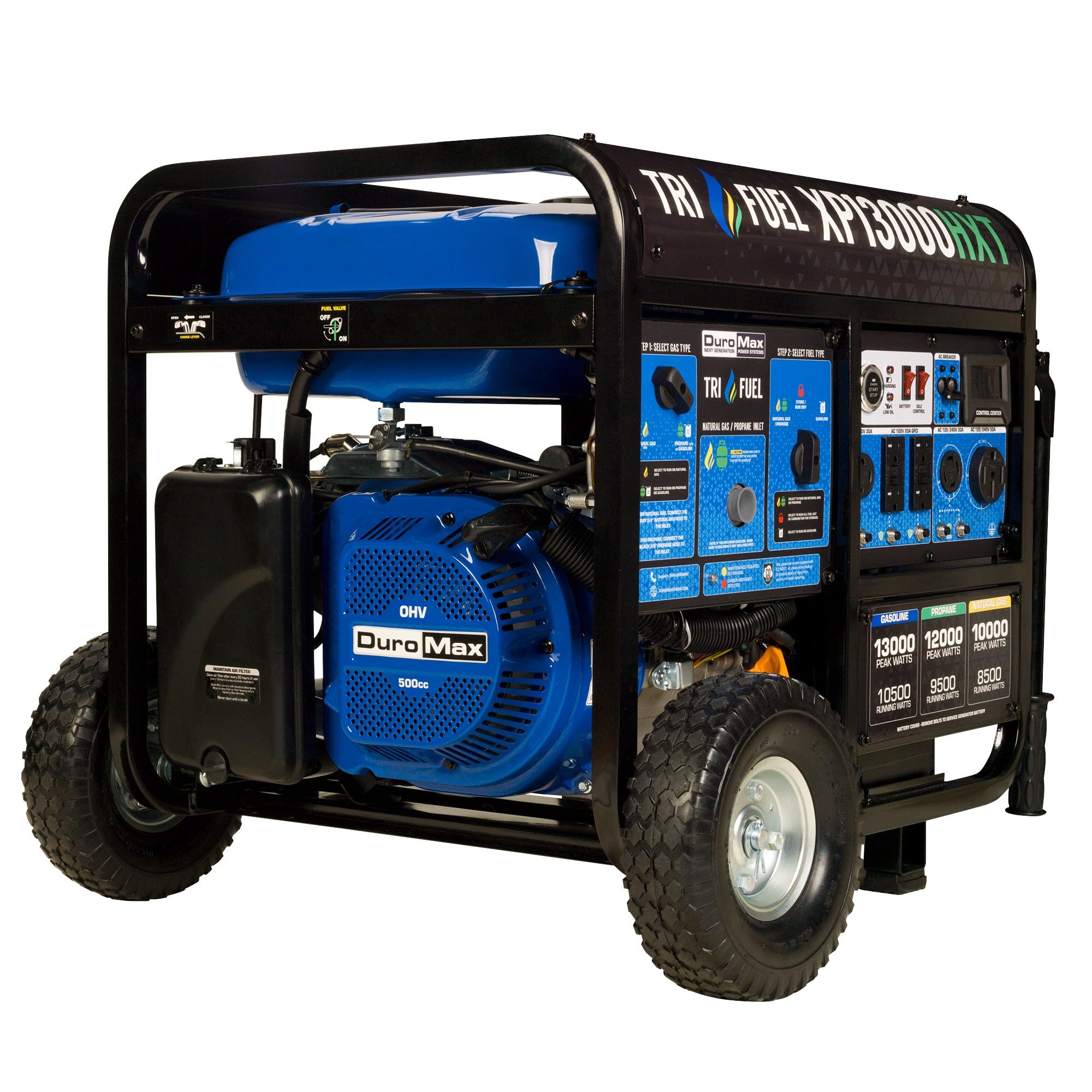
The DuroMax XP13000HXT brings tri-fuel capability to a price point that usually demands dual-fuel or gasoline-only. It runs on gasoline, propane, or natural gas straight out of the box, with a 500cc OHV engine delivering 13,000 surge watts. The remote start key fob lets you fire it up from inside your garage, and the front-facing interface includes a fuel selector dial, a digital hour meter, and a 50-amp outlet ready for a transfer switch.
Natural gas owners appreciate the unlimited runtime — connect the included 15-foot hose to your home’s gas line and the generator runs as long as the gas flows. The unit comes with a propane regulator, a tool kit, and a wheel kit. The CO Alert sensor automatically shuts the engine down if carbon monoxide accumulates, which is critical when operating near a garage or open window. The cast-iron sleeve in the engine adds durability for sustained high-load use.
Users who installed the XP13000HXT as a whole-house backup report that it easily handles a 1.5-ton AC, furnace, refrigerator, lights, and a microwave simultaneously. The natural gas consumption is about 225,000 BTU/hr at full load, so you’ll want a 3/4-inch gas line. The unit is loud — it’s a 500cc open-frame engine — but that’s expected for this power class. The stiff hose reducer and the need for a battery maintainer are minor gripes against an otherwise excellent tri-fuel machine.
Why it’s great
- Tri-fuel (gas, propane, natural gas) for ultimate fuel flexibility
- Remote start key fob included
- CO Alert sensor for safety
Good to know
- Loud open-frame operation (not inverter-quiet)
- Heavy at 240 lbs; wheel kit is part of the assembly
4. EF ECOFLOW Portable Power Station 3600Wh DELTA Pro
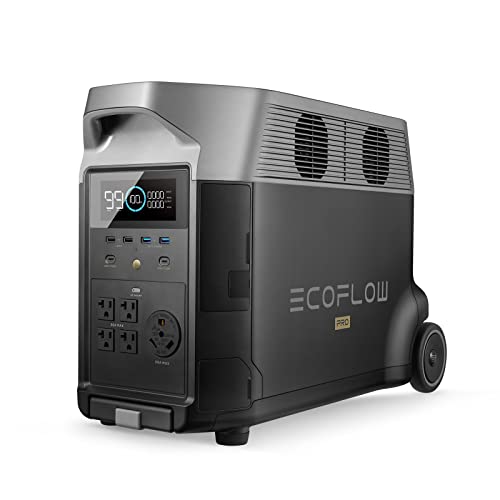
The original EcoFlow DELTA Pro remains a strong contender for anyone who wants expandable battery backup without the hassle of fuel. Its 3600Wh LFP battery capacity can be scaled up to 25kWh with extra batteries. The unit delivers 3600W of AC output (4500W with X-Boost), enough to run two refrigerators, a freezer, and a couple of lights and fans simultaneously. The X-Stream charging technology replenishes the battery from a wall outlet in 2.7 hours, and solar input up to 1600W can fully charge it in under 3 hours.
Where the DELTA Pro shines is in versatility. Its five 120V AC outlets, two USB-C 100W ports, and a car outlet mean you can power everything from a home office to a CPAP machine overnight. The smart app control lets you monitor charge status, adjust discharge rates, and set charge limits to prolong battery life. The unit works as a UPS with a 20ms switchover, protecting sensitive electronics.
Users running mobile businesses — like heat press operators at vendor markets — report zero voltage drops under sustained 3600W loads. Homeowners appreciate the silent operation and the fact that they can place it indoors without worrying about CO. The 99-pound weight is manageable but noticeable, and the lack of a 240V output limits its ability to power well pumps or central AC. It’s a strong middle ground between a massive battery station and a small portable unit.
Why it’s great
- Expandable to 25kWh with extra batteries
- Very fast AC charging (2.7 hours)
- Silent, fume-free indoor operation
Good to know
- No native 240V output
- Heavy at nearly 100 lbs
5. Jackery HomePower 3000 with 2X 200W Solar Panels
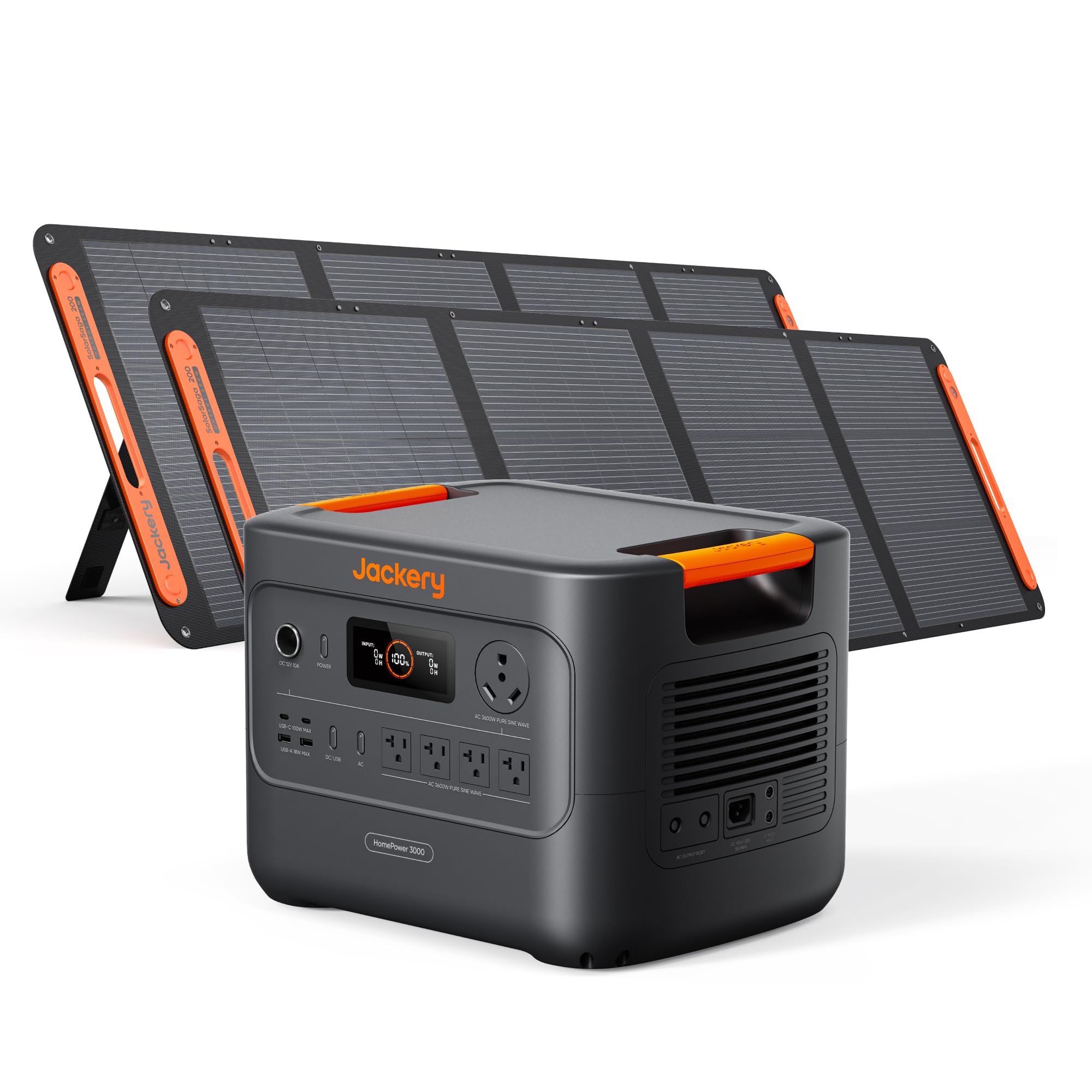
The Jackery HomePower 3000 is a complete solar generator kit designed for home backup. The base unit packs a 3072Wh LFP battery with a 3600W AC output (7200W surge), enough to run a refrigerator for 1-2 days, charge phones and laptops, and power lights and a WiFi router for up to 15 hours. The included pair of 200W solar panels (400W total) can recharge the battery to 80% in about 9 hours of good sunlight, making it a renewable solution for extended outages.
What sets this unit apart is its CTB (Cell-to-Body) technology, which makes it 47% smaller and 43% lighter than comparable 3kWh battery stations — it weighs just 60 lbs. The built-in ≤20ms UPS switch ensures seamless power during grid blips, protecting sensitive electronics. The front panel includes dual 100W USB-C PD ports, a TT-30 RV outlet, and four AC outlets. The ChargeShield 2.0 AI algorithm manages charging to extend the LFP battery’s life to 4,000 cycles while retaining 70% capacity.
Owners using the HomePower 3000 for dry camping and home backup praise its ability to run an RV’s essentials off-grid without a generator running. The 60-lb weight is manageable for one person, though a wheel kit would be a welcome addition. The battery cannot be expanded beyond its internal 3072Wh, so if you need more capacity, you’ll need a second unit. The solar panels are shipped separately, so expect multiple boxes.
Why it’s great
- Lightweight for its capacity (60 lbs)
- Included 400W solar panel kit for renewable charging
- Long battery lifespan with 4,000 cycles
Good to know
- Non-expandable battery capacity
- No native 240V output
6. Westinghouse 12500 Peak Watt Dual Fuel Portable Generator

The Westinghouse 12500W dual-fuel generator delivers 12,500 peak watts (9,500 running) on gasoline and 11,200 peak (8,500 running) on propane. The 457cc engine features a cast-iron sleeve for longevity, and the remote start key fob lets you start the generator from inside your home. The control panel includes a 50-amp RV outlet, a 30-amp locking outlet, and two GFCI-protected 20-amp household outlets, all covered by rubber flaps for weather resistance.
Assembly takes about five minutes and includes oil, a funnel, a battery charger, and a tool kit. The unit is functionally tested at the factory, so a trace of residual oil or fuel odor is normal. The automatic low-oil and CO shutdown sensors provide safety layers, while the digital hour meter tracks maintenance intervals. The 6.6-gallon fuel tank delivers up to 12 hours of runtime at 50% load on gasoline.
Customer reviews consistently highlight the remote start as a standout feature — no more walking out in the rain to pull a cord. The generator is loud (it’s an open-frame design), but owners describe the sound as a deep hum rather than a high-pitched scream. Users note that the manual could be better organized and that the wheels are shipped unattached, requiring some assembly. At over 200 lbs, the wheel kit is essential for moving it around a yard or driveway.
Why it’s great
- Remote key fob start for convenience
- Dual-fuel with 50A RV and transfer switch-ready outlets
- Cast-iron sleeve engine for durability
Good to know
- Heavy (212 lbs) with wheels shipped unattached
- Loud open-frame operation; no Eco mode
7. DuroStar DS13000MX 13,000-Watt Dual Fuel Portable Generator

The DuroStar DS13000MX is a dual-fuel generator that offers 13,000 surge watts and 10,500 running watts on gasoline (10,000/8,000 on propane) for a compelling price. The 500cc OHV engine has push-button electric start with a backup recoil pull. The all-metal frame and reinforced power panel are built for job-site abuse, and the included CO Alert sensor shuts the generator down automatically if dangerous fumes accumulate.
The control panel is straightforward: a fuel selector dial, a 50-amp outlet for transfer switch connection, and a 30-amp RV outlet. The 240V output via the 50-amp receptacle means you can power a well pump, a stick welder, or a central air conditioner. Owners who used it during an ice storm report that it powered their entire home — a 1.5-ton AC, furnace, fridge, microwave, and lights — without straining. The push-button start fires the engine on the first or second try, even after sitting for weeks.
Assembly involves attaching the wheel kit, adding oil, and connecting the battery. The generator is heavy at 220 lbs, so plan for two people or a dolly. Some users note that the fuel selector knob is stiff initially and that the generator must be broken in for 5 hours at half load before pushing to full power. The noise level is typical for a 500cc open-frame generator — loud, but not piercing.
Why it’s great
- Excellent value for 13,000W of dual-fuel power
- Push-button electric start with backup recoil
- CO Alert sensor for safety
Good to know
- Heavy (220 lbs) and requires assembly
- Loud open-frame operation
8. WEN 6800-Watt Dual Fuel Inverter Generator (DF680iX)

The WEN DF680iX is a dual-fuel inverter generator that produces clean power (less than 3% THD) while also offering a bonded-neutral 240V output for low-power Level 2 EV charging. It delivers 6,800 surge watts (5,100 running) on gasoline and 6,000 surge (4,500 running) on propane. The 224cc engine uses electric start, and the fuel shutoff valve lets you run the carburetor dry before storage — a feature that dramatically extends the generator’s lifespan.
The control panel includes an L14-30R 120/240V receptacle, a TT-30R RV outlet, two 120V household outlets, a 12V DC port, and two 5V USB ports. The WEN Watchdog CO sensor auto-shuts down the generator if CO levels get dangerous. The inverter technology allows the engine to idle down under light loads (Eco mode) and ramp up automatically when demand increases, saving fuel and reducing noise.
Owners running it as a fifth-wheel backup report that it runs both air conditioners on propane for about 30 hours. The electric start is reliable, and the unit is quiet enough that it fades into the background at 100 yards. Some users experienced issues with the 240V outlet failing or delays in customer service, though WEN’s support was praised by others. The 99-lb weight is manageable, and the telescoping handle and wheels make it easy to roll around a garage or campsite.
Why it’s great
- Clean inverter power with under 3% THD
- 240V output for Level 2 EV charging
- Fuel shutoff for extended engine life
Good to know
- Customer service responsiveness can be inconsistent
- Some units had early 240V outlet failures
9. Jackery Explorer 2000 v2 with 2x200W Solar Panels
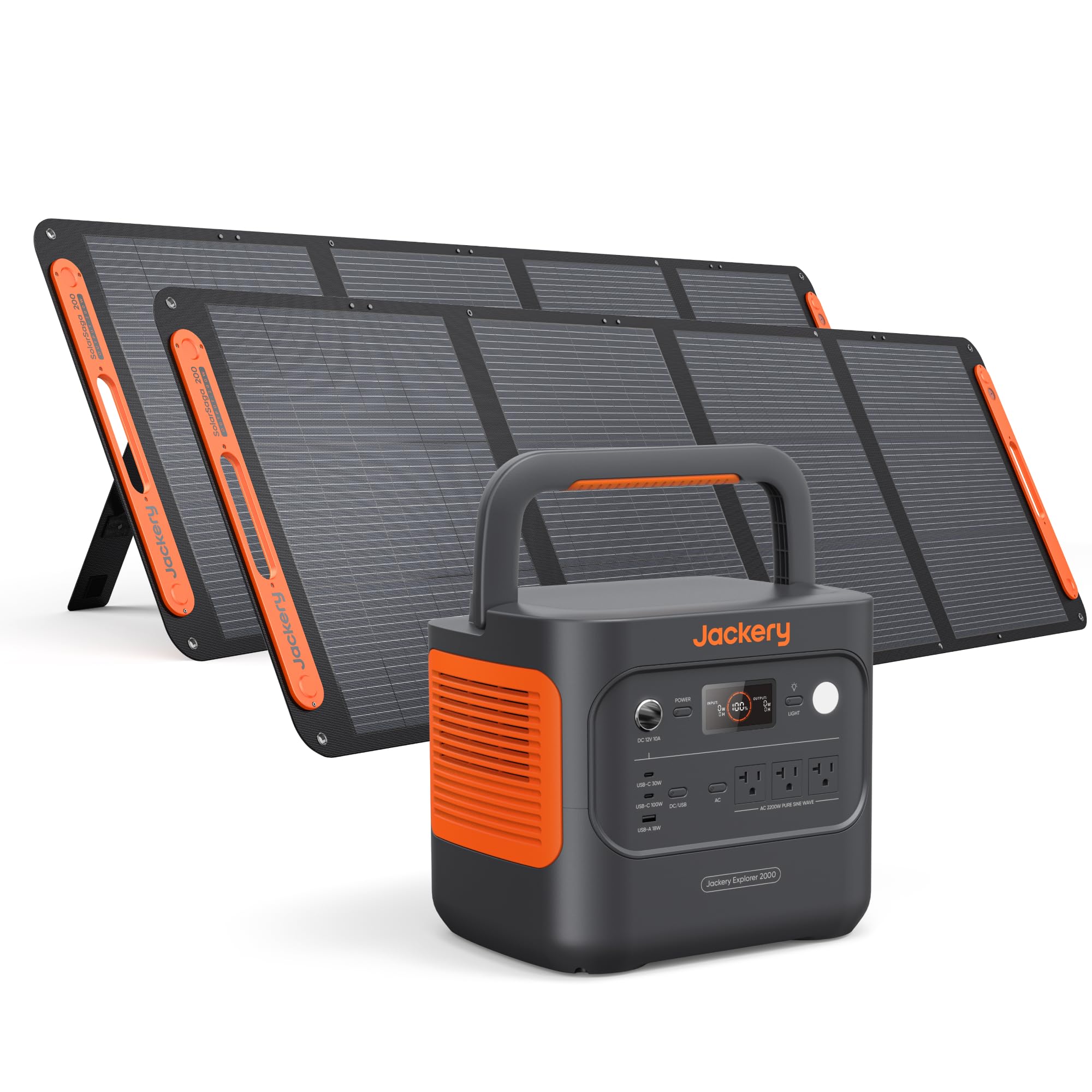
The Jackery Explorer 2000 v2 is a 2kWh-class portable power station that uses CTB (Cell-to-Body) technology borrowed from electric vehicles to pack 2042Wh into a 39.5-lb chassis — 41% lighter than conventional 2kWh stations. It delivers a pure sine wave 2200W AC output (4400W surge) and features a 20ms UPS switch for seamless grid-to-battery transitions during outages.
AC charging hits 80% in just 66 minutes, and the “Emergency Super Charging” mode (activated via the app) delivers a full charge in 102 minutes. The included pair of 200W solar panels can fully recharge the battery in about 6 hours of good sun. At only 40 dB in silent charging mode, the unit is unobtrusive enough for use in a bedroom or home office.
Users praise the Explorer 2000 v2 for its portability and power density: it can run a window AC for 3-4 hours, a refrigerator for 12-18 hours, or a CPAP machine for a full night. The solar panels are high quality and produce 397-400W input when both are connected. The unit works best as a daytime-charge, overnight-use system for home backup, especially if you can pair it with more panels. The 2042Wh capacity is enough for essentials but not whole-home backup — you’ll need to prioritize loads.
Why it’s great
- Remarkably light (39.5 lbs) for a 2kWh battery
- Fast solar charging with included 400W panel kit
- Ultra-quiet silent charging mode
Good to know
- Capacity is limited to essentials, not whole-house
- No 240V output for heavy appliances
10. Champion Power Equipment 4000-Watt Dual Fuel Inverter Generator

The Champion 4000W dual-fuel inverter generator is a lightweight (51.8 lbs), ultra-quiet (64 dBA) unit that runs on gasoline or propane. It delivers 4,000 starting watts and 3,000 running watts on gasoline, and 2,700 running watts on propane. The inverter technology produces clean power (less than 3% THD), making it safe for sensitive electronics like laptops, TVs, and phone chargers.
The runtime is impressive: up to 10 hours on a tank of gasoline and up to 25 hours on a 20-lb propane tank, thanks to inverter load-sensing that reduces engine speed when loads are light. The control panel includes a 30-amp TT-30R RV outlet, a 20-amp household duplex, a 12V automotive outlet, and parallel outlets for doubling output with a second Champion inverter. The CO Shield sensor automatically shuts the generator down if CO levels rise.
This generator is best suited for RVs, campers, and tailgaters who want dual-fuel flexibility in a lightweight package. The 51.8-lb weight makes it one of the lightest dual-fuel inverters in its power class. Owners note that it starts reliably, runs smoothly, and is quiet enough for campground quiet hours. The propane performance is slightly less powerful than gasoline, but the extended runtime on propane is a worthwhile trade-off. The lack of a 240V outlet limits its application to 120V appliances and RV power.
Why it’s great
- Very lightweight at 51.8 lbs
- Ultra-quiet 64 dBA operation
- Long runtime on propane (up to 25 hours)
Good to know
- Only 120V output; no 240V for heavy appliances
- Lower power on propane (2,700W running)
11. Champion Power Equipment 4500-Watt Inverter Generator

The Champion 4500W inverter generator operates at just 61 dBA — quiet enough for campground quiet hours and neighborhood-friendly home backup. It produces 4,500 starting watts and 3,500 running watts with clean power (less than 3% THD), and it runs for up to 14 hours on 2.3 gallons of gasoline in economy mode. The EZ Start Dial simplifies startup: you turn the dial to the desired position and pull the cord once.
The Intelligauge panel displays voltage, frequency, and operating hours so you can track load and plan maintenance. The CO Shield carbon monoxide auto-shutoff system adds an important safety layer. The generator includes a 30-amp RV outlet and a 20-amp household duplex. It is parallel ready, meaning you can connect it to a second Champion inverter (2800W or higher) to double your output for larger loads. The 3-year limited warranty with free lifetime technical support is a strong selling point.
Real-world owners have put this generator through extreme conditions — one reviewer ran multiple units 24/7 for 9 days in 100°F desert heat, dust, and rain without failure. Food truck operators praise its ability to run refrigerators, lights, and cooking equipment all day. The unit is heavier (92 lbs) than modern battery stations, but its fuel efficiency, quiet operation, and proven durability make it a reliable choice for RV owners, campers, and homeowners who need a modest amount of clean portable power.
Why it’s great
- Exceptionally quiet at 61 dBA
- 14-hour runtime on only 2.3 gallons of gas
- Proven reliability in extreme conditions
Good to know
- Heavier than modern battery stations at 92 lbs
- Gasoline-only; no dual fuel capability
FAQ
How do I calculate the generator size I need for my home?
Can I run a generator in my garage during a power outage?
What is the difference between an inverter generator and a conventional generator?
How long can a generator run continuously during a storm?
Final Thoughts: The Verdict
For most users, the best generators for home winner is the DuroMax XP13000HXT because it combines tri-fuel flexibility, 13,000 watts of power, and a remote start at a price that undercuts comparable standby units. If you want silent, fume-free operation with expandable capacity, grab the EcoFlow DELTA Pro 3. And for whole-home convenience without any manual setup, nothing beats the Generac Guardian 22kW with its automatic transfer switch and Wi-Fi monitoring.