
Whether it’s a noisy neighbor’s bass bleeding through the drywall or the hollow echo in a home office that makes video calls sound distant, the struggle to find true quiet is real. Standard acoustic foam panels often fail to tackle low-frequency rumble, and improper placement can leave you wondering why your room still sounds like a gymnasium.
I’m Mohammad Maruf — the founder and writer behind Drink4Good. I’ve spent hours analyzing material density, NRC ratings, and installation methods across dozens of soundproofing products to build this guide around measurable performance rather than marketing claims.
The best soundproofing for walls depends on your specific need—whether it’s taming slap echo in a recording space or stopping vibration through a shared wall.
How To Choose The Best Soundproofing For Walls
Not all panels are the same. A cheap foam wedge muffles treble but does almost nothing for a subwoofer. Understanding the difference between absorption and blocking is the first step to a quieter room.
Material Density and NRC Rating
The Noise Reduction Coefficient (NRC) is a single number that averages how much sound a material absorbs across four frequency bands. An NRC of 0.92 means the panel absorbs 92% of incident sound energy. High-density polyester fiber panels (150kg/m³) outperform open-cell polyurethane foam in midrange clarity and low-frequency extension.
Thickness vs. Frequency Absorption
Thicker panels capture longer wavelengths. A 2-inch panel absorbs noticeable bass energy, while a 0.4-inch panel is best for high-frequency hiss and slap echo. If you have a subwoofer rattling the wall, look for panels 1.5 inches or thicker, or pair thin tiles with a bass trap in the corner.
Installation Method and Wall Type
Self-adhesive backing works on smooth painted drywall but can peel off textured surfaces, freshly painted walls, or humid garages. For porous or uneven walls, use spray contact adhesive or 3M Command strips (removable). Wood slat panels often require screws into studs for a permanent installation that also adds structural mass.
Quick Comparison
On smaller screens, swipe sideways to see the full table.
| Model | Category | Best For | Key Spec | Amazon |
|---|---|---|---|---|
| TONOR Dual-Layer | Mid-Range | Large coverage, echo reduction | 47.2″ x 23.6″ x 0.72″ panels | Amazon |
| TONOR Wood Slatwall | Premium | Accent wall with noise reduction | MDF + polyester fiber, 0.39″ thick | Amazon |
| Art3d Wood Slat | Premium | Studio acoustics + decor | 94.5″ x 7.9″ fluted panels | Amazon |
| AudioSilk ROOM KIT | Premium | Professional studio treatment | NRC 0.91, recycled PET fiber | Amazon |
| Knightsacoustic 96-Pack | Mid-Range | Full wall coverage on a budget | 96 sq.ft, 1″ polyurethane wedges | Amazon |
| Lebenforce 22-Pack | Budget | Appliance noise, desk echo | 12″x12″x0.4″ polyester tiles | Amazon |
| Soundsbay 12-Pack | Budget | Small rooms, quick DIY fix | NRC 0.92, 150kg/m³ density | Amazon |
In‑Depth Reviews
1. TONOR Dual-Layer Thickened Acoustic Wall Panels

The TONOR Dual-Layer panels combine a 0.72-inch thick, high-density polyester core with a second absorption layer, giving them noticeably better low-end dampening than single-layer tiles of similar thickness. Each oversized panel covers over 7.7 square feet, so a 4-pack treats a large wall section quickly with fewer seams.
The self-adhesive backing is aggressive — it will hold firmly to smooth drywall and painted surfaces, but users report it can remove paint if repositioned. For renters, using tacks or 3M strips instead of the built-in adhesive preserves the security deposit.
Customers consistently note a 50% reduction in echo from appliances and voices in thin-walled apartments. The ribbed grey surface also doubles as a subtle decorative element, making the room look treated rather than cluttered with foam squares.
Why it’s great
- Dual-layer construction improves low-frequency absorption beyond standard 0.7-inch foam
- Large panel format means fewer seams and faster installation
- Two-year manufacturer warranty adds peace of mind
Good to know
- Adhesive is permanent on textured walls — consider alternate mounting methods
- Not suitable for complete sound isolation; still needs mass-loaded vinyl for full blocking
2. TONOR Wood Slatwall Panels
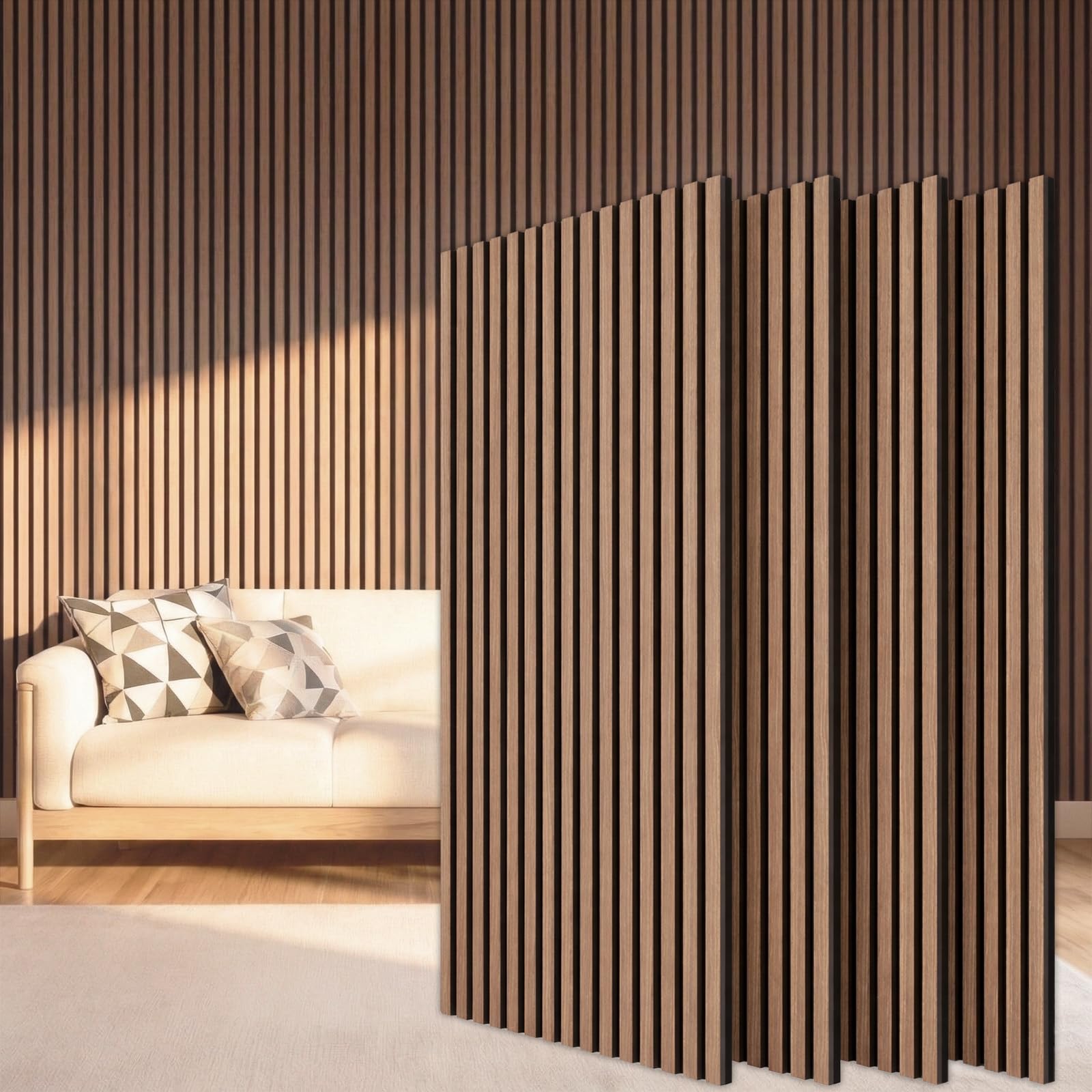
The TONOR Wood Slatwall Panels are a hybrid solution — a solid wood veneer bonded to a high-density polyester fiber core that provides genuine acoustic absorption while looking like premium interior millwork. Each 47.2 x 23.6-inch panel is only 0.39 inches thick, so it won’t eat into room space like thick foam wedges.
Installation requires screws into wall studs (hardware included) rather than peel-and-stick, making this a permanent fixture. The result is a clean, modern accent wall that also tames mid-high frequency reflections — users report noticeably reduced echo in home offices and living rooms after covering just one wall.
The wood veneer can be cut with a jigsaw or table saw, so trimming around outlets or corners is straightforward. Buyers note that the wood strips are only glued at the ends, so cutting near a switch may require a staple gun to re-secure loose slats to the felt backing.
Why it’s great
- Combines noise reduction with high-end interior design aesthetics
- Screwed installation ensures it stays put and adds rigidity
- Covers 31 square feet per 4-pack for a full wall section
Good to know
- Not removable or repositionable once screwed into studs
- Thin profile limits low-frequency absorption — pair with bass traps for deep rumble
3. Art3d 4-Piece Wood Slat Acoustic Panels

The Art3d panels take a different approach — each 94.5-inch-long fluted slat is a narrow vertical strip with a 0.83-inch overall thickness, designed to be mounted side by side to create a linear wall treatment. The MDF veneer over a high-density polyester fiber core provides real acoustical properties while maintaining a sleek, contemporary silhouette.
Installation is straightforward with adhesive or nails, and the narrow slat format works well on irregular wall surfaces or as a feature behind a desk. Users report that the panels cut cleanly with a miter saw and match existing wood finishes convincingly.
Acoustically, the panels reduce flutter echo and add warmth to room ambience, but don’t expect total sound isolation. The standout feature here is the visual transformation — multiple buyers note that the Art3d panels are the most complimented element in their renovated rooms, balancing function with high-end design.
Why it’s great
- Floor-to-ceiling slats create a seamless, modern accent wall
- Solid MDF construction with real wood veneer is durable
- Low TVOC levels make it safe for bedrooms and offices
Good to know
- Narrow format means more pieces to align than large panels
- No adhesive backing — requires glue or mechanical fasteners
4. AudioSilk Acoustic Panels ROOM KIT

The AudioSilk ROOM KIT delivers professional-grade acoustics in a clean, residential-friendly package. Four large panels (45.7 x 22.8 x 0.4 inches each) with an NRC of 0.91 are made from post-consumer recycled PET fiber, which means zero chemical off-gassing and no foam degradation over time.
Unlike melamine or polyurethane foam, PET fiber panels are stiff enough to resist sagging and won’t peel or shrink after years of use. Testers report a dramatic reduction in flutter echo and chaotic reflections in home studios without killing the room’s liveliness — a difficult balance that foam wedges often miss.
Installation requires 3M Command strips (sold separately) for a removable setup that leaves no marks, or spray adhesive for permanent mounting. The mid-grey fabric surface looks intentional rather than temporary, blending into modern interiors without looking like a makeshift recording booth.
Why it’s great
- Recycled PET construction is eco-friendly and odor-free
- NRC 0.91 proves real absorption across mid and high frequencies
- Removable with Command strips — ideal for rented spaces
Good to know
- 0.4-inch thickness is not designed for low-frequency bass trapping
- Adhesive strips are not included in the box
5. Knightsacoustic 96 Pack Sound Proof Foam Panels
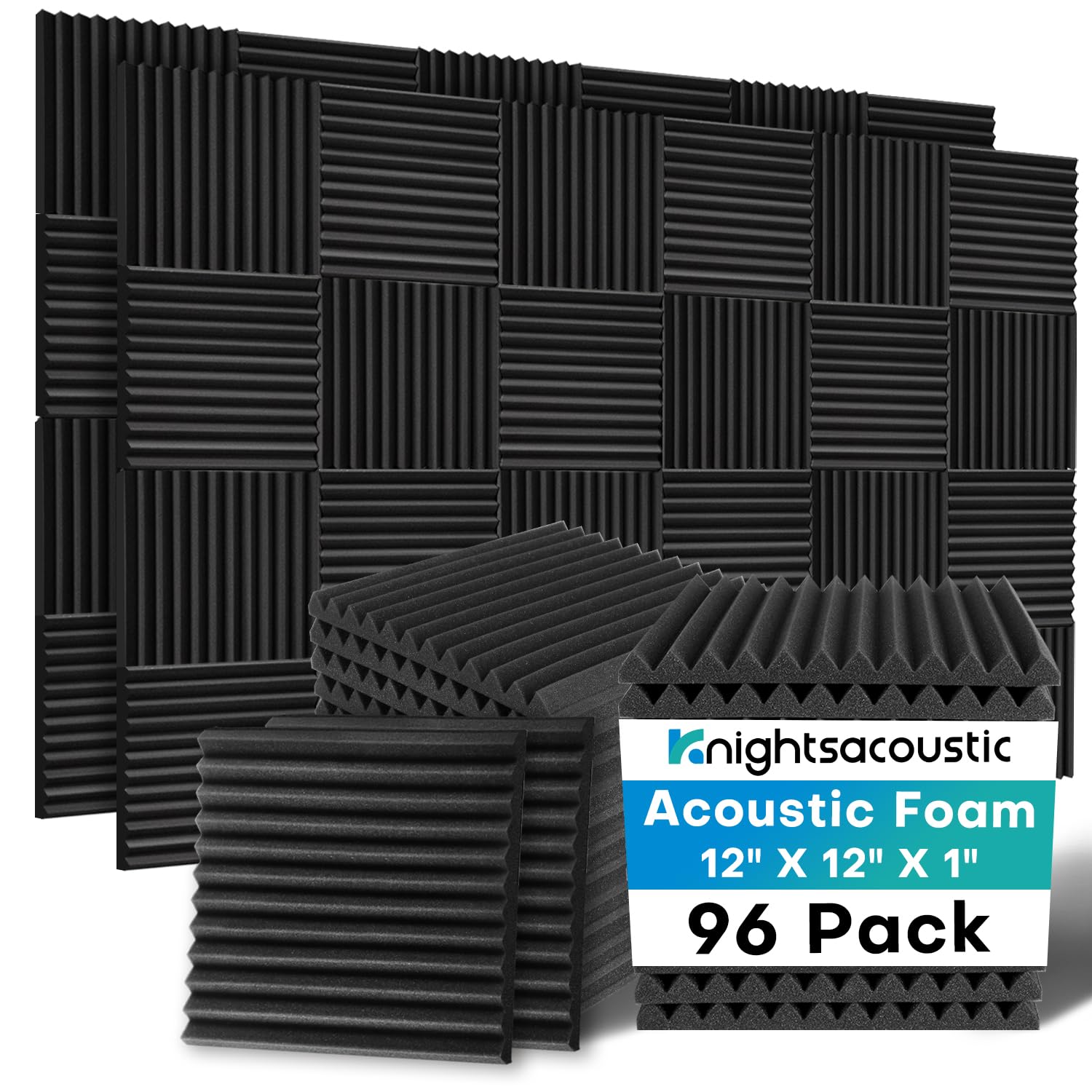
Knightsacoustic offers serious value for covering large wall areas without breaking the bank. The 96-pack provides 96 square feet of 1-inch-thick (reported actual thickness) polyurethane foam wedges — enough to treat an entire 12×12 room ceiling or two accent walls. The wedge profile is effective at scattering mid and high frequencies.
These panels arrive compressed and require a revival step: soaking in water, wringing out, and drying for 45-50 minutes at medium/high heat. Users who follow this process report the foam recovers its full shape with zero odor and no deformation. Without this step, panels may remain flat and undersized.
No adhesive is included — the manufacturer recommends their own adhesive dots (separate purchase) or spray glue. The foam itself is lightweight and easy to cut with scissors, making it a flexible option for custom layouts around fixtures and corners.
Why it’s great
- 96 panels cover a massive area for the price point
- 2-inch wedge profile handles some low-mid frequencies better than thin tiles
- Odor-free after proper revival process
Good to know
- Requires labor-intensive revival and separate adhesive purchase
- Not self-adhesive — adds installation time and cost
6. Lebenforce 22 Pack Self-Adhesive Acoustic Panels

The Lebenforce panels are purpose-built for pinpoint noise problems: behind a loud refrigerator, on the wall between you and a neighbor’s subwoofer, or around a 3D printer that whines at high pitch. The 22 tiles (12x12x0.4 inches) are made from polyester fiber with a strong peel-and-stick backing that holds firm on clean surfaces.
At just 0.4 inches, these are best at absorbing high-frequency slap echo and taming mechanical whines. One user mounted 7 panels on their Bambu P1S printer and eliminated the high-pitched motor whine completely. The thin profile also means they fit behind appliances or in tight desk alcoves without protruding.
The adhesive is aggressive — buyers warn it will strip paint if you need to reposition them. For a cost-effective entry into acoustic treatment, the Lebenforce set covers 21.27 square feet, which is enough for a small office wall or targeted zones around noisy electronics.
Why it’s great
- Strong self-adhesive backing — no extra glue needed
- Thin profile fits behind appliances and tight spaces
- Excellent for eliminating high-frequency machine whine and echo
Good to know
- 0.4-inch thickness offers minimal low-frequency absorption
- Adhesive may damage paint on repositioning
7. Soundsbay 12 Pack Sound Proof Foam Panels

Soundsbay packs an impressive NRC rating of 0.92 into a thin 0.4-inch polyester tile, all at a price that makes testing acoustic treatment nearly risk-free. The 150kg/m³ density is higher than many budget foam panels, which often use low-density polyurethane that crumbles over time.
The self-adhesive backing is praised for saving time — no glue, no spray, just peel and stick. Users in classrooms and home offices report a noticeable reduction in background noise and echo, particularly with voices and TV chatter. The white finish and vertical stripe design blend into walls without looking like a recording studio.
However, the adhesive failure rate on some packs is real: a reviewer noted 4 out of 12 panels had paper peeling issues, requiring creative fixes. Price fluctuation is also a reported annoyance, so timing the purchase matters. For the performance per dollar, though, these tiles are a strong entry point for beginner acousticians on a tight budget.
Why it’s great
- NRC 0.92 at a price point that’s hard to beat
- High-density polyester resists compression better than budget foam
- Self-adhesive requires zero installation tools
Good to know
- Occasional adhesive failure on a few panels per pack
- Price fluctuates frequently — set a price watch
FAQ
Will foam panels stop sound traveling between rooms?
Does higher density always mean better absorption?
How many panels do I need for a 12×12 room?
Do wood slat panels work as well as foam?
Final Thoughts: The Verdict
For most users, the soundproofing for walls winner is the TONOR Dual-Layer Thickened Acoustic Panels because the dual-layer construction and large format deliver noticeable echo reduction with minimal installation hassle. If you want a design-forward solution that doubles as an accent wall, grab the TONOR Wood Slatwall Panels. And for professional-grade, eco-friendly studio treatment, nothing beats the AudioSilk ROOM KIT.