
The combination of frequent spit-up, gassiness, and a visibly uncomfortable baby creates a cycle of worry that many parents know intimately. A formula that fails to address both reflux and excessive gas leaves infants irritable, disrupts sleep, and turns every feeding into a stressful event. The right formula tackles this tandem challenge head-on by thickening in the stomach to reduce regurgitation while using partially broken-down proteins or prebiotics to minimize gas production and digestive upset.
I’m Mohammad Maruf — the founder and writer behind Drink4Good. This guide is the result of analyzing over a dozen formula formulations specifically marketed for reflux and gas, cross-referencing customer experiences with the core digestive science these products leverage.
Whether your baby needs a gentle, partially hydrolyzed whey option for lactose sensitivity or a rice-starch-thickened formula designed to physically block spit-up, the right formula for reflux and gas can restore peace to your feeding routine and help your little one keep more of their meal down comfortably.
How To Choose The Best Formula For Reflux And Gas
Selecting a formula for reflux and gas requires understanding the underlying cause of your baby’s discomfort. A formula designed for general spit-up works through physical thickening, while a formula for gas and fussiness relies on enzymatic protein breakdown. Some babies need both strategies in one product.
Thickening Agent: Rice Starch vs. Carob Bean Gum
Formulas specifically labeled for reflux and spit-up typically contain added rice starch, which thickens in the stomach and makes it more difficult for milk to flow back up the esophagus. This physical barrier effect is clinically proven to reduce visible spit-up volume. Some European-style formulas use carob bean gum for a similar effect, though rice starch is the most common and well-studied thickener in US market formulas. Avoid thickening with infant rice cereal on your own, as it can disrupt the formula’s balanced calorie-to-nutrient ratio.
Protein Hydrolysis Level: Gentle vs. Hypoallergenic
Formulas for gas and fussiness rely on partially hydrolyzed proteins — large milk proteins are broken down into smaller fragments that are easier for a developing digestive system to handle. This reduces the fermentation process in the gut that produces gas. Hypoallergenic formulas take this a step further, using extensively hydrolyzed proteins (very tiny fragments) to virtually eliminate allergic reactions in babies with cow’s milk protein allergy (CMPA). If your baby has eczema, blood in stool, or a strong family history of allergies, start with a hypoallergenic formula rather than a gentle one.
Prebiotic and HMO Profile
Prebiotics like galacto-oligosaccharides (GOS) and human milk oligosaccharides (HMOs) feed beneficial gut bacteria, which can improve stool consistency and reduce gas production over time. Formulas with multiple HMO strains (such as 2′-FL HMO and others) more closely mimic the prebiotic profile of breast milk. For a baby with reflux and gas, a formula that includes a prebiotic blend alongside a gentle protein base offers a dual-pronged approach: reducing acute gas while supporting long-term digestive health.
Quick Comparison
On smaller screens, swipe sideways to see the full table.
| Model | Category | Best For | Key Spec | Amazon |
|---|---|---|---|---|
| Enfamil A.R. | Reflux-Focused | Reducing spit-up volume | Rice starch thickener | Amazon |
| Similac 360 Total Care Gentle Comfort | Gentle/Lactose-Sensitive | Fussiness & gas with mild reflux | Partially hydrolyzed whey | Amazon |
| Enfamil NeuroPro Gentlease | Gentle All-in-One | Gas, crying, & spit-up in 24hrs | Small broken-down proteins | Amazon |
| Similac Alimentum | Hypoallergenic | CMPA & colic from protein sensitivity | Extensively hydrolyzed protein | Amazon |
| Gerber Extensive HA | Hypoallergenic | CMPA with probiotic support | Whey protein + probiotic B. lactis | Amazon |
| Mama Bear Gentle Premium | Gentle Value | Fussiness & gas on a budget | Gentle immune blend + DHA | Amazon |
| Similac Go & Grow Toddler | Toddler Transition | Older toddlers needing digestive help | 5 HMO prebiotic blend | Amazon |
In‑Depth Reviews
1. Enfamil A.R. Infant Formula

Enfamil A.R. is the gold standard for parents dealing with frequent, forceful spit-up. The formula incorporates rice starch directly into the powder, which thickens upon contact with stomach acid and creates a physical barrier that prevents milk from surging back up the esophagus. Clinical data cited by the manufacturer shows a reduction in spit-up episodes by over 50% within the first week — a claim consistently backed by user reports of dramatic improvements.
The protein base remains gentle, and the formula includes DHA for brain development along with a dual prebiotic blend (PDX and GOS) to support softer, more regular stools. This is important because some reflux formulas can cause constipation; the prebiotic blend helps counteract that effect. The formula is also the top brand recommended by pediatricians specifically for spit-up and common reflux, lending it a layer of clinical trust that generic alternatives lack.
One practical consideration: the rice starch creates a visibly foamy or frothy appearance after shaking. This is normal and not a sign of spoilage — the foam settles quickly. Parents should also be aware that the formula is thicker than standard milk-based formulas, which means nipples with a slightly wider flow may be needed. For babies whose primary symptom is reflux rather than gassiness, this is the most targeted solution on the market.
Why it’s great
- Clinically proven to reduce spit-up by over 50% in one week
- Contains DHA for brain development and prebiotics for digestive health
- Most pediatrician-recommended formula for reflux in the US
Good to know
- Rice starch thickener may cause constipation if baby is sensitive to iron or rice
- Requires a faster-flow nipple due to thicker consistency
- Frothy appearance after mixing is normal but can alarm first-time users
2. Similac 360 Total Care Gentle Comfort
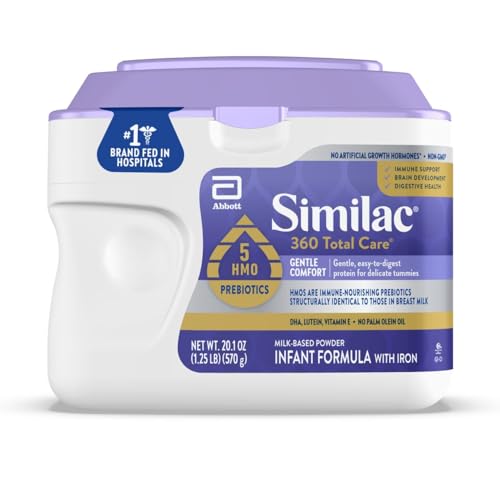
Similac 360 Total Care Gentle Comfort takes a different approach to the reflux-and-gas problem. Instead of physically thickening the formula, it uses partially hydrolyzed whey protein — broken down into smaller fragments that are easier for a sensitive digestive system to handle without producing excessive gas. This makes it ideal for babies whose primary issue is gassiness and fussiness after feeding, with mild secondary spit-up caused by trapped gas bubbles.
The formula also boasts an exclusive blend of five HMO prebiotics structurally identical to those found in breast milk. HMOs feed beneficial gut bacteria, which can reduce the fermentation process that produces gas and improve overall stool consistency. The reduced lactose content is a strategic advantage for infants with lactose sensitivity, who may experience excessive gas and bloating from standard lactose-heavy formulas.
Users transitioning from standard Similac 360 to the Gentle Comfort variant report a noticeable drop in gassiness within 24 to 48 hours, with babies settling into more comfortable sleep patterns. The formula mixes smoothly without clumps and comes in a convenient tub that keeps the powder fresh. It is more expensive than generic gentle formulas but offers a unique 5-HMO prebiotic profile that no budget option currently matches.
Why it’s great
- Partially hydrolyzed whey protein for easy digestion and reduced gas
- 5 HMO prebiotic blend closely mimics breast milk’s prebiotic profile
- Reduced lactose content helps babies with lactose sensitivity
Good to know
- More expensive than many gentle formula alternatives
- May not be thick enough for babies with severe reflux or frequent spit-up
- Some users report a stickier residue on bottle nipples
3. Enfamil NeuroPro Gentlease
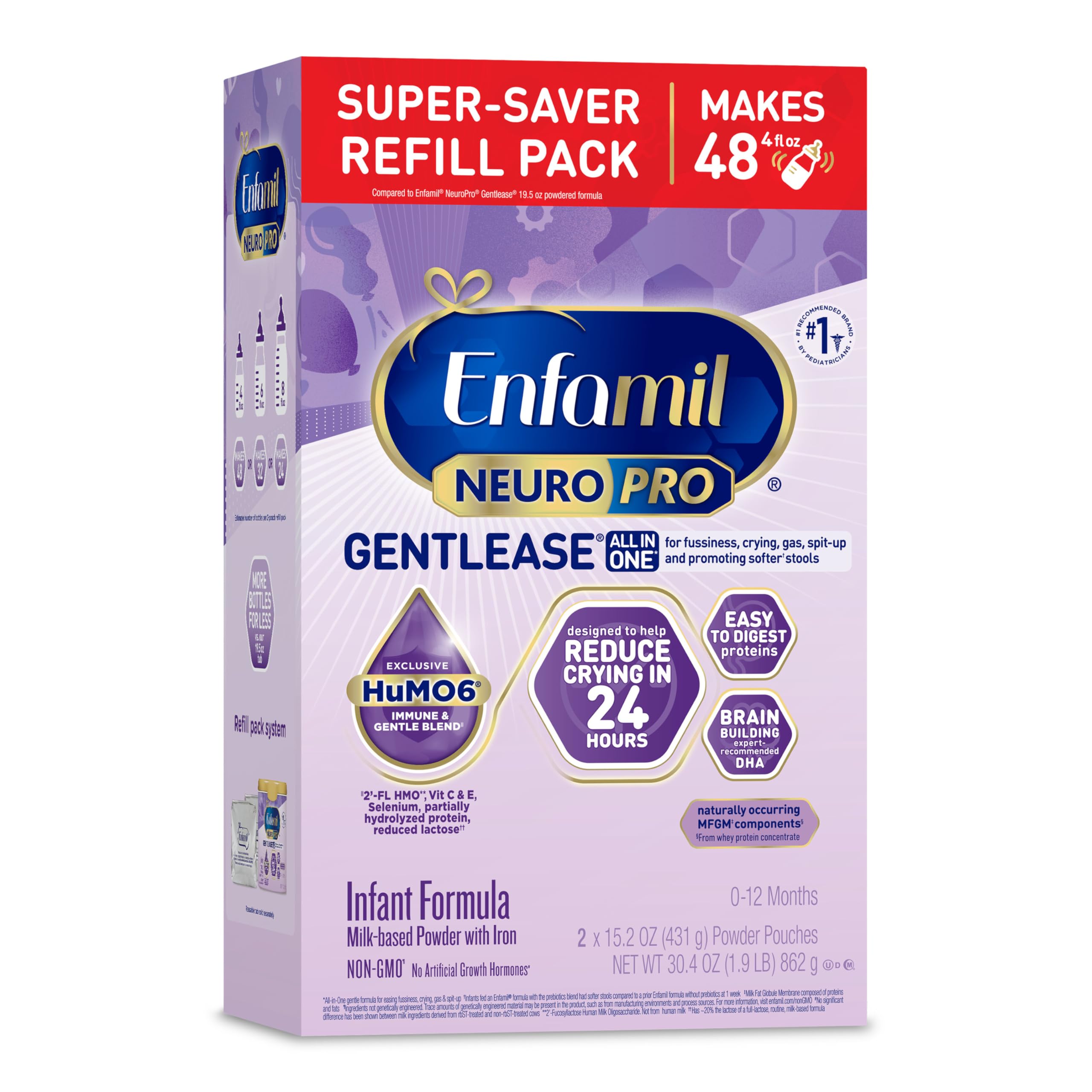
Enfamil NeuroPro Gentlease is the most comprehensive gentle formula on this list, designed to address fussiness, crying, gas, and spit-up within 24 hours. The key innovation is the use of small, broken-down proteins that are significantly easier for an infant’s immature digestive system to process. This reduces the undigested protein load that ferments in the gut and produces gas, while also minimizing the likelihood of milk flowing back up due to over-distension of the stomach.
Unlike formulas that target either reflux or gas in isolation, NeuroPro Gentlease uses a patented prebiotic blend of PDX and GOS to support softer, more regular stools — a critical feature because many gas-relief formulas can paradoxically cause constipation. The formula also includes DHA and choline for brain support, making it a complete nutritional package rather than just a symptom-management tool. The HuMO6 immune blend further supports the infant’s developing defenses.
Parent feedback consistently highlights that babies transition to this formula with minimal resistance, and that stool patterns normalize within a few days. The powder mixes easily without clumps, and the value-sized refill box (30.4 oz) offers a significant cost-per-ounce advantage over smaller tubs. For parents who want a single formula that covers gas, minor reflux, and fussiness without needing to switch products, this is the most balanced option available.
Why it’s great
- Small broken-down proteins ease digestion and reduce gas in 24 hours
- PDX and GOS prebiotic blend supports softer, regular stools
- Large refill box offers excellent value for daily use
Good to know
- Not thick enough for babies with severe reflux or frequent projectile spit-up
- Refill box requires a separate storage container; not ideal for travel
- Some babies may still experience gas if they have additional lactose sensitivity
4. Similac Alimentum With 2′-FL HMO
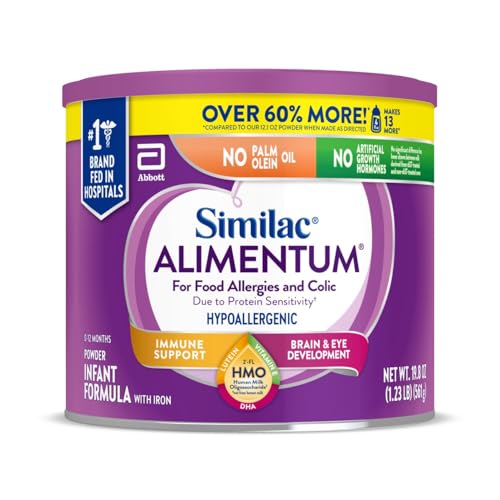
Similac Alimentum is a medical-grade hypoallergenic formula designed for babies with confirmed or strongly suspected cow’s milk protein allergy (CMPA). It uses extensively hydrolyzed casein protein — broken down into fragments so tiny that the immune system no longer recognizes them as allergens. This virtually eliminates the allergic reaction that can cause severe gas, reflux, colic, and even bloody stools in sensitive infants.
What sets Alimentum apart from other hypoallergenic formulas is its inclusion of 2′-FL HMO, an immune-nourishing prebiotic that is found in breast milk and helps support a healthy gut microbiome. This is a relatively recent addition to the formula, and it makes Alimentum the first hypoallergenic option on the US market to combine extensive protein hydrolysis with a prebiotic HMO. The formula is also lactose-free, which is helpful for babies who may have both CMPA and lactose intolerance — a common comorbidity.
The downside is cost: Alimentum is one of the most expensive formulas on the market, and the 19.8-ounce can will not last a full week for most exclusively formula-fed babies. However, for babies who truly need it, the improvement in symptoms within 24 to 48 hours is dramatic — parents report a complete cessation of colic crying and a rapid normalization of stool patterns. It is a targeted therapeutic tool rather than a general-purpose formula.
Why it’s great
- Extensively hydrolyzed protein eliminates CMPA-induced reflux and gas
- First hypoallergenic formula with 2′-FL HMO for immune support
- Clinically proven to reduce colic symptoms within 24 hours
Good to know
- Extremely expensive per ounce; small can size increases restocking frequency
- Bitter taste that some babies refuse initially
- Must be diagnosed with CMPA to justify the cost and taste trade-offs
5. Gerber Extensive HA Hypoallergenic Formula
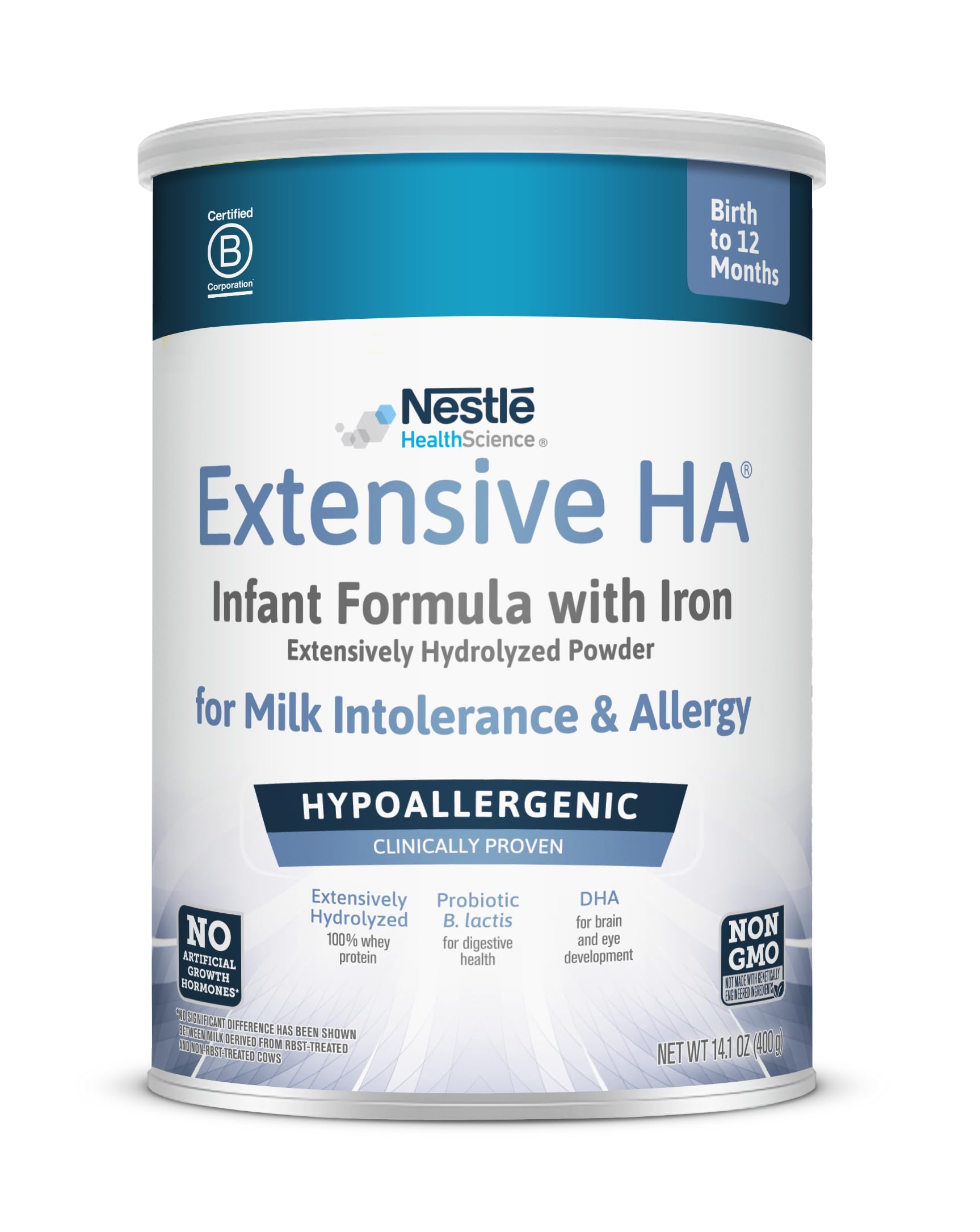
Gerber Extensive HA offers a unique alternative for babies with CMPA who do not tolerate casein-based hypoallergenic formulas well. Unlike Similac Alimentum, which uses extensively hydrolyzed casein, Gerber HA uses 100% whey protein that has been broken down into tiny, ultra-filtered fragments. Whey is naturally more liquid and digests faster than casein, which can be advantageous for babies who experience constipation or slow gastric emptying from casein-heavy hypoallergenic formulas.
The formula is also the only hypoallergenic option on the market that includes the probiotic Bifidobacterium lactis, a strain naturally found in the gut of breastfed infants. This probiotic helps support digestive health during the period when the baby’s microbiome is being re-established after being disrupted by allergic inflammation. The combination of low-residue whey proteins and built-in probiotics often results in greener, less constipated stools compared to casein-based alternatives.
Users frequently note that Gerber HA has a less offensive smell than Nutramigen or Alimentum, which can be a meaningful quality-of-life improvement when preparing multiple bottles per day. The main drawback is the small can size — 14.1 ounces — which may last only four to five days for a fully formula-fed infant. It is also harder to find in brick-and-mortar stores compared to Similac or Enfamil alternatives, making online subscription the most reliable fulfillment route.
Why it’s great
- 100% whey protein is faster digesting and less constipating than casein
- Contains probiotic B. lactis for digestive health support
- Less offensive odor than other hypoallergenic formulas
Good to know
- Small can size requires frequent reordering
- Still retains a bitter taste typical of all hypoallergenic formulas
- Limited availability in physical retail stores
6. Mama Bear Gentle Premium Baby Formula

Mama Bear Gentle Premium delivers a formula that is nutritionally comparable to Enfamil NeuroPro Gentlease at a significantly lower price point. It uses the same gentle protein base — partially broken-down milk proteins — to reduce gas, fussiness, and crying, and includes DHA for brain support and a gentle immune blend with vitamins and minerals. Parents who have used both report that their babies tolerate the transition seamlessly, with no difference in digestive comfort or stool patterns.
The formula is manufactured by Perrigo, the same company that produces store-brand infant formulas for most major US retailers, ensuring consistent quality and FDA compliance. It is non-GMO, contains no artificial growth hormones, and is certified kosher. The 21.5-ounce can is slightly smaller than some name-brand alternatives, but the per-ounce cost is dramatically lower, making it a sustainable choice for budget-conscious families who need a gentle formula long-term.
Where the Mama Bear formula falls short is in its prebiotic profile — it does not contain the HMO or PDX/GOS blends found in Enfamil NeuroPro Gentlease or Similac 360 Total Care. This means that while it effectively reduces gas from protein hydrolysis, it offers less support for stool softening and long-term microbiome development. For babies whose gas is primarily driven by difficulty digesting intact milk proteins, this is a non-issue. For those who also struggle with hard stools, a prebiotic-supplemented formula is a better fit.
Why it’s great
- Comparable gentle formula to Enfamil Gentlease at a much lower cost
- Smooth mixing with minimal clumps; consistent freshness
- Non-GMO, no artificial growth hormones, and certified kosher
Good to know
- Lacks the HMO or PDX/GOS prebiotic blends of premium formulas
- May not be gentle enough for babies with high lactose sensitivity
- Shipping can be slow without an Amazon Prime subscription
7. Similac Go & Grow 360 Total Care

Similac Go & Grow 360 Total Care is not an infant formula — it is a toddler nutritional drink designed for children 12 months and older who need continued digestive support. It is included on this list because many parents of older toddlers who struggle with reflux and gas find that standard cow’s milk or other toddler drinks exacerbate symptoms. This formula provides the same 5-HMO prebiotic blend found in Similac 360 Total Care infant formulas, supporting healthy gut bacteria even as the child transitions to solid foods.
The formula also includes DHA, lutein, and vitamin E for brain and eye development, along with no palm olein oil and no artificial growth hormones. For toddlers who have difficulty tolerating whole milk or who experience post-meal gas and burping, the partially hydrolyzed proteins and HMO prebiotics in this drink can provide similar benefits to infant gentle formulas. It is also SNAP-eligible, making it accessible to families on assistance programs.
The primary limitation is that it is not designed for infants under 12 months, and it does not provide the complete, balanced nutrition that an infant formula would. The milk protein in Go & Grow is not partially or extensively hydrolyzed, so it will not offer the same level of gas relief as infant gentle formulas. It is best viewed as a maintenance option for older children who have outgrown infant formulas but still need controlled prebiotic support to manage digestive sensitivity.
Why it’s great
- 5 HMO prebiotic blend supports ongoing digestive health in toddlers
- Provides brain and eye development nutrients for growing children
- Eligible for SNAP benefits in select stores
Good to know
- Not suitable for infants under 12 months; not a complete infant formula
- Protein is not hydrolyzed, so it may not relieve gas as effectively as gentle formulas
- May not be necessary if toddler tolerates whole milk without issues
FAQ
Can I use a reflux formula (with rice starch) if my baby only has gas but no spit-up?
How quickly should I see improvement in reflux and gas after switching formulas?
What is the difference between “gentle” and “sensitive” formula for gas?
Final Thoughts: The Verdict
For most users, the formula for reflux and gas winner is the Enfamil A.R. because it directly targets the root mechanism of reflux (weak sphincter tone) with rice starch thickening while including prebiotics to offset constipation. If you want a formula that tackles gas and minor spit-up together without a thickener, grab the Enfamil NeuroPro Gentlease. And for babies with confirmed CMPA driving their reflux and gas, nothing beats the Similac Alimentum.