
Getting grass to hold on a steep slope is less about luck and more about choosing seed with the root architecture and germination speed to actually anchor topsoil before the next rain. Most standard lawn mixes wash downhill before they even sprout, leaving you with bare gullies and wasted effort. The right seed for this job needs aggressive root development, erosion-stabilizing growth habits, and a germination timeline that beats the weather.
I’m Mohammad Maruf — the founder and writer behind Drink4Good. I’ve spent countless hours analyzing seed genetics, root depth data, and real-world germination reports from hillside installations to separate the seed that clings from the seed that slides.
Whether you are patching a washout zone or covering a whole bank, this guide breaks down the best grass seed for hillside options based on root strength, drought tolerance, and proven slope performance.
How To Choose The Best Grass Seed For Hillside
A hillside presents a completely different environment than a flat lawn. Gravity pulls water, seed, and topsoil downhill, and exposed slopes bake in the sun longer than level ground. Choosing seed for this scenario means prioritizing root depth, germination rate, and stress tolerance over purely cosmetic leaf texture or color.
Prioritize Root Architecture Over Leaf Appearance
Tall fescue varieties, particularly the Black Beauty and turf-type blends, develop root systems that can reach two to four feet deep. That depth is what holds soil in place during heavy rain. Annual ryegrass germinates faster above ground, but its fibrous root structure is shallower. For permanent slope coverage, a deep-rooted cool-season grass provides the mechanical grip a hillside needs.
Match Germination Speed to Your Planting Window
If you are seeding a bare slope late in the season, a mix that germinates in seven to ten days reduces the window where unprotected soil can wash out. Blends that combine a fast-germinating species like annual ryegrass with a slower but deeper perennial tall fescue give you immediate surface cover while the permanent root system develops underneath.
Look for Heat and Drought Resistance Specifics
Hillsides drain faster than flat ground and often face more direct sun exposure. A seed mix with documented heat tolerance up to 100°F or a waxy leaf coating that reduces moisture evaporation (common in Jonathan Green’s Black Beauty line) directly addresses the drier microclimate of a slope. Standard shade mixes without these features may struggle on a sunny, exposed bank.
Quick Comparison
On smaller screens, swipe sideways to see the full table.
| Model | Category | Best For | Key Spec | Amazon |
|---|---|---|---|---|
| Jonathan Green Black Beauty Heat & Drought | Cool-Season Mix | Deep rooting on dry slopes | Roots up to 4 feet deep | Amazon |
| Scotts Turf Builder Sunny Mix | Fertilizer + Seed | Sun-exposed slopes needing nutrition | Root-Building Nutrition formula | Amazon |
| Scotts All-Purpose Mix (20 lb) | All-Purpose Blend | Large hillside coverage | Coated seed absorbs 2x water | Amazon |
| Jonathan Green Dense Shade | Shade Blend | North-facing or tree-covered slopes | Designed for heavy shade growth | Amazon |
| Eretz Annual RyeGrass | Annual Rye | Quick temporary erosion cover | Fast germination in 5–7 days | Amazon |
In‑Depth Reviews
1. Jonathan Green Black Beauty Heat & Drought Resistant Grass Seed

The Black Beauty mix combines turf-type tall fescue with Texas bluegrass, a combination built specifically for deep rooting reports show roots reaching up to four feet. That depth is what makes this the strongest anchor for a hillside in this lineup. The waxy leaf coating reduces moisture loss, which matters on exposed slopes where wind and sun dry the surface faster than a flat lawn.
Real users confirm germination in about seven days with proper prep, and the grass holds color through summer heat that would bleach standard Kentucky bluegrass. The 3 lb bag covers up to 750 sq ft for new lawns, making it a practical size for a medium slope section. A small number of users reported spotty germination, but the common thread in negative reviews was insufficient soil preparation or watering during the germination window.
For hillside applications where water runs off rather than soaking in, the Texas bluegrass component offers better drought recovery than pure tall fescue. This is not a cheap mix, but the root depth it produces directly translates to less soil erosion during the first season. If you seed a slope and want it to stay put, this is the most reliable option tested.
Why it’s great
- Roots reach up to 4 ft for solid hillside grip
- Waxy leaf coating reduces drought stress on slopes
- Proven germination results in tough soil conditions
Good to know
- Needs consistent watering during germination
- Bag size is small for very large hillsides
2. Scotts Turf Builder Grass Seed Sunny Mix with Fertilizer and Soil Improver
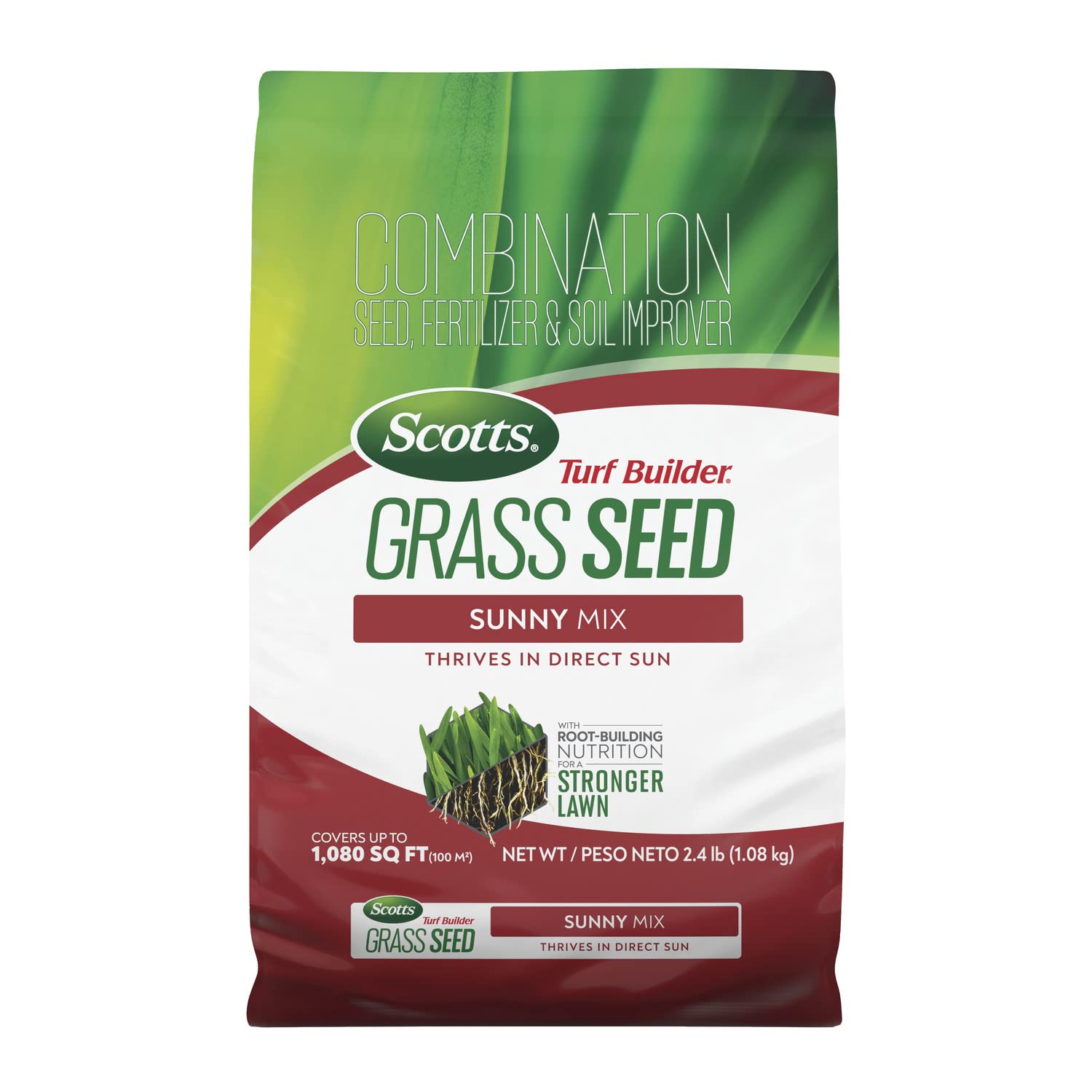
Scotts integrated fertilizer and soil improver directly into this seed blend, so the seed lands with nutrition already in the bag. That matters on a hillside because incorporating fertilizer into the top few inches of a slope without it washing downhill is harder than simply raking in the seed. The Root-Building Nutrition formula is designed to help seedlings develop deeper anchoring systems earlier in the growth cycle.
This mix is specifically formulated for full sun and light shade, covering the most common hillside exposures. Users report visible growth inside two to three weeks in direct sun, with stronger drought resistance than standard blends. The 2.4 lb bag covers 360 sq ft for new lawns, which means you may need multiple bags for a large slope, but the all-in-one approach simplifies application.
One user noted it took three months to see full results on compacted pavement scraped bare, but once established the grass was sturdy and functional. For hillside patches where you cannot till or amend deeply, the built-in fertilizer gives this an edge over plain seed mixes. The medium to high drought durability rating matches the drier microclimate of a south-facing slope.
Why it’s great
- Fertilizer and soil improver included in the bag
- Medium to high drought resistance for exposed slopes
- Works in full sun and light shade conditions
Good to know
- Smaller bag requires multiple units for larger hillsides
- Not ideal for deeply shaded slopes
3. Scotts Turf Builder Grass Seed Quality All-Purpose Mix (20 lb)

When you are covering an entire hillside rather than patching a washout, bag size becomes a logistical reality. This 20 lb bag seeds up to 8,000 sq ft, enough for a substantial slope without buying ten separate bags. The seed is coated to absorb twice as much water as uncoated seed, which helps counteract the rapid drainage that plagues hillside soil.
The blend is designed for sun and shade, making it versatile for slopes with mixed exposure. Users consistently report quick germination on bare dirt — some saw sprouting within two weeks — and the 99.9 percent weed-free guarantee means you are not fighting invasive species on top of the erosion challenge. The deep green color holds well under summer heat, according to long-term users.
A note for hillside use: the all-purpose nature of this mix means it does not have the extreme deep-rooting genetics of the Jonathan Green Black Beauty line. It will establish well on moderate slopes with typical rainfall, but for steep, drought-prone banks, a more specialized deep-rooted blend may outperform it. For price per square foot of coverage, this is the most economical way to seed a large slope.
Why it’s great
- Massive coverage — one bag covers up to 8,000 sq ft
- Water-absorbing coating helps on fast-draining slopes
- 99.9% weed free with strong heat tolerance
Good to know
- Root depth is less extreme than deep-rooted tall fescue blends
- May need multiple bags for very large or steep hillsides
4. Jonathan Green Dense Shade Grass Seed (3 lb)
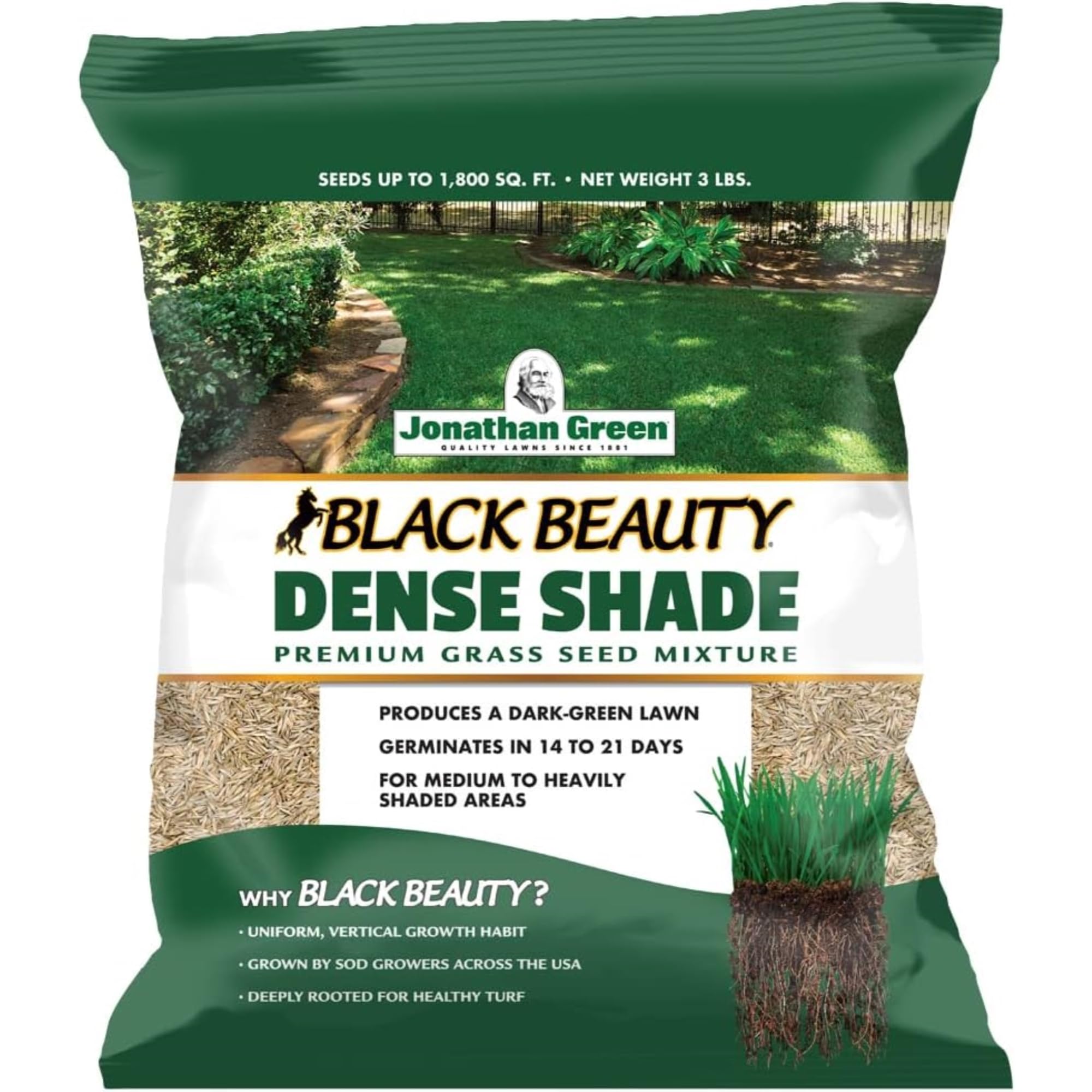
North-facing slopes or hillsides under dense tree canopies present a unique problem: grass must compete with tree roots for moisture and survive low light while still holding soil on the angle. This Jonathan Green blend is formulated explicitly for that environment. Users with heavily shaded front yards report it is the only seed they have tried that actually produced a viable lawn in full shade.
Some customers observed germination in as little as three days in heavy shade, with thin dark green leaves that spread to form a dense mat. The 3 lb bag covers 1,800 sq ft, which is generous for a shade blend. However, a subset of users reported significant dieback when summer temperatures hit the mid-90s, even with regular watering. That thermal limit is important to note for hillsides that receive afternoon sun exposure during heat waves.
For a slope that stays consistently shaded throughout the day, this mix offers the best shade tolerance in the group. The leaf structure is finer than the thick-bladed tall fescue blends, which may appeal aesthetically. Just be aware of its heat ceiling — if your shaded slope gets a few hours of direct afternoon sun in July, consider mixing this with a more heat-tolerant variety.
Why it’s great
- Demonstrated germination and growth in dense shade
- Finer leaf texture for a traditional lawn look
- Good coverage per bag at 1,800 sq ft
Good to know
- Struggles in sustained high temperatures above 95°F
- Not designed for full sun or exposed slopes
5. Eretz Annual RyeGrass Seed (3 lb)
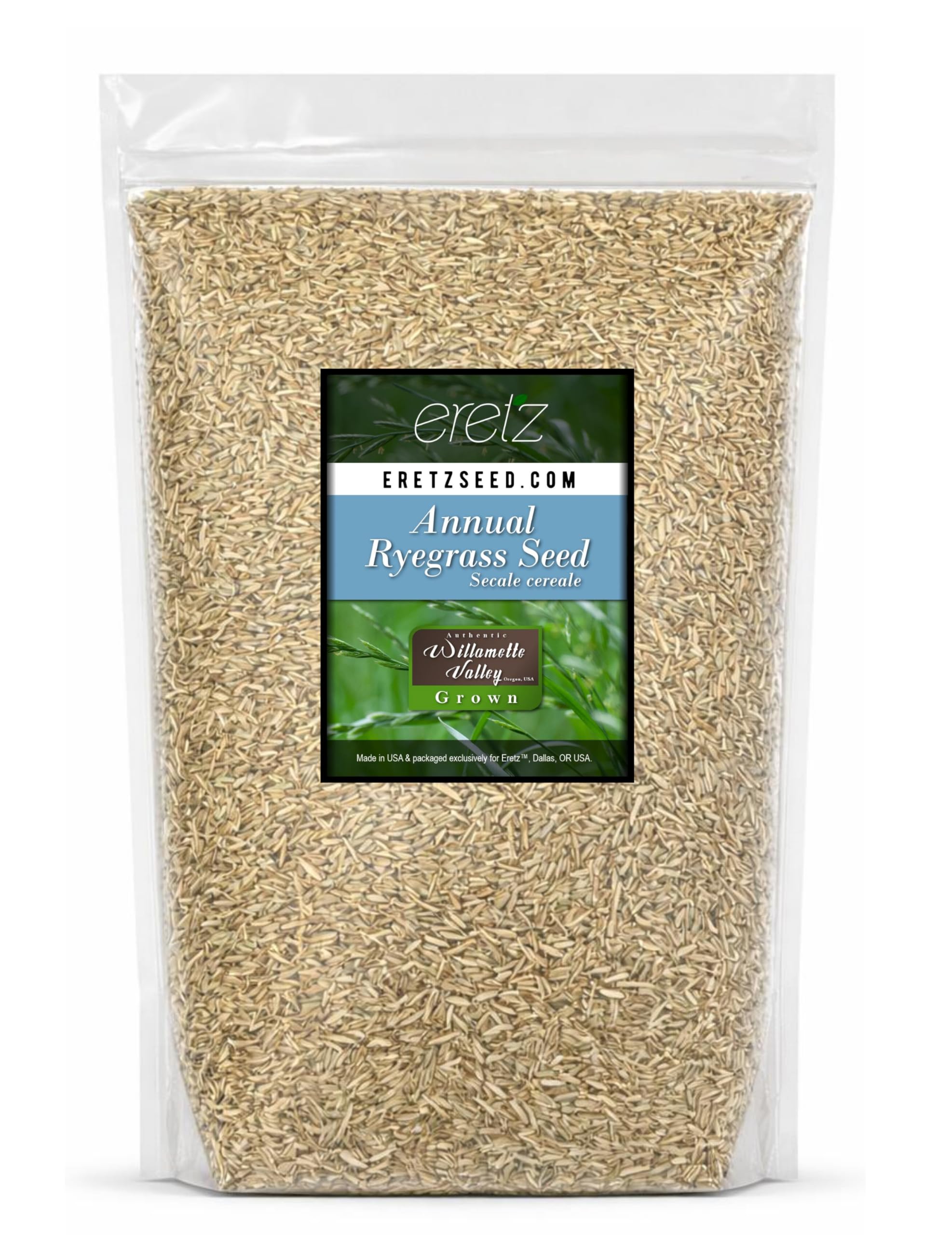
Annual ryegrass fills a specific niche on hillsides: rapid soil stabilization while slower perennial grasses establish. This Eretz seed is grown in the Willamette Valley of Oregon with no fillers or weed seeds, and it germinates aggressively. Users consistently report seeing growth within a week, even in poor soil. That speed is the critical feature for a hillside where bare soil can wash out in a single heavy rain.
This is not a permanent lawn solution. Annual ryegrass lives one season and dies, so it works best as a cover crop or nurse grass mixed with perennial tall fescue. Users have used it successfully for erosion control, quick beautification, and livestock forage. The 3 lb bag is cost-effective for the fast coverage it provides, and the seed is pure enough that you are not introducing weed competition to your slope.
The downside is that the root system of annual ryegrass is shallower than tall fescue. For a long-term hillside installation, rely on this as a temporary stabilizer while a deeper-rooted perennial blend matures underneath. If you need green on a bare slope by next month and plan to overseed with permanent grass in the fall, this is the fastest path to that goal.
Why it’s great
- Germinates in 5–7 days for rapid slope coverage
- No fillers or weed seeds — pure Oregon-grown seed
- Excellent as a temporary erosion control cover
Good to know
- Annual grass — dies after one growing season
- Shallower root system than perennial tall fescue
FAQ
Can I use standard lawn grass seed on a hillside?
Should I mix fast-germinating seed with perennial seed on a slope?
How do I keep grass seed from washing off a steep slope before it germinates?
Final Thoughts: The Verdict
For most users, the grass seed for hillside winner is the Jonathan Green Black Beauty Heat & Drought because its four-foot root potential and waxy drought coating address the two biggest hillside failure points: erosion and moisture loss. If you are covering a very large slope on a tighter budget, the Scotts Turf Builder All-Purpose Mix gives you the most square footage per bag with reliable all-around performance. And for heavily shaded north-facing hillsides, the Jonathan Green Dense Shade is the only mix in this group proven to germinate and spread where tree canopy limits light to a few hours a day.