
Seven is a golden age — reading is clicking, friendships are forming, and that boundless energy needs real direction. The best gifts for this stage don’t just entertain; they channel that curiosity into tangible skills, whether it’s building a circuit, nailing math facts, or discovering the hidden world on a leaf.
I’m Mohammad Maruf — the founder and writer behind Drink4Good. My buying guides are built on deep market research and thousands of hours spent analyzing hardware specifications, educational value, and real parent feedback to find the toys that actually hold a seven-year-old’s attention.
After comparing dozens of options across every budget and play style, this roundup of the best gifts for 7 year olds focuses on screen-free learning, durable construction, and the kind of open-ended play that keeps kids coming back.
How To Choose The Best Gifts For 7 Year Olds
A seven-year-old is no longer a toddler, but not yet a tween. They crave independence, master new skills fast, and can follow multi-step instructions. The best gifts at this age challenge them just enough without causing frustration — think light-up tracing pads that build artistic confidence, math games that feel like a race, or electronics kits that require real problem-solving. Prioritize gifts that offer multiple ways to play or increase in difficulty over time, as these deliver far more hours of engagement than a single-use toy.
Look for Adjustable Difficulty
A toy that is too easy gets abandoned in a week; one that is too hard ends up in the back of the closet. The best picks for this age let the child grow into the challenge: a math game with eight difficulty levels, an electronics kit with over 100 projects, or a microscope with manual focus and variable LED brightness. This “stretch factor” is the single biggest predictor of long-term play value.
Prioritize Screen-Free, Hands-On Interaction
Seven-year-olds already get plenty of passive screen time. A gift that requires them to physically snap, trace, roll dice, or turn a focus dial engages different cognitive pathways. It builds fine motor skills, patience, and cause-effect reasoning in ways a tablet app simply cannot replicate. The most successful gifts in this category are the ones that feel like “a game” but secretly teach circuitry, math, or biology.
Consider Portability and Durability
A gift that can survive a trip to grandma’s house, a car ride, or a drop off the kitchen table will get used more. Lightweight designs with no-slip frames, shock-absorbent rubber casings, and battery-powered operation (with long battery life) let kids take their learning anywhere. Portable options also win over parents by keeping kids occupied during waiting rooms and sibling sports practices.
Quick Comparison
On smaller screens, swipe sideways to see the full table.
| Model | Category | Best For | Key Spec | Amazon |
|---|---|---|---|---|
| Snap Circuits Jr. SC-100 | STEM Kit | Future engineers | 100+ Projects | Amazon |
| BMDSAE Digital Microscope | Science Tool | Young explorers | 1000x Magnification | Amazon |
| Educational Insights Math Whiz | Math Game | Math fact fluency | 8 Difficulty Levels | Amazon |
| Crayola Light Up Tracing Pad | Art Kit | Creative artists | 12 Short Colored Pencils | Amazon |
| Clever Fox Number Hunter | Board Game | Screen-free math practice | 50 Challenge Cards | Amazon |
In‑Depth Reviews
1. Snap Circuits Jr. SC-100 Electronics Exploration Kit

Snap Circuits is the gold standard for introducing 7-year-olds to basic electrical engineering. The SC-100 Jr. kit includes 28 color-coded, numbered parts that snap onto a plastic grid — no soldering, no tools, just instant connections. Kids can build a flying saucer, a sound alarm, or a light-activated switch, with over 100 projects detailed in the full-color manual.
What makes this a standout for this age group is the “I built this myself” factor. Each successful circuit gives a tangible, working gadget — a light that turns on, a fan that spins, a doorbell that rings. The manual’s instructions are clear enough for most second-graders to follow with minimal adult help, and the pieces are interchangeable with other Snap Circuits kits for expansion later.
Some users report that the plastic snap connectors can feel a bit fragile if forced at an angle, and a few reviewers noted that the battery wires could be sturdier. However, the sheer volume of projects and the genuine STEM learning it delivers make this one of the highest-engagement gifts available. It won the Specialty Toy of the Year Award for good reason.
Why it’s great
- 100+ projects keep kids engaged for months
- No tools or soldering required — purely snap-together
- Teaches real circuitry concepts through play
Good to know
- Snap connections can feel delicate if assembled roughly
- Requires 2 AA batteries (not included)
- Recommended for ages 8+, but many 7-year-olds handle it fine with guidance
2. BMDSAE Handheld Digital Microscope (1000X)
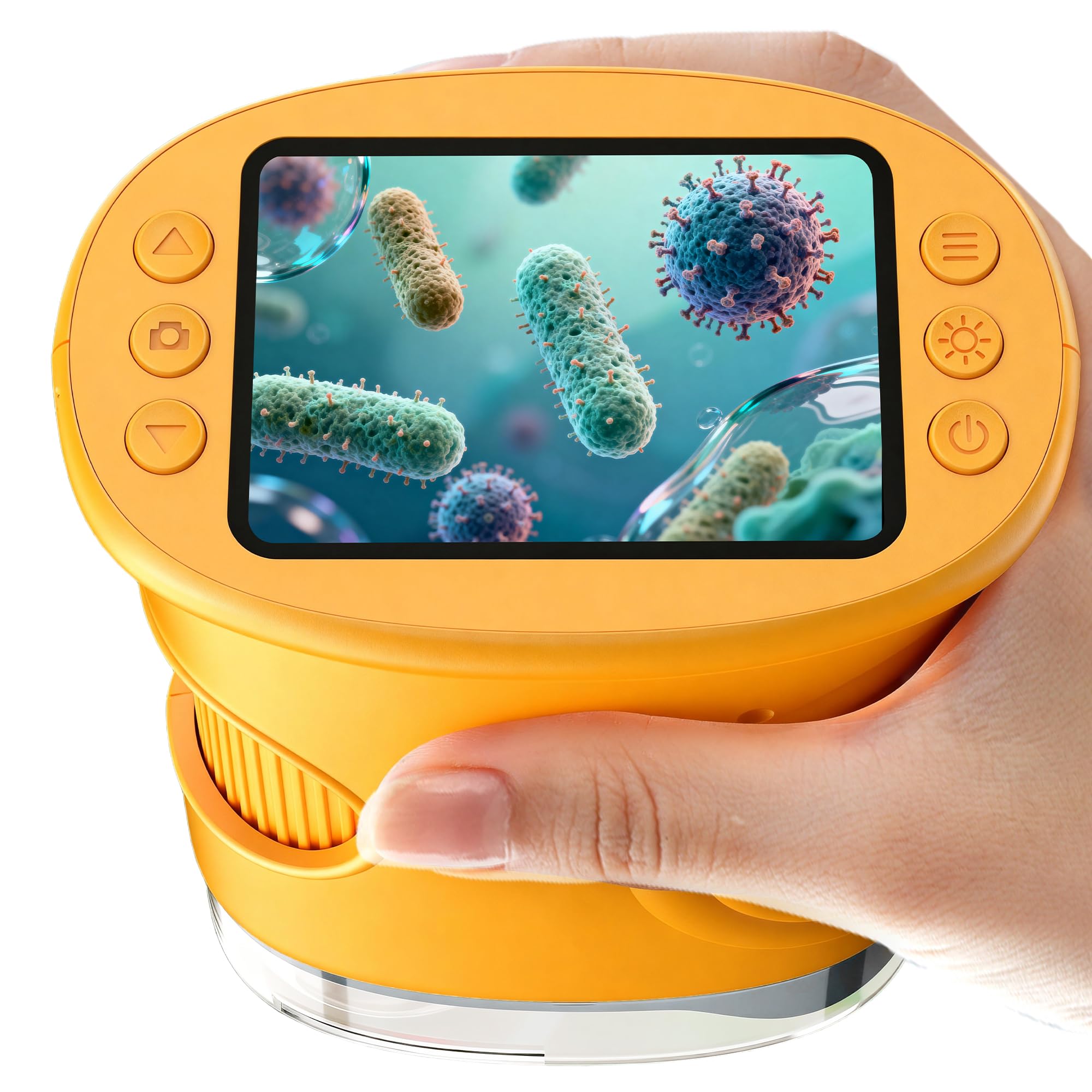
This pocket microscope eschews the old-fashioned eyepiece for a bright 2.0-inch IPS screen that lets kids see magnified images in real-time without squinting. With up to 1000x combined magnification and a 2MP sensor, it reveals plant cells, insect anatomy, and fabric threads in stunning clarity. The manual focus dial gives children precise control, teaching them patience and observation skills.
The 8-LED lighting system with three brightness levels is a standout feature — it eliminates glare and lets kids examine everything from a glowing firefly at dusk to the ridges on a coin in bright daylight. The 600mAh battery provides up to 2 hours of continuous use, and the included 32MB storage holds over 200 photos or videos that can be exported via USB to a computer. This makes it perfect for building a “science portfolio” or sharing discoveries with a teacher.
Weighing just 0.22 kg with a shock-absorbent rubber casing, it survives drops better than most toys. The only downsides are that the yellow-on-yellow icon labeling can be hard to read, and the promised slide preparation kit is not included in the box. Despite that, 92% of children in testing could operate it independently within minutes — a testament to its intuitive design.
Why it’s great
- Screen-based viewing eliminates eyestrain from traditional eyepieces
- Photo and video capture allows kids to document discoveries
- Durable rubber casing handles drops from child height
Good to know
- Button icons are hard to read (yellow on yellow)
- Does not include prepared slides or specimen kit
- Maximum 2-hour battery requires routine charging
3. Educational Insights Math Whiz Electronic Game

This handheld math game packs addition, subtraction, multiplication, and division into a compact device that fits in a backpack pocket. The secret to its success is the three-mode system: Drill Mode presents a progressively harder sequence of problems, Challenge Mode plays like a numbers elimination puzzle, and Calculator Mode doubles as a standard calculator. Each skill in Drill Mode has eight difficulty levels, so it grows with the child from first grade well into fourth grade.
Parents consistently report that kids who “hate math practice” willingly pull this out during car rides and waiting rooms. The screen-free, self-contained design provides immediate feedback — a correct answer triggers a satisfying chime, and wrong answers gently guide the child to try again. It removes the pressure of a parent hovering over a worksheet and turns math into a personal challenge.
The battery compartment screws are notoriously small and fragile — several reviews mention stripping them on the first change. It also requires 2 AAA batteries, which are not included. But for its primary purpose — developing lightning-fast math fact fluency through genuine play — this is arguably the most effective tool in its price class.
Why it’s great
- Adjustable difficulty extends usable lifespan across multiple grades
- Three modes (Drill/Challenge/Calculator) prevent boredom
- Portable, durable, and genuinely screen-free learning
Good to know
- Battery compartment screws are tiny and prone to stripping
- Requires 2 AAA batteries (not included)
- Multiplication/division mode suits more advanced 7-year-olds
4. Crayola Light Up Tracing Pad (Pink)

The Crayola Light Up Tracing Pad uses bright LED illumination behind a translucent surface that makes any image easy to trace. It comes with 10 tracing sheets featuring mix-and-match designs, plus 10 blank sheets and 12 short colored pencils with a graphite pencil — everything a budding artist needs to start immediately. The LED lights are powerful enough to shine through standard copy paper, so kids can also trace their own printouts or drawings.
The no-slip frame and uniform lighting projection create a frustration-free experience for children who might struggle with freehand drawing. Parents report that even kids who were reluctant to draw found confidence through tracing, and then naturally transitioned to creating their own original artwork using the skills they developed. The lightweight, portable design (1.85 lbs) lets kids take it to the kitchen table, the car, or a friend’s house.
Quality control is the main concern here — a small number of units arrive with LEDs that burn out within the first few weeks. The pad also requires 3 AA batteries (not included). When it works, though, it encourages hours of focused, screen-free creativity, and the replacement tracing designs available online give it near-infinite replay value.
Why it’s great
- Builds drawing confidence through easy, satisfying tracing
- Works with any thin paper, not just included sheets
- Lightweight and portable for on-the-go creativity
Good to know
- Some units have had LEDs fail within weeks
- Requires 3 AA batteries (not included)
- Pink color variant is Amazon-exclusive
5. Clever Fox Number Hunter Math Board Game
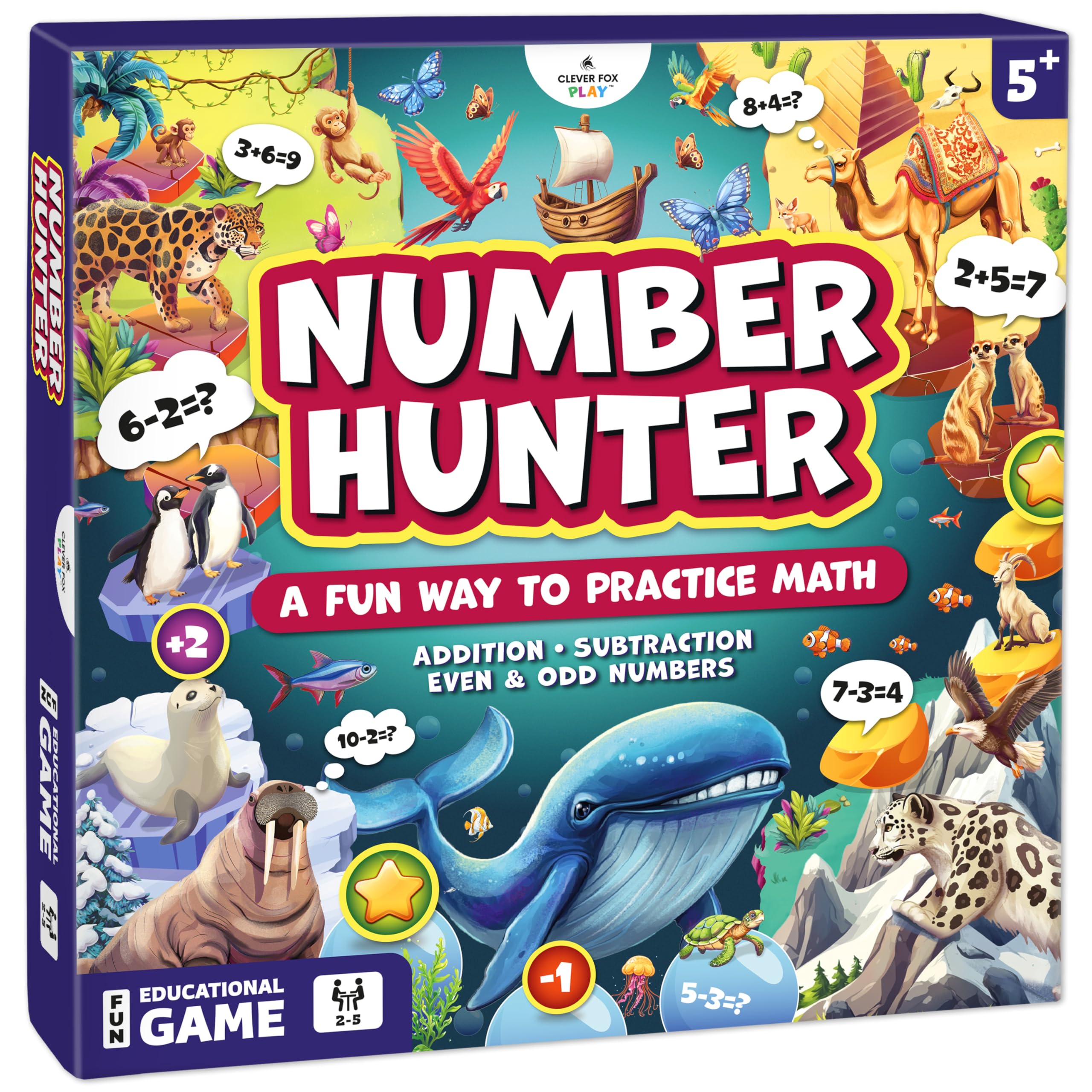
Number Hunter turns math practice into a race around the world. Players roll dice, add or subtract the numbers, and move their piece forward. Landing on a star tile triggers a fun action challenge — hopping on one leg, doing a silly dance, or solving a bonus math question. The game includes a game board, 5 game pieces, 2 number dice, 1 operation die, and 50 challenge cards, all packed in a sturdy box.
What sets it apart from other math games is its accessibility. The rules are simple enough for a kindergartner to grasp, yet the quick pace and physical challenges keep older second- and third-graders engaged. Parents report that it works wonders for children who are resistant to worksheets — the game format disguises the learning, and the active elements shake off the fidgets that plague seated study time.
The game has a few minor quirks: some challenge cards require reading, so a 7-year-old playing independently may need an adult nearby. The game pieces are functional but not luxury-grade. However, for a screen-free option that brings the whole family together while reinforcing single-digit addition and subtraction, Number Hunter delivers exceptional value.
Why it’s great
- Combines math practice with active physical challenges
- Easy to learn and quick to play, reducing frustration
- Durable, non-toxic materials withstand repeated play
Good to know
- Some challenge cards require adult reading for younger kids
- Game pieces are functional but not premium
- Best for single-digit addition/subtraction practice
FAQ
Are Snap Circuits safe for a 7-year-old who still puts things in their mouth?
Can the Math Whiz game replace math homework?
Will the tracing pad work with standard printer paper?
How do I clean the microscope lens if a 7-year-old smudges it?
Final Thoughts: The Verdict
For most families, the absolute winner in the gifts for 7 year olds category is the Snap Circuits Jr. SC-100 because it offers over 100 real projects, teaches genuine electrical engineering concepts, and delivers that irreplaceable “I built this myself” pride. If your child is more of a budding naturalist, grab the BMDSAE Handheld Microscope — it turns every walk into a research expedition. And for building rock-solid math confidence through play, nothing beats the Educational Insights Math Whiz.