
Restoring a boat’s hull or repairing a deep gouge in fiberglass demands a specialized polyester compound that bonds chemically to the substrate and cures to a hard, glossy shell. The difference between a repair that blends in and one that stands out often comes down to the specific formulation — isophthalic versus orthophthalic, waxed versus unwaxed, and the inclusion of UV stabilizers.
I’m Mohammad Maruf — the founder and writer behind Drink4Good. I’ve spent countless hours analyzing marine-grade composite materials, studying chemical cure times, and cross-referencing user application data to identify the gelcoat formulations that deliver consistent results across different repair scenarios.
After evaluating five top-selling quart kits based on their resin chemistry, cure behavior, sandability, and UV resistance, this guide presents the most reliable options for your next fiberglass project, helping you choose the best gelcoat for boats that matches your skill level and repair needs.
How To Choose The Best Gelcoat For Boats
Selecting the right gelcoat starts with understanding the specific layer you are applying — a base coat for a mold, a structural repair layer, or a final cosmetic topcoat. The chemical formulation, the presence of wax, and the level of UV stabilization all dictate whether the repair cures properly and matches the surrounding surface.
Waxed vs. Unwaxed Gelcoat
Gelcoat cures in the presence of air. Unwaxed gelcoat remains tacky after curing because oxygen inhibits the surface reaction — this is ideal for subsequent polyester resin layers that need to bond chemically during layup. Waxed gelcoat contains a small amount of paraffin that rises to the surface during curing, blocking oxygen and allowing the gelcoat to cure tack-free. Use unwaxed for the first coat in a repair or in a mold, and waxed for the final top layer.
Isophthalic vs. Orthophthalic Resin
Isophthalic NPG (Neopentyl Glycol) resin provides significantly better resistance to water absorption, UV radiation, and blistering compared to standard orthophthalic polyester. Marine-grade gelcoats using ISO/NPG resin are the standard for hull topsides and decks exposed to constant sun and saltwater. Orthophthalic gelcoats may suffice for small below-waterline patches or interior repairs, but they will chalk and fade faster in direct sunlight.
MEKP Catalyst Mixing and Pot Life
Every polyester gelcoat requires Methyl Ethyl Ketone Peroxide (MEKP) to initiate the curing reaction. The standard ratio is 1.5% to 2% MEKP by volume of gelcoat — about 15cc per quart. Higher catalyst percentages shorten pot life and can cause brittleness, while lower ratios extend working time but risk incomplete cure. Ambient temperature dramatically affects pot life: at 60°F you may have 20 minutes, while at 90°F you may have fewer than 8 minutes. Always test a small batch first.
Quick Comparison
On smaller screens, swipe sideways to see the full table.
| Model | Category | Best For | Key Spec | Amazon |
|---|---|---|---|---|
| TotalBoat Marine Gelcoat (Quart, No Wax) | Premium Polyester | Multi-layer repairs & hull coatings | 12.8 sq ft per gal at 1/8″ | Amazon |
| Fiberglass Supply Depot Gelcoat with Wax | Professional UV-Resistant | Cosmetic topcoats & final layers | 20-25 min pot life at 77°F | Amazon |
| TRUE COMPOSITES White Gelcoat (Quart Kit) | Isophthalic NPG | UV-exposed hull & deck repairs | 20 sq ft per quart coverage | Amazon |
| Marine Coat One Clear Gelcoat (Quart, Wax) | Premium Topcoat | High-gloss clear top layer & flake repairs | 1 oz MEKP catalyst included | Amazon |
| Marine Coat One White Gelcoat (Quart, Wax + 6 Pigments) | Color-Match Kit | Touch-ups requiring color blending | 6 tinting pigments included | Amazon |
In‑Depth Reviews
1. TotalBoat Marine Gelcoat (Quart, No Wax)
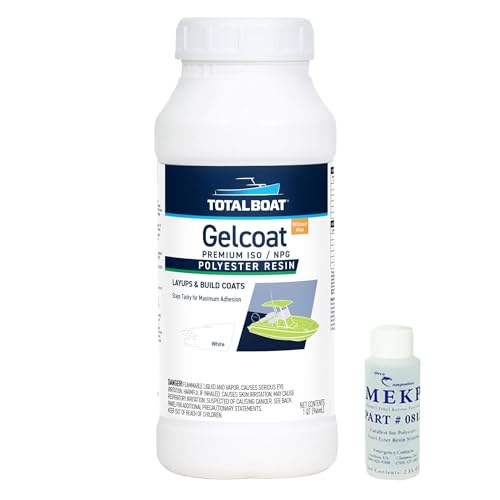
TotalBoat uses a marine-grade polyester resin that is noticeably tougher than standard orthophthalic formulations. Users report excellent adhesion on pre-sanded fiberglass and the ability to build up multiple layers without the gelcoat peeling away from the substrate. The no-wax variant cures with a tacky surface, which is exactly what you need for a structural layup where subsequent polyester layers must bond chemically — but it also means you need a separate waxed topcoat for a tack-free final surface.
The high-viscosity formula resists sagging on vertical hull sections during application, and the cured material sands and polishes to a bright, even gloss. At a coverage rate of roughly 12.8 square feet per gallon at 1/8-inch thickness, a quart goes a long way for patching small to medium areas. The included MEKP catalyst simplifies the process, though the pot life of 8–12 minutes at 77°F means you need to work quickly and mix only what you can apply in one pass.
Several users noted that the bright white finish is significantly whiter than older, sun-faded gelcoat, so plan for a full-topside application if you want a color match. The sanding and buffing behavior is consistent — it does not gum up sandpaper and takes a high-gloss polish with minimal effort. For anyone building or repairing a boat from the layup stage upward, this gelcoat provides a reliable foundation.
Why it’s great
- Superior adhesion on bare fiberglass, plastic, and stainless steel substrates.
- Non-sagging formula works well on vertical surfaces and non-skid textures.
- Excellent sanding and buffing characteristics produce a showroom finish.
Good to know
- Requires a waxed topcoat if you want a tack-free final layer.
- Very short pot life at warm temperatures — work in small batches.
- White finish is brighter than aged gelcoat; full coverage may be needed for matching.
2. Fiberglass Supply Depot Gelcoat with Wax
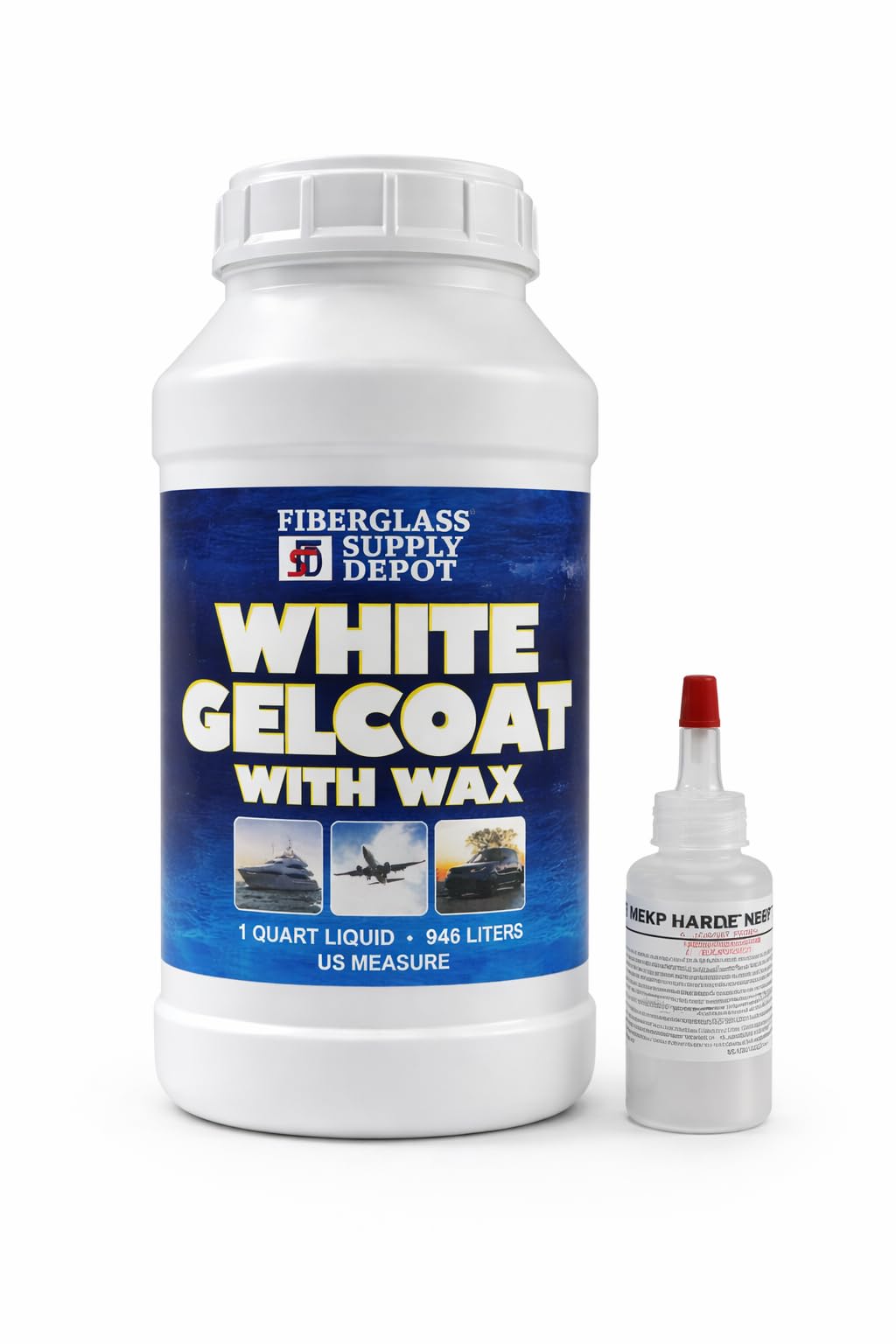
This waxed gelcoat from Fiberglass Supply Depot is formulated specifically for final topcoats where a tack-free cure is essential. The wax additive rises to the surface during curing, blocking oxygen and allowing the gelcoat to harden completely — no wiping down with acetone or applying a separate wax layer is needed. This makes it a straightforward choice for DIY cosmetic repairs on hull topsides, decks, and interior fiberglass surfaces.
The pot life is notably longer than the TotalBoat unwaxed option, offering roughly 20–25 minutes of working time at 77°F. This extra window makes it easier for beginners to apply by roller or brush without rushing. Users report that a single quart covers two coats on a 21-foot center console below the waterline, which aligns with the stated coverage of about 12.8 square feet per gallon at 1/8-inch thickness. The cured surface sands and polishes smoothly, and the UV-resistant properties help delay fading in direct sunlight.
One potential drawback is the strong styrene odor — a respirator rated for organic vapors is strongly advised during application. Also, because this is a waxed formulation, it should not be used as a base coat if you plan to apply additional polyester layers on top, as the wax will prevent proper interlaminar bonding. For a one-step repair where you want the finish coat to cure hard and glossy, this gelcoat delivers consistent results.
Why it’s great
- Tack-free cure without extra steps — ideal for final topcoats on decks and hulls.
- Longer pot life (20-25 min) gives beginners more time to work.
- UV-resistant formulation helps maintain gloss and color in direct sunlight.
Good to know
- Not suitable for base coats or layups — the wax will prevent bonding with subsequent layers.
- Very strong styrene smell requires a quality respirator for safe use.
- Coverage estimates assume ideal conditions; actual yield may vary with surface texture.
3. TRUE COMPOSITES White Gelcoat (Quart Kit)

TRUE COMPOSITES uses an isophthalic NPG resin in this waxed gelcoat kit, which provides markedly better UV resistance and water protection than orthophthalic alternatives. This is the type of chemistry found on production boat hulls that hold their color and gloss for years, rather than chalking after a single season. The quart kit includes MEKP catalyst and claims coverage up to 20 square feet, making it a practical option for repairing a gouge, a set of scratches, or a small section of a deck.
Users who have applied this gelcoat to bottom gouges and scratches report that it sands well with 2000-grit paper and buffs to a finish that blends seamlessly with the surrounding factory gelcoat. The waxed formulation cures tack-free, so you can begin wet sanding within a few hours of application depending on temperature. Several users noted that the kit lacks detailed mixing instructions — the catalyst ratio is not clearly printed, so you may need to research MEKP proportions separately or rely on experience.
One important caveat from long-term users: because the container is sealed, the gelcoat can harden in the can over extended storage, even in an air-conditioned room. Despite this storage sensitivity, the chemical performance of the NPG resin makes it a strong contender for anyone prioritizing UV and blister resistance on a budget.
Why it’s great
- Isophthalic NPG resin offers excellent UV and blister resistance for exterior repairs.
- Waxed formula cures tack-free for immediate sanding and polishing.
- Good coverage — up to 20 sq ft per quart for thin patch applications.
Good to know
- Kit lacks detailed mixing instructions — catalyst ratio information is minimal.
- Sealed gelcoat can harden in storage over longer periods; buy fresh for your project.
- Some users found a fine roller left a grainy texture requiring additional sanding.
4. Marine Coat One Clear Gelcoat (Quart, Wax)

This clear gelcoat from Marine Coat One fills a specific niche for boat owners who want to preserve or add metallic flake patterns, apply a crystal-clear top layer over painted graphics, or restore the gloss on a gelcoat surface without changing the underlying color. The waxed formulation cures to a high-gloss, transparent finish that allows the substrate to show through. Users have successfully applied it to flake repairs on bass boats and top-rail sections where clarity matters.
The ISO/NPG resin base provides UV protection and blister resistance comparable to pigmented gelcoats, which is crucial for a clear layer because UV degradation is more visible in uncolored coatings. The kit includes 1 ounce of MEKP catalyst, and the low VOC formulation makes it safer to use in enclosed spaces with proper ventilation. The non-run, non-sag formula holds well on vertical surfaces, though a foam roller is recommended over a brush for even application and self-leveling behavior.
Some users have noted that the cured finish can remain slightly sticky under sustained pressure or weight, even months after application, which may be an issue on seating surfaces or areas that bear weight. The instructions claim self-leveling with a fine brush, but experienced users report better results with a foam roller. For decorative repairs where a clear top layer is desired, this gelcoat offers a reliable, UV-stable solution.
Why it’s great
- Clear formula preserves underlying graphics or metallic flake patterns perfectly.
- ISO/NPG resin provides UV and blister protection for exposed clear layers.
- Low VOC formulation is safer for use in ventilated interior spaces.
Good to know
- May remain slightly sticky under weight or pressure after curing.
- Best applied with a foam roller rather than a brush for even results.
- Not suitable as a base coat for structural layups due to wax content.
5. Marine Coat One White Gelcoat (Quart, Wax + 6 Pigments)

This quart kit from Marine Coat One stands out because it includes six 1/4-ounce tinting pigments — white, black, yellow, blue, red, and brown — allowing you to shade the white base to match a wider range of existing gelcoat colors. The pigments are designed for pastel and light colors only; the white base cannot be tinted to dark, bold hues, but for touch-ups on white or off-white hulls, the ability to fine-tune the shade is genuinely useful. The waxed formulation cures tack-free and is designed for final topcoat applications.
The ISO/NPG resin provides the same UV and blister resistance as the clear version in this lineup, and the included MEKP catalyst is a full ounce — enough for multiple small batches. Users report that the gelcoat kicks off quickly, becoming ready for wet sanding in 30 to 45 minutes at room temperature. The consistency is thinner than some competing brands, which some users prefer for brush application but others find less familiar. The pigment amounts are small — about enough for subtle color shifts, not full-tube usage for deep colors.
Customer service from this veteran-owned company is frequently praised, with multiple users noting responsive support. The primary limitation is the pastel-only color range: if your repair needs a dark blue or deep red, you will need to buy a pigmented gelcoat or a neutral base instead. For light-colored touch-ups where color matching is the main challenge, this all-in-one kit simplifies the process and saves a separate trip to buy colorants.
Why it’s great
- Six included pigments allow fine-tuning of white for better color matching.
- ISO/NPG resin resists UV fading and blistering on exterior applications.
- Fast cure time — ready for wet sanding in 30-45 minutes at room temperature.
Good to know
- White base cannot produce dark or bold colors — only pastel shades.
- Gelcoat is thinner than some competitors; may require more coats for build.
- Pigment amounts are small — insufficient for full-quart dark tinting.
FAQ
Can I apply gelcoat over existing painted surfaces on my boat?
How do I fix a sticky gelcoat surface after it has cured?
What temperature range is acceptable for applying and curing gelcoat?
Can I use automotive rubbing compound to polish cured gelcoat?
Final Thoughts: The Verdict
For most users, the gelcoat for boats winner is the TotalBoat Marine Gelcoat because of its premium marine-grade polyester formulation, reliable adhesion across multiple substrates, and excellent sanding and buffing behavior — ideal for structural layups and cosmetic repairs when paired with a separate waxed topcoat. If you want a single-step tack-free finish for a cosmetic topcoat, grab the Fiberglass Supply Depot Gelcoat with Wax. And for budget-friendly UV-resistant repairs with the flexibility of included tinting pigments, nothing beats the Marine Coat One White Gelcoat Kit.