
Finding the right guitar combo amp is a search for your voice, not just a box that makes noise. Whether you are a bedroom player, a gigging musician, or a studio enthusiast, the choice between a simple solid-state workhorse and a complex digital modeling rig defines every note you play. The wrong pick can hide your skill; the right one makes you sound like the player you already are.
I’m Mohammad Maruf — the founder and writer behind Drink4Good. After hours of dissecting amplifier specifications, analyzing component quality, and cross-referencing hundreds of user experiences across price tiers, I have focused this guide on what actually separates a good amp from a great one for real-world guitarists.
Whether you are a beginner or a seasoned player, this research-backed breakdown will help you confidently choose the best guitar combo amp that truly matches your playing style and environment.
How To Choose The Best Guitar Combo Amp
Choosing a guitar combo amp is about matching hardware to your real-life playing habits. Wattage, speaker size, and amp technology define your sound and volume ceiling. Failing to match these to your room and style is the fastest way to be disappointed.
Wattage And Speaker Size
Amp wattage is not a measure of quality, but of headroom and volume potential. A 10-watt amp through a 10-inch speaker can be loud enough for bedroom practice, while a 40-watt amp with a 12-inch speaker is needed to stand up against a live drummer. In a small apartment, high wattage simply means you cannot turn the volume knob past two without rattling the walls. For home use, 15 to 30 watts through an 8-inch or 10-inch speaker is the sweet spot. For rehearsal or small gigs, look for 35 to 50 watts paired with a 10-inch or 12-inch driver.
Solid State vs. Digital Modeling
Solid-state amplifiers use analog circuitry to amplify your guitar signal. They are reliable, lightweight, and offer immediate, unprocessed tones. Digital modeling amplifiers use onboard processors to simulate dozens of classic amps, cabinets, and effects pedals. Modeling amps give you incredible versatility in a single box—great for players who want to experiment with many sounds without buying a pedalboard. The trade-off is that modeling amps can sound less authentic than the real thing, though modern models are closing that gap rapidly. If you value simplicity and a core sound, go with solid-state. If you want a huge toolbox of sounds, go with modeling.
Built-In Effects And Connectivity
Modern combo amps often include reverb, delay, chorus, and distortion as built-in features. For a practice amp, these can replace a handful of pedals and save space. An effects loop is a premium feature that lets you place time-based effects (delay, reverb) after the preamp for a cleaner sound. A headphone output is non-negotiable for silent practice, especially if you share a living space. An auxiliary input lets you jam along to backing tracks from your phone. USB connectivity is a bonus for recording directly to a computer and for updating firmware on digital modeling amps.
Quick Comparison
On smaller screens, swipe sideways to see the full table.
| Model | Category | Best For | Key Spec | Amazon |
|---|---|---|---|---|
| Fender Mustang LT25 | Digital Modeling | Versatile home practice | 25W, 8″ speaker, 30 presets | Amazon |
| Positive Grid Spark | Digital Modeling | Smart practice & jamming | 40W, 2×3″ speakers, smart app | Amazon |
| Roland JC-40 | Solid State | Iconic clean tone & pedal platform | 40W stereo, dual 10″ speakers | Amazon |
| Marshall CODE50 | Digital Modeling | Versatile Marshall tones | 50W, 1×12″ speaker, 100+ presets | Amazon |
| Orange Crush 35RT | Solid State | Rich distortion & small gigs | 35W, 1×10″ speaker, reverb & tuner | Amazon |
| Yamaha THR10II | Solid State | Desktop practice & hi-fi audio | 10W stereo, dual 3.5″ speakers | Amazon |
| Orange Crush 20RT | Solid State | Compact analog practice | 20W, 8″ speaker, reverb & tuner | Amazon |
| Fender Frontman 20G | Solid State | Simple, affordable beginner amp | 20W, 8″ speaker, clean & drive | Amazon |
| HeadRush FRFR112 MKII | FRFR Speaker | Amp modeler & multi-FX users | 2500W peak, 12″ woofer, Bluetooth | Amazon |
In‑Depth Reviews
1. Fender Mustang LT25

The Fender Mustang LT25 delivers 25 watts of digital modeling power through an 8-inch Fender Special Design speaker, but its real value lies in the 30 expertly crafted presets that span every genre from sparkling clean to high-gain metal. The 1.8-inch full-color display makes navigating these presets and tweaking settings simple, even for players who are new to digital modeling. USB connectivity allows direct recording into a DAW, and the free Fender Tone Desktop App gives access to deep editing and preset sharing from the community.
Players consistently report that the LT25 sounds far bigger than its compact wooden cabinet suggests. The 30 presets provide immediate gratification, with tones that save beginners from having to dial in a good sound from scratch. The headphone output is clean and usable for silent practice, and the amp responds well to playing dynamics. While it is not loud enough for a full band rehearsal without a PA, it easily fills a bedroom or practice room with authoritative sound.
Some users note that the on-screen navigation for custom editing is not the most intuitive, preferring the desktop app for fine-tuning. The build quality is solid for the price point, and the 2-year limited warranty provides peace of mind. For a beginner or intermediate player who wants a huge palette of Fender-approved sounds without buying a pedalboard, the Mustang LT25 is the most complete package in this price bracket.
Why it’s great
- 30 presets plus 30 customizable slots for instant versatility
- USB interface for recording and firmware updates
- Lightweight wooden cabinet with surprisingly robust 8-inch speaker
Good to know
- On-screen menu navigation can be fiddly for deep editing
- Not designed for live gigging without PA support
2. Positive Grid Spark

The Positive Grid Spark is a 40-watt digital modeling combo that redefines what a practice amp can do. Rather than just providing amp models, its Spark Mobile App analyzes songs from Spotify, Apple Music, or YouTube and displays the guitar chords in real time. The Smart Jam feature learns your playing style and generates authentic bass and drum accompaniment, effectively giving you a backing band for solo practice. The amp itself uses PositiveGrid’s BIAS technology to model 33 amps and 43 effects across guitar, acoustic, and bass presets.
Users highlight the Spark as a game-changer for practice routines. The sound quality is impressive for its size, with a 40-watt output that gets plenty loud for home playing. The Bluetooth connectivity lets it double as a high-quality speaker for streaming music. The built-in tuner and tap tempo are practical additions. The ToneCloud community provides access to over 50,000 presets created by other users, meaning you can dial in a specific tone without being an expert in signal chain architecture.
The Spark is not designed for live gigs—it lacks the raw volume and headroom to compete with a drummer. Some users report a hum issue that is often resolved by changing guitar cables. The app reliance means you need your phone or tablet to access the full feature set. Despite these caveats, for a home practice environment, the Spark offers a breadth of features no traditional combo can match at this price tier.
Why it’s great
- Auto chord detection from streaming music is a revolutionary practice tool
- Over 50,000 community presets on ToneCloud for instant tone access
- Smart Jam generates real-time bass and drums that follow your playing
Good to know
- App dependency is required for full functionality
- Not powerful enough for live band rehearsal
3. Roland JC-40

The Roland JC-40 is a 40-watt stereo solid-state combo that has become the gold standard for pristine clean tones. Its dual 10-inch speakers deliver a wide, dimensional sound that is perfectly matched by the iconic Dimensional Space Chorus effect. The stereo input allows you to run stereo modelers and effects pedals into a single amp, opening a massive stereo image without needing a second amplifier. The built-in reverb, vibrato, and distortion provide a complete toolkit, though the distortion channel is basic compared to dedicated pedals.
Reviews consistently praise the JC-40 as the ultimate pedal platform. Its clean channel offers massive headroom with zero sag, meaning every pedal you put in front of it sounds exactly as intended. The stereo effects loop with series/parallel switching gives advanced routing options for studio and live use. The footswitch compatibility lets you toggle effects hands-free during performance. Despite being a solid-state design, the JC-40 is used by professional touring musicians who demand reliability and transparent amplification day after day.
The JC-40 is heavy at nearly 40 pounds, and its clean-only focus means you will need pedals for overdrive and distortion. The volume knob is sensitive—it gets loud quickly, making bedroom use challenging without a volume pedal. The onboard distortion is often described as subpar compared to the exceptional clean channel. For players who chase that crystalline Fender-like clean and want a studio-grade stereo platform for their pedalboard, the JC-40 is an investment that pays back in sonic quality.
Why it’s great
- Legendary JC clean tone with massive headroom for pedals
- True stereo input and stereo effects loop
- Built-in Dimensional Space Chorus is a sound in its own right
Good to know
- Heavy at 39.6 pounds, not a grab-and-go amp
- Onboard distortion is basic and not the main attraction
4. Marshall CODE50
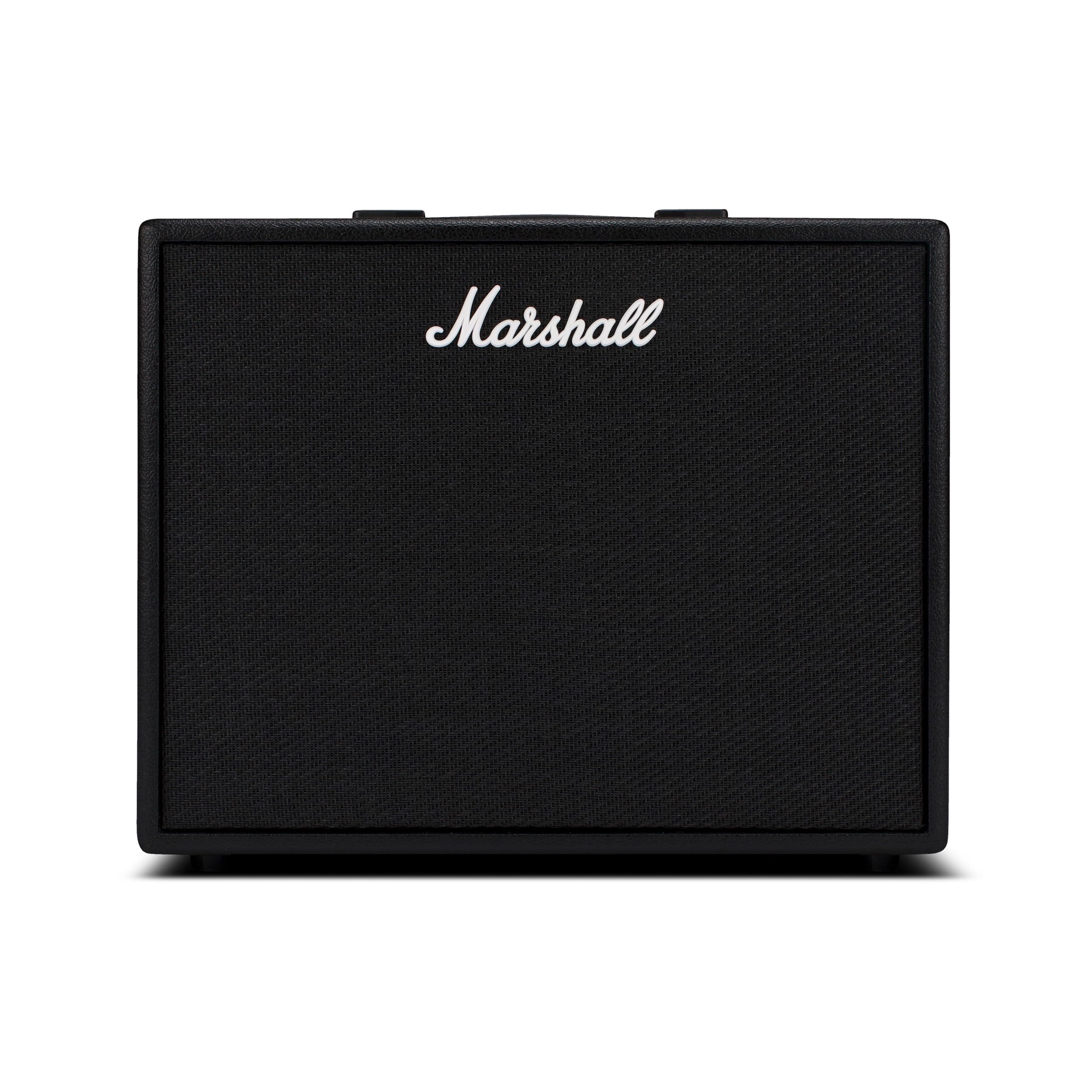
The Marshall CODE50 brings 50 watts of digital modeling power through a 12-inch speaker, delivering the classic Marshall sound with modern versatility. It features 14 preamp models, 4 power amp models, and 8 speaker emulations, covering everything from clean Plexi tones to high-gain JVM roar. The 24 onboard digital effects—including reverb, delay, chorus, flanger, and tremolo—are stored across 100-plus editable presets. Bluetooth connectivity allows preset editing and audio streaming from the MyMarshall app.
Users value the CODE50 as a lightweight alternative to a full Marshall half-stack, weighing just 28.6 pounds. The 12-inch speaker moves real air and can fill a rehearsal space without a PA. The USB connectivity lets you record directly into a DAW, and the headphone output allows silent practice. Custom editing through the app, while somewhat tedious, unlocks the amp’s full potential, yielding incredible tones from clean to extreme metal when properly dialed in.
Presets come from the factory sounding a bit muffled, requiring adjustment of the Presence control to bring clarity. Some users report Bluetooth connectivity issues and motherboard failures after short use. The control layout on the top panel is not ideal for players who keep their amp on the floor. For those willing to invest time in learning the editing workflow, the CODE50 offers a huge sonic toolbox at a price that beats buying separate amp heads and cabinets.
Why it’s great
- 50 watts through a 12-inch speaker delivers real stage volume
- Marshall lineage provides authentic Plexi, JVM, and Silver Jubilee models
- USB recording and Bluetooth streaming for modern workflows
Good to know
- Factory presets sound muffled and require significant tweaking
- Reliability concerns reported with Bluetooth and motherboard
5. Orange Crush 35RT

The Orange Crush 35RT is a 35-watt solid-state combo that punches far above its weight. Its 4-stage preamp delivers the iconic Orange dirty channel with exceptional note articulation and tube-like punch, even at high gain settings. The built-in reverb and chromatic tuner are practical additions, and the cab-simulated headphone output preserves the amp’s character during silent practice. A fully transparent effects loop allows you to integrate external effects without tone loss.
Reviewers consistently describe the dirty channel as some of the best solid-state distortion available, with tight low-end and clear highs that do not turn into mush. The 10-inch speaker provides enough volume for small venues, and the clean channel, while warm, is serviceable for blues and jazz. The 35RT is footswitch compatible, allowing you to toggle between clean and dirty hands-free. At 25.6 pounds, it is portable enough for regular transport to rehearsals.
The clean channel, while good, does not match the high-end clarity of boutique solid-state amps from Roland or Hughes & Kettner. Some users wish for a deeper reverb tank. The volume knob is sensitive—home practice requires it to be kept below 3. These are minor trade-offs for an amp that delivers professional-grade crunch and distortion in a compact, affordable package.
Why it’s great
- Exceptional solid-state distortion with tube-like feel and articulation
- Includes transparent effects loop and cab-sim headphone out
- Loud enough for small gigs and regular rehearsals
Good to know
- Clean channel is good but outclassed by dedicated clean amps
- Reverb is adequate but not deep or lush
6. Yamaha THR10II

The Yamaha THR10II is a 10-watt stereo desktop amp designed to blend into your living space without compromising sound quality. It simulates 15 guitar amps, 3 bass amps, and 3 acoustic-electric microphone models, plus essential effects like reverb, delay, chorus, and flanger. The extended stereo technology delivers wide, hi-fi audio that sounds excellent even at low volumes. Bluetooth connectivity allows wireless audio streaming and deep editing through the Yamaha remote editor app.
Users consistently praise the THR10II for its realistic tube-amp feel and dynamic response at low volume levels—something most small solid-state amps fail to achieve. The compact footprint (14.5 inches wide, 7.2 inches tall) and lightweight design (6.6 pounds) make it an ideal desktop companion that does not dominate your desk. The headphone output is studio-quality for late-night practice, and the USB connectivity allows plug-and-play recording. The THR10II doubles as a high-fidelity Bluetooth speaker when not being used for guitar.
The 10-watt output is strictly for home practice—it will not keep up with a drummer. The onboard speaker is tuned for close-range desktop listening, not for filling a large room. The mobile app is essential for deep editing, and some users report occasional firmware issues. For a focused home practice tool that looks as good as it sounds, the THR10II sets a benchmark that few other desktop amps approach.
Why it’s great
- Realistic tube-amp feel and dynamic response at low volumes
- Hi-fi stereo sound doubles as an excellent Bluetooth speaker
- Ultra-compact, beautiful desktop design that looks like a vintage radio
Good to know
- 10-watt output is strictly for solo practice, not jamming
- Onboard speaker is designed for near-field listening only
7. Orange Crush 20RT

The Orange Crush 20RT delivers 20 watts of analog solid-state power through a custom 8-inch Voice of the World speaker, providing the classic Orange tone in a compact, affordable package. It features a 2-channel design with clean and dirty channels, a built-in digital reverb, and a chromatic tuner that saves desk space. The headphone output allows silent practice, and the auxiliary input lets you jam along with backing tracks. At just under 16 pounds, it is genuinely portable.
Players love the versatility of the clean and dirty channels. The clean channel breaks up nicely when pushed, giving you natural overdrive at higher volumes. The dirty channel delivers the signature Orange crunch that is fat, aggressive, and well-defined. The built-in tuner is a practical addition for quick tuning between songs. The compact dimensions (14.67 x 12.8 x 7.75 inches) mean it fits on a small desk or practice space easily.
The reverb is a digital effect and leaves some users wanting more depth and richness. The 8-inch speaker can sound boxy at high volumes, and the amp is barely loud enough for band practice when cranked. Some users report that the speaker driver blew after extended loud use, suggesting replacement with a higher-grade aftermarket speaker like a Jensen. For bedroom practice and home recording, the 20RT offers authentic analog Orange tone at an accessible entry point.
Why it’s great
- Authentic analog Orange distortion in a compact, lightweight package
- Built-in chromatic tuner simplifies practice setup
- Clean channel breaks up naturally for organic overdrive
Good to know
- Reverb lacks depth and richness compared to premium units
- 8-inch speaker can sound boxy and may struggle with band volumes
8. Fender Frontman 20G

The Fender Frontman 20G is a 20-watt solid-state practice amp that sticks to the basics with excellent execution. It features a clean channel with a 3-band EQ and a separate switchable Drive channel for overdrive. The 8-inch Fender Special Design speaker delivers the classic Fender mid-60s black panel aesthetic and sound. The auxiliary input and headphone jack are practical essentials for modern practice. With only a volume, drive, and EQ section, the controls are intuitive and require zero manual consultation.
Users consistently praise the clean channel for its clarity and crispness, which is impressive at this price level. The Drive channel provides a decent overdrive for practice and learning, though it is not designed to compete with dedicated distortion pedals. At only 11 pounds, the Frontman 20G is extremely portable and easy to move from room to room. The 2-year limited warranty from Fender adds confidence in the build quality.
The amp lacks any built-in reverb, which is a notable omission for players who rely on that spatial effect. The Drive channel is basic and does not offer the richness of higher-end modeling amps. The small 8-inch speaker limits low-end response and overall volume, making it strictly a bedroom practice tool. For a beginner or as a second amp for travel, the Frontman 20G offers excellent fundamental sound at a minimal investment.
Why it’s great
- Clean channel offers excellent clarity for a budget amp
- Simple, intuitive controls with no learning curve
- Extremely lightweight and portable at 11 pounds
Good to know
- No built-in reverb—a missing feature for many players
- Drive channel is basic and lacks the richness of more expensive amps
9. HeadRush FRFR112 MKII

The HeadRush FRFR112 MKII is a 2500-watt peak powered speaker designed specifically for use with amp modelers and multi-FX processors. Unlike traditional guitar combos that color your tone with their preamp and speaker, the FRFR112 delivers a full-range, flat-response reproduction of your modeler’s output, exactly as the designer intended. It features a 12-inch woofer and a 1-inch high-frequency compression driver for clarity across the spectrum. Bluetooth connectivity allows wireless music streaming between sets.
Users who pair this amp with a Fractal Audio, Line 6 Helix, or similar modeler report that it delivers studio-quality tone at live volume. The FRFR112 weighs 34.6 pounds and can be used in wedge, upright, or pole-mounted positions for flexible stage setups. The dual XLR/TRS combo inputs with independent volume controls allow two modelers or instruments to be connected simultaneously, while the XLR direct output lets you chain multiple speakers or send to front-of-house.
Some users find the stock tweeters to be harsh, especially with high-gain tones, and recommend upgrading to polyimide tweeters for smoother highs. At full volume, it is heavy for a portable solution. The FRFR112 is not a traditional guitar amp—it does not have its own character or overdrive. If you already have a floor modeler and want a transparent, powerful speaker to hear your tones accurately, the FRFR112 MKII is the correct choice.
Why it’s great
- True flat-response reproduction for accurate modeler tone
- 2500-watt peak power for stage-filling volume
- Versatile mounting options and Bluetooth streaming
Good to know
- Requires an external amp modeler—not a standalone guitar amp
- Stock tweeters can sound harsh with high-gain models
FAQ
Is a 20-watt combo amp loud enough for a small gig?
Should I buy a solid-state or a modeling amp as my first combo?
Final Thoughts: The Verdict
For most users, the guitar combo amp winner is the Fender Mustang LT25 because it combines 30 versatile presets, USB recording, and a simple interface in a compact package that works for both beginners and experienced players. If you want authentic Orange distortion and a built-in effects loop for jamming with a band, grab the Orange Crush 35RT. And for a dedicated desktop practice tool with hi-fi sound and Bluetooth, nothing beats the Yamaha THR10II.