
That white dust on your tomatoes isn’t a cosmetic issue—it’s powdery mildew destroying leaf cells, starving your plants, and cutting your harvest by more than half if left unchecked. The wrong fungicide choice means wasted time, burned foliage, or a pathogen that keeps coming back stronger.
I’m Mohammad Maruf — the founder and writer behind Drink4Good. After spending countless hours analyzing formulation data, active ingredient concentrations, and real-world user results across dozens of disease control products, I built this guide to cut through the confusion.
Whether you’re battling blight on nightshades, rust on roses, or damping-off in seedlings, the right solution depends on your specific pathogen and timing—this guide to the best fungicide for outdoor plants breaks down exactly what works and why.
How To Choose The Best Fungicide For Outdoor Plants
Selecting a fungicide isn’t about picking the strongest chemical—it’s about matching the active ingredient to your specific pathogen, plant type, and treatment timeline. A preventative spray applied at the wrong growth stage can do more harm than good.
Active Ingredient: Synthetic vs. Biological vs. Botanical
Synthetic options like chlorothalonil are broad-spectrum and rain-resistant, making them ideal for established infections like late blight or rust. Biological fungicides using Bacillus subtilis trigger the plant’s immune system and are safe for organic use up to harvest day. Neem oil extracts offer triple action against fungus, insects, and mites but require careful temperature timing to avoid leaf burn.
Formulation: Concentrate vs. Ready-to-Use (RTU)
A 16-ounce concentrate typically makes 10 to 20 gallons of spray, covering an entire vegetable patch or shrub border for a season. RTU bottles are convenient for spot-treating a few rose bushes or container plants, but the cost per application is significantly higher. If you’re treating more than a handful of plants, concentrate is the smarter investment.
Application Method: Foliar Spray vs. Soil Drench
Foliar sprays coat leaf surfaces to kill spores on contact and stop new infections from landing. Soil drenches are absorbed by roots and move systemically through the plant, which is crucial for treating vascular wilts or root rot pathogens like Pythium and Phytophthora that live in the soil itself.
Quick Comparison
On smaller screens, swipe sideways to see the full table.
| Model | Category | Best For | Key Spec | Amazon |
|---|---|---|---|---|
| Bonide Revitalize Biofungicide | Biological | Edible gardens & organic produce | Bacillus subtilis (immune trigger) | Amazon |
| Garden Safe Fungicide3 | Botanical 3-in-1 | Combined pest & disease control | Neem oil extract (1% conc.) | Amazon |
| Southern Ag Biological Fungicide | Biological | Root rot & damping-off prevention | Bacillus subtilis (soil drench) | Amazon |
| Bonide Fung-onil Multi-Purpose | Synthetic Broad-Spectrum | Heavy blight & rust outbreaks | Chlorothalonil (58.1%) | Amazon |
| Fertilome Liquid Systemic II | Systemic Synthetic | Lawn diseases & tree cankers | Propiconazole (1.55%) | Amazon |
In‑Depth Reviews
1. Bonide Revitalize Biofungicide

Bonide Revitalize uses Bacillus subtilis—a beneficial bacterium that colonizes the root zone and leaf surfaces, triggering the plant’s systemic acquired resistance (SAR). This means the plant actively defends itself against powdery mildew, blight, anthracnose, and black spot rather than relying on a chemical barrier that washes off in rain.
The 16-ounce concentrate mixes at a rate of 1 to 2.5 tablespoons per gallon, yielding enough spray for an entire home vegetable garden through a full growing season. Because it’s approved for organic gardening, you can apply it right up to harvest day without worrying about chemical residues on your tomatoes, peppers, or leafy greens.
Users report it turned around severe septoria leaf spot on tomatoes after just two applications, and it doubles as a soil drench for seedlings prone to damping-off. The one trade-off: it has a noticeable earthy odor during application that dissipates once dry, and it works best as a preventative—don’t expect a miracle cure on heavily infected tissue.
Why it’s great
- Organic-approved up to harvest day
- Triggers plant immune system vs. surface coating
- Works as both foliar spray and soil drench
Good to know
- Preventative—less effective on established heavy infections
- Noticeable organic odor when wet
2. Garden Safe Fungicide3
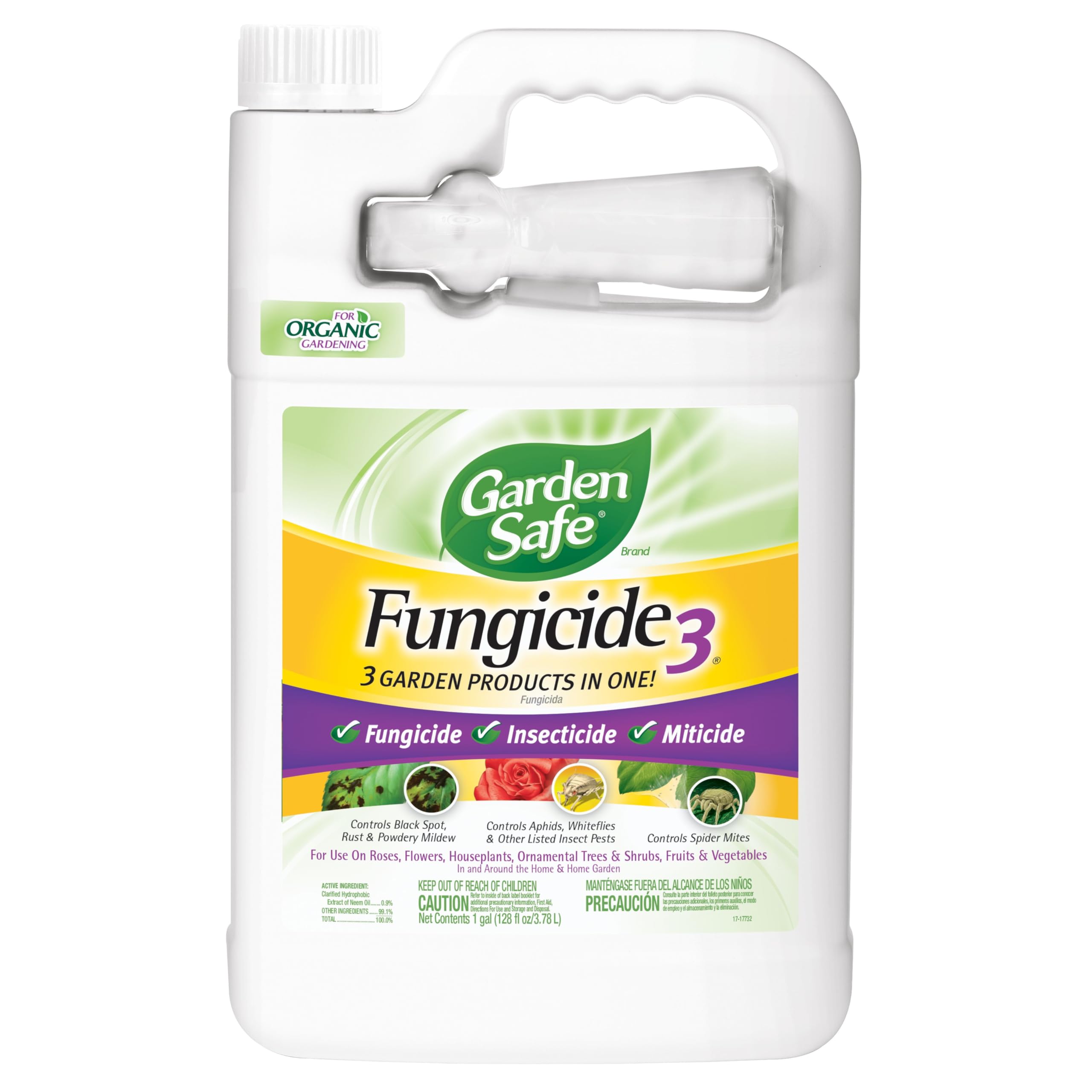
Garden Safe Fungicide3 combines clarified hydrophobic neem oil extract in a ready-to-use 1-gallon sprayer, giving you a fungicide, insecticide, and miticide all in one bottle. This is the ideal choice when you’re dealing with powdery mildew plus aphids or spider mites simultaneously—one application handles both problems without mixing multiple products.
The 128-ounce RTU bottle covers a significant area immediately, but several users strongly recommend buying a separate sprayer wand because the built-in hose-end unit is short and awkward for reaching beneath leaves or into dense shrubs. Apply it in the early morning or evening—neem oil can cause leaf burn if sprayed in direct midday sun, especially on tender new growth.
Customer results on mildew and black spot are excellent, with many reporting noticeable improvement within a week on roses, hibiscus, blueberries, and tomatoes. It does not heal existing leaf damage but reliably prevents new spores from germinating. Start at half the recommended dose and test a small area first to avoid over-stressing sensitive plants.
Why it’s great
- Triple action—fungus, insects, and mites
- Ready to use, no mixing required
- Organic neem oil formulation
Good to know
- Built-in sprayer is awkward to maneuver
- Can burn leaves if applied in hot sun
3. Southern Ag Biological Fungicide

Southern Ag Garden Friendly Biological Fungicide delivers the same Bacillus subtilis active ingredient found in premium hydroponic root inoculants like Hydroguard, but at a far higher concentration per dollar. This makes it a stealth favorite for serious gardeners who want biological protection without paying the boutique markup.
As a soil drench, the bacteria colonize the root rhizosphere, outcompeting Pythium, Fusarium, and Rhizoctonia pathogens that cause root rot and damping-off. When used as a foliar spray, it works preventatively against leaf spot and powdery mildew on tomatoes, cucumbers, and ornamentals. Users report it literally saved water propagations that were rotting in their jars.
The only real complaint is the bottle design—the opening is wide and pours quickly, making it easy to over-measure or dribble concentrate down the side. Use a small funnel or a graduated measuring cup to get accurate dosing. Multiple applications are usually needed to see full suppression in high-disease-pressure soils.
Why it’s great
- Extremely cost-effective biological concentrate
- Root drench prevents damping-off better than sprays
- Acts as a mild bio-fertilizer
Good to know
- Bottle opening causes messy pouring
- Requires repeated applications for full effect
4. Bonide Fung-onil Multi-Purpose

When biological options aren’t cutting it against aggressive late blight, rust, or scab, Bonide Fung-onil brings chlorothalonil—one of the most trusted broad-spectrum fungicides in commercial agriculture. This 16-ounce concentrate makes up to 16 gallons of spray, and the milky-white solution clings to leaf surfaces even through light rain.
Gardeners fighting blight on tomatoes and potatoes have reported that two applications spaced ten days apart stopped yellowing and leaf drop that had already begun. It leaves a visible white residue on leaves and fruit, but a quick wash removes it before eating, and users confirm there is no impact on flavor. It’s also highly effective on boxwood blight and rose black spot.
The active ingredient is strictly preventative and curative for listed diseases, but it will not reverse severe tissue necrosis—prune out dead material first. The concentrate mixes into a suspension that settles, so shake the sprayer frequently during application. Not suitable for organic gardening, so reserve this for ornamental beds or early-season treatment of edibles before fruiting.
Why it’s great
- Chlorothalonil is a proven agricultural-grade weapon
- Rain-resistant once dry
- Controls a very broad spectrum of diseases
Good to know
- Not organic; avoid on edibles near harvest
- Leaves white residue on foliage and fruit
5. Fertilome Liquid Systemic Fungicide II
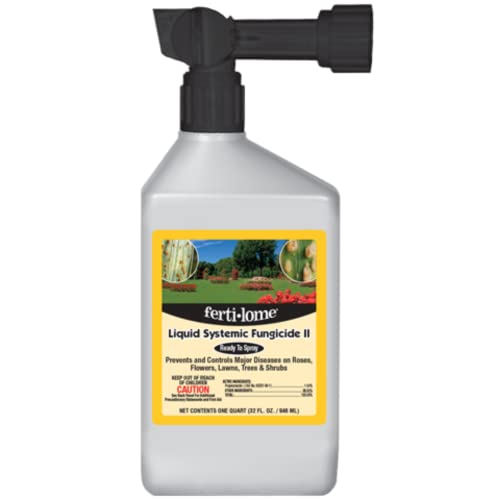
Fertilome Liquid Systemic Fungicide II uses propiconazole, a systemic triazole that moves within the plant’s vascular system to treat diseases from the inside out. This is your go-to for lawn diseases like Take All Patch, Brown Patch, and Dollar Spot, plus fire blight and cankers on ornamental trees that foliar contact sprays can’t reach.
The ready-to-use 32-ounce bottle attaches directly to a hose-end sprayer for quick lawn coverage—apply after mowing so the product reaches the soil line and crown where these root-zone pathogens live. For trees, spray thoroughly to the point of runoff. One user reported that three biweekly applications completely cured fire blight on a Crimson Maple that was already showing dieback.
The biggest advantage is the systemic action: once absorbed, rain doesn’t wash it off, and new growth emerges protected. However, the 1.55% propiconazole concentration is relatively low compared to commercial-grade products, so high-pressure infections may require multiple applications spaced 14 days apart. It is not labeled for edible crops, so keep this in the ornamental and turf arsenal.
Why it’s great
- Systemic absorption protects new growth
- Excellent for lawn patch diseases
- Rainfast once absorbed into plant tissue
Good to know
- Relatively low active concentration per ounce
- Not labeled for use on edible plants
FAQ
Can I use the same fungicide for powdery mildew and root rot?
How long should I wait before harvesting after applying a fungicide?
Why did my spray cause leaf burn even though I followed the instructions?
Final Thoughts: The Verdict
For most users, the best fungicide for outdoor plants winner is the Bonide Revitalize Biofungicide because it delivers reliable immune-system-based prevention for edibles and ornamentals alike, with zero harvest restrictions. If you want a triple threat against fungus plus insects and mites, grab the Garden Safe Fungicide3. And for aggressive blight or rust that requires chemical intervention, nothing beats the Bonide Fung-onil Multi-Purpose for pure knockdown power.