
Muddy, ammonia-soaked runs and cracked eggs from hard-packed dirt are the two biggest headaches backyard chicken keepers face. Choosing the right ground covering for your chicken run directly impacts flock health, egg cleanliness, and how often you haul out a pitchfork.
I’m Mohammad Maruf — the founder and writer behind Drink4Good. I’ve analyzed hundreds of hours of flock health forums, coop sanitation studies, and material science data on poultry bedding to find the best ground covering for chicken run setups that actually hold up to scratching, rain, and daily waste.
After reading this guide, you’ll know exactly which material — from washable synthetic turf to all-natural hemp bedding — will keep your run dry and your hens laying clean eggs in the best ground covering for chicken run
How To Choose The Best Ground Covering For Chicken Run
The wrong ground covering creates a cycle of wet bedding, ammonia buildup, and increased risk of bumblefoot or respiratory infections. Prioritize materials that wick moisture, resist compaction, and are easy to replace or clean without stressing your flock.
Absorbency and Odor Control
Chicken waste is high in nitrogen, which releases ammonia when wet. Look for materials with high absorbency — hemp bedding can absorb up to twice its weight in moisture compared to pine shavings. Aspen fiber and synthetic turf with perforated drainage also help keep the run dry and odor-free between deep cleanings.
Ease of Cleaning and Durability
For open runs, you need a covering that you can rake, hose down, or replace without dismantling the coop. Synthetic turf pads offer the convenience of a quick rinse, while natural fiber pads like excelsior aspen can be composted after use. If your run is covered from rain, a washable turf mat will last the longest.
Foot Health and Traction
Hens need firm but forgiving footing to avoid splayed legs and pressure sores. Materials like synthetic grass or thick hemp bedding provide cushion while preventing mud puddles. Avoid sharp-edged materials like coarse gravel or straw that can cause bumblefoot in heavy breeds.
Quick Comparison
On smaller screens, swipe sideways to see the full table.
| Model | Category | Best For | Key Spec | Amazon |
|---|---|---|---|---|
| My Favorite Chicken Nesting Pads | Excelsior Aspen | All-in-one nesting and run lining | 13×13 in. with embedded herbs | Amazon |
| Rural365 Nest Box Liners | Aspen Pads | Quick-change nest box liners | 12-pack, 13×13 in. paper-backed | Amazon |
| Eaton Hemp Bedding | Hemp Flake | Deep litter method in covered runs | 28L bag, absorbs 2x more than pine | Amazon |
| Hamiledyi Turf Nesting Pads | Synthetic Turf | Washable run flooring and egg protection | 12×12 in. PE grass with drainage holes | Amazon |
| HoazHoald Nesting Herbs | Dried Herbs | Supplemental layer for odor and mite control | 21 oz bag of 8 natural botanicals | Amazon |
In-Depth Reviews
1. My Favorite Chicken Nesting Pads with Herbs

The excelsior aspen fiber in this 10-pack strikes the ideal balance between absorbency and structural integrity. Unlike loose shavings that flatten into a muddy mess, these pads hold their shape thanks to the bonded kraft paper backing, keeping eggs elevated above droppings and reducing cracked shells.
The embedded aromatic herbs — organic botanicals and edible flowers — provide natural pest deterrence without artificial oils. Hens show a clear preference for the fibers, scratching and nesting contentedly, while keepers report noticeably less ammonia odor between weekly cleanings.
Each pad measures 13 x 13 inches, fitting standard nesting boxes and small run sections. The fibers are breathable enough to prevent moisture entrapment, and the pads compost naturally at the end of their useful life, which averages several weeks before pecking breaks them down.
Why it’s great
- Herbal infusion reduces mites and coop odor naturally
- Holds shape longer than loose pine or straw
- Compostable — zero waste at end of life
Good to know
- Higher cost per pad than bulk shavings
- Not suitable for open wet runs without cover
2. Rural365 Chicken Nest Box Liners

Rural365 uses lightweight aspen wood shavings compressed into 13 x 13 inch pads with a stiff paper backing. The backing is the differentiator here — it prevents the shavings from scattering when hens scratch, keeping the nest contained and making swap-outs as fast as lifting the old pad and dropping in a new one.
The aspen fiber absorbs moisture effectively, separating eggs from droppings and reducing the risk of bacteria transfer. Pre-fluffing the pad before placement improves performance by breaking up compressed sections, allowing the wood to expand and trap more moisture.
Keepers note that broody hens and determined peckers eventually tear these apart, but the 12-pack provides excellent value for the replacement rate. They are best suited for nest boxes under cover — not for open, rain-exposed run sections where the paper backing can degrade quickly.
Why it’s great
- Paper backing keeps bedding contained during scratching
- Quick swap — seconds to replace each liner
- Lightweight and natural aspen material
Good to know
- Broody hens can shred the paper backing
- Not meant for wet, uncovered runs
3. Eaton Pet and Pasture Hemp Bedding

Eaton’s hemp bedding is a top-tier choice for keepers using the deep litter method. Hemp fibers absorb more than double the moisture of pine shavings while remaining low-dust — a critical factor for respiratory health in birds that spend their days scratching inches from the ground.
Users report little to no ammonia smell after six months of deep litter management, and the soft texture encourages natural foraging behavior. The 28-liter bag covers a standard 4×6 run section to a depth of a few inches, and the hemp composts into rich garden soil when you finally turn the bedding out.
The main drawback is shipping time and bag size. Some keepers find the bag too small for large coops and prefer locally sourced pine for cost reasons, but the superior odor control and dust reduction make it a premium choice for covered runs where deep litter is practical.
Why it’s great
- Nearly dust-free — protects bird respiratory systems
- Absorbs twice as much moisture as pine shavings
- Ideal for deep litter method with minimal odor
Good to know
- Bag size is small for large coop floors
- Not widely stocked at farm supply stores
4. Hamiledyi Artificial Grass Nesting Pads
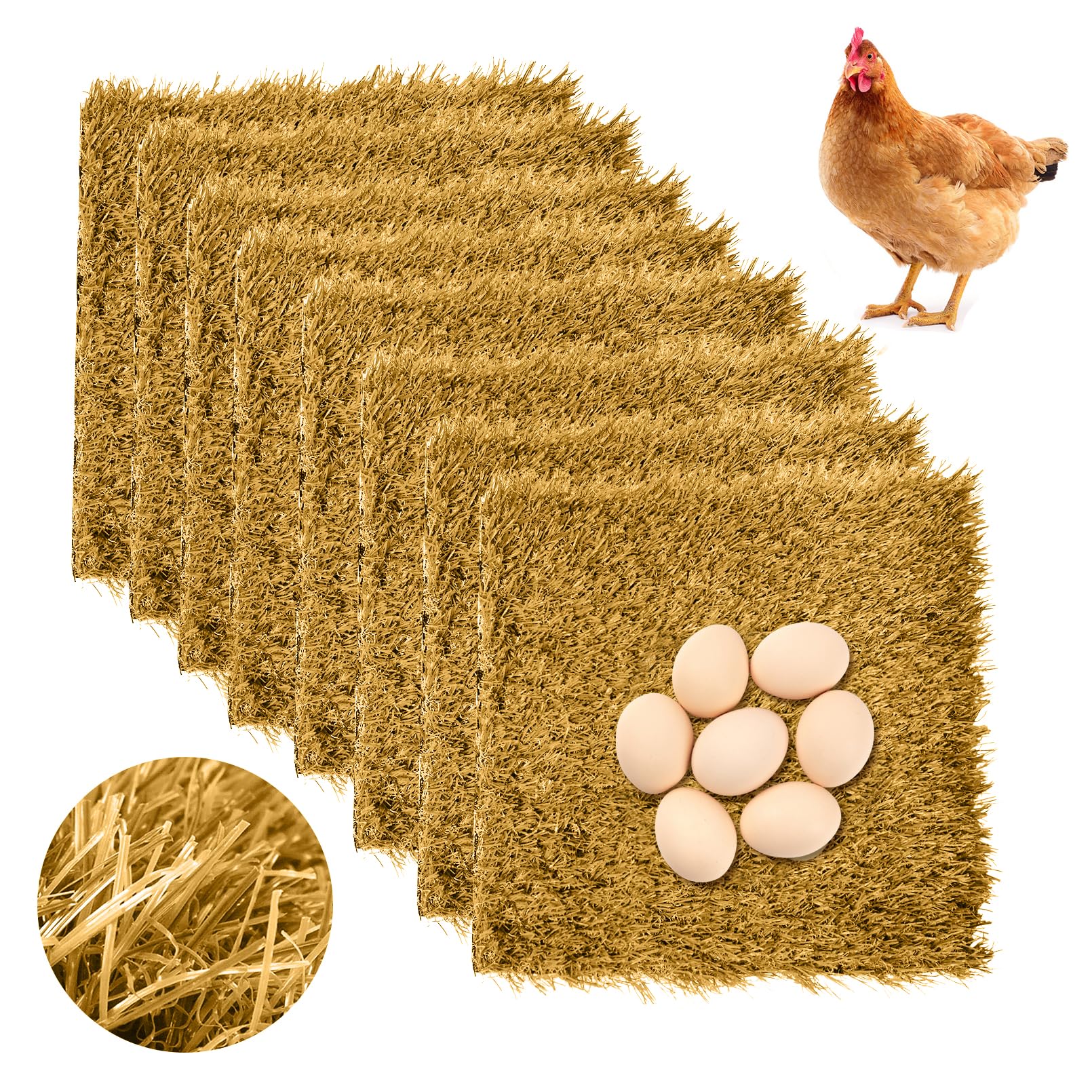
Hamiledyi’s 12×12 inch synthetic turf pads solve the sanitation problem by being fully washable. The polyethylene grass blades sit on a perforated base that allows water to drain straight through, so you can hose off droppings without standing water pooling in the nest box or run area.
The soft, realistic grass texture provides good traction for hens and reduces the risk of broken eggs compared to hard wire mesh or bare wood. Keepers find these easy to trim with scissors to fit odd-shaped boxes, and they hold up well to years of use by small flocks of up to six birds.
Some users report initial shedding of loose grass fibers, and the pads are less cost-effective if your hens are heavy peckers that pull up the synthetic strands. For covered runs or nest boxes where you prioritize quick cleanup over natural composting, this is a durable, low-maintenance option.
Why it’s great
- Hose-washable and quick-drying drainage base
- Soft texture cushions eggs and prevents shell damage
- Easy to cut and customize for any box size
Good to know
- Initial shedding of loose fibers in first use
- Not compostable — plastic material at end of life
5. HoazHoald Chicken Nesting Herbs and Flowers
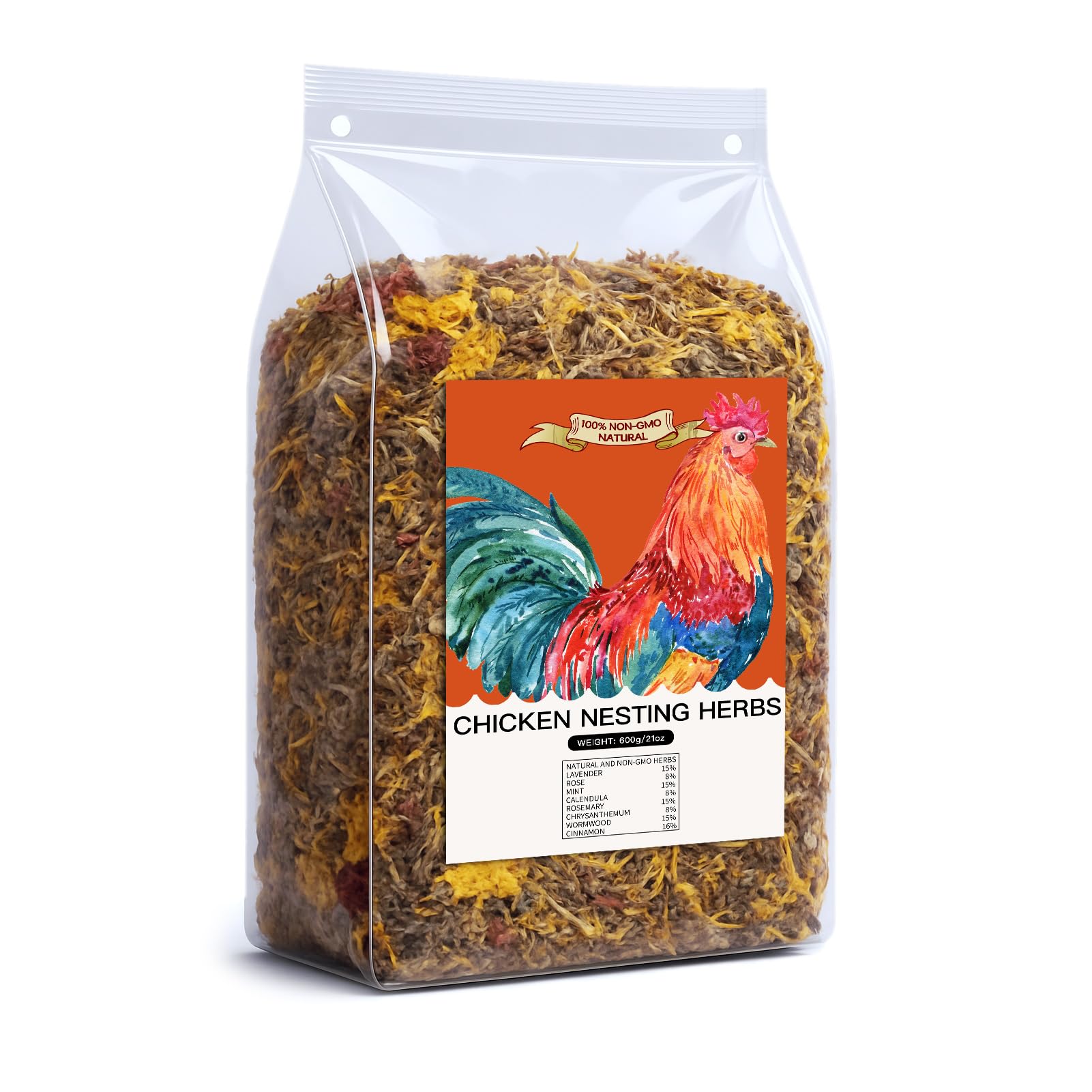
This 21-ounce bag of premixed dried herbs and flowers — lavender, rose, mint, calendula, rosemary, chrysanthemum, wormwood, and cinnamon — acts as a supplemental layer over your main ground covering rather than a standalone solution. Scatter it in nest boxes, on run floors, or in dust bath areas to add natural mite deterrence.
The aroma is pleasant for keepers and seems to soothe laying hens, with many reviewers noting an increase in egg production consistency. The botanicals are edible and non-toxic, so birds that peck at the mixture receive trace vitamins and minerals without risk of chemical exposure.
The bag is lightweight and not meant to replace bulk bedding. Use it as a top dressing over hemp or aspen pads at a rate of a handful per nest box every week. The herbs lose potency after about a week and need replenishment for continuous pest control and freshness.
Why it’s great
- Natural mite and odor control without chemicals
- Pleasant lavender-mint scent for coop freshness
- Edible — provides trace nutrients when pecked
Good to know
- Not a standalone bedding — must layer over base material
- Scent fades and needs weekly reapplication
FAQ
Can I use synthetic turf in an uncovered chicken run?
How often should I replace hemp bedding in the run?
Final Thoughts: The Verdict
For most users, the best ground covering for chicken run winner is the My Favorite Chicken Nesting Pads because they combine excelsior aspen absorbency with embedded herbs for natural pest control in a shape-holding pad. If you want a washable, reusable option, grab the Hamiledyi Turf Pads. And for deep litter management in covered runs, nothing beats the Eaton Hemp Bedding for dust-free, long-lasting moisture control.