
Cork is a naturally forgiving, tactile material, but its porous, semi-absorbent nature makes it one of the trickiest surfaces to glue successfully. Many common adhesives soak in too fast, leaving a dry, brittle joint that crumbles under the slightest torque, while others stay rubbery and never truly grip. Finding a formula that balances penetration with a permanent, flexible bond is essential for any project, from repairing fishing rod handles to crafting coaster sets.
I’m Mohammad Maruf — the founder and writer behind Drink4Good. I decode market specs, analyze hundreds of real user reviews, and compare chemical properties like open time, viscosity, and substrate compatibility to pinpoint which glues genuinely lock into cork without turning it into a mess.
For your next project, the right choice depends on whether the cork needs a flexible, waterproof seal or a fast-setting structural bond. This guide breaks down five proven adhesives to help you choose the best glue for cork based on your actual application.
How To Choose The Best Glue For Cork
Cork’s cellular structure demands an adhesive that wicks into the pores without pooling on the surface. A formula that is too thin may over-penetrate and weaken the cork, while one that is too thick sits on top and peels off. The right match balances viscosity, flexibility, and moisture resistance to match your specific project.
Viscosity and Open Time
Thicker, tacky glues provide an immediate grab, making them ideal for vertical applications like cork wall tiles or coasters. Thinner liquids penetrate deeper into end-grain cork, which is perfect for sealing rough edges on fishing rod handles or knife grips. Open time — the window before the glue begins to set — determines whether you can slide components into place or must commit instantly.
Flexibility and Moisture Resistance
Pure PVA glues dry hard and can crack if the cork flexes. For high-moisture environments like kitchens, bathrooms, or outdoor gear, a urethane or flexible multi-surface formula offers better shock absorption and water resistance. Cyanoacrylate glues provide rigid, instant bonds but become brittle under repeated bending, so they are best for parts that won’t move.
Quick Comparison
On smaller screens, swipe sideways to see the full table.
| Model | Category | Best For | Key Spec | Amazon |
|---|---|---|---|---|
| U.A.A. Cork Sealant | Urethane Sealant | Fishing rod handles & high-exposure cork | 2 oz bottle; urethane base | Amazon |
| Weldbond Multi-Surface | PVA Hybrid | Mosaics & mixed-material crafts | 14.2 oz; dries clear & flexible | Amazon |
| Aleene’s Tacky Glue | Tacky PVA | Papercraft, felt, & lightweight cork tiles | 16 oz 3-pack; instant grab | Amazon |
| Jet Glue CA | Cyanoacrylate | Pointe shoes & fast structural fixes | 2 oz bottle; 1-minute cure | Amazon |
| Scotch Scrapbookers Glue | PVA Applicator | Precision papercraft & photo mounting | 1.6 oz 3-pack; two-way tip | Amazon |
In‑Depth Reviews
1. U.A.A. INC. U-40 2oz Cork Sealant

This is the only product in the group formulated specifically as a cork sealant, not a general-purpose glue. The low-viscosity urethane liquid wicks into the cellular structure of cork, hardening the interior while leaving a smooth, clear coating on the surface. Users report it transforms old, crumbling corks on fishing rod handles back into a solid, grippy surface with a single thin coat applied by foam brush.
The sealant dries fast enough to apply multiple coats in one session, but excess product can run if you apply too thick. It darkens raw cork to a richer honey-brown tone, which many anglers and restorers actually prefer over the original pale look. The 2-ounce bottle is small, but because the liquid penetrates rather than sits on top, a little covers a surprising amount of surface area.
Field tests confirm the sealed cork resists fish oils, dirt, and abrasion far longer than unsealed or PVA-treated handles. It remains pliable enough to absorb minor impacts without cracking, making it the premium choice for any cork that will see regular hand contact or outdoor moisture.
Why it’s great
- Chemically engineered specifically for cork substrates
- Penetrates deep; reinforces rather than just coating
- Dries clear with a natural warm patina
Good to know
- Small bottle may run out fast for large projects
- Requires a brush or applicator for even coverage
2. Weldbond Multi-Surface Adhesive 14.2oz
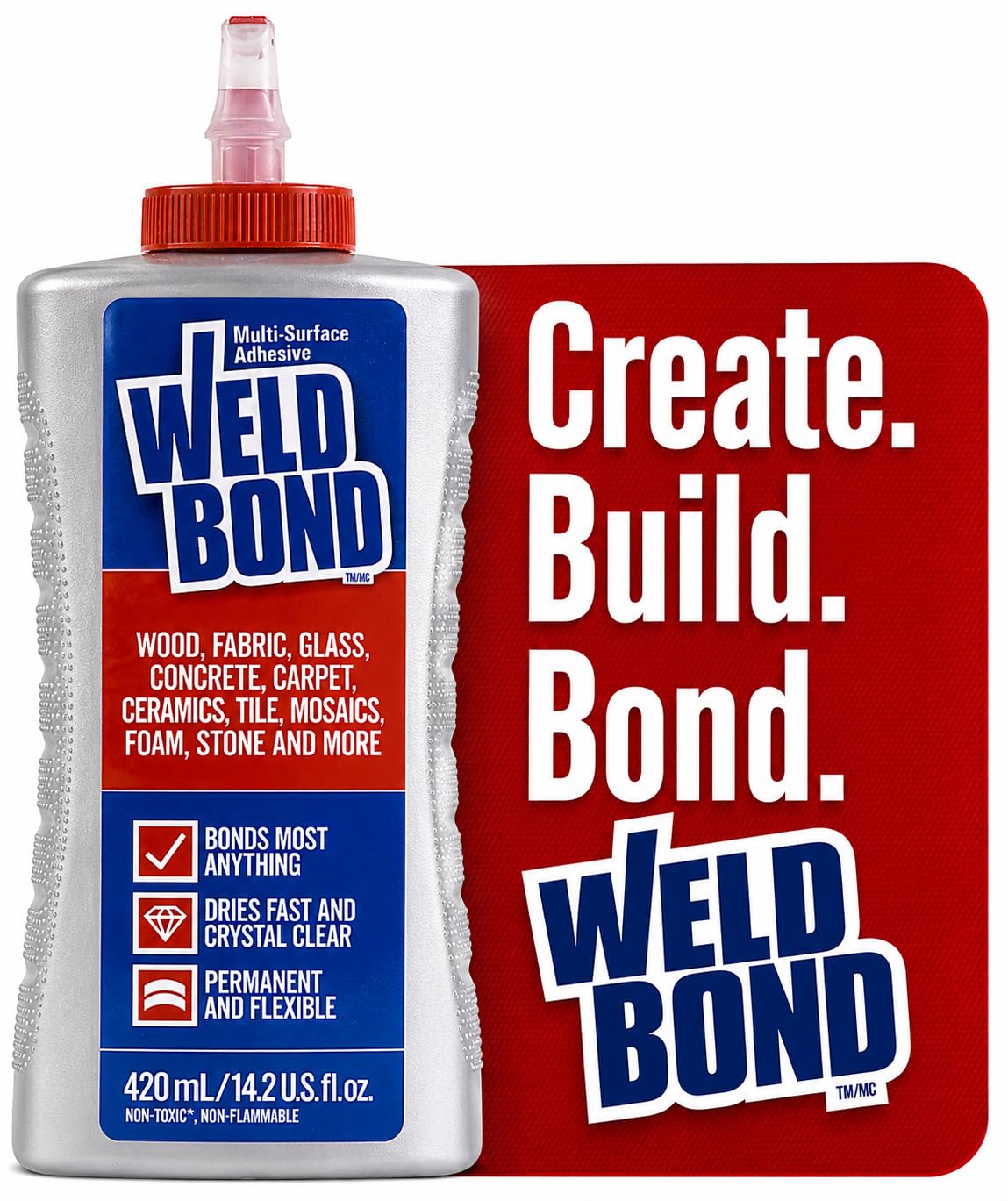
Weldbond bridges the gap between standard white glue and specialty construction adhesives. Its modified PVA formula offers a longer open time than typical craft glues — around 5–10 minutes — which gives you room to position cork sheets, mosaic tiles, or mixed-material panels before the bond locks. Once cured, it remains slightly flexible and water-resistant, so it handles the thermal expansion of glass or metal better than a brittle school glue.
Users in the mosaic community praise it for holding heavy ceramic and stone on wooden backings, positions where cork is often used as a cushioned base layer. The cream-colored liquid dries absolutely clear, leaving no yellow residue on light cork. The 14.2-ounce bottle is generous for the mid-range price point, and the nozzle allows reasonable control for start-and-stop bead application.
The main trade-off is that it is not a true structural adhesive — it bonds cork to wood and fabric well, but for heavy load-bearing joints on porous cork, a urethane or epoxy formula would offer more shear strength. Still, for general craft, light repair, and mixed-material projects, Weldbond delivers strong, odor-free performance.
Why it’s great
- Extended open time for repositioning cork panels
- Dries clear with no yellowing on light surfaces
- Large bottle for frequent craft use
Good to know
- Not waterproof; avoid full submersion
- Slow initial tack on non-porous surfaces
3. Aleene’s Original Tacky Glue 16 fl oz 3-Pack

Aleene’s Original Tacky Glue is a household staple for a reason. Its thick, high-tack formula grabs cork, paper, felt, and wood on contact, which makes it nearly impossible to slide pieces out of place after pressing down. The 16-ounce bottle is enormous for a craft glue, and the three-pack ensures you won’t run out mid-project. For large format cork boards or tabletop coasters where you need immediate hold without clamps, this is the go-to.
The glue dries crystal clear and remains slightly flexible, so it won’t crack if the cork sheet bends during handling. Cleanup is easy with soap and water while wet, but once cured, it forms a permanent bond that holds up to light daily wear. Long-time users in the crafting community point out that it has been the industry standard for over 75 years, and the formula remains consistent bottle to bottle.
The thickness that gives it such strong initial grab also means it does not penetrate deep into porous cork like a thin urethane sealer would. For projects where the cork needs to remain soft and flexible, that is fine. For sealing end-grain or reinforcing a handle, a penetrating formula would be more effective. But for flat surfaces and general crafting, Aleene’s is hard to beat on volume and reliability.
Why it’s great
- Thick formula holds vertical pieces without dripping
- Massive 48 oz total value across three bottles
- Decades of proven formula stability
Good to know
- Does not deeply penetrate cork pores
- Not waterproof; avoid outdoor exposure
4. Jet Glue Instant CA Glue 2 oz
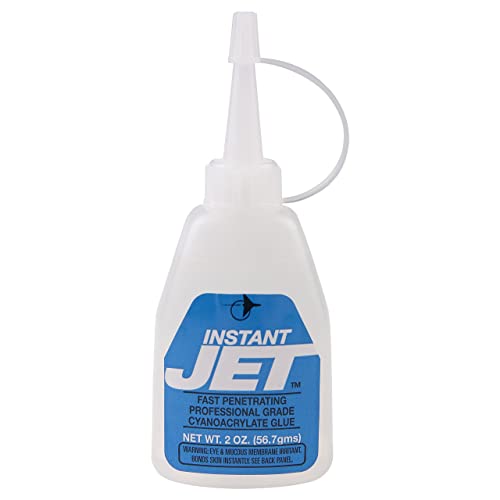
Jet Glue is a thin cyanoacrylate that penetrates deep into porous materials and sets in about 60 seconds. Ballet dancers swear by it for hardening the platform and shank of pointe shoes, where liquid CA glue soaks into the fabric and cork layers and polymerizes into a rigid structure that extends the shoe’s lifespan significantly. The same logic applies to any cork repair that needs structural reinforcement — like reattaching a broken cork sole or stiffening a worn handle.
The glue applies cleanly from the small bottle tip, but it bonds skin instantly upon contact, so precise application is non-negotiable. Users describe a noticeable exothermic reaction as it cures, which is normal for thick CA glue applications. The cured glue is heat-resistant, water-resistant, and solvent-resistant, making it one of the most durable options in this list when used on porous substrates.
The thin consistency that makes it excellent for wicking into cracks also means it does not fill gaps well. If the two cork pieces do not mate perfectly, the joint will be weak. Additionally, the brittle nature of cured cyanoacrylate means it will not tolerate repeated flexing — it shines in static, load-bearing repairs rather than hinged or bending joints.
Why it’s great
- Deep penetration into porous cork for internal reinforcement
- Full cure in one minute for rapid repairs
- Resists heat, water, and chemicals after curing
Good to know
- Bonds skin instantly; use with caution
- Brittle when cured; not for flexible joints
5. Scotch Scrapbookers Glue Two-Way Applicator 3-Pack
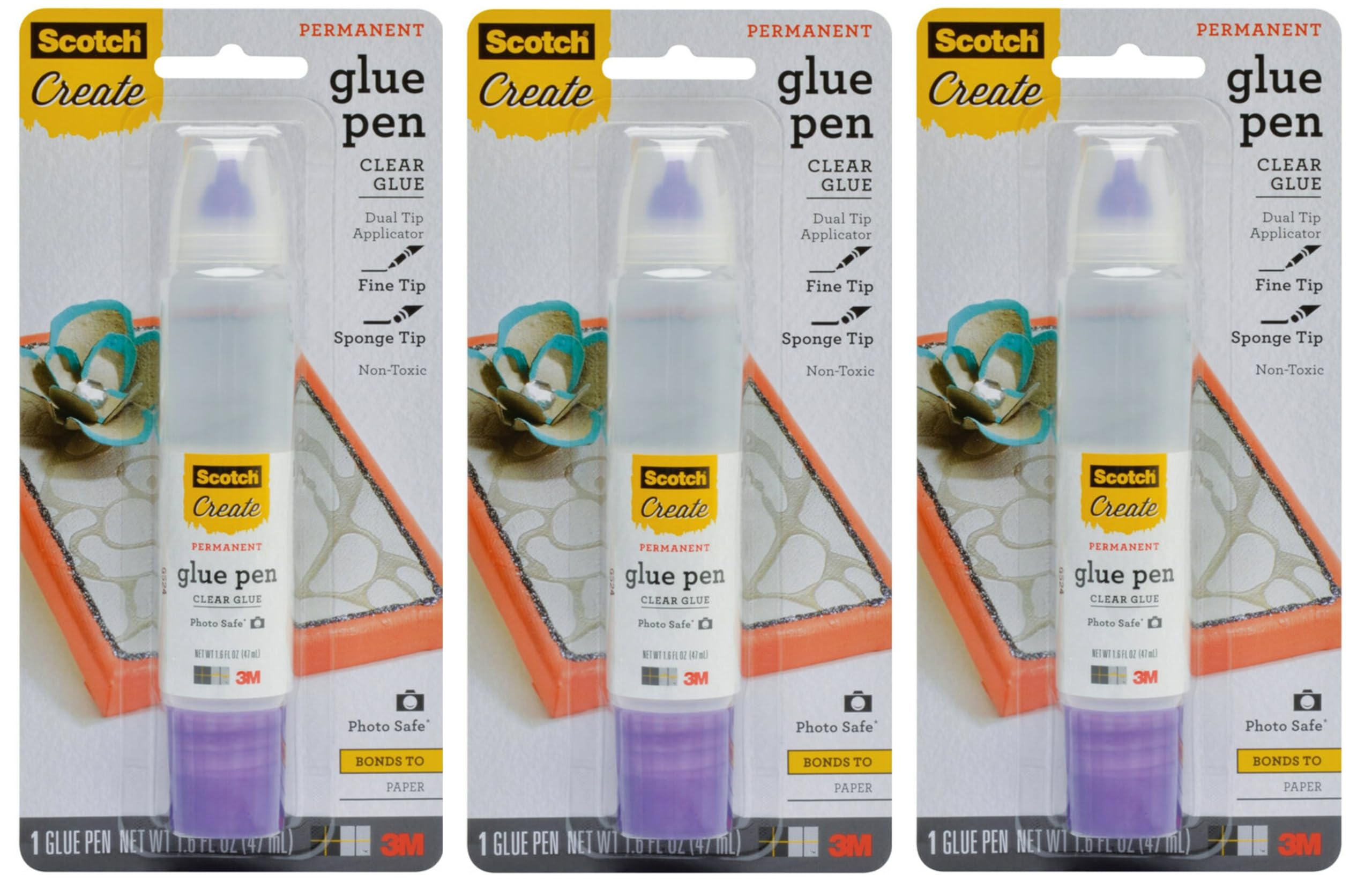
Scotch’s unique two-way bottle gives you a precision needle tip for fine lines and a sponge blotter tip for wider coverage, both in one unit. The thin PVA liquid flows smoothly through the needle tip, allowing you to trace tiny cork shapes or apply a controlled bead along the edge of a cork tile. The blotter end is better for covering larger surfaces evenly without pooling, which is useful for mounting cork sheets to cardboard or foam board.
The glue dries fast — under a minute in thin layers — and allows a brief gap for repositioning before the tack locks in. Users note that the needle tip can occasionally leak if the bottle is stored on its side, but keeping it upright prevents the issue. The photo-safe formulation means no yellowing or acid migration, which matters for archival cork projects like shadow box displays or framed artwork.
The bond is strong enough for paper, photos, and lightweight cork, but it is not designed for heavy structural loads. On thicker cork tiles or three-dimensional objects, the thin PVA may not provide enough internal strength. For lightweight, precision cork work where you need control over adhesive placement, this three-pack delivers excellent value per ounce.
Why it’s great
- Two applicator tips for fine detail or broad coverage
- Dries fast and clear without yellowing
- Photo-safe formulation for archival projects
Good to know
- Not suitable for thick cork or structural repairs
- Needle tip may drip if stored horizontally
FAQ
Can I use regular white school glue on cork?
What glue keeps cork from crumbling on fishing rod handles?
Final Thoughts: The Verdict
For most users, the glue for cork winner is the U.A.A. Cork Sealant because it is the only formula chemically designed to bond and reinforce cork from the inside out. If you want a budget-friendly multi-surface adhesive for crafts and mixed materials, grab the Weldbond. And for instant structural repairs on porous, load-bearing cork, nothing beats the Jet Glue.