
Denver’s high elevation, intense UV radiation, clay-heavy soil, and dramatic temperature swings between scorching summer days and freezing nights create a uniquely hostile environment for cool-season grasses. Most national-brand seed mixes simply die in these conditions by late July, leaving homeowners frustrated and reseeding every season. A seed that thrives here must combine deep-rooting fescue genetics with proven heat and drought tolerance, not just pretty packaging.
I’m Mohammad Maruf — the founder and writer behind Drink4Good. I’ve spent hundreds of hours analyzing seed composition data, germination studies, pH tolerance ranges, and customer results specific to high-altitude, semi-arid climates to build this guide for Front Range homeowners.
After cross-referencing five top contenders against Denver’s specific climate challenges, one selection consistently outperformed the rest in root depth, heat survival, and customer success rates, making it the clear winner in any search for grass seed for denver.
How To Choose The Best Grass Seed For Denver
Denver sits at 5,280 feet, which means roughly 25 percent less atmospheric pressure, thinner air, and UV radiation that burns tender grass blades like a laser. The clay soil is alkaline (pH often 7.5 to 8.2) and compacts easily, making it hard for shallow-rooted grasses like perennial ryegrass to survive past June. You need a seed that prioritizes root depth, leaf wax for moisture retention, and genetic tolerance to heat spikes above 95°F.
Rooting Depth and Drought Resistance
Cool-season grasses with shallow root systems (under 6 inches) will require daily watering during Denver’s July heat. Look for turf-type tall fescue varieties like Black Beauty or Texas bluegrass that can push roots 3 to 4 feet deep. Deeper roots tap moisture from lower soil layers, reduce watering frequency to every 3 to 5 days, and keep the lawn green during heat waves without relying on sprinkler cycles.
Pure Seed vs. Coated Fillers
Many budget seed bags contain up to 30 percent coating weight or inert filler, meaning you pay for less actual seed. Check the label for percent pure seed and weed seed content. Premium options from GreenView and Outsidepride test at 99.9 percent weed-free and use coatings that deliver nutrients like zinc and phosphorus rather than just bulk. For Denver’s short growing window (mid-April to mid-May and mid-August to mid-October), you cannot afford wasted space in the bag.
Sun and Shade Versatility
Denver yards are rarely uniform. A south-facing slope bakes in full sun while a north-facing strip near the house stays cool and damp. A single seed blend must handle both extremes. Blends containing Texas bluegrass (heat-tolerant) and creeping red fescue (shade-tolerant) offer the best coverage across variable microclimates without requiring you to buy separate bags for different zones.
Quick Comparison
On smaller screens, swipe sideways to see the full table.
| Model | Category | Best For | Key Spec | Amazon |
|---|---|---|---|---|
| Jonathan Green Black Beauty | Heat/Drought Mix | Full sun, high heat spots | Roots up to 4 ft deep | Amazon |
| Scotts THICK’R Lawn Tall Fescue | 3-in-1 Combo | Thinning lawns needing quick filler | Includes fertilizer & soil improver | Amazon |
| GreenView Turf Type Tall Fescue | Premium Pure Seed | Weed-free, uniform new lawns | 99.9% weed-free pure seed | Amazon |
| Outsidepride Legacy Fine Fescue | Shade Specialist | Dense shade and fine-textured lawns | OptiGrowth coating with nutrients | Amazon |
| Scotts Turf Builder All-Purpose Mix | Budget All-Rounder | Large area coverage on a budget | Coated to absorb 2x more water | Amazon |
In‑Depth Reviews
1. Jonathan Green (10514) Black Beauty Heat & Drought Resistant Grass Seed

This is the single most aggressive root-development grass seed available for Denver. The Black Beauty tall fescue and Texas bluegrass genetics are specifically bred to produce a waxy leaf coating — like an apple’s skin — that locks in moisture and reflects UV rays. In practical terms, that means this grass can survive 100°F afternoons without going dormant, a huge advantage for Front Range lawns. The 3-pound bag covers 750 sq ft for new seeding and 1,500 sq ft for overseeding, making it cost-efficient for small to medium yards.
Customer results show a strong split: users who aerate, topsoil, and water before 9 a.m. see germination in 7 days and a full lawn by day 14. Those who skip soil prep or plant too late in fall often report zero germination. The critical insight is that the seed itself performs exactly as advertised when paired with Denver’s optimal planting window of mid-August to mid-October. The 4-foot root depth is not a marketing claim — it is a genetic trait of the Black Beauty tall fescue breed, which keeps lawns green with moderate watering rather than daily drenching.
One recurring negative review centers on users who planted in late spring without addressing clay compaction and high soil pH. That is a soil issue, not a seed issue. If you aerate first and maintain consistent moisture for 21 days, this mix outperforms every other entry-level premium product in Denver’s climate.
Why it’s great
- Deepest root system in its price tier (4 ft max)
- Waxy leaf coating reduces water loss by up to 30%
- Proven tolerance to 100°F heat from Texas bluegrass genetics
Good to know
- Requires soil prep (aeration) for best results on clay
- 3 lb bag is small for big lawns over 2,000 sq ft
- Slow to germinate if planted after mid-October in Denver
2. Scotts Turf Builder THICK’R Lawn Tall Fescue Mix, 12 lb.

This is not just seed — it is a three-component system with fertilizer (9-1-1 NPK mix) and a soil improver for root enhancement, all in one spreader-ready bag. For Denver homeowners dealing with patchy lawns from dog spots, winter kill, or compaction, the THICK’R Lawn approach turns one application into a complete renovation. The tall fescue base is ideal for the climate; what makes it stand out is the built-in fertilizer that feeds existing grass while the new seed germinates, so you see visible thickening in 7 to 14 days.
Multiple verified customer reviews confirm germination as early as day 7 in warmer conditions, with full coverage by week 4. The bag’s 12-pound weight covers a larger area than the Jonathan Green 3-pounder, making it more practical for mid-size Denver lots (5,000 to 8,000 sq ft). The downside: the fertilizer component means you cannot use this in conjunction with a separate starter fertilizer without risking nitrogen burn. Also, garden beds or areas adjacent to the lawn may absorb runoff, so application requires careful spreader calibration.
Some users report that the seed component alone underperformed compared to pure seed blends, but that is a misunderstanding of the product’s design. The THICK’R Lawn system prioritizes existing lawn density over bare-dirt establishment. If you are starting from dirt, use a pure seed product first, then overseed with this mix.
Why it’s great
- All-in-one system reduces steps: no separate fertilizer needed
- Germinates in 7 days under proper conditions
- Soil improver helps break up Denver clay
Good to know
- Fertilizer limits use near water runoff-sensitive areas
- Not ideal for establishing new lawn on bare dirt
- Requires spreader for even application
3. GreenView Pure Grass Seed Turf Type Tall Fescue Sun & Shade Blend, 7 lb.

GreenView’s Turf Type Tall Fescue blend is the purest seed on this list, tested at 99.9 percent weed-free. For Denver homeowners who have battled bindweed, crabgrass, and foxtail in clay soil, a weed-free bag eliminates the risk of introducing new invaders during reseeding. The blend is curated from multiple tall fescue varieties designed to handle both full sun and deep shade, which is critical for Denver yards that often have a south-facing exposed area and a cool north-side strip within the same lot.
Germination is reliably fast at 10 to 14 days when soil temperatures stay between 60°F and 75°F — exactly Denver’s early spring and early fall window. The 7-pound bag covers 875 sq ft for new seeding and 1,750 sq ft for overseeding, offering the best coverage-per-dollar ratio among the premium-tier products. Customer reviews consistently highlight the dark green color and thick blade density that mimics Kentucky bluegrass without the high water requirement. The soil adaptability is real: it grows in clay, sandy loam, and even rocky mountain soil without pH adjustment.
One trade-off is the medium-to-coarse texture. If you want a fine, carpet-like lawn (like bentgrass or fine fescue), this blend will feel slightly stiffer underfoot. Also, the “premium” pricing for the 7-pound bag sits above the budget options, but the 99.9 percent weed-free guarantee means you do not need to buy weed killer separately.
Why it’s great
- Virtually no weed seeds — bag purity tested at 99.9%
- Versatile across sun, shade, and variable Denver soil types
- Dark green color and thick turf without high water demand
Good to know
- Medium-coarse texture; not as fine as fescue specialist blends
- Premium price point per pound vs. Scott’s budget options
- Coverage for new seeding (875 sq ft) may require multiple bags for large lawns
4. Outsidepride Legacy Fine Fescue Grass Seed Mix, 5 lb.
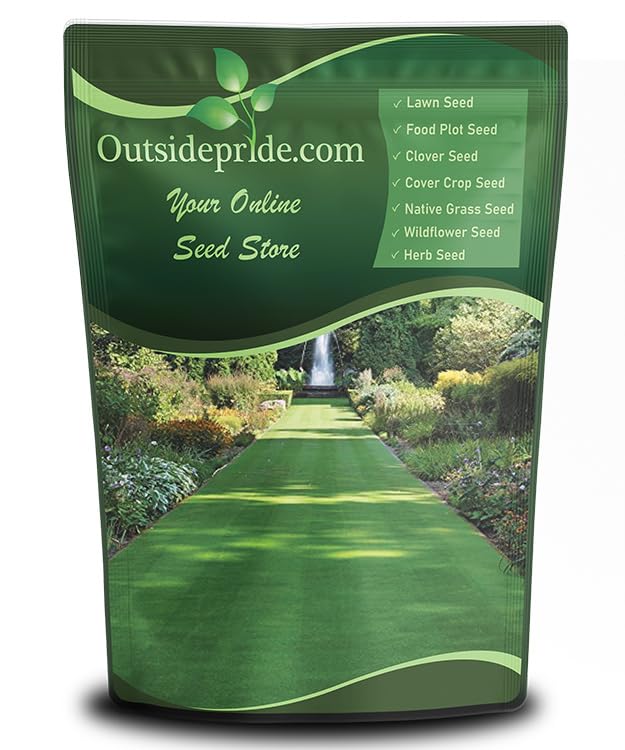
The Outsidepride Legacy Fine Fescue is a complete departure from tall fescue: it blends 20 percent Hard Fescue, 40 percent Chewings Fescue, and 40 percent Creeping Red Fescue, creating a fine-bladed, dense turf that thrives where sunlight is scarce. In Denver, this matters for north-facing yards, narrow side strips between houses, and areas shaded by mature cottonwoods or pines. The OptiGrowth coating delivers zinc, phosphorus, nitrogen, and Elko kelp directly to the seed, improving establishment in poor soil where Denver clay dominates.
The fine fescue texture is dramatically softer and carpet-like compared to tall fescue. Users report germination in 10 to 14 days in shaded areas, with a lush, dark green finish that rivals any traditional grass type. The coating also helps the seed hold moisture better in dry Colorado air. Multiple reviews highlight that this mix requires less water than tall fescue blends once established, making it a strong pick for water-conscious homeowners who still want a full green lawn.
However, fine fescue is less heat-tolerant than tall fescue — it will go dormant faster in Denver’s July direct sun. If your yard gets more than 6 hours of direct sun, this is not the primary choice. Also, customer support issues around refunds have been reported, so purchase knowing that the seed itself performs well under shade conditions, but the company’s guarantee policy may not cover user error.
Why it’s great
- Elite fine texture — soft, carpet-like finish
- OptiGrowth coating feeds seed with nitrogen, zinc, and kelp
- Exceptional shade tolerance for Denver’s covered areas
Good to know
- Not suitable for full-sun areas over 6 hours per day
- Customer refund policy has received negative feedback
- Slow germination if soil temperatures drop below 50°F
5. Scotts Turf Builder Grass Seed Quality All-Purpose Mix, 20 lb.

If your Denver lot spans 5,000 to 8,000 sq ft, this 20-pound bag delivers the lowest cost per square foot of any option here. The all-purpose mix is specially blended for northern lawns, using a combination of perennial ryegrass and tall fescue varieties. The seed is coated with a water-absorbing polymer that pulls in twice as much moisture as uncoated seed, giving you a buffer during Denver’s dry spells — though the coating does mean you get less pure seed by weight than cheaper uncoated bags.
Customer results show that this mix germinates in 10 to 14 days in spring and fall, producing a thick, soft lawn that holds up under moderate foot traffic. The coating helps the seed survive light frost, which is useful for early April planting in Denver when overnight temps still dip into the 30s. The all-purpose formula handles sun and shade about equally, though it will thin out in deep shade (less than 4 hours of direct light) compared to the fine fescue specialist.
The main catch: this bag includes some perennial ryegrass, which has shallow roots (6 to 12 inches) compared to pure tall fescue. In Denver, ryegrass will require more frequent watering during July heat and may die back in extended 95°F+ stretches. For a budget-conscious homeowner who does not mind some summer browning, the coverage value is unmatched. For a heat-proof, low-maintenance lawn, pay the premium for the pure tall fescue options above.
Why it’s great
- Best coverage-per-dollar for large lawns (8,000 sq ft per bag)
- Coated seeds absorb 2x moisture, aiding germination in dry soil
- Versatile sun/shade performance for general use
Good to know
- Ryegrass component has shallow roots and requires more water in heat
- Coating reduces pure seed weight — bag contains filler material
- Not available for shipment to Louisiana (state restriction)
FAQ
Can I plant cool-season grass seed in Denver during summer?
How deep should I water new grass seed in Denver’s clay soil?
What is the best planting window for grass seed in Denver?
Final Thoughts: The Verdict
For most users, the grass seed for denver winner is the Jonathan Green Black Beauty because its 4-foot root depth and Texas bluegrass genetics provide the highest heat and drought tolerance for Front Range conditions. If you want an all-in-one system that thickens an existing lawn without separate fertilizer, grab the Scotts THICK’R Lawn. And for deeply shaded north-facing yards in Denver, nothing beats the Outsidepride Legacy Fine Fescue for soft, carpet-like turf.