
Central California’s climate is a unique crucible for any lawn. You’re dealing with hot, dry summers, cool, wet winters, and alkaline soil that can turn a promising patch of green into a brittle, brown disappointment by August. The wrong seed choice means you’re fighting the environment all year. The right one, however, establishes deep roots that shrug off the Central Valley’s heat and the Sierra foothills’ elevation swings.
I’m Mohammad Maruf — the founder and writer behind Drink4Good. I’ve spent hundreds of hours analyzing the germination rates, drought tolerance scores, and disease resistance data of dozens of seed blends to isolate the ones that actually perform in the specific microclimates of Central California.
This guide cuts through the marketing to deliver a shortlist of proven performers for your exact region. Whether you’re overseeding a patchy lawn in Fresno or starting from bare dirt in Bakersfield, this deep-dive on every spec and customer result will help you choose the best grass seed for central california.
How To Choose The Best Grass Seed For Central California
Central California spans multiple USDA hardiness zones, from the hot, arid San Joaquin Valley to the cooler, higher-elevation Sierra Nevada foothills. This means one-size-fits-all seed mixes rarely work. You need to match the seed type to your specific sun exposure, soil composition, and watering habits. The three dominant cool-season grasses for this region are tall fescue, perennial ryegrass, and Kentucky bluegrass, each with a distinct trade-off between drought tolerance, traffic resilience, and maintenance level.
Match the Seed Type to Your Microclimate
Tall fescue is the undisputed champion for most Central California lawns. Its deep root system (up to four feet) taps moisture reserves that summer heat can’t reach, keeping it green with moderate watering. Perennial ryegrass germinates faster — often within five days — and creates a dense, dark-green turf, but it demands more frequent irrigation and struggles in prolonged drought. Kentucky bluegrass is the least drought-tolerant of the three and requires full sun; it’s best used as a minor component in a blend rather than a stand-alone choice for this region.
Check the Weed and Crop Seed Percentage
A high-quality seed bag will list its weed seed content and other crop seed percentages. For Central California, where invasive grasses like crabgrass and foxtail can quickly take over bare patches, you want a product that is at least 99% weed-free. Blends that include a coating (like Barenbrug’s Yellow Jacket) can improve moisture retention during germination, but they also add weight to the bag — account for that when calculating coverage.
Evaluate the Germination and Coverage Rates
The label will tell you how many pounds of seed you need per 1,000 square feet for new lawns versus overseeding. For example, a 20-pound bag might cover 5,000 square feet for overseeding but only 1,665 square feet for a new lawn. A lower coverage rate often indicates a seed with a higher proportion of lightweight filler or coating. For bare soil in the Central Valley, plan on the higher seeding rate to outcompete weeds during establishment.
Quick Comparison
On smaller screens, swipe sideways to see the full table.
| Model | Category | Best For | Key Spec | Amazon |
|---|---|---|---|---|
| Barenbrug Turf Star RPR | Perennial Ryegrass | High-traffic repair & recovery | RPR regrowth technology | Amazon |
| Lesco All-Pro Transition Fescue | Tall Fescue Blend | Heat & drought resistance | Endophyte-enhanced insect defense | Amazon |
| Jonathan Green Rocky Mountain | Cool-Season Mix | Sierra foothill & high altitude | 4-foot deep root system | Amazon |
| Barenbrug Wonderlawn PRG | Perennial Ryegrass | Quick winter overseeding | Germination in 5 days | Amazon |
| Scotts Kentucky 31 Mix | Tall Fescue Blend | Budget-friendly full sun | 5,000 sq. ft. overseed coverage | Amazon |
| JRK 4 Fescue No Mow | Fine Fescue Mix | Low-maintenance & sandy soil | Maximum height of 4 inches | Amazon |
In‑Depth Reviews
1. Barenbrug Turf Star Regenerating Perennial Ryegrass

Barenbrug’s RPR (Regenerating Perennial Ryegrass) technology is the defining feature here. Unlike standard ryegrass that dies back in thin patches, this blend uses underground rhizomes to fill in worn areas without you needing to reseed. For Central California lawns that see heavy foot traffic from kids or pets, this self-repairing capability is a massive time saver. The Yellow Jacket seed coating improves moisture retention during the critical first week, which helps in our dry summer soil.
Customer reports confirm germination in about seven to ten days when watered twice daily, with a dense, plush turf appearing by week three. It handles clay soil well — a common pain point in the Central Valley — and multiple users noted it revived lawns burned by over-fertilization. The dark green color is uniformly dark, and the texture is soft rather than coarse.
One seller caution: a minority report found crabgrass contamination, so consider a pre-emergent application if you’re starting a new lawn from scratch. Overall, this is the most resilient ryegrass option for this region, combining fast establishment with long-term self-repair.
Why it’s great
- RPR regeneration fills bare spots automatically
- Fast germination even in challenging clay soil
- Excellent foot traffic and pet tolerance
Good to know
- Some bags reported crabgrass seeds
- Requires consistent watering during first 3 weeks
2. Lesco All-Pro Transition Tall Fescue
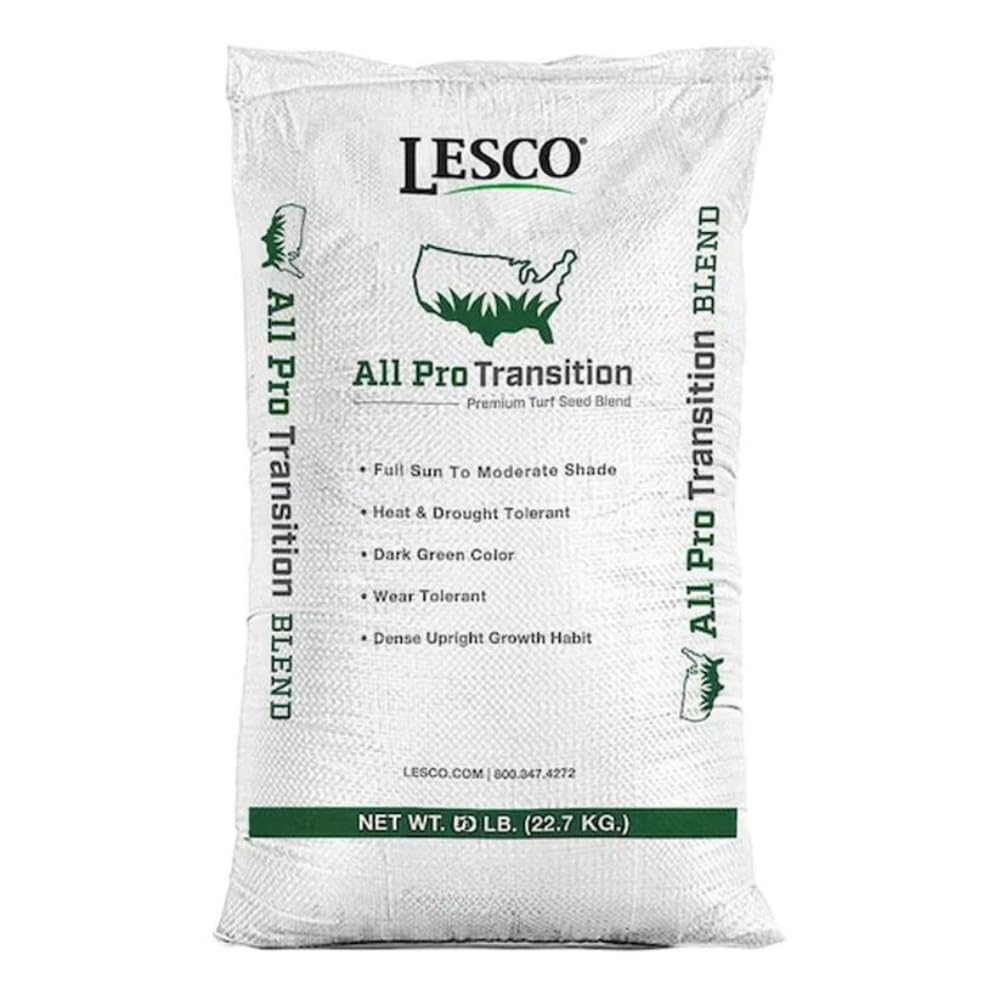
This blend is formulated specifically for transition zones — exactly where Central California sits between warm and cool climates. The tall fescue genetics give it exceptional drought tolerance, while the endophyte enhancement provides a natural defense against chinch bugs and sod webworms without chemical pesticides. That matters in Bakersfield and Fresno where summer heat stresses both the grass and the homeowner.
Users report germination within seven days, and the resulting turf matches existing fescue lawns in texture and color. The seed is noticeably clean — multiple customers switched from Scotts to Lesco because of fewer weed problems in the bag. It establishes a fine-textured, dense sward that feels soft underfoot while maintaining the durability of a traditional tall fescue.
One practical note: Lesco grass seed is labeled non-returnable, so confirm your coverage area calculations before buying. The 10-pound bag covers roughly 2,000 square feet for overseeding or 700 square feet for a new lawn. At the mid-range price point, this is the strongest drought performer in the list.
Why it’s great
- Endophytes deter insects naturally
- Exceptional heat and moderate shade tolerance
- Clean seed with minimal weed content
Good to know
- Non-returnable item
- Slower germination than ryegrass blends
3. Jonathan Green Black Beauty Rocky Mountain

While the label says “Rocky Mountain,” this blend’s specs make it a strong candidate for the higher-elevation areas of Central California — think Mariposa, Tehachapi, or the Sierra foothills above 2,000 feet. It combines Black Beauty tall fescue with Blue Panther Kentucky bluegrass and elite perennial ryegrass, creating a three-way mix that thrives in both sunny and partially shady spots. The fescue roots can grow up to four feet deep, accessing groundwater during summer dry spells.
Customer reviews from Colorado at 8,000 feet confirm the mix grows well at altitude, and the users in Montana and Wyoming also reported success. For Central California’s lower valleys, the deep root system offers a meaningful advantage over shallower-rooted ryegrass: you can cut watering frequency once established. The dark green color is rich and uniform, and the growth habit is non-clumpy, giving a more polished look than some budget mixes.
The 7-pound bag covers 1,750 square feet for new lawns or 3,500 for overseeding. That’s a smaller footprint than some competitors, but the premium blend components justify the per-pound cost. If you’re on well-draining, sandy-loam soil in the foothills, this is your best match.
Why it’s great
- Four-foot deep roots for drought resilience
- Cool-season mix that handles partial shade
- Non-clumpy, uniform growth habit
Good to know
- Smaller bag covers less area
- Premium component pricing
4. Barenbrug Wonderlawn Perennial Ryegrass
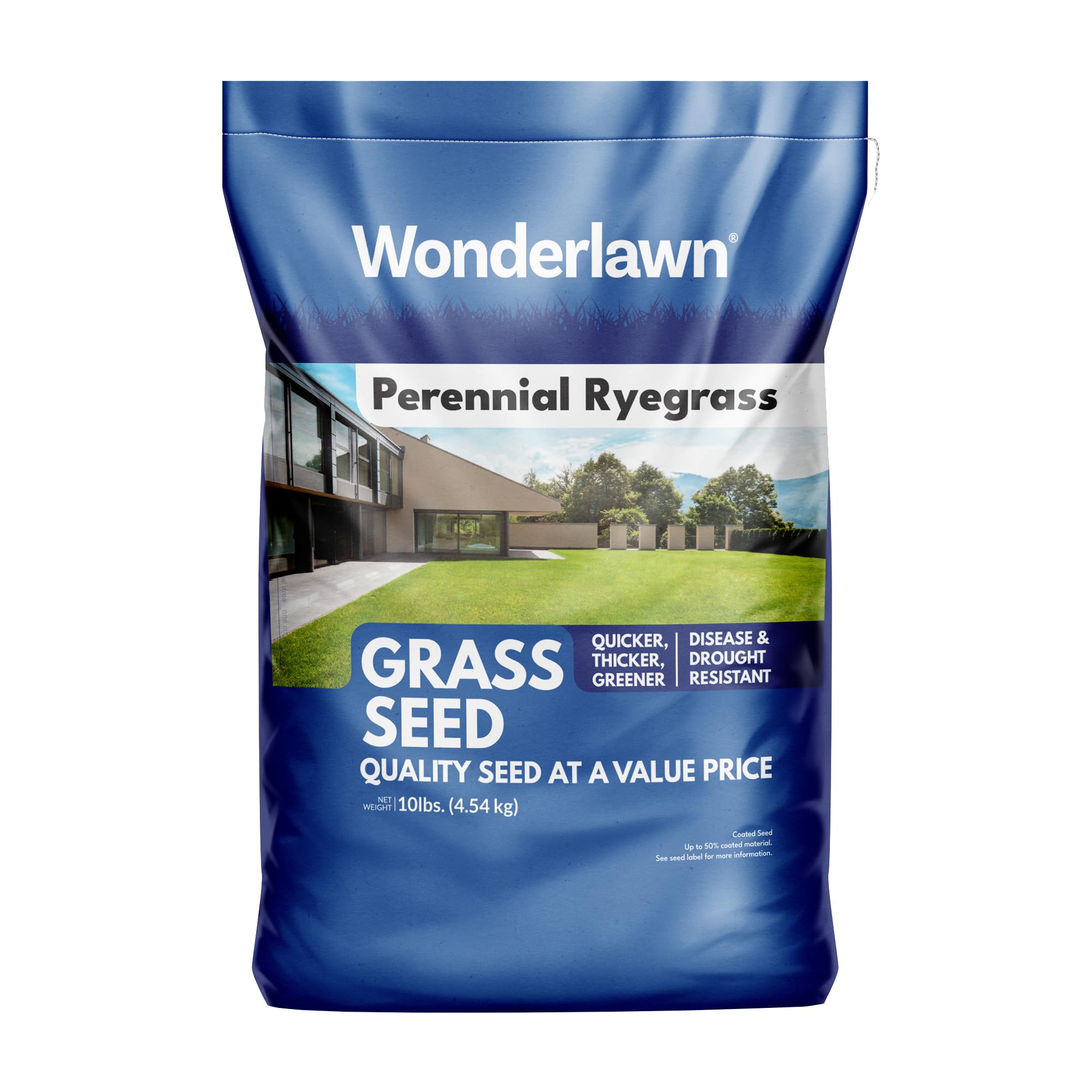
This is the fastest-germinating option on the list. Customer reports show visible grass in as little as five days, making it the go-to choice for winter overseeding in Southern Central California — areas like Bakersfield and Visalia where you want a green lawn through December without starting over in spring. The medium-coarse texture is slightly broader than the Turf Star RPR, but it still produces a dark green, durable surface.
The drought tolerance is moderate compared to tall fescue, but Barenbrug has bred this variety to require less water than standard ryegrass. Multiple reviews mention it outperformed big-box store brands like Scotts and Pennington in both speed and density. The 10-pound bag is manageable for small to medium yards, and the seed spreads evenly through a broadcast spreader.
One limitation: this blend is designed for southern climates and performs best when overseeding existing warm-season lawns like Bermuda. If you’re starting a new cool-season lawn from bare dirt in the Central Valley, you’ll get thicker coverage by choosing a tall fescue-based mix. For overseeding or patch repair, this is the speed leader.
Why it’s great
- Visible grass in 5 days
- Requires less water than standard ryegrass
- Outperforms big-box store brands
Good to know
- Best for overseeding, not new lawns from bare dirt
- Moderate drought tolerance
5. Scotts Kentucky 31 Grass Seed Mix

Scotts Kentucky 31 is a legacy name in grass seed, and this mix combines the original KY-31 tall fescue with annual ryegrass for faster establishment and a denser look. For budget-conscious homeowners in the Central Valley, the 20-pound bag covers up to 5,000 square feet for overseeding, making it the most economical coverage per square foot in this roundup. The heat and drought tolerance are solid for a tall fescue-based mix.
Customer reports are mixed but generally positive. Users in Northern Virginia and North Florida saw lush results within five weeks, even on bare dirt. However, one critical review noted that the bag contains a significant amount of coating material, reducing the actual seed weight by nearly half. That means you might need to buy a second bag if you’re seeding a large bare area. The annual ryegrass component will die off in summer, so this mix is better for temporary winter green or to establish a base that you overseed with a perennial variety.
If your goal is a permanent, low-maintenance lawn, the coating weight and annual grass component make this a short-term solution. For the price, it’s unbeatable for winter cover, but don’t expect the same longevity as a pure tall fescue blend.
Why it’s great
- Lowest cost per square foot in the list
- Germinates in 5 days under ideal conditions
- Heat and drought tolerant tall fescue base
Good to know
- Heavy coating reduces actual seed weight
- Annual ryegrass dies off in summer
6. JRK 4 Fescue No Mow Grass Seed Mix

For those who want to reduce mowing to a seasonal chore — or eliminate it entirely — the JRK 4 Fescue mix is a niche but excellent option. The blend of fine fescues grows to a maximum of four inches and then stops, creating a rolling meadow look that many find aesthetically pleasing. In Central California’s sandy or poor soils, this mix has the best drought tolerance of the group, as fine fescues have evolved to thrive in low-fertility conditions.
Users report germination in about 7 to 10 days, though some noted it was slower to establish than ryegrass. Once established, the grass is soft, non-toxic to pets, and requires minimal fertilization. One user on clay soil in Wilmington used it to create a golf-course-quality lawn with careful preparation. However, the 5-pound bag is small — coverage is roughly 500-700 square feet at the recommended seeding rate, so larger lawns will need multiple bags.
The biggest trade-off is the patience required during establishment. Some users reported patchy results and a mix of tall light-green grass with the short dark-green fescue. This is not a “throw it down and walk away” product — proper soil prep and consistent watering are essential. For the right property and the right expectations, this is the most environmentally low-input option.
Why it’s great
- Requires little or no mowing
- Excellent drought tolerance for sandy soils
- Soft, pet-friendly, and non-toxic
Good to know
- Small bag size limits coverage area
- Slow and sometimes patchy establishment
FAQ
Can I plant cool-season grass seed in Central California during summer?
How often should I water new grass seed in Central California?
Why does my tall fescue lawn look clumpy after seeding?
Final Thoughts: The Verdict
For most users, the best grass seed for central california winner is the Lesco All-Pro Transition Tall Fescue because its endophyte-enhanced blend delivers superior heat and drought tolerance with proven results in the transition zone climate. If you want fast winter green and self-repairing capacity for a high-traffic lawn, grab the Barenbrug Turf Star RPR. And for those in the Sierra foothills or looking for a low-maintenance, no-mow option, nothing beats the Jonathan Green Black Beauty Rocky Mountain mix.