
A flimsy belt that collapses mid-squat doesn’t just ruin your set — it puts your lumbar spine at risk. The difference between a smart purchase and a hospital visit often comes down to the leather thickness, buckle integrity, and width distribution of your gym belt. With options ranging from velcro utility belts to IPF-approved leather prong models, selecting the right one demands a clear-eyed look at specs, not packaging.
I’m Mohammad Maruf — the founder and writer behind Drink4Good. I’ve spent hundreds of hours analyzing customer-verified reviews and cross-referencing factory specs across dozens of lifting belts to isolate the models that genuinely protect your core under load.
Whether you’re a powerlifter chasing a new PR or a cross-training enthusiast needing daily support, this guide breaks down exactly what separates a supportive belt from a liability. This is your complete analysis of the best gym belt options built for real training volume.
How To Choose The Best Gym Belt
Picking the right gym belt comes down to matching three variables to your training style: material thickness, buckle type, and width profile. A 10mm leather belt offers maximum rigidity for heavy squats, while a 7mm tapered belt allows more mobility for Olympic lifts. Avoid the common mistake of buying based on pant size — always measure your true waist at belly-button height with a flexible tape.
Material Thickness and Core Rigidity
Thicker leather (9mm to 10mm) provides the highest intra-abdominal pressure support for heavy powerlifting but requires a break-in period to mold to your torso. Thinner belts (6mm to 7mm) are more comfortable for dynamic movements like snatches and cleans right out of the box, though they offer less sheer back support at extreme loads.
Closure System: Prong vs Velcro
A double-prong steel buckle delivers the most secure hold for maximal-effort lifts, holding the belt at a fixed tightness throughout the set. A velcro system with a steel roller buckle allows micro-adjustments between sets and is generally quicker to fasten, though the adhesive loop can wear out after years of heavy use. Choose prong for competition-style training; choose velcro for high-volume circuit work.
Quick Comparison
On smaller screens, swipe sideways to see the full table.
| Model | Category | Best For | Key Spec | Amazon |
|---|---|---|---|---|
| Iron Bull Strength 7mm | Leather | IPF competition & Olympic lifting | 7mm A-Grade leather, 4″ taper | Amazon |
| Mytra Fusion 10mm | Leather | Heavy powerlifting & bodybuilding | 10mm genuine leather, 4″ width | Amazon |
| Bear KompleX 6″ | Nylon/Velcro | Cross-training & functional fitness | 6″ back panel, steel roller buckle | Amazon |
| Jaffick Leather Pink | Leather | Women’s padded lumbar support | 6mm buffalo hide, 20mm padding | Amazon |
| GurZinn 9mm | Leather | Entry-level powerlifting on a budget | 9mm double-sided leather, 4″ width | Amazon |
| Mytra Fusion Women’s 7mm | Leather | Women’s general weightlifting | 7mm real leather, 4″ width | Amazon |
| Harbinger Foam 4.5″ | Foam/Nylon | Light gym work & general back support | 4.5″ foam core, hook-and-loop closure | Amazon |
In‑Depth Reviews
1. Iron Bull Strength 7mm Leather Weight Lifting Belt
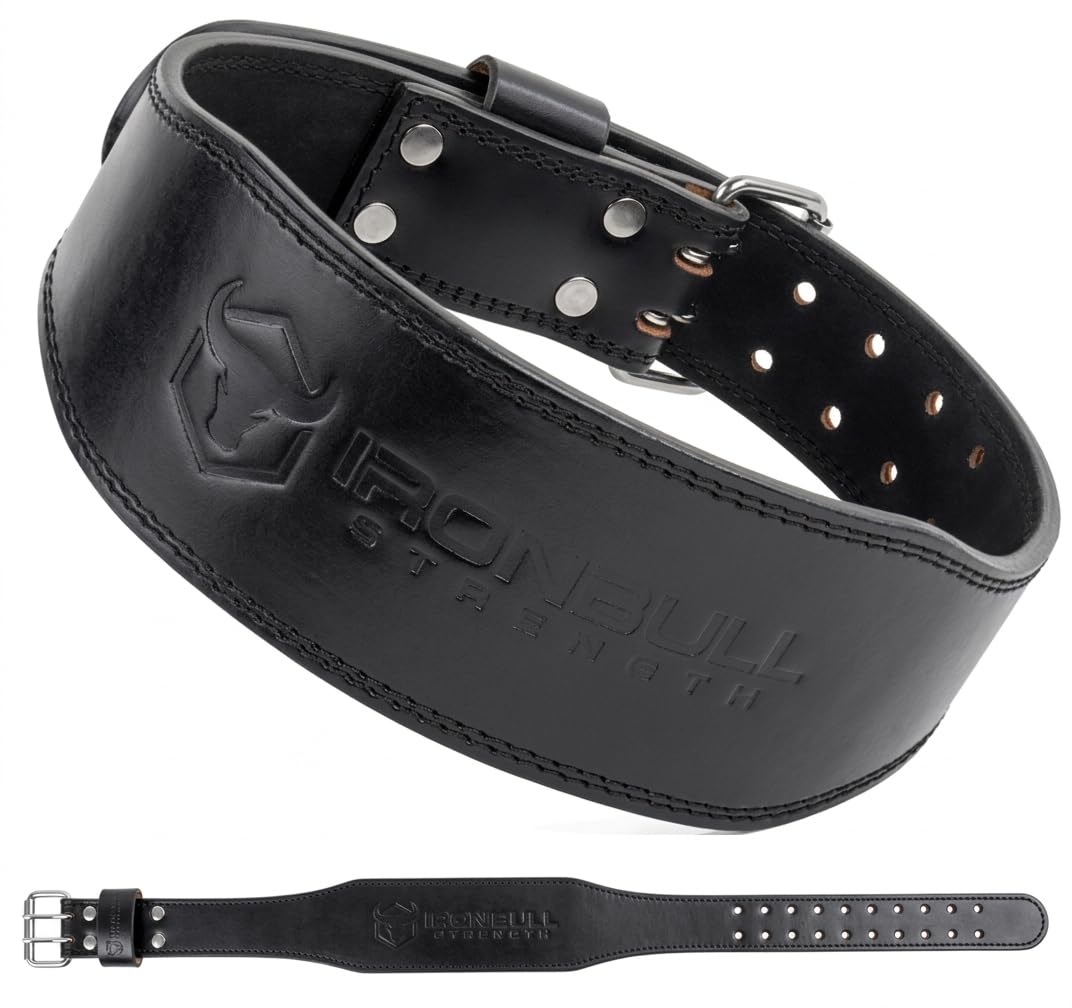
The Iron Bull Strength belt grabs your attention immediately with its IPF, USAPL, and IWF certifications — a rare stamp that confirms its 7mm A-Grade leather and 4-inch to 2-inch taper meet strict competition tolerances. The single-piece core construction eliminates the weak glue joints found in budget belts, and the double roller steel buckle with black coating shows no flex under maximal effort squats.
At 7mm, this belt hits the sweet spot for athletes who both powerlift and perform Olympic lifts. The taper design provides rigid back support during deadlifts while allowing enough flexibility in the front for cleans and snatches. The high-gloss leather finish resists sweat absorption better than suede-covered alternatives, and the included carrying case is a practical bonus for gym travel.
Owners report the leather molds to the torso after roughly three sessions, eliminating the initial stiffness without requiring hours of conditioning. The lifetime warranty against manufacturing defects provides long-term confidence for a belt at this thickness. The only limitation is that very large waist sizes exceeding the Large (40-inch) range will need to confirm fit with the size chart before ordering.
Why it’s great
- IPF/USAPL/USPA/IWF approved for sanctioned meets
- Single-piece A-Grade leather core prevents delamination
- 4″ to 2″ taper balances back support with front mobility
Good to know
- Requires 2-3 sessions to fully break in the leather
- Larger waist sizes should confirm fit before purchase
2. Mytra Fusion 10mm Leather Weight Lifting Belt

The Mytra Fusion 10mm is built for lifters who prioritize absolute rigidity over convenience. With its 10mm thickness and 4-inch uniform width, this belt provides the highest intra-abdominal pressure wall of any option on this list, making it a strong companion for 1-rep max squats and heavy rack pulls. The HG-Steel duo locking system uses a double-prong mechanism with reinforced rivets that prevent any buckle slippage under load.
The 100% genuine leather construction requires a deliberate break-in period, but once conditioned, the belt contours precisely to the lifter’s hip bone and lower rib cage. The hardcore stitching around the buckle and along the full length of the belt resists fraying even after repeated heavy use. Some users note that the initial screws on the buckle assembly can loosen slightly, easily fixed with a drop of thread-locking adhesive.
This is not a belt for dynamic Olympic lifts — the 10mm uniform thickness restricts torso flexion during cleans and snatches. But for powerlifters and bodybuilders focused purely on raw strength numbers, the Mytra Fusion delivers competition-grade support at a mid-range price point. The embroidered logo adds a clean aesthetic that holds up after months of chalk and sweat exposure.
Why it’s great
- 10mm thickness provides maximum core support for heavy compound lifts
- HG-Steel dual-prong buckle stays locked during maximal effort sets
- Reinforced stitching prevents fraying over long-term use
Good to know
- Not ideal for Olympic lifts requiring torso mobility
- Buckle screws may need thread lock for permanent tightness
3. Bear KompleX Weight Lifting Belt

The Bear KompleX belt is the standout option for athletes who split their training between strength work and metabolic conditioning. Its 6-inch firm back panel distributes pressure evenly across the lower back, while the soft inner lining eliminates the pinching and friction marks common with traditional leather belts. The steel roller buckle paired with the heavy-duty velcro strap allows micro-adjustments between barbell sets without needing to fully rethread the belt.
The nylon construction is noticeably lighter than leather alternatives, making it a practical choice for workouts that involve running, box jumps, or kettlebell swings between lifting blocks. The velcro holds securely through heavy clean and jerk sets, and the reinforced stitching prevents the loop from peeling at the edges. Owners with thinner waistlines report the velcro system provides a more precise fit than incremental prong holes.
The trade-off is that the velcro will eventually lose grip after multiple years of heavy daily use, though the belt is priced competitively enough to be considered a consumable item for high-volume athletes. The available patterned designs add a visual personality that many leather belts lack.
Why it’s great
- 6″ back panel spreads pressure across the full lumbar region
- Velcro closure allows infinite adjustability between exercises
- Soft inner lining prevents skin chafing during long sessions
Good to know
- Velcro grip naturally degrades over extended heavy use
- Less rigid than leather belts for 1-rep max attempts
4. Jaffick Leather Weight Lifting Belt for Ladies

The Jaffick belt specifically addresses a gap in the market for shorter-torso lifters with its 4-1/6-inch back width and 20mm of padded sponge lumbar support. The 6mm buffalo hide leather offers a softer feel than standard cowhide, reducing the break-in period while still providing enough rigidity for squats and deadlifts. The dual-prong steel buckle and reinforced rivets keep the belt locked in place throughout the set, and the extra leather flap prevents the buckle from digging into the abdomen.
Women with waists between 22 and 27 inches report that the smallest size fits correctly without gaping at the hips — a common failure point on unisex belts. The pearlescent pink color has drawn strong positive feedback from users who want functional gear with a distinct aesthetic. The suede lining on the back panel adds grip against clothing, preventing the belt from riding up during bent-over rows.
The 6mm thickness is best suited for intermediate lifting loads rather than elite powerlifting. For general gym work and progress toward strength goals, however, the comfort-to-support ratio is excellent.
Why it’s great
- 20mm padded lumbar insert provides extra low-back support
- Buffalo hide leather breaks in faster than standard cowhide
- True sizing accommodates smaller waist measurements accurately
Good to know
- 6mm thickness compresses under extreme powerlifting loads
- Limited to lighter color options if you prefer all-black gear
5. GurZinn 9mm Leather Weight Lifting Belt

The GurZinn 9mm belt punches above its price tier with double-sided leather construction and six stainless steel rivets reinforcing the buckle area. The 4-inch width is a standard powerlifting profile, and the 10 adjustment holes provide enough range for waist sizes from 21 to 43 inches. The sponge pad sewn into the inner back adds a layer of comfort that is uncommon at this thickness and price combination.
New lifters transitioning from foam velcro belts to leather will appreciate the gradual stiffness of the 9mm leather — it is stiff enough to provide genuine core support for heavy squats but not so rigid that it becomes unusable without extensive conditioning. The purple color option adds a distinct look compared to the sea of black belts in most gyms.
Some users note the belt arrives quite stiff and requires dedicated rolling or wear time to achieve full flexibility. The stitching around the pad attachment is adequate for regular training but may not survive aggressive daily use over multiple years. For an entry-level powerlifting belt, it delivers the core function at an accessible price point.
Why it’s great
- 9mm double-sided leather offers genuine support without extreme cost
- Stainless steel rivets add durability to the buckle connection
- Sponge pad improves comfort during long squat sessions
Good to know
- Very stiff when new — requires manual break-in
- Pad stitching may show wear under frequent heavy use
6. Mytra Fusion Women’s 7mm Leather Belt

The Mytra Fusion Women’s belt is a 7mm real leather option designed specifically to fit smaller frames without excess bulk. At 4 inches wide with a 31-inch waist size in Medium, it avoids the gaping issue that occurs when women wear unisex belts with straight-cut designs. The genuine leather construction provides predictable stiffness that supports the core during deadlifts without digging into the ribs on front squats.
Lifters with waist sizes below 28 inches report that the XS and S options fit correctly where many standard belts do not. The 7mm thickness is manageable for daily training, offering enough rigidity for working sets up to moderate-heavy loads. The belt arrives with moderate stiffness and becomes noticeably more comfortable after about five sessions of regular use.
The primary limitation is that the prong-and-hole adjustment system offers less granular fit than velcro or a lever mechanism. Some users wish for tighter micro-adjustment between the holes. For women seeking a leather belt that fits proportionally rather than swimming in a unisex design, this is a practical choice at a fair price.
Why it’s great
- Scales correctly for smaller waist sizes down to 24 inches
- 7mm real leather provides good support for moderate-heavy loads
- No hip gaping common with unisex belt designs
Good to know
- Prong-hole system lacks micro-adjustment flexibility
- Not stiff enough for elite-level 1RM powerlifting
7. Harbinger Weightlifting Belt, Foam, 4.5″ Width

The Harbinger foam belt is a utilitarian option designed for general fitness classes, yard work, and light gym sessions rather than heavy barbell training. Its 4.5-inch foam core provides basic proprioceptive feedback and mild back support, while the low-profile steel roller buckle ensures it does not interfere with abdominal compression during crunches or dumbbell work. The hook-and-loop closure allows quick fastening and removal between exercises.
The polypropylene and nylon blend construction keeps the belt lightweight and breathable, making it a reasonable choice for warm climates or high-rep circuit training. The IWF competition standard mention applies to the buckle form factor rather than the belt’s load-bearing rating, so this should not be confused with a powerlifting belt. Owners appreciate the value for basic back support in group exercise classes and household lifting tasks.
The velcro strap on this model has a smaller surface area than premium velcro belts, which means the hold is less aggressive during twisting movements. Users moving significant barbell weight have reported the belt feeling less supportive under load. For its intended use as a light-duty support belt, it performs adequately, but it is not a substitute for a leather lifting belt.
Why it’s great
- Extremely lightweight and breathable for circuit training
- Quick hook-and-loop closure for fast transitions between exercises
- Low-profile buckle stays out of the way during ab work
Good to know
- Not designed for heavy barbell squats or deadlifts
- Velcro surface area is small — less secure for dynamic movements
FAQ
Should I size my gym belt based on my pant size or true waist measurement?
How long does it take to break in a 10mm leather gym belt?
Can I use a velcro gym belt for powerlifting competitions?
Final Thoughts: The Verdict
For most users, the gym belt winner is the Iron Bull Strength 7mm because its IPF certification, single-piece leather core, and tapered design serve both powerlifting and Olympic lifting without compromise. If you want maximum rigidity for heavy powerlifting, grab the Mytra Fusion 10mm. And for cross-training athletes who need quick adjustability and a comfortable inner lining, nothing beats the Bear KompleX 6″ velcro belt.