
Park rats and lap-hounds know the drill: a frozen toe strap on a sub-zero morning, or a stubborn ratchet that refuses to click. The right set of bindings eliminates that friction, turning every run into a seamless flow of pop, flex, and edge-to-edge response. The binding is your direct connection to the board — the highback angle, the strap geometry, and the baseplate stiffness all dictate whether you land clean or wash out.
I’m Mohammad Maruf — the founder and writer behind Drink4Good. I spent countless hours analyzing the material science, customer durability reports, and flex profiles of this year’s most talked-about bindings to separate the playful from the plank-tastic.
Whether you are tweaking grabs in the terrain park or charging through mogul fields, finding the best freestyle snowboard bindings means matching your boot size and riding style to a binding that balances forgiveness with response.
How To Choose The Best Freestyle Snowboard Bindings
Snowboard bindings are not one-size-fits-all. Freestyle riders need a softer flex for pressing on rails and jibbing, while a free-rider on the same park lap might want a stiffer highback for landing kickers. Before clicking “add to cart,” lock in these factors.
Flex Rating and Riding Style
Numbered 1 (mushed-out soft) to 10 (frozen-stiff), a freestyle binding usually lives in the 3–6 range. A 4/10 flex provides enough give for butter tricks and presses but still snaps back for edge control on groomers. Entry-level riders often mistake “stiffer = better” and end up fighting their bindings in the park.
Entry System: Traditional vs. Step-In vs. Dual
Traditional two-straps remain the gold standard for reliability and micro-adjustability. Step-in systems (Burton Step On, Nidecker Supermatic) trade weight for speed — ideal for lap-hungry resort riders. Dual-entry bindings like the JONES FASE use a hinged highback to let you pivot in without sitting down, retaining the wrap of a traditional toe strap.
Heelcup Material and Baseplate
Aluminum heelcups (Union, XCMAN) don’t crack like plastic under extreme cold, and they shed slush better. A single-component nylon baseplate offers consistent flex across all temperatures, while a fiberglass-infused baseplate (Rossignol Battle) gives more snap and dampening. Baseplate material also dictates how well the binding mates with the board’s sidecut for carving.
Quick Comparison
On smaller screens, swipe sideways to see the full table.
| Model | Category | Best For | Key Spec | Amazon |
|---|---|---|---|---|
| Union Force | Premium | All-terrain aggression | Aluminum heelcup / 8/10 flex | Amazon |
| Burton Step On Re:Flex | Premium | Step-in convenience | Single-component nylon baseplate | Amazon |
| Nidecker Supermatic | Premium | Dual-entry versatility | Flax fiber highback / 6/10 flex | Amazon |
| Nidecker LT Supermatic | Premium | Automatic dual-entry | Reinforced platform / 7/10 flex | Amazon |
| JONES Mercury FASE | Premium | Freeride with fast entry | Hinged highback / 5/10 flex | Amazon |
| Union Flite Pro | Mid-Range | Beginner park progression | Aluminum heelcup / 4/10 flex | Amazon |
| Burton Mission Re:Flex | Mid-Range | All-mountain freestyle | Single-component baseplate / 5/10 flex | Amazon |
| Rossignol Battle | Budget | Value all-mountain setup | Heel-side highback spine / 4/10 flex | Amazon |
| XCMAN All-Mountain | Budget | Entry-level all-mountain | Aluminum heelcup / 4/10 flex | Amazon |
In‑Depth Reviews
1. Union Force
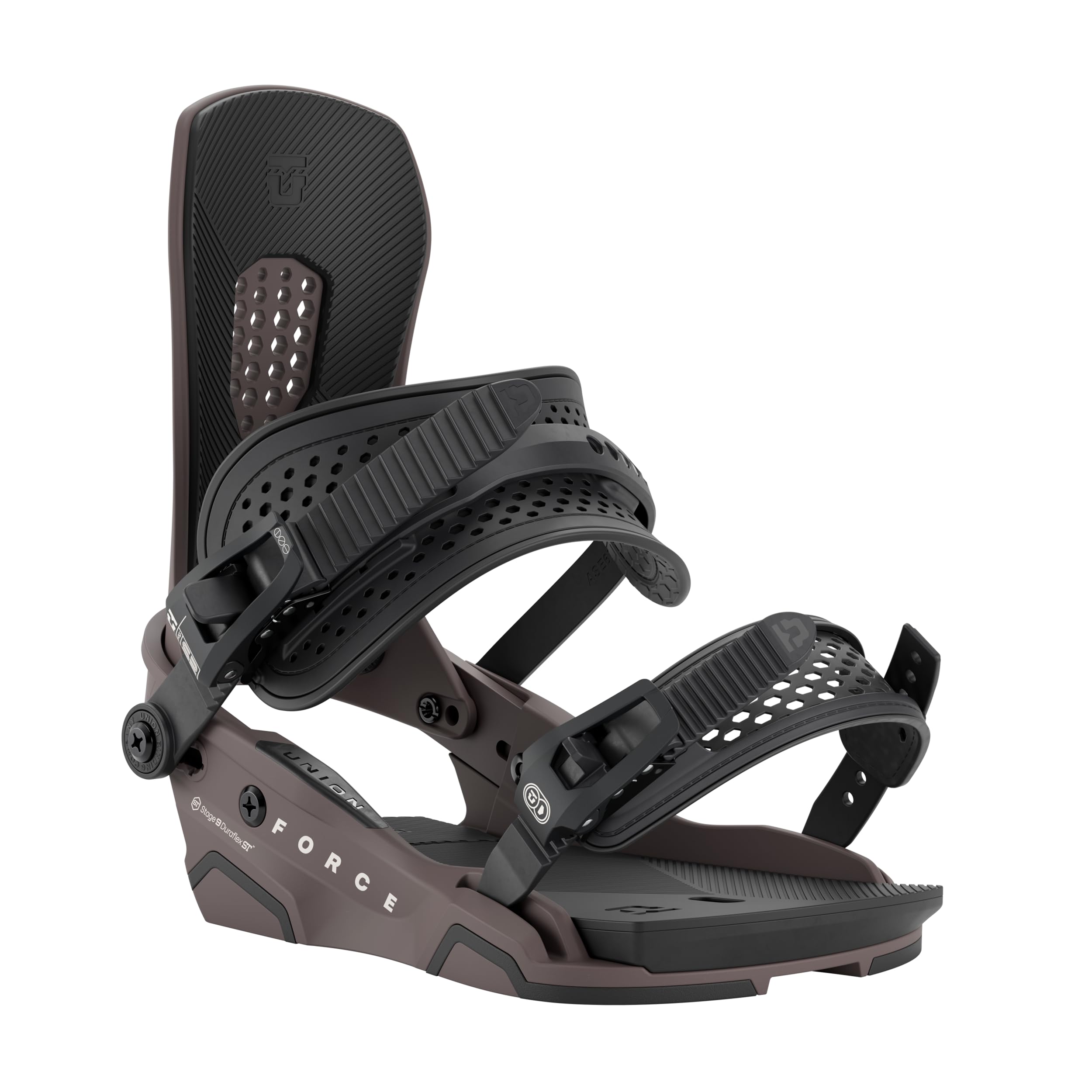
The Union Force has held the “most popular binding on the mountain” title for years for good reason. It uses a forged aluminum heelcup that sheds ice and snow instantly, paired with a fiberglass-reinforced nylon baseplate that gives a snappy 8/10 flex. The S11 Duraflex ST highback provides enough resistance for aggressive carving and steep chutes but still pivots well for tweaked-out grabs.
Ridden by pros Miles Fallon and Benny Milam, the Force uses Union’s magnesium ratchet system that stays bombproof even after several seasons of park abuse. The toe ramp is adjustable for boot centering, and the heelcup slides tool-free to fine-tune your stance. This binding rewards an experienced rider who wants a single quiver-killer binding.
One review mentions the Medium fits US 8–10 boots but a size 14 rider found entry tight — tall riders should size up to the XL offering. The Force does not include a baseplate cushioning system as plush as Burton’s FullBED, so hard landings transmit more shock through the feet.
Why it’s great
- Industry-leading aluminum heelcup prevents cracking in extreme cold
- Magnesium ratchet system maintains smooth operation through ice and slush
- Tool-free heelcup and strap adjustment for quick on-mountain tuning
Good to know
- Stiff 8/10 flex may feel punishing for beginner freestyle riders
- No integrated shock-absorbing footbed compared to Burton Re:Flex
- Larger boot sizes (14+) may struggle with the Medium heelcup geometry
2. Burton Step On Re:Flex
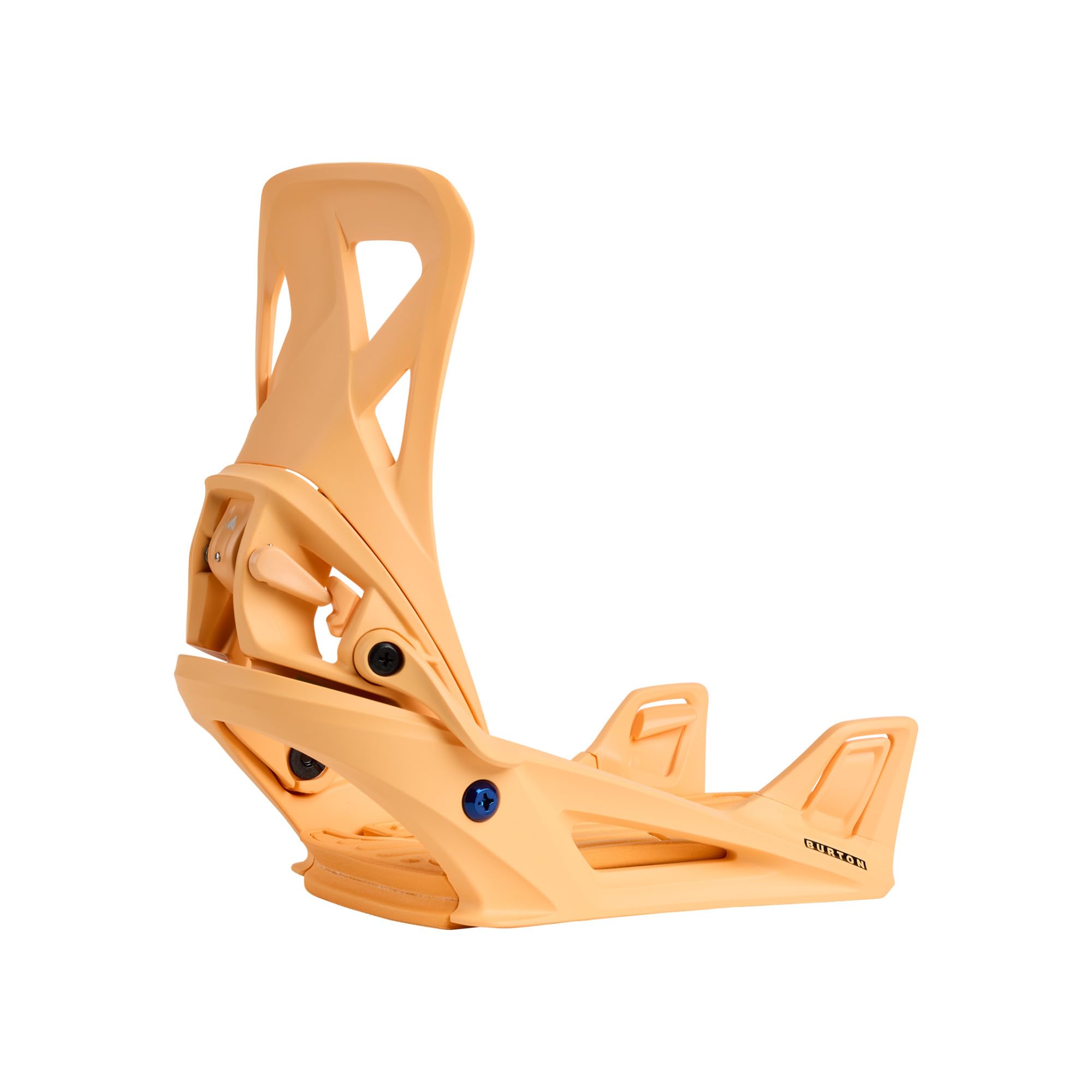
The Burton Step On Re:Flex eliminates straps entirely. Two toe hooks engage with the boot’s cleats while a rear heel lock secures the heel pocket. The system uses Burton’s Re:Flex mounting disc, which is fully compatible with 2×4, 3D, and channel systems, so it fits most modern boards. The baseplate is a single-component nylon blend with 30% short-glass fiber for a playful, medium-flex feel suited to freestyle applications.
Riders report a noticeable reduction in leg fatigue because there is no need to bend over to crank straps between runs — you simply click in and go. The Toe Hook 2.0 design offers easier entry in icy conditions than the original Step On, and the canted hi-back provides immediate heel-side response without cranking forward lean.
This binding only works with Burton Step On boots, which means you are locked into an ecosystem. If you already own regular lace or Boa boots, you will need to buy a new pair. The step-in connection feels less locked-in than a traditional toe strap for aggressive carving, and some riders report heel lift if the boot-bed interface is not perfectly matched.
Why it’s great
- Fastest entry/exit on the market — click in while standing
- Proven Re:Flex cushioning reduces fatigue for full-day sessions
- Tool-less forward lean adjustment on the hi-back for quick tuning
Good to know
- Requires Burton Step On boots — no compatibility with standard snowboard boots
- Heel lift can occur if boot soles are worn or dirty
- Less lateral play for technical freestyle tricks compared to strap bindings
3. Nidecker Supermatic
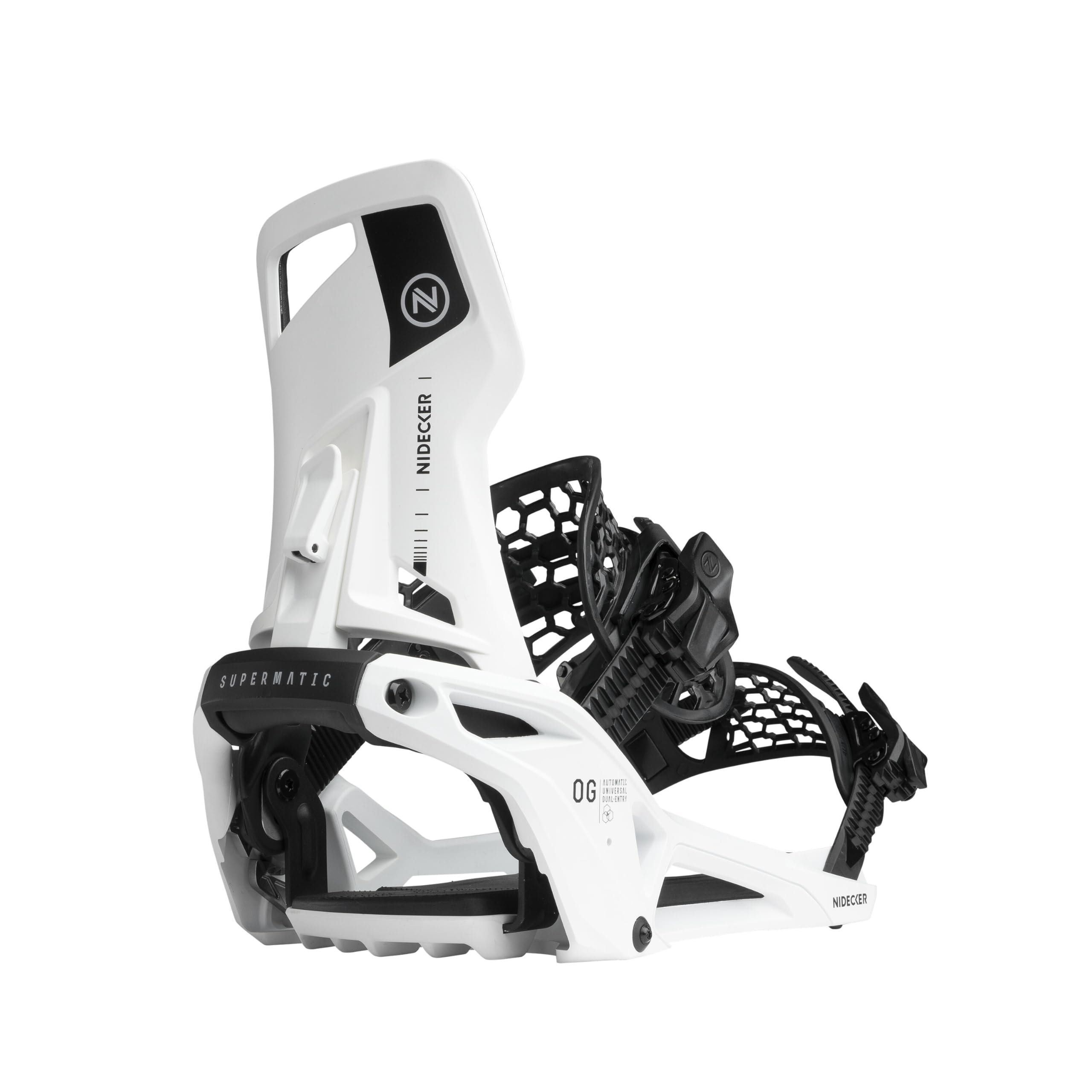
The Nidecker Supermatic uses a clever dual-entry system — you can step in from the rear (like a Flow) or snap in from the front like a traditional strap binding. The highback is crafted from flax fiber, a natural material that provides damp, vibration-absorbing flex without the ping of pure nylon. The baseplate uses recycled carbon hangers and posts, giving it a premium feel while keeping weight under 5 lbs.
Riders highlight the ability to leave the toe strap pre-set and the ankle strap connected — you just pivot your foot in and the heel lever locks automatically. The shock-absorbing footbed uses a multi-density EVA construction that tames chatter on hardpack and ice. The tool-free micro-adjustments allow you to dial in forward lean and strap tightness without removing gloves.
The Supermatic is heavier than traditional strap bindings due to the locking mechanism. The initial learning curve involves finding the exact heel-cup tension — too tight and the rear lever is difficult to release; too loose and you sacrifice heel hold. Some users report that boot heel can get jammed between the heel cup and locking points until the bindings break in.
Why it’s great
- Dual-entry design works with standard snowboard boots — no proprietary footwear needed
- Flax fiber highback delivers smooth, damp flex ideal for park and groomers
- Shock-absorbing footbed with multi-density EVA reduces vibration
Good to know
- Heavier than traditional strap bindings due to the automatic mechanism
- Learning curve to set optimal heel-cup tension for smooth release
- Mechanical movement takes a few days of riding to feel natural
4. Nidecker LT Supermatic
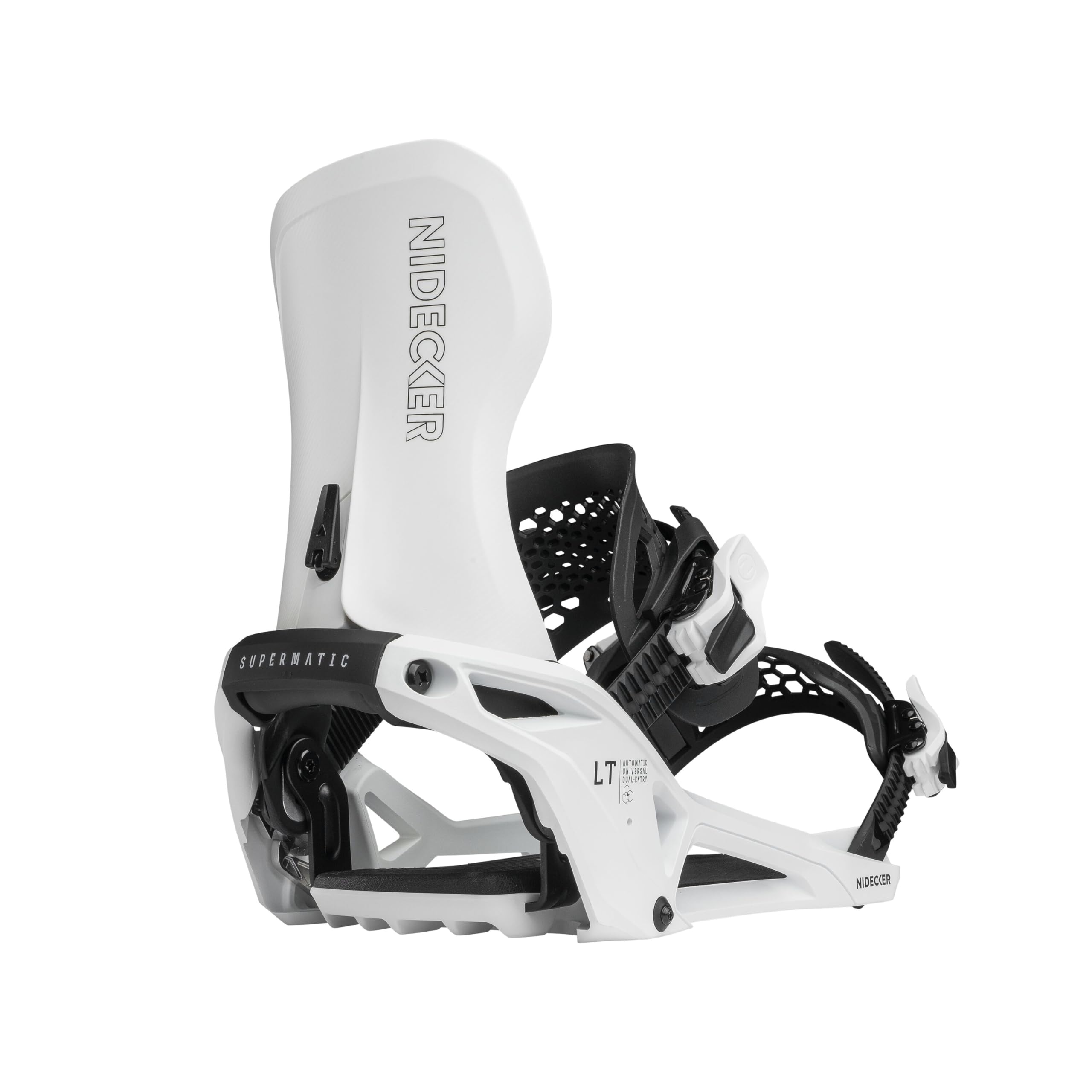
The LT Supermatic shares the same dual-entry DNA as the standard Supermatic but uses a reinforced platform for more efficient power transfer. The highback is still flax fiber, but the chassis adds a nylon composite hybrid that pushes the flex rating to 7/10 — stiffer than the standard Supermatic, making it better suited for riders who want pop on kickers without losing the convenience of a step-in system.
The LT uses Nidecker’s “Even Wrap” strap design that reduces pressure points by distributing tension more evenly across the boot tongue. Reviewers note the binding feels supportive and responsive right out of the box, with minimal break-in required. The reinforced heel cup uses more aluminum content than the standard model, improving durability for riders who rack up 30+ laps in a day at Midwestern hills.
The binding is noticeably heavier than traditional strap options — one scale reports 6 lbs per binding. The included leash is criticized for being too short for practical use. The rear-entry heel strap can be finicky — if the strap is set too tight, releasing the rear lever becomes difficult, and boot heels can stick between the heel-cup locking points until the mechanism wears in.
Why it’s great
- Stiffer flex (7/10) suits aggressive freestyle riders seeking pop and response
- Even Wrap strap design minimizes pressure points and improves board feel
- Reinforced aluminum heel cup improves long-term durability
Good to know
- Heavier than traditional strap bindings, noticeable during air tricks
- Included leash is too short for convenient use
- Rear release mechanism needs break-in to operate smoothly
5. JONES Mercury FASE
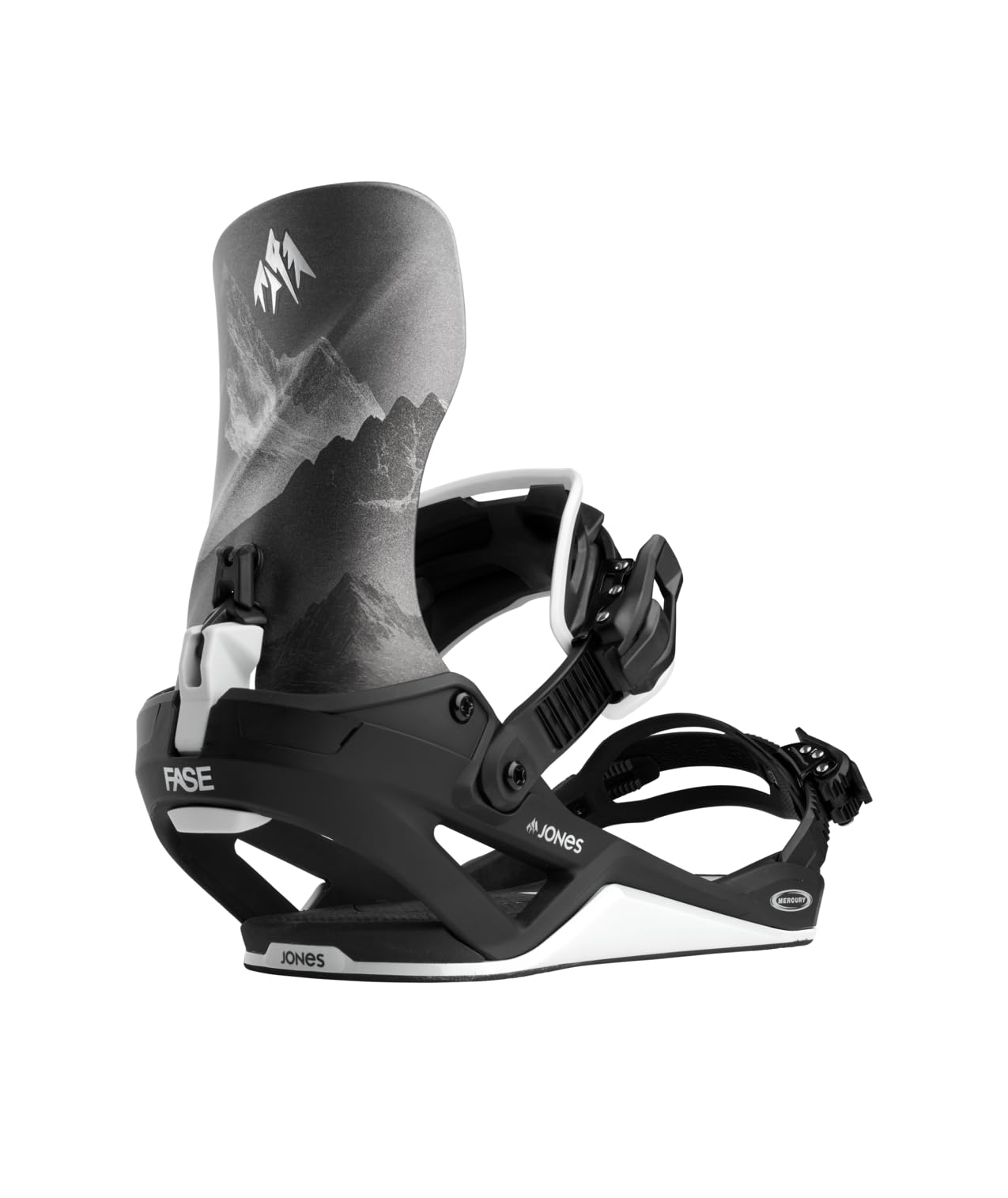
The JONES Mercury FASE (Fast Access Step-in Entry) uses a hinged highback that flips open so you can step in without sitting down. Unlike step-in systems that rely on toe cleats, the FASE system keeps a traditional two-strap setup — the toe strap is set once and the ankle strap stays pre-connected, so you pivot in and ratchet the ankle strap for final tension. The baseplate uses a 30% glass-filled nylon with a TPU chassis for medium-stiff response.
Riders describe the Mercury FASE as “the future of two-strap bindings” because it retains the locked-in feel of a traditional strap while shaving seconds off every lap. The highback hinge is constructed from the same flax fiber material as Nidecker models, offering consistent dampening. The EVA bottom pad and full-length footbed cushion landings without deadening board feel.
The FASE system takes a few runs to learn — the hinge point can feel loose if the ankle strap is not properly pre-tensioned. The binding is designed for medium-stiff boots, and very soft boots can cause heel lift. The Mercury FASE does not include forward lean adjustment as fine-tuned as the Burton Step On, and the highback hinge adds a small amount of weight compared to a solid one-piece highback.
Why it’s great
- Hinged highback allows step-in convenience without sacrificing two-strap security
- TPU chassis with 30% glass-filled nylon provides responsive edge-to-edge power transfer
- EVA footbed cushions landings well for medium-stiff freestyle riding
Good to know
- Requires pre-tensioned ankle strap for smooth entry — needs practice
- Not recommended for very soft boots due to potential heel lift
- Hinged highback adds slight weight compared to traditional one-piece designs
6. Union Flite Pro
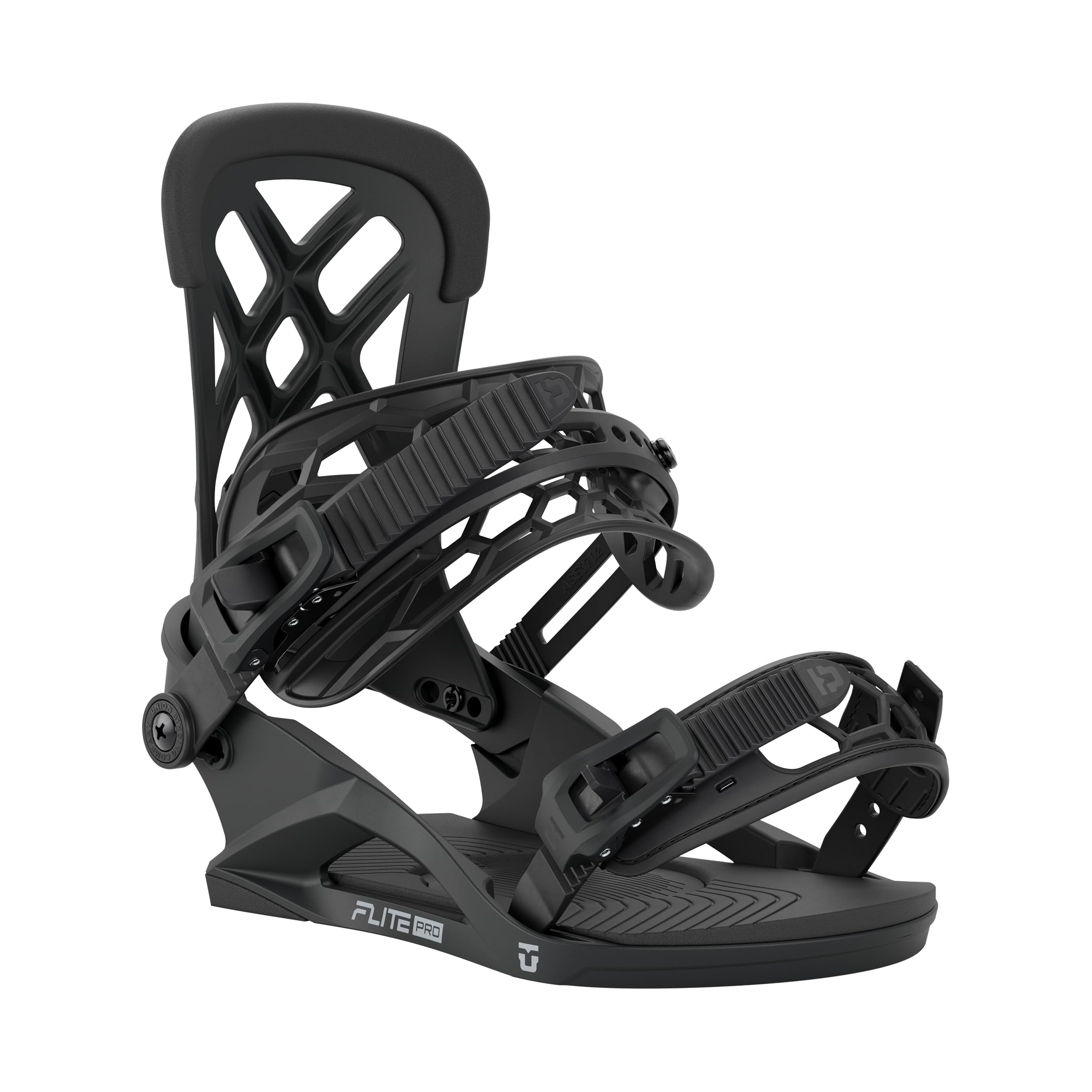
The Union Flite Pro lands at the sweet spot between price-conscious design and real Union engineering. It uses an aluminum heelcup (the same material as the Force) combined with a plastic baseplate and a soft 4/10 flex. This makes it forgiving for presses on rails and butters, while the metal heel cup prevents the binding from cracking in sub-zero temps.
Reviewers praise the smooth ratchet system and easy setup — one report mentions they paired perfectly with Vans lace-up boots and a mid-flex board for a balanced park setup. The Flite Pro is notably lightweight at 4.1 lbs per binding, making it easy to toss your board under one arm between runs.
The plastic baseplate raises long-term durability concerns compared to full aluminum or fiberglass-infused plates. One reviewer noted that after one season of aggressive riding, the flex felt “noodly” for steep runs and larger kickers. The entry-level skill rating (Beginner-Intermediate) means experienced riders will likely outgrow this binding within 1–2 seasons.
Why it’s great
- Aluminum heelcup at a budget-friendly price point ensures cold-weather durability
- Soft 4/10 flex is forgiving for park jibbing and beginner progression
- Lightweight construction reduces fatigue for all-day resort riding
Good to know
- Plastic baseplate may show fatigue over multiple seasons of hard park use
- Soft flex limits control on steep terrain and large jumps
- Beginner to intermediate skill ceiling — likely outgrow in 1–2 seasons
7. Burton Mission Re:Flex

The Burton Mission Re:Flex is one of the most popular all-mountain bindings on the planet, and for good reason. It uses a single-component baseplate made from nylon blended with 30% short-glass fiber, resulting in a medium 5/10 flex that is playful enough for the park but stiff enough for carving on groomers. The Re:Flex mounting system is fully compatible with 2×4, 3D, and channel boards.
The FullBED cushioning system provides full underfoot shock absorption — a feature that noticeably reduces fatigue on long days, especially if you are landing jumps or riding through chop. The Reactstrap ankle strap uses a three-piece construction that wraps the ankle without pressure points, and the Supergrip Capstrap fully encases the toe box for secure power transfer.
Some riders report the Mission is less responsive than stiffer bindings like the Union Force — the medium flex can feel too loose for aggressive carving at higher speeds. The Smooth Glide buckles are durable but can ice up in wet snow if not periodically cleared. The Small size is snug for smaller feet, so check the size chart carefully before buying.
Why it’s great
- FullBED cushioning system minimizes leg fatigue during all-day park sessions
- 5/10 flex splits the difference between park-friendly and all-mountain carving
- All mounting systems (2×4, 3D, channel) are supported out of the box
Good to know
- Medium flex lacks bone-stiff response for aggressive carving at speed
- Buckles can ice up in wet snow conditions if not dried
- Size Small runs snug — measure your boot sole length before ordering
8. Rossignol Battle

The Rossignol Battle binding punches well above its tier. The MainFrame highback features a rigid spine for heel-side response but includes built-in flex zones that allow lateral movement — a design borrowed from Rossi’s higher-end models. The 3D-molded One Shot straps wrap the boot snugly for precise connection, and the dual-zone Puffy Pad footbed uses thermoformed EVA to absorb vibration.
Customer feedback is overwhelmingly positive for the price — one rider reported they held up perfectly in 10°F Colorado conditions without freezing or jamming. The Baselight buckle system uses anti-shock nylon for smooth entry and exit, even with thick gloves. The binding is rated for beginner to intermediate use, and a reviewer noted they work well on a 154cm Ride Control board for mixed runs.
The plastic construction of the baseplate and highback lacks the stiffness of aluminum counterparts, so aggressive freeriders may find the flex too soft for steep carving. The binding is unmarked for left/right orientation, so setup takes a few extra minutes of checking stance alignment. The toe strap may need periodic re-tightening as the EVA compresses over time.
Why it’s great
- Rigid spine highback provides surprising heel-side response for the price
- 3D-molded One Shot straps deliver a secure, conforming fit around the boot
- Dual-zone EVA footbed absorbs chatter and landings effectively
Good to know
- Plastic construction limits overall stiffness for aggressive riding
- No left/right orientation markings — setup requires careful attention
- Toe strap tension may loosen as EVA compresses with use
9. XCMAN All-Mountain
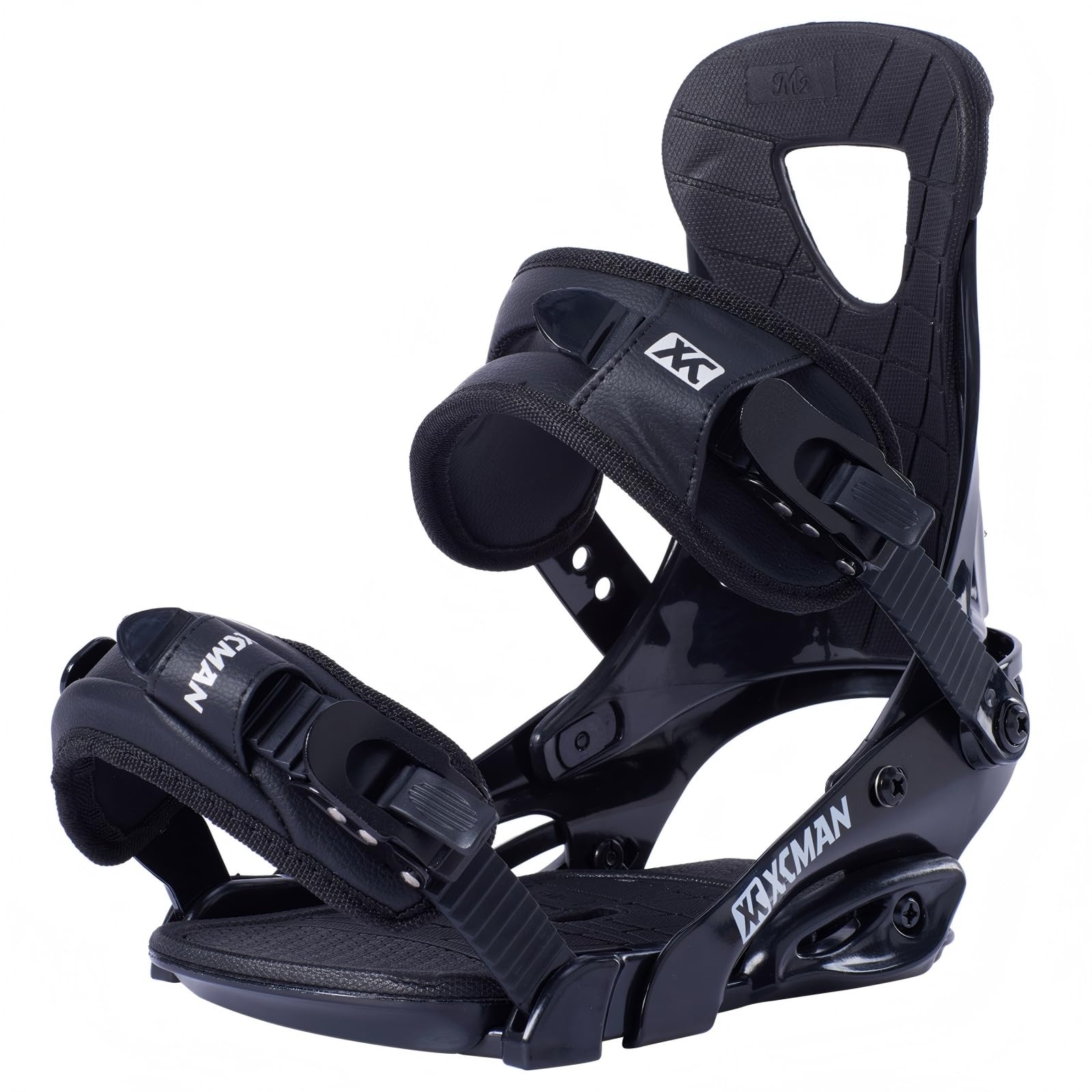
The XCMAN All-Mountain binding uses an aluminum heelcup (rare at this tier) and a fiberglass-reinforced scaffolding inside the baseplate to provide a medium-rigid flex at a very accessible price. The binding uses a 360-degree universal mounting disc compatible with 2×4 and 4×4 inserts, making it easy to swap between boards. The canting feature allows alignment with the rider’s natural stance, reducing knee and ankle strain.
Reviews note the binding fits size 12 boots comfortably in Large, and the easy self-explanatory install makes it a strong choice for beginners setting up their first board. The strap system uses a padded EVA design that provides a snug, locked-in feel. The tool-free adjustable highback allows quick forward lean changes on the mountain.
The bindings come with no printed instructions — one reviewer noted they had to figure out mounting by trial and error. The plastic baseplate, while reinforced, is not as durable as full-aluminum options, and the toe strap can feel thin compared to premium brands. The flex is rated 4/10, but some riders report it feels closer to a 3/10 after the first few days of use, indicating the nylon softens with exposure to cold.
Why it’s great
- Aluminum heelcup at a budget price provides cold-weather durability
- Universal 360-degree mounting disc works with most board insert patterns
- Canting adjustment reduces knee strain for riders with wider stances
Good to know
- No printed instructions included — setup requires online research for beginners
- Baseplate and straps use more plastic than premium alloy alternatives
- Flex softens in sustained cold temperatures, reducing responsiveness
FAQ
What flex rating should a beginner freestyle rider look for?
Can I use step-in bindings for freestyle park riding?
Do I need a specific boot to match my bindings?
Final Thoughts: The Verdict
For most riders, the freestyle snowboard bindings winner is the Burton Mission Re:Flex because its 5/10 flex and FullBED cushioning deliver enough playfulness for park laps while retaining carving capability for the rest of the mountain. If you want a step-in system without sacrificing the feel of two straps, grab the JONES Mercury FASE. And for the best value that still uses an aluminum heelcup, nothing beats the Union Flite Pro.