
Late-night practice used to mean choosing between disturbing the whole house or not playing at all. A dedicated headphone solution eliminates that trade-off, delivering rich, responsive amp tones directly to your ears without waking a soul. The right unit transforms silent practice from a compromise into a focused, immersive experience where every nuance of your playing comes through clearly.
I’m Mohammad Maruf — the founder and writer behind Drink4Good. I’ve spent countless hours analyzing the hardware specifications and real-world performance of these compact rigs, from digital modeling algorithms to DAC quality and headphone driver compatibility, to bring you this guide.
Whether you’re a beginner or a seasoned player, finding the right best guitar amp for headphones depends on understanding key specs like amp modeling depth, headphone output impedance, and connectivity options.
How To Choose The Best Guitar Amp For Headphones
Silent practice requires more than just any amplifier with a 1/4-inch jack. The way an amp reproduces its sound through a headphone output—or through a dedicated headphone amp system—affects your tone, feel, and overall practice quality. Focus on these key areas to find the right setup for your needs.
Analog vs. Digital Modeling Circuits
Traditional solid-state and tube amps often use a simple resistor network for their headphone output, which can sound dull and lifeless. Modern digital modeling units, from pocket-sized plugs to over-ear systems, use complex algorithms, cabinet simulation, and high-quality DACs to deliver realistic amp tones directly to your headphones. The level of modeling depth—whether it emulates preamp tubes, power tubes, and speaker cabs—determines how authentic your silent tone will be.
Headphone Output Quality and Impedance
Not all headphone outputs are created equal. A clean, low-noise circuit with enough power to drive your specific headphones (measured in milliwatts) prevents hiss and ensures dynamic range. Some units feature a dedicated headphone amplifier with adjustable output impedance, making them compatible with both low-impedance in-ear monitors and high-impedance studio headphones without tonal coloration.
Connectivity and Silent Features
Bluetooth audio streaming lets you jam along with backing tracks or YouTube lessons wirelessly, while USB-C audio interface functionality allows direct recording to your computer or phone. An auxiliary input and a built-in tuner are practical additions for daily practice. For ultimate quiet, some units allow you to completely mute the internal speaker while still sending signal to the headphones.
Quick Comparison
On smaller screens, swipe sideways to see the full table.
| Model | Category | Best For | Key Spec | Amazon |
|---|---|---|---|---|
| BOSS KATANA:GO | Digital Modeling Plug | Versatile practice with community tones | 10 amp types, 85+ effects, 3D spatial tech | Amazon |
| Fender Mustang Micro Bundle | Digital Modeling Plug | Fender tones with bundled headphones | 12 amp models, 13 effects, Bluetooth audio | Amazon |
| NUX Mighty Plug Pro MP-3 | Digital Modeling Plug | Deep IR customization and livestreaming | 36 built-in IRs, 18 user slots, 512 samples | Amazon |
| HOTONE Pulze Mini | Compact Modeling Amp | Portable practice with mini speaker | 5W, 2″ speaker, CDCM HD modeling | Amazon |
| BOSS Waza-Air | Over-Ear System | Immersive 3D wireless experience | 50mm drivers, gyro sensor, 5 amp types | Amazon |
| Marshall MG10G | Solid-State Combo | Classic Marshall tone at low volume | 10W, 8″ speaker, headphone jack | Amazon |
| Monoprice 1×8 Combo | Solid-State Combo | Budget-friendly practice with line output | 20W, 8″ speaker, line level output | Amazon |
In‑Depth Reviews
1. BOSS KATANA:GO

The BOSS KATANA:GO brings the renowned Katana series into a pocket-sized headphone amp that delivers authentic stage-class tones. With 10 distinct amp types and over 85 effects in guitar mode—plus a dedicated bass mode with three amp types and 65 effects—it covers an immense range of styles without feeling like a compromise. The advanced spatial technology creates a rich 3D soundstage that makes silent practice feel more like playing through a full rig.
Connection to the BOSS Tone Studio app unlocks deep customization, tone sharing, and over 30 programmable channels you can recall on the fly. Bluetooth audio streaming for backing tracks is seamless, and the Session Mode lets you play along with integrated music playback. The metal enclosure feels robust, and the 2.24-ounce weight means it won’t weigh down your guitar cable.
Headphone impedance compatibility is important here—users report best results with low-ohm headphones under 80 ohms. The fast USB-C charging and solid battery life make it ideal for daily practice. It also doubles as a high-quality Bluetooth receiver for wired headphones when not connected to your instrument.
Why it’s great
- Broad amp and effect selection with deep app customization
- Advanced spatial audio for an immersive feel
- Dedicated bass mode expands versatility
Good to know
- Best with low-impedance headphones
- Some users report initial app pairing steps
2. Fender Mustang Micro Bundle

This bundle pairs the Fender Mustang Micro with Polsen HPC-A30-MK2 studio monitor headphones, making it a turnkey solution for silent practice. The Mustang Micro itself packs 12 amp models lifted from the Mustang GTX series and 13 digital effects with parameter control, offering everything from sparkling cleans to saturated high-gain tones. The onboard Bluetooth streaming works with audio and video sync, so you can play along with YouTube lessons without lip-sync delays.
The USB rechargeable lithium-ion battery provides several hours of playtime, and the compact form factor plugs directly into your guitar’s jack. Users consistently praise the intuitive layout with physical controls for the amp model, effects, and output volume—no phone app required for basic operation. The bundled headphones are functional for practice but may feel tight during longer sessions.
One of the Mustang Micro’s standout features is its ability to eliminate the need for an amp entirely. It outputs cleanly to any set of wired headphones, and the DSP engine processes your playing with virtually no perceptible latency. For Fender fans wanting a plug-and-play silent rig with classic tones, this is a polished choice.
Why it’s great
- 12 amp models and 13 effects offer excellent variety
- Bluetooth audio streaming with A/V sync
- No phone required for basic control
Good to know
- Bundled headphones may be uncomfortable for long use
- Limited to Fender’s modeling approach
3. NUX Mighty Plug Pro MP-3

The NUX Mighty Plug Pro MP-3 stands out for its deep cabinet impulse response engine, offering 512-sample IR resolution with 36 built-in IRs and 18 user slots for third-party loading. This level of customization lets you dial in precise speaker cab emulations that react authentically to your playing dynamics. The TS/AC-HD white-box modeling algorithm replicates tube amplifier feel, giving your silent practice a lively, responsive character that flat circuits lack.
Seven active presets are accessible via a button on the unit, with full editing available through the MightyAmp mobile app. The signal chain is fully flexible: gate, compressor, effects, amp, IR, EQ, modulation, delay, and reverb can be reordered. Livestreamers will appreciate the ability to stream guitar, microphone, and Bluetooth audio simultaneously via USB-C OTG to a mobile device.
Battery life runs around five hours, and you can charge and play simultaneously using the USB-C port. Users note that the floating ground design can cause static noise with certain guitars using foil or orange drop capacitors in very dry conditions—this is a compatibility nuance, not a device defect. For players who want to shape their silent tone with precision IRs and flexible routing, the MP-3 offers a compelling feature set.
Why it’s great
- Powerful IR engine with user-customizable slots
- Flexible signal chain routing in the app
- USB-C livestreaming capability
Good to know
- Static noise may occur with specific guitar pickups
- Battery management requires attention during long sessions
4. HOTONE Pulze Mini
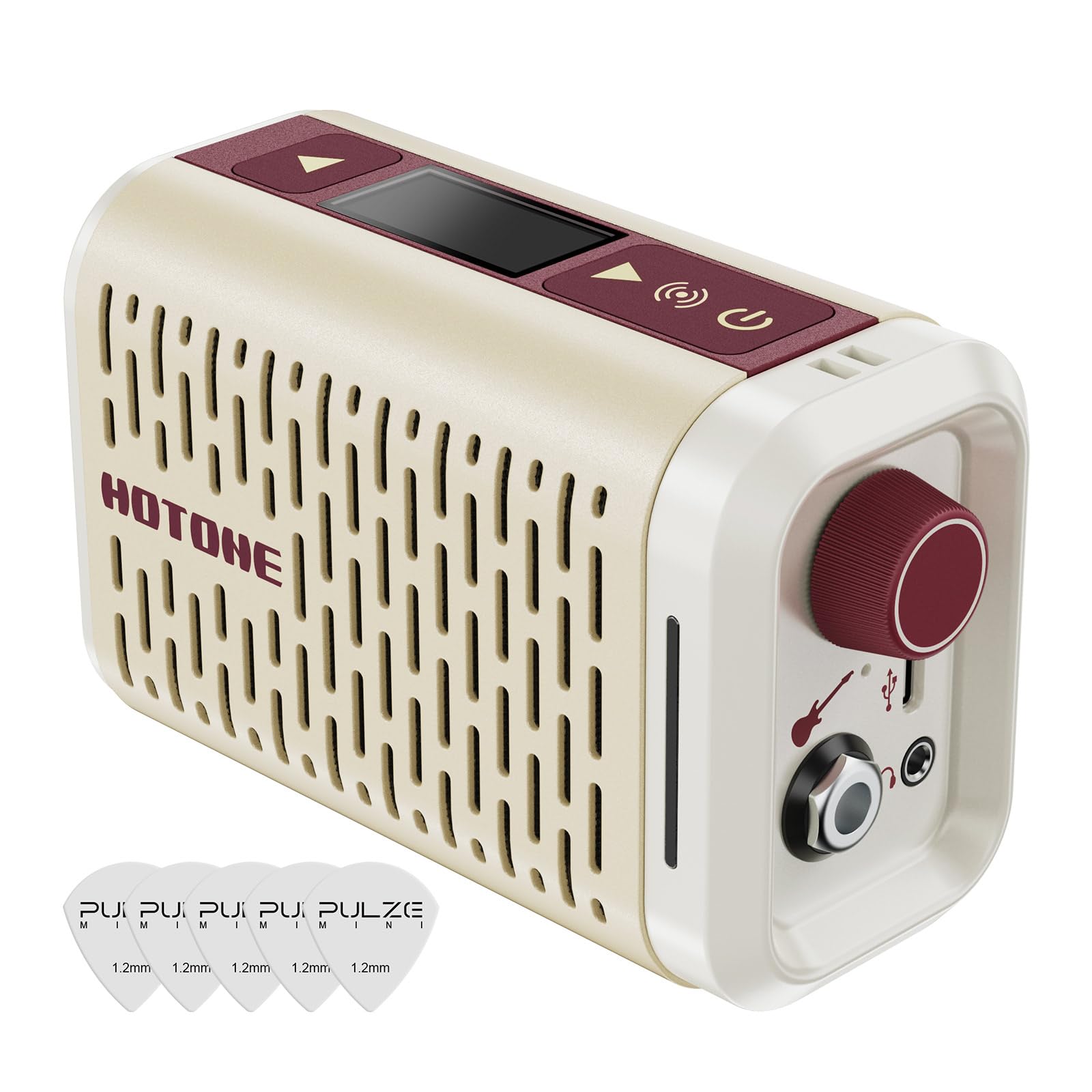
The HOTONE Pulze Mini is a 5-watt smart amp that functions as both a mini Bluetooth speaker and a headphone practice rig. Its evolved CDCM HD and F.I.R.E. modeling system delivers realistic amp response, and the 5 classic speaker IRs provide a convincing cab emulation through headphones. The 2-inch internal speaker is best suited for casual playing; this unit truly shines when connected to headphones or an external amplifier.
The color LCD screen displays tuning and status, while the free mobile app grants full control over over 200 programmable presets. Dual-mode Bluetooth handles both audio playback and remote control, and the Hotone Community allows you to upload, download, and share tones. USB-C charging handles power, firmware updates, and audio interface duties for recording.
Some users report that the internal speaker distorts at high gain settings with certain effects, but the headphone output remains clean. The lightweight plastic enclosure is pocketable, and battery life reaches 4 to 5 hours with mixed use. For players wanting a compact unit that can function as a quiet practice tool, a headphone amp, and a recording interface, the Pulze Mini is a flexible option.
Why it’s great
- Compact size with color LCD and app control
- 200 preset slots for extensive tone storage
- Works as a USB audio interface
Good to know
- Internal speaker has limited headroom for high gain
- Bluetooth connection can be unstable at times
5. BOSS Waza-Air
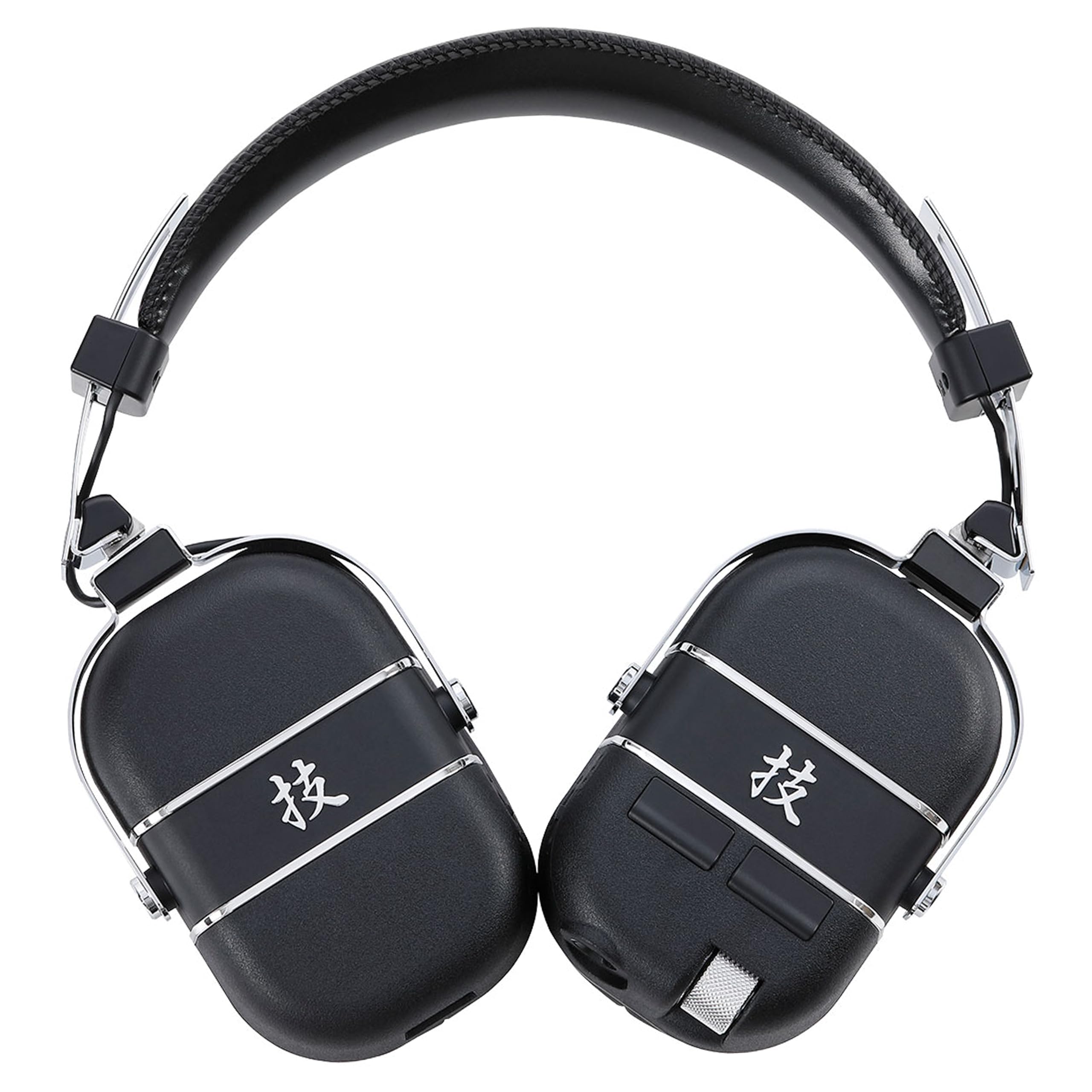
The BOSS Waza-Air is not a headphone amp in the traditional sense—it’s a complete over-ear guitar sound system. With custom 50mm drivers, advanced spatial technology, and an integrated gyro sensor, it creates a 3D soundstage where your amp appears to sit in the room around you. Turning your head changes the sound localization, simulating the experience of playing in front of a real amplifier rather than inside one.
Five amp types from the Katana series are onboard, including a full-range voice for acoustic-electric or bass guitars. Over 50 customizable effects are accessible via the BOSS Tone Studio app. The wireless transmitter plugs into your guitar and connects to the headphones, removing all cables from your body. Six user-configurable tone settings are switchable from the earcup controls.
Battery life reaches 5 hours for the headphones and 12 hours for the transmitter, with auto standby to conserve power. The fold-flat design stores easily in a gig bag. Bluetooth connectivity can sometimes require re-pairing, and the setup process is more involved than simpler plug-in units. For players who want the most immersive silent practice experience possible and are willing to invest at a premium, the Waza-Air redefines what headphone practice feels like.
Why it’s great
- Gyro-based 3D ambience creates a realistic room feel
- Fully wireless operation with no cables
- Rich Katana-derived amp sounds
Good to know
- High price point compared to other options
- Connection setup can be finicky initially
6. Marshall MG10G

The Marshall MG10G is a straightforward 10-watt solid-state combo amp with an 8-inch speaker that delivers the classic Marshall tone in a compact package. While it is primarily a practice amp for low-volume room playing, it includes a 3.5mm headphone jack that mutes the speaker for silent practice. The gain, volume, and tone controls are simple and effective, letting you shape both clean and overdriven sounds.
An auxiliary 3.5mm input allows you to play along with music from a phone or MP3 player, turning the amp into a small speaker when you’re not playing guitar. The lightweight 10-pound enclosure is easy to move around the house. Users consistently praise the sound quality for a practice amp, noting that it maintains clarity and punch even at low volume.
This is a conventional practice amp with a headphone output, not a dedicated silent rig. The headphone sound is good but lacks the sophisticated cabinet simulation found in digital modeling units. It is an ideal entry-level choice for beginners who want a real amp to play out loud with the occasional silent practice option, without spending on a specialized headphone amp.
Why it’s great
- Authentic Marshall tone at an accessible price
- Simple controls with headphone jack and AUX input
- Compact and portable design
Good to know
- Basic headphone output without advanced cab simulation
- Not suitable for gigging
7. Monoprice 1×8 Combo

The Monoprice 1×8 combo is a 20-watt solid-state practice amp with an 8-inch speaker and a rare feature at its price point: a line-level output for direct recording or sending signal to a mixing board. The headphone output mutes the speaker for silent practice, and the 3.5mm AUX input allows playback of backing tracks. The overdrive channel delivers up to 86dB of gain, offering a wide range from clean to saturated distortion.
Users appreciate the clean, hiss-free electronics—a common shortcoming in budget amps. The open-back cabinet design contributes to a pleasant clean tone, and the responsive tone controls allow for effective EQ shaping. Two units can be ganged together for more power, making this a surprisingly expandable platform.
The headphone output is functional but basic, again lacking the comprehensive cab simulation of modern digital modeling plugs. Some users note that the amp only works when both power and overdrive controls are turned on, which is an unusual design quirk. For players on a tight budget who need a real amp with silent practice capability and a line output for recording, the Monoprice delivers remarkable value.
Why it’s great
- Excellent value with line output for recording
- Clean, quiet electronics with no background hiss
- Can be ganged with a second unit for more power
Good to know
- Power and overdrive must be on for operation
- Basic headphone output without advanced simulation
FAQ
Can I use any guitar amp for headphone practice?
What headphone impedance is best for a guitar headphone amp?
Why does my headphone amp sound better with certain headphones?
Final Thoughts: The Verdict
For most users, the best guitar amp for headphones winner is the BOSS KATANA:GO because it combines deep amp modeling, spatial audio, and community-driven tone sharing in a portable plug. If you want the feel of playing through a real amp in a room without waking anyone, the BOSS Waza-Air delivers an unmatched immersive experience. And for the most flexible tone shaping with custom IRs, nothing beats the NUX Mighty Plug Pro MP-3.