
Flat light turns a pristine powder run into a guessing game of hidden bumps and unseen shadows. The right pair of snow goggles does more than shield your eyes from glare — it actively filters the visual noise, letting your brain read the mountain’s texture instantly. That split-second advantage between spotting a mogul and catching an edge is exactly what separates a good day from a trip to the lodge.
I’m Mohammad Maruf — the founder and writer behind Drink4Good. This guide comes from hundreds of hours analyzing the lens coatings, frame geometries, and ventilation math that determine whether a pair of goggles delivers on its promises in real-world conditions, from sub-zero chairlift rides to sun-crusted spring afternoons.
Whether you’re navigating a whiteout in the trees or burning corduroy under a high-altitude sun, the best snowboarding goggles combine anti-fog engineering, wide peripheral vision, and swift lens-swap systems to keep your focus exactly where it belongs — on the line ahead.
How To Choose The Best Snowboarding Goggles
Snow goggles are a direct interface between your vision and the mountain’s ever-changing light. The wrong pair creates eye strain, fog cycles, and blind spots that ruin any run. Focus on three pillars — lens technology, fit geometry, and ventilation design — and the decision becomes simple.
Lens Technology: Tint, Curvature, and Coatings
Lens curvature defines your field of view. Cylindrical lenses curve horizontally for a classic shape and lower distortion at the edges. Spherical lenses curve both horizontally and vertically, matching the natural shape of your eye — this reduces glare from the sides and widens your peripheral awareness. Tint technology matters just as much. High-contrast lenses like Smith’s ChromaPop, Giro’s VIVID (by Zeiss), or Oakley’s Prizm selectively filter wavelengths to enhance definition against snow, ice, and tree shadows. A cheap tint simply darkens everything; a good tint reveals texture.
Fit Verification: Over-the-Glasses and Helmet Pairing
Over-the-glasses (OTG) frames are deeper to accommodate prescription eyewear without pinching the arms against your temples. If you wear glasses, an OTG-compatible goggle saves you from shopping for prescription inserts. Helmet integration is equally critical — a goggle strap with a silicone strip prevents slippage, and the frame’s top edge should meet the helmet’s brim without a gap that lets in cold air and moisture. Many brands (Smith, Giro, Oakley) design their goggles to pair seamlessly with their own helmet lines, creating a vent channel that pulls exhaled moisture away from the lens.
Ventilation and Lens-Swap Mechanism
Fogging is the number one reason riders swap out goggles mid-day. Look for frames with multiple intake vents across the top and exhaust ports along the bottom — this creates a convection current that pushes warm, humid air out. The lens retention system determines how fast you can adapt to changing light. Magnetic systems (like Smith’s I/O Mag or Wildhorn’s snap-and-lock) let you swap lenses in seconds without removing your gloves. Mechanical tabs are reliable and cheaper, but they require more dexterity on a freezing lift.
Quick Comparison
On smaller screens, swipe sideways to see the full table.
| Model | Category | Best For | Key Spec | Amazon |
|---|---|---|---|---|
| SMITH I/O Mag | Premium | All-day clarity with magnetic lens swaps | ChromaPop lens; Responsive Fit frame | Amazon |
| Giro Method | Premium | Enhanced contrast in flat light | VIVID lens by Zeiss; EXV frameless zones | Amazon |
| Oakley Flight Deck L | Premium | Over-glasses fit with Prizm optics | Prizm lens tech; 12.8 oz weight | Amazon |
| Wildhorn Pipeline | Mid-Range | Large heads requiring oversized frames | Magnetic/snap hybrid; OTG friendly | Amazon |
| SMITH Squad | Mid-Range | ChromaPop clarity without the premium price | Chromapop lens; spherical design | Amazon |
| Wildhorn Roca Pro | Value | Budget-conscious riders wanting 185° FOV | 185° ultra-wide FOV; magnetic lock | Amazon |
| OutdoorMaster Heron | Entry | Two-lens pack on a tight budget | Frameless toric lens; includes 2 lenses | Amazon |
In‑Depth Reviews
1. SMITH I/O Mag

The I/O Mag sits at the top of Smith’s goggle lineup for good reason. The ChromaPop lens technology actively filters specific wavelengths to boost texture on snow and ice — this isn’t a simple tint but a contrast-enhancing optical filter that reveals subtle terrain contours. The magnetic lens swap is genuinely tool-less and gloved-hand friendly, letting you move from a bright-day mirror lens to a low-light Rose lens in seconds on the lift.
The Responsive Fit frame uses a silicone-infused frame material that flexes enough to conform to different face shapes without pressure points. The DriWix foam layers pull sweat away from the skin, keeping the seal consistent across a full day of exertion. The frame also integrates with the AirEvac system on Smith helmets, creating a channel that vents exhaled moisture directly out of the goggle chamber — this is why users consistently report zero fogging even on damp, cold days.
All-day comfort and precise optical clarity come at a premium cost, and the field of view, while excellent, is slightly narrower than the absolute widest spherical models on this list. The ChromaPop lens is also more scratch-prone than basic polycarbonate if you’re rough with storage. For riders who prioritize color contrast and fog-free reliability above all else, this is the benchmark.
Why it’s great
- ChromaPop reveals snow texture that basic tints flatten
- Magnetic lens swap is fast and secure, even with gloves
- Zero fogging when paired with a Smith helmet vent channel
Good to know
- Premium pricing over mid-range competition
- ChromaPop lens requires careful storage to avoid scratching
2. Giro Method
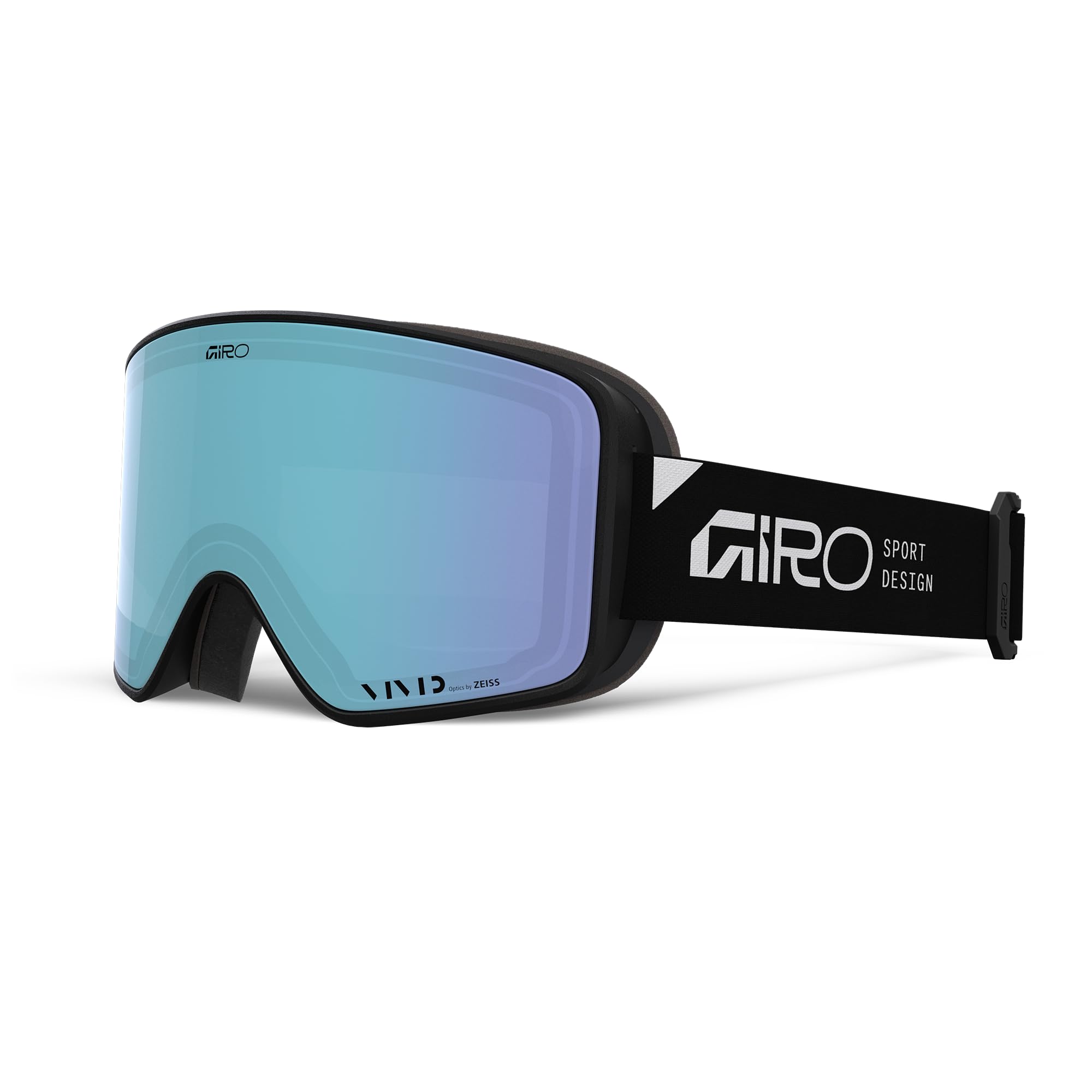
The Giro Method uses VIVID lens technology developed in partnership with Zeiss Optics. The patent behind VIVID manipulates blue light — letting in contrast-enhancing blue wavelengths while blocking harmful UV — effectively cutting through the haze that washes out detail on overcast days. This is not a marketing claim; the Whitelines 100 award recognized it as the top-performing goggle in their test for this exact behavior in flat light.
Expansion View (EXV) technology creates frameless zones around a massive spherical lens, pushing peripheral vision to its maximum without the blind spots that traditional full rim frames sometimes create. The triple-layer face foam includes a microfleece facing that feels dry against the skin even when temperatures drop below zero. The Slash Seal lens interchange system uses a hybrid snap-and-magnetic retention that balances security with quick swaps — two VIVID lenses (one full-sun, one low-light) ship in the box.
The sunny VIVID lens has been noted to scratch more easily than some competitors’ offerings if dropped on ice, and the frame runs slightly large — users with smaller facial features may find the fit loose against the bridge of the nose. For riders who spend the majority of their time fighting flat light in tree runs or northern resorts, this goggle delivers the most dramatic contrast improvement in its class.
Why it’s great
- Zeiss VIVID lens outperforms basic tints in overcast conditions
- EXV frameless design provides near-180° peripheral vision
- Two premium VIVID lenses included for all light conditions
Good to know
- Sun lens scratches faster than standard polycarbonate
- Oversized frame may not fit narrow faces well
3. Oakley Flight Deck L

The Flight Deck L is Oakley’s answer to the prescription-wearing snowboarder. The low-bridge fit and deep frame channel accommodate glasses underneath without pinching the temple arms — a pain point that eliminates many otherwise excellent goggles. The Prizm lens technology, which Oakley engineers by tuning dye formulas to specific light wavelengths, increases contrast across snow surfaces while preserving natural color balance. The lens geometry is a large spherical cut that wraps prominently into the peripheral zone.
At 12.8 ounces, this is one of the heavier frames on the list, but the weight is distributed evenly enough that it doesn’t pull on the strap during long runs. The venting layout uses intake ports across the entire top frame and exhaust slits along the bottom edge — this passive airflow system is effective enough that most users report minimal fogging even during high-exertion runs, though some have noted occasional condensation during maximum effort in humid snow conditions. The included hard case and microfiber bag protect the expensive Prizm lens.
Replacement Prizm lenses are expensive — often approaching half the cost of the goggle itself — so care during storage matters. The lens’s scratch resistance is above average but not indestructible. For anyone who relies on prescription glasses while riding, this goggle eliminates the compromise of squinting through a fogged-in non-OTG frame.
Why it’s great
- Exceptional OTG fit with room for larger prescription frames
- Prizm lens delivers superior flat-light definition
- Hard case and bag protect the lens in storage
Good to know
- Replacement lenses are very pricey
- Heavier frame compared to modern mid-range options
4. Wildhorn Pipeline
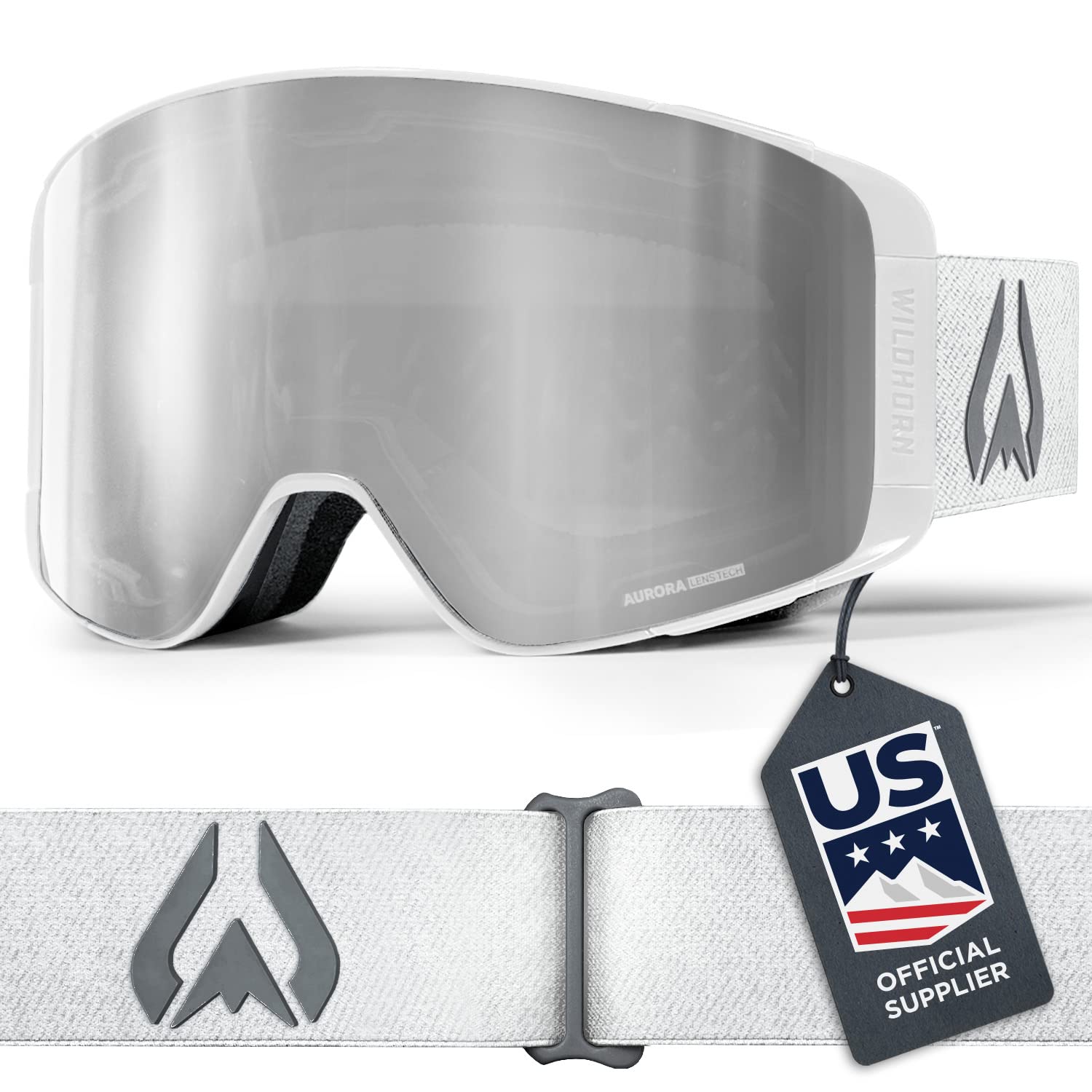
Wildhorn is the official goggle supplier for the U.S. Ski Team, and the Pipeline model is their oversized frame designed for riders with larger head circumferences or those who want maximum coverage. The lens retention system uses a magnetic-snap hybrid — the magnets guide alignment, and a mechanical lock clicks into place for security. This is a deliberate design choice: pure magnetic systems can pop off on hard falls, and pure tabs are slow; the hybrid splits the difference.
The field of view is genuinely wide, helped by the spherical lens curvature that pulls the edges of the frame out of the sightline. The frame is OTG-friendly, leaving enough depth for glasses underneath without pressing the arms against the ears. Users with 65cm-plus head circumferences report that the strap reaches comfortably without maxing out the adjuster — a point where many smaller frames fail. The triple-layer foam uses a plush density that seals without digging into the brow.
The frame is undeniably large — riders with narrow faces or flat nose bridges have noted that it pushes slightly on the nose during wear, and the overall bulk can feel heavy if you’re used to a frameless low-profile design. The included lens options are basic tint grades, not contrast-enhancing filters like ChromaPop or VIVID. For big-headed riders who struggle to find a helmet-compatible goggle that doesn’t leave a gap, the Pipeline solves a specific fit problem that pricier brands often ignore.
Why it’s great
- Oversized frame fits large heads and big helmets perfectly
- Hybrid magnetic/snap lock is more secure than pure magnets
- U.S. Ski Team supplier with solid build quality
Good to know
- Large frame can feel bulky and push on the nose
- Included lenses lack advanced contrast-enhancing tint tech
5. SMITH Squad

The SMITH Squad brings ChromaPop lens technology into a spherical frame at a price point significantly below the flagship I/O Mag. The optical performance is nearly identical — the same blue-light filtering and contrast enhancement that reveals ice patches and snow textures — but the frame construction is simpler, using a full rim design with mechanical tab lens retention instead of a magnetic system. This is a deliberate trade: you lose the one-second lens swap speed, but you gain a lower cost and a lens lock that absolutely cannot pop off in a crash.
The spherical lens curvature creates a panoramic field of view that eliminates the tunnel-vision effect of budget cylindrical lenses. Users consistently note that the low-light lens (included with the package) performs well in flat light and stormy conditions, maintaining definition where cheaper tints go milky. The anti-fog coating is bonded to the inner lens surface and holds up through multiple seasons — it doesn’t wash off with standard lens cleaning wipes. The strap features a silicone strip on the inside that grips helmet shells without sliding.
The mechanical lens swap is slower than magnetic systems — you need to find a dry spot, pull off your gloves, and line up the four tab positions carefully. The frame is also a standard medium fit; riders with very wide faces or large helmet brims may find the top gap allows a slight draft. For riders who want genuine ChromaPop performance without spending for the top-tier magnetic model, this is the best optical value in Smith’s lineup.
Why it’s great
- ChromaPop lens delivers flagship-level contrast at a lower price
- Spherical design provides wide peripheral awareness
- Bonded anti-fog coating lasts through multiple seasons
Good to know
- Mechanical lens swap requires gloves-off handling
- Standard medium fit may be tight for wide faces
6. Wildhorn Roca Pro
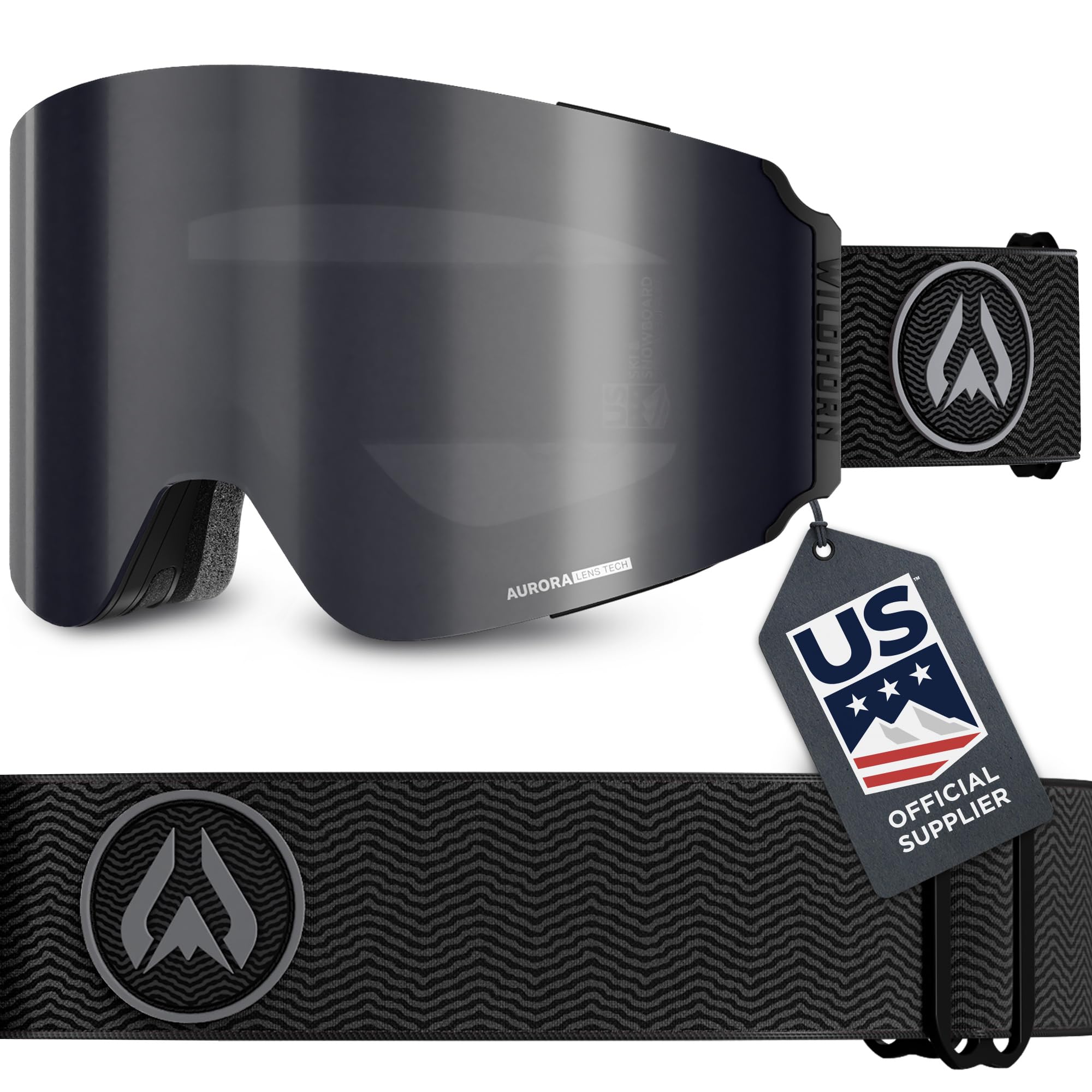
The Roca Pro is positioned as the budget-friendly gateway to a wide field of view. Wildhorn claims a 185° horizontal FOV, which is among the widest in this price bracket — achieved through a full-rim frame with a spherical cut that pushes the lens edge closer to the cheekbone. The magnetic lock system allows lens swaps in seconds, using four magnets embedded in the frame corners that align with matching receptors in the lens. In practice, the hold is strong enough for normal riding but can dislodge on hard impacts.
The anti-fog coating is paired with a scratch-resistant outer layer, and the lens carries 100% UV protection. The frame is lightweight at 0.26 kilograms, making it one of the lightest options on the list — this reduces neck fatigue during long days on the mountain. The foam density is medium-soft, providing a comfortable seal without requiring high tension from the strap. Users with standard-to-medium face shapes report an excellent fit; those with very large heads may find the strap at its limit.
The included lens is a single VLT (visible light transmission) grade, meaning you get one tint for bright or overcast conditions and no second lens for the opposite extreme. The lens also lacks the advanced dye tuning of ChromaPop or VIVID — it darkens and protects, but it doesn’t enhance terrain texture as effectively. For a first-time buyer who wants magnetic convenience and a wide view without breaking the budget, the Roca Pro is a solid entry point.
Why it’s great
- 185° FOV rivals goggles costing three times as much
- Magnetic lens swap works well for on-the-fly changes
- Lightweight frame reduces fatigue on full-day outings
Good to know
- Single lens included — no spare for low-light conditions
- Basic tint lacks contrast-enhancing optics of premium brands
7. OutdoorMaster Heron

The OutdoorMaster Heron uses a frameless toric lens — a geometry that curves between the cylindrical and spherical extremes, offering a balance of distortion-free forward vision and moderate peripheral wrap. The standout feature for this price range is the inclusion of two magnetic-swap lenses in the box: a standard tint for sunny days and a yellow/amber lens for low-light and overcast conditions. The magnetic connection uses eight magnets around the frame rim, creating a hold that users describe as “super strong” — strong enough to survive tumbles without popping off.
The anti-fog performance is surprising for the price tier. The lens coating uses a textured surface that physically disrupts condensation formation, combined with a dual-vent airflow channel. Users with hyperhidrosis — excessive facial sweating — report zero fogging even during high-exertion runs in subzero temperatures. The frame is also OTG-friendly, with a generous internal cavity that accommodates prescription glasses without pressure on the temples. The strap is wide and includes a silicone grip strip for helmet security.
The frame fits heads up to about 65cm in circumference, but the strap adjustment runs out of room at its maximum extension — users with very large heads or thick helmets may find the strap barely reaches. The night/overcast lens is only available in the combo pack, not sold separately. There is no hard case included, only a soft pouch, so storing the second lens safely requires careful packing. For the rider on a strict budget who still wants magnetic versatility and reliable anti-fog, the Heron delivers disproportionally high value.
Why it’s great
- Two lenses included cover sunny and low-light conditions
- Strong 8-magnet retention stays secure in falls
- Textured anti-fog coating works even with heavy sweating
Good to know
- Strap maxes out for very large head sizes (65cm+)
- No hard case included for spare lens protection
FAQ
What VLT percentage should I choose for a snowboarding trip in Colorado?
Can I wear a balaclava under my snow goggles without breaking the seal?
How do I clean my snow goggle lens without destroying the anti-fog coating?
Are magnetic lens swaps actually reliable at high speed or on rough terrain?
Final Thoughts: The Verdict
For most riders, the best snowboarding goggles winner is the SMITH I/O Mag because its ChromaPop lens transforms flat snow into readable terrain, and the magnetic swap lets you adapt to changing light on a lift. If you want Zeiss-grade contrast specifically engineered for overcast days, grab the Giro Method. And for riders with larger faces or prescription glasses who need a solid-performing frame at a mid-range price, nothing beats the oversized fit and OTG comfort of the Wildhorn Pipeline.