
French candy is not a monolith. The difference between a mass-produced gelatin chew and a true fruit pâte de fruit is the difference between eating corn syrup and tasting a sun-ripened pear. The French confectionery tradition treats sugar as a vehicle for flavor, not the main event. A properly made calisson, nougat, or fruit jelly delivers a concentrated fruitiness that American candies rarely approach—the texture alone tells you real pectin was used, not just a lab-designed binder.
I’m Mohammad Maruf — the founder and writer behind Drink4Good. I’ve spent hundreds of hours cross-referencing ingredient lists, breaking down packaging claims, and analyzing the difference between “natural flavor” and real fruit pulp concentration to find the candy that actually delivers on its French promise.
This guide breaks down the five most reliable french candy boxes on Amazon right now—judged by fruit authenticity, texture fidelity, and overall eating experience.
How To Choose The Best French Candy
Choosing a French candy box is about deciding which confectionery tradition you want to eat—and how much you care about fruit authenticity versus texture variety. The best candy for a corporate gift is not the same as the best candy for a personal evening indulgence. Here are the three factors that matter most.
Fruit content vs. artificial flavor
The highest-tier French fruit jellies (pâtes de fruit) are made with real fruit pulp—the fruit is cooked down with sugar and pectin. The result is a dense, almost jammy chew with a flavor that tastes like the fruit it came from, not a lab approximation. Candies that rely on juice concentrates or artificial flavors will have a brighter, less complex taste and a softer, more gelatinous texture. If the ingredient list starts with “corn syrup” and “natural flavor,” you are buying candy shaped like France, not French candy.
Regional specialty: Which region matches your taste?
France’s confectionery traditions are regionally protected. Auvergne is the home of pâte de fruit—intense fruit jellies with a firm but yielding bite. Provence gives us calissons, a chewy almond-paste confection shaped like a lozenge. Normandy is famous for its salted butter caramels—rich, soft, and cream-forward. A box that mixes three regions (like the Maxim’s de Paris assortment) offers variety, but a single-region box like Straight from France’s Auvergne tin offers depth and focus.
Presentation: Tin, box, or individual wrapping
Gift suitability is a real factor. A beautifully decorated tin (like Straight from France Auvergne edition) is a stronger presentation than a simple cardboard box, but the candy itself must remain fresh. Individually wrapped candies preserve freshness longer but sometimes feel less luxurious. For a hostess gift, the tin is the better choice. For personal eating, individual wrappers prevent the box from drying out over weeks.
Quick Comparison
On smaller screens, swipe sideways to see the full table.
| Model | Category | Best For | Key Spec | Amazon |
|---|---|---|---|---|
| Maxim’s de Paris Assorted Gift Box | Premium Assortment | Variety & Gifting | 32 pieces across 4 regions | Amazon |
| Maxim’s de Paris Fruit Jellies Gift Box | Premium Pâte de Fruit | Fruit Purity | Real fruit pulp, no artificial flavors | Amazon |
| Straight from France Auvergne Tin | Mid-Range Pâte de Fruit | Gifting & Collecting | ~110 pieces in themed tin | Amazon |
| Oliver’s French Cremes (All Fruit) | Value French Cremes | Nostalgic Creams | 20 count, fruit cream centers | Amazon |
| Les Anis de Flavigny (4-pack) | Premium Anise Drops | Long-Lasting Flavor | Natural anise oil, 4 tins | Amazon |
In-Depth Reviews
1. Maxim’s de Paris French Candy Gift Box
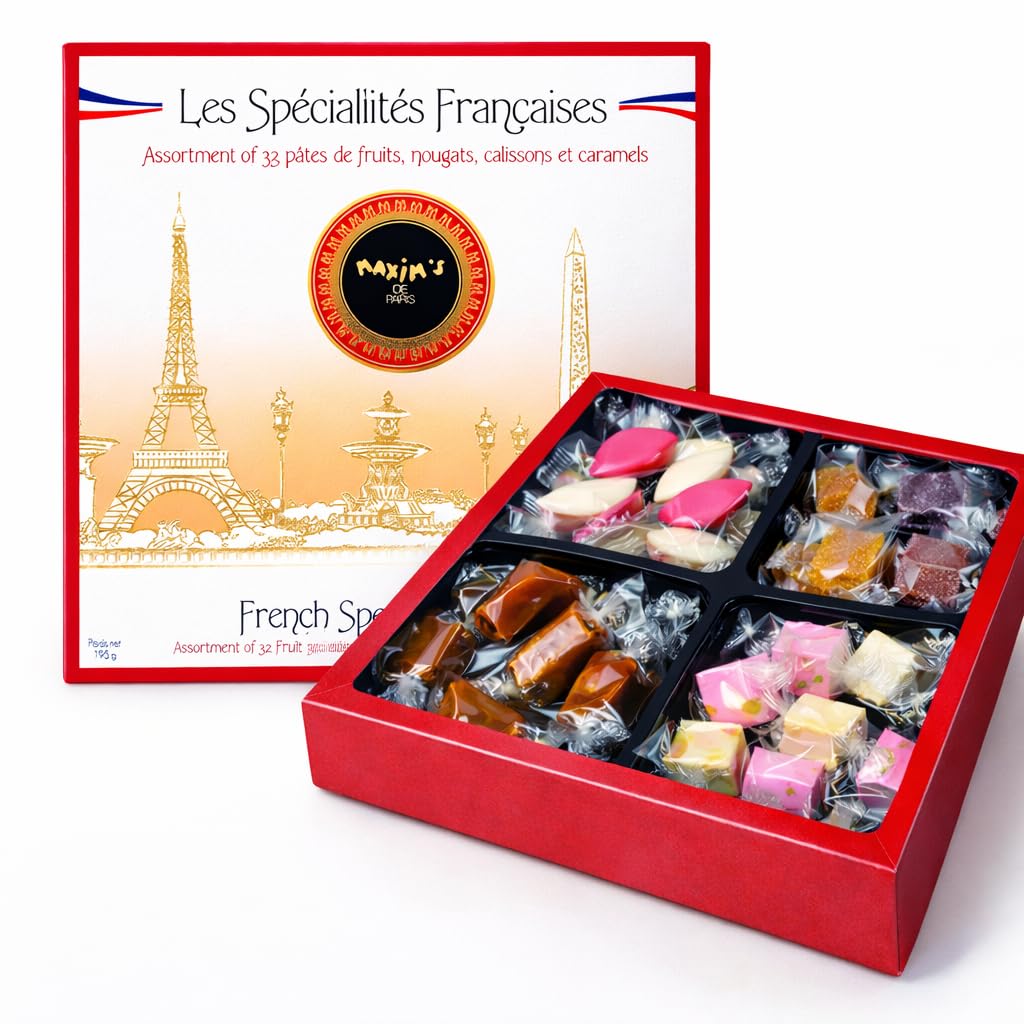
This is the most complete French candy experience available in a single box. Maxim’s de Paris, a brand born in 1893, has packed 32 pieces from four distinct French confectionery regions: fruit jellies from Auvergne (cherry and pear), salted butter caramels from Normandy, calissons from Provence (plain and raspberry), and soft nougats (plain and raspberry). No artificial flavors appear anywhere in the ingredient chain, and the fruit jellies deliver a dense, real-pectin chew that mass-produced gelatin sweets cannot touch.
The calissons are the sleeper hit here—they have a subtle almond-paste base that is nothing like marzipan’s sugar bomb. The salted butter caramels are soft and cream-forward, a direct reflection of Normandy’s butter-heavy dairy tradition. Each piece is individually wrapped, which keeps the assortment fresh over multiple sessions, a practical detail that matters for a 32-piece box.
At 6.9 ounces total, the net weight-to-piece ratio is efficient—each candy is large enough to feel substantial but small enough that a single piece doesn’t overwhelm. The gift box presentation is clean and elegant, needing no additional wrapping. If you are sending French candy to someone who has never tried regional confections, this box is the most representative introduction.
Why it’s great
- Four different French specialties in one box—calissons, nougats, caramels, jellies
- No artificial flavors; real fruit pulp and almond paste
- Individually wrapped for freshness and portion control
Good to know
- The nougat texture is soft and chewy, not hard—some may find it too delicate
- Mixed reviews on caramel creaminess; some reports of older pieces
2. Maxim’s de Paris French Fruit Jellies Gift Box
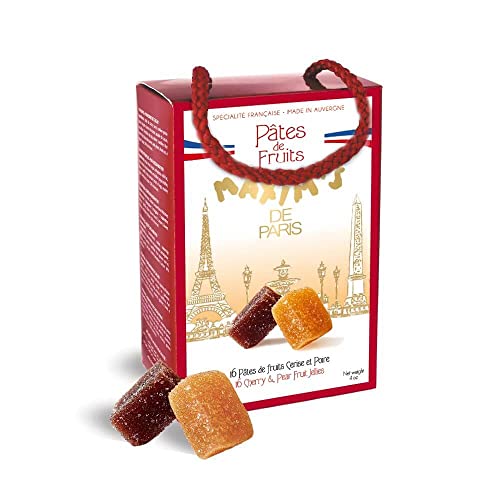
If you want to taste what a real pâte de fruit can be—without the distraction of calissons, caramels, or nougats—this box delivers pure fruit jellies from the Auvergne region. The box contains 16 individually wrapped pieces in two flavors: pear and cherry. The pear jelly is the standout, with a clean, almost floral sweetness that comes only from real fruit pulp cooked down with pectin, not from added juice concentrates.
The cherry jellies have a darker, more intense flavor, closer to a cooked cherry compote than a candy. Both varieties are rolled in fine sugar crystals, which gives the surface a pleasant slight crunch before the interior yields into a firm but not stiff chew. The texture is notably different from American fruit snacks—denser, less gelatinous, and more satisfyingly solid.
The box itself is small (4 ounces net weight) and the pieces are individually wrapped, which makes this a stronger choice for a focused tasting experience than for a crowd. Some reviews note that the texture can be slightly hard if the box has been stored in a cool environment—let them warm to room temperature before eating for the ideal mouthfeel.
Why it’s great
- Made with real fruit pulp and natural pectin; no artificial flavors
- Authentic Auvergne-style pâte de fruit texture
- Pear and cherry flavors are distinct and well-balanced
Good to know
- Small box (4 oz) at a premium price point
- Texture can firm up in cool storage; needs room temperature before eating
3. Straight from France Auvergne Fruit Jellies Tin

This is the volume play for pâte de fruit lovers. Straight from France imports these mini fruit jellies directly from Auvergne, packing approximately 110 pieces into a beautifully illustrated collector’s tin. The five flavors—apple, blackberry, currant, lemon, and grapefruit—offer a solid range of tart and sweet, with the blackberry and currant pieces delivering the deepest fruit character.
The texture is lighter than the Maxim’s fruit jellies, sitting somewhere between a traditional gumdrop and a soft jelly bean. These are less dense than traditional pâte de fruit but still notably superior to standard American gumdrops. The grapefruit pieces are particularly good—they have a clean bitterness that balances the sugar and makes them feel less cloying than the apple or lemon.
The tin itself is the real star for gifting: each tin in this series features a different French region’s landscape (Auvergne, Provence, Paris, Brittany), which gives it collectible appeal. The tin is durable enough for storage after the candy is gone. However, the jellies are not individually wrapped, so the tin should be sealed properly between eating sessions to prevent drying.
Why it’s great
- Large quantity (~110 pieces) for the price point
- Beautiful, collectible regional tin
- Authentically imported from Auvergne, France
Good to know
- Texture is lighter and more gelatin-like than traditional pâte de fruit
- One review reported damage to the tin during shipping
4. Oliver’s French Cremes (All Fruit)
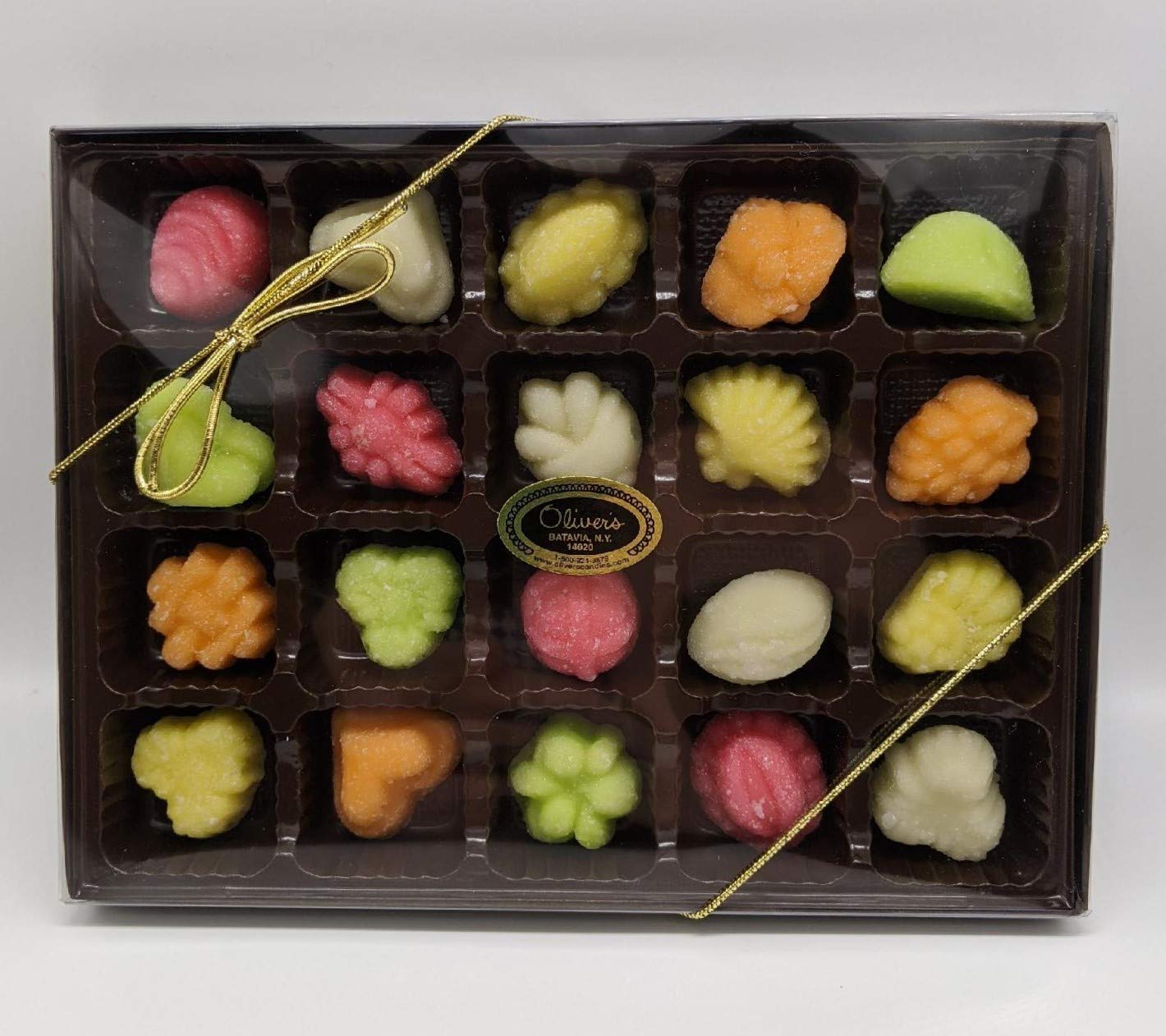
Oliver’s French Cremes are not pâte de fruit. They are a different kind of French confectionery tradition altogether—a crystallized sugar shell with a soft, creamy fruit-flavored center. The five fruit flavors (lemon, orange, pineapple, lime, raspberry) are delivered through the creamy interior, not through fruit pulp. The texture is a nostalgic throwback: a firm sugar shell that gives way to a melt-in-mouth cream that dissolves uniformly.
The flavor profile is noticeably sweeter and more artificial than a real fruit pâte. These are not candies for fruit purists—they are for someone who remembers a specific texture from childhood. Multiple reviews mention sixty-year-old memories of exactly this type of French cream candy. The raspberry is the most convincing fruit flavor; the lime is tart enough to cut through the sugar.
At 20 pieces per pack, the per-piece cost is the lowest in this roundup. The candies are small and round, making them easy to eat in quick succession. Some customers noted that the candies are slightly smaller than the versions they remembered from decades ago. These work well as a budget-friendly introduction to French-style creams but should not be judged by the same standard as a fruit-pulp pâte de fruit.
Why it’s great
- Unique sugar-shell, cream-center texture
- Strong nostalgia factor for older customers
- Budget-friendly per-piece cost
Good to know
- Flavors are more artificial than fruit-pulp alternatives
- Some customers find pieces smaller than expected
5. Les Anis de Flavigny French Anise Candy (4-pack)
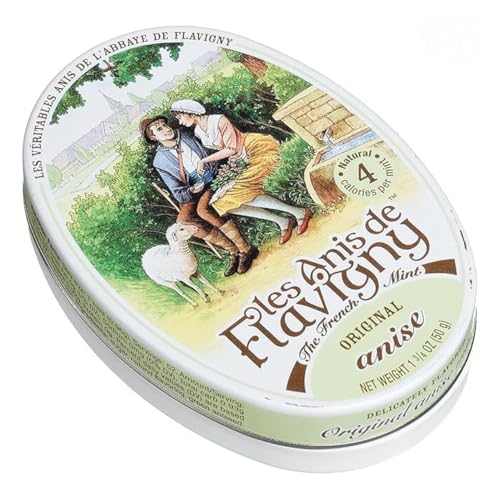
Les Anis de Flavigny produces one of France’s oldest continuously made confections: anise-flavored hard drops made with natural anise oil. These are not chews, jellies, or creams—they are hard candies designed to dissolve slowly in the mouth, releasing a clean, balanced anise flavor that does not hit with the aggressive punch of black licorice. The brand has been making these in the same French village since 1591.
The texture is the key here—these are hard enough to last for minutes of slow sucking, but they dissolve evenly without turning into sharp shards. The anise flavor is surprisingly mild and pleasant, even for people who normally dislike licorice. One enthusiastic review notes that “even my friends who don’t like anise love these.” Each tin is small and elegant, making these good for pocket carry or as an after-dinner breath sweetener.
The 4-pack gives you four separate tins, which makes them a perfect gift splitter or desk-stasher. The downside is that the tin size is genuinely small (1.75 ounces per tin)—you are paying for the packaging and the heritage, not for bulk volume. Some customers received mint instead of anise, so check the flavor before gifting. For a classic, pure-flavor French candy that fits in a coat pocket, this is a refined choice.
Why it’s great
- Authentic 16th-century French confection recipe
- Mild anise flavor that appeals even to non-licorice fans
- Elegant reusable tins perfect for gifting or travel
Good to know
- Small net weight per tin (1.75 oz)
- Some flavor mix-ups reported by customers
FAQ
What is the difference between a pâte de fruit and a French cream candy?
Are French fruit jellies gluten-free?
Final Thoughts: The Verdict
For most users, the french candy winner is the Maxim’s de Paris Assorted Gift Box because it offers four distinct regional specialties in one box, giving you the most complete overview of French confectionery tradition. If you want pure fruit authenticity, grab the Maxim’s de Paris Fruit Jellies Gift Box for its pear and cherry pâtes de fruit made from real fruit pulp. And for a budget-friendly introduction that still feels distinctly French, nothing beats the Oliver’s French Cremes for their nostalgic sugar-shell, cream-center texture.