
Gluten flour for baking is the single most impactful ingredient swap you can make if your breads turn out flat, your bagels lack chew, or your pizza crust snaps instead of bending. Swapping your standard all-purpose flour for a high-gluten alternative fundamentally changes the protein matrix of your dough, delivering the structure and elasticity needed for artisan results at home.
I’m Mohammad Maruf — the founder and writer behind Drink4Good. I’ve spent hundreds of hours analyzing the protein percentages, grind textures, and enrichment protocols of commercial flours to understand exactly how each one behaves in a home oven.
This guide cuts through the marketing to help you find the best gluten flour for baking that matches your specific technique, from high-hydration sourdough to stiff-dough bagels and delicate enriched breads.
How To Choose The Best Gluten Flour For Baking
Selecting the right gluten flour for baking comes down to understanding protein levels, the type of wheat used, and how the flour is milled. The wrong choice crushes your dough; the right one lifts it.
Protein percentage defines your final texture
Gluten is wheat protein. A flour labeled high-gluten typically hits 13% to 15% protein. For bagels, artisan breads, and pizza crust, you want that top range. For soft sandwich loaves or pastries, a moderate 11% to 12% whole wheat works better. Check the nutrition panel — protein content is non-negotiable.
Whole grain versus refined gluten flour
Stone grinding preserves the germ and bran, adding flavor and nutrients but reducing rise potential because bran cuts gluten strands. Whole wheat gluten flour produces a denser crumb and requires more hydration. Refined high-gluten flour gives a taller, airier loaf with a more open crumb structure.
Enriched versus unenriched formulations
Many commercial gluten flours add niacin, iron, thiamine, and riboflavin back after milling. Enriched flour is standard and perfectly fine for baking. Unbleached and unbromated options are available if you want to avoid chemical treatments — King Arthur’s Sir Lancelot, for example, is never bleached nor bromated.
Quick Comparison
On smaller screens, swipe sideways to see the full table.
| Model | Category | Best For | Key Spec | Amazon |
|---|---|---|---|---|
| Bob’s Red Mill Organic Whole Wheat Flour | Whole Grain | Nutritious whole wheat bread | 13–15% protein, stone ground | Amazon |
| Glicks Unbleached High Gluten Flour | High Gluten | NY-style pizza and bagels | Presifted, enriched, kosher | Amazon |
| Anthony’s Vital Wheat Gluten | Additive | Strengthening weak flours | 75%+ protein, keto friendly | Amazon |
| Anthony’s Premium White Rice Flour | Gluten Free | Gluten-free baking | Batch tested gluten free, fine powder | Amazon |
| King Arthur Sir Lancelot Hi-Gluten Flour | High Gluten | Artisan sourdough and bagels | 14.2% protein, 50 lb bulk | Amazon |
In‑Depth Reviews
1. Bob’s Red Mill Organic Whole Wheat Flour, 5 Pounds

Bob’s Red Mill stone grinds hard red spring wheat on slow-turning millstones that stay cool, so the germ’s natural oils never oxidize. This process preserves a nutty, sweet flavor that comes through clearly in every loaf. With a protein range of 13% to 15%, this flour delivers enough gluten development for sandwich bread, rustic rolls, bagels, and flatbreads without the dense crumb that cheaper whole wheat flours produce.
The 5-pound bag is a versatile workhorse. You can use it for yeasted breads, pizza dough, pasta, muffins, cookies, and quick breads — it adapts to hydration changes better than standard whole wheat because the high protein absorbs more water evenly. Pre-ferments like bigas and poolishes respond well, developing a creamy texture within 12 hours.
Some Amazon shipments arrive with torn bags due to poor packaging. Transfer the flour to an airtight container immediately upon arrival. Inside that container, the flour stays fresh for months, especially if stored in a cool pantry.
Why it’s great
- Stone grinding preserves flavor and nutrition
- High protein range supports strong gluten networks
- Non-GMO, vegan, and fully organic
Good to know
- Shipping damage is a recurring complaint — transfer to a sealed bin
- Whole wheat absorbs 10–15% more water than refined flour
2. Glicks Unbleached High Gluten Flour, 5 Pounds
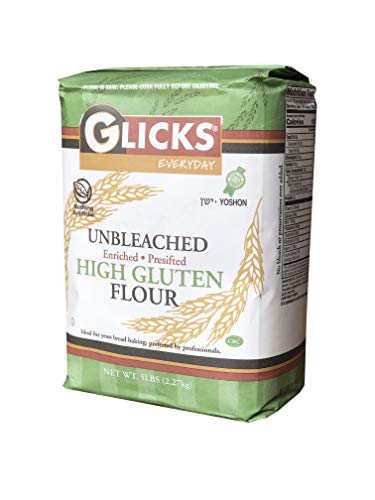
Glicks High Gluten Flour is an unbleached, enriched, presifted flour that skips the whiteners and conditioners found in commodity brands. It lands squarely in the high-gluten camp, making it ideal for yeast breads that demand a sturdy crumb and a chewy crust. Bagel makers especially praise it — the gluten network holds up against boiling water without collapsing.
The presifted texture saves a step in your mise en place. You can dump it straight into your mixing bowl without sifting, which matters when you are working with high-hydration doughs that are sticky and need every second of careful timing. The flour also blends evenly with whole rye or spelt without clumping, so multigrain doughs stay homogenous.
Enriched with niacin, iron, thiamine, and riboflavin, this flour replaces the nutrients lost during milling. Some bakers note the dough can feel stiffer compared to non-enriched flours, so add an extra tablespoon of water per cup if your mix feels tight. The kosher certification broadens its appeal for observant households.
Why it’s great
- Unbleached and presifted for immediate use
- Excellent for NY-style pizza and bagels
- Kosher with no preservatives
Good to know
- Stiffer dough may need slight hydration adjustments
- Best for experienced bakers who want a specific chew
3. Anthony’s Vital Wheat Gluten, 1.5 Pounds
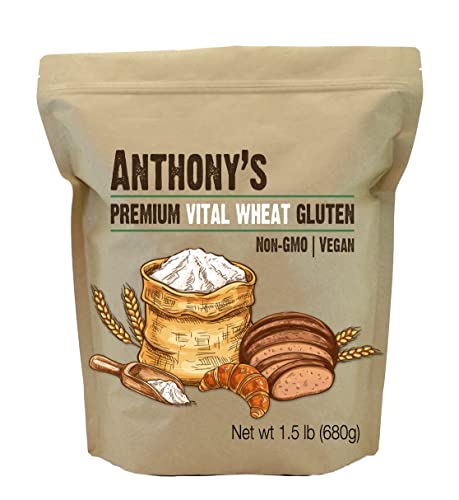
Anthony’s Vital Wheat Gluten is not a standalone flour — it is a concentrated protein additive (over 75% protein by weight) designed to strengthen weak or low-protein flours. Add one to two tablespoons per cup of all-purpose or whole wheat flour to boost gluten development and get a taller, chewier loaf without switching your base flour.
This product is the primary building block for seitan, making it indispensable for plant-based kitchens. It rehydrates quickly, binds well with seasonings, and produces a firm, elastic texture that holds up in braises and stir-fries. For keto bakers, it allows low-carb flour blends to achieve a bread-like crumb that would otherwise crumble apart.
The bag does not have a resealable zipper — a significant oversight for a product that absorbs moisture easily. Transfer the contents to a mason jar or a clip-seal bag immediately. Without that step, the powder can clump within days in humid kitchens. Aside from packaging, the product itself is reliable, arriving fresh and finely milled.
Why it’s great
- Boosts protein in any flour blend
- Essential for seitan and vegan meat alternatives
- Non-GMO, vegan, and keto friendly
Good to know
- Bag does not reseal — plan for airtight storage
- Overuse (above 2 tbsp per cup) makes dough rubbery
4. Anthony’s Premium White Rice Flour, 3 Pounds
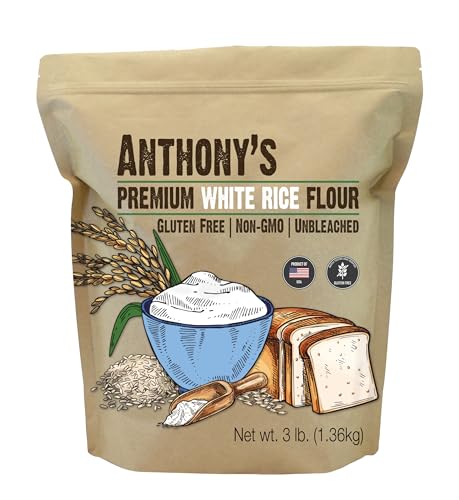
Anthony’s Premium White Rice Flour is batch tested and verified gluten free, making it a safe base for celiac households. The fine powder mimics the mouthfeel of all-purpose flour in blends, and it does not carry the gritty texture that coarser rice flours leave in cookies and cakes. It performs reliably as a thickening agent for soups and gravies without clumping.
For waffles, mixing this rice flour with brown rice flour and a binding protein powder produces a fluffy interior with a crispy shell. It also works for crackers, fresh pasta sheets, and crepes. The lack of gluten means you must pair it with xanthan gum or psyllium husk for anything that needs structure — this flour alone will not hold air.
The 3-pound bag is smaller than economy gluten-free options, so heavy users may want to buy multiples. Storage is simple since the resealable bag is well designed, but it is still wise to decant into a airtight container to protect against pantry pests. The price per pound runs higher than mainstream white rice flour, but the gluten-free guarantee justifies it for sensitive diets.
Why it’s great
- Certified gluten free — safe for celiac diets
- Fine powder prevents gritty baked goods
- Versatile for baking, thickening, and pasta
Good to know
- Requires a binder (xanthan gum) for leavened baking
- Premium pricing compared to generic rice flours
5. King Arthur Flour Sir Lancelot Hi-Gluten Flour, 50 Pounds

King Arthur’s Sir Lancelot Hi-Gluten Flour sits at a professional-grade 14.2% protein, putting it at the very top of the high-gluten tier. Milled from hard red spring wheat and never bleached or bromated, this flour builds a gluten network that can handle high-hydration sourdough, stiff bagel dough, and pizza that stretches thin without tearing. It is the flour that professional pizzerias and artisan bakeries reach for.
The 50-pound sack is clearly aimed at heavy users — weekly sourdough bakers, small commercial kitchens, and serious home bakers who freeze dough in bulk. It pairs beautifully with whole grain flours, providing enough structural support to lift a loaf that includes 30% rye or spelt. The flavor is clean and slightly sweet from the hard red spring wheat, and it develops a dark, crispy crust during long bakes.
Storage is the primary obstacle. The ply-lined paper bag is not moisture-proof, so you must divide the flour into food-grade buckets or Mylar bags with oxygen absorbers. The physical weight (50 pounds) makes it a two-person lift to pour. Some shipments arrive in rain-damaged boxes, though the seller is responsive with replacements. For anyone who bakes multiple loaves a week, the cost per pound is unbeatable.
Why it’s great
- Professional protein level for artisan results
- Unbleached, unbromated, and clean tasting
- Excellent value per pound for high-volume bakers
Good to know
- Requires airtight storage — bag is not resealable
- 50-pound weight is physically demanding to handle
FAQ
Can I use high-gluten flour for sourdough starter feeding?
What is the difference between vital wheat gluten and high-gluten flour?
Does high-gluten flour require more kneading time?
Final Thoughts: The Verdict
For most users, the best gluten flour for baking winner is the Bob’s Red Mill Organic Whole Wheat Flour because it delivers a high protein range with stone-ground flavor that works across breads, rolls, and pastries. If you want a professional-grade gluten network for bagels and artisan sourdough, grab the King Arthur Sir Lancelot Hi-Gluten Flour. And for strengthening weak all-purpose flour or making seitan, nothing beats the Anthony’s Vital Wheat Gluten.