
Snapping drywall panels into place only to watch them sag or pop days later is a hard lesson in trust. The right adhesive eliminates that gamble, locking boards tight against studs while reducing screw pops and nail holes that demand tedious mudding. But not every tube delivers the grip needed to hold a heavy sheet of gypsum board flush against wood or metal framing — especially in moisture-prone basements or cold garages where curing slows to a crawl.
I’m Mohammad Maruf — the founder and writer behind Drink4Good. I’ve analyzed chemical formulations, cure times, and real-world feedback across dozens of adhesives to find which ones actually deliver the bond a drywall job demands without slipping or shrinking.
Whether you’re hanging a single patch or finishing a basement, choosing the right glue for drywall means balancing initial tack strength with long-term hold on porous gypsum and non-porous metal studs alike.
How To Choose The Best Glue For Drywall
Adhesive technology for wallboard has moved beyond simple latex mastics. Modern construction adhesives are engineered to bridge gaps, resist moisture, and cure at lower temperatures — but not all of them are appropriate for the unique demands of drywall. Paper-faced gypsum is porous on one side and slick on the other, and the bond must survive seasonal expansion and contraction of wood framing without cracking.
Initial Tack vs. Ultimate Strength
A glue that slides down the wall after you position the panel is useless no matter how strong it gets after 24 hours. Look for formulations that advertise “grab” or “initial tack” — the ability to hold the panel in place without screws or bracing for at least 30 seconds. Polyurethane-based adhesives like PL Premium excel here, while some latex options require more patience and temporary fasteners.
Water Resistance and Temperature Tolerance
Drywall in basements, bathrooms, or garages faces moisture exposure and temperature swings. Not all construction adhesives remain stable below freezing — some turn into a gel that a caulk gun cannot push through. Check the label for a working temperature range. A glue rated down to 0°F will cure slowly but stay workable, whereas a standard interior mastic may freeze inside the tube.
Cure Time and Workability
Most heavy-duty drywall adhesives reach full cure in 24 hours, but some set fast enough to hold a panel in minutes. Fast-setting formulas reduce the need for temporary screws, but they also leave less time to adjust alignment. For large rooms, a slower cure gives you the window to tweak panel positioning before the bond locks permanently.
Quick Comparison
On smaller screens, swipe sideways to see the full table.
| Model | Category | Best For | Key Spec | Amazon |
|---|---|---|---|---|
| PL Premium Multi Purpose | Polyurethane | High-strength drywall bonding | Full cure in 24 hours | Amazon |
| Loctite Power Grab Ultimate Crystal Clear | Latex Hybrid | Invisible repairs on finished surfaces | Crystal clear after cure | Amazon |
| Gorilla Construction Adhesive | Epoxy Resin | Rough framing and concrete bonding | 100% waterproof formula | Amazon |
| Larsen Plaster-Weld | PVA Bonding Agent | Plaster patches over concrete | Quart container, brush-on | Amazon |
| Henry 314 Premixed Mastic | Mastic | Small drywall patches and tile work | Pre-mixed, ready to use | Amazon |
In‑Depth Reviews
1. PL Premium Multi Purpose Construction Adhesive

PL Premium delivers the highest ratio of grip-to-flexibility among the adhesives tested here. The polyurethane formula expands slightly into the paper face of drywall, creating a mechanical lock that resists shear forces from stud movement. Customers report that two stones bonded with PL could not be separated by a 300-pound person on a hammer drill — an extreme case, but indicative of the bond depth this glue achieves on porous surfaces like gypsum board.
The adhesive sets in roughly 30 seconds, which is enough to hold a drywall panel vertical without immediate screw support. It bonds equally well to wood, metal, and concrete, so the same tube works for furring strips, baseboard glue-ups, and ceiling patches. The tan color blends well with raw gypsum and mud, minimizing discoloration through thin paint layers.
Application requires a standard caulk gun, and the 118 mL tube is compact enough for one-handed use on ladders. Full cure hits at 24 hours, at which point the bond outperforms most mechanical fasteners in pull tests. The only real limitation is the manufacturer’s cold-weather cutoff — below freezing, the polyurethane thickens significantly, slowing both application and initial cure.
Why it’s great
- Exceptional mechanical bond with gypsum paper face
- Sets fast enough to hold panels without bracing
- Works on wood, metal studs, and concrete
Good to know
- Becomes thick and hard to dispense below freezing
- Small tube size may require multiple units for large rooms
2. Loctite Power Grab Ultimate Crystal Clear
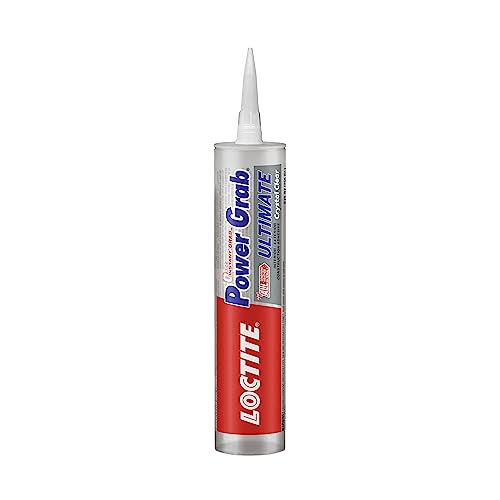
Loctite Power Grab Crystal Clear solves a specific problem that other drywall glues create: visible squeeze-out. Standard tan or beige adhesives require careful application to avoid staining the finished side of drywall or trim. This version dries completely transparent, making it ideal for quick patch repairs where a bead of glue may seep beyond the repair paper and onto painted wallboard.
The formula is a latex hybrid that remains jello-like during application rather than thin and runny. That consistency helps it stay on vertical surfaces without dripping. One user successfully bonded a stainless steel backsplash with it, holding a 5-pound weight after 24 hours — a sign that the tensile strength is sufficient for lightweight drywall patches and edge gluing. The low odor also makes it comfortable for indoor repair work without heavy ventilation.
The trade-off shows up in cold weather: below-freezing temperatures extend the cure time dramatically, with one report noting it remained tacky even with space heaters after 24 hours. For indoor drywall work in a conditioned space, however, the clear finish and quick initial tack make it a smart choice for visible repair areas where aesthetics matter as much as grip.
Why it’s great
- Dries fully transparent — hides squeeze-out on finished wallboard
- Low odor and non-drip consistency for indoor use
- Good gap-filling ability for uneven substrate
Good to know
- Cure time increases significantly in temperatures below freezing
- Higher cost per ounce compared to standard construction adhesive
3. Gorilla Construction Adhesive
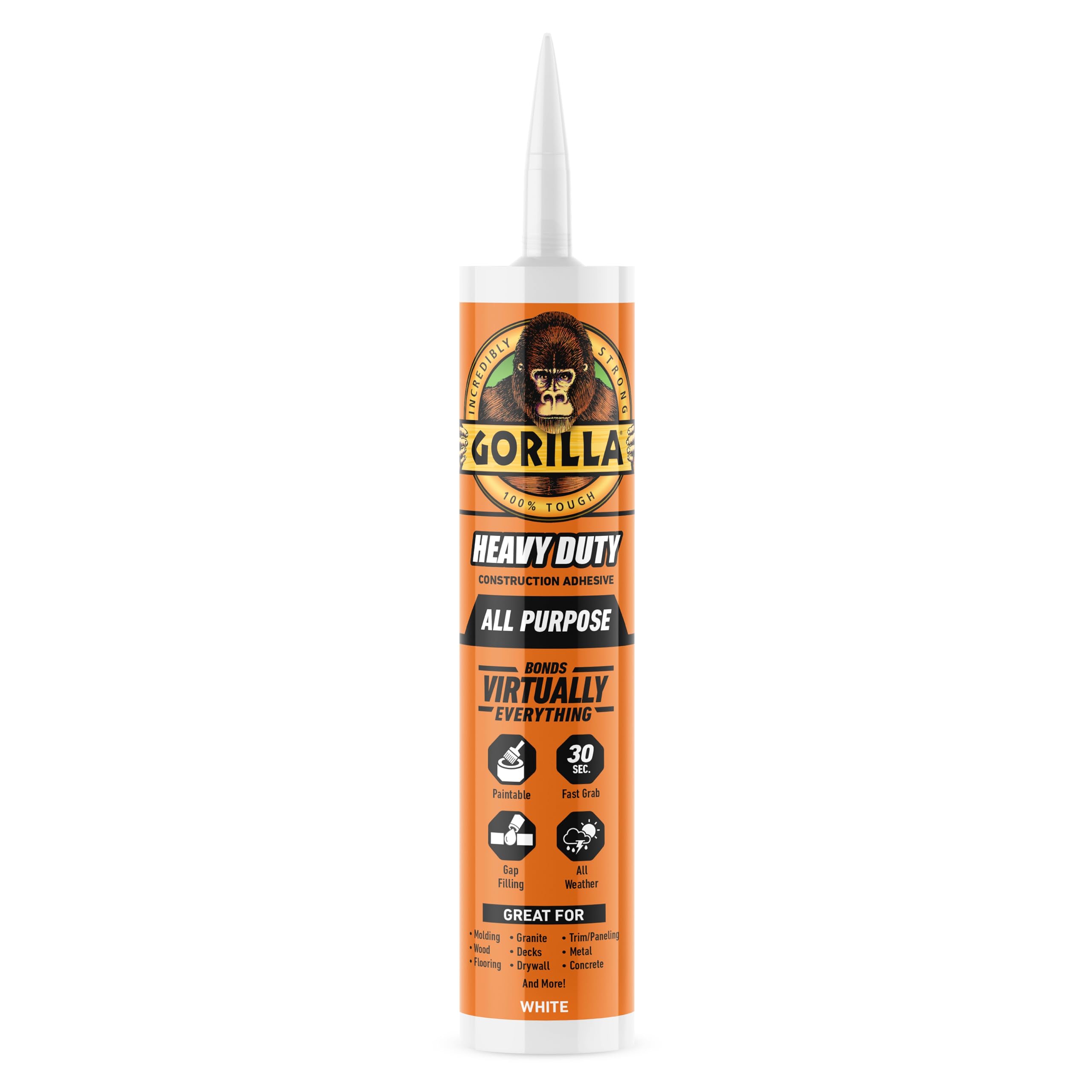
Gorilla’s entry into construction adhesive leans on its reputation for epoxy-level strength, but buyers need to calibrate expectations. The paste-like formula is 100% waterproof and handles gap filling well — which matters when gluing furring strips to damp concrete walls in a basement remodel. The thick consistency grabs immediately on porous surfaces like drywall paper and raw lumber, reducing the need for temporary bracing.
The major caveat appears in the tube itself. Several users report receiving tubes where the adhesive had separated or frozen during shipping, making it impossible to extrude even with a high-ratio caulk gun. This is a consistency and quality-control issue that seems to plague certain batches, and it’s worth shaking the tube vigorously and testing a small bead before committing to a full application. When the formula is fresh, the bond strength on wood-to-drywall joints is excellent, with reports of plywood mounted to concrete holding permanently after a day’s cure.
The epoxy-resin base dries to a tan color that blends reasonably well with drywall mud. Full cure takes the standard 24 hours, though initial grab is strong enough to hold light paneling within minutes. For drywall work in unconditioned spaces where moisture resistance is paramount — think garage ceilings or exterior sheathing retrofits — Gorilla’s waterproof rating gives it an edge over standard latex options.
Why it’s great
- 100% waterproof bond ideal for damp environments
- Thick paste fills uneven gaps between studs and drywall
- Strong initial grab reduces temporary fasteners
Good to know
- Some tubes arrive frozen or separated — inspect before use
- Very thick consistency can be hard to apply in cold weather
4. Larsen Plaster-Weld Bonding Agent

Larsen Plaster-Weld occupies a distinct slot in the drywall adhesive category: it is a bonding agent, not a gap-filling construction glue. The quart container holds a pink-dyed PVA solution that you brush or roll onto smooth surfaces — concrete, existing painted plaster, or glazed tile — before applying fresh plaster or joint compound. This is the product you reach for when patching a ceiling where old plaster has delaminated from the concrete slab above.
Professional plasterers have relied on this formula for decades. One user reported a 22-year ceiling repair that never blistered, and a professional plasterer noted 40 years of consistent use. The mechanism is straightforward: the PVA creates a tacky film that bonds mechanically to the substrate, preventing the new plaster from pulling away during curing shrinkage. The pink dye serves a practical purpose — you can see exactly where you have applied it and whether the coverage is uniform.
For standard drywall-to-stud applications, Plaster-Weld is unnecessary. But for any job involving patching drywall over concrete, tile, or old glossy paint, skipping the bonding agent nearly guarantees delamination within a year. The quart size covers roughly 50 to 75 square feet, making it cost-effective for multiple patch repairs. Work quickly — the film dries in about 30 minutes, and applying plaster over dry film reduces bond strength.
Why it’s great
- Essential for bonding plaster or compound over non-porous surfaces
- Pink dye indicates coverage clearly during application
- Decades of professional use with proven longevity
Good to know
- Not a construction adhesive — does not fill gaps or hold panels
- Must apply plaster while the film is still tacky for best results
5. Henry 314 Premixed Mastic Adhesive

Henry 314 is a pre-mixed mastic originally formulated for ceramic tile but useful in a pinch for lightweight drywall patches and small glue-ups. The quart-sized pail eliminates the need for a caulk gun — you can apply it with a putty knife or notched trowel directly onto the substrate. For a DIYer patching a fist-sized hole in drywall, this is the simplest route: spread a thin layer on the back of the patch panel, press into place, and tape the edges.
The adhesive dries quickly — too quickly, some users note. If you take longer than a couple of minutes to position the panel, the mastic begins to crumble and lose tack. Work in small sections and have everything ready before opening the pail. The beige color matches drywall mud well, which means no staining through thin paint layers. For larger drywall installations, however, the open time is too short to panel an entire wall, and the mastic lacks the structural elongation needed to bridge seasonal wood movement.
Packaging complaints are common: the plastic pail lid frequently splits during shipping, allowing a skin to form on the mastic surface. Stirring or scraping off the top layer usually salvages the rest. For small repair projects where convenience outweighs performance, Henry 314 is a functional entry-level option. For full-room hanging, prioritize one of the tube-based construction adhesives above.
Why it’s great
- No caulk gun needed — apply directly with a trowel
- Matches drywall compound color when squeezed out
- Convenient for one-off repairs and small patches
Good to know
- Dries quickly — limited working time for alignment
- Pail lids often arrive cracked, causing surface drying
- Not designed for structural drywall-to-stud bonding
FAQ
Do I need to use glue on every drywall stud?
Can I apply drywall glue over old paint or wallpaper?
How long should I wait before taping and mudding after gluing drywall?
Will drywall glue help reduce screw pops in a ceiling?
Final Thoughts: The Verdict
For most users, the glue for drywall winner is the PL Premium Multi Purpose Construction Adhesive because its polyurethane formula provides the strongest mechanical lock to gypsum paper and sets fast enough to reduce temporary fasteners. If you want a clear finish that hides squeeze-out on finished repair work, grab the Loctite Power Grab Ultimate Crystal Clear. And for bonding new plaster or compound over concrete or tile, nothing beats the Larsen Plaster-Weld.