
Keeping your grow tent at the right temperature and humidity is the single most important factor for healthy plant development and maximum yield. Too much heat from high-intensity grow lights can stunt growth, cause foxtailing, and ruin a harvest. A standard window AC unit often fails in this enclosed environment, but a dedicated solution built for the unique demands of a sealed grow space changes everything.
I’m Mohammad Maruf — the founder and writer behind Drink4Good. For this guide, I’ve spent dozens of hours cross-referencing BTU ratings, noise profiles, self-evaporating systems, smart sensor integration, and real-world user experiences across dozens of models to find the best options for growers.
Whether you manage a 4×4 tent or a larger 5×5 setup, finding the right grow tent air conditioner means balancing cooling power, humidity control, and smart automation to create the perfect VPD environment season after season.
How To Choose The Best Grow Tent Air Conditioner
Selecting a cooling unit for a grow tent is different from picking one for a bedroom. The enclosed environment, high heat load from lights, and need for precise humidity control require specific features. Focus on these factors to narrow your options.
Cooling Capacity (BTU vs. SACC)
Most portable ACs list a BTU rating measured by the ASHRAE standard, which often overstates real-world performance. The DOE (Department of Energy) SACC rating is more realistic for enclosed spaces like tents. A unit with 8,000 ASHRAE BTUs might only deliver 5,000-6,000 SACC BTUs. For a 4×4 tent with high-output LED lights, look for a true SACC rating of at least 8,000 BTUs to handle the heat load without running constantly.
Self-Evaporative Drainage
In a sealed grow tent, humidity builds up fast from plant transpiration. A self-evaporating system recycles condensed moisture and uses it to cool the condenser coils, reducing the need to manually empty a water tank. This is critical for maintaining consistent humidity levels and avoiding interruptions when you are not checking the tent daily. Units with a pump that expels water out the exhaust hose are the gold standard.
Smart Controls and VPD Integration
Vapor Pressure Deficit (VPD) is the metric serious growers use to optimize plant growth. The best grow tent ACs include a remote temperature and humidity sensor probe or app connectivity that lets you set target VPD ranges. The unit then automatically switches between cooling, heating, or dehumidification to maintain the perfect environment. This automation prevents heat stress during lights-on and excess humidity during the dark cycle.
Noise Level and Form Factor
Grow tents are often placed in basements, spare rooms, or garages where noise matters. Look for a unit with a decibel rating at or below 52 dB in sleep mode. Also consider the exhaust configuration: a single-duct unit is simpler to set up but draws conditioned air from the room, while a dual-duct system is more efficient for sealed tents. The unit should fit through standard doorways and include casters for easy repositioning.
Quick Comparison
On smaller screens, swipe sideways to see the full table.
| Model | Category | Best For | Key Spec | Amazon |
|---|---|---|---|---|
| VIVOSUN AeroLush C08 | Smart AC | Precision VPD Control | 8,000 BTU + Sensirion Probe | Amazon |
| AC Infinity TERRAFORM 8 | All-in-One | Auto Cool/Heat Switch | 12,000 BTU + AI Control | Amazon |
| DREO 516S | Quiet AC | Low-Noise Operation | 14,000 BTU / 45 dB | Amazon |
| VACOOR 14000 BTU | High-Capacity | Large 5×5 Tents | 14,000 BTU / 50 dB | Amazon |
| SereneLife 10,000 BTU | Budget Pick | Supplemental Cooling | 10,000 BTU / 55-57 dB | Amazon |
| Ftocase 10,000 BTU | Mid-Range | Bedroom-Style Cooling | 10,000 BTU / 50 dB | Amazon |
| Air Choice 10,000 BTU | Versatile | Small Tents & Drying | 10,000 BTU / 53 dB | Amazon |
| Garvee 3-in-1 | Entry-Level | Spot Cooling for Small Tents | 8,000 BTU / 51 dB | Amazon |
| Electactic 10,000 BTU | Value Option | Auto-Drainage Efficiency | 10,000 BTU / 52 dB | Amazon |
In‑Depth Reviews
1. VIVOSUN AeroLush C08 Smart Air Conditioner
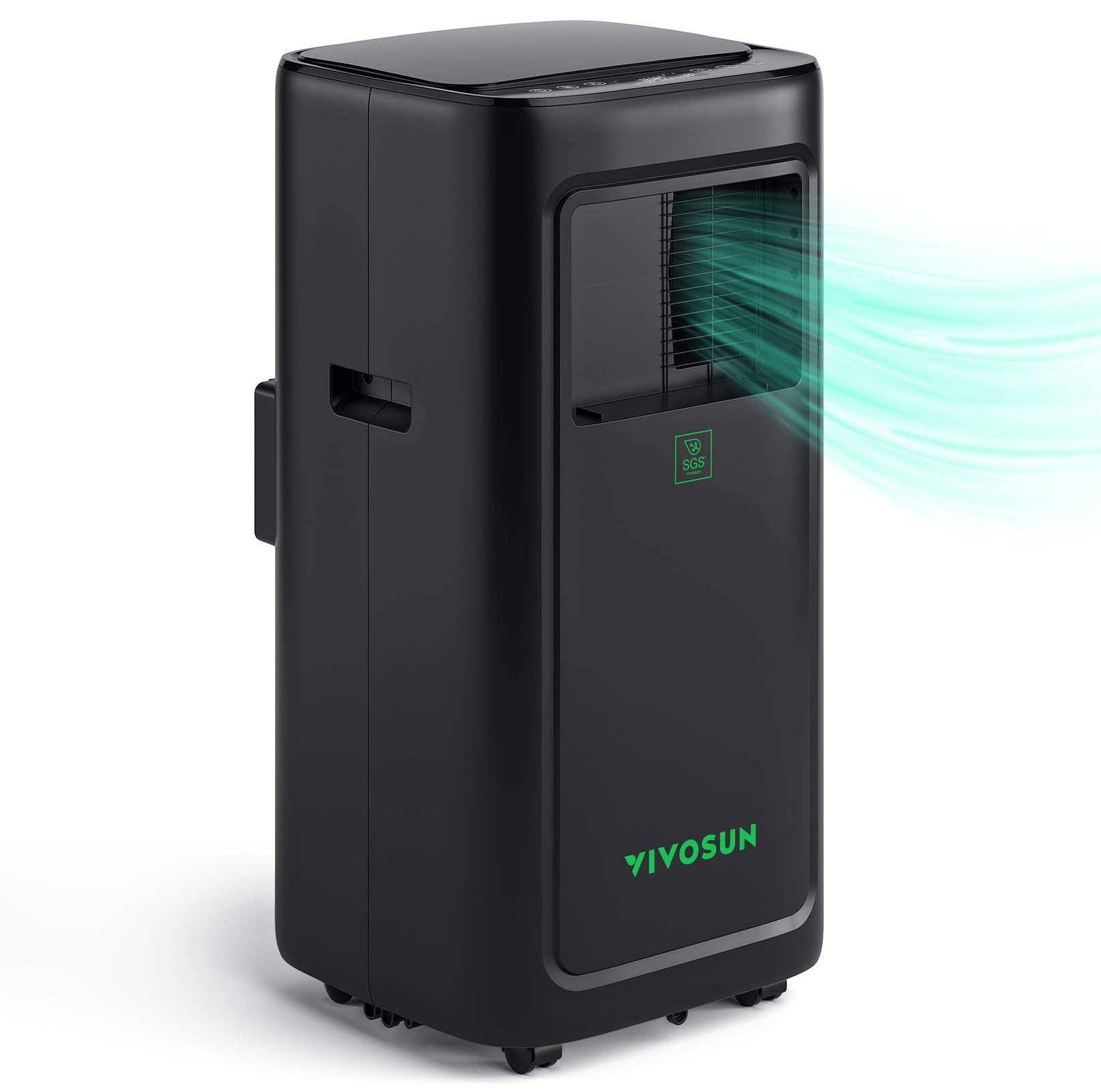
The VIVOSUN AeroLush C08 is built specifically for grow tents, not bedrooms. Its 8,000 BTU compressor uses a precision Sensirion sensor probe for real-time temperature, humidity, and VPD readings. This level of environmental monitoring is exactly what serious growers need to dial in the perfect climate for each growth phase. Users report it can cool a 4×8 tent from the high 90s down to 73°F with lights on, stopping foxtailing issues dead in their tracks.
The 4-in-1 functionality covers cooling, heating, drying, and fan modes, giving season-round control. It connects to the Vivosun app for remote adjustments, and the self-evaporating design reduces manual drain frequency. The unit requires no permanent wall installation for a grow tent — simply roll it into place and connect the exhaust. Keep the internal duct fan at level 0 or 1 for best performance, as higher speeds can pull conditioned air out too fast.
One caveat: the heating function requires reconfiguring the exhaust tubes, which feels clunky compared to the AC Infinity unit’s single-duct auto-switch. But for precision climate control in tents up to 5×5, the integrated sensor and app make this the most grower-focused unit available. The auto-restart after power outages is a welcome safety net for unattended grows.
Why it’s great
- Integrated Sensirion probe for accurate VPD and humidity readings
- 4-in-1 cooling, heating, drying, and fan modes for year-round use
- Smart app control syncs with the VIVOSUN grow system
- Self-evaporating system minimizes manual drainage
Good to know
- Heating mode requires reconfiguring exhaust tubes
- Best performance in ambient temps below 85°F
2. AC Infinity TERRAFORM 8
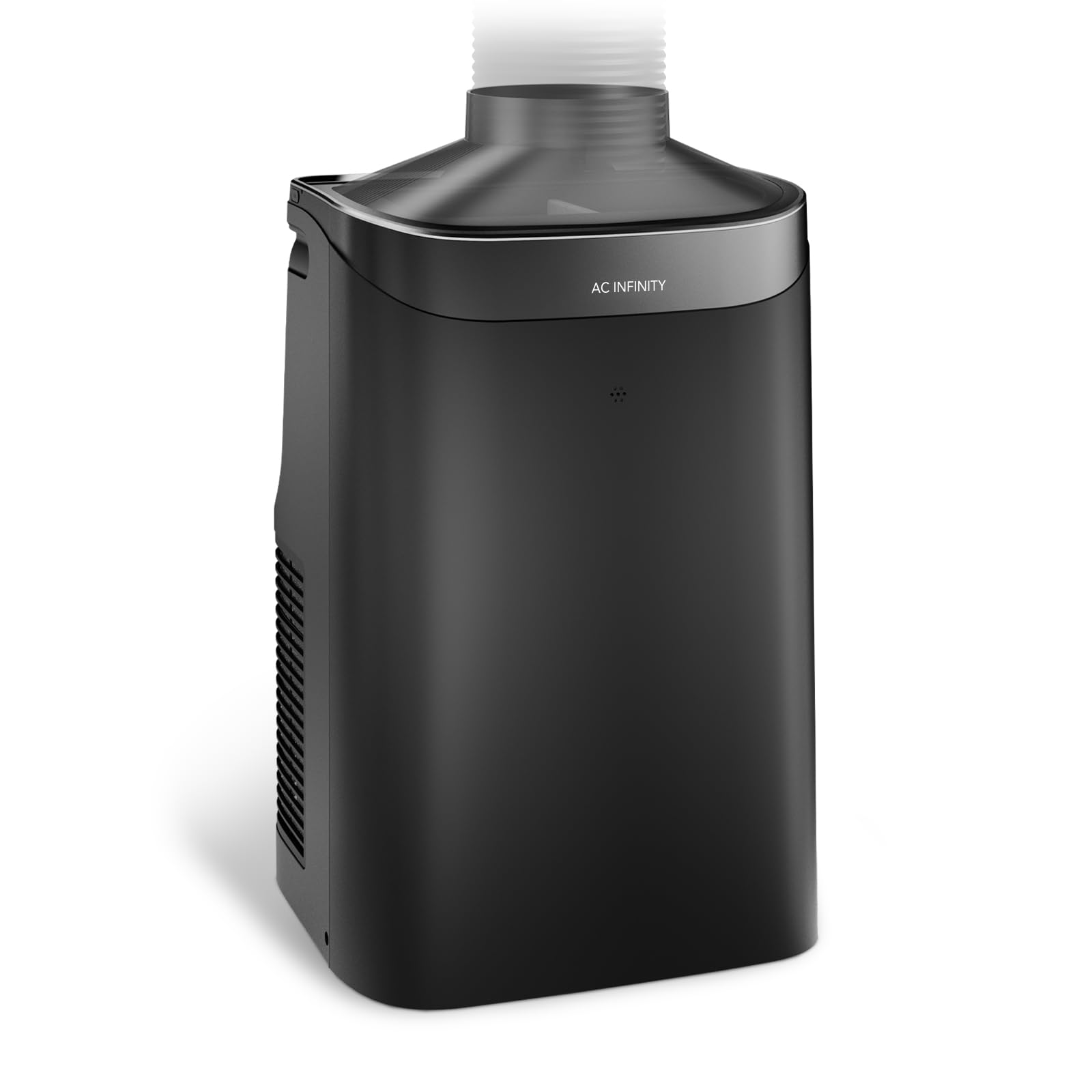
The AC Infinity TERRAFORM 8 is the only unit on this list that delivers both cooling and heating through a single exhaust duct using dynamic AI. You set a target temperature or VPD, and the system auto-switches between cool, heat, and fan modes to keep it steady. For drying, you manually adjust two ducts, but for everyday growing, this single-duct simplicity makes installation far less messy than any competitor.
At 12,000 BTU, this is a powerful unit that can comfortably handle 4×4 and 5×5 tents. The self-evaporative design pumps excess water to the condenser, drastically cutting down how often you need to empty the tank. It connects to the Controller AI+ for WiFi app connectivity, giving you data tracking, advanced automations, and grow guide integration. Users report excellent build quality and quiet operation at half speed, though full power is comparable to a window AC.
The 70.6-pound weight is significant, but the built-in handles and caster wheels make it manageable to move. The auto-switch between heating and cooling is a game-changer for growers in climates with large temperature swings between day and night cycles. This is the closest you can get to a true climate control system for a tent without installing a mini-split.
Why it’s great
- Auto-switches between cooling and heating via single duct
- 12,000 BTU power suitable for large tents
- WiFi app connectivity with data tracking and automation
- Self-evaporative pump reduces frequent draining
Good to know
- Heavy at 70.6 pounds — needs stable placement
- Drying mode requires manual two-duct adjustments
3. DREO Portable Air Conditioner 516S
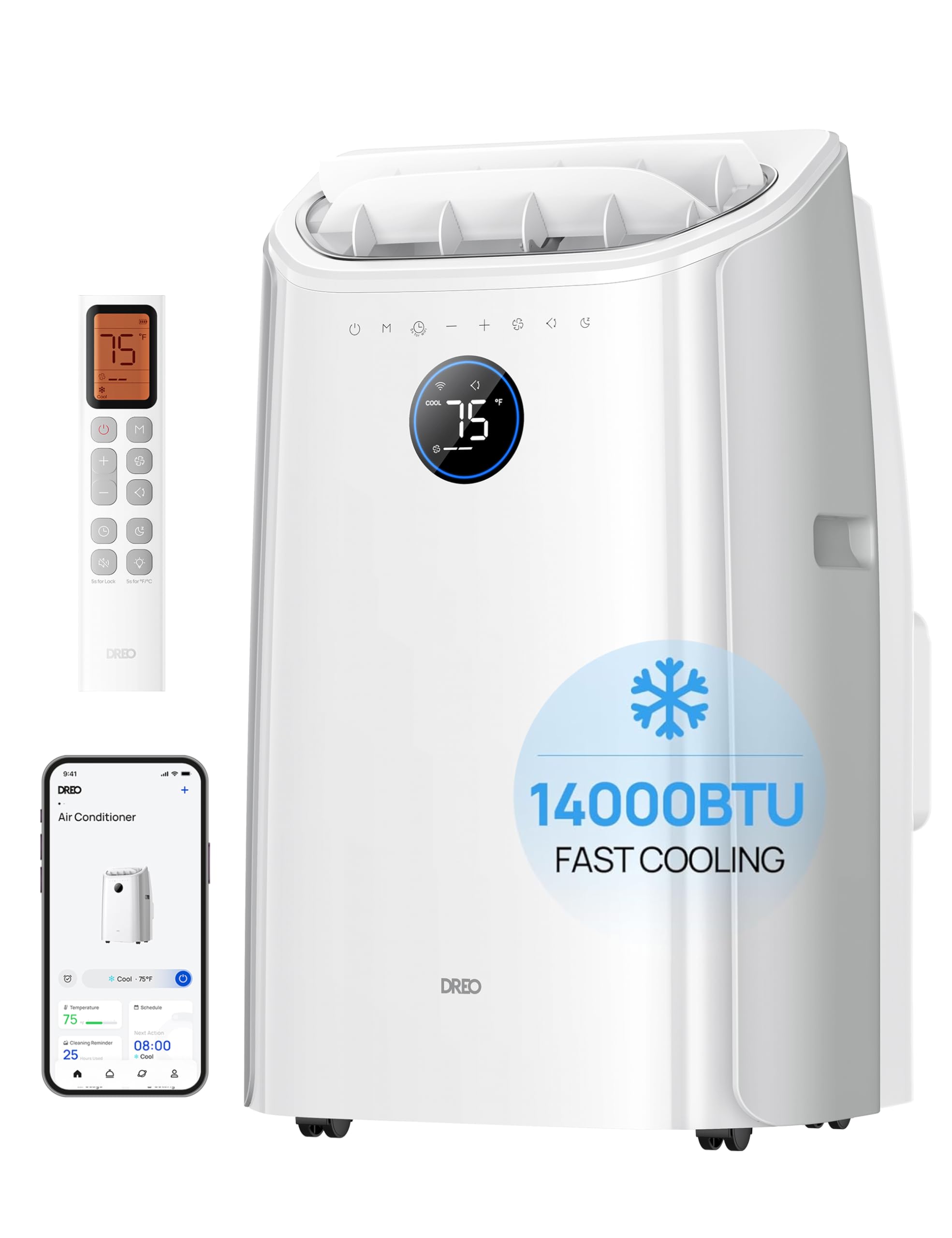
Noise is a real concern when a grow tent sits in a bedroom or living area. The DREO 516S uses a patented noise isolation system to deliver just 45 dB in operation — quieter than most box fans. Despite the low noise, it packs 14,000 BTU (ASHRAE) / 10,000 BTU (SACC) of cooling power, covering up to 16 feet of throw with its IceCool system. It can drop a 600 sq ft room from 86°F to 79°F in about 90 minutes.
The true drainage-free system is a standout for growers. DREO’s patented algorithm, sensors, and pump automatically evaporate excess water in environments up to 90% humidity. This means no manual draining even when your tent is in full flower and transpiring heavily. Smart home integration covers Siri, Alexa, and Google Assistant, plus you get a full DREO app with a sleep curve function for nighttime temperature scheduling.
Setup can be finicky — the window panel pieces require extra foam to seal properly. But once installed, the unit is reliable and quiet enough to run 24/7 without disturbance. The magnetic remote holder and dimmable display are thoughtful touches for a tent environment. This is the best pick if a silent grow room is your priority.
Why it’s great
- Ultra-quiet 45 dB operation — ideal for bedrooms near tents
- True drainage-free system handles up to 90% humidity
- Voice control works with Alexa, Google, and Siri
- Strong 14,000 BTU cooling for large tents and rooms
Good to know
- Window kit installation can require extra sealing
- SACC rating of 10,000 BTU is lower than ASHRAE number
4. VACOOR 14000 BTU Portable Air Conditioner
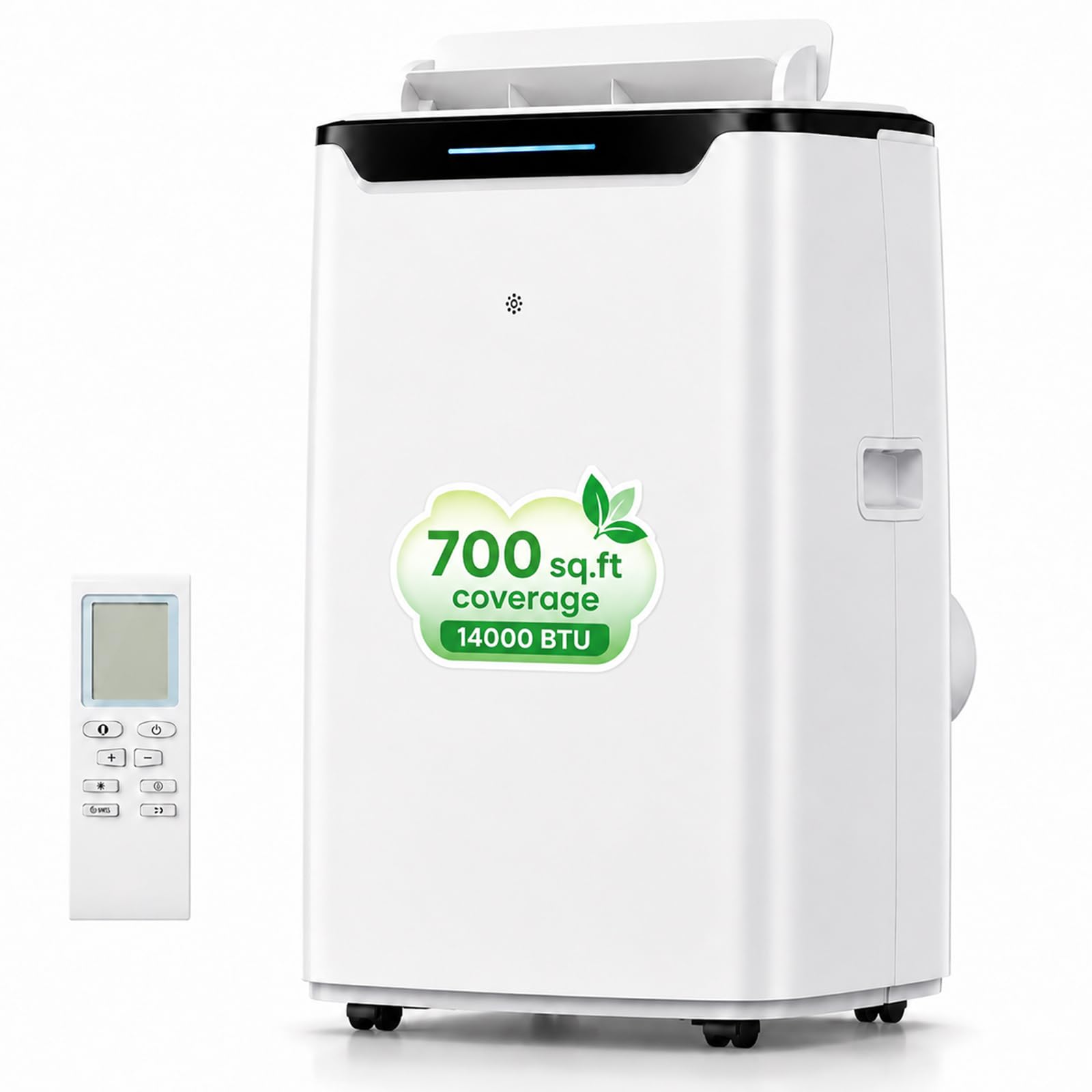
When your grow tent is large (up to 700 sq ft) or your LED array generates serious heat, the VACOOR 14,000 BTU unit brings raw cooling power. It features an upward full-width vent design that delivers 235 CFM airflow, cycling cool air more effectively than front-vent portable ACs that tend to blow directly on plants. Users report that it cools an entire downstairs area quickly without hot spots.
The CEER 7.8 efficiency rating is among the highest in this class, meaning it delivers strong cooling without punishing electricity bills during 18-hour light cycles. The 3-in-1 modes (cool, fan, dehumidifier) remove up to 50 liters of moisture per day — critical when your tent is packed with flowering plants. The sleep mode drops noise to 50 dB, and the 45°-90° adjustable airflow angle lets you direct cool air above the canopy rather than blasting leaves directly.
Installation is straightforward with the included window kit, and the built-in casters and side handles make it easy to relocate. The child lock feature is a nice safety addition. This unit is not optimized for VPD sensing like the VIVOSUN, but its raw BTU output and efficient design make it a top choice for large tents where heat load is the primary challenge.
Why it’s great
- 14,000 BTU of raw cooling for large tents up to 700 sq ft
- CEER 7.8 energy efficiency reduces operating costs
- Upward airflow design prevents direct leaf blasting
- Removes 50L/day of moisture for sealed environments
Good to know
- Lacks a dedicated VPD sensor probe
- Dimensions are large (16.8″ x 26.9″ x 26.9″) — check tent doorway clearance
5. SereneLife 10,000 BTU Portable Air Conditioner
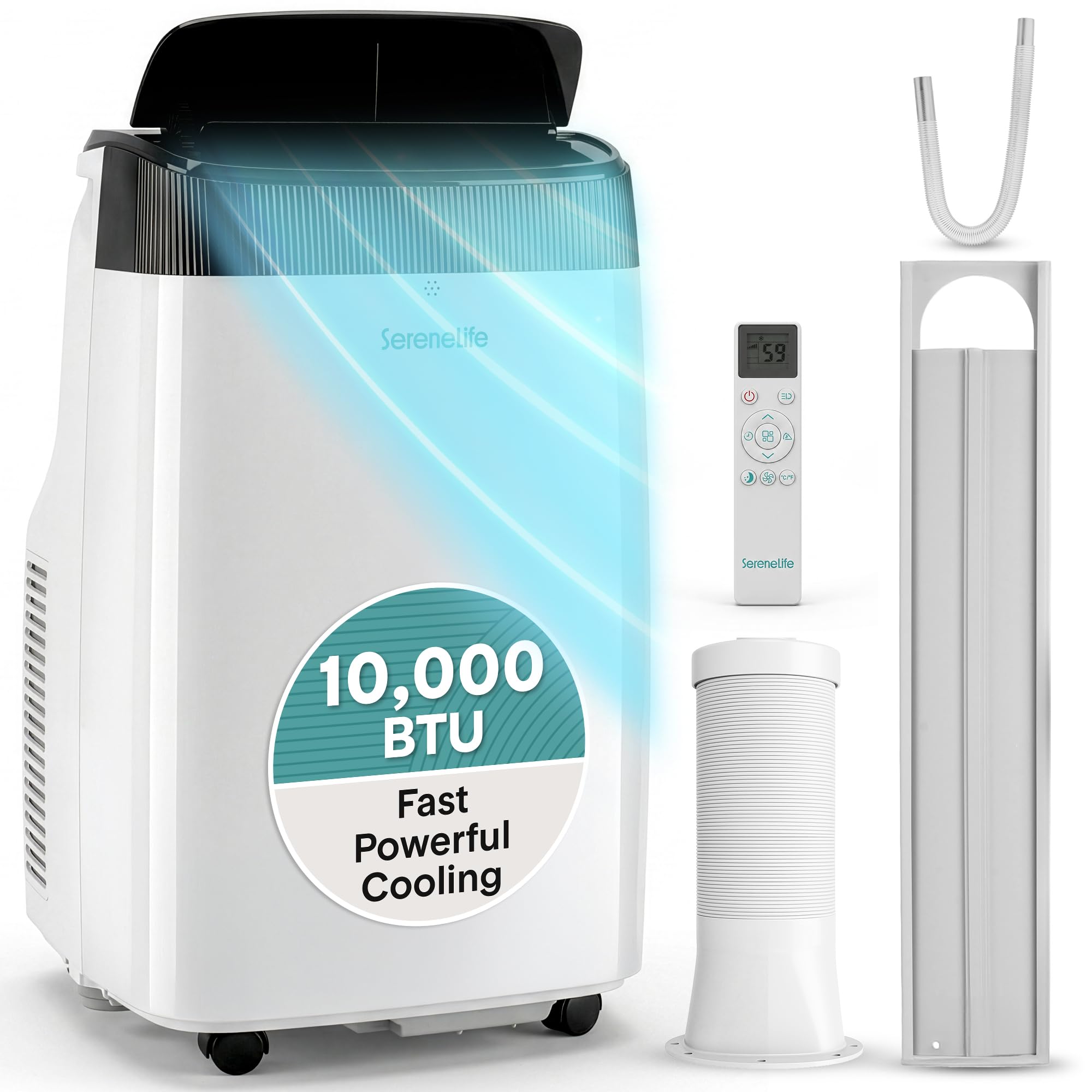
The SereneLife 10,000 BTU unit is an entry-level option that works well for supplemental cooling in smaller tents (3×3 or 4×4) or as a secondary unit for a drying space. It covers up to 450 sq ft with three modes: cooling, dehumidifier, and fan. The double-layer washable filter helps keep dust out of your tent environment, though the filter itself feels flimsy compared to premium units.
Noise is a notable factor here — 55-57 dB is louder than the DREO or VACOOR, which could be distracting in a bedroom setup. The self-evaporative system is basic; in high-humidity environments you will need to manually drain the tank every couple of weeks. The window kit is functional but several users report the hose popping off and the kit being hard to seal properly. Using HVAC tape helps a lot.
This unit lacks any smart controls or app connectivity, so you are managing the environment manually. It is also not designed for the precision VPD control that serious growers need. However, for a grower on a tight budget who needs to knock down heat from a single light setup, the SereneLife gets the job done without breaking the bank. Just keep expectations realistic about its dehumidifier performance.
Why it’s great
- Affordable entry point for small tent cooling
- Washable double-layer filter reduces airborne dust
- Includes remote control and 24-hour timer
Good to know
- Noisy at 55-57 dB — not suitable for quiet rooms
- Basic window kit often requires additional sealing
- No smart controls or VPD sensing
6. Ftocase 10,000 BTU Portable Air Conditioner
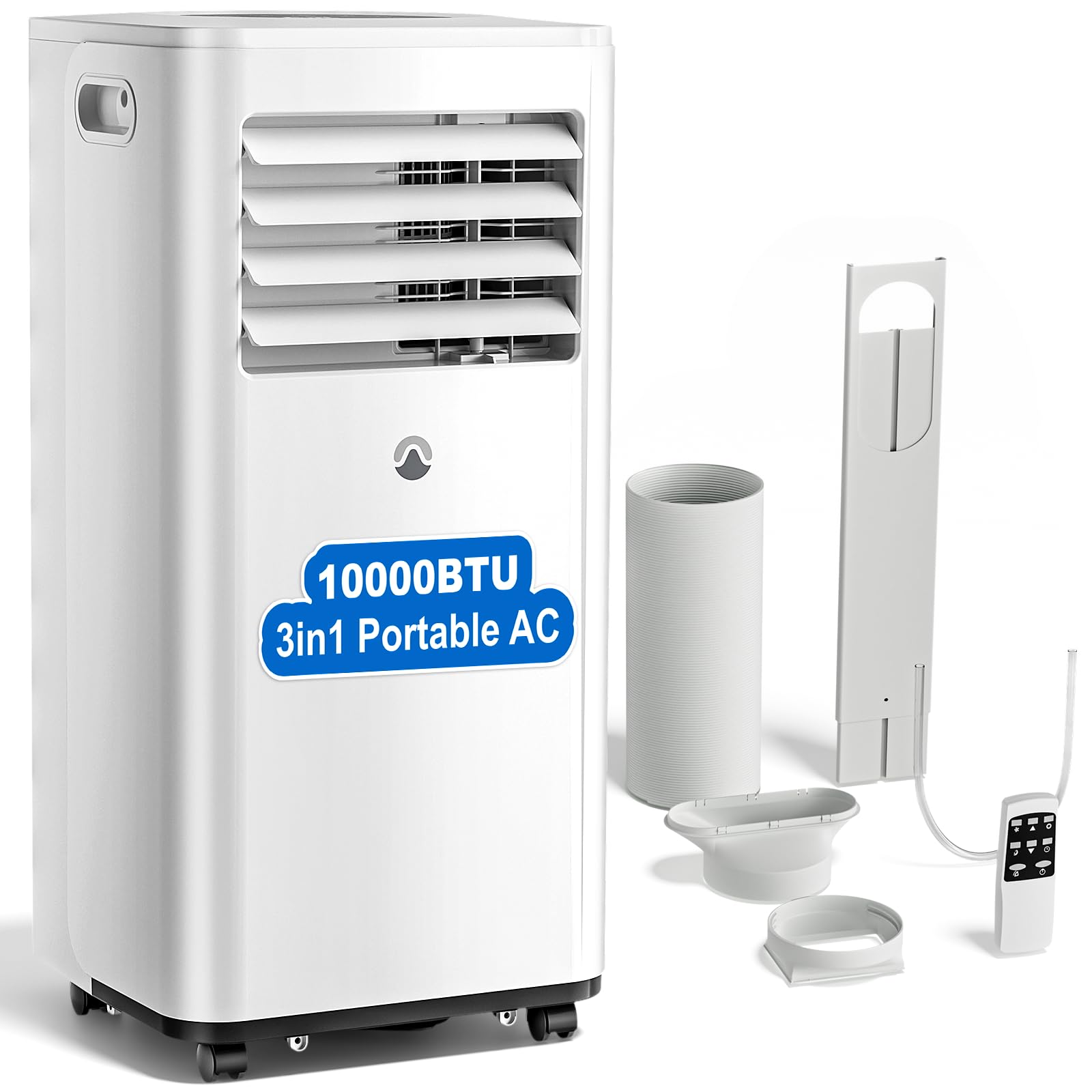
The Ftocase 10,000 BTU unit brings a solid set of features at a reasonable mid-range price point. With a 50 dB noise level and a CEER 7.0 efficiency rating, this unit balances performance and power consumption fairly well. It uses R-32 refrigerant, a more environmentally friendly option with lower global warming potential than R-410A. The 4-way swing function helps distribute cool air evenly across the tent canopy.
The 3-in-1 modes (cool, fan, dehumidifier) are standard, but the built-in water-full alert is a practical feature that prevents the unit from running dry and damaging the compressor. The top LED display and included remote make adjustments easy without opening the tent and disturbing the environment. The 360-degree caster wheels and hidden side handles allow smooth repositioning between tents during harvest rotation.
Setup is straightforward with the included window kit, though some users have noted the exhaust tube works best if kept short for maximum cooling efficiency. This unit is not built for VPD automation, but for a grower who wants a clean, quiet, and efficient cooling solution for a mid-sized tent, the Ftocase delivers reliable performance. The 50 dB sleep mode is unobtrusive enough for a nearby bedroom.
Why it’s great
- Uses R-32 refrigerant with lower environmental impact
- CEER 7.0 efficiency helps manage electricity costs
- 4-way swing for even air distribution in tents
- Water-full alert prevents compressor damage
Good to know
- Lacks remote sensor probe for precise tent climate control
- Window kit may need additional foam for a tight seal
7. Air Choice 10,000 BTU Portable Air Conditioner
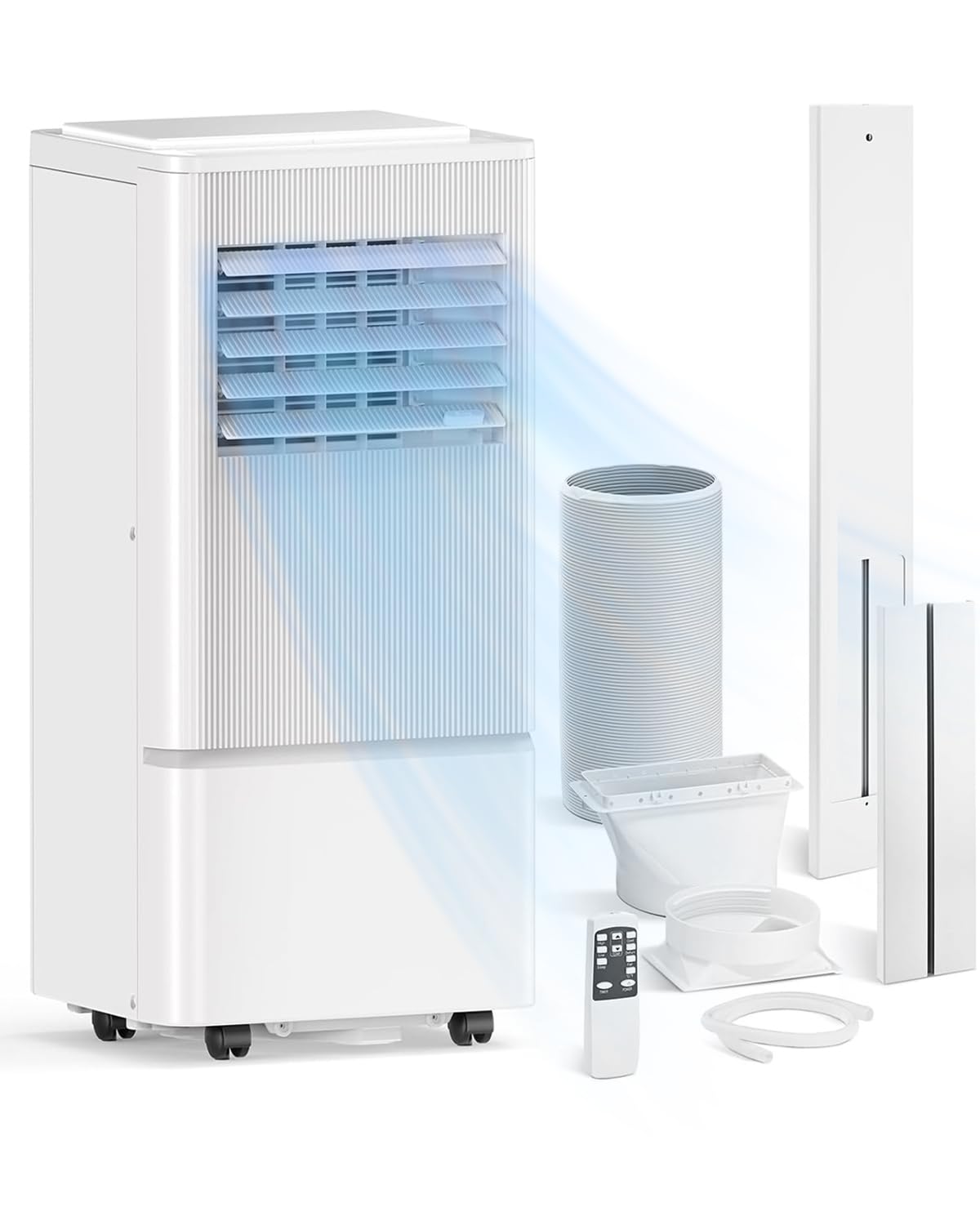
The Air Choice 10,000 BTU unit is a strong option for growers running smaller tents (2×4 or 3×3) who need reliable cooling without a lot of complexity. The adjustable window kit includes three panels with a short and long option, minimizing the need to cut custom pieces. It fits windows from 25.6″ to 50″, making it versatile for different installation scenarios. The 350 m³/h airflow with two fan speeds moves air effectively in a compact tent space.
Sleep mode operates at 53 dB, which is reasonable for night-time use when the tent is in a nearby room. The 24-hour programmable timer helps match the light cycle schedule, turning off during dark periods to save energy. Users report that it cools quickly and is easy to use, with clear instructions. The 3-in-1 functionality includes a dehumidifier mode that helps manage the extra moisture from transpiration.
This unit is not designed for sealed tent operation or VPD control — it is a standard portable AC that happens to work well for small grow rooms. The pre-filter catches larger dust particles, but for heavy-duty grows with high humidity, you will still need a separate dehumidifier. It is best suited for a veg tent or a drying area where precise climate automation is less critical.
Why it’s great
- Versatile window kit with short and long panel options
- Quiet sleep mode at 53 dB for nighttime use
- Fast cooling performance for small to medium tents
- Simple setup with clear instructions included
Good to know
- No smart app control or sensor probe
- Dehumidifier mode is basic, not for high-humidity sealed tents
8. Garvee 3-in-1 Portable Air Conditioner

The Garvee 3-in-1 is the most affordable option here, making it accessible for new growers who need to cool a small tent without a big investment. The 8,000 BTU unit covers up to 350 sq ft and offers three modes (cool, dehumidifier, fan) plus a sleep mode. At 51 dB, it is reasonably quiet for a budget unit, and the self-evaporative system helps reduce manual draining, though in high-humidity environments you will still need to empty the tank periodically.
The washable filter slides out easily for cleaning, which is useful for keeping tent air free from dust buildup. The smooth-rolling casters and compact size make it easy to move between a veg tent and a drying space. Users report that it cools reliably in small rooms and server closets, though the build quality is noticeably cheaper than mid-range units — the exhaust hose can pop off the back if the unit is moved carelessly.
This unit lacks any smart controls or auto-drain pump, so it requires more hands-on management. The window kit is basic and may not seal perfectly. For a micro-grow setup with a single small light (like a 2×2 tent with a 100W LED), the Garvee provides enough cooling to prevent heat stress. Just be prepared to check the water level regularly and reinforce the hose connections with tape.
Why it’s great
- Budget-friendly entry point for small tent cooling
- Self-evaporative system reduces draining frequency
- Washable filter for cleaner tent air
- Compact size with casters for easy room-to-room movement
Good to know
- Build quality is basic — hose connections may need reinforcement
- No smart controls or remote sensor probe
- Not designed for high-heat loads from multiple lights
9. Electactic 10,000 BTU Portable Air Conditioner
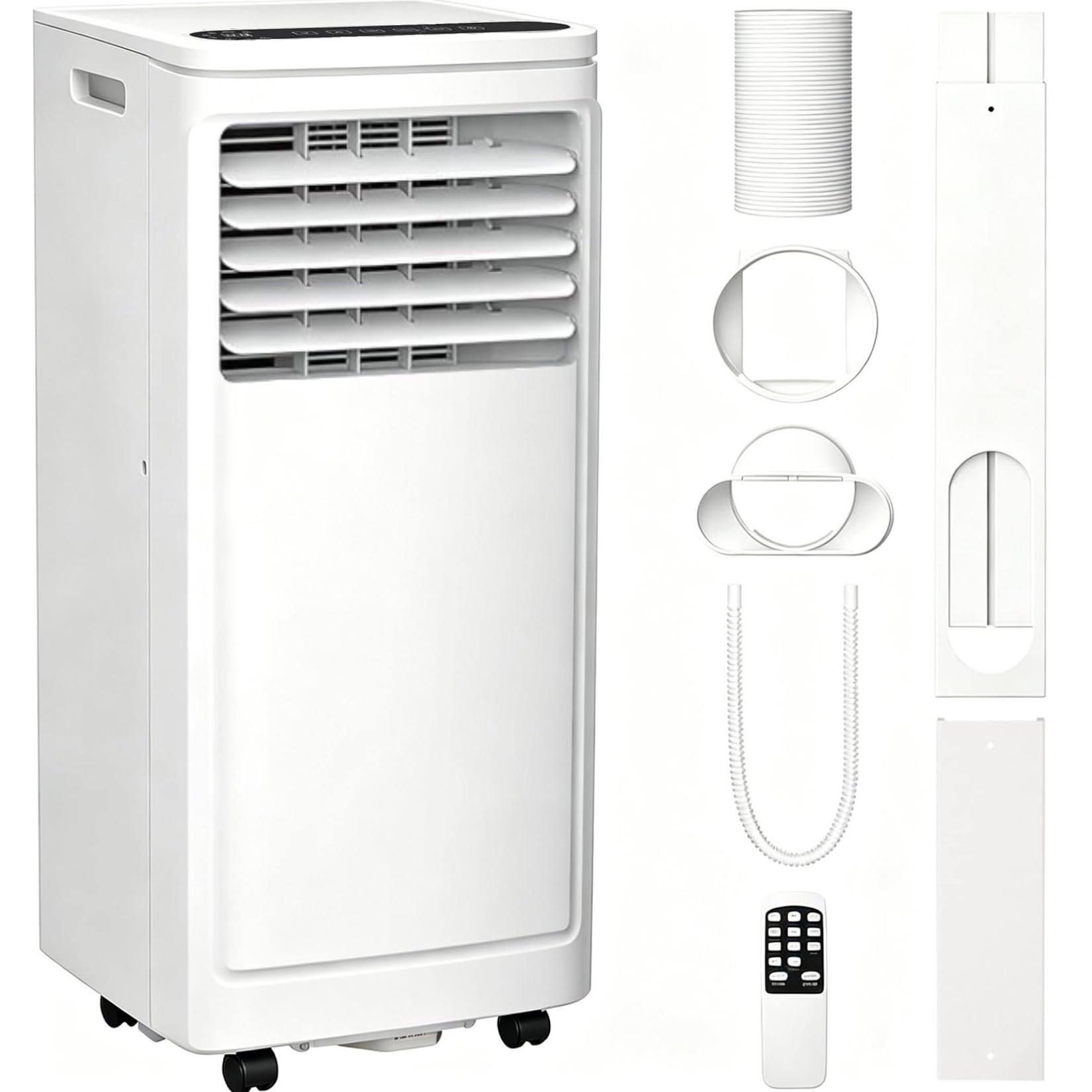
The Electactic 10,000 BTU unit is a value-focused alternative with a strong auto-evaporation system that many users report allows the water tank to last over two weeks in normal operation. This is a significant advantage for growers who want to minimize maintenance frequency. The unit covers up to 450 sq ft, making it suitable for a 4×4 tent, and delivers a wide temperature range from 62°F to 86°F.
The 4-in-1 modes include sleep mode at 52 dB, which is quieter than the SereneLife but not as silent as the DREO. The LED display and remote control are easy to use, and the setup takes about 15 minutes. However, reviews consistently note that the SACC rating of this unit is around 6,000-7,000 BTU in real-world conditions, not the full 10,000 BTU advertised. This means it works best as a supplemental cooler rather than a primary solution for a sealed tent with high heat load.
The window kit parts are on the cheaper side, and most users recommend sealing gaps with HVAC tape or spray foam for optimal performance. The Electactic works well for a bedroom or small grow space where you can afford to run it continuously and supplement with a separate exhaust fan. It is a solid budget-conscious choice, but serious growers with multi-light setups should invest in a higher-SACC-rated unit.
Why it’s great
- Excellent auto-evaporation with weeks-long drainage intervals
- Quiet 52 dB sleep mode for nearby rooms
- Easy 15-minute setup and wide temperature range
Good to know
- Real-world cooling is closer to 6,000-7,000 SACC BTU
- Window kit needs additional sealing for optimal performance
FAQ
Can I use a regular portable AC in a grow tent?
What size AC do I need for a 4×4 grow tent?
How does VPD control work with a grow tent AC?
Is it better to vent the AC exhaust outside the tent or into the room?
Why does my portable AC seem less powerful than advertised for my tent?
Final Thoughts: The Verdict
For most growers, the grow tent air conditioner that strikes the best balance of intelligent control and dedicated grow features is the VIVOSUN AeroLush C08 because its integrated Sensirion probe gives you real-time VPD data without a separate controller. If you want automatic switching between cooling and heating with single-duct simplicity, grab the AC Infinity TERRAFORM 8. And for a silent, nearly maintenance-free operation that handles high humidity without draining, nothing beats the DREO 516S.