
That hairline crack running through the lip of a hand-thrown mug or the clean snap on a cherished ceramic vase can feel like the end of the line. But a properly selected adhesive can restore structural integrity and visual continuity, often rendering the break invisible. The trick is matching the glue chemistry to the clay’s fired state—greenware, bisque, or glazed—and the environmental stress the piece will endure.
I’m Mohammad Maruf — the founder and writer behind Drink4Good. I’ve spent dozens of hours cross-referencing ASTM data, cure chemistry, customer failure reports, and kiln-rated temperature tolerances to isolate the adhesives that actually work under pottery’s unique conditions.
Whether you are repairing a functional dinner plate or reattaching a detailed clay sculpture before the final fire, this guide dissects the five strongest options to help you find the right glue for pottery that matches your specific break, firing stage, and aesthetic requirements.
How To Choose The Best Glue For Pottery
Picking the wrong adhesive for a pottery repair almost always leads to a second break—often worse than the first. The decision hinges on three factors: whether the piece needs to be re-fired, the porosity of the broken surface, and the temperature or moisture the bond will face. Below are the core distinctions to understand before buying.
Firing Stage Compatibility
A glue meant for a finished, glazed mug is useless on a bisque-fired piece that still needs a glaze coat and a second kiln trip. Bisque Fix and sodium silicate (water glass) are the only chemistries in this lineup that survive Cone 6 to Cone 10 heat. Cyanoacrylates and most epoxies burn out or produce toxic fumes above 250°F, making them strictly for post-firing repairs.
Viscosity and Capillary Action
Hairline cracks require a low-viscosity liquid that can wick into the fracture by capillary action. Thicker gel epoxies bridge larger gaps and fill missing chips but cannot penetrate fine fissures. Look for the viscosity spec: “water-thin” liquids suit invisible seam repairs; gel or paste formulations suit structural fills where you need to build up missing material.
Thermal and Moisture Exposure
A repaired dinner plate or teapot handle will face hot water, dishwashing cycles, and thermal expansion. Standard cyanoacrylate breaks down under sustained heat; choose a waterproof epoxy or a specialized ceramic-grade adhesive rated above 200°F if the piece will be used functionally. For purely decorative pottery that stays on a shelf, any clear-drying instant glue will suffice.
Quick Comparison
On smaller screens, swipe sideways to see the full table.
| Model | Category | Best For | Key Spec | Amazon |
|---|---|---|---|---|
| LEENEXUS Super Glue | Cyanoacrylate | Invisible glazed repairs | Water-thin liquid wicks into cracks | Amazon |
| Starbond 5 Min Epoxy | Two-part epoxy | Load-bearing fills & wide gaps | 2,600 lb shear strength | Amazon |
| Lynn Mfg Sodium Silicate | Inorganic adhesive | Kiln-rated pre-glaze repairs | 2000°F heat tolerance | Amazon |
| AMACO Bisque Fix | Ceramic slip | Greenware & bisque repairs before glaze | Fires to Cone 10 | Amazon |
| Beacon 527 Multi-Use Glue | Synthetic polymer | Everyday craft & household repairs | Dries clear in 1 hour | Amazon |
In‑Depth Reviews
1. LEENEXUS Super Glue for Ceramic
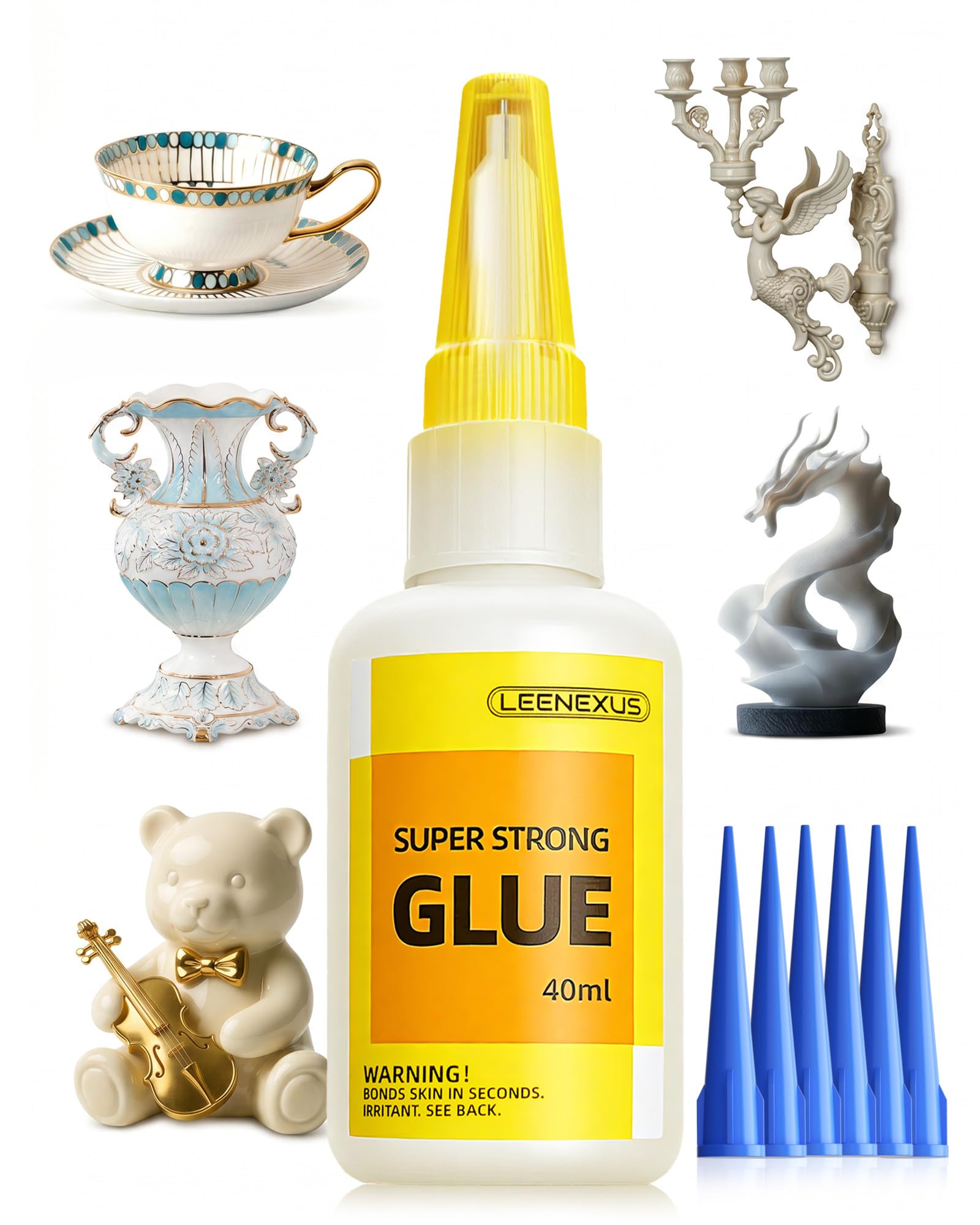
The defining advantage of the LEENEXUS glue is its low viscosity. This is not a thick gel; it is a water-thin cyanoacrylate that literally wicks into hairline fractures by capillary action. For a prized vase or a lidded jar where you want the seam to disappear, this material property is the deciding factor—no other adhesive in this category can penetrate a sub-millimeter crack without leaving a raised ridge.
The 40 ml bottle eliminates the waste of single-use tubes. Included precision tips and a dual-threaded cap that resists clogging mean you can come back to this glue weeks later without fighting a hardened nozzle. The bond reaches handling strength in roughly 20 seconds and cures fully transparent. Users report success reattaching handles on glazed stoneware mugs that then survived hot tea and gentle hand washing.
Heat resistance is rated to 212°F, which makes it safe for hot beverages but not for oven-to-table cookware or dishwasher cycles. The bond is waterproof, but sustained heat cycling above 200°F can degrade cyanoacrylate over time. For decorative pieces or items that see moderate thermal exposure, this is the invisible-repair champion.
Why it’s great
- Water-thin liquid penetrates hairline cracks for invisible seams
- Large 40 ml bottle with anti-clog cap system reduces waste
- Cures crystal clear with 20-second handling time
Good to know
- Not rated for kiln firing or oven temperatures
- Cannot bridge gaps wider than a hairline crack
2. Starbond 5 Minute Epoxy Pro Kit

When a piece of pottery suffers a shatter with missing chips or a load-bearing handle that needs real structural strength, a two-part epoxy is the right tool. The Starbond 5 Minute Epoxy is a flexible toughened formula rated at 2,600 lb shear strength—a number that matters because the bond must absorb vibration and thermal expansion without brittle failure.
The 1:1 mixing ratio is straightforward, and the Pro Kit includes reusable mixing trays and spatulas that make application clean. The gel consistency stays put on vertical surfaces, which is critical for reattaching handles or filling gaps along the rim of a bowl. Full cure takes 24 hours, but handling strength arrives in about 5 minutes, giving you just enough time to align the pieces precisely.
Because this is a thick epoxy, it will leave a visible seam unless you carefully sculpt and sand the excess after curing. It works on glazed and unglazed surfaces alike, but the bond is not kiln-safe—do not fire it. For everyday broken pottery that needs to hold up to use, the Starbond kit delivers the highest mechanical strength in this roundup.
Why it’s great
- Extremely high shear strength for load-bearing repairs
- Flexible formula resists cracking under vibration
- Gel consistency stays in place on vertical surfaces
Good to know
- Visible bond line requires sanding for aesthetic results
- Not suitable for kiln firing or high-heat exposure
3. Lynn Manufacturing Sodium Silicate

Sodium silicate—commonly called water glass or liquid glass—is the only adhesive in this list that can withstand the inside of a kiln. Rated to 2000°F, this 40% solution dries into a clear glass-like solid that essentially fuses with the ceramic body during firing. For potters who need to repair greenware or bisque-fired work before the final glaze, this is the standard.
The application requires a careful touch: the liquid is caustic (alkaline) and will bond to skin quickly. Use a small brush to apply it to clean, tight-fitting breaks. The bond sets to handling hardness in about 30 minutes and cures fully in 24 hours. Once fired, the repair becomes part of the ceramic matrix—there is no seam to fail later under thermal stress.
The 4-ounce bottle is small but lasts a long time because you use just a thin film. Note that sodium silicate is water-soluble before curing, so pieces must stay dry until they enter the kiln. It also conducts electricity when wet, so keep it away from electronics. For pre-fire repairs that need to survive Cone 10, nothing else here compares.
Why it’s great
- Withstands kiln firing up to 2000°F without degradation
- Dries into a transparent glass-like solid
- Bond becomes integral to the ceramic after firing
Good to know
- Caustic alkaline liquid requires gloves and ventilation
- Not water-resistant before firing; dissolves if exposed to moisture
4. AMACO Bisque Fix
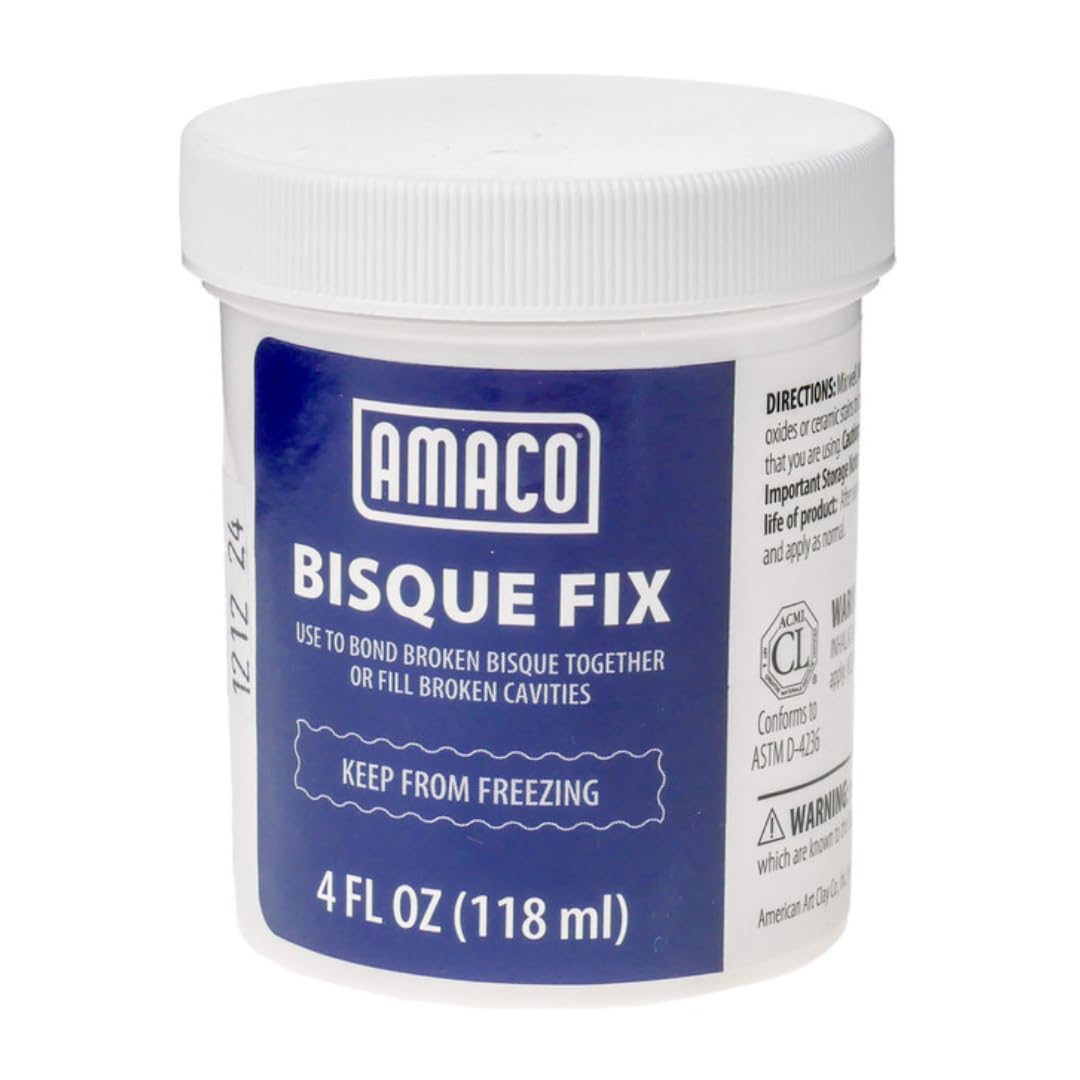
AMACO Bisque Fix is a specialty product designed for a specific window: repairing broken bisque-fired pottery before it is glazed and re-fired. Unlike sodium silicate, which is a clear liquid, Bisque Fix is a white, creamy slip that you can tint with ceramic stains or metal oxides to match the clay body color—a huge advantage for visible repairs on sculptural pieces.
The material fires to Cone 10, meaning it will mature in any standard ceramic kiln. It shrinks and hardens in a way that mimics the original clay, so the repaired area does not create a stress point during the glaze fire. Users report success reattaching handles, filling cracks in the walls of pots, and even creating decorative relief details that blend into the final surface.
The biggest practical complaint is packaging reliability: several Amazon customers report receiving dried-out jars because the thin manila envelope does not protect the container. If you buy online, inspect immediately. Also, the gritty texture means you cannot achieve an invisible repair on a smooth glazed surface—this is strictly for pre-glaze work where the glaze layer will cover the seam.
Why it’s great
- Fires to Cone 10 for full kiln compatibility
- Mixable with oxides/stains to match clay color
- Behaves like clay during firing, reducing stress cracks
Good to know
- Packaging is fragile; product often arrives dried out
- Gritty texture unsuitable for invisible repairs on glazed ware
5. Beacon 527 Multi-Use Glue
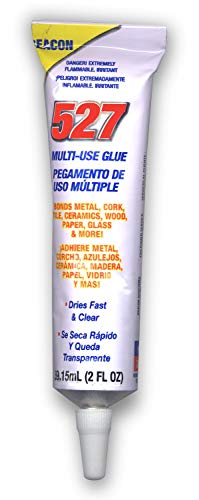
The Beacon 527 is a multi-surface synthetic polymer glue that covers the widest range of materials—ceramics, metal, shells, tile, glass, and plastic. For the potter who needs a single adhesive for craft projects, small household repairs, and mixed-media work, the two-pack offers exceptional value. The formula dries clear in about one hour and reaches full cure in 24 hours.
It is waterproof and weatherproof, which makes it suitable for outdoor pottery like garden planters or decorative yard ceramics that will face rain and frost. The bond is flexible enough to absorb minor thermal expansion, though it is not rated for kiln temperatures or direct food-contact surfaces. The included can-type container allows easy access, but the open mouth can lead to skinning over if not sealed tightly after each use.
For the price of a single premium glue, you get two 2-ounce cans that can handle the majority of non-kiln pottery fixes. The trade-off is a slower set time compared to cyanoacrylate glues, and the need to clamp or hold pieces in place for the first hour. It is the sensible pick for casual potters and mixed-material projects where firing is not required.
Why it’s great
- Excellent value with two 2-ounce cans in one pack
- Waterproof and weatherproof for outdoor pottery use
- Works on ceramics, metal, glass, plastic, and tile
Good to know
- Slower set time requires clamping or holding
- Not rated for kiln firing or direct food contact
FAQ
Can I use regular super glue on pottery that will go in the kiln?
How do I get an invisible seam on a glazed ceramic vase?
Will epoxy hold a broken pottery handle under hot water?
Why does my sodium silicate repair dissolve when I apply glaze?
Can I paint over a glue repair on pottery?
Final Thoughts: The Verdict
For most users, the glue for pottery winner is the LEENEXUS Super Glue because it delivers invisible seams on glazed pieces and packs a large 40 ml bottle with anti-clog engineering. If you need to repair a load-bearing handle or fill missing chunks, grab the Starbond 5 Minute Epoxy for its 2,600 lb shear strength. And for pre-fire repairs that must survive kiln temperatures up to Cone 10, nothing beats the Lynn Manufacturing Sodium Silicate.