
A single loose tile or a hairline crack in the bathroom floor can turn a calm morning into a frustrating repair project. The wrong adhesive leaves you chasing popped tiles, crumbling grout lines, and a finish that never looks right. This guide cuts through the confusion to find the bond that actually holds.
I’m Mohammad Maruf — the founder and writer behind Drink4Good. I’ve spent hundreds of hours analyzing hardware specs, reading through dense adhesive chemistry data, and cross-referencing real-world user reports to build this guide.
Whether you’re patching a chipped ceramic tile or regrouting a shower wall, this guide to the best glue for tile will help you choose the right formula for a durable, clean finish every time.
How To Choose The Right Glue For Tile
Selecting the correct tile adhesive depends on three factors: the size of the repair, the material of the tile, and the expected moisture exposure. A small bathroom grout fix needs a different solution than re-adhering a loose kitchen floor tile. This section breaks down the critical specs so you match the product to your job.
Acrylic vs. Epoxy vs. Thinset
Pre-mixed acrylic grout adhesives like the Custom Building Products SimpleFix cure with a flexible, water-resistant seal that works well for small touch-ups and indoor grout lines. Epoxy-based repair kits, such as the Ankita Tile Repair Kit, provide a harder, waterproof bond that is better suited for chips, cracks, and high-use areas like shower floors. Thinset mortar, applied with a notch trowel from the Tile Tools set, is the standard for installing new tiles from scratch, offering the strongest structural hold for large-format or floor tiles.
Notch Trowel Size Is Not Optional
The depth and pattern of the notches on your trowel directly control the amount of adhesive that transfers to the tile back. Using a 1/2-inch notch for a large floor tile prevents the mortar from squeezing out the sides, while a 5/32-inch notch works for small wall tiles. The Tile Tools set gives you three notch sizes, so you always have the right one for the job.
Color Matching and Cure Time
For visible repairs on existing tile, the ability to match the surrounding grout color is essential. The Ankita kit includes seven pigments to blend custom shades. Cure time also matters: pre-mixed acrylic grout can be touch-dry in two hours, while epoxy formulas may require a full 24-hour cure before the area sees water. Always factor this into your project timeline.
Quick Comparison
On smaller screens, swipe sideways to see the full table.
| Model | Category | Best For | Key Spec | Amazon |
|---|---|---|---|---|
| Ankita Tile Repair Kit | Color Match Epoxy | Chipped ceramic & porcelain | Seven color pigments included | Amazon |
| PentaUSA Grout Repair Kit | Sanded Acrylic | Medium grout line repairs | 44 sq ft coverage per tube | Amazon |
| Custom SimpleFix Grout | Pre-Mixed Acrylic | Small indoor touch-ups | Ready-to-use 1-qt tub | Amazon |
| Marshalltown Margin Trowel | Steel Hand Tool | Spreading adhesive in tight spots | 5-inch carbon steel blade | Amazon |
| Tile Tools Notch Trowel Set | Trowel & Float Set | Full tile installation | 3 notch sizes included | Amazon |
In‑Depth Reviews
1. Ankita Tile Repair Kit
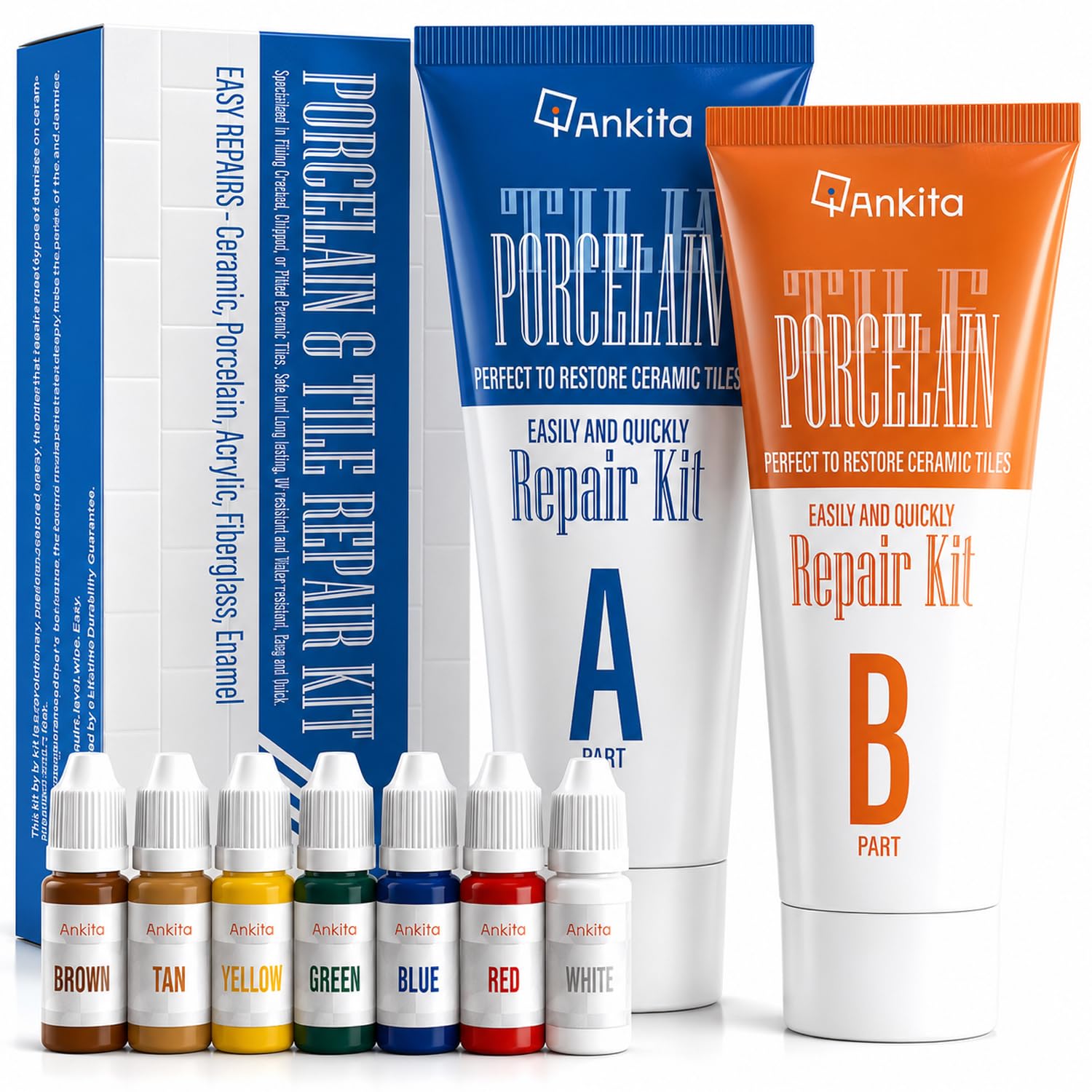
The Ankita kit is the most versatile all-in-one repair solution for ceramic and porcelain tiles. It includes a two-part epoxy paste alongside seven color pigments, letting you blend a precise match for white, beige, gray, almond, blue, black, or standard tile shades. This is the only product on this list that addresses both the structural bond and the cosmetic finish in a single package.
Application is straightforward: mix Part A and Part B, add pigment until the color matches, then press the paste into the chip or crack. The cured epoxy becomes waterproof, scratch-resistant, and holds up in wet areas like shower surrounds and sink backsplashes. User reports confirm strong adhesion on ceramic, porcelain, and even acrylic surfaces.
The main trade-off is that the epoxy cures hard and can be difficult to sand perfectly smooth. A few users noted that the dried finish remains slightly textured compared to the original tile glaze. This kit is best for small repairs — chips, scratches, and hairline cracks — rather than large missing sections.
Why it’s great
- Seven pigments allow near-seamless color matching for common tile shades
- Fully waterproof after 24-hour cure, suitable for showers and kitchens
Good to know
- Hard to achieve a perfectly smooth, factory-like finish even with sanding
- Only practical for small repairs; not designed for large missing sections
2. PentaUSA Tile Grout Repair Kit
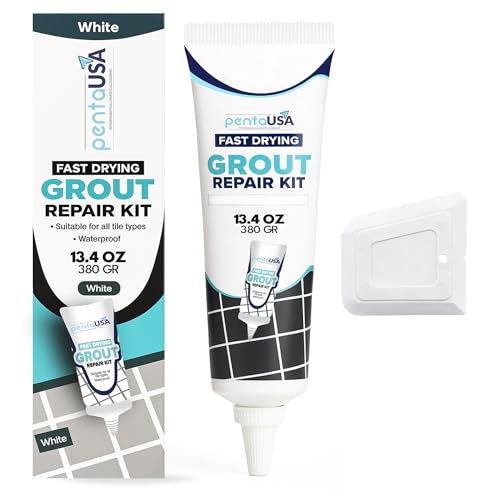
The PentaUSA kit delivers a premixed acrylic sanded grout that fills cracked and missing grout lines with a structural bond rather than a temporary filler. The 13.4-ounce tube covers about 44 square feet of 12×12-inch tile surface at a 1mm depth, making it a strong mid-range choice for medium-sized bathroom or kitchen floor repairs.
The sanded formula provides better adhesion and a more durable finish than standard unsanded caulks. Users consistently report that the consistency is thick but spreadable, blending well with existing grout when applied with the included spatula tool. The anti-clog nozzle pin keeps the tube usable between applications, a practical detail for multi-day projects.
It is worth noting that the white shade can dry slightly darker than the wet appearance, and the tube design requires steady, even pressure to avoid messes. A few users also mentioned needing to apply a second coat for deeper gaps, which extends the total project time by a few hours.
Why it’s great
- Large 13.4 oz tube covers up to 44 square feet, reducing mid-project reorders
- Sanded acrylic formula cures to a durable, water-resistant finish
Good to know
- Color may dry slightly darker than the wet appearance; test on a hidden spot
- Applying deep fills requires multiple coats, slowing down the repair process
3. Custom Building Products SimpleFix Grout

Custom’s SimpleFix is the easiest option on this list for small, quick repairs. It comes pre-mixed in a 1-quart tub, so there is no mixing, no measuring, and no messy powder. The acrylic formula is thick right out of the container and works as both a grout filler and an adhesive for loose edge pieces.
The Alabaster color is a versatile off-white that blends into most existing grout lines. Users report that it cures to a durable finish that resists cracking and shrinking, even in slightly damp environments. It also handles stain resistance well — one user wiped coffee off the cured surface with no visible mark.
The main drawback is that a single quart tub is relatively expensive compared to mixing your own powdered grout, making it uneconomical for anything larger than about 30 square feet. Additionally, the packaging has been flagged as fragile; the thin plastic tub can split during shipping, leaving you with hardened, unusable grout.
Why it’s great
- Zero mixing required — open the tub and apply for immediate use
- Stain-resistant finish that holds up well to coffee and food splashes
Good to know
- Cost per square foot is higher than powdered grout for larger projects
- Thin plastic tub can split in transit, leading to product loss
4. Marshalltown Margin Trowel

The MARSHALLTOWN Margin Trowel is not an adhesive itself, but it is the tool that makes every glue application cleaner and more controlled. The 5-inch blade and flat, square nose are designed to spread mortar and tile adhesive into tight corners, along edges, and behind fixtures where larger trowels simply cannot reach.
Forged from a single piece of high carbon steel, the blade is tempered and ground for a precise balance between stiffness and flex. The wood handle provides a secure grip even with wet hands, and the American assembly is evident in the tight fit between the tang and the handle. Many long-term users, including professional plasterers, consider this the gold standard margin trowel.
It is not a complete solution by itself — you still need an adhesive product. However, for anyone applying glue to tiles, having this trowel in your kit ensures you can reach every gap without leaving lumps or voids. The only caution is that the carbon steel will rust if left wet, so cleaning and drying after each use is essential.
Why it’s great
- Slim square nose fits into tight gaps where standard trowels cannot
- High carbon steel blade holds an edge and resists bending under pressure
Good to know
- Blade is not stainless steel; will rust if not dried after cleaning
- Designed for spreading application, not for mixing or holding large amounts
5. Tile Tools Stainless Steel Notch Trowel Set

For anyone tackling a full tile installation rather than a simple repair, the Tile Tools set provides the three most common notch trowel sizes — 4mm, 8mm, and 12mm — along with a rubber grout float and two sponges. This kit is designed to be a one-stop solution for spreading both thinset adhesive and grout.
The stainless steel blades are polished and corrosion-resistant, with an aluminum shank and ergonomic handle that reduces hand fatigue during long jobs. The rubber float is rigid enough to push grout into lines without scratching the tile surface. Users consistently comment that the set punches above its price point for weekend warrior and DIY projects.
The sponge quality is the weakest link in the kit — they are medium-density and tend to lose shape faster than premium options. Some users also noted that the smaller trowel handles feel slightly flimsy when working with heavy-bodied thinset. For occasional use, this set is excellent; for daily professional use, you would likely upgrade the sponges and the smallest trowel.
Why it’s great
- Includes three notch sizes (4/8/12mm) covering small wall to large floor tile
- Stainless steel blades resist corrosion and clean up easily
Good to know
- Included sponges wear out faster than premium alternatives
- Smallest trowel handle can feel a bit flimsy under heavy thinset pressure
FAQ
Can I use the Ankita epoxy kit to fix a large broken tile section?
How long should I wait before getting the PentaUSA repair wet?
Final Thoughts: The Verdict
For most users, the best glue for tile winner is the Ankita Tile Repair Kit because it combines a strong epoxy bond with a color-matching system that works for the five most common tile shades. If you want a pre-mixed grout that spreads straight from the tube, grab the PentaUSA Grout Repair Kit. And for a full installation rather than a patch, nothing beats the Tile Tools Notch Trowel Set paired with your own thinset.