
The heat and humidity of South Louisiana create a unique stress test for turf grass. Standard cool-season blends wither by July, while aggressive warm-season varieties can overtake flower beds. The wrong choice leaves you reseeding every spring, battling thin patches and weed invasions.
I’m Mohammad Maruf — the founder and writer behind Drink4Good. I’ve spent countless hours analyzing germination rates, wear tolerances, and regional adaptability of dozens of grass seed blends to find what actually survives a Louisiana summer.
This guide breaks down the top options for overseeing winter lawns, repairing bare spots, and establishing permanent turf, helping you find the best grass seed for south louisiana that matches your specific yard conditions and maintenance style.
How To Choose The Best Grass Seed For South Louisiana
South Louisiana’s long, sweltering summers and mild winters create a distinct growing season. The key is matching your seed type to your yard’s sun exposure, traffic level, and whether you want a permanent lawn or winter color over dormant warm-season grass.
Permanent Warm-Season vs. Winter Overseed
For a permanent lawn that survives summer, choose warm-season varieties like Bermuda, Bahia, or St. Augustine (via plugs, not seed). These grasses thrive in heat but go dormant and brown in winter. If you want green grass year-round, you’ll overseed with a cool-season ryegrass in fall, knowing it will die off when summer heat returns.
Sunlight and Shade Tolerance
Bermuda and Bahia demand full sun — at least six to eight hours daily. If your yard has significant shade under live oaks or along the house, look for tall fescue blends or consider St. Augustine plugs, which tolerate partial shade better than most seeded grasses in the region.
Germination Speed and Establishment
Ryegrasses germinate in three to seven days, delivering fast green coverage for winter or erosion control. Bermuda takes 10 to 21 days and requires consistent soil temperatures above 70°F. Tall fescue blends typically emerge within 7 to 14 days. Faster germination helps crowd out weeds but demands more diligent watering during the establishment window.
Quick Comparison
On smaller screens, swipe sideways to see the full table.
| Model | Category | Best For | Key Spec | Amazon |
|---|---|---|---|---|
| Pennington Annual Ryegrass | Annual Ryegrass | Winter overseeding | 25 lb bag, covers 5,000 sq ft | Amazon |
| Pennington Bermudagrass | Bermudagrass | Full-sun permanent lawn | 5 lb, cold-tolerant variety | Amazon |
| Scotts Turf Builder All-Purpose | Fescue/Rye Mix | Sun/shade quick repair | 20 lb, covers up to 8,000 sq ft | Amazon |
| Lesco All-Pro Tall Fescue | Tall Fescue | High-traffic transition lawns | 10 lb, endophyte-enhanced | Amazon |
| SeedRanch Pensacola Bahia | Bahia | Low-maintenance sandy soil | 10 lb, covers 1,000 sq ft | Amazon |
| St. Augustine Floratam Plugs | St. Augustine Plugs | Shade-tolerant vegetative lawn | 18 live plugs, 3 inch size | Amazon |
| GreenView Perennial Ryegrass | Perennial Ryegrass | Lush winter lawn & patching | 20 lb, covers 10,000 sq ft | Amazon |
In-Depth Reviews
1. Pennington Annual Ryegrass, 25 lb

This annual ryegrass is the standard choice for South Louisiana homeowners who want a green lawn through winter without committing to a permanent cool-season turf. It germinates in three to seven days, tolerates foot traffic well, and dies back naturally as summer heat arrives, allowing your dormant Bermuda or Zoysia to regrow. The 25-pound bag covers up to 5,000 square feet, making it ideal for full-yard overseeding.
Customers consistently report rapid establishment — many saw grass within 48 hours after consistent watering. It holds up well under kids and pets during the cooler months, though it lacks the fine texture of perennial ryegrass. The annual lifecycle means you’ll reseed each fall, but for the price per square foot, it is the most cost-effective winter solution for the region.
One note: annual ryegrass can be aggressive and may require more frequent mowing in late winter. It is not intended as a permanent lawn, but as a seasonal cover. For homeowners in Zone 8, planting in November provides vibrant green through April without interfering with warm-season grass green-up.
Why it’s great
- Ultra-fast germination in 3-7 days
- Disease-resistant and holds up to foot traffic
Good to know
- Must be reseeded each fall
- Coarser texture than perennial rye or fescue
2. Pennington Bermudagrass, 5 lb

Bermudagrass is the backbone of South Louisiana permanent lawns that see heavy sun and foot traffic. This Pennington blend includes cold-tolerant varieties and Penkoted technology, which coats each seed with a fungicide and nutrient layer to improve establishment. It spreads aggressively via stolons and rhizomes, filling in bare spots on its own once established. The 5-pound bag is best for spot repairs or smaller lawns up to 500 square feet at a heavy seeding rate.
Users report that germination is slower than ryegrass — expect 10 to 21 days with soil temperatures above 70°F. The tiny seeds require careful distribution and daily watering until they reach mowing height. Once established, the deep root system provides excellent drought tolerance, staying green longer into dry spells than St. Augustine or fescue.
One limitation: Bermuda goes dormant and turns brown at the first frost, typically November in South Louisiana. It thrives from April through October, requiring regular mowing at one to one-and-a-half inches. It does not tolerate shade well, so it will thin out under trees or along north-facing walls.
Why it’s great
- Aggressive self-spreading fills bare spots naturally
- Deep roots provide drought tolerance
Good to know
- Goes dormant and browns in winter
- Needs full sun — struggles in shade
3. GreenView Perennial Ryegrass Blend, 20 lb
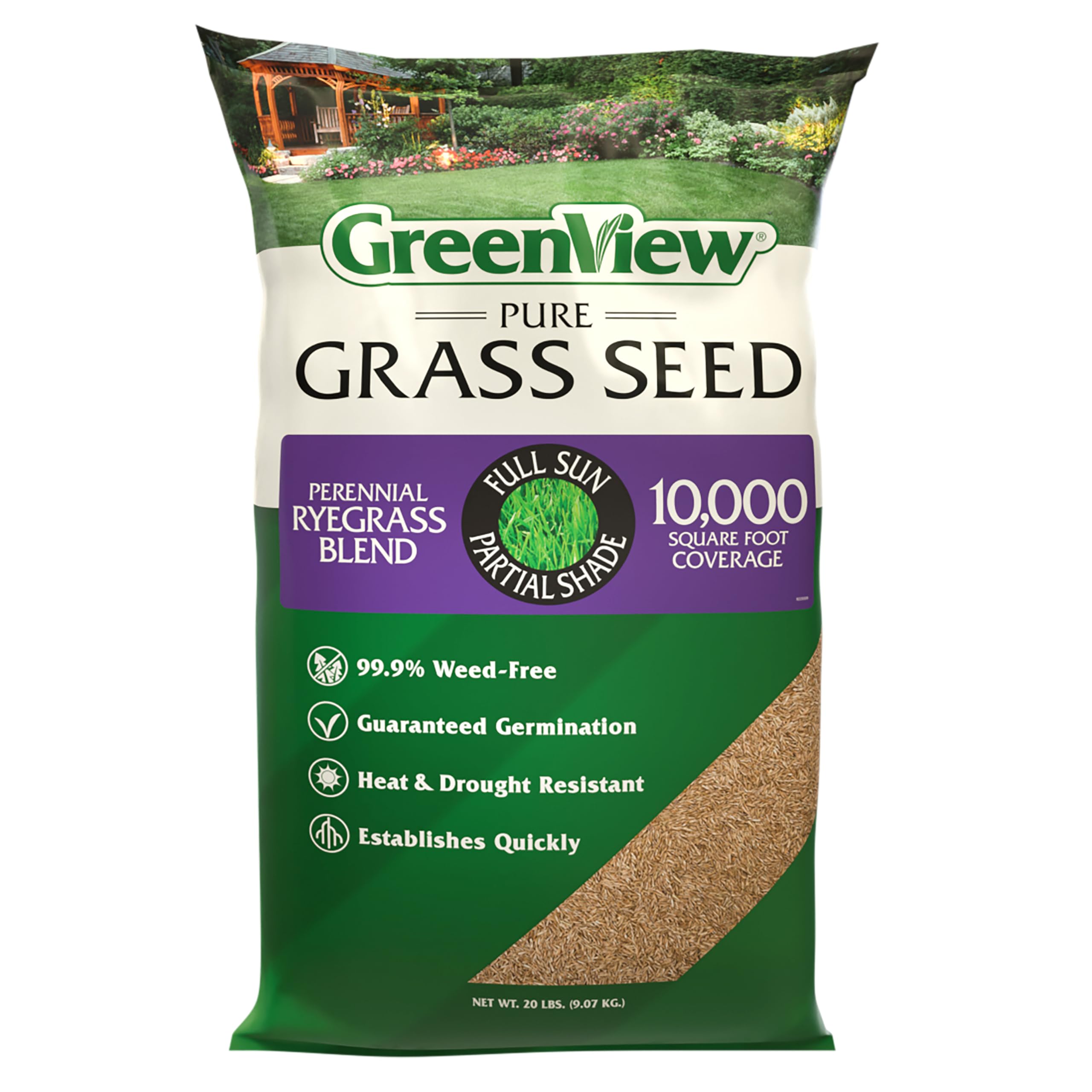
For homeowners who want a richer, darker green winter lawn than annual ryegrass provides, this GreenView perennial ryegrass blend delivers. It germinates in 7 to 12 days and forms a medium-to-fine textured turf that survives light shade better than annual rye. The 20-pound bag covers an impressive 10,000 square feet for overseeding or 5,000 square feet for new lawns. It is 99.9% weed-free, reducing the risk of invasive winter weeds like henbit or annual bluegrass.
Customer feedback highlights its rapid green-up in early spring, often weeks before surrounding Bermuda or fescue lawns. It also holds up well against light foot traffic and competes effectively with winter weeds. Unlike annual ryegrass, perennial ryegrass can persist through mild winters, but it will struggle and thin out during South Louisiana’s humid summers.
Good to know: this blend is designed for transitional and northern zones. In South Louisiana, treat it as a high-quality winter overseed rather than a permanent lawn. It requires consistent moisture during germination — users who missed a single watering day saw delayed emergence. For the densest winter lawn you can seed, this is the top choice.
Why it’s great
- Fine texture and dark green color
- Large coverage area from one bag
Good to know
- Higher upfront cost than annual ryegrass
- Will thin out in summer heat
4. Lesco All-Pro Transition Tall Fescue Blend, 10 lb
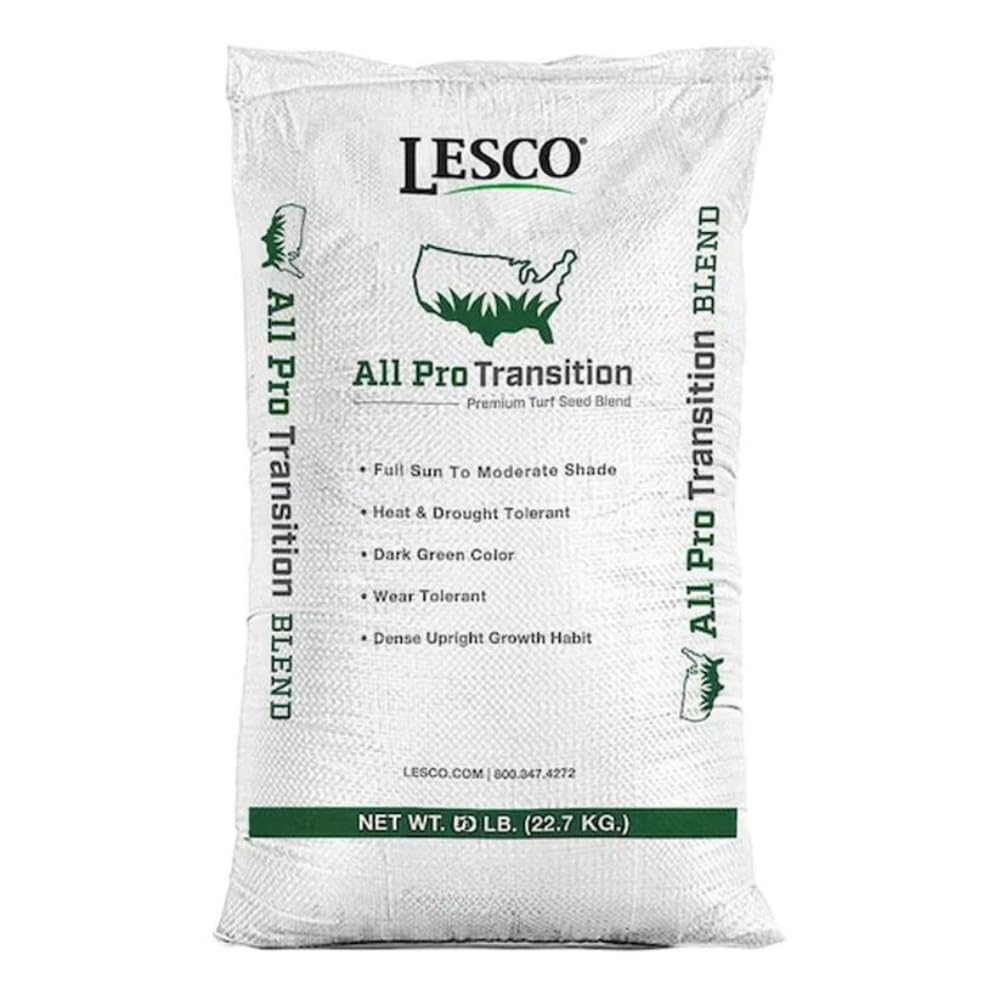
Tall fescue traditionally prefers cooler climates, but this Lesco blend is formulated specifically for transition zones — exactly where South Louisiana sits. It features endophyte-enhanced seeds that naturally deter surface-feeding insects like chinch bugs and sod webworms, two common pests in the region. The 10-pound bag is priced competitively against big-box brands and delivers a fine-textured, dense turf that handles moderate shade better than Bermuda or Bahia.
Reviewers note fast germination within a week and clean seed with virtually no weed or filler content. The turf is soft underfoot and holds up well to heavy use from kids and pets. This blend is particularly effective for shaded areas that still get a few hours of direct sun, such as side yards or under sparse canopy.
The main caveat: tall fescue requires more water than Bermuda or Bahia during July and August. It will stay green through summer with regular irrigation, but drought stress can cause brown patches. This bag is non-returnable, so be certain of your yard conditions before purchasing. For a shaded, high-traffic lawn where Bermuda won’t grow, this is a strong candidate.
Why it’s great
- Natural insect resistance from endophytes
- Fine texture, soft feel, durable under traffic
Good to know
- Higher water needs in summer heat
- Non-returnable product
5. SeedRanch Pensacola Bahia Grass Seed, 10 lb

Pensacola Bahia is a warm-season grass native to the Gulf Coast, making it one of the most naturally adapted options for South Louisiana. It thrives in sandy, low-fertility soils where Bermuda struggles, requires minimal fertilizer, and has strong drought resistance once established. The 10-pound bag covers roughly 1,000 square feet, so plan accordingly for larger lawns — you may need multiple bags.
Customer experiences are mixed regarding germination speed. Several users report that Bahia takes longer to establish than Bermuda — two to four weeks with consistent moisture. Proper soil preparation, including tilling and fertilizing, significantly improves results. The grass grows vigorously once established and tolerates foot traffic well, though it has a coarser blade texture than Bermuda or fescue.
One key consideration: Bahia produces tall seed heads in summer that require more frequent mowing to maintain a manicured look. It is best suited for homeowners who prioritize low input over a pristine putting-green aesthetic. If you have sandy soil and want a lawn that survives on its own with minimal watering, Bahia is your best bet.
Why it’s great
- Excellent drought and disease resistance
- Thrives in sandy, low-fertility soil
Good to know
- Slow to germinate; needs careful watering
- Coarser texture; more frequent mowing in summer
6. St. Augustine Floratam Sod Plugs, 18 Count

St. Augustine grass is not grown from seed — it is propagated vegetatively via sod, sprigs, or plugs. This Floratam variety is the most common in South Louisiana because it tolerates heat, humidity, and moderate shade better than any seeded grass. The 18-pack of three-inch plugs is ideal for patching bare spots under live oaks or along shaded property lines. Floratam has wide, coarse blades and a purplish-red stolon color that distinguishes it from common St. Augustine.
Users praise the plug quality and packaging, with most plugs arriving healthy and ready to plant. Establishment requires diligent watering — multiple short cycles daily for the first 10 days, then tapering to deeper, less frequent watering. Once rooted, Floratam spreads via stolons and can fill a two-foot gap in a single growing season with proper care.
The drawbacks: St. Augustine is susceptible to chinch bugs and large patch fungus, especially during South Louisiana’s humid springs. It also requires more water than Bermuda or Bahia during dry spells. Additionally, these are plugs, not seeds, so you cannot simply broadcast them. Each plug must be planted into prepared soil, which requires more labor than seeding but yields a more predictable, uniform result in shade.
Why it’s great
- Best shade tolerance of any southern turf
- Spreads quickly once established
Good to know
- Higher water requirements than Bermuda
- Susceptible to chinch bugs and fungus
7. Scotts Turf Builder Grass Seed Quality All-Purpose Mix, 20 lb

Scotts Turf Builder All-Purpose Mix is a versatile blend of fescue and ryegrass designed for sun and shade. The seed coating absorbs twice as much water as uncoated seed, which helps maintain consistent moisture during the critical germination window. At 20 pounds, it covers up to 8,000 square feet, making it a cost-effective choice for large bare-area repairs or overseeding established lawns in fall and spring.
Users highlight the 99.9% weed-free guarantee and the fact that it blends well with existing turf. The deep green color and medium texture match many northern lawn types, though this mix is not formulated for South Louisiana’s extreme summer heat. It germinates in 7 to 14 days under proper moisture conditions and produces a soft, durable turf that holds up to moderate traffic.
The critical catch: this product is not available in Louisiana. The manufacturer’s distribution restrictions mean it cannot be shipped to the state. If you have an out-of-state address or are reading this as a general reference, the seed performs well in spring and fall. For Louisiana residents, look to the other direct-ship options on this list that are regionally approved and heat-tolerant.
Why it’s great
- Coating helps seeds stay moist during germination
- High weed-free guarantee for clean lawns
Good to know
- Not available for shipment to Louisiana
- Fescue in the blend struggles in extreme summer heat
FAQ
What grass seed grows best in full sun in South Louisiana?
Can I use tall fescue for a shaded lawn in Louisiana?
Should I buy annual or perennial ryegrass for winter overseeding?
Final Thoughts: The Verdict
For most homeowners, the grass seed for south louisiana winner is the Pennington Annual Ryegrass because it delivers fast winter color at a low cost per square foot and dies back naturally when summer arrives. If you want a permanent full-sun lawn that survives July, grab the Pennington Bermudagrass. And for shaded areas where seed won’t thrive, nothing beats the St. Augustine Floratam Plugs.