
Gen 5 SSDs are no longer just for early adopters. The second wave of drives has arrived, closing the gap between theoretical PCIe 5.0 bandwidth and real-world responsiveness, with sequential reads now pushing past 14,000 MB/s and random IOPS crossing the 2 million mark.
I’m Mohammad Maruf — the founder and writer behind Drink4Good. My approach relies on deconstructing controller architectures, NAND flash types, and thermal design trade-offs to separate genuine next-gen performance from marketing bandwidth claims.
Whether you are upgrading a high-end workstation or building a PCIe 5.0 gaming rig, finding the right best gen 5 ssd means looking past the top-line speed and evaluating sustained throughput, power efficiency, and thermal behavior under continuous loads.
How To Choose The Best Gen 5 SSD
The jump from Gen 4 to Gen 5 is not just a number on a box. It changes how your storage subsystem interacts with your CPU and GPU, especially for workflows that benefit from DirectStorage and high-queue-depth random reads. Here is what to prioritize.
Controller Node and Thermal Management
Gen 5 controllers run hot. A 5nm or 6nm lithography controller (like the Samsung 9100 PRO’s 5nm or the Kingston FURY’s SM2508 6nm) draws significantly less power and generates less heat than a 12nm or 28nm controller, meaning sustained speeds without thermal throttling. Drives without adequate heatsink support or with thin graphene stickers may drop below 5,000 MB/s after seconds of sustained writes.
NAND Type and DRAM Cache
All Gen 5 drives listed here use 3D TLC NAND, which balances density and endurance. The presence of a dedicated DRAM cache (either LPDDR4 or DDR4) is critical for consistent random IOPS and longevity under heavy mixed workloads. Drives without DRAM rely on host memory buffer (HMB), which can bottleneck at high queue depths.
Endurance Rating (TBW)
Terabytes Written (TBW) is the warranty endurance metric. For daily OS and gaming usage, 600 TBW per 1TB is sufficient. For heavy content creation or AI model training, look for 1,200 TBW or higher. The Corsair MP700 Elite and Kingston FURY Renegade G5 lead in this category within the 1TB segment.
Physical Compatibility
Most Gen 5 SSDs are single-sided M.2 2280 modules. However, the integrated heatsink on the Samsung 9100 PRO adds thickness, which may interfere with GPU backplates or low-clearance motherboard slots. Always check your motherboard’s M.2 thermal pad height and slot position before purchasing a drive with a pre-attached heatsink.
Quick Comparison
On smaller screens, swipe sideways to see the full table.
| Model | Category | Best For | Key Spec | Amazon |
|---|---|---|---|---|
| Samsung 9100 PRO | High-End | Sustained throughput & AI | 14,700 MB/s Seq. Read | Amazon |
| WD_Black SN8100 | High-End | Raw sequential speed | 14,900 MB/s Seq. Read | Amazon |
| Kingston FURY Renegade G5 | High-End | Gaming & write endurance | 14,800 MB/s Seq. Read | Amazon |
| Sabrent Rocket 5 | Mid-Range | Value in raw IOPS | 14,000 MB/s Seq. Read | Amazon |
| PNY CS2150 | Mid-Range | Balanced performance & encryption | 10,200 MB/s Seq. Read | Amazon |
| OSCOO ON2000PRO | Mid-Range | Competitive Gen 5 pricing | 13,000 MB/s Seq. Read | Amazon |
| Corsair MP700 Elite | Mid-Range | Reliability & endurance | 10,000 MB/s Seq. Read | Amazon |
| Crucial P510 | Value | Entry-level Gen 5 upgrade | 11,000 MB/s Seq. Read | Amazon |
| SIX NVMe SSD | Value | PS5 expansion budget | 7,350 MB/s Seq. Read | Amazon |
In‑Depth Reviews
1. Samsung 9100 PRO with Heatsink 1TB

The Samsung 9100 PRO leverages a 5nm controller and Samsung’s own 3D NAND to deliver sequential reads up to 14,700 MB/s and writes up to 13,300 MB/s. The integrated heatsink, while adding thickness, enables sustained throughput without thermal throttling, making it ideal for AI inference tasks and heavy video editing workflows. Backward compatible with Gen 4 and 3 platforms, but its real advantage appears only on a native PCIe 5.0 x4 slot.
User reports confirm system boot times under 10 seconds and massive 2TB file transfers completing in minutes on PS5 Pro. The Magician software provides firmware updates and drive health monitoring, adding a layer of long-term reliability. Samsung’s reputation for consistent NAND quality makes this a safe premium bet.
The pre-installed heatsink may cause clearance issues in some laptops and tight ITX builds. For standard ATX desktop use, this is the most complete Gen 5 package available.
Why it’s great
- Industry-leading sustained sequential performance
- Integrated heatsink with advanced thermal control
- Samsung Magician software for monitoring and encryption
Good to know
- Heatsink not removable — check motherboard clearance
- Premium price tier compared to competitors
2. WD_Black SN8100 1TB
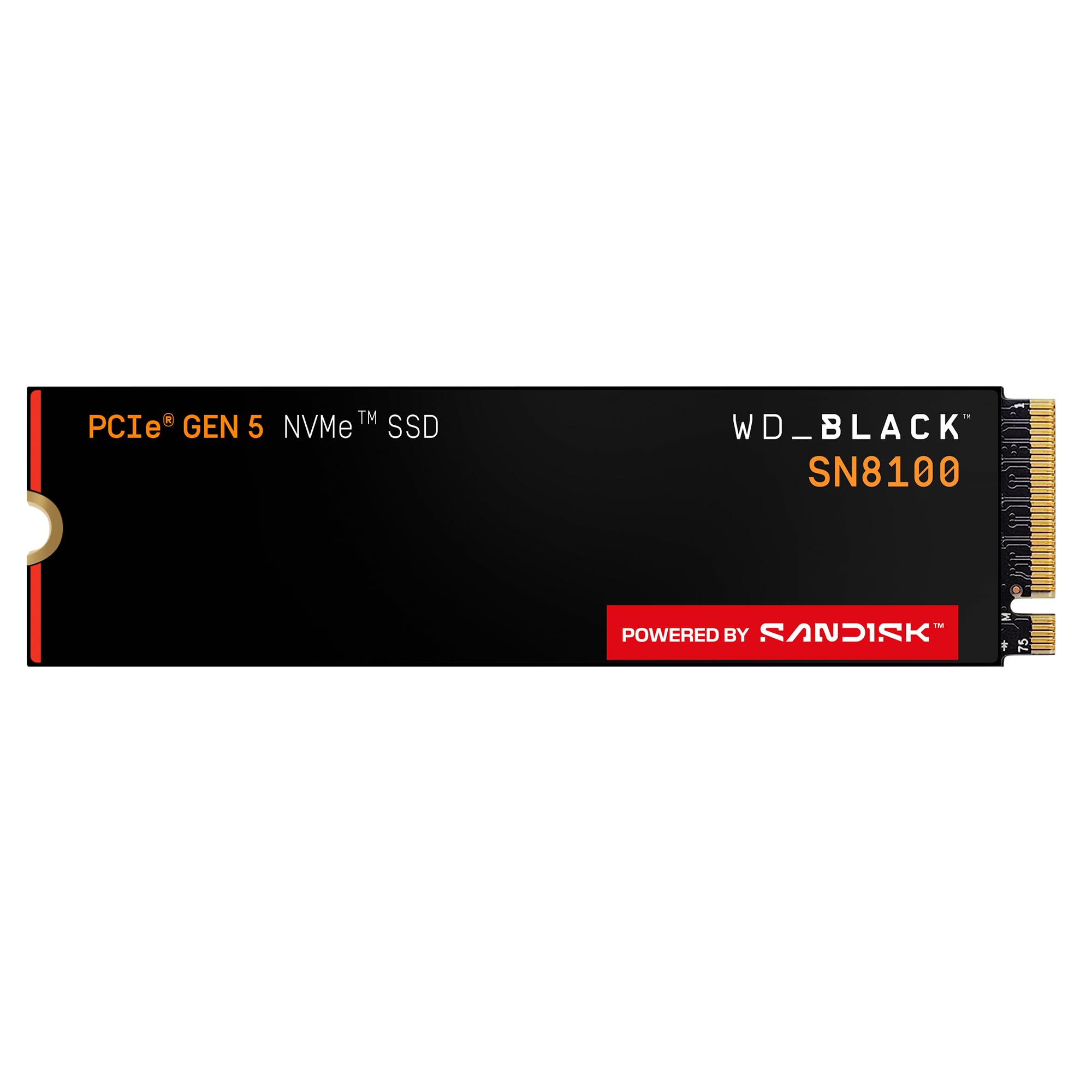
The WD_Black SN8100 claims the highest sequential read speed in this lineup at 14,900 MB/s, with write speeds hitting 14,000 MB/s on the 2TB and 4TB capacities. This drive uses TLC 3D CBA NAND and a power-efficient controller that averages just 7.5W under load — over 100% more efficient than its Gen 4 predecessor. The random IOPS reach 2.3 million, positioning it as a top choice for direct storage workloads and 4K video editing.
Real-world testing on native Gen 5 motherboards reports reads around 10,500 MB/s and writes around 10,200 MB/s in typical usage, with stable thermals around 82°F. The bundled Sandisk Dashboard and Acronis True Image simplify cloning and health monitoring. Users upgrading from Gen 4 report eliminating micro-stuttering in open-world games.
The raw sequential speed advantage is most noticeable in large file transfers and content creation. For general OS responsiveness, the difference between 14,000 MB/s and 10,000 MB/s is negligible.
Why it’s great
- Highest sequential read speed in the class
- Excellent power efficiency under 7.5W
- Comprehensive cloning and monitoring software
Good to know
- Heatsink not included in the standard package
- Peak speeds require active motherboard cooling
3. Kingston FURY Renegade G5 1TB

The Kingston FURY Renegade G5 uses the SM2508 controller built on a 6nm process, paired with a low-power DDR4 cache and a 12-layer PCB for thermal stability. Sequential read speeds reach 14,800 MB/s with writes up to 14,000 MB/s, putting it neck-and-neck with the Samsung and WD flagships. Random IOPS and mixed-load performance are tuned for gaming, where DirectStorage compatible titles see immediate benefits.
Users report game installation speeds around 1.5x faster than Gen 4, and load times nearly matching the Samsung 990 PRO for current-generation titles. Kingston’s reputation for durability is reflected in user reviews spanning years of trust. The single-sided M.2 2280 design fits most motherboards without clearance issues.
The 1TB version caps at 1,200 TBW, which is double the endurance of many entry-level Gen 5 drives. However, the packaging is minimal, and the drive does not include a bundled heatsink or migration software.
Why it’s great
- Superb thermal efficiency with 6nm controller
- High endurance rating (1,200 TBW)
- Excellent mixed-load gaming performance
Good to know
- No bundled heatsink or cloning software
- Price per TB high compared to mid-range options
4. Sabrent Rocket 5 1TB

Sabrent’s Rocket 5 delivers 14,000 MB/s sequential reads and 2.3 million random IOPS at just 7W power consumption, making it one of the most power-efficient Gen 5 drives available. The controller is heatsink-ready, designed to work with motherboard M.2 shields or Sabrent’s proprietary dual heatpipe cooler. DirectStorage support and backward compatibility with Gen 4 and 3 slots add flexibility.
Users upgrading from Gen 4 NVMe report sequential read speeds jumping from 7,000 MB/s to 12,500 MB/s, with a 65GB Windows backup image completing in 45 seconds. The included Acronis True Image license simplifies OS migration. The drive runs at 52–54°C with motherboard heatsinks in well-ventilated cases, well within safe operating range.
The Rocket 5’s strength is raw IOPS for multi-threaded workloads. For users who frequently move large volumes of small files or run data-intensive applications, this drive excels. The 1TB endurance rating is 600 TBW, which is adequate but not class-leading.
Why it’s great
- Industry-leading random IOPS at 2.3M
- Very low power consumption (7W load)
- Includes Acronis True Image for migration
Good to know
- Heatsink not included in standard package
- Endurance at 600 TBW lower than premium competitors
5. PNY CS2150 1TB

The PNY CS2150 offers 10,200 MB/s sequential reads and 8,300 MB/s writes, landing in the middle of the Gen 5 performance band. Its standout feature is TCG Opal 2.0 hardware encryption, which is rare at this price level. The drive is built for users who require hardware-based data security alongside Gen 5 throughput — ideal for corporate laptops and sensitive creative workflows.
Users report idle temperatures around 47°C, dropping to 40°C under load when paired with a standard M.2 heatsink. DirectStorage compatibility ensures compatible games benefit from faster asset streaming. PNY backs it with a 5-year warranty and 24/7 US-based technical support, adding peace of mind for business buyers.
While not the fastest Gen 5 drive in peak sequential speeds, the CS2150’s balanced spec sheet and enterprise-grade encryption make it a compelling choice for users who prioritize data security over headline numbers. The TBW rating is competitive for the 1TB class, though lower than premium competitors.
Why it’s great
- TCG Opal 2.0 hardware encryption included
- Temperature stays cool under load with proper heatsink
- 5-year warranty with US-based support
Good to know
- Peak speeds lower than high-end Gen 5 options
- No bundled heatsink or cloning software
6. OSCOO ON2000PRO 1TB
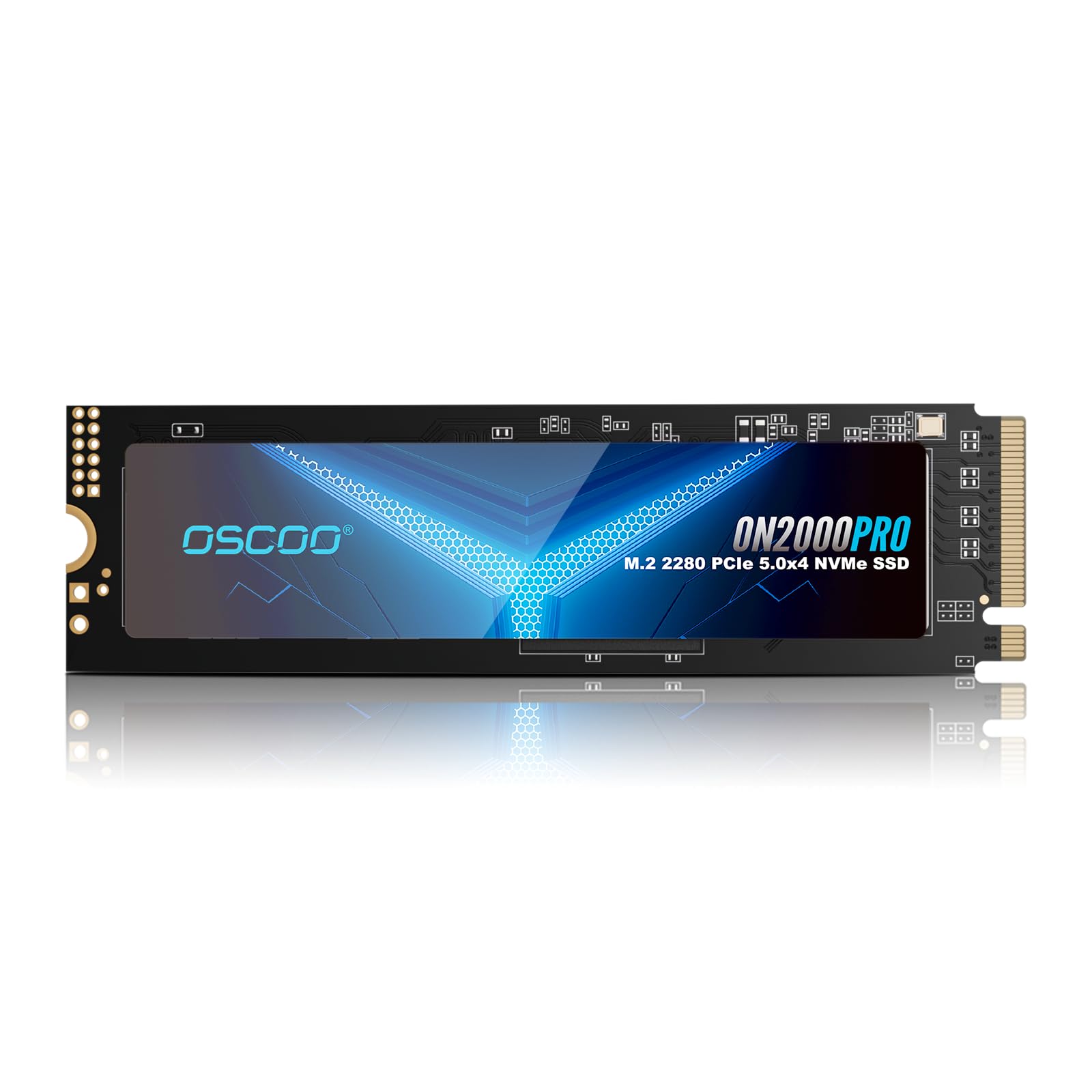
The OSCOO ON2000PRO brings a DRAM cache and graphene heatsink into the budget Gen 5 segment, claiming 13,000 MB/s reads and 7,500 MB/s writes. The 5nm controller targets efficient thermal management, and AES-256 encryption ensures basic data protection. This drive is positioned for users who want Gen 5 access without paying a premium for a brand name.
User experiences vary: some report flawless operation with macOS and Windows, while others highlight installation alignment issues that required reseating the drive to be recognized. Once configured properly, the drive performs well for everyday gaming and general productivity. The graphene heatsink provides basic cooling but will not handle sustained full-throttle writes without thermal throttling.
The performance-to-price ratio is strong, but the inconsistency in initial setup and smaller brand support infrastructure may deter less experienced builders. For those comfortable with potential alignment troubleshooting, this delivers respectable Gen 5 performance on a budget.
Why it’s great
- DRAM cache at a competitive price point
- Good read speeds for budget Gen 5
- AES-256 encryption and wear leveling included
Good to know
- Installation alignment can be finicky on some systems
- Graphene heatsink may not prevent sustained throttling
- Limited brand support compared to major manufacturers
7. Corsair MP700 Elite 1TB

The Corsair MP700 Elite focuses on reliability with a staggering 1,200 TBW endurance rating for the 1TB version — double the typical 600 TBW found on most competitors. Sequential reads reach 10,000 MB/s and writes 8,500 MB/s, with high-density 3D TLC NAND maintaining consistent speeds over the drive’s lifespan. DirectStorage compatibility ensures smooth gaming performance in supported titles.
Benchmark data from users shows SEQ1M Q8T1 reads at 10,301 MB/s and writes at 9,055 MB/s, with RND4K Q32T1 reads at 853 MB/s — outperforming many Gen 4 drives by a wide margin. The drive runs at 31°C idle in standard desktop environments, staying cooler than many Gen 5 contemporaries. Large 8K RAW video scrubbing workflows benefit from the sustained write performance.
While peak sequential speeds trail the top-tier drives by around 4,000 MB/s, the MP700 Elite’s endurance and cool operation make it a strong choice for workstation environments. It runs hot under sustained load, requiring good case airflow or an aftermarket heatsink for best performance.
Why it’s great
- Exceptional 1,200 TBW endurance rating
- Excellent random 4K performance for its class
- Runs cool under typical desktop conditions
Good to know
- Peak sequential speeds lower than high-end Gen 5
- Requires good airflow or aftermarket heatsink for sustained loads
8. Crucial P510 1TB

The Crucial P510 brings Gen 5 performance to a value tier, offering 11,000 MB/s reads and 8,500 MB/s writes at a price that undercuts most competitors. Built with Micron’s advanced G8 NAND, it includes a 5-year warranty with 600 TBW endurance. The drive is backward compatible with Gen 4 and Gen 3 slots, making it a future-proof upgrade for current systems.
Users consistently report easy installation and immediate performance gains over SATA and older Gen 3 drives. One user restored a 256GB OS backup to the P510 in just 25 minutes on a Gen 3 slot — a testament to its low latency. The bundled Acronis True Image software simplifies OS migration, and the Creative Cloud subscription adds value for content creators.
Heavy sustained writes may require a motherboard heatsink, as the drive lacks an integrated cooling solution. For most daily gamers and home users, this drive delivers Gen 5 performance where it counts without overwhelming the budget.
Why it’s great
- Excellent performance for the price
- Bundled with Acronis cloning software
- Backward compatible with older PCIe generations
Good to know
- No heatsink included — motherboard cooling needed
- Endurance at 600 TBW average for the class
9. SIX NVMe M.2 PCIe 4.0 1TB
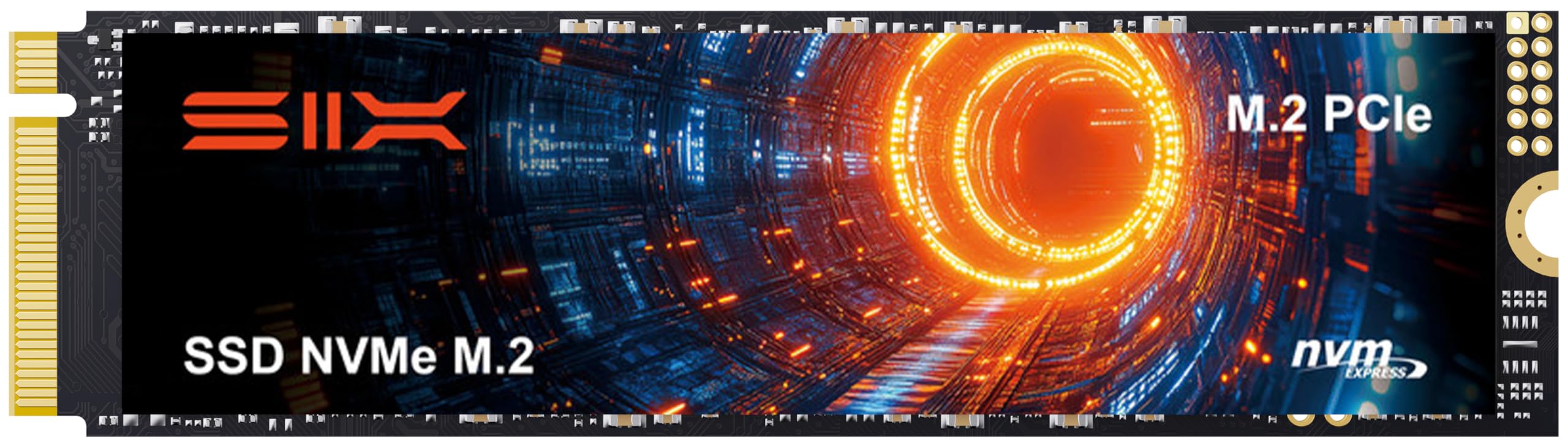
The SIX NVMe SSD is a PCIe 4.0 drive that tops out at 7,350 MB/s sequential reads, making it the only Gen 4 product in this roundup. It is included here as a budget entry point for users who want to upgrade storage capacity without jumping to a Gen 5 motherboard. The package includes a heatsink, screwdriver, and thermal tape, making installation straightforward on both PC and PS5.
Users report consistent speeds at the advertised levels, with smooth game loads and stable performance under prolonged gaming sessions on PS5. The included low-profile heatsink fits comfortably under GPU backplates. Reviews note that the drive is recognized immediately by Windows 11 and maintains stable temperatures during operation.
This is not a Gen 5 SSD. It will not offer the same peak bandwidth or DirectStorage optimization as the other products on this list. For users without PCIe 5.0 hardware, it provides a reliable and affordable storage upgrade with a 5-year warranty.
Why it’s great
- Includes all installation hardware and heatsink
- Good Gen 4 performance for PS5 and PC
- Backward compatible with older PCIe generations
Good to know
- Gen 4 only — not a Gen 5 NVMe drive
- Peak speeds lower than any Gen 5 product here
FAQ
Will a Gen 5 SSD work in my Gen 4 or Gen 3 slot?
Do I need a heatsink for a Gen 5 SSD?
What is the real-world difference between 10,000 MB/s and 14,000 MB/s?
Should I buy a Gen 5 SSD if I only use a Gen 4 motherboard?
Final Thoughts: The Verdict
For most users, the best gen 5 ssd winner is the Samsung 9100 PRO with Heatsink because it delivers the strongest combination of sustained sequential speed, reliable thermal management, and robust software support. If you want the highest raw sequential speed at the best power efficiency, grab the WD_Black SN8100. And for a budget-friendly entry into Gen 5 without sacrificing DRAM cache, nothing beats the Crucial P510.