
North Carolina’s climate — from the humid Coastal Plain to the Piedmont and the Mountain regions — creates a tricky environment for grass. Between scorching summer heat, unpredictable spring rains, and dense shade from mature trees, finding grass seed that actually survives and thickens year after year requires a blend built for these specific stressors.
I’m Mohammad Maruf — the founder and writer behind Drink4Good. I’ve spent countless hours analyzing germination test data, customer growth patterns across NC climate zones, and the real-world failure points of popular seed blends to understand what separates a thriving lawn from a patchy mess.
Whether you’re overseeding a worn-out lawn or filling bare spots under a canopy of oaks, this guide breaks down the top contenders in the crowded market for grass seed for nc — with a focus on which blends actually deliver dense, lasting turf in the Tar Heel State.
How To Choose The Best Grass Seed For NC
NC sits squarely in the transition zone, where cool-season grasses struggle through August and warm-season varieties get scorched by winter frost. The winning formula is a Tall Fescue blend — it offers the heat and drought tolerance to survive Piedmont summers and the shade adaptability to thrive under the canopy of dogwoods and pines. Beyond picking the right species, you need to evaluate three factors that determine whether your seed investment turns into actual grass.
Weed-Free Purity and Filler Weight
Not all weight on the label is seed. Many products mix in fertilizer coatings, mulch, or soil improvers that inflate the bag’s heft but reduce the volume of pure grass seed you’re spreading. For NC lawns, a 99% weed-free guarantee is critical, especially if you’re overseeding without tilling. Contaminated seed introduces crabgrass and broadleaf weeds that compete with your new turf during its vulnerable first month.
Shade Tolerance vs. Sun Durability
A seed blend that excels in a full-sun pasture may fail completely under a mature oak in Charlotte or Raleigh. Conversely, a deep-shade formula might stay leggy and thin in open areas. The best NC options are “sun and shade” blends that combine a shade-tolerant fescue cultivar with a drought-hardy one. This dual coverage ensures consistent growth across the varied light conditions of a typical suburban yard.
Germination Speed vs. Root Establishment
Fast germination — often advertised in 5 to 10 days — is visually satisfying, but rapid sprouting doesn’t guarantee a deep root system. NC’s clay soils can stunt root penetration, making a grass more vulnerable to July heat spikes. Look for blends with root-building nutrition or soil-improving clays that encourage deeper anchoring. A slightly slower start often pays off with a thicker, more resilient lawn by September.
Quick Comparison
On smaller screens, swipe sideways to see the full table.
| Model | Category | Best For | Key Spec | Amazon |
|---|---|---|---|---|
| GreenView Turf Type Tall Fescue Sun & Shade | Premium Pure Seed | 99.9% weed-free full lawn | 0% filler — 7 lb. pure seed | Amazon |
| Scotts Turf Builder Sun & Shade Mix | All-Purpose Seed + Fertilizer | Overseeding sun-to-shade yards | Root-Building Nutrition technology | Amazon |
| O.M. Scott & Sons Tall Fescue Blend | 3-in-1 Seed + Soil Improver | Clay soil and tough transition zones | Natural clay soil improver included | Amazon |
| Pennington Smart Patch Dense Shade | Bare-Spot Patch Mix | Deep shade under trees | Tackifier protects against erosion | Amazon |
| Scotts Kentucky 31 Mix | Budget Overseed Mix | Large-area fill under full sun | Heat and drought tolerance | Amazon |
In‑Depth Reviews
1. GreenView Turf Type Tall Fescue Sun & Shade Blend

GreenView’s Turf Type Tall Fescue blend is the closest you’ll get to a professional-grade seed without stepping into a sod farm. With a 99.9% weed-free guarantee and absolutely no filler coatings, every ounce in this 7-pound bag is pure, viable seed. That matters for NC lawns because contaminated mixes introduce crabgrass in late spring — and this blend simply doesn’t. Customer reviews consistently note zero weed breakouts even when overseeding thin patches.
Blended from multiple tall fescue cultivars, it balances shade tolerance with drought and heat resistance, making it genuinely versatile across the varied light conditions of a Greensboro or Asheville yard. Germination falls in the 10-to-14-day window, with most users reporting thick, dark-green coverage that survives July humidity. The visual texture is medium-to-coarse, closely mimicking a natural sod look that blends well with existing turf.
It is the priciest option on this list on a per-bag basis, but when you account for the zero filler weight and the higher seed count per square foot, the cost per pound of actual grass is competitive. For anyone serious about a low-weed, high-density lawn, this is the gold standard.
Why it’s great
- Absolutely no filler or coating — pure seed weight only.
- Drought and heat resistant once established, ideal for Piedmont summers.
Good to know
- Higher upfront cost per bag than coated blends.
- Germination can be slightly slower (10–14 days) than quick-start patches.
2. Scotts Turf Builder Sun & Shade Mix

Scotts Turf Builder Sun & Shade Mix wears two hats — it functions as a premium seed blend and as a soil conditioner with Root-Building Nutrition. That means the mix includes fertilizer and a carbohydrate complex that encourages deeper root penetration into NC’s heavy clay. For homeowners in the Triad who battle compacted soil, this dual action reduces the need for separate starter fertilizer applications.
It covers a wide range of conditions, from full-sun sections of a lawn to areas with moderate shade. Overseeding coverage reaches 2,240 square feet per 5.6-pound bag, which is generous for a product that includes non-seed components. Real-world reviews show consistent germination at day 10 with daily watering, and many users report it surviving the transition from spring rain to summer drought without major die-off.
The tradeoff is that the bag weight is partially filler — fertilizer and soil improver — so the seed-only weight is lower than pure-seed alternatives. If you’re covering a large bare area, you may need more bags than expected. For overseeding an already-established lawn, this mix’s integrated nutrition system delivers reliable results with less effort.
Why it’s great
- Fertilizer and soil improver are already mixed in — no extra spreading needed.
- Root-building formula helps grass anchor in tough clay soils.
Good to know
- Bag contains seed plus non-seed additives — weight doesn’t equal pure grass seed.
- Some users noted patchy results on reused topsoil without fresh soil prep.
3. O.M. Scott & Sons Tall Fescue Blend
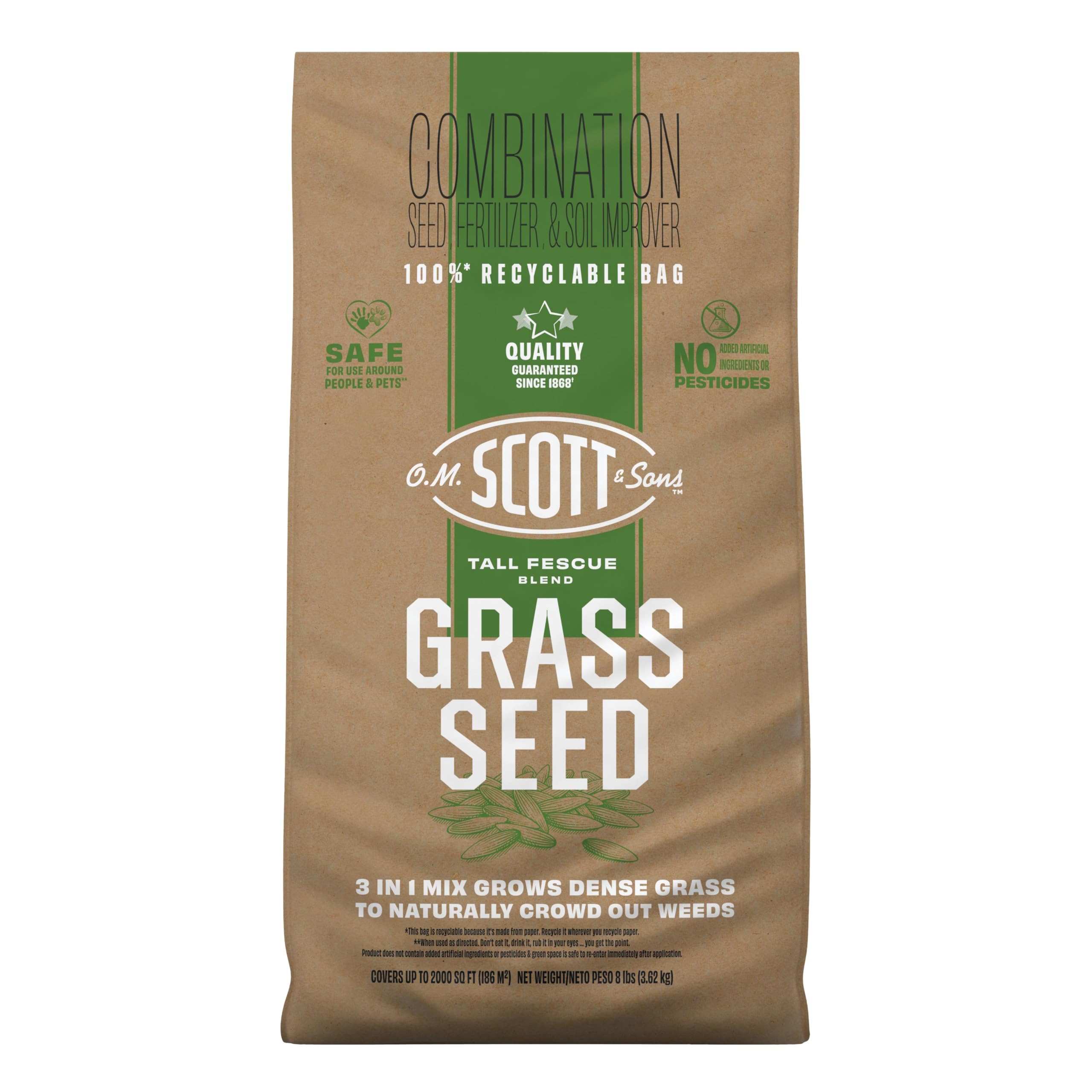
This 3-in-1 product from O.M. Scott & Sons bundles tall fescue seed with natural grass food and a clay-based soil improver, all in a recyclable paper bag. The clay component is particularly useful for NC lawns — sandy soils along the coast lose moisture fast, and clay helps retain it around the seed longer, improving germination odds during dry spells. The seed varieties are hand-selected Oregon-grown tall fescue, paired with no artificial ingredients or pesticides, making it safe for children and pets after application.
Coverage is solid: 2,000 square feet for overseeding or 665 square feet for a new lawn from the 8-pound bag. Germination reports cluster around 10 days, with several long-term users calling it the only seed that finally worked after years of failure with other brands. The result is a dense, dark-green fescue that naturally crowds out weeds without chemical intervention.
The main tradeoff echoes the Scotts Sun & Shade — roughly half the bag’s weight is soil improver, not seed. For the same money, a pure-seed product like GreenView gives you more seed per pound. However, if you’re seeding into depleted or sandy soil, the integrated soil improver saves you the extra step of mixing in compost or topsoil.
Why it’s great
- Natural clay soil improver helps retain moisture in sandy or loose soil.
- Zero artificial ingredients or pesticides — pet and kid safe when used as directed.
Good to know
- High filler-to-seed ratio makes cost per pound of actual seed higher than pure options.
- Some batches shipped without a date code — germination may vary if stock is old.
4. Pennington Smart Patch Dense Shade

Pennington’s Smart Patch Dense Shade is engineered for one specific scenario: bare spots in deep shade where little to no direct sunlight hits. The seed mix combines Tall Fescue with American Ryegrass, both selected for low-light performance, and it includes a tackifier — a binding agent that prevents seed washout on sloped or rain-exposed patches. For NC properties with steep wooded hillsides, this is a functional advantage over standard seed.
The 5-pound bag covers 100 square feet, and the included mulch layer turns a lighter color when dry, acting as a visual watering indicator. This is a smart feature for new gardeners who struggle to judge moisture levels under tree canopies. Germination is advertised as fast as 5 days, and many customer photos confirm visible growth within the first week.
That said, the patch formula is not designed for large lawns or full-sun areas — it’s a spot-repair tool. A significant minority of reviews report zero germination, likely due to improper soil prep or inadequate watering. The inclusion of fertilizer and mulch reduces the amount of actual seed in the bag, so covering large bare areas requires multiple units. Use it strictly for the deep-shade trouble spots that other blends miss.
Why it’s great
- Tackifier holds seed in place on slopes — ideal for NC’s rainy spring.
- Mulch changes color when dry, simplifying watering decisions.
Good to know
- Results are inconsistent — some users report zero germination.
- High filler content (mulch + fertilizer) makes it expensive per seed weight for large patches.
5. Scotts Kentucky 31 Mix
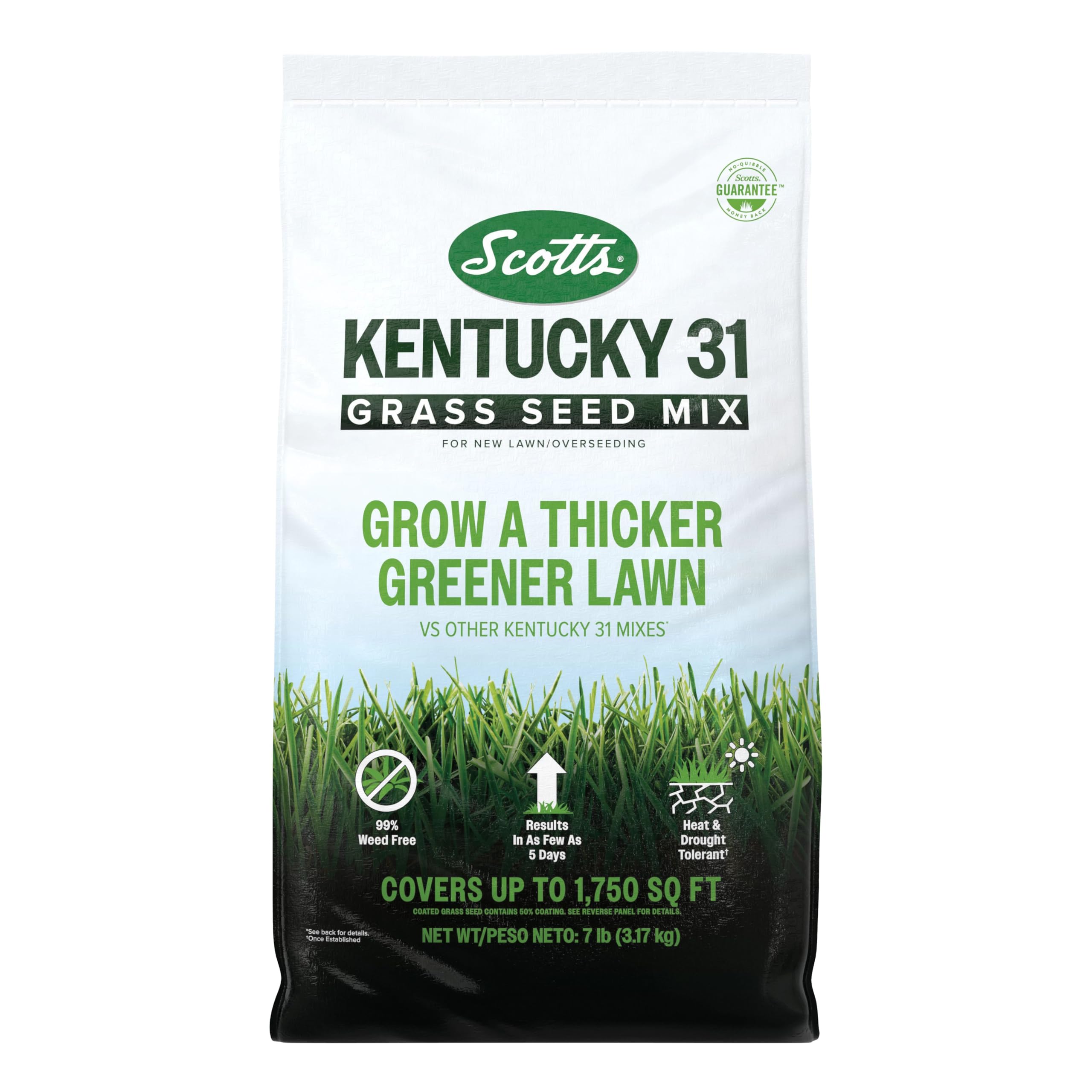
Scotts Kentucky 31 Mix is the entry-level workhorse for large-area overseeding, especially in full-sun conditions. It’s a three-way blend of Premium Tall Fescue, Kentucky 31 Tall Fescue, and Annual Ryegrass. The Ryegrass component germinates fast — visible green in 5 to 7 days — providing quick soil cover while the slower fescue root system establishes. This makes it a practical choice for covering a bare front yard quickly in spring or fall.
One 7-pound bag covers up to 1,750 square feet for overseeding or 580 square feet for a brand-new lawn. The heat and drought tolerance of the fescue elements makes it suited to NC’s summer stress, though the Annual Ryegrass will die off after one season, leaving the fescue to take over. Several multi-generational families swear by it, with reviews spanning decades of use for kid-and-dog lawns.
The catch is the coating weight. Multiple verified buyers report the seed is heavily coated with a fertilizer-like layer, effectively reducing the active seed weight. One extreme review estimated only half the bag’s weight is actual seed. For the low sticker price, you’re getting convenience and quick cover — but if you calculate cost per viable seed, a pure-seed option is more economical for serious lawn building.
Why it’s great
- Quick Ryegrass germination provides fast soil coverage in full sun.
- Proven family brand with decades of real-world results in transition zones.
Good to know
- Heavy coating reduces the amount of pure seed in the bag.
- Some batches reportedly had poor germination rates — plant early in the season to allow for do-over.
FAQ
What is the best type of grass seed for full shade in NC?
Should I use pure seed or a seed-and-fertilizer mix for my NC lawn?
What is the ideal time to plant grass seed in North Carolina?
Final Thoughts: The Verdict
For most users, the grass seed for nc winner is the GreenView Turf Type Tall Fescue Sun & Shade Blend because it delivers 99.9% weed-free pure seed with no filler, paired with heat and drought tolerance that survives Piedmont summers. If you want an all-in-one solution that includes fertilizer and soil improver for convenience, grab the Scotts Turf Builder Sun & Shade Mix. And for deep-shade trouble spots under dense tree cover, nothing beats the erosion protection of the Pennington Smart Patch Dense Shade.