
The first few months with a newborn are a blur of feedings, diaper changes, and anxious Google searches about spit-up and gas. Choosing the right bottle fuel is one of the most consequential decisions you’ll make, as the wrong formula can mean a miserable, colicky baby and sleepless nights for everyone. This guide cuts through the marketing noise to focus on the real-world performance of five top contenders for the 0-6 month window.
I’m Mohammad Maruf — the founder and writer behind Drink4Good. I’ve spent countless hours cross-referencing the latest nutritional research with real parent feedback to identify which infant formulas actually deliver on their promises for newborns and young infants.
In this research-backed review, I break down the key nutritional specs, ingredient profiles, and digestive compatibility of the current top sellers to help you find the most reliable formula milk for baby 0-6 months on the market today.
How To Choose The Best Formula Milk For Baby 0-6 Months
Selecting the right newborn formula hinges on understanding your baby’s unique digestive sensitivity and the nutritional building blocks they need. The first six months are a critical window for brain development and establishing a healthy gut microbiome, so the ingredient list matters far more than the price on the can.
Cow’s Milk vs. Soy vs. Gentle Formulas
The vast majority of standard formulas are cow’s milk-based, with the proteins broken down for easier digestion. For babies who are sensitive to these proteins, “Gentle” or partially hydrolyzed formulas are designed to reduce fussiness and gas. Soy-based formulas, like Similac Soy Isomil, are a dairy-free alternative for families following a vegetarian diet or for infants with confirmed cow’s milk protein intolerance. Start with a standard cow’s milk formula and only switch to a specialized variant if persistent digestive discomfort is observed.
The Role of HMOs and DHA
Human Milk Oligosaccharides (HMOs) like 2′-FL and LNnT are prebiotics naturally found in breast milk that feed beneficial gut bacteria and support the developing immune system. Look for formulas that list these on the ingredients panel, as they are a marker of a premium formulation. DHA is an omega-3 fatty acid critical for eye and brain development; the American Academy of Pediatrics recommends at least 100mg per serving for optimal support during the first year of life.
Powder vs. Ready-to-Feed
Powdered formula is the most economical and environmentally friendly option for daily use, but it requires precise mixing with safe, warm water. Ready-to-feed (RTF) liquid formulas are sterile and incredibly convenient, especially during the first few weeks or for travel, but they come at a significantly higher cost per ounce. For a budget-conscious parent of a 0-6 month old, powder is the standard choice; RTF is ideal for emergency kits or the newborn haze of the first month.
Quick Comparison
On smaller screens, swipe sideways to see the full table.
| Model | Category | Best For | Key Spec | Amazon |
|---|---|---|---|---|
| Enfamil NeuroPro | Premium Powder | Brain development & immunity | MFGM + DHA + HuMO6 blend | Amazon |
| Mama Bear Advantage Premium | Mid-Range Powder | Dual HMO immune support | 2′-FL + LNnT HMOs | Amazon |
| Mama Bear Gentle | Gentle Powder | Fussiness, gas & crying | Partially hydrolyzed proteins | Amazon |
| Bubs Essential | Mid-Range Powder | Clean ingredients & allergy-friendly | Pre + Probiotics, No Corn Syrup | Amazon |
| Similac Soy Isomil | Ready-to-Feed | Dairy-free & vegetarian | Soy protein, Prebiotics | Amazon |
In-Depth Reviews
1. Enfamil NeuroPro Baby Formula
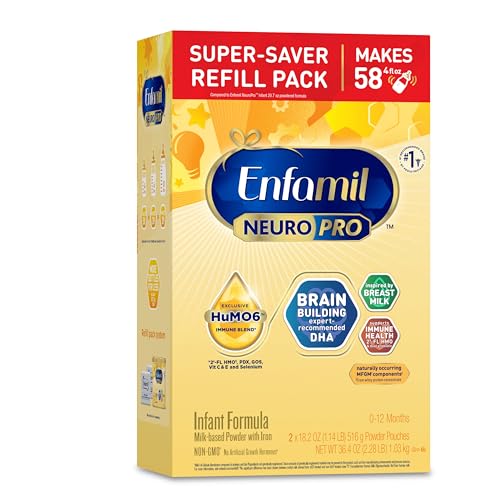
Enfamil NeuroPro is the most pediatrician-recommended brand for a reason: its Brain Building Duo of MFGM components and DHA is the only combination clinically shown to support cognitive, motor, and communication development through age 5 when fed in the first year. For a 0-6 month old, this proprietary blend provides unmatched neurodevelopmental support that directly mirrors the complex fats found in breast milk. The addition of the exclusive HuMO6 immune blend gives parents confidence that their newborn’s developing immune system is getting targeted prebiotic support.
Real-world feedback from parents is overwhelmingly positive, with many noting how well their babies tolerated the formula with minimal gas or spit-up issues. The 36.4 oz canister provides excellent value at the premium tier, mixing easily without clumping regardless of water temperature. Parents of infants with reflux have specifically reported improvements after switching to this formulation, likely due to the specific protein profile and fat blend that is designed to be gentle on immature digestive systems.
The only significant drawback is the price point, which sits at the highest end of the market. However, the four-pack subscription option through Amazon offers meaningful per-unit savings and ensures you never run out during late-night feeding emergencies. For parents who want the best-available science and a proven track record of hospital-grade nutrition, this is the default choice for the first six months of life.
Why it’s great
- Only formula with MFGM + DHA for proven five-year brain benefits
- HuMO6 immune blend supports digestive and immune health
- Mixes effortlessly and is gentle on sensitive newborn stomachs
Good to know
- Highest price per ounce among competitors on this list
- Contains palm olein oil, which may cause harder stools in some babies
2. Mama Bear Advantage Premium Baby Formula
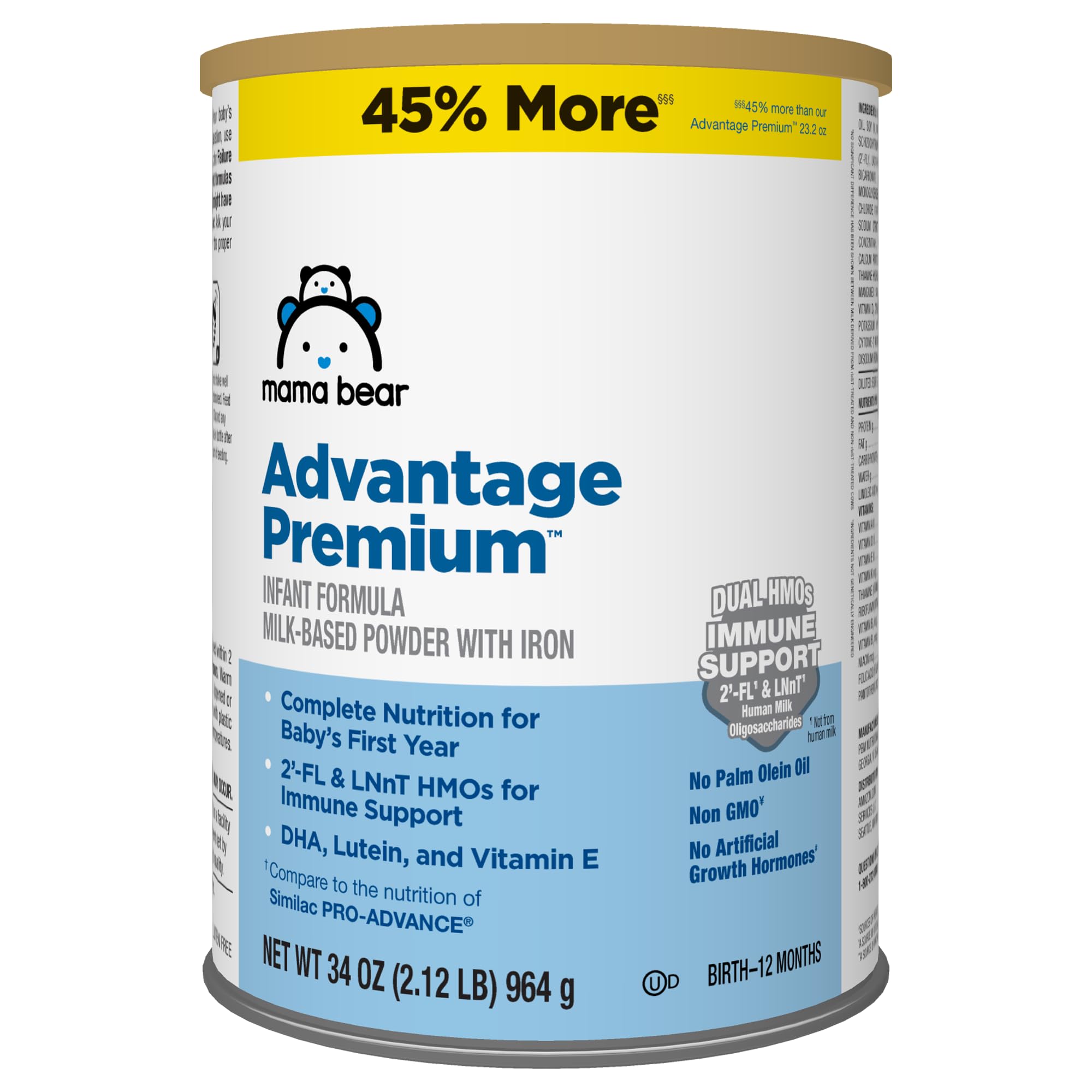
Amazon’s Mama Bear Advantage Premium is arguably the most impressive value proposition on the market for the 0-6 month bracket. It directly competes with Similac Pro-Advance but includes dual HMOs (2′-FL and LNnT) for the same price as a standard store-brand formula. For the budget-conscious parent who refuses to compromise on prebiotic immune support, this formula delivers the core benefit of HMO-enhanced nutrition without the premium markup.
The 34 oz can is larger than most competitors, and its SNAP eligibility makes it accessible to more families. Customer reviews consistently highlight the seamless transition from name-brand formulas — babies take to it without fussiness or digestive complaints, and parents report significant monthly savings that “really add up.” The inclusion of DHA, lutein, vitamin E, and choline for brain and eye development means no nutritional corners were cut to achieve the lower price point.
It is worth noting that this formula uses palm olein oil, which some studies suggest may reduce calcium absorption and cause harder stools in sensitive infants. If your baby tends toward constipation, the Mama Bear Advantage Premium might not be the ideal match. However, for the vast majority of newborns, this non-GMO, growth-hormone-free option provides complete nutrition with the exact same FDA quality standards as the national brands at a fraction of the cost.
Why it’s great
- Dual HMO (2′-FL + LNnT) for immune support at a store-brand price
- Non-GMO with no artificial growth hormones
- Competitive with Similac Pro-Advance nutritionally
Good to know
- Contains palm olein oil, may cause constipation in some babies
- Not a gentle or partially hydrolyzed formula for extreme sensitivity
3. Mama Bear Gentle Premium Baby Formula

For parents dealing with a colicky newborn who cries, arches their back, or pulls up their legs after every feeding, the Mama Bear Gentle formula is designed as an affordable alternative to Enfamil NeuroPro Gentlease. The key difference lies in the partially hydrolyzed proteins, which are broken down into smaller fragments that are easier for a tender digestive system to process. This targeted approach helps reduce the gas bubbles and fermentation that cause the classic “fussy baby” symptoms during the first months of life.
Customer reviews are remarkably consistent: babies transition from name-brand formulas without fussiness, and many parents report a noticeable reduction in crying and gassiness within the first few days of switching. The 21.5 oz can is slightly smaller than the standard Advantage formula, but it still provides excellent value compared to the national brand gentle formula it mimics. The inclusion of the 2′-FL HMO, DHA, and choline ensures that the brain and immune support is not sacrificed in the pursuit of digestive gentleness.
A critical consideration is that this formula contains corn syrup solids as its primary carbohydrate source, a common ingredient in gentle formulas designed to be easier on the stomach. While this is perfectly safe and FDA-approved, some parents prefer formulas using lactose as the sole carbohydrate. Additionally, the Perrigo manufacturing process that produces this formula can result in a slightly thicker consistency than name-brand equivalents, which some babies may notice if they are being switched directly from a different brand’s ready-to-feed.
Why it’s great
- Partially hydrolyzed proteins significantly reduce gas and fussiness
- Comparable to Enfamil NeuroPro Gentlease at a much lower price
- Includes 2′-FL HMO and DHA for immune and brain development
Good to know
- Contains corn syrup solids as primary carbohydrate
- May have a slightly thicker texture than name-brand equivalents
4. Bubs Essential Infant Formula
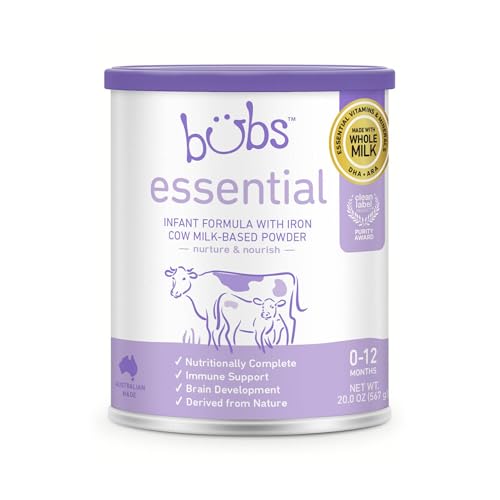
Australian-made Bubs Essential has carved a distinct niche for itself among parents who prioritize “clean” ingredient profiles. It is one of the few mid-range formulas that excludes corn syrup, artificial colors, flavors, and preservatives while still including both prebiotics (GOS) and probiotics (B. lactis) for dual gut and immune support. For a 0-6 month old, this dual-prebiotic approach is especially valuable because it more closely mimics the complex microbiome support of breast milk.
The whole cow’s milk base gives Bubs a creamy consistency that many babies seem to prefer, and parents consistently report that their infants show more “enjoyment” and enthusiasm at meal times after switching from the standard Similac or Enfamil offerings. The Clean Label Project Award certification and First 1,000 Day Promise standard are reassuring third-party validations that the product is free from heavy metals and other industrial contaminants — a concern for many modern parents. For babies with sensitive stomachs or mild food allergies, this formula has repeatedly proven to be well-tolerated.
The primary trade-off is the smaller 20 oz can size, which means more frequent repurchases compared to the 34 oz Mama Bear container. Some users also note that the powder feels “thin” or less dense than others, which can lead to over-powdering if you’re not careful to use the provided scoop precisely level. Nevertheless, for the parent who reads every ingredient label and refuses to compromise on clean sourcing, Bubs Essential delivers a genuinely differentiated product that justifies its place on this list.
Why it’s great
- No corn syrup, artificial colors, or preservatives
- Contains both prebiotics and probiotics for dual gut support
- Clean Label Project Award certified for purity
Good to know
- Smaller 20 oz can requires more frequent purchase
- Powder density is lower than some competitors, requiring careful scooping
5. Similac Soy Isomil Infant Formula Ready to Feed

Similac Soy Isomil is the go-to solution for a specific but significant subset of families: those with infants who have a diagnosed or strongly suspected cow’s milk protein intolerance, and families following a vegetarian or plant-based diet. This ready-to-feed format eliminates any mixing errors, which is a genuine safety advantage during the sleep-deprived newborn weeks. The soy protein base has been clinically shown to reduce fussiness and gas when switching from milk-based formulas, and the inclusion of DHA and lutein supports eye and brain development in the absence of dairy-derived nutrients.
The ready-to-feed quart bottles are sterile and incredibly convenient — no need to boil water, measure powder, or worry about improper mixing that could stress a newborn’s kidneys. Parents report that babies with severe dairy intolerance settle quickly on this formula, with normalized stool patterns and significantly reduced fussiness within the first week. The four-pack format is designed for bulk storage, and the Similac app coupons and baby registry discounts provide additional savings that bring the effective cost down.
The most significant downside is that soy-based formulas are generally not recommended as a first-line option for healthy, full-term infants due to the higher concentration of plant estrogens and the potential for lower calcium absorption compared to cow’s milk formulas. The American Academy of Pediatrics advises soy formula only when medically indicated, so this is not a general-purpose recommendation. Additionally, the ready-to-feed format is considerably heavier and more expensive per ounce than powder, making it less practical for daily use beyond the first month or for travel.
Why it’s great
- Clinically shown to reduce fussiness and gas for dairy-intolerant babies
- Ready-to-feed format is sterile and eliminates mixing errors
- DHA and lutein support brain and eye development
Good to know
- Soy formulas are not recommended for routine use in healthy full-term infants
- Much heavier and more expensive per ounce than powdered alternatives
FAQ
What is the difference between a gentle formula and a standard formula for a 2-month-old?
When should I switch my 3-month-old from ready-to-feed to powder formula?
Can I use a formula designed for 0-12 months for my newborn?
Final Thoughts: The Verdict
For most users, the formula milk for baby 0-6 months winner is the Enfamil NeuroPro because its MFGM + DHA brain-building duo and HuMO6 immune blend provide the most comprehensive nutritional support for the critical first six months of life based on clinical evidence. If you want a budget-friendly option that doesn’t sacrifice HMO immune benefits, grab the Mama Bear Advantage Premium. And for a colicky or gassy newborn who needs gentle, partially hydrolyzed proteins at an affordable price, nothing beats the Mama Bear Gentle.